ABC Family Arquivos Brasileiros de Cardiologia International Journal of Cardiovascular Sciences ABC Heart Failure & Cardiomyopathy ABC Imagem Cardiovascular
Português English
ABC Family
Português English
  • About
    • About ABC Family
    • Internal Regulation
    • Editorial Board
    • Brazilian Society of Cardiology (SBC)
  • Issues
  • SBC Guidelines
  • Content
    • Videos
    • Podcasts
    • News
  • About
    • About ABC Family
    • Internal Regulation
    • Editorial Board
    • Brazilian Society of Cardiology (SBC)
  • Issues
  • SBC Guidelines
  • Content
    • Videos
    • Podcasts
    • News

ABC Family

  • ABC Family
  • Arquivos Brasileiros de Cardiologia
  • International Journal of Cardiovascular Sciences
  • ABC Heart Failure & Cardiomyopathy
  • ABC Imagem Cardiovascular
Search in

No content found.

Journals
Ordering
Article types
Others

  1. Home
  2. Keyword: Diastole
Figure 1
ABCIC
Original Article

Misinterpretation of Indeterminate Diastolic Function: Awareness and Insights from a Survey among Brazilian Cardiologists

Daniela do Carmo Rassi et al. Salvador Rassi Jorge Eduardo Assef Alex dos Santos Felix … Adenalva Lima de Souza Beck Cecília Beatriz Bittencourt Viana Cruz Silvio Henrique Barberato

Abstract

Background:

Diastolic dysfunction (DD) is highly prevalent and is associated with significant morbidity and mortality. More recent guidelines have introduced the classification of Indeterminate Diastolic Function or Indeterminate Diastolic Dysfunction (IDF or IDD). Nevertheless, both diagnoses are still poorly understood in clinical practice, with variable prevalence.

Objectives:

Assess the understanding of IDF and IDD among non-echocardiographer cardiologists in Brazil.

Methods:

A nationwide online survey was conducted among non-echocardiography readers cardiologists via mobile messaging platforms. A brief and anonymous questionnaire on knowledge and interpretation of Diastolic Function.

Results:

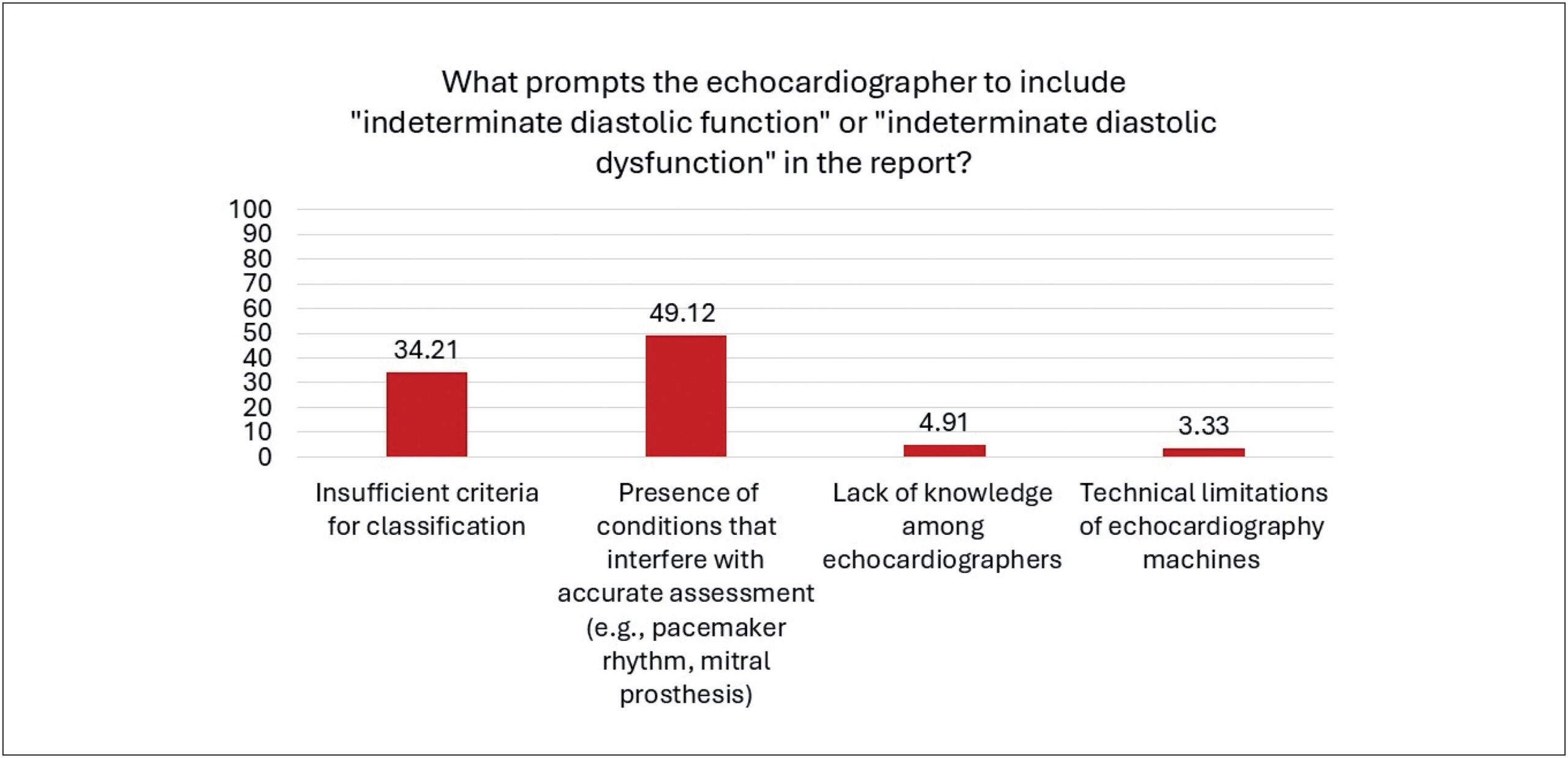
A total of 570 cardiologists from all regions of Brazil participated in the study. Most participants (64.21%) had more than ten years of clinical experience. While 71% correctly identified grades 2 or 3 as indicative of elevated filling pressures, only 34.21% accurately understood the diagnostic criteria for IDF or IDD. Among the mistakes associated with the indeterminate classification, the following stand out: attribution of this status to conditions that interfere with the assessment of diastole (49.12%), technical limitations of the echocardiography equipment (3.33%), and alleged lack of knowledge by echocardiographers (4.91%). In addition, 46.7% reported finding this diagnosis rarely in the reports, 33.5% believed that this classification influenced clinical conduct, and 43.5% considered that the examination could have been better performed.

Conclusion:

Despite knowledge about diastolic function, misinterpretation of IDF or IDD is still common among non-echocardiographer cardiologists. Investment in education, sharing these concepts with clinicians, and clear guidelines are essential to optimize the use and diagnostic accuracy of echocardiography.

  • Diastole
  • Echocardiography
  • Practice Guidelines as Topic
Read Full Article
Creative Commons Attribution (CC BY) Creative Commons license
28/03/2025 DOI: 10.36660/abcimg.20250013i Views 2
Figure 1
ABCIC
Review Article

My Approach to Assess Diastolic Function in the Presence of Atrial Fibrillation?

Antonio Amador Calvilho Júnior et al. João Moron Saes Braga Jorge Eduardo Assef Andrea de Andrade Vilela

Introduction

Atrial fibrillation (AF) is a prevalent arrhythmia that can occur alone or in combination with other clinical conditions. Its onset interferes both in common diagnostic algorithms and in their respective protocol procedures. In diastolic function assessments by echocardiography, it drastically changes the analysis sequence. This relationship becomes even more complex because diastolic dysfunction is onc cause of non-valvular AF.

A group of conditions called “special populations” or “situations” in diastology also modify study algorithms, especially but not exclusively sinus tachycardia, hypertrophic cardiomyopathy, restrictive cardiomyopathy, non-cardiac pulmonary hypertension, mitral stenosis, mitral regurgitation, greater than mild mitral annulus calcification, heart transplantation, and constrictive pericarditis.–

[…]

  • Atrial Fibrillation
  • Diastole
  • Echocardiography
Read Full Article
Creative Commons Attribution (CC BY) Creative Commons license
01/12/2022 DOI: 10.47593/2675-312X/20223504eabc344i Views 2
Figure 1
ABCIC
Original Article

Left Ventricular Longitudinal Linear Displacement Versus Global Longitudinal Strain on Cardiovascular Magnetic Resonance

Rafael Almeida Fonseca et al. Sergio Marrone Ribeiro Clerio Francisco de Azevedo Filho Roney Sampaio … Flávio Tarasoutchi Carlos Eduardo Rochitte

Abstract

Background

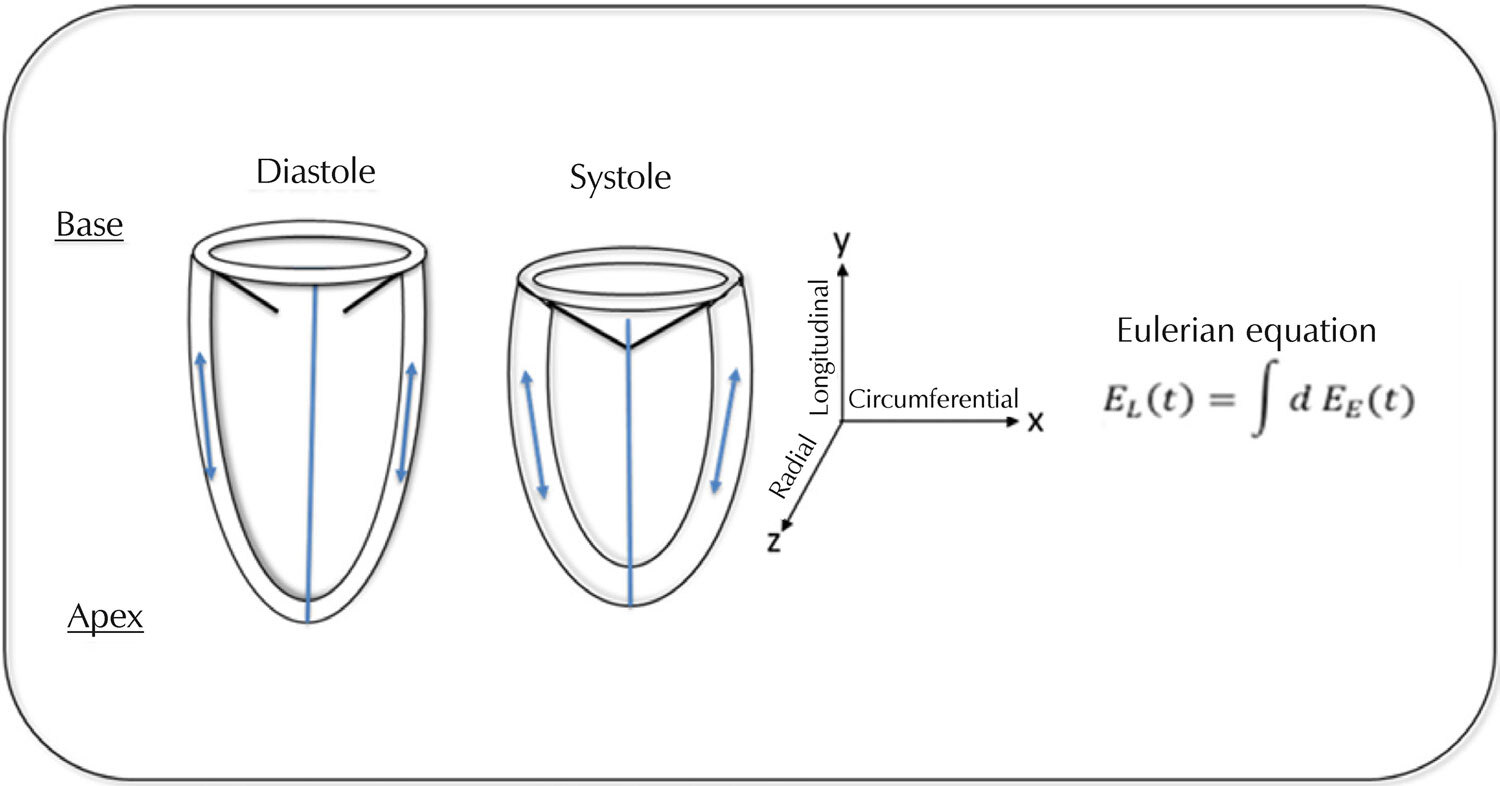
Left ventricular (LV) systolic diastolic function is prognostic in cardiovascular diseases and can be assessed via global longitudinal strain (GLS) on echocardiography and cardiac magnetic resonance (CMR). However, GLS by CMR requires the use of expensive software. Longitudinal linear displacement (LLD) may be a simple and inexpensive alternative to GLS, but the two have not been systematically compared.

Objective

To compare LLD with GLS and LV ejection fraction (LVEF) in aortic valve disease patients and controls.

Methods

We included 44 participants (26 with aortic valve disease, 19 controls). GLS was determined using CVI42 software (Circle Cardiovascular Imaging), while the LLD linear measurements of the distance between the base/apex of the LV included maximum displacement (MD), maximum velocity in early diastole (MVED), atrioventricular junction velocity in diastasis (VDS), and VDS/MVED ratio.

Results

DM and MVED were correlated with GLS (r=0.69 and r=0.65, respectively) and LVEF (r=0.47 and r=0.57, p<0.001 for both). DM and MVED showed areas under the receiver operating characteristic curve (AUC) of 0.88 and 0.91, and at the best cut-off point (-0.13 and 0.66), sensitivities of 72.43% and 57.14% and specificities of 80.65% and 87.10%, respectively, compared to GLS. Using LVEF as a reference, we obtained AUC of 0.70 and 0.82, and at the best cut-off point (-0.11 and 0.61), sensitivities of 75.00% and 50.00% and specificities of 72.97% and 78.38%, respectively.

Conclusion

LLD demonstrated similar performance to that of GLS. MD derived from LLD was the best parameter during systole, while MVED was the best during diastole. Our findings demonstrate the routine, quick, and inexpensive assessment of diastolic function on CMR.

  • Aortic Valve Insufficiency
  • Aortic Valve Stenosis
  • Diastole
  • Magnetic Resonance
  • Myocardial Contraction
Read Full Article
Creative Commons Attribution (CC BY) Creative Commons license
30/06/2022 DOI: 10.47593/2675-312X/20223502eabc304 Views 2
ABCIC
Editorial

What Does the Cardiologist Expect from the Echocardiogram in Amyloidosis?

Aristóteles Comte de Alencar Neto et al. Fabio Fernandes

[…]

  • Diastole
  • Early diagnosis
  • Strain
Read Full Article
Creative Commons Attribution (CC BY) Creative Commons license
14/01/2022 DOI: 10.5935/2318-8219.20200016
Early change of extracellular matrix and diastolic parameters in metabolic syndrome
ABC
Artigo Original

Early change of extracellular matrix and diastolic parameters in metabolic syndrome

Angela B. S. Santos et al. Mauricio Junges Daiane Silvello Adriana Macari … Bruno S. de Araújo Beatriz G. Seligman Bruce B. Duncan Luis Eduardo P. Rohde Nadine Clausell Murilo Foppa

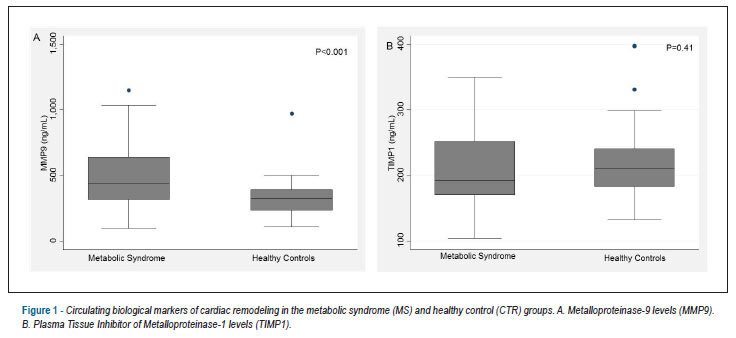
BACKGROUND: Metabolic syndrome (MS) is associated with increased cardiovascular risk. It is not clear whether myocardial changes showed in this syndrome, such as diastolic dysfunction, are due to the systemic effects of the syndrome, or to specific myocardial effects. OBJECTIVES: Compare diastolic function, biomarkers representing extracellular matrix activity (ECM), inflammation and cardiac hemodynamic stress in patients with the MS and healthy controls. METHODS: MS patients (n=76) and healthy controls (n=30) were submitted to a clinical assessment, echocardiographic study, and measurement of plasma levels of metalloproteinase-9 (MMP9), tissue inhibitor of metalloproteinase-1 (TIMP1), ultrasensitive-reactive-C-Protein (us-CRP), insulin resistance (HOMA-IR) and natriuretic peptide (NT-proBNP). RESULTS: MS group showed lower E’ wave (10.1 �± 3.0 cm/s vs 11.9 �± 2.6 cm/s, p = 0.005), increased A wave (63.4 �± 14.1 cm/s vs. 53.1 �± 8.9 cm/s; p < 0.001), E/E' ratio (8.0 �± 2.2 vs. 6.3 �± 1.2; p < 0.001), MMP9 (502.9 �± 237.1 ng/mL vs. 330.4�±162.7 ng/mL; p < 0.001), us-CRP (p = 0.001) and HOMA-IR (p < 0.001), but no difference for TIMP1 or NT-proBNP levels. In a multivariable analysis, only MMP9 was independently associated with MS. CONCLUSION: MS patients showed differences for echocardiographic measures of diastolic function, ECM activity, us-CRP and HOMA-IR when compared to controls. However, only MMP9 was independently associated with the MS. These findings suggest that there are early effects on ECM activity, which cannot be tracked by routine echocardiographic measures of diastolic function.

  • Diastole
  • Extracellular Matrix
  • Metabolic Syndrome
  • Risk Factors
Read Full Article
Creative Commons Attribution (CC BY) Creative Commons license
06/09/2013 DOI: 10.5935/abc.20130182 Views 2
Correlation between diastolic function and maximal exercise capacity on exercise test
ABC
Artigo Original

Correlation between diastolic function and maximal exercise capacity on exercise test

Maria Estefânia Bosco Otto et al. Márcio Mendes Pereira Adenalva Lima de Souza Beck Maurício Milani

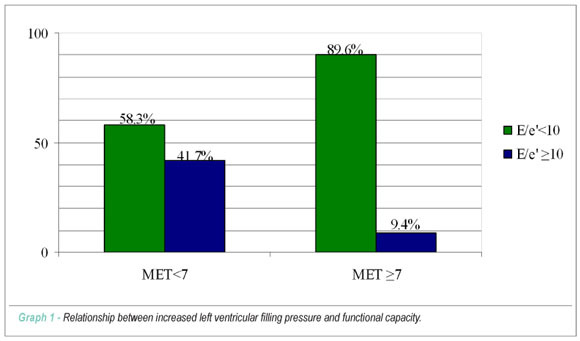
BACKGROUND: Increased pulmonary capillary pressure (PCP) is one of the mechanisms of exercise intolerance. Assessment of the diastolic function by echocardiography (ECHO) enables estimation of PCP. OBJECTIVE: To identify variables that determine the exercise capacity in patients undergoing routine exercise test (ET), conventional ECHO, and tissue Doppler imaging (TD). METHODS: A total of 640 patients undergoing ET, ECHO, and TD were retrospectively studied. Patients with ejection fraction 10 was considered an estimate of increased PCP. Maximal exercise capacity was analyzed by the number of metabolic equivalents (MET). The patients were divided into two groups for analysis: MET7 (n=572). Morise score showed a population at low risk (60%) for coronary artery disease (CAD). RESULTS: The number of patients with E/e’ > 10 was significantly higher in the MET 7 group (41.7% vs 9.4%, p=0.001), and so was the presence of any degree of diastolic dysfunction (76.6% vs 34.1% p=0.001). Using logistic regression analysis, age, female gender and A velocity (late diastole) were the independent variables related to a low exercise capacity (MET < 7). CONCLUSION: Diastolic dysfunction as determined by ECHO, female gender, and age are associated with a lower exercise capacity in a population at low risk for CAD.

  • Diastole
  • Exercise
  • Exercise Test
  • Ventricular Dysfunction
Read Full Article
Creative Commons Attribution (CC BY) Creative Commons license
14/01/2011 DOI: 10.1590/S0066-782X2011005000004
Heart failure with normal ejection fraction
ABC
Review Article

Heart failure with normal ejection fraction

Meliza Goi Roscani et al. Luiz Shiguero Matsubara Beatriz Bojikian Matsubara

Heart failure with normal ejection fraction (HFNEF) is a complex syndrome that has been broadly studied since the last decade. It is caused by diastolic ventricular dysfunction demonstrated by complementary methods, such as hemodynamic study or echocardiogram, in the presence of a normal ejection fraction (EF). It affects primarily elderly individuals with comorbidities, such as systemic arterial hypertension, coronary failure and obesity. The physiopathological mechanisms are complex and multifactorial, involving the myocardial passive stiffness, the ventricular geometry, the pericardial restraint and the interaction between the ventricles. The main objectives of the treatment were to decrease the pulmonary venous congestion and the heart rate and control the comorbidities. There is no strong evidence that the use of specific medications, such as the angiotensin-converting enzyme inhibitors or beta-blockers can influence mortality. The poorer prognostic factors include advanced age, presence of kidney dysfunction, diabetes, functional class III and IV (NYHA) and advanced-stage diastolic dysfunction, with a restrictive pattern of ventricular filling. Another aspect that has been increasingly cited in the literature is the analysis of the role of the systolic function in HFNEF cases. All these aspects are analyzed in detail in the present review.

  • Cardiomegaly
  • compliance
  • Diastole
  • Echocardiography
  • Heart Failure
Read Full Article
Creative Commons Attribution (CC BY) Creative Commons license
22/09/2010 DOI: 10.1590/S0066-782X2010000500019 Views 1
Heart failure with normal ejection fraction: new diagnostic criteria and pathophysiological advances
ABC
Review Article

Heart failure with normal ejection fraction: new diagnostic criteria and pathophysiological advances

Evandro Tinoco Mesquita et al. Antonio José Lagoeiro Jorge

Heart failure (HF) is a highly prevalent complex cardiovascular syndrome, and its clinical presentation is usually associated with ventricular dilatation, decreased contractility and reduced left ventricular ejection fraction (EF). However, in the past two decades studies have demonstrated that many patients with signs and symptoms of HF have normal EF (higher than 50%). The great challenge for doctors lies in the identification of patients presenting heart failure with normal ejection fraction (HFNEF) and this challenge seems to be mainly related to the high complexity of the syndrome and to the lack of a standardized method to confirm or exclude the diagnosis that could be used in the daily clinical practice. Unlike in heart failure with reduced ejection fraction (HFREF) in which one single parameter – EF lower than 50%, is sufficient to confirm the diagnosis of the syndrome, in HFNEF different diastolic indexes have been used to characterize the presence or absence of diastolic dysfunction (DD). The purpose of this review is to show new concepts related to the diastolic function that will help understand the cardiovascular pathophysiology of HFNEF, and to discuss the new guideline of the European Society of Cardiology for the diagnosis and exclusion of HFNEF based on cardiac function indices obtained using tissue Doppler imaging (TDI) and natriuretic peptide determination.

  • Diastole
  • Doppler
  • Echocardiography
  • Heart Failure
  • Stroke Volume
  • Systole
Read Full Article
Creative Commons Attribution (CC BY) Creative Commons license
13/10/2009 DOI: 10.1590/S0066-782X2009000800018

How to cite this article

EndNote RIS

Electronic Document Format (Vancouver)

Rassi DC, Rassi S, Assef JE, Felix AS, Beck ALS, Cruz CBBV, Barberato SH, et al. Misinterpretation of Indeterminate Diastolic Function: Awareness and Insights from a Survey among Brazilian Cardiologists. ABC Imagem Cardiovascular 2025;38(1):e20250013.

Electronic Document Format (ABNT)

Rassi, Daniela do Carmo; Rassi, Salvador; Assef, Jorge Eduardo; Felix, Alex dos Santos; Beck, Adenalva Lima de Souza; Cruz, Cecília Beatriz Bittencourt Viana; Barberato, Silvio Henrique. Misinterpretation of Indeterminate Diastolic Function: Awareness and Insights from a Survey among Brazilian Cardiologists. ABC Imagem Cardiovascular, v. 38, n. 1, e20250013, Mar. 2025.

Electronic Document Format (APA)

Rassi, D. C., Rassi, S., Assef, J. E., Felix, A. S., Beck, A. L. S., Cruz, C. B. B. V., & Barberato, S. H. (2025). Misinterpretation of Indeterminate Diastolic Function: Awareness and Insights from a Survey among Brazilian Cardiologists. ABC Imagem Cardiovascular, 38(1), e20250013.

Electronic Document Format (ISO)

Rassi, Daniela do Carmo and Rassi, Salvador and Assef, Jorge Eduardo and Felix, Alex dos Santos and Beck, Adenalva Lima de Souza and Cruz, Cecília Beatriz Bittencourt Viana and Barberato, Silvio Henrique. Misinterpretation of Indeterminate Diastolic Function: Awareness and Insights from a Survey among Brazilian Cardiologists. ABC Imagem Cardiovascular [online]. 2025, vol. 38, n. 1, [cited 2026-10-14], e20250013. Available from: <https://journals.cardiol.br/en/article/misinterpretation-of-indeterminate-diastolic-function-awareness-and-insights-from-a-survey-among-brazilian-cardiologists/>. ISSN 2318-8219

EndNote RIS

Electronic Document Format (Vancouver)

Calvilho Júnior AA, Braga JMS, Assef JE, Vilela AA. My Approach to Assess Diastolic Function in the Presence of Atrial Fibrillation?. ABC Imagem Cardiovascular 2022;35(4):eabc344.

Electronic Document Format (ABNT)

Calvilho Júnior, Antonio Amador; Braga, João Moron Saes; Assef, Jorge Eduardo; Vilela, Andrea de Andrade. My Approach to Assess Diastolic Function in the Presence of Atrial Fibrillation?. ABC Imagem Cardiovascular, v. 35, n. 4, eabc344, Nov. 2022.

Electronic Document Format (APA)

Calvilho Júnior, A. A., Braga, J. M. S., Assef, J. E., & Vilela, A. A. (2022). My Approach to Assess Diastolic Function in the Presence of Atrial Fibrillation?. ABC Imagem Cardiovascular, 35(4), eabc344.

Electronic Document Format (ISO)

Calvilho Júnior, Antonio Amador and Braga, João Moron Saes and Assef, Jorge Eduardo and Vilela, Andrea de Andrade. My Approach to Assess Diastolic Function in the Presence of Atrial Fibrillation?. ABC Imagem Cardiovascular [online]. 2022, vol. 35, n. 4, [cited 2026-10-14], eabc344. Available from: <https://journals.cardiol.br/en/article/my-approach-to-assess-diastolic-function-in-the-presence-of-atrial-fibrillation/>. ISSN 2318-8219

EndNote RIS

Electronic Document Format (Vancouver)

Fonseca RA, Ribeiro SM, Azevedo Filho CF, Sampaio R, Tarasoutchi F, Rochitte CE. Left Ventricular Longitudinal Linear Displacement Versus Global Longitudinal Strain on Cardiovascular Magnetic Resonance. ABC Imagem Cardiovascular 2022;35(2):eabc304.

Electronic Document Format (ABNT)

Fonseca, Rafael Almeida; Ribeiro, Sergio Marrone; Azevedo Filho, Clerio Francisco de; Sampaio, Roney; Tarasoutchi, Flávio; Rochitte, Carlos Eduardo. Left Ventricular Longitudinal Linear Displacement Versus Global Longitudinal Strain on Cardiovascular Magnetic Resonance. ABC Imagem Cardiovascular, v. 35, n. 2, eabc304, Jun. 2022.

Electronic Document Format (APA)

Fonseca, R. A., Ribeiro, S. M., Azevedo Filho, C. F. , Sampaio, R., Tarasoutchi, F., & Rochitte, C. E. (2022). Left Ventricular Longitudinal Linear Displacement Versus Global Longitudinal Strain on Cardiovascular Magnetic Resonance. ABC Imagem Cardiovascular, 35(2), eabc304.

Electronic Document Format (ISO)

Fonseca, Rafael Almeida and Ribeiro, Sergio Marrone and Azevedo Filho, Clerio Francisco de and Sampaio, Roney and Tarasoutchi, Flávio and Rochitte, Carlos Eduardo. Left Ventricular Longitudinal Linear Displacement Versus Global Longitudinal Strain on Cardiovascular Magnetic Resonance. ABC Imagem Cardiovascular [online]. 2022, vol. 35, n. 2, [cited 2026-10-14], eabc304. Available from: <https://journals.cardiol.br/en/article/left-ventricular-longitudinal-linear-displacement-versus-global-longitudinal-strain-on-cardiovascular-magnetic-resonance/>. ISSN 2318-8219

EndNote RIS

Electronic Document Format (Vancouver)

Alencar Neto AC, Fernandes F. What Does the Cardiologist Expect from the Echocardiogram in Amyloidosis?. Arquivos Brasileiros de Cardiologia Imagem cardiovascular 2022;33(2):1-4.

Electronic Document Format (ABNT)

Alencar Neto, Aristóteles Comte de; Fernandes, Fabio. What Does the Cardiologist Expect from the Echocardiogram in Amyloidosis?. Arquivos Brasileiros de Cardiologia Imagem cardiovascular, v. 33, n. 2, p. 1-4, Jan. 2022.

Electronic Document Format (APA)

Alencar Neto, A. C. , & Fernandes, F. (2022). What Does the Cardiologist Expect from the Echocardiogram in Amyloidosis?. Arquivos Brasileiros de Cardiologia Imagem cardiovascular, 33(2), 1-4.

Electronic Document Format (ISO)

Alencar Neto, Aristóteles Comte de and Fernandes, Fabio. What Does the Cardiologist Expect from the Echocardiogram in Amyloidosis?. Arquivos Brasileiros de Cardiologia Imagem cardiovascular [online]. 2022, vol. 33, n. 2, [cited 2026-10-14], pp. 1-4. Available from: <https://journals.cardiol.br/en/article/what-does-the-cardiologist-expect-from-the-echocardiogram-in-amyloidosis/>. ISSN 2318-8219

EndNote RIS

Electronic Document Format (Vancouver)

Santos ABS, Junges M, Silvello D, Macari A, Araújo BS, Seligman BG, Duncan BB, et al. Early change of extracellular matrix and diastolic parameters in metabolic syndrome. Arquivos Brasileiros de Cardiologia 2013;101(4):311-6.

Electronic Document Format (ABNT)

Santos, Angela B. S.; Junges, Mauricio; Silvello, Daiane; Macari, Adriana; Araújo, Bruno S. de; Seligman, Beatriz G.; Duncan, Bruce B.; Rohde, Luis Eduardo P.; Clausell, Nadine; Foppa, Murilo. Early change of extracellular matrix and diastolic parameters in metabolic syndrome. Arquivos Brasileiros de Cardiologia, v. 101, n. 4, p. 311-316, Sep. 2013.

Electronic Document Format (APA)

Santos, A. B. S., Junges, M., Silvello, D., Macari, A., Araújo, B. S. , Seligman, B. G., Duncan, B. B., Rohde, L. E. P., Clausell, N., & Foppa, M. (2013). Early change of extracellular matrix and diastolic parameters in metabolic syndrome. Arquivos Brasileiros de Cardiologia, 101(4), 311-316.

Electronic Document Format (ISO)

Santos, Angela B. S. and Junges, Mauricio and Silvello, Daiane and Macari, Adriana and Araújo, Bruno S. de and Seligman, Beatriz G. and Duncan, Bruce B. and Rohde, Luis Eduardo P. and Clausell, Nadine and Foppa, Murilo. Early change of extracellular matrix and diastolic parameters in metabolic syndrome. Arquivos Brasileiros de Cardiologia [online]. 2013, vol. 101, n. 4, [cited 2026-10-14], pp. 311-316. Available from: <https://journals.cardiol.br/en/article/early-change-of-extracellular-matrix-and-diastolic-parameters-in-metabolic-syndrome/>. ISSN 0066-782X

EndNote RIS

Electronic Document Format (Vancouver)

Otto MEB, Pereira MM, Beck ALS, Milani M. Correlation between diastolic function and maximal exercise capacity on exercise test. Arquivos Brasileiros de Cardiologia 2011;96(2):107-13.

Electronic Document Format (ABNT)

Otto, Maria Estefânia Bosco; Pereira, Márcio Mendes; Beck, Adenalva Lima de Souza; Milani, Maurício. Correlation between diastolic function and maximal exercise capacity on exercise test. Arquivos Brasileiros de Cardiologia, v. 96, n. 2, p. 107-113, Jan. 2011.

Electronic Document Format (APA)

Otto, M. E. B., Pereira, M. M., Beck, A. L. S., & Milani, M. (2011). Correlation between diastolic function and maximal exercise capacity on exercise test. Arquivos Brasileiros de Cardiologia, 96(2), 107-113.

Electronic Document Format (ISO)

Otto, Maria Estefânia Bosco and Pereira, Márcio Mendes and Beck, Adenalva Lima de Souza and Milani, Maurício. Correlation between diastolic function and maximal exercise capacity on exercise test. Arquivos Brasileiros de Cardiologia [online]. 2011, vol. 96, n. 2, [cited 2026-10-14], pp. 107-113. Available from: <https://journals.cardiol.br/en/article/correlation-between-diastolic-function-and-maximal-exercise-capacity-on-exercise-test/>. ISSN 0066-782X

EndNote RIS

Electronic Document Format (Vancouver)

Roscani MG, Matsubara LS, Matsubara BB. Heart failure with normal ejection fraction. Arquivos Brasileiros de Cardiologia 2010;94(5):694-702.

Electronic Document Format (ABNT)

Roscani, Meliza Goi; Matsubara, Luiz Shiguero; Matsubara, Beatriz Bojikian. Heart failure with normal ejection fraction. Arquivos Brasileiros de Cardiologia, v. 94, n. 5, p. 694-702, Sep. 2010.

Electronic Document Format (APA)

Roscani, M. G., Matsubara, L. S., & Matsubara, B. B. (2010). Heart failure with normal ejection fraction. Arquivos Brasileiros de Cardiologia, 94(5), 694-702.

Electronic Document Format (ISO)

Roscani, Meliza Goi and Matsubara, Luiz Shiguero and Matsubara, Beatriz Bojikian. Heart failure with normal ejection fraction. Arquivos Brasileiros de Cardiologia [online]. 2010, vol. 94, n. 5, [cited 2026-10-14], pp. 694-702. Available from: <https://journals.cardiol.br/en/article/heart-failure-with-normal-ejection-fraction/>. ISSN 0066-782X

EndNote RIS

Electronic Document Format (Vancouver)

Mesquita ET, Jorge AJL. Heart failure with normal ejection fraction: new diagnostic criteria and pathophysiological advances. Arquivos Brasileiros de Cardiologia 2009;93(2):180-7.

Electronic Document Format (ABNT)

Mesquita, Evandro Tinoco; Jorge, Antonio José Lagoeiro. Heart failure with normal ejection fraction: new diagnostic criteria and pathophysiological advances. Arquivos Brasileiros de Cardiologia, v. 93, n. 2, p. 180-187, Oct. 2009.

Electronic Document Format (APA)

Mesquita, E. T., & Jorge, A. J. L. (2009). Heart failure with normal ejection fraction: new diagnostic criteria and pathophysiological advances. Arquivos Brasileiros de Cardiologia, 93(2), 180-187.

Electronic Document Format (ISO)

Mesquita, Evandro Tinoco and Jorge, Antonio José Lagoeiro. Heart failure with normal ejection fraction: new diagnostic criteria and pathophysiological advances. Arquivos Brasileiros de Cardiologia [online]. 2009, vol. 93, n. 2, [cited 2026-10-14], pp. 180-187. Available from: <https://journals.cardiol.br/en/article/heart-failure-with-normal-ejection-fraction-new-diagnostic-criteria-and-pathophysiological-advances/>. ISSN 0066-782X

  • About ABC Family
  • Internal Regulation
  • Editorial Board
  • Brazilian Society of Cardiology (SBC)

Issues

SBC Guidelines

  • Videos
  • Podcasts
  • News