Comparison of Clinical and Epidemiological Profiles Between Men and Women with ST-Elevation Myocardial Infarction in Salvador from 2021 to 2023
Abstract
Background:
ST-segment elevation myocardial infarction (STEMI) remains one of the leading causes of morbidity and mortality worldwide. Although studies indicate sex disparities in risk factors, symptomatology, and outcomes, there is a lack of local research validating these differences.
Objectives:
To compare the clinical and epidemiological profiles, treatment times, and in-hospital outcomes of men and women diagnosed with STEMI at a private hospital in Salvador, Brazil from 2021 to 2023.
Methods:
This retrospective observational study analyzed 75 patients, of whom 30.7% were women. Variables assessed included age, cardiovascular risk factors, symptom-to-door time, door-to-ECG time, door-to-reperfusion time, pharmacological therapy, and in-hospital outcomes.
Results:
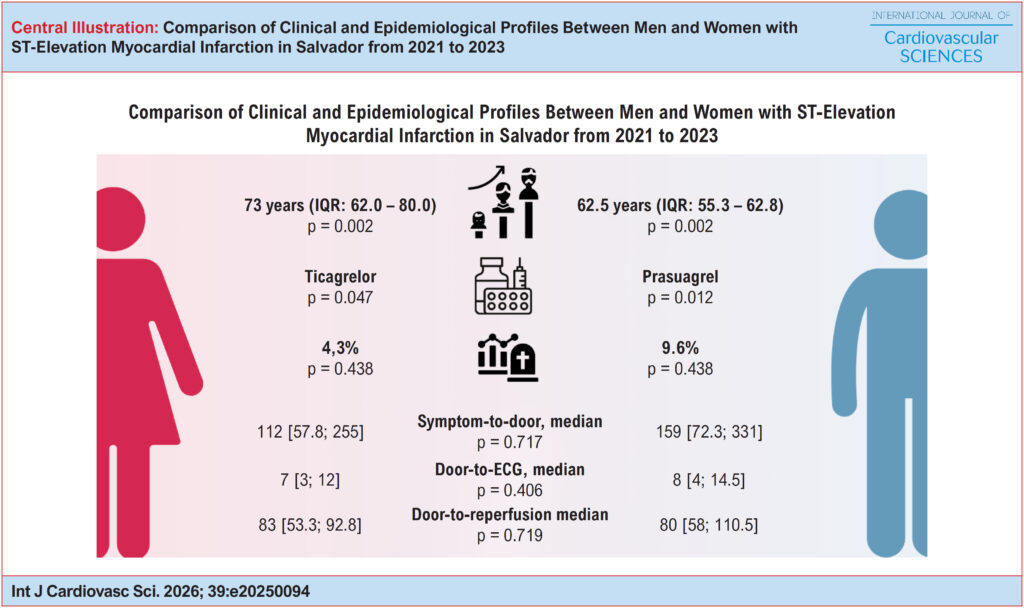
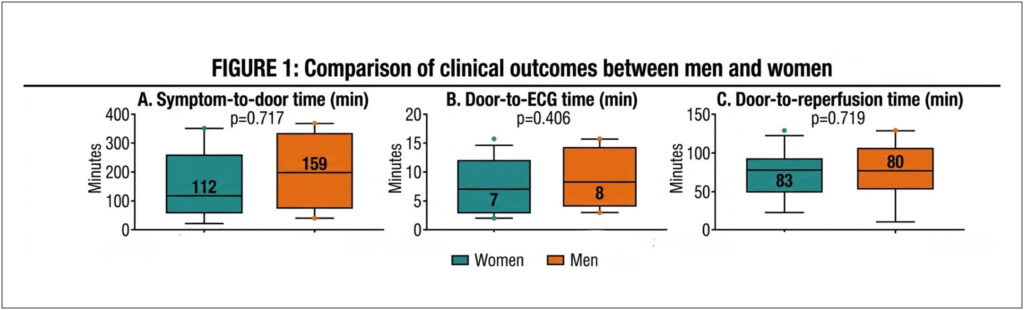
Women presented STEMI at a significantly older age compared to men (median age: 73.0 versus 62.5 years; p = 0.002). There were no statistically significant differences in treatment times (symptom-to-door, door-to-ECG, and door-to-reperfusion) between sexes. Women were more frequently treated with high-potency antiplatelet agents (prasugrel and ticagrelor) than men (p = 0.047 and p = 0.012, respectively). No differences in complications or mortality rates were observed between the groups.
Conclusions:
Despite being older and using more potent antiplatelet therapy, women did not experience significant differences in treatment times or complications. The limited sample size may have affected the ability to detect more significant differences, underscoring the need for larger studies.
Images
Image gallery fullscreen viewer
Comments are moderated by the editorial team before publication. Discussions should be evidence-based and use scientific language. Conflicts of interest should be declared.