Relationship between the Fibrinogen/Albumin Ratio and Microvascular Perfusion in Patients Undergoing Primary Percutaneous Coronary Intervention for ST-Elevated Myocardial Infarction: A Prospective Study
Abstract
Background
Correct TIMI frame count (CTFC), myocardial blush grade (MBG), and ST-segment resolution (STR) are parameters used to evaluate reperfusion at the microvascular level in patients that have undergone primary percutaneous coronary intervention (pPCI). Fibrinogen-to-albumin ratio (FAR) has been associated with thrombotic events in patients with ST-elevation myocardial infarction (STEMI) and chronic venous insufficiency.
Objectives
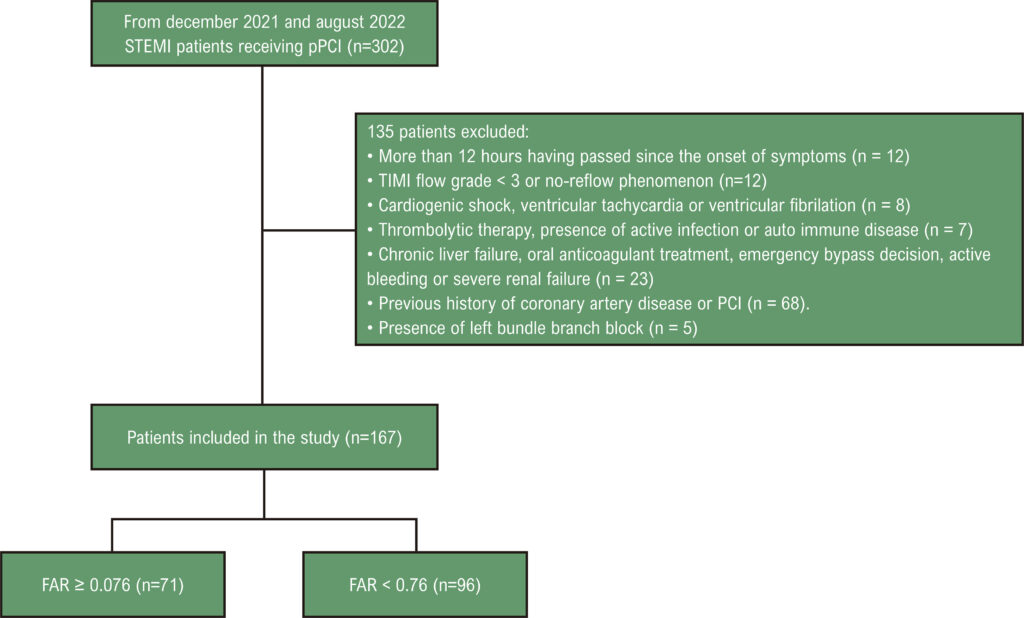
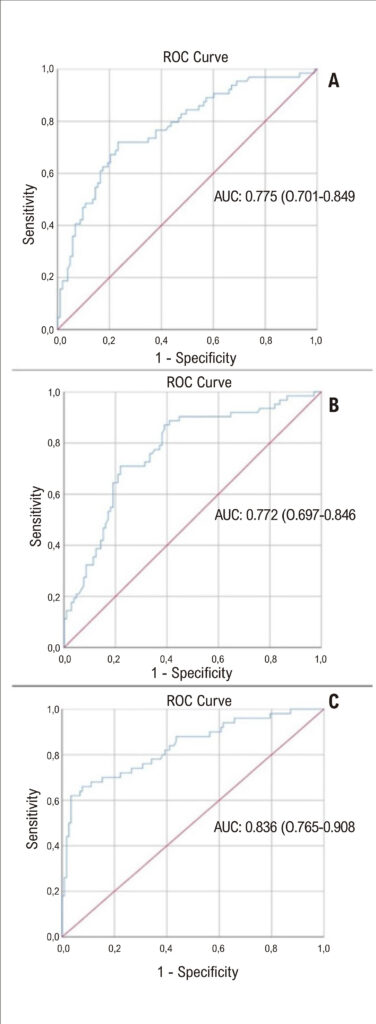
To investigate the relationship of FAR with CTFC, MBG, and STR. Methods: The study included 167 consecutive patients who underwent successful pPCI for STEMI and achieved TIMI-3 flow. The cases were divided into two groups, high (>0.0765) and low FAR (≤0.0765), according to the cut-off value of this parameter in the receiver operator characteristic analysis (ROC). STR, CTFC, and MBG were used to evaluate myocardial reperfusion. P values<0.05 were considered statistically significant.
Results
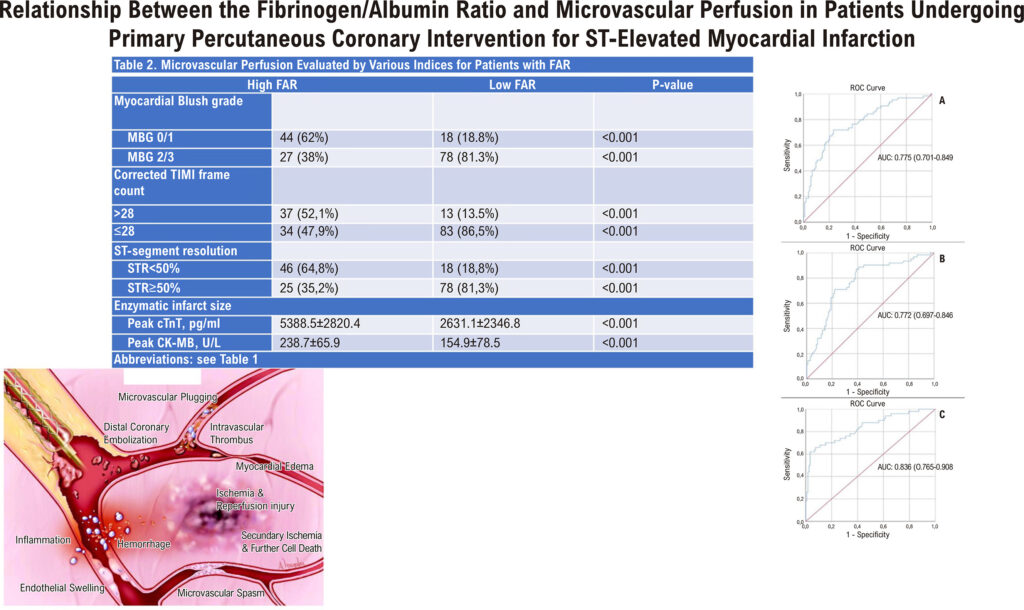
CTFC value, SYNTAX score, neutrophil/lymphocyte ratio, low-density lipoprotein, glucose, and peak cTnT were significantly higher, whereas STR, MBG, and LVEF were lower in the high FAR group. Spearman’s correlation analysis revealed a significant relationship between the FAR and STR (r=-0.666, p<0.001), MBG (-0.523, p28, and STR28 with a sensitivity of 76 % and a specificity of 65.8 %.
Conclusions
FAR is an important independent predictor of microvascular perfusion in patients undergoing pPCI for STEMI.
Images
Image gallery fullscreen viewer
Comments are moderated by the editorial team before publication. Discussions should be evidence-based and use scientific language. Conflicts of interest should be declared.