Mustafa Kaplangoray et al. Kenan Toprak Omer Faruk Cicek Edhem Deveci
Abstract
Background
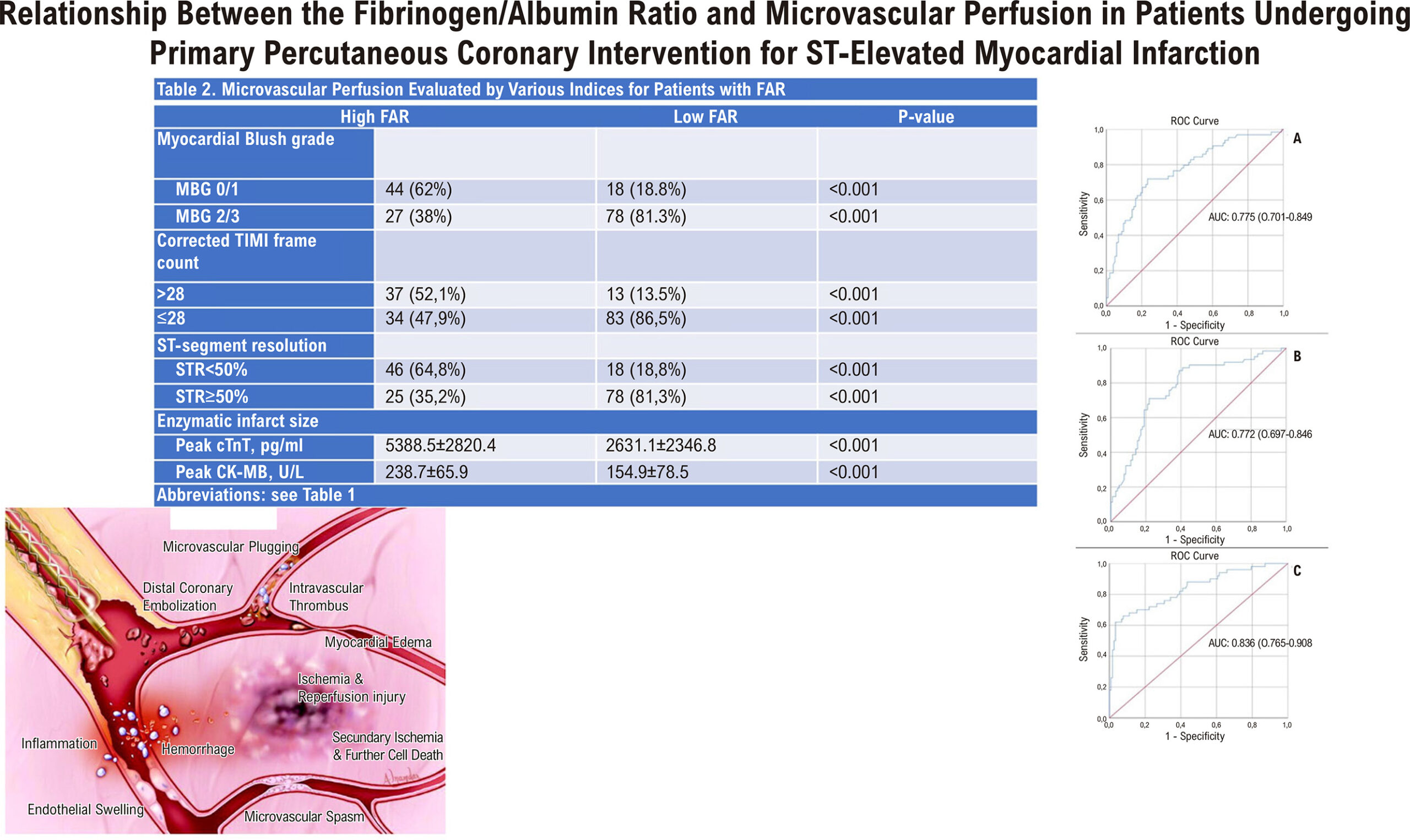
Correct TIMI frame count (CTFC), myocardial blush grade (MBG), and ST-segment resolution (STR) are parameters used to evaluate reperfusion at the microvascular level in patients that have undergone primary percutaneous coronary intervention (pPCI). Fibrinogen-to-albumin ratio (FAR) has been associated with thrombotic events in patients with ST-elevation myocardial infarction (STEMI) and chronic venous insufficiency.
Objectives
To investigate the relationship of FAR with CTFC, MBG, and STR. Methods: The study included 167 consecutive patients who underwent successful pPCI for STEMI and achieved TIMI-3 flow. The cases were divided into two groups, high (>0.0765) and low FAR (≤0.0765), according to the cut-off value of this parameter in the receiver operator characteristic analysis (ROC). STR, CTFC, and MBG were used to evaluate myocardial reperfusion. P values<0.05 were considered statistically significant.
Results
CTFC value, SYNTAX score, neutrophil/lymphocyte ratio, low-density lipoprotein, glucose, and peak cTnT were significantly higher, whereas STR, MBG, and LVEF were lower in the high FAR group. Spearman’s correlation analysis revealed a significant relationship between the FAR and STR (r=-0.666, p<0.001), MBG (-0.523, p28, and STR28 with a sensitivity of 76 % and a specificity of 65.8 %.
Conclusions
FAR is an important independent predictor of microvascular perfusion in patients undergoing pPCI for STEMI.