ABC Family Arquivos Brasileiros de Cardiologia International Journal of Cardiovascular Sciences ABC Heart Failure & Cardiomyopathy ABC Imagem Cardiovascular
Português English
ABC Family
Português English
  • About
    • About ABC Family
    • Internal Regulation
    • Editorial Board
    • Brazilian Society of Cardiology (SBC)
  • Issues
  • SBC Guidelines
  • Content
    • Videos
    • Podcasts
    • News
  • About
    • About ABC Family
    • Internal Regulation
    • Editorial Board
    • Brazilian Society of Cardiology (SBC)
  • Issues
  • SBC Guidelines
  • Content
    • Videos
    • Podcasts
    • News

ABC Family

  • ABC Family
  • Arquivos Brasileiros de Cardiologia
  • International Journal of Cardiovascular Sciences
  • ABC Heart Failure & Cardiomyopathy
  • ABC Imagem Cardiovascular
Search in

No content found.

Journals
Ordering
Article types
Others

  1. Home
  2. Keyword: Neutrophils
Association between the Neutrophil-to-HDL-Cholesterol Ratio and Myocardial Infarction: A Cross-Sectional Study
ABC
Original Article

Association between the Neutrophil-to-HDL-Cholesterol Ratio and Myocardial Infarction: A Cross-Sectional Study

Youpeng Wang et al. Qian Yin Ying Lei Juncang Duan

Abstract

Background

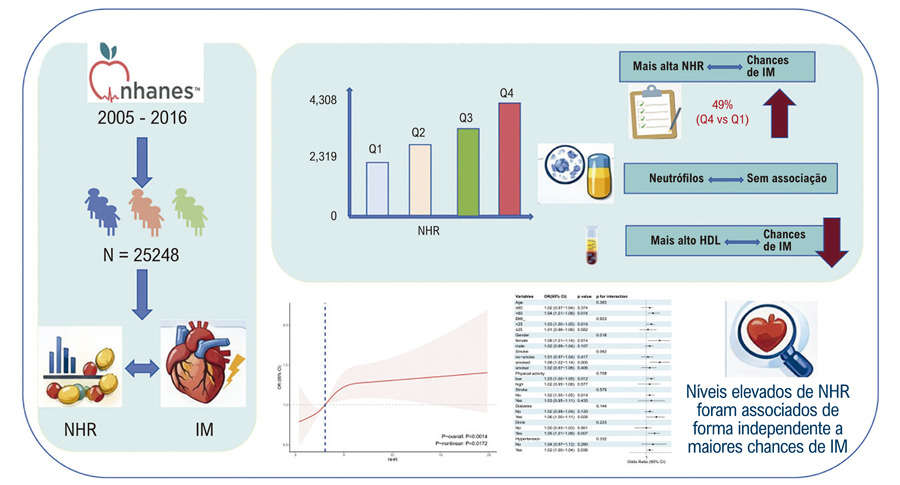
Myocardial infarction (MI) remains a major global health burden. Inflammation and lipid metabolism’s roles in MI pathogenesis have drawn more attention. The neutrophil-to-high-density lipoprotein cholesterol ratio (NHR) is a new composite biomarker integrating inflammation and lipid metabolism markers, but its association with MI is unclear.

Objectives

We investigated the association between NHR and MI.

Methods

We analyzed data from 25,248 eligible participants from NHANES between 2005 and 2016. A history of MI was determined using questionnaire data, and NHR values were derived from laboratory measurements. Logistic regression models were used to assess the associations of NHR, neutrophil count, and high-density lipoprotein cholesterol (HDL-C) with the odds of MI. Restricted cubic spline (RCS) analysis was used to evaluate potential nonlinear associations. Subgroup analyses and interaction tests were performed to explore potential heterogeneity across demographic and clinical subgroups. Sensitivity analyses were performed to evaluate the robustness of the primary findings. A two-sided P value of <0.05 was considered statistically significant.

Results

Higher NHR was independently associated with higher odds of MI. In the fully adjusted model, participants in the highest NHR quartile had 49% higher odds of MI than those in the lowest quartile. Neutrophil count alone was not significantly associated with MI, whereas HDL-C levels were inversely associated with MI. RCS suggested a modest nonlinear association between NHR and MI. Although a data-driven inflection point was identified at 6.93, this result should be interpreted as exploratory and descriptive rather than a clinically meaningful threshold. Subgroup analyses suggested a stronger association in women, and the interaction by sex was statistically significant. Sensitivity analyses confirmed the robustness of these findings.

Conclusion

In this large, representative sample, elevated NHR was independently associated with higher odds of MI, suggesting that NHR may serve as a potentially informative epidemiological marker for MI. Prospective studies are needed to determine causality and elucidate the underlying mechanisms.
  • HDL, Cholesterol
  • Myocardial Infarction
  • Neutrophils
  • Nutrition Surveys
Read Full Article
Creative Commons Attribution (CC BY) Creative Commons license
28/08/2026 DOI: 10.36660/abc.20250718i Views 1
Figure 1
ABCHF
Original Article

Evolution of Hematological Parameters in Patients with Vasoplegia Following Coronary Artery Bypass Graft Surgery

Nicolas Ramos et al. Marcos T. Faé Cristina B. Hebeda Franciani R. da Rocha … Caroline O. F. Bacca Marcelo V. Gambetta

Abstract

Background:

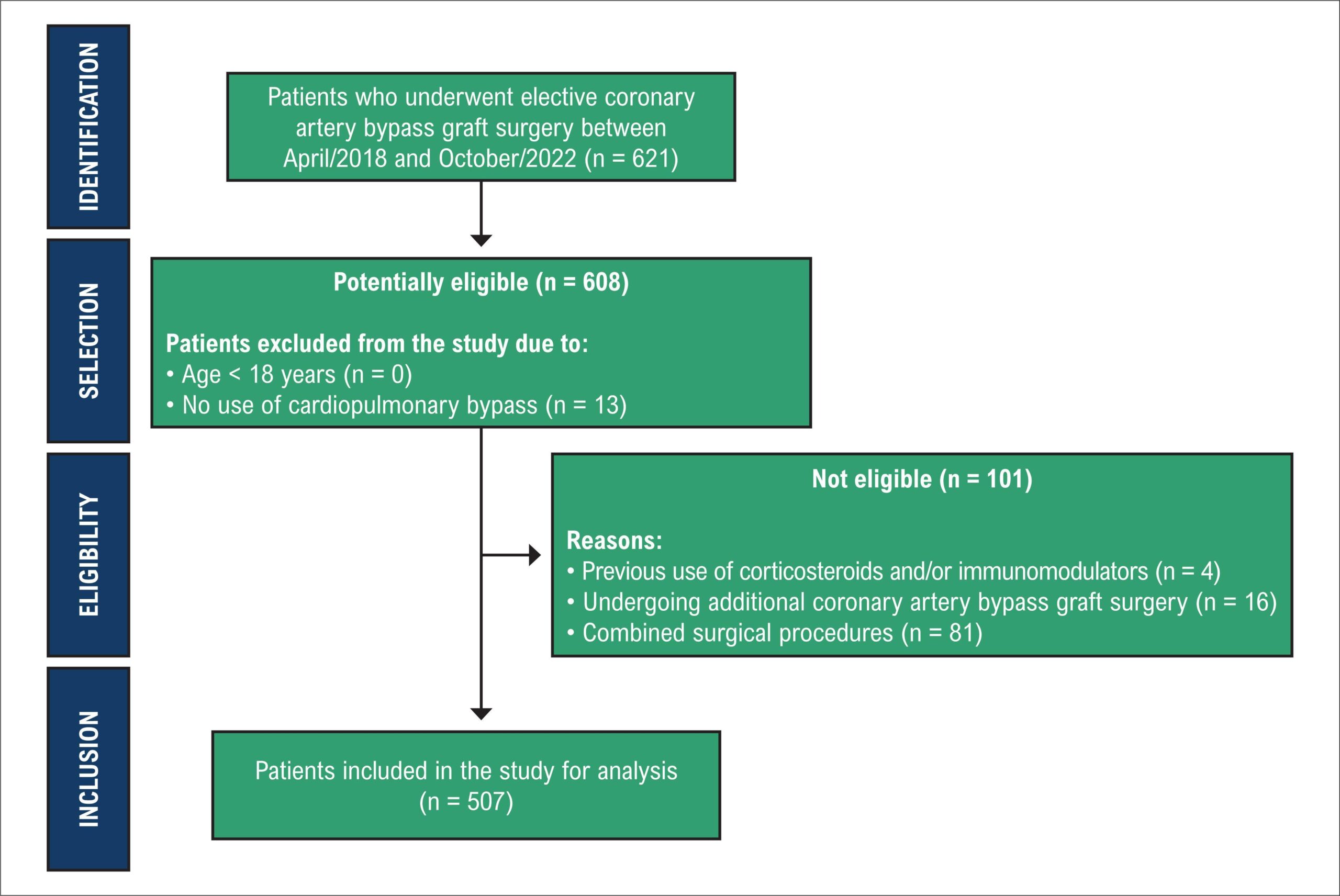
The utilization of extracorporeal circulation during a coronary artery bypass graft (CABG) surgery induces the secretion of inflammatory mediators associated with the onset of vasoplegic syndrome (VS). Blood cells contribute to the amplification of enzymatic mechanisms related to the development of VS, which is responsible for high mortality rates.

Objectives:

To investigate possible changes in hematological ratios to evaluate the evolution of VS in patients undergoing CABG.

Methods:

Analytical observational study of the retrospective cohort type, utilizing data collected from medical records in a reference cardiology hospital.

Results:

VS was associated with decreased monocyte rates (p = 0.02) 24 hours before the CABG, as well as elevated lymphocyte/monocyte ratio (LMR) (p = 0.01) and neutrophil/monocyte ratio (NMR) (p = 0.01) on the same period. Twenty-four hours after the procedure, increased neutrophil counts (p = 0.05) and platelet/lymphocyte ratio (PLR) (p = 0.03), as well as neutrophil/lymphocyte ratio (NLR) (p = 0.04), were associated with VS. Between 24 and 48 hours after CABG, neutrophil ratios (p = 0.01), PLR (p = 0.02), MLR (p = 0.04), and systemic inflammation response index (SIRI) (p = 0.02) were lower in patients who developed vasoplegia.

Conclusion:

A decreased monocyte count 24 hours before CABG was associated with the development of VS, as well as an elevated neutrophil count 24 hours after the procedure. Higher LMR and NMR 24 hours before the surgery, as well as PLR and MLR after the cardiac surgery were also associated with VS. Our data show different hematological changes at different times after CABG and highlight that new studies are essential to allow the use of hematological ratios in the monitoring of patients undergoing CABG.

  • Inflammation
  • Leukocytes
  • Monocytes
  • Neutrophils
  • Vasoplegia
Read Full Article
Creative Commons Attribution (CC BY) Creative Commons license
31/12/2023 DOI: 10.36660/abchf.20230057 Views 1
ABC
Letter to the Editor

Analysis of the Neutrophil-Lymphocyte Ratio as a Marker of Atherosclerosis of the Abdominal Aorta

João Victor Domiciano Martins et al. Rodrigo Mendes Johnnatas Mikael Lopes Pedro Pereira Tenório

Dear Editor,

We read with great interest the article: Neutrophil-Lymphocyte Ratio and Abdominal Aortic Atherosclerosis among Asymptomatic Individuals, which evaluated whether the neutrophil-lymphocyte ratio (NRL) could be associated with abdominal aortic atherosclerosis (AtAA). A positive association between the increase in NLR and AtAA was demonstrated when comparing carriers and non-carriers of the disease. However, when adjusting the statistical analysis for age and risk factors, this association did not remain true.

[…]

  • Aorta
  • Atherosclerosis
  • Biomarkers
  • Lymphocytes
  • Neutrophils
  • Risk Factors
Read Full Article
Creative Commons Attribution (CC BY) Creative Commons license
25/11/2022 DOI: 10.36660/abc.20220145
ABC
Original Article

Neutrophil-To-Lymphocyte Ratio and Abdominal Aortic Atherosclerosis among Asymptomatic Individuals

Bárbara Said Marin et al. Fernando Cesena Antonio Gabriele Laurinavicius Raul D. Santos Marcio Sommer Bittencourt

Abstract

Background

Neutrophil-to-lymphocyte ratio (NLR) has been proposed as an inflammatory marker that might be associated with coronary atherosclerosis, although most of the current data is restricted to the acute setting. Additionally, the association of NLR with extracoronary atherosclerosis and stable disease remains unclear.

Objective

To analyze the association between NLR and abdominal aortic atherosclerosis (AAAt).

Methods

We included asymptomatic individuals who underwent a health screening program. AAAt was measured by ultrasound. Absolute leukocyte and lymphocyte counts were used to calculate the NLR. The level of significance for statistical analysis was 0.05.

Results

Among 36,985 individuals (age: 42±10 years, 72% male), AAAt was identified in 7%. Those with AAAt were older and more likely to be male and diabetic. Presence of AAAt was associated with increased NLR (odds ratio [OR] 1.17; 95% confidence interval [CI] 1.13-1.21). However, this association was no longer significant when the analysis was adjusted for risk factors (OR 1.02; 95% CI 0.97-1.06), mostly due to the inclusion of age in the model. When neutrophils and lymphocytes were analyzed separately, the negative association between lymphocytes and AAAt was inverted once age was accounted for, suggesting a strong confounding effect of age on the relationship between lymphocytes and atherosclerosis. Finally, the association of neutrophils and AAAt lost significance after an additional adjustment for traditional risk factors, but not age alone.

Conclusion

Although the NLR was associated with AAAt, this was largely due to the confounding effect of age. Overall, the results suggest a limited role of leukocyte measurements as biomarkers of AAAt.

  • Atherosclerosis
  • Biomarkers
  • Lymphocytes
  • Neutrophils
  • Risk Factors
Read Full Article
Creative Commons Attribution (CC BY) Creative Commons license
07/02/2022 DOI: 10.36660/abc.20201163 Views 1
Figure 1
ABC
Case Report

Myocardial Involvement in Sweet Syndrome: A Rare Finding in a Rare Condition

Luís Graça-Santos et al. Katarina Kieselova Fernando Montenegro-Sá Joana Guardado João Morais

Introduction

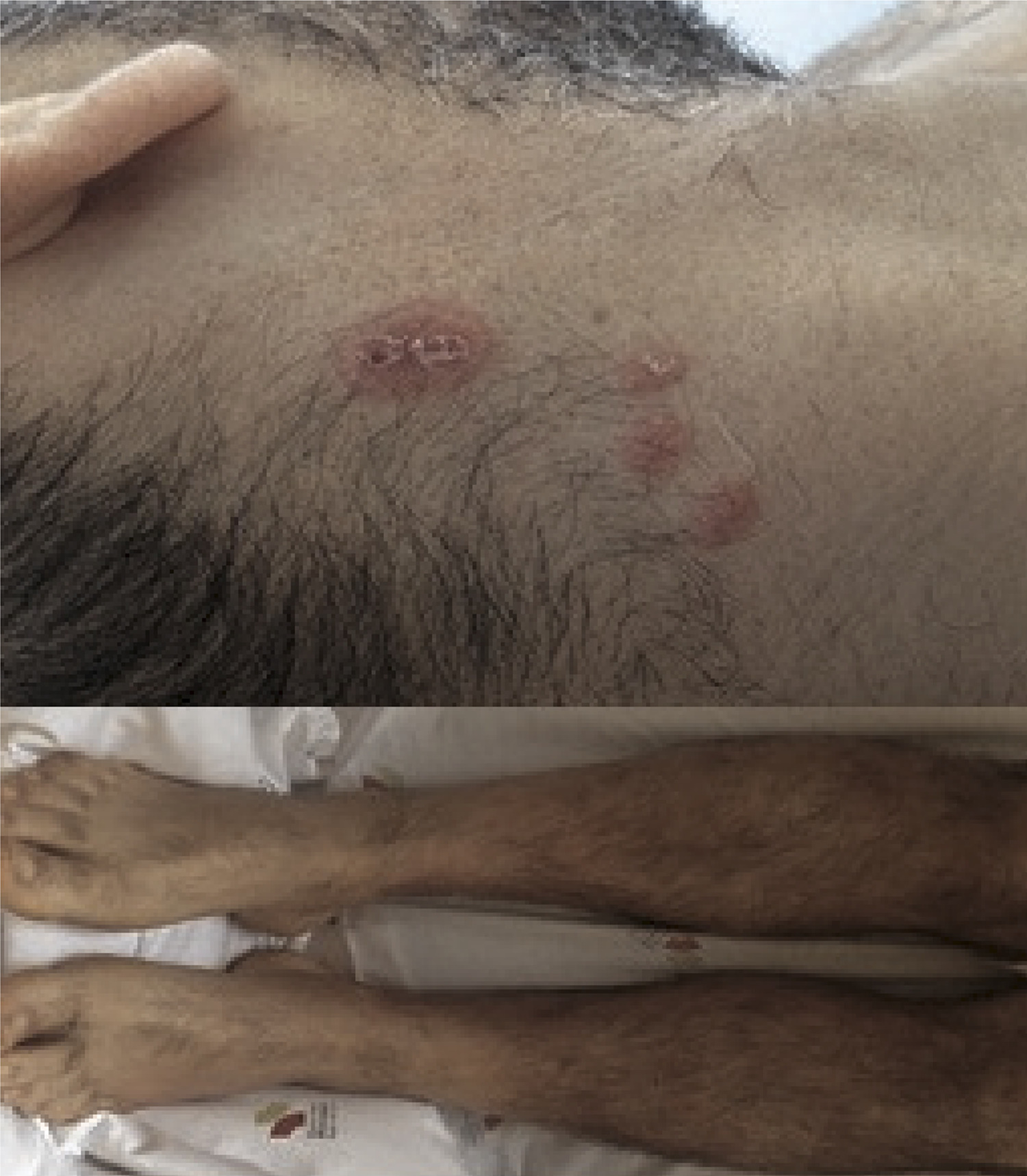
Sweet Syndrome is an acute febrile neutrophilic dermatosis characterized by an association of fever, neutrophilia, tender erythematous skin lesions (papules, nodules, and plaques), as well as pathologic findings consisting predominantly of mature neutrophils typically located in the upper dermis. It is a rare condition with a worldwide distribution which can present as one of three main clinical types: idiopathic, malignancy-associated, or drug-induced. – Extracutaneous manifestations may occur but cardiovascular involvement is extremely rare. ,

[…]

  • Adrenal Cortex Hormones/therapeutic use
  • Erythema Multiforme
  • Myocarditis
  • Neutrophils
  • Sweet Syndrome/physiopathology
Read Full Article
Creative Commons Attribution (CC BY) Creative Commons license
14/09/2020 DOI: 10.36660/abc.20190249
Figure 1
IJCS
Review Article

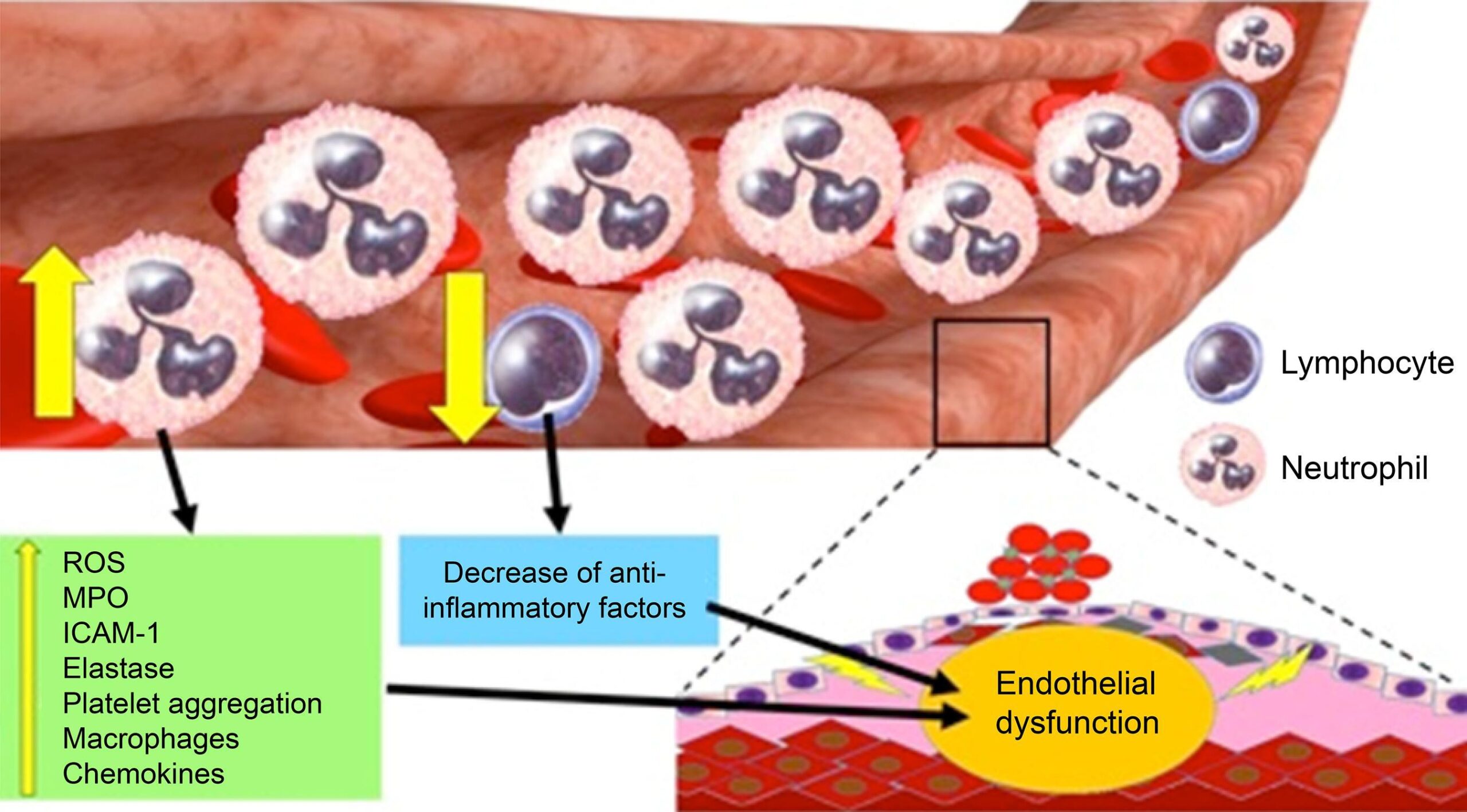
Neutrophil-Lymphocyte Ratio in Cardiovascular Disease Risk Assessment

Heitor Oliveira Santos et al. Luiz Fernando Moreira Izidoro

Abstract

The development of cardiovascular diseases with atherosclerotic origin is associated with a severe inflammatory process. Neutrophils and lymphocytes are cells sensitive to this type of disorder and their ratio, known as the NLR (neutrophil/lymphocyte ratio), has shown to be useful in clinical practice. The aim of this study was to assess the role of NLR in cardiovascular disease risk assessment. We carried out a literature review in the PubMed databases searching for articles published between 2001 to 2017 and found that NLR is in fact a useful marker for cardiovascular disease. Using NLR in patients at cardiovascular risk would be useful to delineate the prognosis of patients with this disease pattern.

  • Atherosclerosis / physiopathology
  • Biomarkers
  • Cardiovascular Diseases/physiopathology
  • Inflammation
  • Leukocyte Count
  • Neutrophils
Read Full Article
Creative Commons Attribution (CC BY) Creative Commons license
02/07/2018 DOI: 10.5935/2359-4802.20180038 Views 1
ABC
Letter to the Editor

Neutrophil-to-Lymphocyte Ratio, Platelet-to-Lymphocyte Ratio and Heart Failure

Viroj Wiwanitkit

D

e

[…]

  • Heart Failure
  • Lymphocytes
  • Neutrophils
Read Full Article
Creative Commons Attribution (CC BY) Creative Commons license
01/03/2016 DOI: 10.5935/abc.20160037

How to cite this article

EndNote RIS

Electronic Document Format (Vancouver)

Wang Y, Yin Q, Lei Y, Duan J. Association between the Neutrophil-to-HDL-Cholesterol Ratio and Myocardial Infarction: A Cross-Sectional Study. Arquivos Brasileiros de Cardiologia 2026;123(8):e20250718.

Electronic Document Format (ABNT)

Wang, Youpeng; Yin, Qian; Lei, Ying; Duan, Juncang. Association between the Neutrophil-to-HDL-Cholesterol Ratio and Myocardial Infarction: A Cross-Sectional Study. Arquivos Brasileiros de Cardiologia, v. 123, n. 8, e20250718, Aug. 2026.

Electronic Document Format (APA)

Wang, Y., Yin, Q., Lei, Y., & Duan, J. (2026). Association between the Neutrophil-to-HDL-Cholesterol Ratio and Myocardial Infarction: A Cross-Sectional Study. Arquivos Brasileiros de Cardiologia, 123(8), e20250718.

Electronic Document Format (ISO)

Wang, Youpeng and Yin, Qian and Lei, Ying and Duan, Juncang. Association between the Neutrophil-to-HDL-Cholesterol Ratio and Myocardial Infarction: A Cross-Sectional Study. Arquivos Brasileiros de Cardiologia [online]. 2026, vol. 123, n. 8, [cited 2026-10-14], e20250718. Available from: <https://journals.cardiol.br/en/article/association-between-the-neutrophil-to-hdl-cholesterol-ratio-and-myocardial-infarction-a-cross-sectional-study/>. ISSN 0066-782X

EndNote RIS

Electronic Document Format (Vancouver)

Ramos N, Faé MT, Hebeda CB, Rocha FR, Bacca COF, Gambetta MV. Evolution of Hematological Parameters in Patients with Vasoplegia Following Coronary Artery Bypass Graft Surgery. ABC Heart Fail Cardiomyop 2023;3(4):e20230057.

Electronic Document Format (ABNT)

Ramos, Nicolas; Faé, Marcos T.; Hebeda, Cristina B.; Rocha, Franciani R. da; Bacca, Caroline O. F.; Gambetta, Marcelo V.. Evolution of Hematological Parameters in Patients with Vasoplegia Following Coronary Artery Bypass Graft Surgery. ABC Heart Fail Cardiomyop, v. 3, n. 4, e20230057, Dec. 2023.

Electronic Document Format (APA)

Ramos, N., Faé, M. T., Hebeda, C. B., Rocha, F. R. , Bacca, C. O. F., & Gambetta, M. V. (2023). Evolution of Hematological Parameters in Patients with Vasoplegia Following Coronary Artery Bypass Graft Surgery. ABC Heart Fail Cardiomyop, 3(4), e20230057.

Electronic Document Format (ISO)

Ramos, Nicolas and Faé, Marcos T. and Hebeda, Cristina B. and Rocha, Franciani R. da and Bacca, Caroline O. F. and Gambetta, Marcelo V.. Evolution of Hematological Parameters in Patients with Vasoplegia Following Coronary Artery Bypass Graft Surgery. ABC Heart Fail Cardiomyop [online]. 2023, vol. 3, n. 4, [cited 2026-10-14], e20230057. Available from: <https://journals.cardiol.br/en/article/evolution-of-hematological-parameters-in-patients-with-vasoplegia-following-coronary-artery-bypass-graft-surgery/>

EndNote RIS

Electronic Document Format (Vancouver)

Martins JVD, Mendes R, Lopes JM, Tenório PP. Analysis of the Neutrophil-Lymphocyte Ratio as a Marker of Atherosclerosis of the Abdominal Aorta. Arquivos Brasileiros de Cardiologia 2022;119(5):813-4.

Electronic Document Format (ABNT)

Martins, João Victor Domiciano; Mendes, Rodrigo; Lopes, Johnnatas Mikael; Tenório, Pedro Pereira. Analysis of the Neutrophil-Lymphocyte Ratio as a Marker of Atherosclerosis of the Abdominal Aorta. Arquivos Brasileiros de Cardiologia, v. 119, n. 5, p. 813-814, Nov. 2022.

Electronic Document Format (APA)

Martins, J. V. D., Mendes, R., Lopes, J. M., & Tenório, P. P. (2022). Analysis of the Neutrophil-Lymphocyte Ratio as a Marker of Atherosclerosis of the Abdominal Aorta. Arquivos Brasileiros de Cardiologia, 119(5), 813-814.

Electronic Document Format (ISO)

Martins, João Victor Domiciano and Mendes, Rodrigo and Lopes, Johnnatas Mikael and Tenório, Pedro Pereira. Analysis of the Neutrophil-Lymphocyte Ratio as a Marker of Atherosclerosis of the Abdominal Aorta. Arquivos Brasileiros de Cardiologia [online]. 2022, vol. 119, n. 5, [cited 2026-10-14], pp. 813-814. Available from: <https://journals.cardiol.br/en/article/analysis-of-the-neutrophil-lymphocyte-ratio-as-a-marker-of-atherosclerosis-of-the-abdominal-aorta/>. ISSN 0066-782X

EndNote RIS

Electronic Document Format (Vancouver)

Marin BS, Cesena F, Laurinavicius AG, Santos RD, Bittencourt MS. Neutrophil-To-Lymphocyte Ratio and Abdominal Aortic Atherosclerosis among Asymptomatic Individuals. Arquivos Brasileiros de Cardiologia 2022;118(4):729-34.

Electronic Document Format (ABNT)

Marin, Bárbara Said; Cesena, Fernando; Laurinavicius, Antonio Gabriele; Santos, Raul D.; Bittencourt, Marcio Sommer. Neutrophil-To-Lymphocyte Ratio and Abdominal Aortic Atherosclerosis among Asymptomatic Individuals. Arquivos Brasileiros de Cardiologia, v. 118, n. 4, p. 729-734, Feb. 2022.

Electronic Document Format (APA)

Marin, B. S., Cesena, F., Laurinavicius, A. G., Santos, R. D., & Bittencourt, M. S. (2022). Neutrophil-To-Lymphocyte Ratio and Abdominal Aortic Atherosclerosis among Asymptomatic Individuals. Arquivos Brasileiros de Cardiologia, 118(4), 729-734.

Electronic Document Format (ISO)

Marin, Bárbara Said and Cesena, Fernando and Laurinavicius, Antonio Gabriele and Santos, Raul D. and Bittencourt, Marcio Sommer. Neutrophil-To-Lymphocyte Ratio and Abdominal Aortic Atherosclerosis among Asymptomatic Individuals. Arquivos Brasileiros de Cardiologia [online]. 2022, vol. 118, n. 4, [cited 2026-10-14], pp. 729-734. Available from: <https://journals.cardiol.br/en/article/neutrophil-to-lymphocyte-ratio-and-abdominal-aortic-atherosclerosis-among-asymptomatic-individuals/>. ISSN 0066-782X

EndNote RIS

Electronic Document Format (Vancouver)

Graça-Santos L, Kieselova K, Montenegro-Sá F, Guardado J, Morais J. Myocardial Involvement in Sweet Syndrome: A Rare Finding in a Rare Condition. Arquivos Brasileiros de Cardiologia 2020;115(1 suppl 1):6-9.

Electronic Document Format (ABNT)

Graça-Santos, Luís; Kieselova, Katarina; Montenegro-Sá, Fernando; Guardado, Joana; Morais, João. Myocardial Involvement in Sweet Syndrome: A Rare Finding in a Rare Condition. Arquivos Brasileiros de Cardiologia, v. 115, n. 1 suppl 1, p. 6-9, Sep. 2020.

Electronic Document Format (APA)

Graça-Santos, L., Kieselova, K., Montenegro-Sá, F., Guardado, J., & Morais, J. (2020). Myocardial Involvement in Sweet Syndrome: A Rare Finding in a Rare Condition. Arquivos Brasileiros de Cardiologia, 115(1 suppl 1), 6-9.

Electronic Document Format (ISO)

Graça-Santos, Luís and Kieselova, Katarina and Montenegro-Sá, Fernando and Guardado, Joana and Morais, João. Myocardial Involvement in Sweet Syndrome: A Rare Finding in a Rare Condition. Arquivos Brasileiros de Cardiologia [online]. 2020, vol. 115, n. 1 suppl 1, [cited 2026-10-14], pp. 6-9. Available from: <https://journals.cardiol.br/en/article/myocardial-involvement-in-sweet-syndrome-a-rare-finding-in-a-rare-condition/>. ISSN 0066-782X

EndNote RIS

Electronic Document Format (Vancouver)

Santos HO, Izidoro LFM. Neutrophil-Lymphocyte Ratio in Cardiovascular Disease Risk Assessment. International Journal of Cardiovascular Sciences 2018;31(5):532-7.

Electronic Document Format (ABNT)

Santos, Heitor Oliveira; Izidoro, Luiz Fernando Moreira. Neutrophil-Lymphocyte Ratio in Cardiovascular Disease Risk Assessment. International Journal of Cardiovascular Sciences, v. 31, n. 5, p. 532-537, Jul. 2018.

Electronic Document Format (APA)

Santos, H. O., & Izidoro, L. F. M. (2018). Neutrophil-Lymphocyte Ratio in Cardiovascular Disease Risk Assessment. International Journal of Cardiovascular Sciences, 31(5), 532-537.

Electronic Document Format (ISO)

Santos, Heitor Oliveira and Izidoro, Luiz Fernando Moreira. Neutrophil-Lymphocyte Ratio in Cardiovascular Disease Risk Assessment. International Journal of Cardiovascular Sciences [online]. 2018, vol. 31, n. 5, [cited 2026-10-14], pp. 532-537. Available from: <https://journals.cardiol.br/en/article/neutrophil-lymphocyte-ratio-in-cardiovascular-disease-risk-assessment/>. ISSN 2359-4802

EndNote RIS

Electronic Document Format (Vancouver)

Wiwanitkit V. Neutrophil-to-Lymphocyte Ratio, Platelet-to-Lymphocyte Ratio and Heart Failure. Arquivos Brasileiros de Cardiologia 2016;106(3):265-6.

Electronic Document Format (ABNT)

Wiwanitkit, Viroj. Neutrophil-to-Lymphocyte Ratio, Platelet-to-Lymphocyte Ratio and Heart Failure. Arquivos Brasileiros de Cardiologia, v. 106, n. 3, p. 265-266, Feb. 2016.

Electronic Document Format (APA)

Wiwanitkit, V. (2016). Neutrophil-to-Lymphocyte Ratio, Platelet-to-Lymphocyte Ratio and Heart Failure. Arquivos Brasileiros de Cardiologia, 106(3), 265-266.

Electronic Document Format (ISO)

Wiwanitkit, Viroj. Neutrophil-to-Lymphocyte Ratio, Platelet-to-Lymphocyte Ratio and Heart Failure. Arquivos Brasileiros de Cardiologia [online]. 2016, vol. 106, n. 3, [cited 2026-10-14], pp. 265-266. Available from: <https://journals.cardiol.br/en/article/neutrophil-to-lymphocyte-ratio-platelet-to-lymphocyte-ratio-and-heart-failure/>. ISSN 0066-782X

  • About ABC Family
  • Internal Regulation
  • Editorial Board
  • Brazilian Society of Cardiology (SBC)

Issues

SBC Guidelines

  • Videos
  • Podcasts
  • News