Association of Plasma Osmolality with Cardiovascular Disease Risk: Evidence from the National Health and Nutrition Examination Survey Database
Abstract
Background
Cardiovascular disease (CVD) remains the world’s leading cause of death. Because of its substantial public health burden, further research is needed to define risk factors that are both modifiable and measurable.
Objective
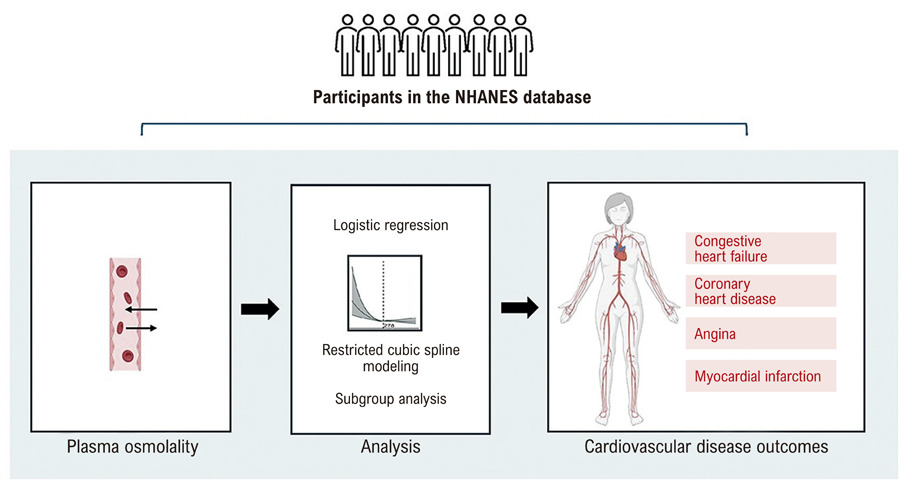
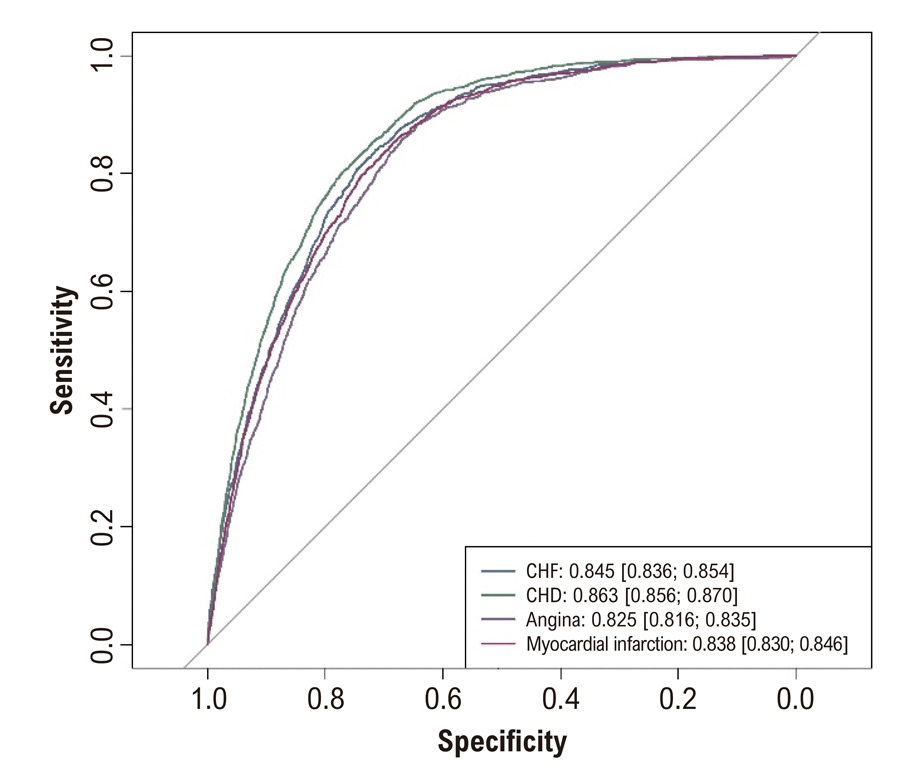
We examined the association between plasma osmolality (Osm) and CVDs — namely, heart failure, coronary heart disease, angina, and myocardial infarction — using data from the National Health and Nutrition Examination Survey (NHANES).
Methods
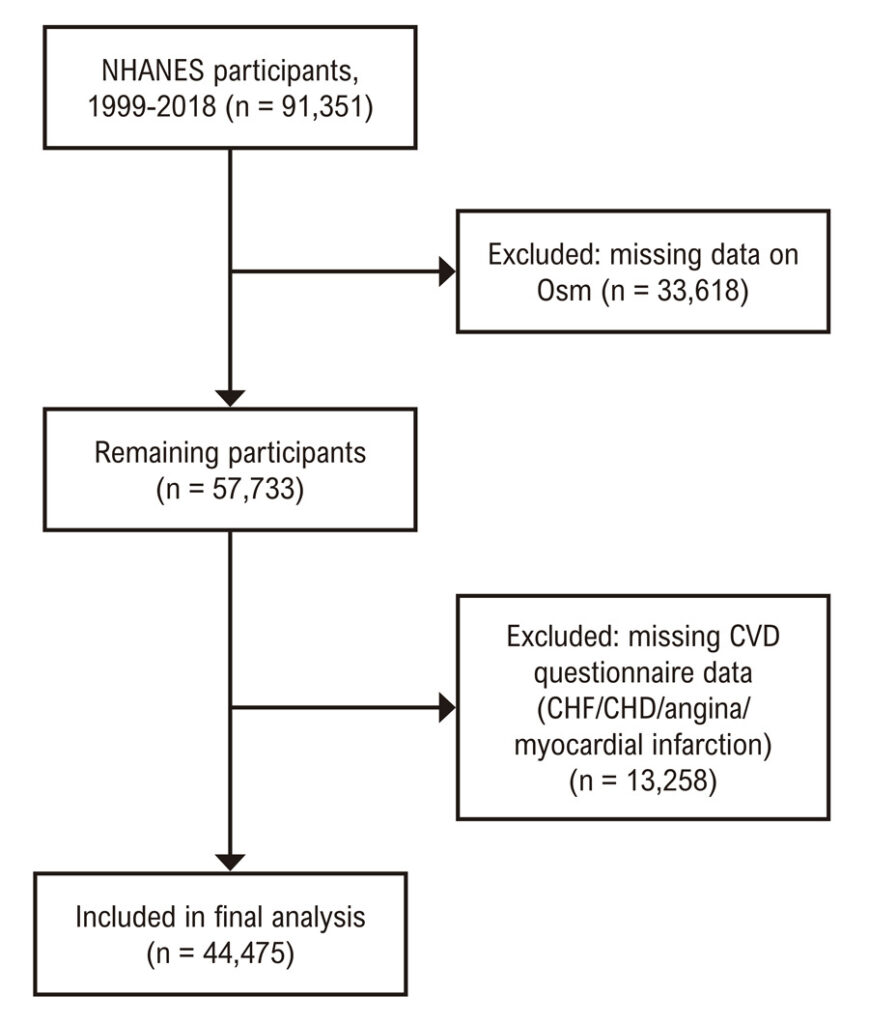
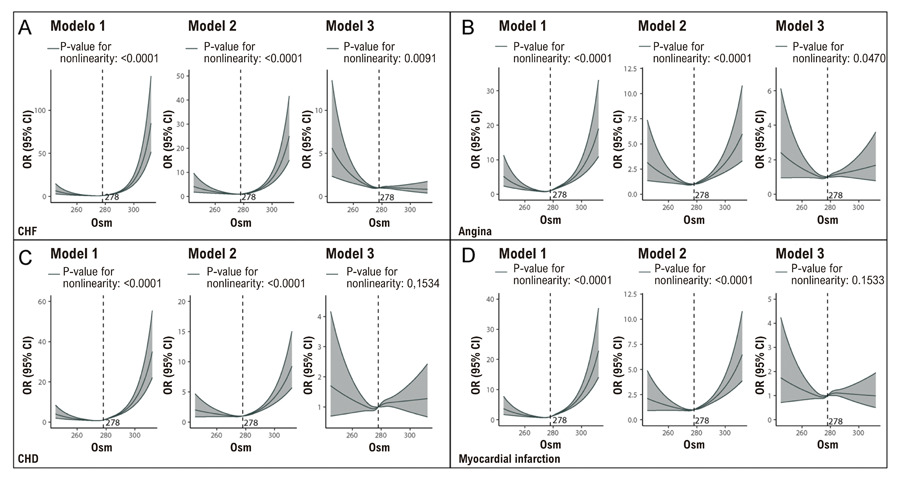
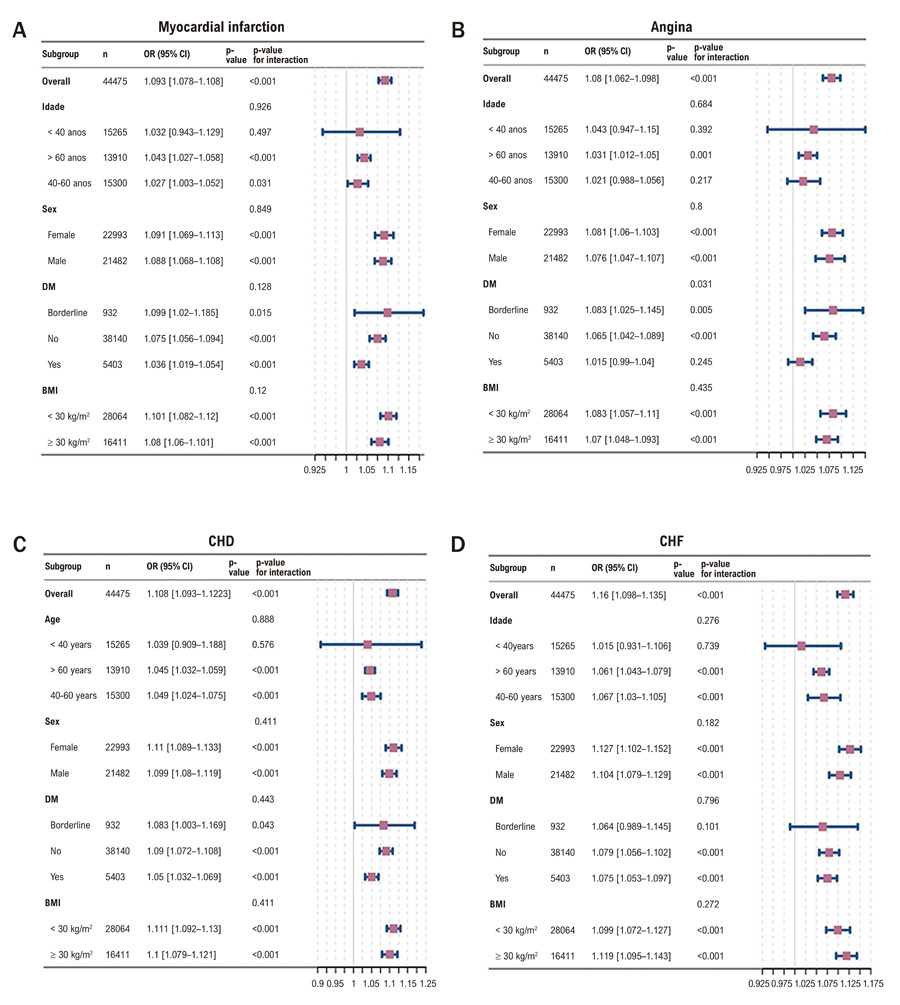
We analyzed nine NHANES cycles (1999-2018). Associations between Osm and CVD were assessed with weighted logistic regression. Odds ratios (ORs) and 95% CIs were estimated, and subgroup analyses were conducted. Restricted cubic spline (RCS) models were used to evaluate potential nonlinear relationships. Statistical significance was set at p < 0.05.
Results
Higher Osm was associated with increased odds of heart failure, coronary heart disease, angina, and myocardial infarction in unadjusted and partially adjusted models. After full adjustment, the associations remained significant for all outcomes except angina. RCS analyses indicated a significant U-shaped relationship for heart failure and angina across all models, with the lowest risk around 278 mmol/kg. Subgroup analyses were consistent with the primary results.
Conclusion
Increased Osm is significantly associated with CVD risk. Osm may serve as a useful biomarker for assessment and management of CVD risk in clinical practice, pending confirmation in prospective cohort studies.
Images
Image gallery fullscreen viewer
Comments are moderated by the editorial team before publication. Discussions should be evidence-based and use scientific language. Conflicts of interest should be declared.