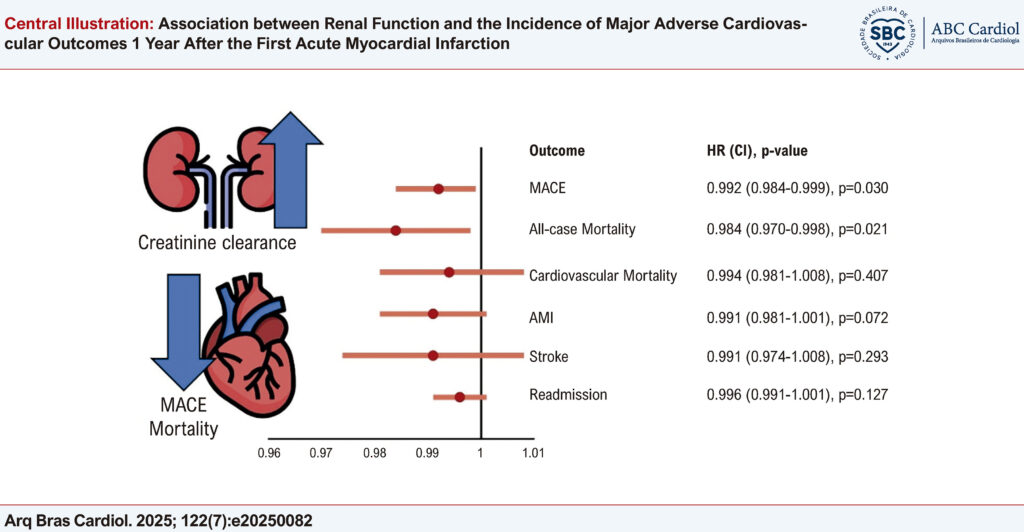
Association between Renal Function and the Incidence of Major Adverse Cardiovascular Outcomes 1 Year After the First Acute Myocardial Infarction
Abstract
Background
Cardiovascular diseases are the leading cause of death worldwide, with substantial social and economic impacts. These conditions are frequently associated with comorbidities, including renal dysfunction.
Objectives
To evaluate the association between creatinine clearance and the incidence of cardiovascular outcomes within 1 year in patients diagnosed with acute myocardial infarction (AMI).
Methods
This prospective cohort study included patients hospitalized for their first AMI. Creatinine clearance was assessed in relation to cardiovascular outcomes, including recurrent AMI, stroke, and cardiovascular death. A p-value of <0.05 was considered statistically significant.
Results
A total of 1,324 patients were analyzed, with a mean age of 60.9 ± 11.4 years; 67.4% were male. Creatinine clearance <60 mL/min was significantly associated with systemic arterial hypertension (79.6% vs. 55.1%, p<0.001), diabetes mellitus (40.8% vs. 24.5%, p<0.001), and dyslipidemia (38.8% vs. 31.4%, p=0.043). Higher creatinine clearance values were associated with a reduced risk of major adverse cardiovascular events (MACE) at 1 year (HR: 0.992; 95% CI: 0.984-0.999; p=0.030). Additionally, higher clearance was linked to lower overall mortality (HR: 0.984; 95% CI: 0.970-0.998; p=0.021).
Conclusion
Higher creatinine clearance values are associated with a lower hazard ratio for MACE and overall mortality within 1 year following AMI.
Images
Image gallery fullscreen viewer
Comments are moderated by the editorial team before publication. Discussions should be evidence-based and use scientific language. Conflicts of interest should be declared.