Overview of Heart Failure in Brazil over 15 Years of Analysis: Impacts and Perspectives for the Health System
Abstract
Background:
Heart failure (HF) remains one of the leading causes of hospital admissions and in-hospital mortality in Brazil. As the population ages, understanding how these hospitalizations have evolved over time is crucial for improving healthcare planning and reducing the burden on the public health system.
Objectives:
To evaluate temporal trends in HF hospitalizations in Brazil from 2010 to 2024, considering factors such as time, region, patient profile, and hospital-related costs.
Methods:
This observational study used data from the Brazilian Unified Health System’s Hospital Information System (SIH/SUS). Hospitalization rates per 100,000 inhabitants were adjusted using population estimates from the Brazilian Institute of Geography and Statistics. Temporal trends were assessed using annual percent change (APC) and average annual percent change (AAPC), with statistical significance set at p < 0.05.
Results:
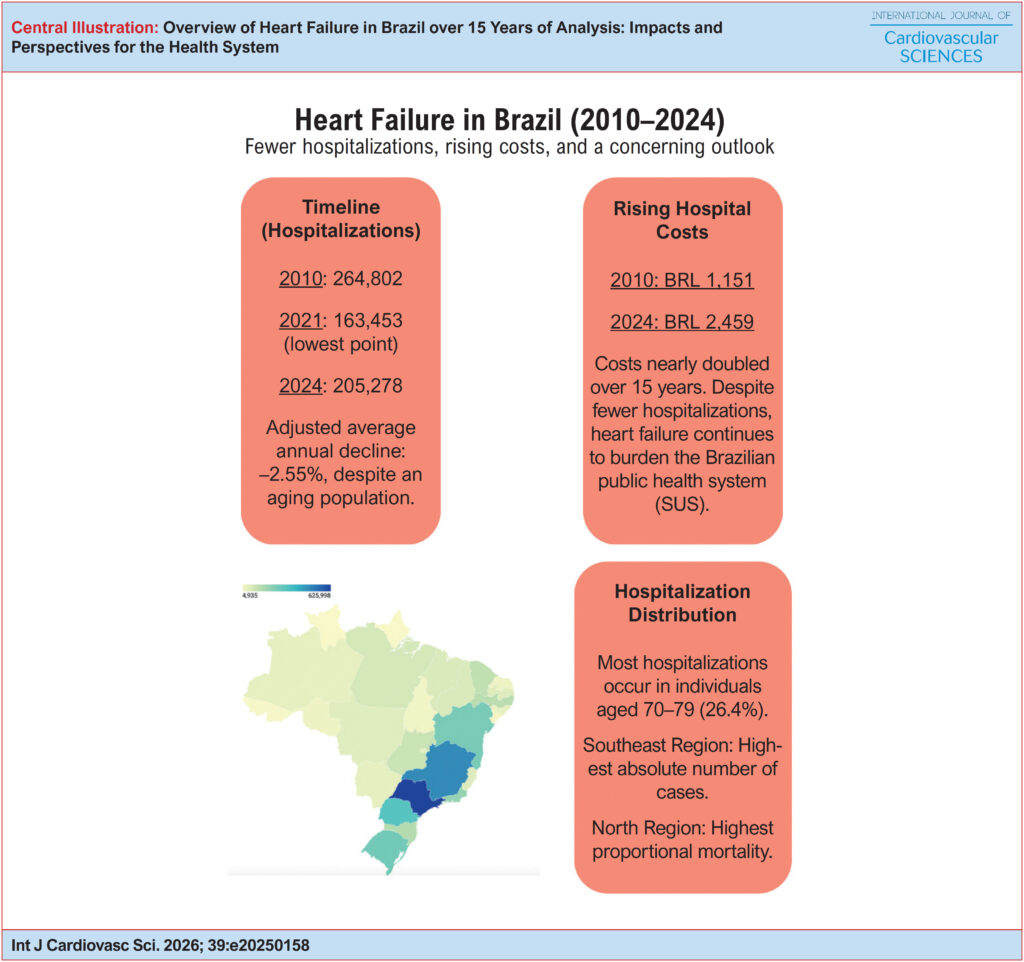
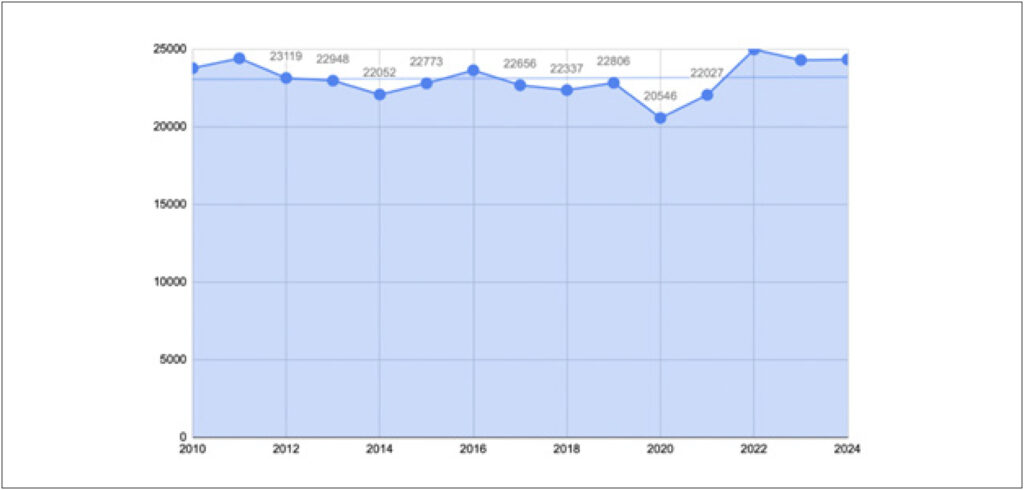
Over 3 million HF hospitalizations were recorded during the study period. Annual admissions declined from 264,000 in 2010 to 205,000 in 2024, representing an average annual decrease of 1.8%. Adjusted rates fell from 135.3 to 94.3 per 100,000 inhabitants (AAPC: −2.55%; p < 0.001). In-hospital mortality peaked in 2021, reaching 13.5%. The average cost per hospitalization more than doubled, rising from BRL 1,151.42 to BRL 2,459.57.
Conclusion:
Despite a significant reduction in hospitalization rates, HF continues to pose a major challenge to Brazil’s healthcare system due to its high case volume and the steadily rising economic burden.
Images
Image gallery fullscreen viewer
Comments are moderated by the editorial team before publication. Discussions should be evidence-based and use scientific language. Conflicts of interest should be declared.