ABC Family Arquivos Brasileiros de Cardiologia International Journal of Cardiovascular Sciences ABC Heart Failure & Cardiomyopathy ABC Imagem Cardiovascular
Português English
ABC Family
Português English
  • About
    • About ABC Family
    • Internal Regulation
    • Editorial Board
    • Brazilian Society of Cardiology (SBC)
  • Issues
  • SBC Guidelines
  • Content
    • Videos
    • Podcasts
    • News
  • About
    • About ABC Family
    • Internal Regulation
    • Editorial Board
    • Brazilian Society of Cardiology (SBC)
  • Issues
  • SBC Guidelines
  • Content
    • Videos
    • Podcasts
    • News

ABC Family

  • ABC Family
  • Arquivos Brasileiros de Cardiologia
  • International Journal of Cardiovascular Sciences
  • ABC Heart Failure & Cardiomyopathy
  • ABC Imagem Cardiovascular
Search in

No content found.

Journals
Ordering
Article types
Others

  1. Home
  2. Keyword: risk stratification
IJCS
Original Article

Prognostic Value of Adding Admission Blood Glucose to the GRACE Score: Systematic Review and Meta-Analysis

Loren Lacerda-Rodrigues et al. Alleh Nogueira Hayala M. Cavalcante Conceicao Sarah C. Fernandez … Nicole Felix Rafael Modesto Fernandes

Abstract

Background:

Hyperglycemia at admission is associated with higher morbidity and mortality in patients with Acute Coronary Syndrome (ACS). However, it remains unclear whether the inclusion of admission glycemia improves risk prediction atop established prognostic models.

Objectives:

To evaluate the incremental prognostic value of admission glycemia when added to the Global Registry of Acute Coronary Events (GRACE) risk score.

Methods:

A systematic search of PubMed, Embase, and ScienceDirect was conducted to identify cohort studies comparing GRACE with models that included admission blood glucose in patients with ACS. Random-effects meta-analyses were performed to compare mean differences (MDs) in predictive discrimination between models, measured by the area under the receiver operating characteristic curve (AUROC). Statistical significance was defined as p <0.05. Heterogeneity was assessed using Cochran's Q and Higgins–Thompson's I² statistics. In accordance with Cochrane recommendations, the risk of bias in individual studies was evaluated using the Quality in Prognosis Studies (QUIPS) tool.

Results:

In a pooled analysis of eight independent comparisons from seven studies encompassing 6,536 patients, a statistically significant difference was observed between GRACE and GRACE-glucose models (MD, 0.03; 95% CI, 0.00–0.05; p = 0.027; I² = 0%). Leave-one-out sensitivity analyses confirmed statistically significant differences in AUROCs. Meta-regression analyses did not demonstrate any modification in predictive discrimination based on overall risk of bias, mortality follow-up, or baseline prevalence of STEMI. Underreporting of calibration measures precluded a definitive assessment of predictive calibration.

Conclusions:

In this systematic review and meta-analysis, the inclusion of admission blood glucose enhanced prognostic value beyond the GRACE score alone.
  • Acute coronary syndrome
  • Hyperglycemia
  • risk stratification
Read Full Article
Creative Commons Attribution (CC BY) Creative Commons license
12/06/2026 DOI: 10.36660/ijcs.20240108
ABC
Editorial

Can Simple Echocardiographic Parameters Replace The ASCVD Probabilistic Model Calculation?

Tonnison de Oliveira Silva et al. Luiz Eduardo Fonteles Ritt

The study by Fernandes et al. used data from the ELSA-BRASIL Cohort. , It showed that in asymptomatic patients with no history of cardiovascular disease, echocardiographic measurements that are part of the daily routine of any echocardiography service are independently associated with the ASCVD predictor model. A total of 2,973 Brazilian participants without cardiovascular disease were evaluated between 2008 and 2010. The ASCVD score calculation used data produced in 2008-2010 and 2012-2014; echocardiography was performed exclusively at the initial moment (period 1). After multivariate logistic regression analysis, the echocardiographic parameters with statistical significance (controlled for body mass index, hypertriglyceridemia, physical activity, educational level and excessive alcohol consumption) were diastolic dysfunction, left ventricular hypertrophy, and left atrial volume indexed by body surface area. Left ventricular diastolic dysfunction was the strongest predictor of association with a high risk of cardiovascular events (ASCVD > 7.5%).

Diastolic dysfunction is a marker of cardiovascular events, including total mortality and hospitalizations for HF. In the ischemic cascade, diastolic dysfunction, symptomatic or not, is one of the earliest manifestations. It is also useful in identifying those patients with stage B heart failure. Echocardiography is the non-invasive, available and low-cost tool most used to evaluate this alteration. The major obstacle is that ventricular diastole mechanisms are complex, multifactorial, age-related, and subject to both acute and chronic hemodynamic and coronary flow changes. –

[…]

  • Cardiovascular Diseases
  • Diastolic Dysfunction
  • Echocardiography/methods
  • Hospitalization
  • Hypertrophy Left Ventricular
  • Mortality
  • risk stratification
Read Full Article
Creative Commons Attribution (CC BY) Creative Commons license
13/05/2022 DOI: 10.36660/abc.20220270 Views 1
Figure 1
IJCS
Original Article

Analysis of the Influence of Abdominal Obesity on Systemic Arterial Hypertension and on the Lipid Profile on Cardiometabolic Risk Stratification in Adult Women

Iury Matheus Lima Cavalcanti et al. Cristian Rodrigues do Nascimento Pedro Pereira Tenório Tiago Ferreira da Silva Araújo

Abstract

Background:

Obesity is a public health problem and has been associated with the development of metabolic disorders that have a strong relationship with the onset of cardiovascular diseases (CVD).

Objective:

The objective was to analyze the influence of abdominal obesity (AO) on systemic arterial hypertension (SAH) and on the lipid profile in cardiovascular risk stratification in adult women.

Methods:

Altogether, 91 women participated in the research. Lifestyle information was collected, in addition to the analysis of clinical measures of cardiovascular risk and biochemical parameters. Unpaired Student’s t-test, logistic regression, and Pearson’s correlation were performed for data analysis, with a value of p <0.05 considered significant.

Results:

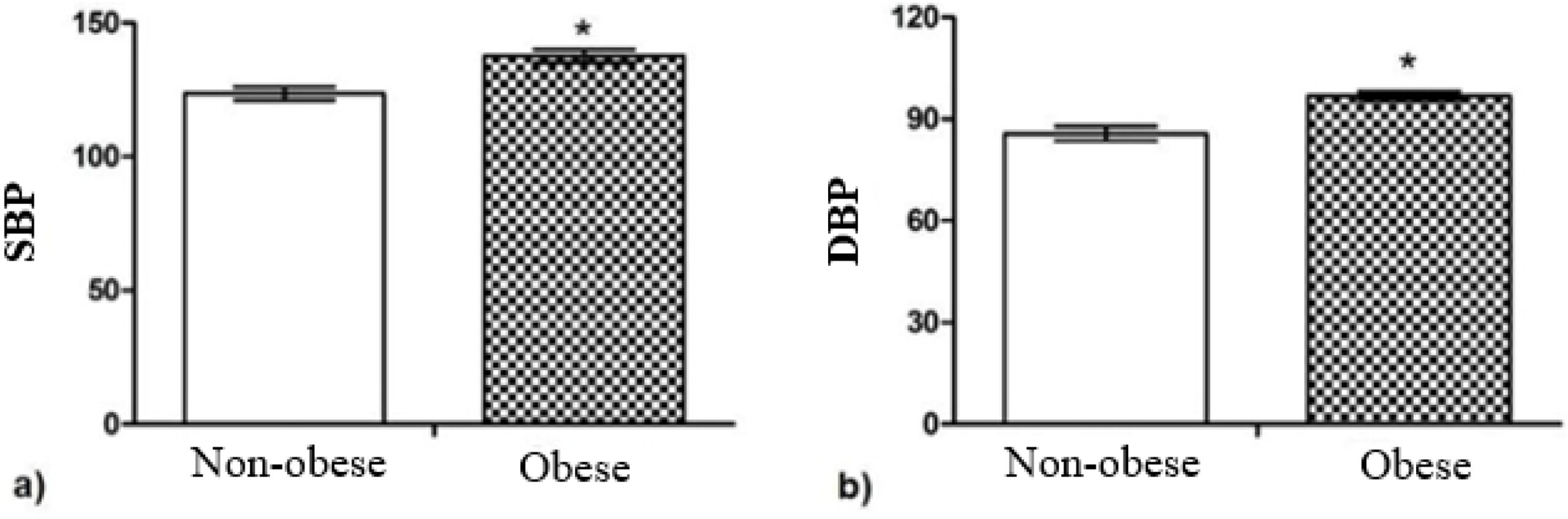
The prevalence of AO was 62.6%. Logistic regression showed that AO increased the chance of developing SAH by 2.9-fold. The same behavior was observed in the TG/HDL-c lipid ratio (3.93 ± 0.3 vs. 2.16 ± 0.2), representing an 82% increase in obese women. The present study also demonstrated that the best anthropometric parameter to analyze cardiovascular risk in the studied population was the waist/height ratio (AUC = 0.707).

Conclusions:

It can therefore be concluded that AO plays a significant role in the development of SAH and changes in lipid values that predict increased cardiovascular risk, configuring a strong influence factor for CVD.

  • Adult
  • Cardiovascular Diseases
  • Hyperlipidemias
  • Hypertension
  • Lipidic Metabolism
  • Metabolic Syndrome
  • Obesity, Abdominal
  • risk stratification
  • Women
Read Full Article
Creative Commons Attribution (CC BY) Creative Commons license
01/04/2022 DOI: 10.36660/ijcs.20200415 Views 1
Stratifying the risk in unstable angina with dobutamine stress echocardiography
ABC
Artigo Original

Stratifying the risk in unstable angina with dobutamine stress echocardiography

Brivaldo Markman Filho et al. Maria Celita Almeida Manuel Markman Andrea Chaves … Miguel A. Moretti José A. F. Ramires Luiz A. César

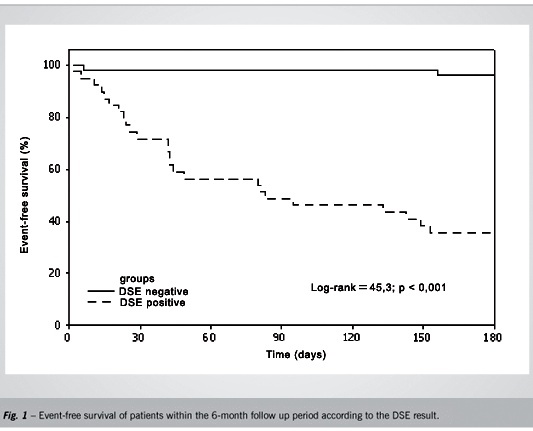
OBJECTIVE: To evaluate the role of dobutamine stress echocardiography (DSE) in the risk stratification of low to moderate risk unstable angina (UA) patients, to predict the combined clinical outcome of cardiovascular death, myocardial infarction (MI), recurrent UA and the need of revascularization procedures in a 6 month period. METHODS: Multicenter prospective study. Patients should be admitted to the hospital and asymptomatic in the last 24 hours. The exam was performed up to 72 hours from the hospital admission and no medication was stopped prior to the test. RESULTS: Ninety-five consecutive patients were evaluated by DSE. Forty patients (42,1%) had a positive ischemic test and fifty five (57,9%) had a negative one. Clinical events occurred in twenty eight patients, twenty six of whom had a positive test. The rest of the patients (67) did not have clinical events and fifty three of them, had a negative test. The sensibility, specificity, accuracy, positive predictive value and negative predictive value of the test related to the clinical events were: 92,9%, 79,1%, 83,2%, 65% and 96,4%, respectively. Event-free survival after 6 months for pacients with a negative DSE was 96% compared to 35% for those with a positive DSE (p<0,001). The UA classification, left ventricular ejection fraction, rest and peak wall motion score index, DSE result and history of previous MI were associated with the combined end point by univariate analysis. The test result was the only independent predictor of cardiac events by multivariate analysis (p<0.001). CONCLUSION: O DSE has shown an excellent negative predictive value allowing for early hospital discharge without further exams. The positive test result was the only independent predictor for adverse cardiac events.

  • risk stratification
  • Stress echocardiography
  • Unstable Angina
Read Full Article
Creative Commons Attribution (CC BY) Creative Commons license
16/10/2006 DOI: 10.1590/S0066-782X2006001600011 Views 1

How to cite this article

EndNote RIS

Electronic Document Format (Vancouver)

Lacerda-Rodrigues L, Nogueira A, Conceicao HMC, Fernandez SC, Felix N, Fernandes RM. Prognostic Value of Adding Admission Blood Glucose to the GRACE Score: Systematic Review and Meta-Analysis. International Journal of Cardiovascular Sciences 2026;39:e20240108.

Electronic Document Format (ABNT)

Lacerda-Rodrigues, Loren; Nogueira, Alleh; Conceicao, Hayala M. Cavalcante; Fernandez, Sarah C.; Felix, Nicole; Fernandes, Rafael Modesto. Prognostic Value of Adding Admission Blood Glucose to the GRACE Score: Systematic Review and Meta-Analysis. International Journal of Cardiovascular Sciences, v. 39, e20240108, Jun. 2026.

Electronic Document Format (APA)

Lacerda-Rodrigues, L., Nogueira, A., Conceicao, H. M. C., Fernandez, S. C., Felix, N., & Fernandes, R. M. (2026). Prognostic Value of Adding Admission Blood Glucose to the GRACE Score: Systematic Review and Meta-Analysis. International Journal of Cardiovascular Sciences, 39, e20240108.

Electronic Document Format (ISO)

Lacerda-Rodrigues, Loren and Nogueira, Alleh and Conceicao, Hayala M. Cavalcante and Fernandez, Sarah C. and Felix, Nicole and Fernandes, Rafael Modesto. Prognostic Value of Adding Admission Blood Glucose to the GRACE Score: Systematic Review and Meta-Analysis. International Journal of Cardiovascular Sciences [online]. 2026, vol. 39, [cited 2026-10-14], e20240108. Available from: <https://journals.cardiol.br/en/article/prognostic-value-of-adding-admission-blood-glucose-to-the-grace-score-systematic-review-and-meta-analysis/>. ISSN 2359-4802

EndNote RIS

Electronic Document Format (Vancouver)

Silva TO, Ritt LEF. Can Simple Echocardiographic Parameters Replace The ASCVD Probabilistic Model Calculation?. Arquivos Brasileiros de Cardiologia 2022;118(5):925-6.

Electronic Document Format (ABNT)

Silva, Tonnison de Oliveira; Ritt, Luiz Eduardo Fonteles. Can Simple Echocardiographic Parameters Replace The ASCVD Probabilistic Model Calculation?. Arquivos Brasileiros de Cardiologia, v. 118, n. 5, p. 925-926, May. 2022.

Electronic Document Format (APA)

Silva, T. O., & Ritt, L. E. F. (2022). Can Simple Echocardiographic Parameters Replace The ASCVD Probabilistic Model Calculation?. Arquivos Brasileiros de Cardiologia, 118(5), 925-926.

Electronic Document Format (ISO)

Silva, Tonnison de Oliveira and Ritt, Luiz Eduardo Fonteles. Can Simple Echocardiographic Parameters Replace The ASCVD Probabilistic Model Calculation?. Arquivos Brasileiros de Cardiologia [online]. 2022, vol. 118, n. 5, [cited 2026-10-14], pp. 925-926. Available from: <https://journals.cardiol.br/en/article/can-simple-echocardiographic-parameters-replace-the-ascvd-probabilistic-model-calculation/>. ISSN 0066-782X

EndNote RIS

Electronic Document Format (Vancouver)

Cavalcanti IML, Nascimento CR, Tenório PP, Araújo TFS. Analysis of the Influence of Abdominal Obesity on Systemic Arterial Hypertension and on the Lipid Profile on Cardiometabolic Risk Stratification in Adult Women. International Journal of Cardiovascular Sciences 2022;35(5):625-34.

Electronic Document Format (ABNT)

Cavalcanti, Iury Matheus Lima; Nascimento, Cristian Rodrigues do; Tenório, Pedro Pereira; Araújo, Tiago Ferreira da Silva. Analysis of the Influence of Abdominal Obesity on Systemic Arterial Hypertension and on the Lipid Profile on Cardiometabolic Risk Stratification in Adult Women. International Journal of Cardiovascular Sciences, v. 35, n. 5, p. 625-634, Mar. 2022.

Electronic Document Format (APA)

Cavalcanti, I. M. L., Nascimento, C. R. , Tenório, P. P., & Araújo, T. F. S. (2022). Analysis of the Influence of Abdominal Obesity on Systemic Arterial Hypertension and on the Lipid Profile on Cardiometabolic Risk Stratification in Adult Women. International Journal of Cardiovascular Sciences, 35(5), 625-634.

Electronic Document Format (ISO)

Cavalcanti, Iury Matheus Lima and Nascimento, Cristian Rodrigues do and Tenório, Pedro Pereira and Araújo, Tiago Ferreira da Silva. Analysis of the Influence of Abdominal Obesity on Systemic Arterial Hypertension and on the Lipid Profile on Cardiometabolic Risk Stratification in Adult Women. International Journal of Cardiovascular Sciences [online]. 2022, vol. 35, n. 5, [cited 2026-10-14], pp. 625-634. Available from: <https://journals.cardiol.br/en/article/analysis-of-the-influence-of-abdominal-obesity-on-systemic-arterial-hypertension-and-on-the-lipid-profile-on-cardiometabolic-risk-stratification-in-adult-women/>. ISSN 2359-4802

EndNote RIS

Electronic Document Format (Vancouver)

Markman Filho B, Almeida MC, Markman M, Chaves A, Moretti MA, Ramires JAF, César LA, et al. Stratifying the risk in unstable angina with dobutamine stress echocardiography. Arquivos Brasileiros de Cardiologia 2006;87(3):294-9.

Electronic Document Format (ABNT)

Markman Filho, Brivaldo; Almeida, Maria Celita; Markman, Manuel; Chaves, Andrea; Moretti, Miguel A.; Ramires, José A. F.; César, Luiz A.. Stratifying the risk in unstable angina with dobutamine stress echocardiography. Arquivos Brasileiros de Cardiologia, v. 87, n. 3, p. 294-299, Oct. 2006.

Electronic Document Format (APA)

Markman Filho, B., Almeida, M. C., Markman, M., Chaves, A., Moretti, M. A., Ramires, J. A. F., & César, L. A. (2006). Stratifying the risk in unstable angina with dobutamine stress echocardiography. Arquivos Brasileiros de Cardiologia, 87(3), 294-299.

Electronic Document Format (ISO)

Markman Filho, Brivaldo and Almeida, Maria Celita and Markman, Manuel and Chaves, Andrea and Moretti, Miguel A. and Ramires, José A. F. and César, Luiz A.. Stratifying the risk in unstable angina with dobutamine stress echocardiography. Arquivos Brasileiros de Cardiologia [online]. 2006, vol. 87, n. 3, [cited 2026-10-14], pp. 294-299. Available from: <https://journals.cardiol.br/en/article/stratifying-the-risk-in-unstable-angina-with-dobutamine-stress-echocardiography/>. ISSN 0066-782X

  • About ABC Family
  • Internal Regulation
  • Editorial Board
  • Brazilian Society of Cardiology (SBC)

Issues

SBC Guidelines

  • Videos
  • Podcasts
  • News