| ABC
ABC Family Arquivos Brasileiros de Cardiologia International Journal of Cardiovascular Sciences ABC Heart Failure & Cardiomyopathy ABC Imagem Cardiovascular
Português English
ABC Family | ABC
Português English
  • About
    • About the Journal
    • Internal Regulation
    • Editors Section
    • Editorial Board
    • History
    • SBC Award
  • Instructions to Authors
    • Guidelines for Publication
    • Editorial Policy
    • Ethics Policy
    • Policy on the Use of Artificial Intelligence
    • Mandatory Publication Form
    • Publication Fee
  • Issues
  • SBC Guidelines
  • Abstracts
    • How to Publish an Abstract Supplement?
    • Supplements from the Brazilian Congress of Cardiology
  • About
    • About the Journal
    • Internal Regulation
    • Editors Section
    • Editorial Board
    • History
    • SBC Award
  • Instructions to Authors
    • Guidelines for Publication
    • Editorial Policy
    • Ethics Policy
    • Policy on the Use of Artificial Intelligence
    • Mandatory Publication Form
    • Publication Fee
  • Issues
  • SBC Guidelines
  • Abstracts
    • How to Publish an Abstract Supplement?
    • Supplements from the Brazilian Congress of Cardiology

ABC Family

  • ABC Family
  • Arquivos Brasileiros de Cardiologia
  • International Journal of Cardiovascular Sciences
  • ABC Heart Failure & Cardiomyopathy
  • ABC Imagem Cardiovascular
Search in

No content found.

Journals
Ordering
Article types
Others

  1. Home
  2. ABC
  3. Issues
  4. 2024, Volume 121, Number 3
Editorial

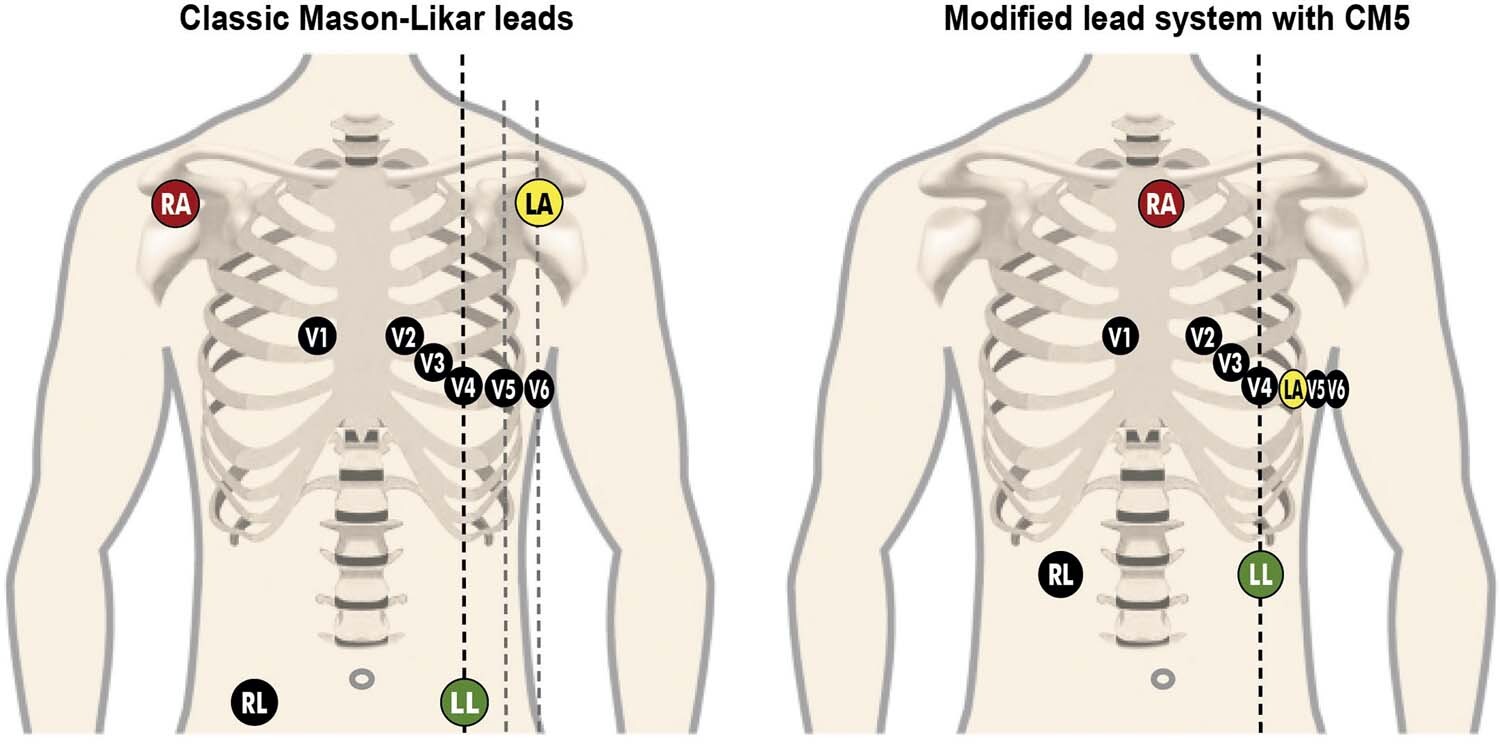
Is Left Atrial Strain the Missing Part to Diagnose Diastolic Dysfunction in Children with Chronic Kidney Disease?

José Luiz Barros Pena

Echocardiography is the most critical imaging modality for assessing diastolic function, an essential part of the cardiac function evaluation.

Since its publication in 2016, the ASE/EACVI recommendations for evaluating diastolic function have been validated in different cohorts but have shown conflicting results, especially when considering patients with preserved ejection fraction (EF). When patients with preserved EF were studied in a separate subgroup, a poorer sensitivity was observed.

[…]

  • Child
  • Echocardiography/methods
  • Heart Atria
  • Kidney
Read Full Article
Creative Commons Attribution (CC BY) Creative Commons license
08/07/2024 DOI: 10.36660/abc.20240257i
Figure 1
Diretrizes

Brazilian Guideline for Exercise Test in the Adult Population – 2024

Tales de Carvalho et al. Odilon Gariglio Alvarenga de Freitas William Azem Chalela Carlos Alberto Cordeiro Hossri … Mauricio Milani Susimeire Buglia Dalton Bertolim Precoma Andréa Maria Gomes Marinho Falcão Luiz Eduardo Mastrocola Iran Castro Pedro Ferreira de Albuquerque Ricardo Quental Coutinho Fabio Sandoli de Brito Josmar de Castro Alves Salvador Manoel Serra Mauro Augusto dos Santos Clea Simone Sabino de Souza Colombo Ricardo Stein Artur Haddad Herdy Anderson Donelli da Silveira Claudia Lucia Barros de Castro Miguel Morita Fernandes da Silva Romeu Sergio Meneghello Luiz Eduardo Fonteles Ritt Felipe Lopes Malafaia Leonardo Filipe Benedeti Marinucci José Luiz Barros Pena Antônio Eduardo Monteiro de Almeida Marcelo Luiz Campos Vieira Arnaldo Laffitte Stier Júnior

Table of Contents

Part 1 – Indications, Legal Aspects, and Training in Exercise Test 08

1. Introduction 08

[…]

Read Full Article
Creative Commons Attribution (CC BY) Creative Commons license
17/06/2024 DOI: 10.36660/abc.20240110i Views 2
Editorial

The Impact of Cardiovascular Disease on Economic Loss

Fátima Marinho

Cardiovascular diseases (CVD) are a public health concern that impacts the population’s health and economy. It is the leading cause of death globally. In Brazil, CVD has been the leading cause of death, with Ischemic Heart Disease and Stroke as the most common causes, except during the pandemic years (2020-2021) when COVID-19 was the first cause of death for men and women.

What is the impact on productive work and the economy? How can cardiovascular disease and its loss of health in the population be prevented?

[…]

  • Cardiovascular Diseases, mortality
  • Cost Efficiency Analysis
  • Public Health Policy/economics
Read Full Article
Creative Commons Attribution (CC BY) Creative Commons license
20/05/2024 DOI: 10.36660/abc.20240175i Views 2
Editorial

Fatty Acids Intake in Cardiovascular Prevention: The Incessant Search for Adequacy

Elisa Maia dos Santos et al. Grazielle Vilas Bôas Huguenin

Cardiovascular diseases (CVD) are currently the leading cause of mortality worldwide. Several risk factors contribute to its development and among the modifiable ones, the main ones are related to lifestyle behaviors, such as smoking, physical activity, and diet. In individuals undergoing secondary cardiovascular prevention, promoting a healthy lifestyle is a strategy for reducing the recurrence of events.– However, gaps in adherence to a healthy lifestyle in secondary prevention may be related to the low integration between behavior change and traditional models of outpatient care.

Nutrition plays a central role in the primary and secondary prevention of CVD, but relatively recently, food has been considered as a treatment, and not just as a complement to established medical and pharmacological therapy. Diet, in particular, has a significant impact on the management of the main modifiable risk factors for CVD such as obesity, dyslipidemia, diabetes, and hypertension.

[…]

  • Eating
  • Fatty Acids
  • Secondary Prevention
Read Full Article
Creative Commons Attribution (CC BY) Creative Commons license
20/05/2024 DOI: 10.36660/abc.20240208i Views 1
Editorial

The Importance of Characterizing Chest Pain in the Management of Unstable Angina

Daniela do Carmo Rassi et al. Aguinaldo Figueiredo Freitas Jr. Salvador Rassi

Unstable angina is a clinical entity of great complexity and whose correct diagnosis is essential for appropriate management. This terminology, unstable angina, tends to fall into disuse. As advocated by the latest European Guideline for the Management of Acute Coronary Syndrome of 2020, it would be encompassed under the name Acute Coronary Syndrome (unstable angina, acute myocardial infarction with and without ST elevation). Its diagnosis is essentially clinical, with nonspecific changes on the electrocardiogram and without plasma elevation of markers of myocardial necrosis.

In Acute Coronary Syndrome, when we have electrocardiographic changes and documentation of myocardial injury, there is already an established approach that would be early catheterization and coronary intervention, if applicable. In the absence of these markers, we do not yet have an established approach.

[…]

  • Acute coronary syndrome
  • Chest Pain
  • Electrocardiography/methods
  • Myocardial Ischemia
  • Peripheral Arterial Disease
Read Full Article
Creative Commons Attribution (CC BY) Creative Commons license
06/05/2024 DOI: 10.36660/abc.20240168i Views 2
Editorial

Relationship of Testosterone with Obesity and Arterial Hypertension

Rui Póvoa

Testosterone is the main male hormone and is responsible for the development of sexual organs, having importance in libido and sexual function in general. Although controversial, it is believed that this hormone gradually decreases with age, and some studies point to obesity as the main factor in hormonal reduction.,

Hormonal differences in men and women may explain some peculiarities in the behavior of certain diseases, especially cardiovascular (CV) diseases. Testosterone reaches a peak at 30 years of age, with a decline of 1-2% annually. In the elderly, the risk of developing testosterone deficiency (TD) increases significantly, which can lead to several symptoms. However, the effect of this hormonal reduction on CV risk is not yet well defined, as various comorbidities arise at later stages of life, especially obesity. In this mix of risk factors, it is somewhat difficult to typify the importance of DT objectively. Some studies, such as that by Laughlin et al., showed that DT increased CV risk. Others, such as “The Longitudinal Cardiovascular Health Study” and that of Collet et al. found no relationship.

[…]

  • Hypertension
  • Obesity
  • Testosterone
Read Full Article
Creative Commons Attribution (CC BY) Creative Commons license
06/05/2024 DOI: 10.36660/abc.20240138i Views 1
Editorial

The Immense Challenge of Searching for the Best Evidence

Luiz Maurino Abreu

To generate the best scientific evidence, it is crucial to follow rigorous research methods, use representative samples, apply appropriate statistical analyses, and ensure peer review in reputable scientific publications. Transparency and replicability are also key. Systematic reviews and meta-analyses aim to summarize a body of available evidence for a given question and provide a high-quality answer.

New situations add variables not previously analyzed, and the COVID-19 pandemic has raised big questions. The urgency to find effective treatments and develop vaccines has encouraged a global mobilization of the scientific community. Contributing factors were: the global health emergency, international mobilization, priority funding sources, greater availability of data networks, and high technology, which stimulated a real race in search of answers. This convergence of factors resulted in an explosion of publications, seeking to better understand the pathophysiology, treatment options, prevention measures, and socioeconomic impacts. As would be expected, in the rush, most of the publications were of poor quality, some of which generated misinformation with serious consequences, as many of these had great repercussions in the media. During the course of the pandemic, numerous guidelines were generated and changed. There were notable discrepancies between different guidelines regarding recommendations on the management of COVID-19 in Brazil.

[…]

  • Anticoagulants
  • Arrhytmias, Cardiac
  • Atrial Fibrillation
  • Coronavirus infections
  • COVID-19
Read Full Article
Creative Commons Attribution (CC BY) Creative Commons license
06/05/2024 DOI: 10.36660/abc.20240106i Views 2
Figure 1
Research Letter

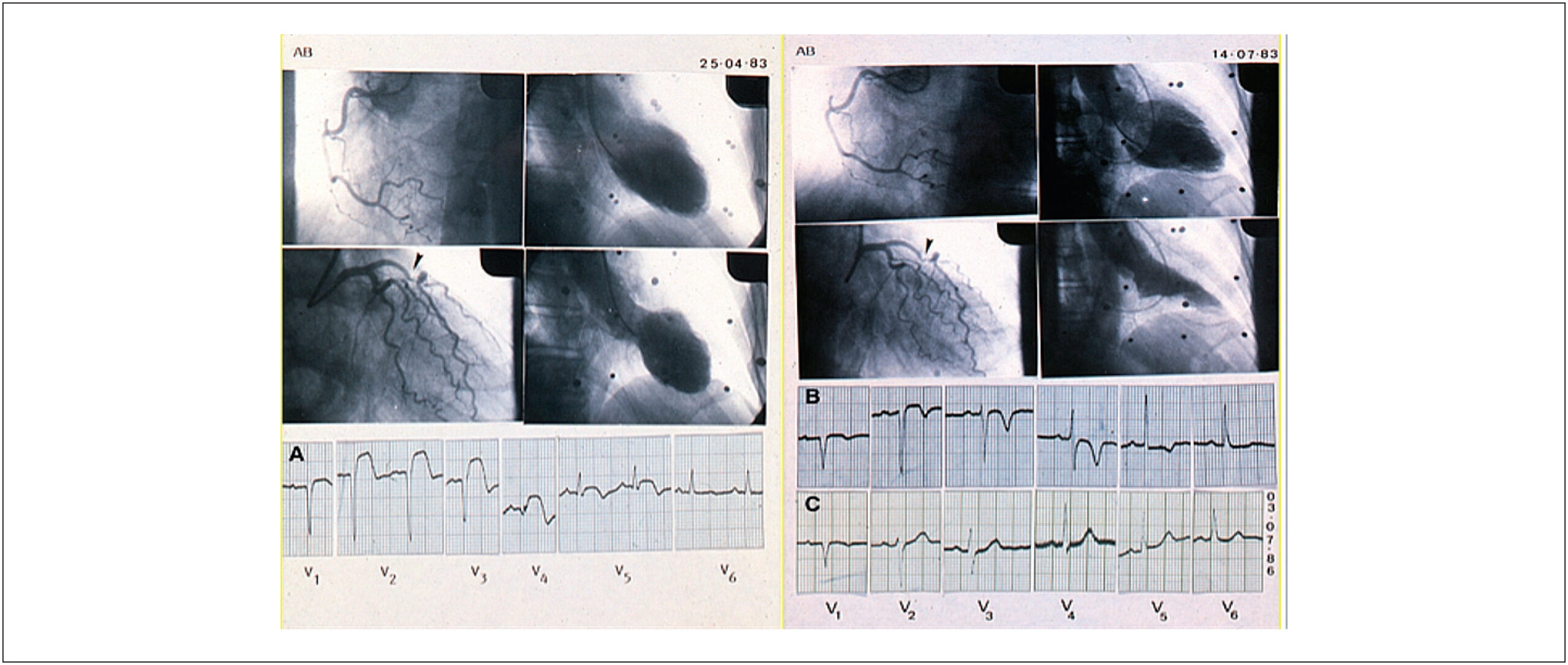
Interpreting Acute Myocardial Infarction 40 Years Later. Evolution of Knowledge: What is the Best Explanation?

Vitor Coutinho Andrade et al. Paulo Cury Rezende Whady Hueb José Antonio Franchini Ramires

Introduction

Plaque rupture and erosion are the most common immediate pathologies associated with acute myocardial infarction. However, other mechanisms must be considered. The reported case occurred at a time when percutaneous or pharmacological coronary revascularization were not the standard treatment, which sparked discussion about these other mechanisms, as well as the possible advantages associated with the myocardial revascularization procedures.

[…]

  • Coronary Vasoespasm
  • Diagnostic Imaging/methods
  • Dyslipidemias
  • Myocardial Infarction
  • Myocardial Stunning
Read Full Article
Creative Commons Attribution (CC BY) Creative Commons license
29/04/2024 DOI: 10.36660/abc.2023-0757i Views 1
Study Design of a Brazilian Observational Study of Edoxaban in Patients with Atrial Fibrillation (EdoBRA)
Original Article

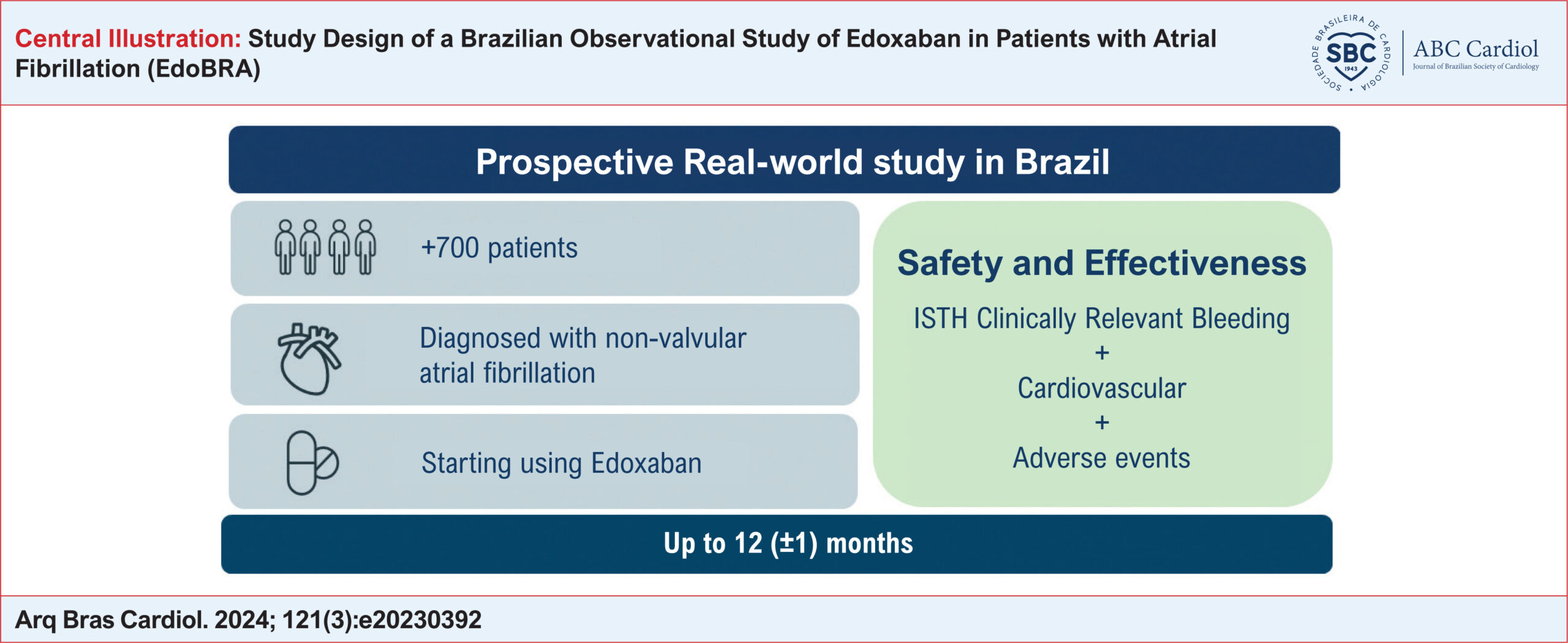
Study Design of a Brazilian Observational Study of Edoxaban in Patients with Atrial Fibrillation (EdoBRA)

Dalton Bertolim Précoma et al. Rafael Paletta da Silva Allyson Nakamoto Viviane Mariz Omar … Danilo Lopes José Francisco Kerr Saraiva

Abstract

Background:

Clinical trials showed the safety of Edoxaban, a non-vitamin K-dependent oral anticoagulant (NOAC), and its efficacy to prevent stroke and systemic embolism in non-valvular atrial fibrillation (NVAF) patients and also to prevent and treat venous thromboembolism. However, additional research is needed to evaluate the safety and effectiveness of Edoxaban in a real-world scenario in the Brazilian population.

Objective:

In order to understand the risks and benefits of Edoxaban use in routine clinical settings, the EdoBRA study is being conducted to gain insight into the safety and effectiveness of Edoxaban use in non-preselected patients with NVAF in Brazil.

Methods:

The EdoBRA study is a multicenter, prospective, observational study conducted in 36 sites in Brazil. NVAF patients ≥ 18 years treated with commercially available Edoxaban who initiated treatment for at least 14 days and no longer than 90 days prior to enrollment, and who are not simultaneously participating in any interventional study are eligible for this study. Seven hundred patients are planned to be enrolled and one-year of follow up, with data collections expected at baseline and 3, 6, and 12 months after the study enrollment. The primary safety objective is ISTH Clinically Relevant Bleeding, and the secondary effectiveness objective focuses on relevant cardiovascular outcomes related to NVAF.

Conclusion:

EdoBRA observational study will generate relevant additional information about NOAC Edoxaban on various aspects of patient management in routine care, such as its safety and effectiveness profile in patients with NVAF in Brazil.

  • Edoxaban
  • Efficacy
  • Observational Study
  • Oral Anticoagulants
  • Safety
Read Full Article
Creative Commons Attribution (CC BY) Creative Commons license
26/04/2024 DOI: 10.36660/abc.20230392i Views 1
Research Letter

Cardiovascular Safety of Testosterone-Replacement Therapy: Critical Appraisal of a Currently Published Clinical Trial

Isabela Tramontini Muller et al. Sérgio Renato da Rosa Decker Regis Goulart Rosa Guilherme Rollin

Introduction

In the last edition on June 16 of the New England Journal of Medicine, A. Michael Lincoff et al. published a non-inferiority trial, entitled “Cardiovascular Safety of Testosterone-Replacement Therapy”, aiming to determine the safety outcomes of testosterone replacement therapy in middle-aged and older men with hypogonadism and pre-existing cardiovascular disease. The inclusion criteria for hypogonadism were symptoms and two fasting serum testosterone levels of less than 300 ng/dL in blood samples obtained between 5:00 a.m. and 11:00 a.m. The intervention was daily transdermal 1.62% testosterone gel with adjustments to maintain testosterone levels between 350 and 750 ng/dL or to respond to a hematocrit greater than 54%.

The baseline characteristics were men, with a mean age of 63 years, 80% were white, with a mean body-mass index of 35, and 55% had preexisting cardiovascular disease. The median testosterone level was 227 ng/dL in both groups, and the median increase from baseline was 148 ng/dL in the testosterone group, as compared to a median increase of 14 ng/dL in the placebo group. The study concluded non-inferiority for major adverse cardiac events (MACE) by comparing testosterone replacement to placebo, and a prespecified non-inferiority margin of 1.5. The final results showed a hazard ratio for the primary end-point of 0.96 (95% confidence interval, 0.78-1.17; p-value for non-inferiority <0.001). However, we have concerns regarding this claim of non-inferiority mainly because of two points: the margin of non-inferiority and the choice of a three-point MACE over a five-point MACE.,

[…]

  • cardiovascular
  • Non-inferiority
  • Outcomes
  • Safety
  • Testosterone
Read Full Article
Creative Commons Attribution (CC BY) Creative Commons license
26/04/2024 DOI: 10.36660/abc.20230558i Views 1
Chronic Anticoagulation in Patients with Atrial Fibrillation and COVID-19: A Systematic Review and Meta-Analysis
Original Article

Chronic Anticoagulation in Patients with Atrial Fibrillation and COVID-19: A Systematic Review and Meta-Analysis

Isabela Landsteiner et al. Jonathan A. Pinheiro Nicole Felix Douglas Mesadri Gewehr Rhanderson Cardoso

Abstract

Background:

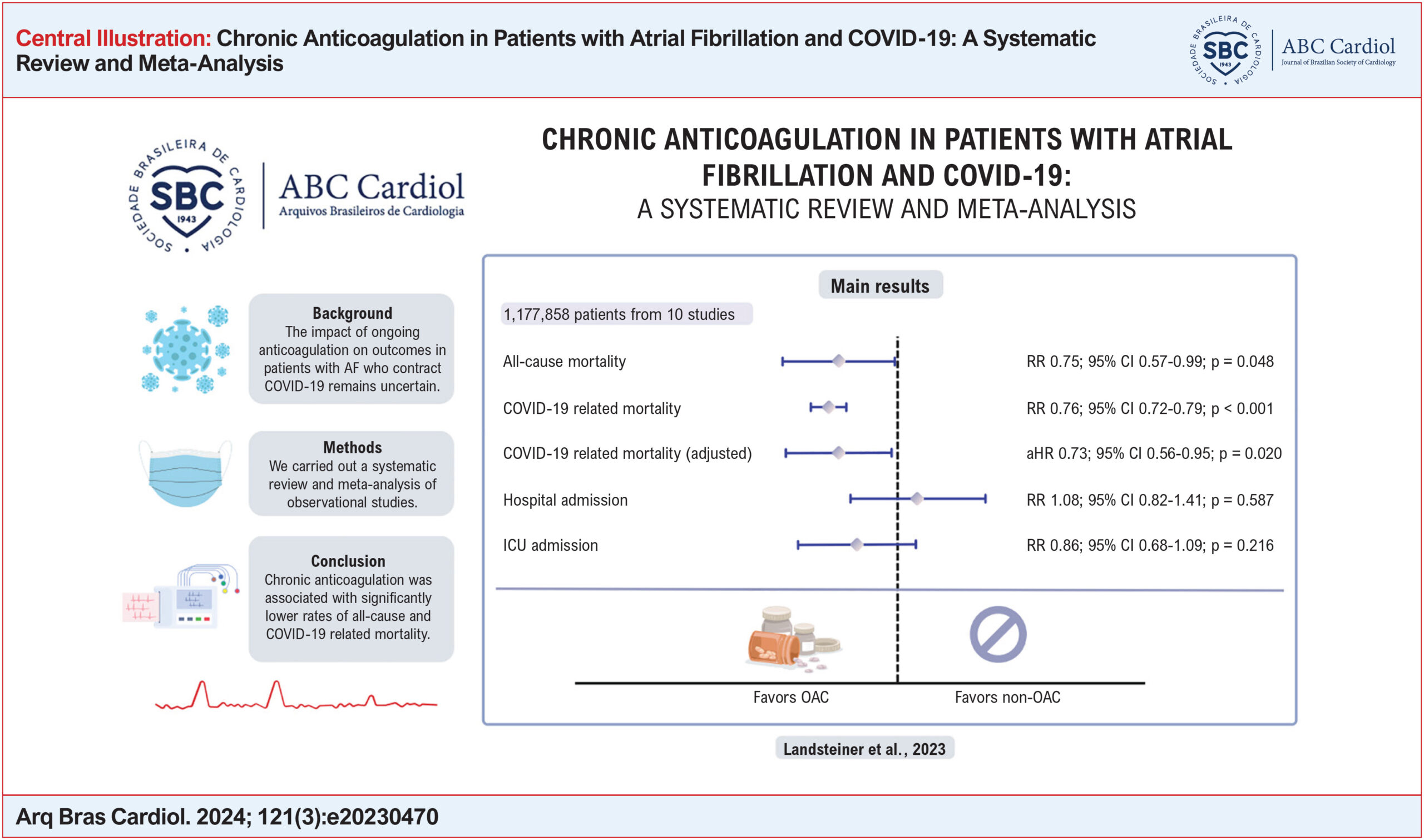
Coronavirus disease 2019 (COVID-19) is associated with hypercoagulability. It remains uncertain whether ongoing anticoagulation for atrial fibrillation (AF) in patients who later contract COVID-19 improves clinical outcomes.

Objectives:

To compare chronic oral anticoagulation with no previous anticoagulation in patients with AF who contracted a COVID-19 infection concerning the outcomes of all-cause mortality, COVID-19 mortality, intensive care unit (ICU) admission, and hospitalization.

Methods:

We systematically searched PubMed, Embase, and Cochrane Library for eligible studies from inception to December 2022. We included studies comparing COVID-19 outcomes in patients with versus without prior chronic anticoagulation for AF. Risk ratios (RR) with 95% confidence intervals (CI) were pooled with a random-effects model. The level of significance was set at p < 0.05. Quality assessment and risk of bias were performed according to Cochrane recommendations.

Results:

Ten studies comprising 1,177,858 patients with COVID-19 and AF were identified, of whom 893,772 (75.9%) were on prior chronic anticoagulation for AF. In patients with COVID-19, being on chronic anticoagulation for AF significantly reduced all-cause mortality (RR 0.75; 95% CI 0.57 to 0.99; p = 0.048; I = 89%) and COVID-19-related mortality (RR 0.76; 95% CI 0.72 to 0.79; p < 0.001; I = 0%) when compared with no prior anticoagulation. In contrast, there was no difference between groups regarding hospitalization (RR 1.08; 95% CI 0.82 to 1.41; p = 0.587; I = 95%) or ICU admission (RR 0.86; 95% CI 0.68 to 1.09; p = 0.216; I = 69%).

Conclusions:

In this meta-analysis, chronic anticoagulation for patients with AF who contracted COVID-19 was associated with significantly lower rates of all-cause mortality and COVID-19-related mortality as compared with no previous anticoagulation.

  • Anticoagulants
  • Atrial Fibrillation
  • COVID-19
  • Factor Xa Inhibitors
  • Vitamin K
Read Full Article
Creative Commons Attribution (CC BY) Creative Commons license
26/04/2024 DOI: 10.36660/abc.20230470i
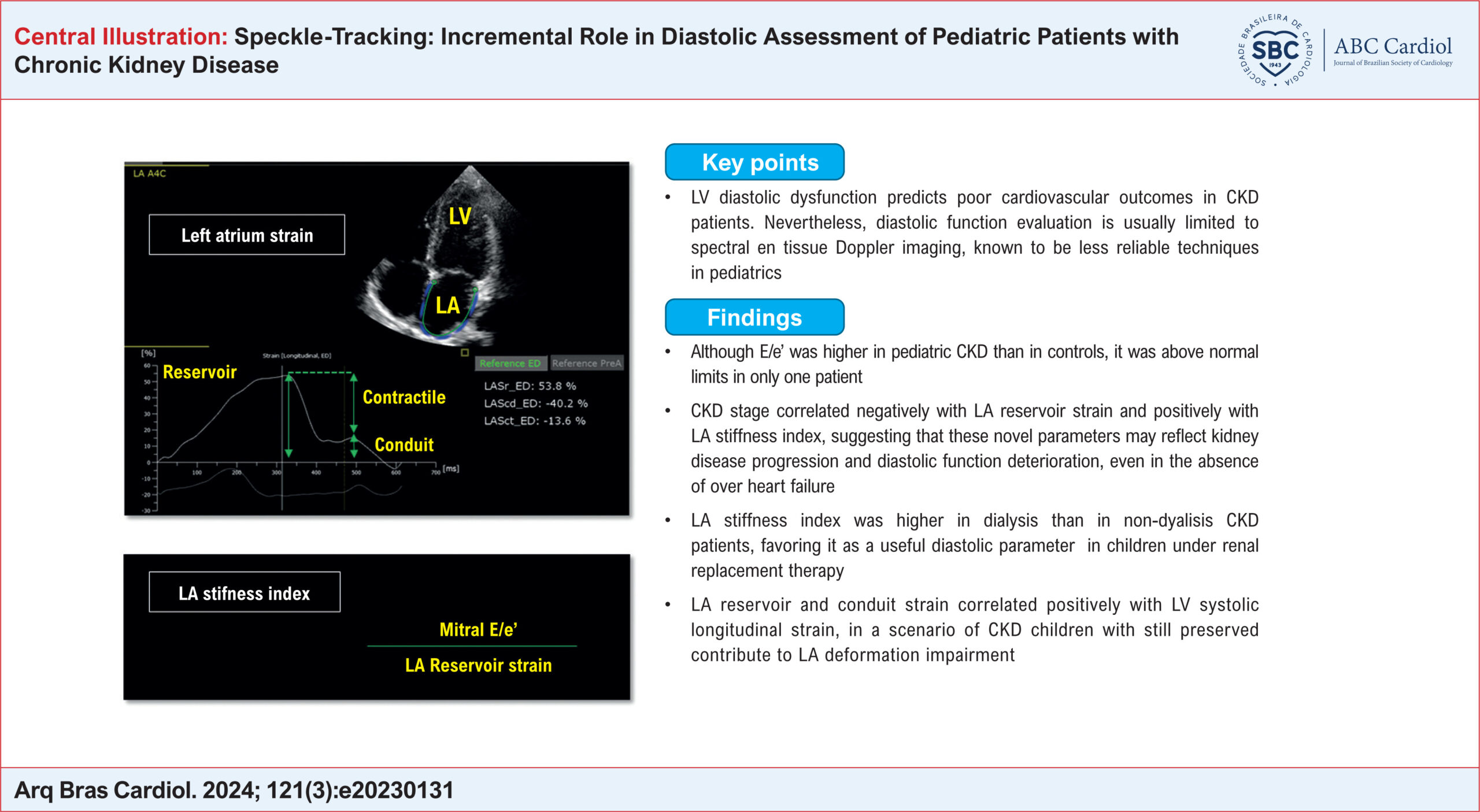
Speckle-Tracking: Incremental Role in Diastolic Assessment of Pediatric Patients with Chronic Kidney Disease
Original Article

Speckle-Tracking: Incremental Role in Diastolic Assessment of Pediatric Patients with Chronic Kidney Disease

Flora Maciel Penachio et al. Maria de Fátima Rodrigues Diniz Rosana Sbruzzi Prado Laurino Andreia Watanabe … Karen Saori Shiraishi Sawamura Alessandro Cavalcanti Lianza Carolina Rocha Brito Menezes Isabela de Sousa Lobo Silva Gabriela Nunes Leal

Abstract

Background:

Cardiovascular complications are the leading cause of mortality in pediatric patients with chronic kidney disease (CKD). Echocardiographic assessment of diastolic function in CKD has been limited to spectral and tissue Doppler imaging, known to be less reliable techniques in pediatrics. Two-dimensional Speckle tracking echocardiography (2DST) derived left atrial (LA) strain has recently been confirmed as a robust measure of diastolic function.

Objectives:

To investigate LA strain role in diastolic assessment of children at different stages of CKD.

Methods:

From February 2019 to July 2022, 55 CKD patients without cardiovascular symptoms and 55 controls were evaluated by standard and 2DST echocardiograms. The level of significance was set at 5% (p<0.05).

Results:

Patients and controls had similar age [9.78 (0.89 – 17.54) vs. 10.72 (1.03 –18,44) years; p = 0.41] and gender (36M:19F vs. 34M:21F; p=0.84). There were 25 non-dialysis patients and 30 dialysis patients. Left ventricular ejection fraction was ≥ 55% in all of them. Comparing CKD and controls, LA reservoir strain was lower (48.22±10.62% vs. 58.52±10.70%) and LA stiffness index was higher [0.14 (0.08–0.48)%-1 vs. 0.11 (0.06–0.23) %-1]; p<0.0001. LV hypertrophy was associated with lower LA reservoir strain (42.05±8.74% vs. 52.99±9.52%), higher LA stiffness [0.23(0.11 – 0.48)%-1 vs. 0.13 (0.08–0.23) %-1 and filling indexes (2.39±0.63 cm/s x %-1 vs. 1.74±0.47 cm/s x %-1; p<0.0001. Uncontrolled hypertension was associated with lower LA reservoir strain (41.9±10.6% vs. 50.6±9.7; p=0.005).

Conclusions:

LA strain proved to be a feasible tool in the assessment of pediatric CKD patients and was associated with known cardiovascular risk factors.

  • Child
  • Echocardiography
  • Heart Atria
  • Kidney
Read Full Article
Creative Commons Attribution (CC BY) Creative Commons license
26/04/2024 DOI: 10.36660/abc.20230131i Views 1
Figure 1
Case Report

Acute ST-Elevation Myocardial Infarction in a Young Adult: Rare Presentation of Giant Atrial Myxoma

Rodrigo Rufino Pereira Silva et al. Carolina Jerônimo Magalhães Rafael Silvestre Vieira da Silva Giulia Antoni Ferreira Rocha … Paulo Ernando Ferraz Cavalcanti Sérgio Tavares Montenegro

Abstract

Cardiac tumors are rare entities, among which atrial myxoma (AM) stands as the most frequent, accounting for approximately half of all reported cases. The incidence of AM is estimated to range from 0.001% to 0.3% within the general population, yet only about 0.06% of these cases present with coronary embolic events.

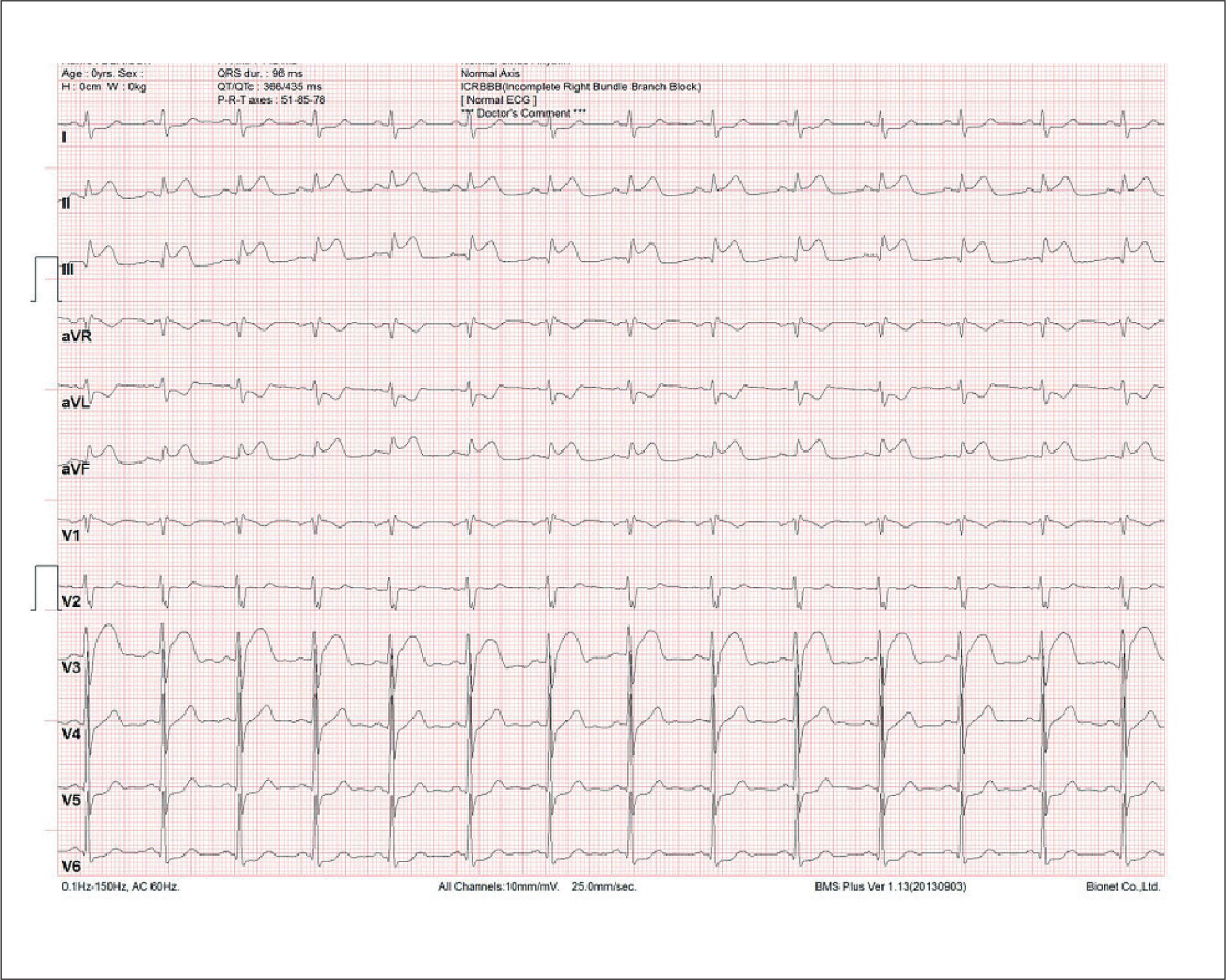
We report on a 33-year-old male smoker who experienced acute, severe precordial pain radiating to the left upper limb, lasting for one hour. The electrocardiographic evaluation demonstrated ST-segment elevation in leads D2, D3, and aVF, alongside significantly elevated serum troponin levels, confirming a diagnosis of ST-segment elevation myocardial infarction (STEMI). Subsequent coronary angiography revealed proximal occlusion of the right coronary artery due to thrombus. An initial attempt of thrombus aspiration was unsuccessful, followed by primary angioplasty with balloon inflation without stent placement. Further diagnostic exploration through transthoracic echocardiography identified a homogenous, smooth-surfaced mass measuring 5.2 cm x 2.3 cm attached to the interatrial septum. This mass, characterized by lobulations, prolapsed into the mitral valve and left ventricle during diastole, consistent with AM. Surgical resection of the mass was successfully performed, with the patient being discharged asymptomatic.

In the reported case, the patient’s profile, notably his age, and gender, diverges from the typical epidemiological characteristics associated with AM. This case adds to the limited number of reports where the inferior wall is affected by the right coronary artery being occluded. This report emphasizes the significance of differential diagnoses in younger patients presenting with STEMI.

  • Diagnostic Imaging/methods
  • Myxoma
  • ST Elevation Myocardial Infarction
  • Young Adult
Read Full Article
Creative Commons Attribution (CC BY) Creative Commons license
22/04/2024 DOI: 10.36660/abc.20230538i Views 1
Editorial

Aortic Stiffness and the Response to Phosphodiesterase-5 Inhibitors in Patients Receiving Treatment for Erectile Dysfunction: Predictive Role or an Epiphenomenon?

Eduardo Tibiriça

Erectile dysfunction (ED), a health problem with multifactorial pathogenesis and high prevalence, is directly correlated with patient age and is related to endothelial dysfunction and an increased risk of cardiovascular disease (CVD). Vascular endothelial dysfunction is currently considered to be the link between vasculogenic ED and cardiometabolic diseases, including hypertension, diabetes, and atherosclerosis., The association between ED and CVD has long been recognized, and studies suggest that ED may be an independent marker of CVD risk, including the presence of subclinical coronary artery disease in otherwise asymptomatic men.

In this context, the general use of type 5 phosphodiesterase inhibitors (iPDE-5) has led more patients with ED to seek medical help, providing an excellent opportunity for the identification and correction of possible cardiovascular risk factors. In addition to functional and structural vascular alterations in the systemic circulation that occur during ED, local microcirculatory disturbances and fibrosis are thought to contribute to the pathogenesis of ED., Moreover, penile endothelium-dependent microvascular function has been shown to improve after continuous use of sildenafil in hypertensive patients with ED.

[…]

  • erectile dysfunction
  • Phosphodiesterase 5 Inhibitors
  • Vascular Stiffness
Read Full Article
Creative Commons Attribution (CC BY) Creative Commons license
22/04/2024 DOI: 10.36660/abc.20240092i Views 1
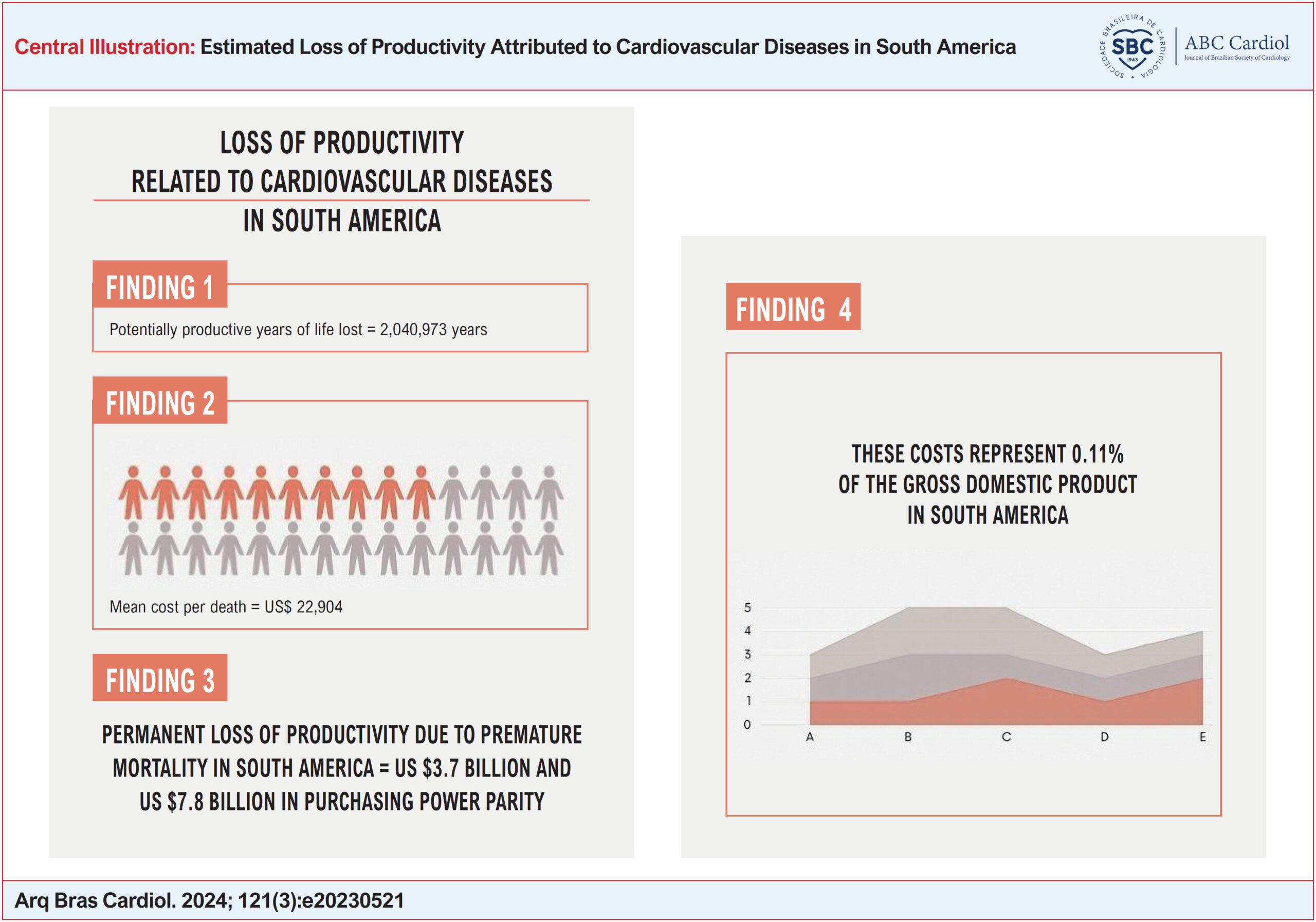
Estimated Loss of Productivity Attributed to Cardiovascular Diseases in South America
Original Article

Estimated Loss of Productivity Attributed to Cardiovascular Diseases in South America

Tayna Felicissímo Gomes de Souza Bandeira et al. Gabriela Bittencourt Gonzalez Mosegui Cid Manso de Mello Vianna Alfonso Jesús Gil López

Abstract

Background:

Cardiovascular diseases (CVD) have significant health and economic burdens. In South America, the loss of productivity related to these diseases has not yet been well explored.

Objective:

Estimate the potentially productive years of life lost (PPYLL) and loss of productivity related to premature mortality associated with CVD in South America, in 2019.

Methods:

Mortality data available from the 2019 Global Burden of Disease Study were used to estimate the burden of disease attributable to CVD. For monetary calculations of productivity loss, a proxy of the human capital approach was used. Data were stratified by sex, in working age groups.

Results:

The total number of deaths due to CVD in South America in 2019 was 754,324, and the total number of PPYLL was 2,040,973. The total permanent loss of productivity was approximately US$ 3.7 billion and US$ 7.8 billion in purchasing power parity, equivalent to 0.11% of the gross domestic product. The cost per death was US$ 22,904, and the ratio between men and women for the cost per death was 1.45. The variation in scenarios indicates that the estimates are robust, even with important differences between countries.

Conclusions:

CVD impose a significant economic burden on countries in South America. The characterization of this burden can support governments in the allocation of resources for the planning and execution of health policies and interventions in promotion, prevention, and recovery.

  • Cardiovascular Diseases
  • cost of illness
  • Disability-Adjusted Life Years
  • South America
Read Full Article
Creative Commons Attribution (CC BY) Creative Commons license
05/04/2024 DOI: 10.36660/abc.20230521i Views 1
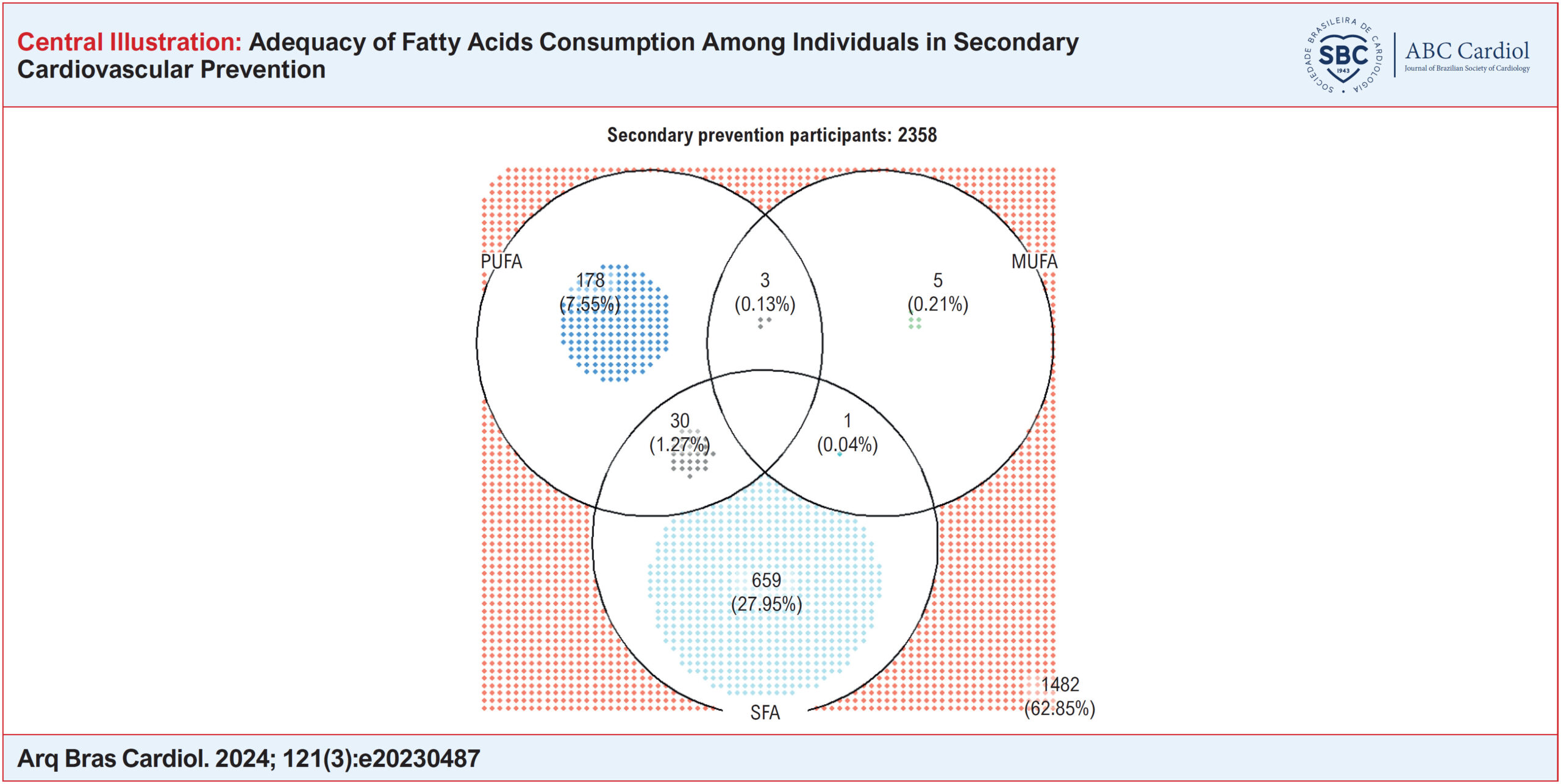
Adequacy of Fatty Acids Consumption Among Individuals in Secondary Cardiovascular Prevention
Original Article

Adequacy of Fatty Acids Consumption Among Individuals in Secondary Cardiovascular Prevention

Aline Marcadenti et al. Rachel H. Vieira Machado Renato Hideo Nakagawa Santos Caio Cesar dos Santos Kasai … Cristiane Kovacs Annie Bello Cristina H. de Matos Renata Torres Abib Bertacco Gabriela C. Souza Gabriela da S. Schirmann Francisca Eugenia Zaina Nagano Soraia Poloni Raquel Milani El Kik Naoel Hassan Feres Isa G. Rodrigues Antônio Carlos Sobral Sousa Josilene M. F. Pinheiro Sandra Mary Lima Vasconcelos Daniele Maria de Oliveira Carlos Viviane Sahade Souza Adriana Barros Gomes José Albuquerque de Figueiredo Neto Emilio Hideyuki Moriguchi Maria Cristina Izar Sônia Lopes Pinto Josefina Bressan Simone Raimondi de Souza Magali C. Kumbier Celme Barroncas Passos de Araújo Camila R. Torreglosa Bernardete Weber Ângela Cristine Bersch-Ferreira

Background:

Adhering to a diet adequate in macronutrients is crucial for the secondary prevention of cardiovascular diseases.

Objective:

To assess the prevalence of adherence to recommendations for the consumption of dietary fatty acids for the prevention and treatment of cardiovascular diseases and to estimate whether the presence of certain cardiovascular risk factors would be associated with adherence.

Methods:

Cross-sectional study using baseline data from 2,358 participants included in the “Brazilian Cardioprotective Nutritional Program Trial”. Dietary intake and cardiovascular risk factors were assessed. Adequate intake of polyunsaturated fatty acids (PUFA) was considered as ≥10% of total daily energy intake; for monounsaturated fatty acids (MUFA), 20%; and for saturated fatty acids (SFA), <7% according to the Brazilian Society of Cardiology. A significance level of 5% was considered in the statistical analysis.

Results:

No participant adhered to all recommendations simultaneously, and more than half (1,482 [62.9%]) did not adhere to any recommendation. Adherence exclusively to the SFA recommendation was the most prevalent, fulfilled by 659 (28%) participants, followed by adherence exclusively to the PUFA (178 [7.6%]) and MUFA (5 [0.2%]) recommendations. There was no association between the number of comorbidities and adherence to nutritional recommendations (p = 0.269). Participants from the Brazilian Northeast region showed a higher proportion of adherence to SFA consumption recommendations (38.42%) and lower adherence to PUFA intake (3.52%) (p <0.001) compared to other regions.

Conclusions:

Among the evaluated sample, there was low adherence to nutritional recommendations for dietary fatty acid consumption.

  • Cardiovascular disease
  • Diet
  • Fatty Acids
  • Secondary Prevention
Read Full Article
Creative Commons Attribution (CC BY) Creative Commons license
05/04/2024 DOI: 10.36660/abc.20230487i Views 1
Letter to the Editor

Key Points in Estimating Pulmonary Vascular Hemodynamic Parameters

Yusuf Ziya Şener

Dear Editor,

I have read the manuscript comparing the hemodynamic measurements of pulmonary vascular bed obtained from transthoracic echocardiography and invasive right heart catheterization with great interest. The authors reported that although the results of both diagnostic interventions correlate with each other, nearly half of echocardiographic measurements of systolic pulmonary artery pressure and right atrial pressure are accurate.

[…]

  • Anemia
  • Cardiac Catheterization
  • Echocardiography
  • Pulmonary Wedge Pressure
Read Full Article
Creative Commons Attribution (CC BY) Creative Commons license
05/04/2024 DOI: 10.36660/abc.20230579 Views 2
Role of Aortic Stiffness in Predicting Response to Phosphodiesterase-5 Inhibitors in the Treatment of Erectile Dysfunction
Original Article

Role of Aortic Stiffness in Predicting Response to Phosphodiesterase-5 Inhibitors in the Treatment of Erectile Dysfunction

Ömer Faruk Çiçek et al. Halil Ferat Öncel Remzi Salar

Abstract

Background:

It is known that aortic stiffness (AS) increases in patients with erectile dysfunction (ED). Phosphodiesterase type-5 (PDE-5) enzyme inhibitors are used in the treatment of ED, and patients’ responses to this treatment may vary.

Objectives:

We aimed to investigate the role of AS in predicting the response of patients planned to take PDE-5 enzyme inhibitors due to ED.

Methods:

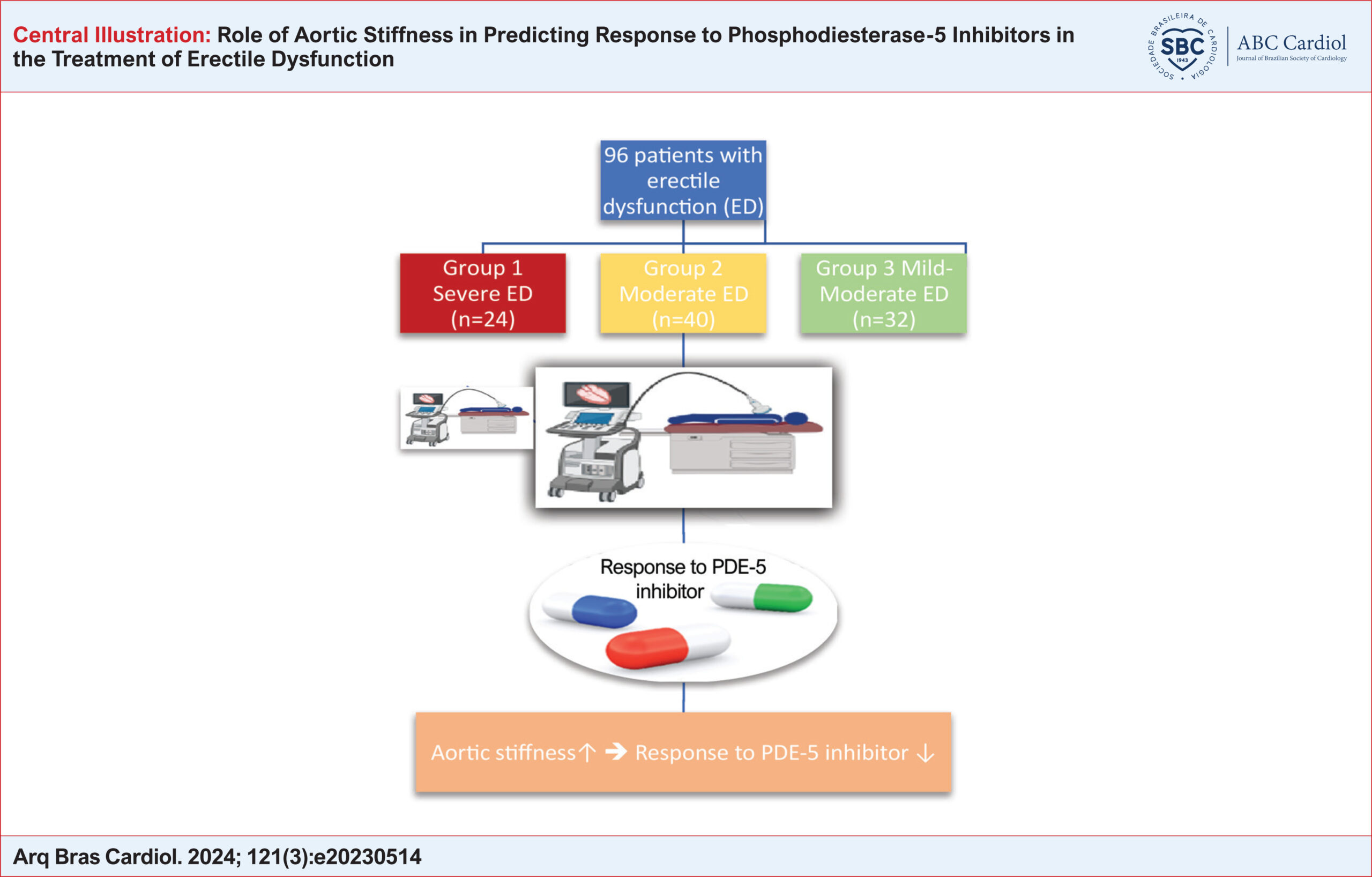
A total of 96 male patients with ED were included in the study. The International Index of Erectile Function (IIEF) questionnaire was used to evaluate the presence and severity of ED and the response to treatment. Transthoracic echocardiography was used to evaluate AS.

Results:

There was a statistically significant difference between the aortic strain and aortic distensibility values of the study groups (p<0.001). The delta IIEF score had a high level of positive correlation with aortic strain (p<0.01, r=0.758) and a moderate level of positive correlation with aortic distensibility (p<0.01, r=0.574).

Conclusion:

We determined that in patients with ED, aortic strain and aortic distensibility measured non-invasively using transthoracic echocardiography are important parameters in predicting patients’ response to PDE-5 inhibitor therapy.

  • Echocardiography
  • erectile dysfunction
  • Phosphodiesterase 5 Inhibitors
Read Full Article
Creative Commons Attribution (CC BY) Creative Commons license
05/04/2024 DOI: 10.36660/abc.20230514 Views 1
Testosterone Deficiency in Hypertensive Men: Prevalence and Associated Factors
Original Article

Testosterone Deficiency in Hypertensive Men: Prevalence and Associated Factors

Leandra Analia Freitas Negretto et al. Nelson Rassi Leonardo Ribeiro Soares Amanda Bueno Carvalho Saraiva … Maria Emília Figueiredo Teixeira Luciana da Ressurreição Santos Ana Luiza Lima Souza Paulo Cesar B. Veiga Jardim Weimar Kunz Sebba Barroso de Souza Thiago de Souza Veiga Jardim

Abstract

Background:

Testosterone deficiency (TD) is a prevalent condition in our midst and still very neglected. Arterial hypertension (AH) is one of the possible associated factors.

Objectives:

To determine the prevalence of TD in a hypertensive male population and the factors associated with its occurrence, such as age, time since hypertension diagnosis, number of antihypertensive classes, body mass index (BMI), diabetes, dyslipidemia, chronic kidney disease (CKD), positive symptoms of TD (positive ADAM questionnaire) and use of spironolactone.

Methods:

Cross-sectional study with administration of the ADAM questionnaire, assessment of biochemical, clinical, and anthropometric data. Patients were stratified into DT and normal testosterone groups. Categorical variables were compared using the chi-squared test and continuous variables using the Mann-Witney test; variables with significance (p<0,05) were analyzed by multivariable linear regression.

Results:

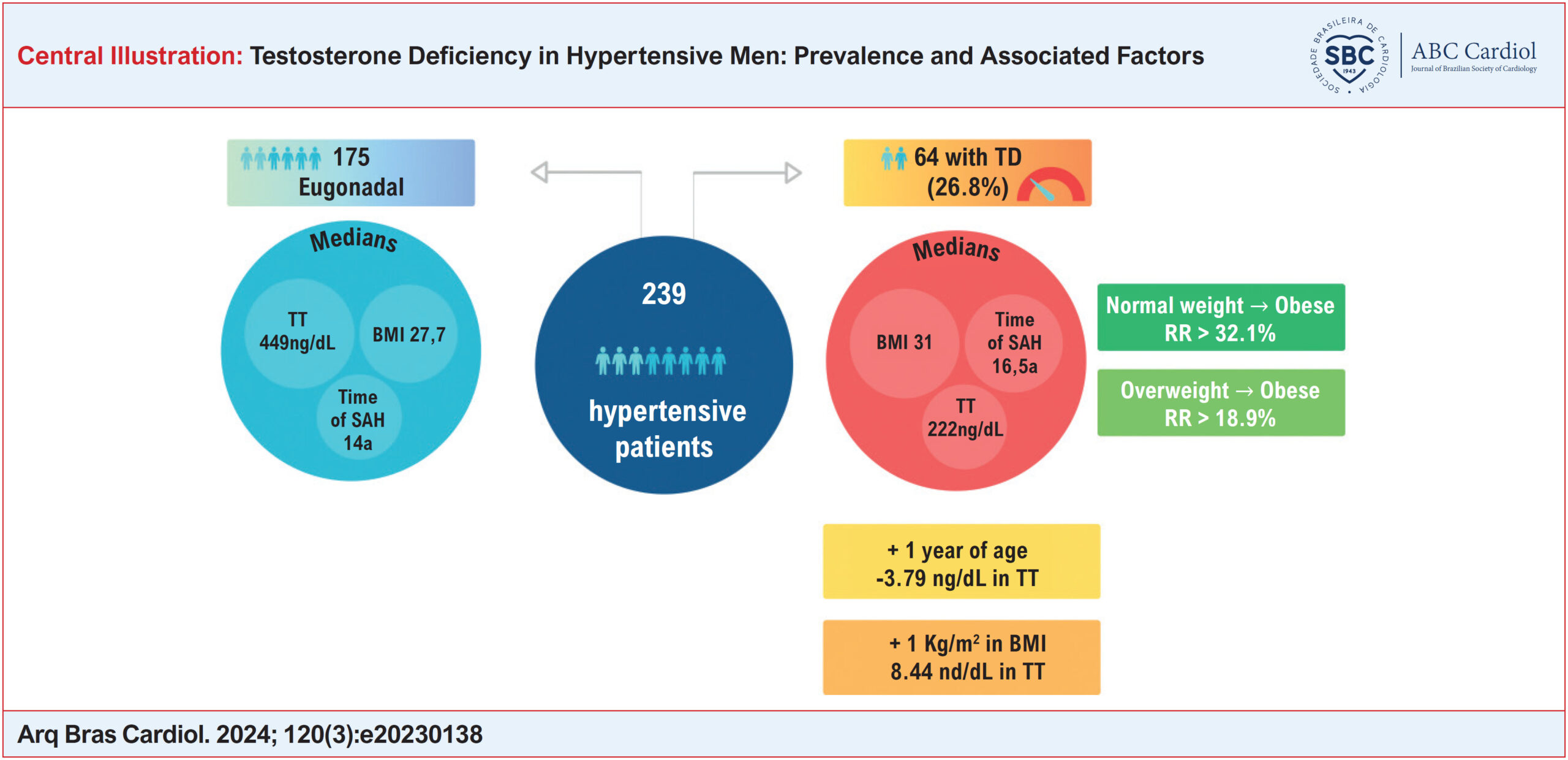
The prevalence of TD was 26.36%. There was an association between TD and body mass index (BMI) (p=0.0007) but there was no association with age (p=0.0520), time of hypertension diagnosis (p=0.1418), number of classes of antihypertensive drugs (p=0.732), diabetes (p=0.1112); dyslipidemia (p=0.3888); CKD (p=0.3321); use of spironolactone (p=0.3546) or positive ADAM questionnaire (p=0.2483).

Conclusions:

TD was highly prevalent and positively associated with BMI. Total testosterone (TT) declined by 8.44ng/dL with a one unit increase in BMI and dropped by 3.79ng/dL with a one-year increase in age.

  • Hypertension
  • Hypogonadism
  • Obesity
  • Testosterone
Read Full Article
Creative Commons Attribution (CC BY) Creative Commons license
05/04/2024 DOI: 10.36660/abc.20230138i Views 1
Critical Assessment of the Management of Unstable Angina in a Specialized Cardiology Emergency Room
Original Article

Critical Assessment of the Management of Unstable Angina in a Specialized Cardiology Emergency Room

Mateus Arantes Prata et al. Louis Nakayama Ohe Kelvin Henrique Vilalva Lucas Ferreira Marcondes Lemos Paola Emanuela Poggio Smanio

Abstract

Background:

The management of unstable angina (UA) presents a challenge due to its subjective diagnosis and limited representation in randomized clinical trials that inform current practices.

Objectives:

This study aims to identify key factors associated with the indication for invasive versus non-invasive stratification in this population and to evaluate factors associated with stratification test results.

Methods:

This retrospective cohort study included patients hospitalized with UA over a consecutive 20-month period. To assess factors associated with stratification strategies, patients were divided into invasive stratification (coronary angiography) and non-invasive stratification (other methods) groups. For the analysis of factors related to changes in stratification tests, patients were categorized into groups with or without obstructive coronary artery disease (CAD) or ischemia, as per the results of the requested tests. Comparisons between groups and multiple logistic regression analyses were performed, with statistical significance set at a 5% level.

Results:

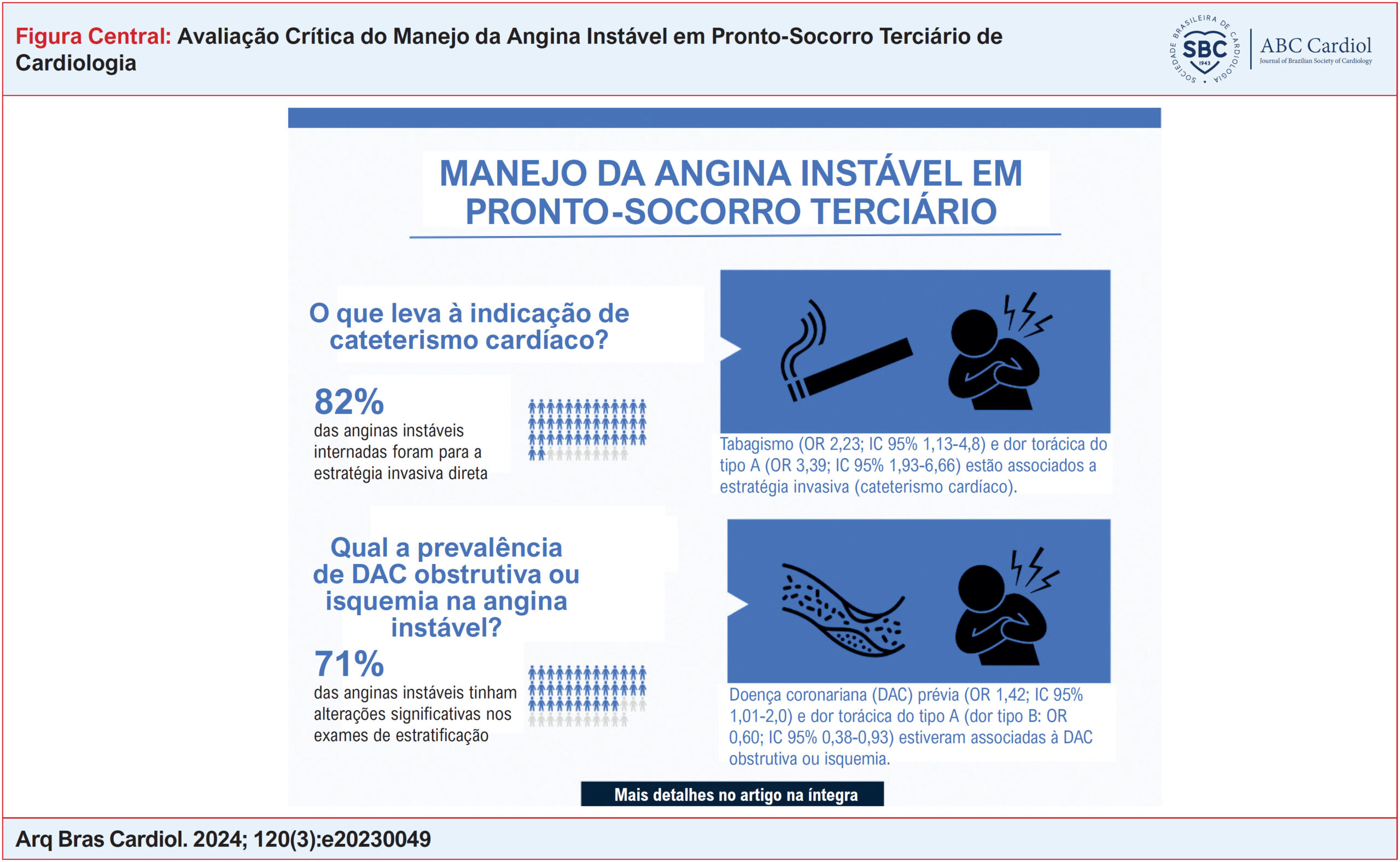
A total of 729 patients were included, with a median age of 63 years and a predominance of males (64.6%). Factors associated with invasive stratification included smoking (p = 0.001); type of chest pain (p < 0.001); "crescendo" pain (p = 0.006); TIMI score (p = 0.006); HEART score (p = 0.011). In multivariate analysis, current smokers (OR 2.23, 95% CI 1.13-4.8), former smokers (OR 2.19, 95% CI 1.39-3.53), and type A chest pain (OR 3.39, 95% CI 1.93-6.66) were independently associated. Factors associated with obstructive CAD or ischemia included length of hospital stay (p < 0.001); male gender (p = 0.032); effort-induced pain (p = 0.037); Diamond-Forrester score (p = 0.026); TIMI score (p = 0.001). In multivariate analysis, only chest pain (type B chest pain: OR 0.6, 95% CI 0.38-0.93, p = 0.026) and previous CAD (OR 1.42, 95% CI 1.01-2.0, p = 0.048) were independently associated.

Conclusion:

The type of chest pain plays a crucial role not only in the diagnosis of UA but also in determining the appropriate treatment. Our results highlight the importance of incorporating pain characteristics into prognostic scores endorsed by guidelines to optimize UA management.

  • Acute coronary syndrome
  • Chest Pain
  • Unstable Angina
Read Full Article
Creative Commons Attribution (CC BY) Creative Commons license
05/04/2024 DOI: 10.36660/abc.20230049i Views 1
Letter to the Editor

Intermittent Fasting in the Control of Hypertension: Do We Have Enough Evidence?

Adriana Camargo Oliveira et al. Natália de Filippo Mariosa Marcos Pereira Caetano Mikaelle Costa Correia

Dear Editor,

The study published by Demirci et al. brings up an interesting and current discussion by evaluating the effect of intermittent fasting (IF) on blood pressure, the renin-angiotensin system (RAS), and the autonomic nervous system (ANS) in hypertensive patients using 24-hour ambulatory blood pressure monitoring (ABPM), Holter electrocardiogram, serum levels of Ang-I and Ang-II and ACE activity before and after IF. Among the findings was a notable reduction in blood pressure in patients undergoing IF, as well as a decreased expression of Ang-II and ACE in this same group. In addition, the reduction in Ang-II levels was identified as a predictive factor for blood pressure improvement after IF.

[…]

  • Arterial Stiffness
  • Blood Pressure
  • Fasting
  • Hypertension
Read Full Article
Creative Commons Attribution (CC BY) Creative Commons license
05/04/2024 DOI: 10.36660/abc.20230607i Views 1

How to cite this article

EndNote RIS

Electronic Document Format (Vancouver)

Pena JLB. Is Left Atrial Strain the Missing Part to Diagnose Diastolic Dysfunction in Children with Chronic Kidney Disease?. Arquivos Brasileiros de Cardiologia 2024;121(3):e20240257.

Electronic Document Format (ABNT)

Pena, José Luiz Barros. Is Left Atrial Strain the Missing Part to Diagnose Diastolic Dysfunction in Children with Chronic Kidney Disease?. Arquivos Brasileiros de Cardiologia, v. 121, n. 3, e20240257, Jul. 2024.

Electronic Document Format (APA)

Pena, J. L. B. (2024). Is Left Atrial Strain the Missing Part to Diagnose Diastolic Dysfunction in Children with Chronic Kidney Disease?. Arquivos Brasileiros de Cardiologia, 121(3), e20240257.

Electronic Document Format (ISO)

Pena, José Luiz Barros. Is Left Atrial Strain the Missing Part to Diagnose Diastolic Dysfunction in Children with Chronic Kidney Disease?. Arquivos Brasileiros de Cardiologia [online]. 2024, vol. 121, n. 3, [cited 2026-10-14], e20240257. Available from: <https://journals.cardiol.br/en/article/is-left-atrial-strain-the-missing-part-to-diagnose-diastolic-dysfunction-in-children-with-chronic-kidney-disease/>. ISSN 0066-782X

EndNote RIS

Electronic Document Format (Vancouver)

Carvalho T, Freitas OGA, Chalela WA, Hossri CAC, Milani M, Buglia S, Precoma DB, et al. Brazilian Guideline for Exercise Test in the Adult Population – 2024. Arquivos Brasileiros de Cardiologia 2024;121(3):e20240110.

Electronic Document Format (ABNT)

Carvalho, Tales de; Freitas, Odilon Gariglio Alvarenga de; Chalela, William Azem; Hossri, Carlos Alberto Cordeiro; Milani, Mauricio; Buglia, Susimeire; Precoma, Dalton Bertolim; Falcão, Andréa Maria Gomes Marinho; Mastrocola, Luiz Eduardo; Castro, Iran; Albuquerque, Pedro Ferreira de; Coutinho, Ricardo Quental; Brito, Fabio Sandoli de; Alves, Josmar de Castro; Serra, Salvador Manoel; Santos, Mauro Augusto dos; Colombo, Clea Simone Sabino de Souza; Stein, Ricardo; Herdy, Artur Haddad; Silveira, Anderson Donelli da; Castro, Claudia Lucia Barros de; Silva, Miguel Morita Fernandes da; Meneghello, Romeu Sergio; Ritt, Luiz Eduardo Fonteles; Malafaia, Felipe Lopes; Marinucci, Leonardo Filipe Benedeti; Pena, José Luiz Barros; Almeida, Antônio Eduardo Monteiro de; Vieira, Marcelo Luiz Campos; Stier Júnior, Arnaldo Laffitte. Brazilian Guideline for Exercise Test in the Adult Population – 2024. Arquivos Brasileiros de Cardiologia, v. 121, n. 3, e20240110, Jun. 2024.

Electronic Document Format (APA)

Carvalho, T. , Freitas, O. G. A. , Chalela, W. A., Hossri, C. A. C., Milani, M., Buglia, S., Precoma, D. B., Falcão, A. M. G. M., Mastrocola, L. E., Castro, I., Albuquerque, P. F. , Coutinho, R. Q., Brito, F. S. , Alves, J. C., Serra, S. M., Santos, M. A. , Colombo, C. S. S. S., Stein, R., Herdy, A. H., Silveira, A. D. , Castro, C. L. B. , Silva, M. M. F. , Meneghello, R. S., Ritt, L. E. F., Malafaia, F. L., Marinucci, L. F. B., Pena, J. L. B., Almeida, A. E. M. , Vieira, M. L. C., & Stier Júnior, A. L. (2024). Brazilian Guideline for Exercise Test in the Adult Population – 2024. Arquivos Brasileiros de Cardiologia, 121(3), e20240110.

Electronic Document Format (ISO)

Carvalho, Tales de and Freitas, Odilon Gariglio Alvarenga de and Chalela, William Azem and Hossri, Carlos Alberto Cordeiro and Milani, Mauricio and Buglia, Susimeire and Precoma, Dalton Bertolim and Falcão, Andréa Maria Gomes Marinho and Mastrocola, Luiz Eduardo and Castro, Iran and Albuquerque, Pedro Ferreira de and Coutinho, Ricardo Quental and Brito, Fabio Sandoli de and Alves, Josmar de Castro and Serra, Salvador Manoel and Santos, Mauro Augusto dos and Colombo, Clea Simone Sabino de Souza and Stein, Ricardo and Herdy, Artur Haddad and Silveira, Anderson Donelli da and Castro, Claudia Lucia Barros de and Silva, Miguel Morita Fernandes da and Meneghello, Romeu Sergio and Ritt, Luiz Eduardo Fonteles and Malafaia, Felipe Lopes and Marinucci, Leonardo Filipe Benedeti and Pena, José Luiz Barros and Almeida, Antônio Eduardo Monteiro de and Vieira, Marcelo Luiz Campos and Stier Júnior, Arnaldo Laffitte. Brazilian Guideline for Exercise Test in the Adult Population – 2024. Arquivos Brasileiros de Cardiologia [online]. 2024, vol. 121, n. 3, [cited 2026-10-14], e20240110. Available from: <https://journals.cardiol.br/en/article/brazilian-guideline-for-exercise-test-in-the-adult-population-2024/>. ISSN 0066-782X

EndNote RIS

Electronic Document Format (Vancouver)

Marinho F. The Impact of Cardiovascular Disease on Economic Loss. Arquivos Brasileiros de Cardiologia 2024;121(3):e20240175.

Electronic Document Format (ABNT)

Marinho, Fátima. The Impact of Cardiovascular Disease on Economic Loss. Arquivos Brasileiros de Cardiologia, v. 121, n. 3, e20240175, May. 2024.

Electronic Document Format (APA)

Marinho, F. (2024). The Impact of Cardiovascular Disease on Economic Loss. Arquivos Brasileiros de Cardiologia, 121(3), e20240175.

Electronic Document Format (ISO)

Marinho, Fátima. The Impact of Cardiovascular Disease on Economic Loss. Arquivos Brasileiros de Cardiologia [online]. 2024, vol. 121, n. 3, [cited 2026-10-14], e20240175. Available from: <https://journals.cardiol.br/en/article/the-impact-of-cardiovascular-disease-on-economic-loss/>. ISSN 0066-782X

EndNote RIS

Electronic Document Format (Vancouver)

Santos EM, Huguenin GVB. Fatty Acids Intake in Cardiovascular Prevention: The Incessant Search for Adequacy. Arquivos Brasileiros de Cardiologia 2024;121(3):e20240208.

Electronic Document Format (ABNT)

Santos, Elisa Maia dos; Huguenin, Grazielle Vilas Bôas. Fatty Acids Intake in Cardiovascular Prevention: The Incessant Search for Adequacy. Arquivos Brasileiros de Cardiologia, v. 121, n. 3, e20240208, May. 2024.

Electronic Document Format (APA)

Santos, E. M. , & Huguenin, G. V. B. (2024). Fatty Acids Intake in Cardiovascular Prevention: The Incessant Search for Adequacy. Arquivos Brasileiros de Cardiologia, 121(3), e20240208.

Electronic Document Format (ISO)

Santos, Elisa Maia dos and Huguenin, Grazielle Vilas Bôas. Fatty Acids Intake in Cardiovascular Prevention: The Incessant Search for Adequacy. Arquivos Brasileiros de Cardiologia [online]. 2024, vol. 121, n. 3, [cited 2026-10-14], e20240208. Available from: <https://journals.cardiol.br/en/article/fatty-acids-intake-in-cardiovascular-prevention-the-incessant-search-for-adequacy/>. ISSN 0066-782X

EndNote RIS

Electronic Document Format (Vancouver)

Rassi DC, Freitas Jr. AF, Rassi S. The Importance of Characterizing Chest Pain in the Management of Unstable Angina. Arquivos Brasileiros de Cardiologia 2024;121(3):e20240168.

Electronic Document Format (ABNT)

Rassi, Daniela do Carmo; Freitas Jr., Aguinaldo Figueiredo; Rassi, Salvador. The Importance of Characterizing Chest Pain in the Management of Unstable Angina. Arquivos Brasileiros de Cardiologia, v. 121, n. 3, e20240168, May. 2024.

Electronic Document Format (APA)

Rassi, D. C., Freitas Jr., A. F., & Rassi, S. (2024). The Importance of Characterizing Chest Pain in the Management of Unstable Angina. Arquivos Brasileiros de Cardiologia, 121(3), e20240168.

Electronic Document Format (ISO)

Rassi, Daniela do Carmo and Freitas Jr., Aguinaldo Figueiredo and Rassi, Salvador. The Importance of Characterizing Chest Pain in the Management of Unstable Angina. Arquivos Brasileiros de Cardiologia [online]. 2024, vol. 121, n. 3, [cited 2026-10-14], e20240168. Available from: <https://journals.cardiol.br/en/article/the-importance-of-characterizing-chest-pain-in-the-management-of-unstable-angina/>. ISSN 0066-782X

EndNote RIS

Electronic Document Format (Vancouver)

Póvoa R. Relationship of Testosterone with Obesity and Arterial Hypertension. Arquivos Brasileiros de Cardiologia 2024;121(3):e20240138.

Electronic Document Format (ABNT)

Póvoa, Rui. Relationship of Testosterone with Obesity and Arterial Hypertension. Arquivos Brasileiros de Cardiologia, v. 121, n. 3, e20240138, May. 2024.

Electronic Document Format (APA)

Póvoa, R. (2024). Relationship of Testosterone with Obesity and Arterial Hypertension. Arquivos Brasileiros de Cardiologia, 121(3), e20240138.

Electronic Document Format (ISO)

Póvoa, Rui. Relationship of Testosterone with Obesity and Arterial Hypertension. Arquivos Brasileiros de Cardiologia [online]. 2024, vol. 121, n. 3, [cited 2026-10-14], e20240138. Available from: <https://journals.cardiol.br/en/article/relationship-of-testosterone-with-obesity-and-arterial-hypertension/>. ISSN 0066-782X

EndNote RIS

Electronic Document Format (Vancouver)

Abreu LM. The Immense Challenge of Searching for the Best Evidence. Arquivos Brasileiros de Cardiologia 2024;121(3):e20240106.

Electronic Document Format (ABNT)

Abreu, Luiz Maurino. The Immense Challenge of Searching for the Best Evidence. Arquivos Brasileiros de Cardiologia, v. 121, n. 3, e20240106, May. 2024.

Electronic Document Format (APA)

Abreu, L. M. (2024). The Immense Challenge of Searching for the Best Evidence. Arquivos Brasileiros de Cardiologia, 121(3), e20240106.

Electronic Document Format (ISO)

Abreu, Luiz Maurino. The Immense Challenge of Searching for the Best Evidence. Arquivos Brasileiros de Cardiologia [online]. 2024, vol. 121, n. 3, [cited 2026-10-14], e20240106. Available from: <https://journals.cardiol.br/en/article/the-immense-challenge-of-searching-for-the-best-evidence/>. ISSN 0066-782X

EndNote RIS

Electronic Document Format (Vancouver)

Andrade VC, Rezende PC, Hueb W, Ramires JAF. Interpreting Acute Myocardial Infarction 40 Years Later. Evolution of Knowledge: What is the Best Explanation?. Arquivos Brasileiros de Cardiologia 2024;121(3):e20230757.

Electronic Document Format (ABNT)

Andrade, Vitor Coutinho; Rezende, Paulo Cury; Hueb, Whady; Ramires, José Antonio Franchini. Interpreting Acute Myocardial Infarction 40 Years Later. Evolution of Knowledge: What is the Best Explanation?. Arquivos Brasileiros de Cardiologia, v. 121, n. 3, e20230757, Apr. 2024.

Electronic Document Format (APA)

Andrade, V. C., Rezende, P. C., Hueb, W., & Ramires, J. A. F. (2024). Interpreting Acute Myocardial Infarction 40 Years Later. Evolution of Knowledge: What is the Best Explanation?. Arquivos Brasileiros de Cardiologia, 121(3), e20230757.

Electronic Document Format (ISO)

Andrade, Vitor Coutinho and Rezende, Paulo Cury and Hueb, Whady and Ramires, José Antonio Franchini. Interpreting Acute Myocardial Infarction 40 Years Later. Evolution of Knowledge: What is the Best Explanation?. Arquivos Brasileiros de Cardiologia [online]. 2024, vol. 121, n. 3, [cited 2026-10-14], e20230757. Available from: <https://journals.cardiol.br/en/article/interpreting-acute-myocardial-infarction-40-years-later-evolution-of-knowledge-what-is-the-best-explanation/>. ISSN 0066-782X

EndNote RIS

Electronic Document Format (Vancouver)

Précoma DB, Silva RP, Nakamoto A, Omar VM, Lopes D, Saraiva JFK. Study Design of a Brazilian Observational Study of Edoxaban in Patients with Atrial Fibrillation (EdoBRA). Arquivos Brasileiros de Cardiologia 2024;121(3):e20230392.

Electronic Document Format (ABNT)

Précoma, Dalton Bertolim; Silva, Rafael Paletta da; Nakamoto, Allyson; Omar, Viviane Mariz; Lopes, Danilo; Saraiva, José Francisco Kerr. Study Design of a Brazilian Observational Study of Edoxaban in Patients with Atrial Fibrillation (EdoBRA). Arquivos Brasileiros de Cardiologia, v. 121, n. 3, e20230392, Apr. 2024.

Electronic Document Format (APA)

Précoma, D. B., Silva, R. P. , Nakamoto, A., Omar, V. M., Lopes, D., & Saraiva, J. F. K. (2024). Study Design of a Brazilian Observational Study of Edoxaban in Patients with Atrial Fibrillation (EdoBRA). Arquivos Brasileiros de Cardiologia, 121(3), e20230392.

Electronic Document Format (ISO)

Précoma, Dalton Bertolim and Silva, Rafael Paletta da and Nakamoto, Allyson and Omar, Viviane Mariz and Lopes, Danilo and Saraiva, José Francisco Kerr. Study Design of a Brazilian Observational Study of Edoxaban in Patients with Atrial Fibrillation (EdoBRA). Arquivos Brasileiros de Cardiologia [online]. 2024, vol. 121, n. 3, [cited 2026-10-14], e20230392. Available from: <https://journals.cardiol.br/en/article/study-design-of-a-brazilian-observational-study-of-edoxaban-in-patients-with-atrial-fibrillation-edobra/>. ISSN 0066-782X

EndNote RIS

Electronic Document Format (Vancouver)

Muller IT, Decker SRR, Rosa RG, Rollin G. Cardiovascular Safety of Testosterone-Replacement Therapy: Critical Appraisal of a Currently Published Clinical Trial. Arquivos Brasileiros de Cardiologia 2024;121(3):e20230558.

Electronic Document Format (ABNT)

Muller, Isabela Tramontini; Decker, Sérgio Renato da Rosa; Rosa, Regis Goulart; Rollin, Guilherme. Cardiovascular Safety of Testosterone-Replacement Therapy: Critical Appraisal of a Currently Published Clinical Trial. Arquivos Brasileiros de Cardiologia, v. 121, n. 3, e20230558, Apr. 2024.

Electronic Document Format (APA)

Muller, I. T., Decker, S. R. R., Rosa, R. G., & Rollin, G. (2024). Cardiovascular Safety of Testosterone-Replacement Therapy: Critical Appraisal of a Currently Published Clinical Trial. Arquivos Brasileiros de Cardiologia, 121(3), e20230558.

Electronic Document Format (ISO)

Muller, Isabela Tramontini and Decker, Sérgio Renato da Rosa and Rosa, Regis Goulart and Rollin, Guilherme. Cardiovascular Safety of Testosterone-Replacement Therapy: Critical Appraisal of a Currently Published Clinical Trial. Arquivos Brasileiros de Cardiologia [online]. 2024, vol. 121, n. 3, [cited 2026-10-14], e20230558. Available from: <https://journals.cardiol.br/en/article/cardiovascular-safety-of-testosterone-replacement-therapy-critical-appraisal-of-a-currently-published-clinical-trial/>. ISSN 0066-782X

EndNote RIS

Electronic Document Format (Vancouver)

Landsteiner I, Pinheiro JA, Felix N, Gewehr DM, Cardoso R. Chronic Anticoagulation in Patients with Atrial Fibrillation and COVID-19: A Systematic Review and Meta-Analysis. Arquivos Brasileiros de Cardiologia 2024;121(3):e20230470.

Electronic Document Format (ABNT)

Landsteiner, Isabela; Pinheiro, Jonathan A.; Felix, Nicole; Gewehr, Douglas Mesadri; Cardoso, Rhanderson. Chronic Anticoagulation in Patients with Atrial Fibrillation and COVID-19: A Systematic Review and Meta-Analysis. Arquivos Brasileiros de Cardiologia, v. 121, n. 3, e20230470, Apr. 2024.

Electronic Document Format (APA)

Landsteiner, I., Pinheiro, J. A., Felix, N., Gewehr, D. M., & Cardoso, R. (2024). Chronic Anticoagulation in Patients with Atrial Fibrillation and COVID-19: A Systematic Review and Meta-Analysis. Arquivos Brasileiros de Cardiologia, 121(3), e20230470.

Electronic Document Format (ISO)

Landsteiner, Isabela and Pinheiro, Jonathan A. and Felix, Nicole and Gewehr, Douglas Mesadri and Cardoso, Rhanderson. Chronic Anticoagulation in Patients with Atrial Fibrillation and COVID-19: A Systematic Review and Meta-Analysis. Arquivos Brasileiros de Cardiologia [online]. 2024, vol. 121, n. 3, [cited 2026-10-14], e20230470. Available from: <https://journals.cardiol.br/en/article/chronic-anticoagulation-in-patients-with-atrial-fibrillation-and-covid-19-a-systematic-review-and-meta-analysis/>. ISSN 0066-782X

EndNote RIS

Electronic Document Format (Vancouver)

Penachio FM, Diniz MFR, Laurino RSP, Watanabe A, Sawamura KSS, Lianza AC, Menezes CRB, et al. Speckle-Tracking: Incremental Role in Diastolic Assessment of Pediatric Patients with Chronic Kidney Disease. Arquivos Brasileiros de Cardiologia 2024;121(3):e20230131.

Electronic Document Format (ABNT)

Penachio, Flora Maciel; Diniz, Maria de Fátima Rodrigues; Laurino, Rosana Sbruzzi Prado; Watanabe, Andreia; Sawamura, Karen Saori Shiraishi; Lianza, Alessandro Cavalcanti; Menezes, Carolina Rocha Brito; Silva, Isabela de Sousa Lobo; Leal, Gabriela Nunes. Speckle-Tracking: Incremental Role in Diastolic Assessment of Pediatric Patients with Chronic Kidney Disease. Arquivos Brasileiros de Cardiologia, v. 121, n. 3, e20230131, Apr. 2024.

Electronic Document Format (APA)

Penachio, F. M., Diniz, M. F. R., Laurino, R. S. P., Watanabe, A., Sawamura, K. S. S., Lianza, A. C., Menezes, C. R. B., Silva, I. S. L., & Leal, G. N. (2024). Speckle-Tracking: Incremental Role in Diastolic Assessment of Pediatric Patients with Chronic Kidney Disease. Arquivos Brasileiros de Cardiologia, 121(3), e20230131.

Electronic Document Format (ISO)

Penachio, Flora Maciel and Diniz, Maria de Fátima Rodrigues and Laurino, Rosana Sbruzzi Prado and Watanabe, Andreia and Sawamura, Karen Saori Shiraishi and Lianza, Alessandro Cavalcanti and Menezes, Carolina Rocha Brito and Silva, Isabela de Sousa Lobo and Leal, Gabriela Nunes. Speckle-Tracking: Incremental Role in Diastolic Assessment of Pediatric Patients with Chronic Kidney Disease. Arquivos Brasileiros de Cardiologia [online]. 2024, vol. 121, n. 3, [cited 2026-10-14], e20230131. Available from: <https://journals.cardiol.br/en/article/speckle-tracking-incremental-role-in-diastolic-assessment-of-pediatric-patients-with-chronic-kidney-disease/>. ISSN 0066-782X

EndNote RIS

Electronic Document Format (Vancouver)

Silva RRP, Magalhães CJ, Silva RSV, Rocha GAF, Cavalcanti PEF, Montenegro ST. Acute ST-Elevation Myocardial Infarction in a Young Adult: Rare Presentation of Giant Atrial Myxoma. Arquivos Brasileiros de Cardiologia 2024;121(3):e20230538.

Electronic Document Format (ABNT)

Silva, Rodrigo Rufino Pereira; Magalhães, Carolina Jerônimo; Silva, Rafael Silvestre Vieira da; Rocha, Giulia Antoni Ferreira; Cavalcanti, Paulo Ernando Ferraz; Montenegro, Sérgio Tavares. Acute ST-Elevation Myocardial Infarction in a Young Adult: Rare Presentation of Giant Atrial Myxoma. Arquivos Brasileiros de Cardiologia, v. 121, n. 3, e20230538, Apr. 2024.

Electronic Document Format (APA)

Silva, R. R. P., Magalhães, C. J., Silva, R. S. V. , Rocha, G. A. F., Cavalcanti, P. E. F., & Montenegro, S. T. (2024). Acute ST-Elevation Myocardial Infarction in a Young Adult: Rare Presentation of Giant Atrial Myxoma. Arquivos Brasileiros de Cardiologia, 121(3), e20230538.

Electronic Document Format (ISO)

Silva, Rodrigo Rufino Pereira and Magalhães, Carolina Jerônimo and Silva, Rafael Silvestre Vieira da and Rocha, Giulia Antoni Ferreira and Cavalcanti, Paulo Ernando Ferraz and Montenegro, Sérgio Tavares. Acute ST-Elevation Myocardial Infarction in a Young Adult: Rare Presentation of Giant Atrial Myxoma. Arquivos Brasileiros de Cardiologia [online]. 2024, vol. 121, n. 3, [cited 2026-10-14], e20230538. Available from: <https://journals.cardiol.br/en/article/acute-st-elevation-myocardial-infarction-in-a-young-adult-rare-presentation-of-giant-atrial-myxoma/>. ISSN 0066-782X

EndNote RIS

Electronic Document Format (Vancouver)

Tibiriça E. Aortic Stiffness and the Response to Phosphodiesterase-5 Inhibitors in Patients Receiving Treatment for Erectile Dysfunction: Predictive Role or an Epiphenomenon?. Arquivos Brasileiros de Cardiologia 2024;121(3):e20240092.

Electronic Document Format (ABNT)

Tibiriça, Eduardo. Aortic Stiffness and the Response to Phosphodiesterase-5 Inhibitors in Patients Receiving Treatment for Erectile Dysfunction: Predictive Role or an Epiphenomenon?. Arquivos Brasileiros de Cardiologia, v. 121, n. 3, e20240092, Apr. 2024.

Electronic Document Format (APA)

Tibiriça, E. (2024). Aortic Stiffness and the Response to Phosphodiesterase-5 Inhibitors in Patients Receiving Treatment for Erectile Dysfunction: Predictive Role or an Epiphenomenon?. Arquivos Brasileiros de Cardiologia, 121(3), e20240092.

Electronic Document Format (ISO)

Tibiriça, Eduardo. Aortic Stiffness and the Response to Phosphodiesterase-5 Inhibitors in Patients Receiving Treatment for Erectile Dysfunction: Predictive Role or an Epiphenomenon?. Arquivos Brasileiros de Cardiologia [online]. 2024, vol. 121, n. 3, [cited 2026-10-14], e20240092. Available from: <https://journals.cardiol.br/en/article/aortic-stiffness-and-the-response-to-phosphodiesterase-5-inhibitors-in-patients-receiving-treatment-for-erectile-dysfunction-predictive-role-or-an-epiphenomenon/>. ISSN 0066-782X

EndNote RIS

Electronic Document Format (Vancouver)

Bandeira TFGS, Mosegui GBG, Vianna CMM, López AJG. Estimated Loss of Productivity Attributed to Cardiovascular Diseases in South America. Arquivos Brasileiros de Cardiologia 2024;121(3):e20230521.

Electronic Document Format (ABNT)

Bandeira, Tayna Felicissímo Gomes de Souza; Mosegui, Gabriela Bittencourt Gonzalez; Vianna, Cid Manso de Mello; López, Alfonso Jesús Gil. Estimated Loss of Productivity Attributed to Cardiovascular Diseases in South America. Arquivos Brasileiros de Cardiologia, v. 121, n. 3, e20230521, Apr. 2024.

Electronic Document Format (APA)

Bandeira, T. F. G. S., Mosegui, G. B. G., Vianna, C. M. M., & López, A. J. G. (2024). Estimated Loss of Productivity Attributed to Cardiovascular Diseases in South America. Arquivos Brasileiros de Cardiologia, 121(3), e20230521.

Electronic Document Format (ISO)

Bandeira, Tayna Felicissímo Gomes de Souza and Mosegui, Gabriela Bittencourt Gonzalez and Vianna, Cid Manso de Mello and López, Alfonso Jesús Gil. Estimated Loss of Productivity Attributed to Cardiovascular Diseases in South America. Arquivos Brasileiros de Cardiologia [online]. 2024, vol. 121, n. 3, [cited 2026-10-14], e20230521. Available from: <https://journals.cardiol.br/en/article/estimated-loss-of-productivity-attributed-to-cardiovascular-diseases-in-south-america/>. ISSN 0066-782X

EndNote RIS

Electronic Document Format (Vancouver)

Marcadenti A, Machado RHV, Santos RHN, Kasai CCS, Kovacs C, Bello A, Matos CH, et al. Adequacy of Fatty Acids Consumption Among Individuals in Secondary Cardiovascular Prevention. Arquivos Brasileiros de Cardiologia 2024;121(3):e20230487.

Electronic Document Format (ABNT)

Marcadenti, Aline; Machado, Rachel H. Vieira; Santos, Renato Hideo Nakagawa; Kasai, Caio Cesar dos Santos; Kovacs, Cristiane; Bello, Annie; Matos, Cristina H. de; Bertacco, Renata Torres Abib; Souza, Gabriela C.; Schirmann, Gabriela da S.; Nagano, Francisca Eugenia Zaina; Poloni, Soraia; Kik, Raquel Milani El; Feres, Naoel Hassan; Rodrigues, Isa G.; Sousa, Antônio Carlos Sobral; Pinheiro, Josilene M. F.; Vasconcelos, Sandra Mary Lima; Carlos, Daniele Maria de Oliveira; Souza, Viviane Sahade; Gomes, Adriana Barros; Figueiredo Neto, José Albuquerque de; Moriguchi, Emilio Hideyuki; Izar, Maria Cristina; Pinto, Sônia Lopes; Bressan, Josefina; Souza, Simone Raimondi de; Kumbier, Magali C.; Araújo, Celme Barroncas Passos de; Torreglosa, Camila R.; Weber, Bernardete; Bersch-Ferreira, Ângela Cristine. Adequacy of Fatty Acids Consumption Among Individuals in Secondary Cardiovascular Prevention. Arquivos Brasileiros de Cardiologia, v. 121, n. 3, e20230487, Apr. 2024.

Electronic Document Format (APA)

Marcadenti, A., Machado, R. H. V., Santos, R. H. N., Kasai, C. C. S., Kovacs, C., Bello, A., Matos, C. H. , Bertacco, R. T. A., Souza, G. C., Schirmann, G. S., Nagano, F. E. Z., Poloni, S., Kik, R. M. E., Feres, N. H., Rodrigues, I. G., Sousa, A. C. S., Pinheiro, J. M. F., Vasconcelos, S. M. L., Carlos, D. M. O., Souza, V. S., Gomes, A. B., Figueiredo Neto, J. A. , Moriguchi, E. H., Izar, M. C., Pinto, S. L., Bressan, J., Souza, S. R. , Kumbier, M. C., Araújo, C. B. P. , Torreglosa, C. R., Weber, B., & Bersch-Ferreira, C. (2024). Adequacy of Fatty Acids Consumption Among Individuals in Secondary Cardiovascular Prevention. Arquivos Brasileiros de Cardiologia, 121(3), e20230487.

Electronic Document Format (ISO)

Marcadenti, Aline and Machado, Rachel H. Vieira and Santos, Renato Hideo Nakagawa and Kasai, Caio Cesar dos Santos and Kovacs, Cristiane and Bello, Annie and Matos, Cristina H. de and Bertacco, Renata Torres Abib and Souza, Gabriela C. and Schirmann, Gabriela da S. and Nagano, Francisca Eugenia Zaina and Poloni, Soraia and Kik, Raquel Milani El and Feres, Naoel Hassan and Rodrigues, Isa G. and Sousa, Antônio Carlos Sobral and Pinheiro, Josilene M. F. and Vasconcelos, Sandra Mary Lima and Carlos, Daniele Maria de Oliveira and Souza, Viviane Sahade and Gomes, Adriana Barros and Figueiredo Neto, José Albuquerque de and Moriguchi, Emilio Hideyuki and Izar, Maria Cristina and Pinto, Sônia Lopes and Bressan, Josefina and Souza, Simone Raimondi de and Kumbier, Magali C. and Araújo, Celme Barroncas Passos de and Torreglosa, Camila R. and Weber, Bernardete and Bersch-Ferreira, Ângela Cristine. Adequacy of Fatty Acids Consumption Among Individuals in Secondary Cardiovascular Prevention. Arquivos Brasileiros de Cardiologia [online]. 2024, vol. 121, n. 3, [cited 2026-10-14], e20230487. Available from: <https://journals.cardiol.br/en/article/adequacy-of-fatty-acids-consumption-among-individuals-in-secondary-cardiovascular-prevention/>. ISSN 0066-782X

EndNote RIS

Electronic Document Format (Vancouver)

Şener YZ. Key Points in Estimating Pulmonary Vascular Hemodynamic Parameters. Arquivos Brasileiros de Cardiologia 2024;121(3):e20230579.

Electronic Document Format (ABNT)

Şener, Yusuf Ziya. Key Points in Estimating Pulmonary Vascular Hemodynamic Parameters. Arquivos Brasileiros de Cardiologia, v. 121, n. 3, e20230579, Apr. 2024.

Electronic Document Format (APA)

Şener, Y. Z. (2024). Key Points in Estimating Pulmonary Vascular Hemodynamic Parameters. Arquivos Brasileiros de Cardiologia, 121(3), e20230579.

Electronic Document Format (ISO)

Şener, Yusuf Ziya. Key Points in Estimating Pulmonary Vascular Hemodynamic Parameters. Arquivos Brasileiros de Cardiologia [online]. 2024, vol. 121, n. 3, [cited 2026-10-14], e20230579. Available from: <https://journals.cardiol.br/en/article/key-points-in-estimating-pulmonary-vascular-hemodynamic-parameters/>. ISSN 0066-782X

EndNote RIS

Electronic Document Format (Vancouver)

Çiçek F, Öncel HF, Salar R. Role of Aortic Stiffness in Predicting Response to Phosphodiesterase-5 Inhibitors in the Treatment of Erectile Dysfunction. Arquivos Brasileiros de Cardiologia 2024;121(3):e20230514.

Electronic Document Format (ABNT)

Çiçek, Ömer Faruk; Öncel, Halil Ferat; Salar, Remzi. Role of Aortic Stiffness in Predicting Response to Phosphodiesterase-5 Inhibitors in the Treatment of Erectile Dysfunction. Arquivos Brasileiros de Cardiologia, v. 121, n. 3, e20230514, Apr. 2024.

Electronic Document Format (APA)

Çiçek, F., Öncel, H. F., & Salar, R. (2024). Role of Aortic Stiffness in Predicting Response to Phosphodiesterase-5 Inhibitors in the Treatment of Erectile Dysfunction. Arquivos Brasileiros de Cardiologia, 121(3), e20230514.

Electronic Document Format (ISO)

Çiçek, Ömer Faruk and Öncel, Halil Ferat and Salar, Remzi. Role of Aortic Stiffness in Predicting Response to Phosphodiesterase-5 Inhibitors in the Treatment of Erectile Dysfunction. Arquivos Brasileiros de Cardiologia [online]. 2024, vol. 121, n. 3, [cited 2026-10-14], e20230514. Available from: <https://journals.cardiol.br/en/article/role-of-aortic-stiffness-in-predicting-response-to-phosphodiesterase-5-inhibitors-in-the-treatment-of-erectile-dysfunction/>. ISSN 0066-782X

EndNote RIS

Electronic Document Format (Vancouver)

Negretto LAF, Rassi N, Soares LR, Saraiva ABC, Teixeira MEF, Santos LR, Souza ALL, et al. Testosterone Deficiency in Hypertensive Men: Prevalence and Associated Factors. Arquivos Brasileiros de Cardiologia 2024;121(3):e20230138.

Electronic Document Format (ABNT)

Negretto, Leandra Analia Freitas; Rassi, Nelson; Soares, Leonardo Ribeiro; Saraiva, Amanda Bueno Carvalho; Teixeira, Maria Emília Figueiredo; Santos, Luciana da Ressurreição; Souza, Ana Luiza Lima; Jardim, Paulo Cesar B. Veiga; Souza, Weimar Kunz Sebba Barroso de; Jardim, Thiago de Souza Veiga. Testosterone Deficiency in Hypertensive Men: Prevalence and Associated Factors. Arquivos Brasileiros de Cardiologia, v. 121, n. 3, e20230138, Apr. 2024.

Electronic Document Format (APA)

Negretto, L. A. F., Rassi, N., Soares, L. R., Saraiva, A. B. C., Teixeira, M. E. F., Santos, L. R., Souza, A. L. L., Jardim, P. C. B. V., Souza, W. K. S. B. , & Jardim, T. S. V. (2024). Testosterone Deficiency in Hypertensive Men: Prevalence and Associated Factors. Arquivos Brasileiros de Cardiologia, 121(3), e20230138.

Electronic Document Format (ISO)

Negretto, Leandra Analia Freitas and Rassi, Nelson and Soares, Leonardo Ribeiro and Saraiva, Amanda Bueno Carvalho and Teixeira, Maria Emília Figueiredo and Santos, Luciana da Ressurreição and Souza, Ana Luiza Lima and Jardim, Paulo Cesar B. Veiga and Souza, Weimar Kunz Sebba Barroso de and Jardim, Thiago de Souza Veiga. Testosterone Deficiency in Hypertensive Men: Prevalence and Associated Factors. Arquivos Brasileiros de Cardiologia [online]. 2024, vol. 121, n. 3, [cited 2026-10-14], e20230138. Available from: <https://journals.cardiol.br/en/article/testosterone-deficiency-in-hypertensive-men-prevalence-and-associated-factors/>. ISSN 0066-782X

EndNote RIS

Electronic Document Format (Vancouver)

Prata MA, Ohe LN, Vilalva KH, Lemos LFM, Smanio PEP. Critical Assessment of the Management of Unstable Angina in a Specialized Cardiology Emergency Room. Arquivos Brasileiros de Cardiologia 2024;121(3):e20230049.

Electronic Document Format (ABNT)

Prata, Mateus Arantes; Ohe, Louis Nakayama; Vilalva, Kelvin Henrique; Lemos, Lucas Ferreira Marcondes; Smanio, Paola Emanuela Poggio. Critical Assessment of the Management of Unstable Angina in a Specialized Cardiology Emergency Room. Arquivos Brasileiros de Cardiologia, v. 121, n. 3, e20230049, Apr. 2024.

Electronic Document Format (APA)

Prata, M. A., Ohe, L. N., Vilalva, K. H., Lemos, L. F. M., & Smanio, P. E. P. (2024). Critical Assessment of the Management of Unstable Angina in a Specialized Cardiology Emergency Room. Arquivos Brasileiros de Cardiologia, 121(3), e20230049.

Electronic Document Format (ISO)

Prata, Mateus Arantes and Ohe, Louis Nakayama and Vilalva, Kelvin Henrique and Lemos, Lucas Ferreira Marcondes and Smanio, Paola Emanuela Poggio. Critical Assessment of the Management of Unstable Angina in a Specialized Cardiology Emergency Room. Arquivos Brasileiros de Cardiologia [online]. 2024, vol. 121, n. 3, [cited 2026-10-14], e20230049. Available from: <https://journals.cardiol.br/en/article/critical-assessment-of-the-management-of-unstable-angina-in-a-specialized-cardiology-emergency-room/>. ISSN 0066-782X

EndNote RIS

Electronic Document Format (Vancouver)

Oliveira AC, Mariosa NF, Caetano MP, Correia MC. Intermittent Fasting in the Control of Hypertension: Do We Have Enough Evidence?. Arquivos Brasileiros de Cardiologia 2024;121(3):e20230607.

Electronic Document Format (ABNT)

Oliveira, Adriana Camargo; Mariosa, Natália de Filippo; Caetano, Marcos Pereira; Correia, Mikaelle Costa. Intermittent Fasting in the Control of Hypertension: Do We Have Enough Evidence?. Arquivos Brasileiros de Cardiologia, v. 121, n. 3, e20230607, Apr. 2024.

Electronic Document Format (APA)

Oliveira, A. C., Mariosa, N. F., Caetano, M. P., & Correia, M. C. (2024). Intermittent Fasting in the Control of Hypertension: Do We Have Enough Evidence?. Arquivos Brasileiros de Cardiologia, 121(3), e20230607.

Electronic Document Format (ISO)

Oliveira, Adriana Camargo and Mariosa, Natália de Filippo and Caetano, Marcos Pereira and Correia, Mikaelle Costa. Intermittent Fasting in the Control of Hypertension: Do We Have Enough Evidence?. Arquivos Brasileiros de Cardiologia [online]. 2024, vol. 121, n. 3, [cited 2026-10-14], e20230607. Available from: <https://journals.cardiol.br/en/article/intermittent-fasting-in-the-control-of-hypertension-do-we-have-enough-evidence/>. ISSN 0066-782X

Sede – Rio de Janeiro
Av. Marechal Câmara, 160
3º andar – Sala: 330 – Centro
Rio de Janeiro – CEP: 20020-907
Tel.: (55 +21) 3478-2700
ou (21) 99386-3961
E-mail: revista@cardiol.br

Sede – São Paulo
Alameda Santos, 705 – 11º andar
Cerqueira César | São Paulo
CEP: 01419-001
Tel.: (55 +11) 3411-5500
E-mail: revista@cardiol.br

  • About the Journal
  • Internal Regulation
  • Editors Section
  • Editorial Board
  • History
  • SBC Award

  • Guidelines for Publication
  • Editorial Policy
  • Ethics Policy
  • Policy on the Use of Artificial Intelligence
  • Mandatory Publication Form
  • Publication Fee

Issues

SBC Guidelines

  • How to Publish an Abstract Supplement?
  • Supplements from the Brazilian Congress of Cardiology