| ABC
ABC Family Arquivos Brasileiros de Cardiologia International Journal of Cardiovascular Sciences ABC Heart Failure & Cardiomyopathy ABC Imagem Cardiovascular
Português English
ABC Family | ABC
Português English
  • About
    • About the Journal
    • Internal Regulation
    • Editors Section
    • Editorial Board
    • History
    • SBC Award
  • Instructions to Authors
    • Guidelines for Publication
    • Editorial Policy
    • Ethics Policy
    • Policy on the Use of Artificial Intelligence
    • Mandatory Publication Form
    • Publication Fee
  • Issues
  • SBC Guidelines
  • Abstracts
    • How to Publish an Abstract Supplement?
    • Supplements from the Brazilian Congress of Cardiology
  • About
    • About the Journal
    • Internal Regulation
    • Editors Section
    • Editorial Board
    • History
    • SBC Award
  • Instructions to Authors
    • Guidelines for Publication
    • Editorial Policy
    • Ethics Policy
    • Policy on the Use of Artificial Intelligence
    • Mandatory Publication Form
    • Publication Fee
  • Issues
  • SBC Guidelines
  • Abstracts
    • How to Publish an Abstract Supplement?
    • Supplements from the Brazilian Congress of Cardiology

ABC Family

  • ABC Family
  • Arquivos Brasileiros de Cardiologia
  • International Journal of Cardiovascular Sciences
  • ABC Heart Failure & Cardiomyopathy
  • ABC Imagem Cardiovascular
Search in

No content found.

Journals
Ordering
Article types
Others

  1. Home
  2. ABC
  3. Issues
  4. 2018, Volume 110, Number 2
Figure 1
Original Article

The Presence and Extension of Myocardial Fibrosis in the Undetermined Form of Chagas’ Disease: A Study Using Magnetic Resonance

Marcia Maria Noya-Rabelo et al. Carolina The Macedo Ticiana Larocca Admilson Machado … Thais Pacheco Jorge Torreão Bruno Solano de Freitas Souza Milena B. P. Soares Ricardo Ribeiro-dos-Santos Luis Claudio Lemos Correia

Abstract

Background:

Previous data has shown that patients in the indeterminate form of Chagas disease may present myocardial fibrosis as shown on through magnetic resonance imaging (MRI). However, there is little information available regarding the degree of severity of myocardial fibrosis in these individuals. This variable has the potential to predict the evolution of Chagas’ disease into its cardiac form.

Objectives:

To describe the frequency and extent of myocardial fibrosis evaluated using an MRI in patients in the indeterminate form, and to compare it with other forms of the disease.

Methods:

Patients were admitted one after another. Their clinical history was collected and they were submitted to laboratory exams and an MRI.

Results:

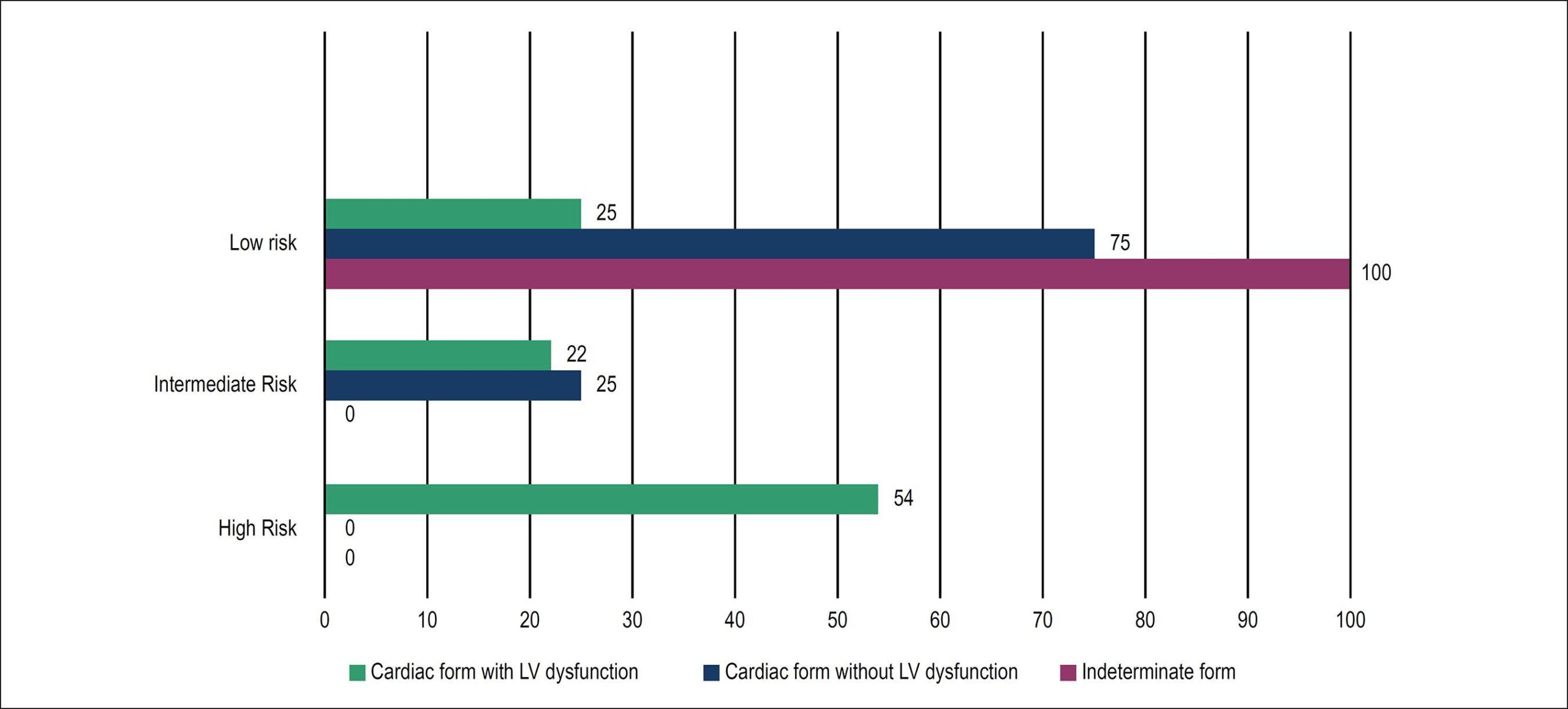
Sixty-one patients with Chagas’ disease, with an average age of 58 ± 9 years old, 17 patients in the indeterminate form, 16 in the cardiac form without left ventricular (LV) dysfunction and 28 in the cardiac form with LV dysfunction were studied. P <0.05 was considered to be statistically significant. Late enhancement was detected in 37 patients (64%). Myocardial fibrosis was identified in 6 individuals in indeterminate form (41%; 95% CI 23-66) in a proportion similar to that observed in cardiac form without LV dysfunction (44%); p = 1.0. Among the individuals with fibrosis, the total area of the affected myocardium was 4.1% (IIQ: 2.1 – 10.7) in the indeterminate form versus 2.3% (IIQ: 1-5) in the cardiac form without LV (p = 0.18). The left ventricular fraction ejection in subjects in the indeterminate form was similar to that of the individuals in the cardiac form without ventricular dysfunction (p = 0.09).

Conclusion:

The presence of fibrosis in the indeterminate form of Chagas’ disease has a frequency and extension similar to that of in the cardiac form without dysfunction, suggesting that the former is part of a subclinical disease spectrum, rather than lacking cardiac involvement.
  • Chagas Cardiomyopathy
  • Chagas disease
  • Fibrosis
  • Magnetic Resonance Imaging
Read Full Article
Creative Commons Attribution (CC BY) Creative Commons license
19/02/2018 DOI: 10.5935/abc.20180016
Figure 1
Original Article

Heart Transplantation for Peripartum Cardiomyopathy: A Single-Center Experience

Nadia Bouabdallaoui et al. Pierre Demondion Sylvestre Maréchaux Shaida Varnous … Guillaume Lebreton Frédéric Mouquet Pascal Leprince

Abstract

Background:

Peripartum cardiomyopathy is an idiopathic disorder defined by the occurrence of acute heart failure during late pregnancy or post-partum period in the absence of any other definable cause. Its clinical course is variable and severe cases might require heart transplantation.

Objective:

To investigate long-term outcomes after heart transplantation (HT) for peripartum cardiomyopathy (PPCM).

Methods:

Out of a single-center series of 1938 HT, 14 HT were performed for PPCM. We evaluated clinical characteristics, transplant-related complications, and long-term outcomes, in comparison with 28 sex-matched controls. Primary endpoint was death from any cause; secondary endpoints were transplant-related complications (rejection, infection, cardiac allograft vasculopathy). A value of p < 0.05 was considered of statistical significance.

Results:

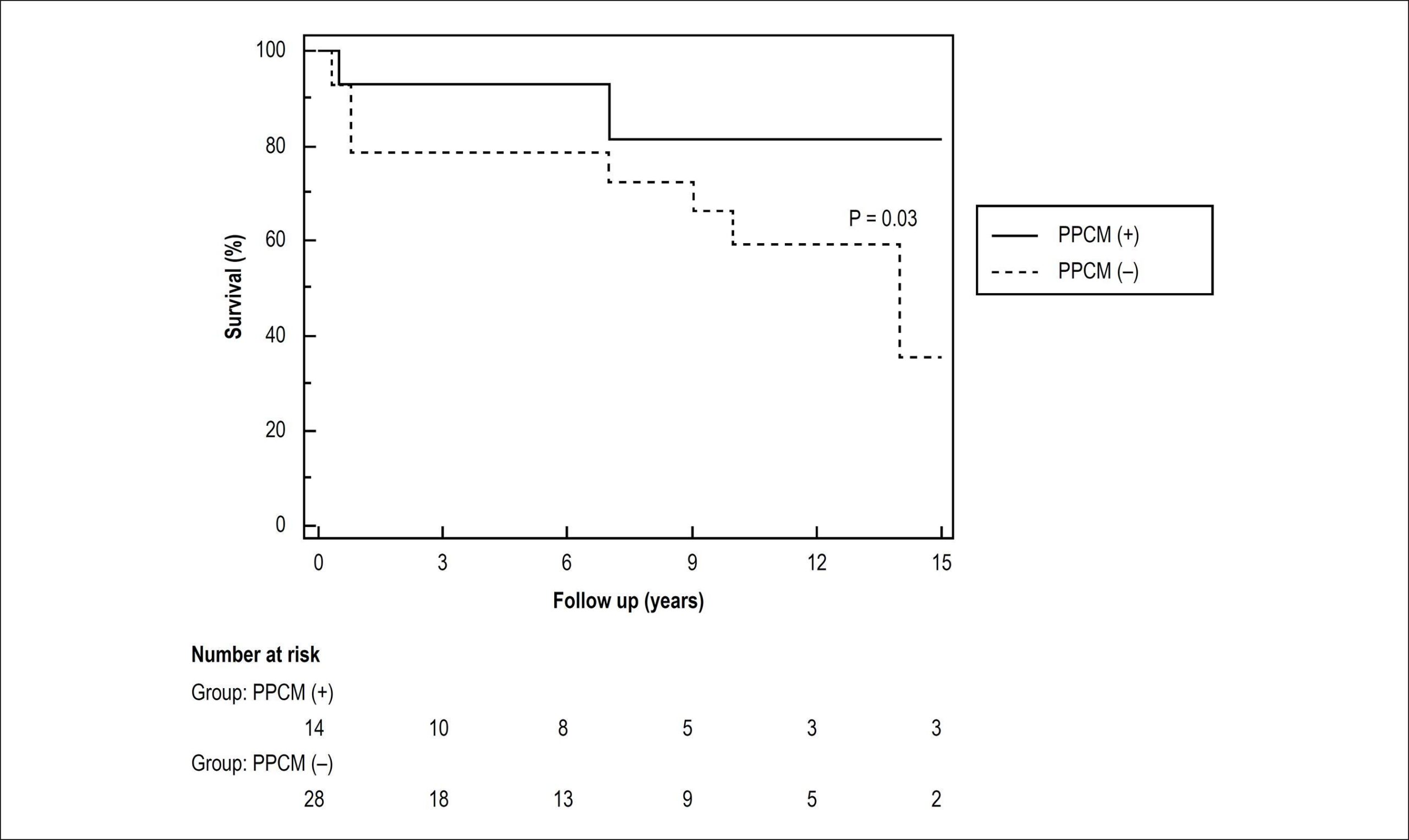
PPCM patients and matched controls were comparable for most variables (all p values > 0.05), except for a higher use of inotropes at the time of HT in PPCM group (p = 0.03). During a median follow-up of 7.7 years, 16 patients died, 3 (21.5%) in PPCM group and 13 (46.5%) in control group. Mortality was significantly lower in PPCM group (p = 0.03). No significant difference was found in terms of transplant-related complications (p > 0.05).

Conclusions:

Long-term outcomes following HT for PPCM are favorable. Heart transplantation is a valuable option for PPCM patients who did not recover significantly under medical treatment.

  • Cardiomyopathies / mortality
  • Graft Rejection / mortality
  • Heart Failure
  • Heart Transplantation
  • Peripartum Period
Read Full Article
Creative Commons Attribution (CC BY) Creative Commons license
19/02/2018 DOI: 10.5935/abc.20180014
Figure 1
Review Article

High-Intensity Interval Training in Heart Transplant Recipients: A Systematic Review with Meta-Analysis

Raphael José Perrier-Melo et al. Fernando Augusto Marinho dos Santos Figueira Guilherme Veiga Guimarães Manoel da Cunha Costa

Abstract

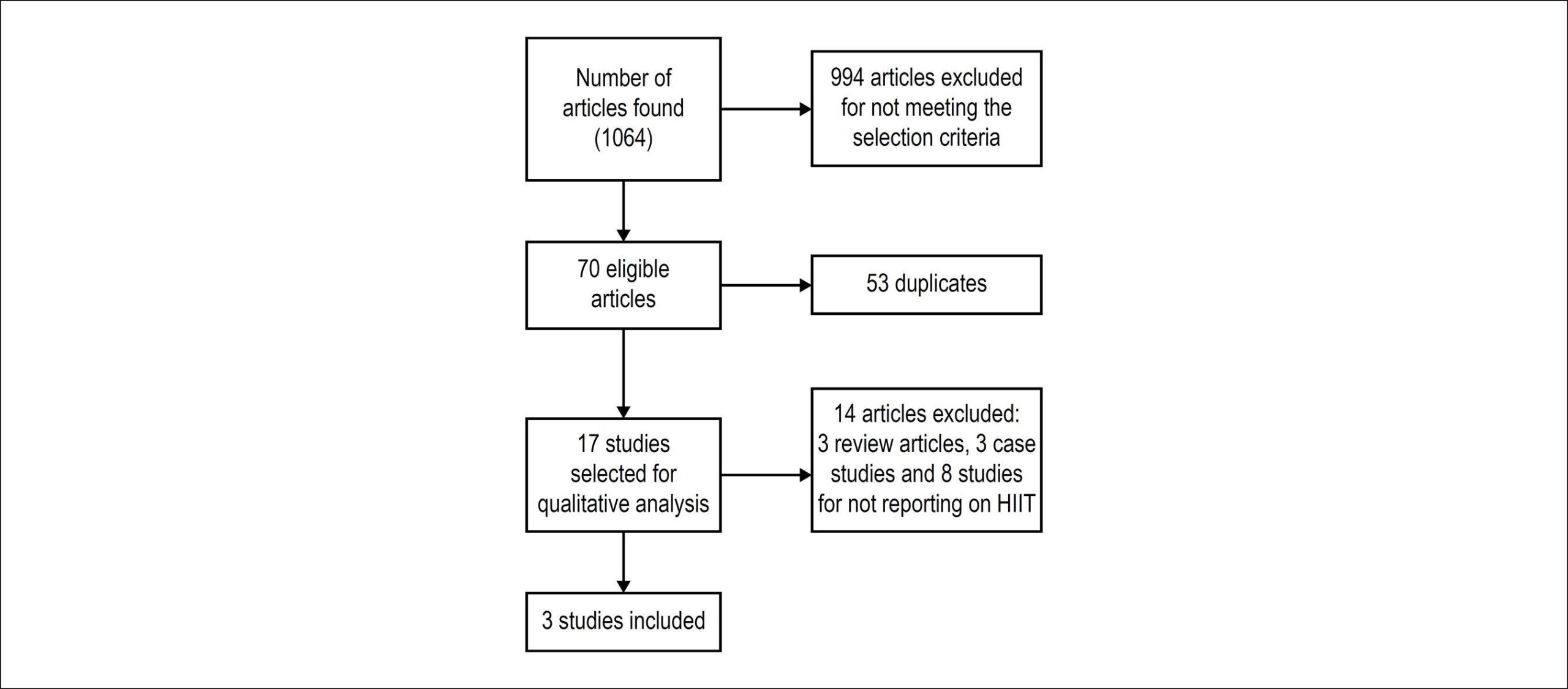
Heart transplantation (HTx) is considered an efficient and gold-standard procedure for patients with end-stage heart failure. After surgery, patients have lower aerobic power (VO2max) and compensatory hemodynamic responses. The aim of the present study was to assess through a systematic review with meta-analysis whether high-intensity interval training (HIIT) can provide benefits for those parameters. This is a systematic review with meta-analysis, which searched the databases and data portals PubMed, Web of Science, Scopus, Science Direct and Wiley until December 2016 (pairs). The following terms and descriptors were used: “heart recipient” OR “heart transplant recipient” OR ”heart transplant” OR “cardiac transplant” OR “heart graft”. Descriptors via DeCS and Mesh were: “heart transplantation’’ OR “cardiac transplantation”. The words used in combination (AND) were: “exercise training” OR “interval training” OR “high intensity interval training” OR “high intensity training” OR “anaerobic training” OR “intermittent training” OR “sprint training”. The initial search identified 1064 studies. Then, only those studies assessing the influence of HIIT on the post-HTx period were added, resulting in three studies analyzed. The significance level adopted was 0.05. Heart transplant recipients showed significant improvement in VO2peak, heart rate and peak blood pressure in 8 to 12 weeks of intervention.

  • Cardiac Rehabilitation
  • Exercise
  • Heart Failure/physiopathology
  • Life Style
  • Meta-Analysis as Topic
Read Full Article
Creative Commons Attribution (CC BY) Creative Commons license
19/02/2018 DOI: 10.5935/abc.20180017 Views 1
Figure 1
Original Article

Uninterrupted Use of Oral Anticoagulants for the Ablation of Atrial Flutter: A Single Center Cohort of 154 Patients

Tiago Luiz Luz Leiria et al. Alexandre Kreling Medeiros Eduardo Dytz Almeida Antonio Lessa Gaudie Ley … Catarine Benta Lopes dos Santos Roberto Toffani Sant'Anna Marcelo Lapa Kruse Leonardo Martins Pires Gustavo Glotz de Lima

Abstract

Background:

The uninterrupted use of oral anticoagulation (OAC) with vitamin K antagonists (VKAs) for electrophysiology procedures has been more and more recommended. The clinical practice in our service recommends the continuous use of these drugs for atrial flutter ablation. There is little evidence as to the uninterrupted use of non-vitamin K antagonist oral anticoagulants (NOACs) in this scenario.

Objective:

To compare the rates of complications related with the uninterrupted use of different types of oral anticoagulants in patients referred to atrial flutter (AFL) ablation.

Methods:

Historical, single-center cohort of ablation procedures by AFL conducted from November 2012 to April 2016. The primary outcome was the occurrence of hemorrhagic or embolic complication during the procedure. The secondary outcome was the occurrence of stroke or transient ischemic attack (TIA) in follow-up. The statistical significance level was 5%.

Results:

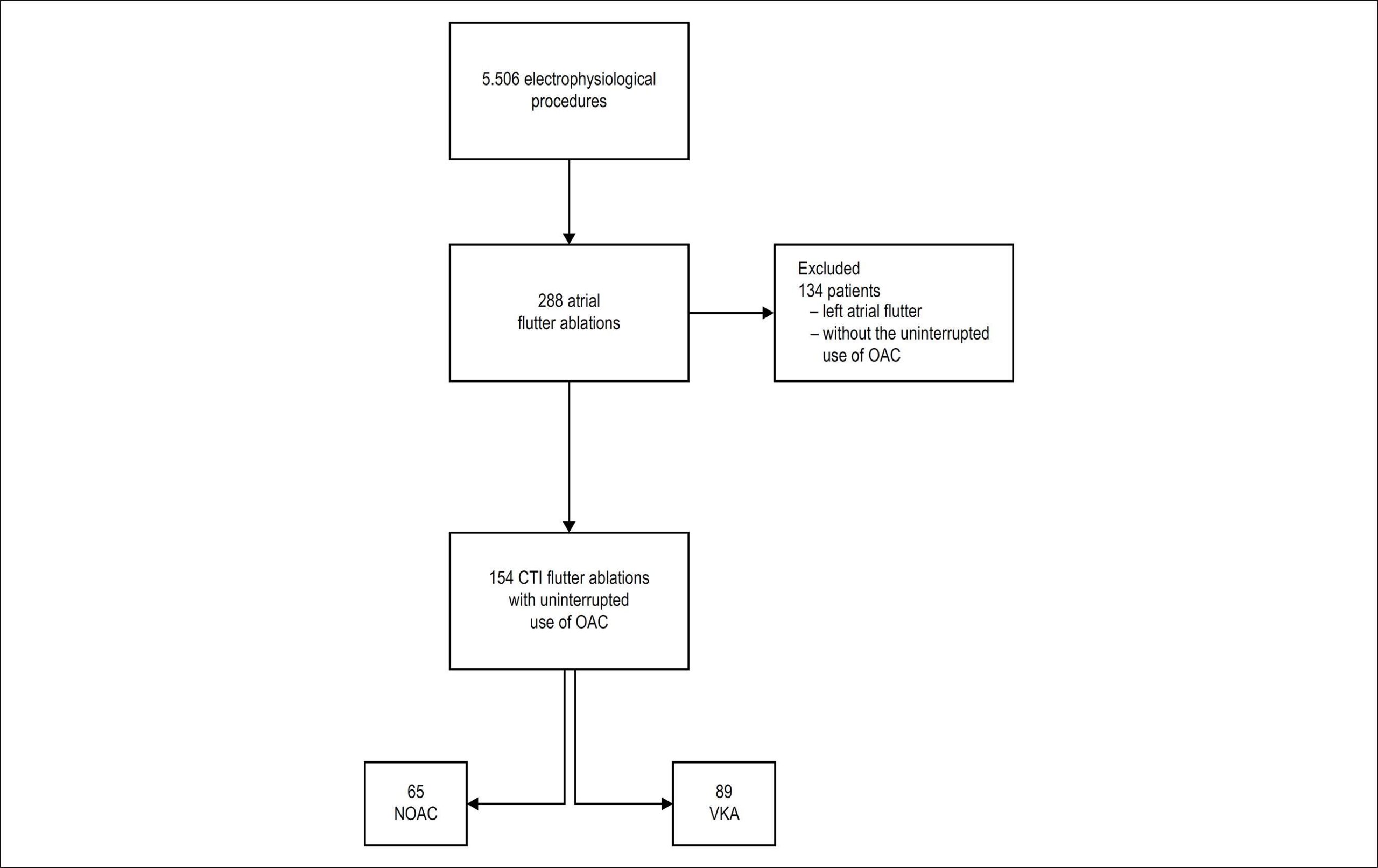
There were 288 ablations per AFL; 154 were carried out with the uninterrupted use of OAC (57.8% with VKA and 42.2% with NOAC). Mean age was 57 ± 13 years. The rate of hemorrhagic complication during the procedure was 3% in each group (p = NS). The rate of stroke/TIA was, respectively, of 56/1,000 people-year in the VKA group against zero/1,000 people-year in the NOAC group (p = 0.02).

Conclusion:

In our population there were no hemorrhagic complications regarding the procedure of OAC use uninterruptedly, including NOACs. There was higher occurrence of stroke/TIA in the follow-up of the group of patients undergoing VKAs; however, this difference may not only be a result of the type of OAC used.

  • Anticoagulants
  • Atrial flutter
  • Catheter Ablation
  • Thromboembolism
  • Vitamin K
Read Full Article
Creative Commons Attribution (CC BY) Creative Commons license
19/02/2018 DOI: 10.5935/abc.20180001
Figure 1
Original Article

Autonomic and Vascular Control in Prehypertensive Subjects with a Family History of Arterial Hypertension

Josária Ferraz Amaral et al. Diana de Medeiros Andrade Borsato Isabelle Magalhães Guedes Freitas Edgar Toschi-Dias … Daniel Godoy Martinez Mateus Camaroti Laterza

Abstract

Background:

Individuals with a family history of systemic arterial hypertension (FHSAH) and / or prehypertension have a higher risk of developing this pathology.

Objective:

To evaluate the autonomic and vascular functions of prehypertensive patients with FHSAH.

Methods:

Twenty-five young volunteers with FHSAH, 14 normotensive and 11 prehypertensive subjects were submitted to vascular function evaluation by forearm vascular conductance(VC) during resting and reactive hyperemia (Hokanson®) and cardiac and peripheral autonomic modulation, quantified, respectively, by spectral analysis of heart rate (ECG) and systolic blood pressure (SBP) (FinometerPRO®). The transfer function analysis was used to measure the gain and response time of baroreflex. The statistical significance adopted was p ≤ 0.05.

Results:

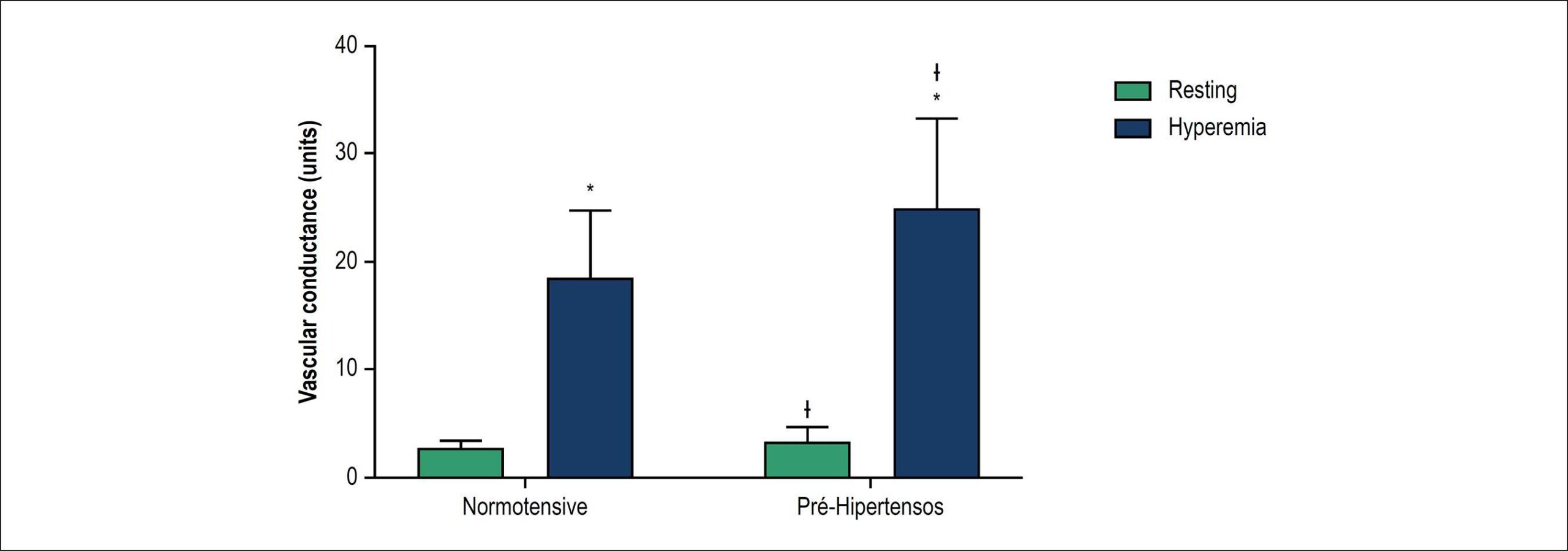
Pre-hypertensive individuals, in relation to normotensive individuals, have higher VC both at rest (3.48 ± 1.26 vs. 2.67 ± 0.72 units, p = 0.05) and peak reactive hyperemia (25, 02 ± 8.18 vs. 18.66 ± 6.07 units, p = 0.04). The indices of cardiac autonomic modulation were similar between the groups. However, in the peripheral autonomic modulation, greater variability was observed in prehypertensive patients compared to normotensive individuals (9.4 [4.9-12.7] vs. 18.3 [14.8-26.7] mmHg2; p < 0.01) and higher spectral components of very low (6.9 [2.0-11.1] vs. 13.5 [10.7-22.4] mmHg2, p = 0.01) and low frequencies (1.7 [1.0-3.0] vs. 3.0 [2.0-4.0] mmHg2, p = 0.04) of SBP. Additionally, we observed a lower gain of baroreflex control in prehypertensive patients compared to normotensive patients (12.16 ± 4.18 vs. 18.23 ± 7.11 ms/mmHg, p = 0.03), but similar delay time (-1.55 ± 0.66 vs. -1.58 ± 0.72 s, p = 0.90).

Conclusion:

Prehypertensive patients with FHSAH have autonomic dysfunction and increased vascular conductance when compared to normotensive patients with the same risk factor.

  • Autonomic Nervous System
  • Endothelium, Vascular / physiopathology
  • Hypertension / genetic
  • Risk Factors
Read Full Article
Creative Commons Attribution (CC BY) Creative Commons license
19/02/2018 DOI: 10.5935/abc.20180006 Views 1
Figure 1
Original Article

Correlation between Very Short and Short-Term Blood Pressure Variability in Diabetic-Hypertensive and Healthy Subjects

Karina R. Casali et al. Beatriz D. Schaan Nicola Montano Daniela Massierer … Flávio M.F. Neto Gabriela H. Teló Priscila S. Ledur Marilia Reinheimer Graciele Sbruzzi Miguel Gus

Abstract

Background:

Blood pressure (BP) variability can be evaluated by 24-hour ambulatory BP monitoring (24h-ABPM), but its concordance with results from finger BP measurement (FBPM) has not been established yet.

Objective:

The aim of this study was to compare parameters of short-term (24h-ABPM) with very short-term BP variability (FBPM) in healthy (C) and diabetic-hypertensive (DH) subjects.

Methods:

Cross-sectional study with 51 DH subjects and 12 C subjects who underwent 24h-ABPM [extracting time-rate, standard deviation (SD), coefficient of variation (CV)] and short-term beat-to-beat recording at rest and after standing-up maneuvers [FBPM, extracting BP and heart rate (HR) variability parameters in the frequency domain, autoregressive spectral analysis]. Spearman correlation coefficient was used to correlate BP and HR variability parameters obtained from both FBPM and 24h-ABPM (divided into daytime, nighttime, and total). Statistical significance was set at p < 0.05.

Results:

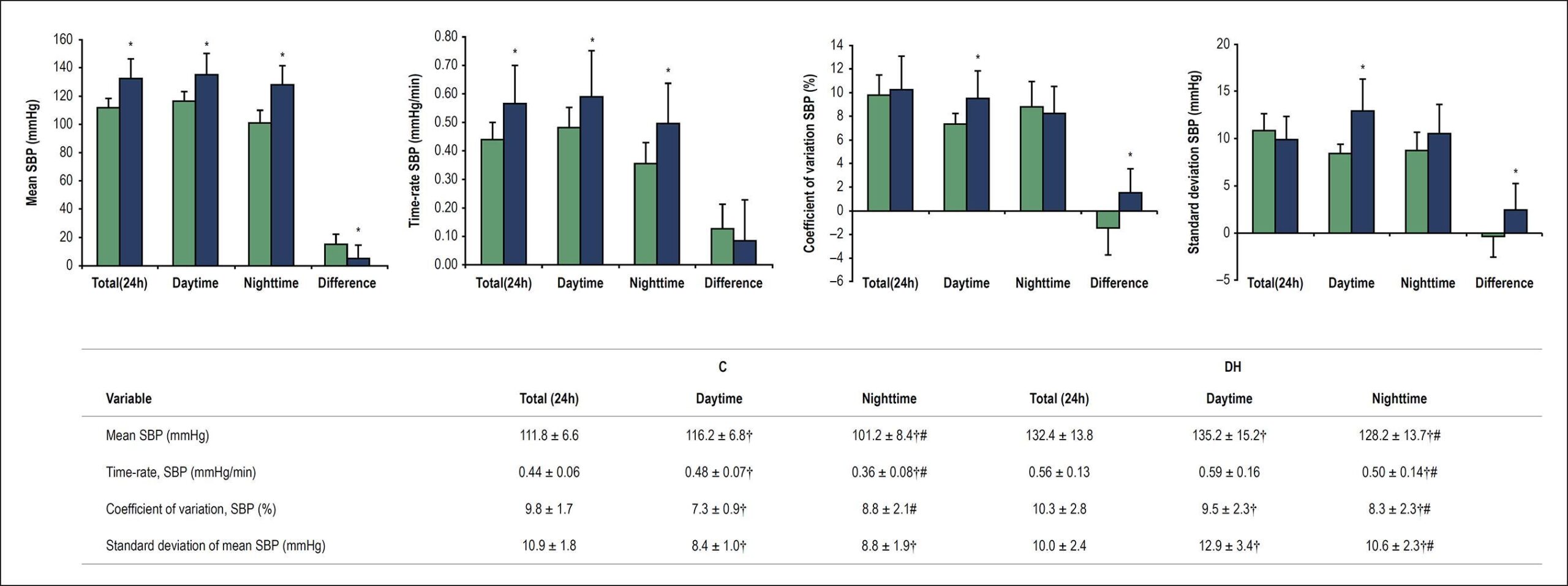
There was a circadian variation of BP levels in C and DH groups; systolic BP and time-rate were higher in DH subjects in all periods evaluated. In C subjects, high positive correlations were shown between time-rate index (24h-ABPM) and LF component of short-term variability (FBPM, total, R = 0.591, p = 0.043); standard deviation (24h-ABPM) with LF component BPV (FBPM, total, R = 0.608, p = 0.036), coefficient of variation (24h-ABPM) with total BPV (FBPM, daytime, -0.585, p = 0.046) and alpha index (FBPM, daytime, -0.592, p = 0.043), time rate (24h-ABPM) and delta LF/HF (FBPM, total, R = 0.636, p = 0.026; daytime R = 0,857, p < 0.001). Records obtained from DH showed weak positive correlations.

Conclusions:

Indices obtained from 24h-ABPM (total, daytime) reflect BP and HR variability evaluated by FBPM in healthy individuals. This does not apply for DH subjects.

  • Autonomic Nervous System
  • Blood Pressure Monitoring, Ambulatory
  • Diabetes Mellitus, Type 2
  • Hypertension
Read Full Article
Creative Commons Attribution (CC BY) Creative Commons license
01/02/2018 DOI: 10.5935/abc.20180020
Figure 1
Original Article

An Alternative Method to Calculate Simplified Projected Aortic Valve Area at Normal Flow Rate

Joana Sofia Silva Moura Ferreira et al. Nádia Moreira Rita Ferreira Sofia Mendes … Rui Martins Maria João Ferreira Mariano Pego

Abstract

Background:

Simplified projected aortic valve area (EOAproj) is a valuable echocardiographic parameter in the evaluation of low flow low gradient aortic stenosis (LFLG AS). Its widespread use in clinical practice is hampered by the laborious process of flow rate (Q) calculation.

Objetive:

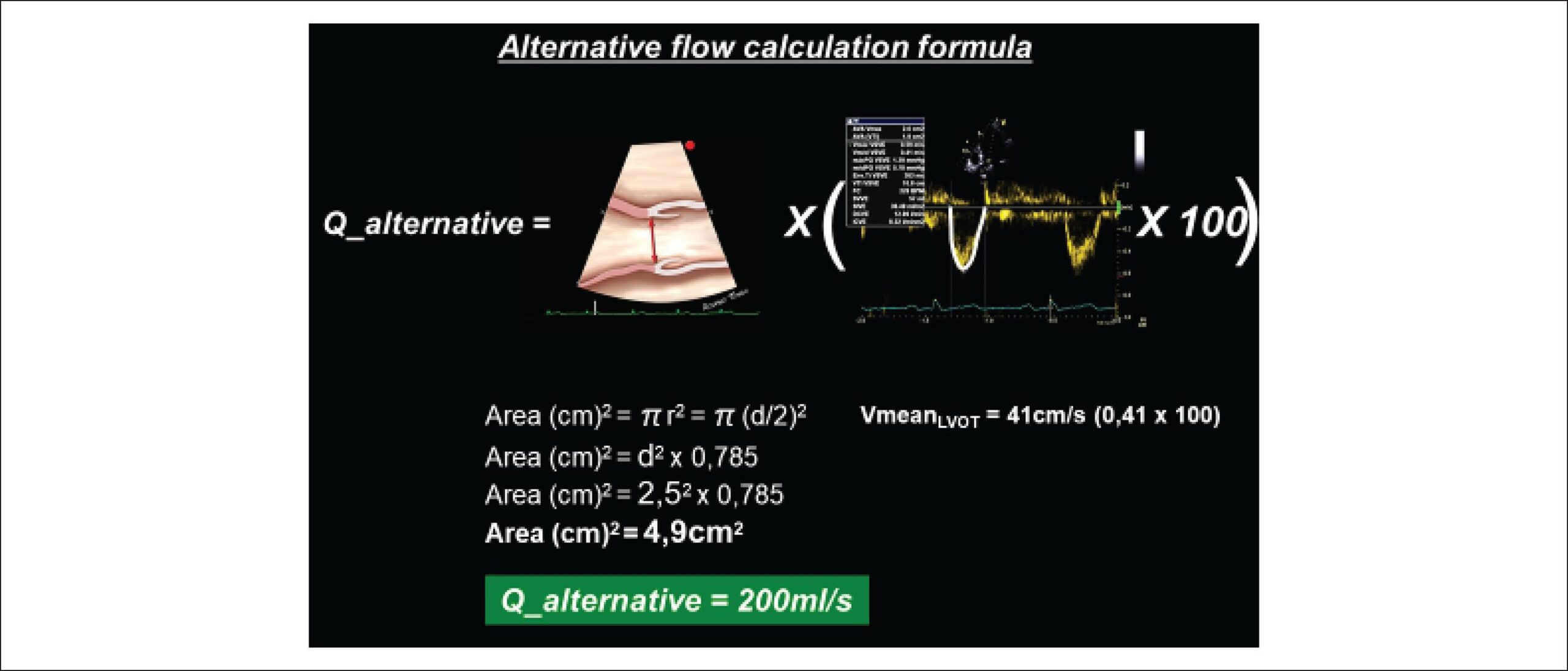
This study proposes a less burdensome, alternative method of Q calculation to be incorporated in the original formula of EOAproj and measures the agreement between the new proposed method of EOAproj calculation and the original one.

Methods:

Retrospective observational single-institution study that included all consecutive patients with classic LFLG AS that showed a Q variation with dobutamine infusion ≥ |15|% by both calculation methods.

Results:

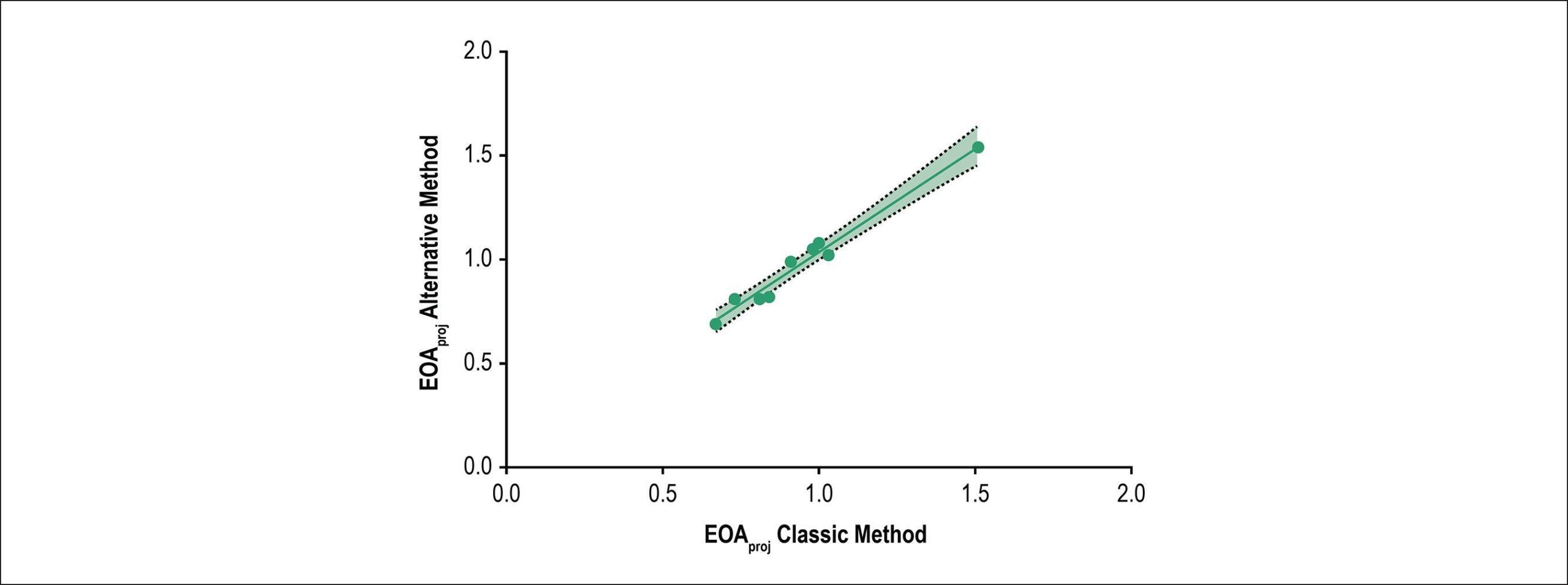
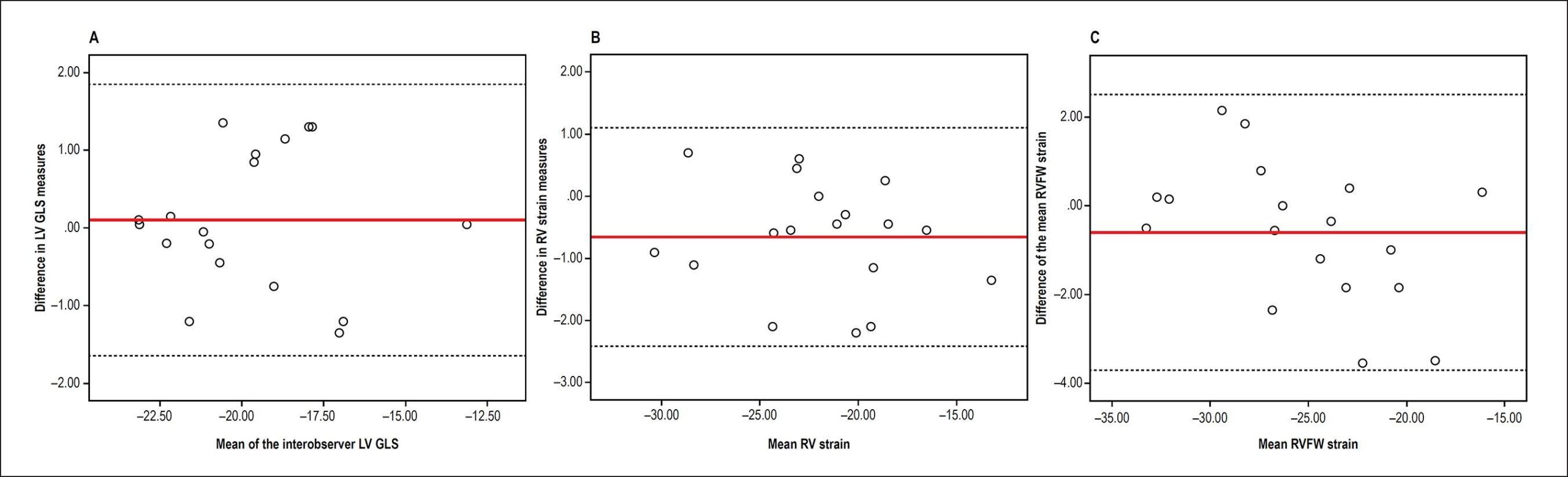
Twenty-two consecutive patients with classical LFLG AS who underwent dobutamine stress echocardiography were included. Nine patients showed a Q variation with dobutamine infusion calculated by both classical and alternative methods ≥ |15|% and were selected for further statistical analysis. Using the Bland-Altman method to assess agreement we found a systematic bias of 0,037 cm2 (95% CI 0,004 – 0,066), meaning that on average the new method overestimates the EOAproj in 0,037 cm2 compared to the original method. The 95% limits of agreement are narrow (from -0,04 cm2 to 0,12 cm2), meaning that for 95% of individuals, EOAproj calculated by the new method would be between 0,04 cm2 less to 0,12 cm2 more than the EOAproj calculated by the original equation.

Conclusion:

The bias and 95% limits of agreement of the new method are narrow and not clinically relevant, supporting the potential interchangeability of the two methods of EOAproj calculation. As the new method requires less additional measurements, it would be easier to implement in clinical practice, promoting an increase in the use of EOAproj.

  • Aortic Valve Stenosis / diagnosis
  • Aortic Valve Stenosis / diagnostic imaging
  • Echocardiography, Stress
  • Heart Valves / physiopathology
Read Full Article
Creative Commons Attribution (CC BY) Creative Commons license
01/02/2018 DOI: 10.5935/abc.20180018 Views 1
Figure 1
Original Article

Global Longitudinal Strain Accuracy for Cardiotoxicity Prediction in a Cohort of Breast Cancer Patients During Anthracycline and/or Trastuzumab Treatment

Eliza de Almeida Gripp et al. Gabriela Escudini de Oliveira Luiz Augusto Feijó Marcelo Iorio Garcia … Sergio Salles Xavier Andréa Silvestre de Sousa

Abstract

Background:

The high cardiotoxicity morbidity and mortality rates associated with the antineoplastic therapy for breast cancer could be reduced with the early use of cardioprotective drugs. However, the low sensitivity of left ventricular ejection fraction limits its use in that preventive strategy. New parameters, such as global longitudinal strain, are being used in the early detection of contractile function changes.

Objectives:

To assess the incidence of cardiotoxicity in patients treated for breast cancer, the independent factors associated with that event, and the ability of strain to identify it early.

Methods:

Prospective observational study of consecutive outpatients diagnosed with breast cancer, with no previous antineoplastic treatment and no ventricular dysfunction, who underwent anthracycline and/or trastuzumab therapy. The patients were quarterly evaluated on a 6- to 12-month follow-up by an observer blind to therapy. Cox regression was used to evaluate the association of cardiotoxicity with clinical, therapeutic and echocardiographic variables. A ROC curve was built to identify the strain cutoff point on the third month that could predict the ejection fraction reduction on the sixth month. For all tests, the statistical significance level adopted was p ≤ 0.05.

Results:

Of 49 women (mean age, 49.7 ± 12.2 years), cardiotoxicity was identified in 5 (10%) on the third (n = 2) and sixth (n = 3) months of follow-up. Strain was independently associated with the event (p = 0.004; HR = 2.77; 95%CI: 1.39-5.54), with a cutoff point for absolute value of -16.6 (AUC = 0.95; 95%CI: 0.87-1.0) or a cutoff point for percentage reduction of 14% (AUC = 0.97; 95%CI: 0.9-1.0).

Conclusion:

The 14% reduction in strain (absolute value of -16.6) allowed the early identification of patients who could develop anthracycline and/or trastuzumab-induced cardiotoxicity.

  • Breast Neoplasms/drug therapy
  • Cardiotoxicity
  • Indicators of Morbidity and Mortality
  • Stroke Volume
  • Trastuzumab
Read Full Article
Creative Commons Attribution (CC BY) Creative Commons license
01/02/2018 DOI: 10.5935/abc.20180021 Views 1
Figure 1
Original Article

Is There Any Relationship between TSH Levels and Prognosis in Acute Coronary Syndrome?

Alexandre de Matos Soeiro et al. Victor Arrais Araújo Júlia Pitombo Vella Aline Siqueira Bossa … Bruno Biselli Tatiana de Carvalho Andreucci Torres Leal Maria Carolina Feres de Almeida Soeiro Carlos V. Serrano Jr. Christian Mueller Mucio Tavares de Oliveira Junior

Abstract

Background:

Some small studies have related higher levels of thyrotropin (TSH) to potentially worse prognosis in acute coronary syndromes. However, this relationship remains uncertain.

Objective:

To analyze the outcomes of patients with acute coronary syndromes in relation to the value of TSH at admission.

Methods:

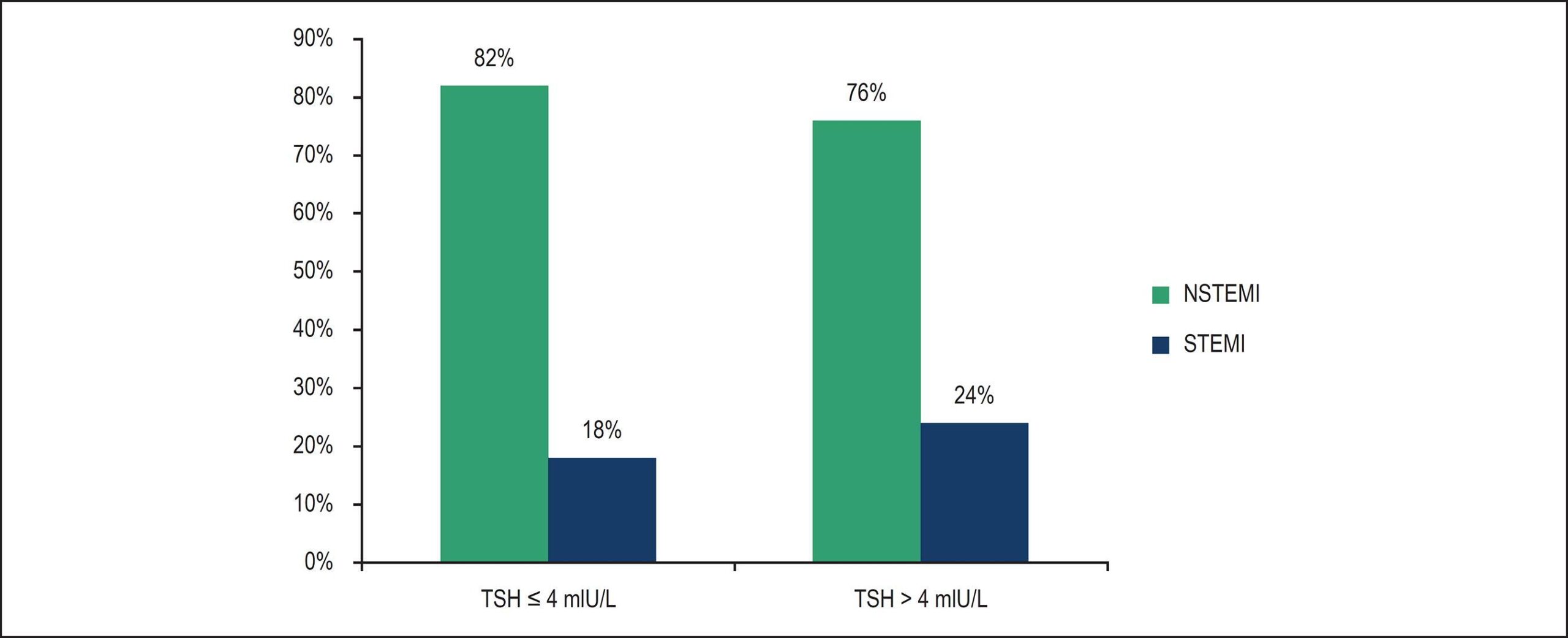
Observational and retrospective study with 505 patients (446 in group I [TSH ≤ 4 mIU/L] and 59 in group II [TSH > 4 mIU/L]) with acute coronary syndromes between May 2010 and May 2014. We obtained data about comorbidities and the medications used at the hospital. The primary endpoint was in-hospital all-cause death. The secondary endpoint included combined events (death, non-fatal unstable angina or myocardial infarction, cardiogenic shock, bleeding and stroke). Comparisons between groups were made by one-way ANOVA and chi-square test. Multivariate analysis was determined by logistic regression. Analyses were considered significant when p < 0.05.

Results:

Significant differences between groups I and II were observed regarding the use of enoxaparin (75.2% vs. 57.63%, p = 0.02) and statins (84.08% vs. 71.19%, p < 0.0001), previous stroke (5.83% vs. 15.25%, p = 0.007), combined events (14.80% vs. 27.12%, OR = 3.05, p = 0.004), cardiogenic shock (4.77% vs. 6.05%, OR = 4.77, p = 0.02) and bleeding (12.09% vs. 15.25%, OR = 3.36, p = 0.012).

Conclusions:

In patients with acute coronary syndromes and TSH > 4 mIU/L at admission, worse prognosis was observed, with higher incidences of in-hospital combined events, cardiogenic shock and bleeding.

  • Acute coronary syndrome
  • Euthyroid Sick Syndromes
  • Hospital Mortality
  • Thyrotropin/metabolism
Read Full Article
Creative Commons Attribution (CC BY) Creative Commons license
01/02/2018 DOI: 10.5935/abc.20180019
Figure 1
Review Article

Case 1/2018 – Young Male with Heart Disease Expressed Mainly as Ventricular Arrhythmia, Right Ventricular Dysfunction and Syncope

Desiderio Favarato et al. Luiz Alberto Benvenuti

Clinical aspects

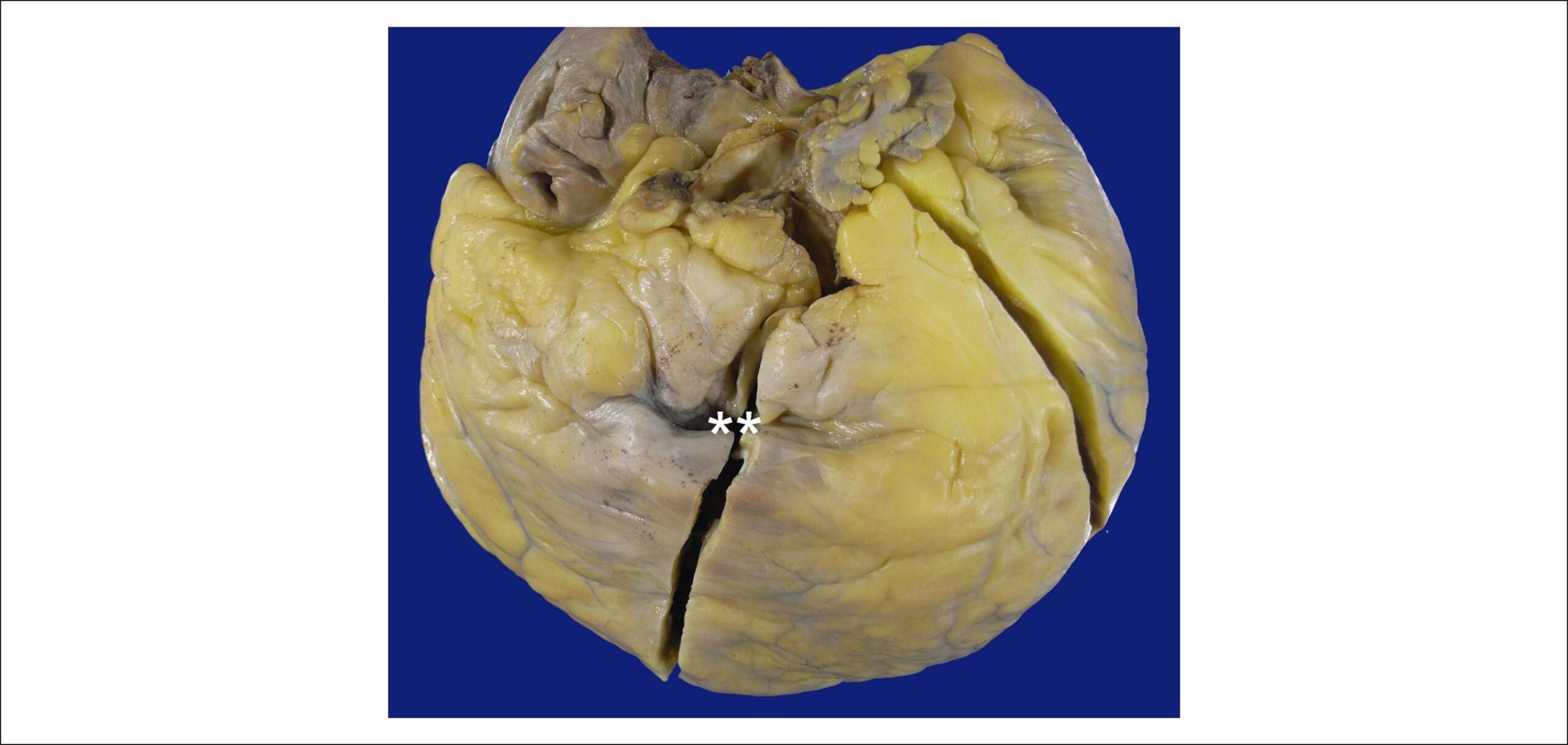
The patient had syncope episodes since the age of 20 years, and heart failure since the age of 30 years, undergoing cardiac transplantation at the age of 36 years.

Since symptom onset, heart disease with marked left ventricular dilatation and moderate dysfunction was detected. The exercise test revealed frequent ventricular arrhythmia. His syncope episodes were attributed to malignant ventricular arrhythmias, and a cardioverter defibrillator was implanted.

[…]

  • Arrhythmias Cardiac
  • Catheter Ablation
  • Defibrillators, Implantable
  • Diagnostic Imaging
  • Heart Transplantation
  • Syncope
  • Ventricular Dysfunction Right
Read Full Article
Creative Commons Attribution (CC BY) Creative Commons license
01/02/2018 DOI: 10.5935/abc.20180031
Original Article

Clinical, Anthropometric and Biochemical Characteristics of Patients with or without Genetically Confirmed Familial Hypercholesterolemia

Andrea De Lorenzo et al. Juliana Duarte Lopes da Silva Cinthia E. James Alexandre C. Pereira Annie Seixas Bello Moreira

Abstract

Background:

Familial hypercholesterolemia (FH) is a common autosomal dominant disorder, characterized by a high level of low-density lipoprotein cholesterol (LDL-C) and a high risk of premature cardiovascular disease.

Objective:

To evaluate clinical and anthropometric characteristics of patients with the familiar hypercholesterolemia (FH) phenotype, with or without genetic confirmation of FH.

Methods:

Forty-five patients with LDL-C > 190 mg/dl were genotyped for six FH-related genes: LDLR, APOB, PCSK9, LDLRAP1, LIPA and APOE. Patients who tested positive for any of these mutations were considered to have genetically confirmed FH. The FH phenotype was classified according to the Dutch Lipid Clinic Network criteria.

Results:

Comparing patients with genetically confirmed FH to those without it, the former had a higher clinical score for FH, more often had xanthelasma and had higher LDL-C and apo B levels. There were significant correlations between LDL-C and the clinical point score for FH (R = 0.382, p = 0.037) and between LDL-C and body fat (R = 0.461, p = 0.01). However, patients with mutations did not have any correlation between LDL-C and other variables, while for those without a mutation, there was a correlation between LDL-C and the clinical point score.

Conclusions:

LDL-C correlated with the clinical point score and with body fat, both in the overall patient population and in patients without the genetic confirmation of FH. In those with genetically confirmed FH, there were no correlations between LDL-C and other clinical or biochemical variables in patients.

  • Body Weights and Measurements, LDL Lipoproteins, Dyslipidemias, Mutation, Phenotype
  • Hyperlipoproteinemia Type II
Read Full Article
Creative Commons Attribution (CC BY) Creative Commons license
01/02/2018 DOI: 10.5935/abc.20180005 Views 1
Figure 1
Image

Cardiac Lymphoma: A Rare Cause of Acute Heart Failure with Restrictive Physiology

Fernando Garagoli et al. Ezequiel Guzzetti Ezequiel Lillo Luciano Lucas César Belziti

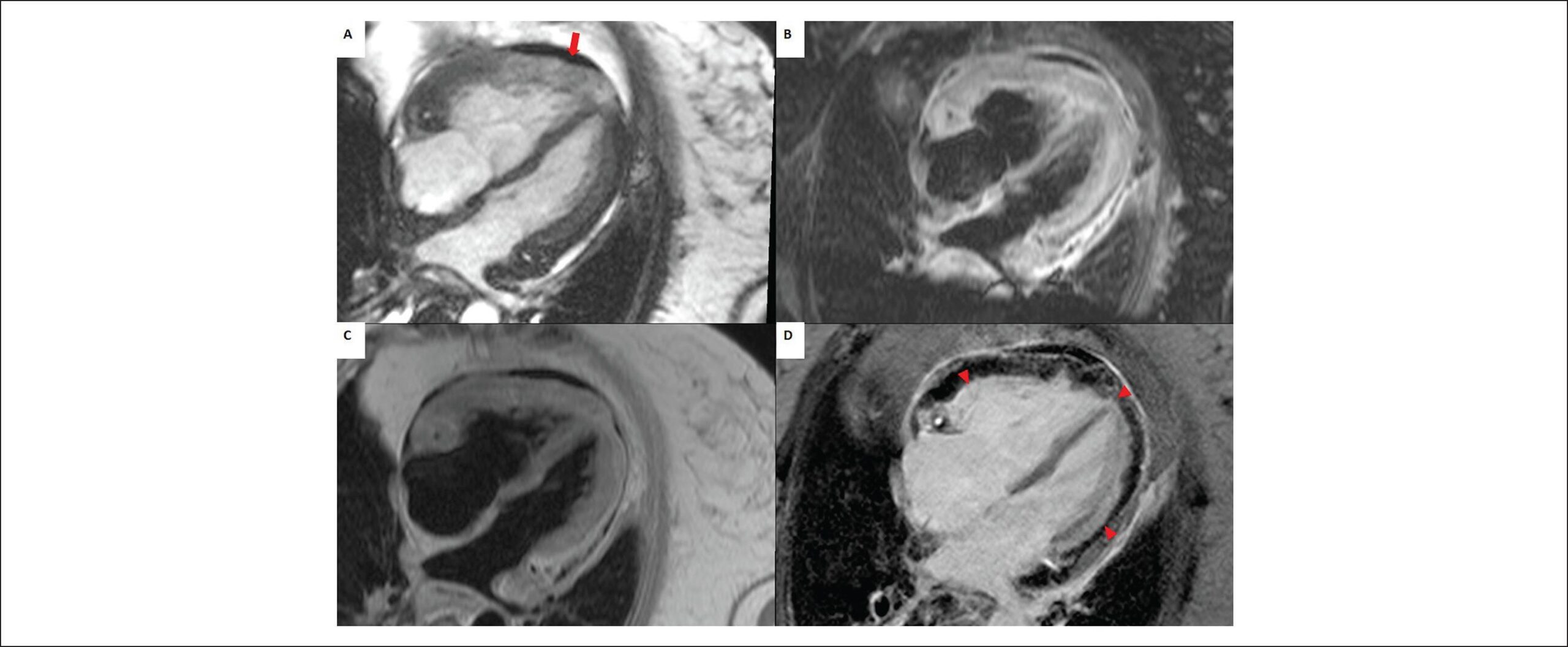
A 74-year-old woman with a history of membranous glomerulonephritis and a recent diagnosis of mediastinal adenopathy was admitted to the emergency department with acute heart failure. She complained of progressive dyspnea and weakness in the last week. Physical examination revealed hypotension, tachypnea, jugular vein distention, and desaturation. The most relevant laboratory findings were: anemia, lymphocytopenia, lactic acidosis, and increased lactate dehydrogenase. An electrocardiogram showed rapid atrial fibrillation and low-voltage QRS complexes. An echocardiogram revealed severe pericardial effusion and diffuse heterogeneous thickening of the ventricular and atrial walls. The patient required mechanical ventilation and inotropic support. Therapeutic pericardiocentesis was performed without clinical improvement. Cardiovascular magnetic resonance imaging (CMR) showed septal bounce (compatible with restrictive physiology) and a heterogeneous isointense mass surrounding the ventricular and atrial walls with late gadolinium enhancement of the myocardium and hypoenhancement of the tumor (), compatible with primary cardiac lymphoma. A diagnosis of large B-cell lymphoma was confirmed by flow cytometry of the pericardial fluid. The patient died before starting chemotherapic treatment.

[…]

  • Cardiovascular Diseases
  • Heart Failure/physiopathology
  • Lymphoma
  • Magnetic Resonance Imaging
Read Full Article
Creative Commons Attribution (CC BY) Creative Commons license
01/02/2018 DOI: 10.5935/abc.20180015 Views 1
Editorial

The Indeterminate Form of Chagas Disease

Victor Sarli Issa

The presence of diffuse fibrosis in the myocardial tissue is a characteristic of Chagas heart disease. The mechanisms proposed to explain such fibrosis areas vary and include direct injury by Trypanosoma cruzi to the cardiac tissue, as well as tissue ischemia due to microcirculation changes and microvascular thrombosis mediated by inflammatory and immune processes. The myocardial fibrosis not only reveals important aspects of the pathophysiology of the disease, but has a clinical significance, because its progression can lead to injury to the heart conduction system, contributing to generate arrhythmia, as well as systolic and diastolic ventricular dysfunction, in addition to favoring the appearance of thromboembolic phenomena from the hypokinetic or akinetic areas.

This issue of the Arquivos Brasileiros de Cardiologia presents the results of a study jointly conducted by three different centers in the city of Salvador, Bahia state, about the clinical significance of the fibrosis found in patients with Chagas disease, in both the indeterminate and heart disease (with and without left ventricular dysfunction) stages. The search for fibrosis was performed by use of late enhancement cardiac magnetic resonance imaging. The authors have reported late enhancement compatible with fibrosis in 41% of the patients with the indeterminate form, a figure similar to that found in patients with heart disease without ventricular dysfunction. In addition, it is worth noting the similar findings in the other groups regarding the clinical characteristics and the levels of type B natriuretic peptide, troponin, interleukins 2, 4, 6 and 10, tumor necrosis factor alpha and gamma interferon.

[…]

Read Full Article
Creative Commons Attribution (CC BY) Creative Commons license
01/02/2018 DOI: 10.5935/abc.20180027 Views 1
Figure 1
Original Article

Current Practices in Myocardial Perfusion Scintigraphy in Brazil and Adherence to the IAEA Recommendations: Results of a Cross-Sectional Study

Carlos Vitor Braga Rodrigues et al. Anderson Oliveira Christiane Cigagna Wiefels Maurício de Souza Leão Cláudio Tinoco Mesquita

Abstract

Background:

Data on the current situation of nuclear medicine practices in cardiology in Brazil are scarce. The International Atomic Energy Agency (IAEA) has recommended eight “good practices” to minimize patients’ ionizing radiation exposure during myocardial perfusion scintigraphy (MPS).

Objectives:

To assess the adoption of the eight good practices in MPS in Brazil.

Methods:

Cross-sectional study with data obtained by use of a questionnaire. All hypothesis tests performed considered a significance level of 5%.

Results:

We observed that 100% of the nuclear medicine services (NMS) assessed do not use thallium-201 as the preferred protocol. Regarding the use of technetium-99m, 57% of the NMS administer activities above the threshold recommended by the IAEA (36 mCi) or achieve an effective dose greater than 15 millisievert (mSv). The abbreviated stress-only myocardial perfusion imaging is not employed by 94% of the NMS; thus, only 19% count on strategies to reduce the radioactive doses. Approximately 52% of the NMS reported always performing dose adjustment for patient’s weight, while 35% administer poorly calculated doses in the one-day protocol.

Conclusion:

A considerable number of NMS in Brazil have not adopted at least six practices recommended by the IAEA. Despite the difficulties found in nuclear practice in some Brazilian regions, almost all obstacles observed can be overcome with no cost increase, emphasizing the importance of developing strategies for adopting “good practices” when performing MPS.

  • Myocardial Ischemia / diagnostic imaging
  • Myocardial Perfusion Imaging
  • Nuclear Medicine / methods
Read Full Article
Creative Commons Attribution (CC BY) Creative Commons license
01/02/2018 DOI: 10.5935/abc.20180023 Views 2
Figure 1
Editorial

Low-Flow Low-Gradient and Low-Ejection Fraction Aortic Stenosis and Projected Aortic Valve Area Calculation: So Important but so Complicated. Let us Just Keep it Simple!

Wilson Mathias Junior

Low-flow low-gradient aortic stenosis with low ejection fraction is still one of the main challenges not only for echocardiography but to cardiology itself. It is the very late stage of aortic stenosis that portends very poor prognosis with medical treatment, in addition to a very high operative mortality. In subjects with that condition, dobutamine stress echocardiography is of paramount importance to stratify aortic stenosis status (real aortic stenosis vs pseudo aortic stenosis) and to predict surgical mortality by the evaluation of the left ventricular contractile reserve status.–

To better differentiate both parameters, the sole use of the variation of the absolute values of aortic valve area and flow through the outflow tract carries major problems due to load conditions, previous use of medication, such as betablockers, and submaximal stress. All of these limitations may impede the detection of maximal cardiac output, a marker of contractile reserve and, therefore, may underestimate the aortic valve area.

[…]

Read Full Article
Creative Commons Attribution (CC BY) Creative Commons license
01/02/2018 DOI: 10.5935/abc.20180030
Editorial

What are the Characteristics of an Excellent Review of Scientific Articles?

Carlos Eduardo Rochitte et al. Claudio Tinoco Mesquita

The selection by a scientific journal’s editor-in-chief and associate editors of a manuscript for publishing is mainly, although not exclusively, based on the opinion of the manuscript’s reviewers. This process is known as peer review and consists on the manuscript’s assessment by experts in the area, who judge the scientific merit of the manuscript submitted to the journal. This process is expected to accept the better science for publishing, while refusing that of lower merit. Other standards and rules followed by editors of international journals contribute to improve the scientific quality of the journals. One of the most important contributions of peer review is the refinement of the manuscript regarding its clarity and content. To optimize the reviewer’s contribution in this process, understanding the characteristics involved is necessary.

In the peer-review system, it is crucial that the reviewer’s scientific opinion be transmitted to the editors in a clear and focused way regarding the essential aspects for decision making. This information is conveyed through writing by the reviewer in the review system of a given journal. Dealing with online article submission and review systems is challenging, and most of such systems are neither intuitive nor easy to use. However, this editorial will not focus on such difficulties, which can usually be overcome with the support of assistant editors and an efficient editorial office, which we fortunately have for the Brazilian Society of Cardiology (SBC) journals: the Arquivos Brasileiros de Cardiologia and the International Journal of Cardiovascular Science. We will address the specific topics that should be clearly indicated by the reviewers to allow the editors to make their best decision possible. In addition to local specific suggestions that the SBC journals’ editors consider important, we add recommendations of other editors for an excellent-quality review.,

[…]

Read Full Article
Creative Commons Attribution (CC BY) Creative Commons license
01/02/2018 DOI: 10.5935/abc.20180032
Figure 1
Case Report

A Prenatal Case of Arrhythmogenic Right Ventricular Dysplasia

Lilian Maria Lopes et al. Juliana Torres Pacheco Regina Schultz Rossana Pulcineli Vieira Francisco Marcelo Zugaib

Introduction

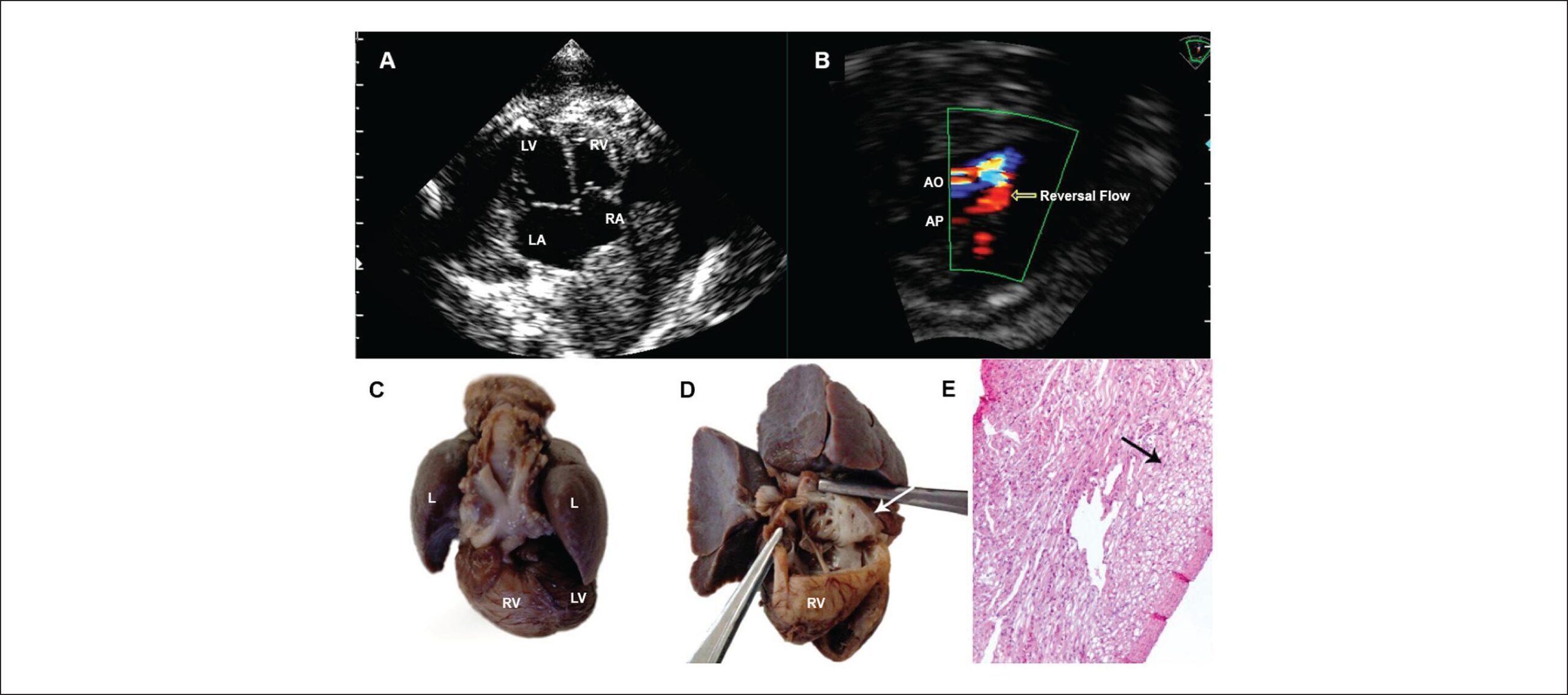
Arrhythmogenic right ventricular dysplasia (ARVD) is a heart muscle disorder that is characterized pathologically by fibrofatty replacement of the right (and sometimes left) ventricular myocardium. In 30-90% of cases, it is an inherited condition, with an autosomal dominant form of transmission. Disease expression is variable. In this article, we discuss a rare case of fetal ARVD and its difficult prenatal diagnosis, only confirmed at post-natal autopsy.

[…]

  • Arrhythmogenic right ventricular dysplasia;
  • Fetus / echocardiography
  • Pregnancy
  • Prenatal Care
Read Full Article
Creative Commons Attribution (CC BY) Creative Commons license
01/02/2018 DOI: 10.5935/abc.20180022

How to cite this article

EndNote RIS

Electronic Document Format (Vancouver)

Noya-Rabelo MM, Macedo CT, Larocca T, Machado A, Pacheco T, Torreão J, Souza BSF, et al. The Presence and Extension of Myocardial Fibrosis in the Undetermined Form of Chagas’ Disease: A Study Using Magnetic Resonance. Arquivos Brasileiros de Cardiologia 2018;110(2):124-31.

Electronic Document Format (ABNT)

Noya-Rabelo, Marcia Maria; Macedo, Carolina The; Larocca, Ticiana; Machado, Admilson; Pacheco, Thais; Torreão, Jorge; Souza, Bruno Solano de Freitas; Soares, Milena B. P.; Ribeiro-dos-Santos, Ricardo; Correia, Luis Claudio Lemos. The Presence and Extension of Myocardial Fibrosis in the Undetermined Form of Chagas’ Disease: A Study Using Magnetic Resonance. Arquivos Brasileiros de Cardiologia, v. 110, n. 2, p. 124-131, Feb. 2018.

Electronic Document Format (APA)

Noya-Rabelo, M. M., Macedo, C. T., Larocca, T., Machado, A., Pacheco, T., Torreão, J., Souza, B. S. F., Soares, M. B. P., Ribeiro-dos-Santos, R., & Correia, L. C. L. (2018). The Presence and Extension of Myocardial Fibrosis in the Undetermined Form of Chagas’ Disease: A Study Using Magnetic Resonance. Arquivos Brasileiros de Cardiologia, 110(2), 124-131.

Electronic Document Format (ISO)

Noya-Rabelo, Marcia Maria and Macedo, Carolina The and Larocca, Ticiana and Machado, Admilson and Pacheco, Thais and Torreão, Jorge and Souza, Bruno Solano de Freitas and Soares, Milena B. P. and Ribeiro-dos-Santos, Ricardo and Correia, Luis Claudio Lemos. The Presence and Extension of Myocardial Fibrosis in the Undetermined Form of Chagas’ Disease: A Study Using Magnetic Resonance. Arquivos Brasileiros de Cardiologia [online]. 2018, vol. 110, n. 2, [cited 2026-10-14], pp. 124-131. Available from: <https://journals.cardiol.br/en/article/the-presence-and-extension-of-myocardial-fibrosis-in-the-undetermined-form-of-chagas-disease-a-study-using-magnetic-resonance/>. ISSN 0066-782X

EndNote RIS

Electronic Document Format (Vancouver)

Bouabdallaoui N, Demondion P, Maréchaux S, Varnous S, Lebreton G, Mouquet F, Leprince P, et al. Heart Transplantation for Peripartum Cardiomyopathy: A Single-Center Experience. Arquivos Brasileiros de Cardiologia 2018;110(2):181-7.

Electronic Document Format (ABNT)

Bouabdallaoui, Nadia; Demondion, Pierre; Maréchaux, Sylvestre; Varnous, Shaida; Lebreton, Guillaume; Mouquet, Frédéric; Leprince, Pascal. Heart Transplantation for Peripartum Cardiomyopathy: A Single-Center Experience. Arquivos Brasileiros de Cardiologia, v. 110, n. 2, p. 181-187, Feb. 2018.

Electronic Document Format (APA)

Bouabdallaoui, N., Demondion, P., Maréchaux, S., Varnous, S., Lebreton, G., Mouquet, F., & Leprince, P. (2018). Heart Transplantation for Peripartum Cardiomyopathy: A Single-Center Experience. Arquivos Brasileiros de Cardiologia, 110(2), 181-187.

Electronic Document Format (ISO)

Bouabdallaoui, Nadia and Demondion, Pierre and Maréchaux, Sylvestre and Varnous, Shaida and Lebreton, Guillaume and Mouquet, Frédéric and Leprince, Pascal. Heart Transplantation for Peripartum Cardiomyopathy: A Single-Center Experience. Arquivos Brasileiros de Cardiologia [online]. 2018, vol. 110, n. 2, [cited 2026-10-14], pp. 181-187. Available from: <https://journals.cardiol.br/en/article/heart-transplantation-for-peripartum-cardiomyopathy-a-single-center-experience/>. ISSN 0066-782X

EndNote RIS

Electronic Document Format (Vancouver)

Perrier-Melo RJ, Figueira FAMS, Guimarães GV, Costa MC. High-Intensity Interval Training in Heart Transplant Recipients: A Systematic Review with Meta-Analysis. Arquivos Brasileiros de Cardiologia 2018;110(2):188-94.

Electronic Document Format (ABNT)

Perrier-Melo, Raphael José; Figueira, Fernando Augusto Marinho dos Santos; Guimarães, Guilherme Veiga; Costa, Manoel da Cunha. High-Intensity Interval Training in Heart Transplant Recipients: A Systematic Review with Meta-Analysis. Arquivos Brasileiros de Cardiologia, v. 110, n. 2, p. 188-194, Feb. 2018.

Electronic Document Format (APA)

Perrier-Melo, R. J., Figueira, F. A. M. S., Guimarães, G. V., & Costa, M. C. (2018). High-Intensity Interval Training in Heart Transplant Recipients: A Systematic Review with Meta-Analysis. Arquivos Brasileiros de Cardiologia, 110(2), 188-194.

Electronic Document Format (ISO)

Perrier-Melo, Raphael José and Figueira, Fernando Augusto Marinho dos Santos and Guimarães, Guilherme Veiga and Costa, Manoel da Cunha. High-Intensity Interval Training in Heart Transplant Recipients: A Systematic Review with Meta-Analysis. Arquivos Brasileiros de Cardiologia [online]. 2018, vol. 110, n. 2, [cited 2026-10-14], pp. 188-194. Available from: <https://journals.cardiol.br/en/article/high-intensity-interval-training-in-heart-transplant-recipients-a-systematic-review-with-meta-analysis/>. ISSN 0066-782X

EndNote RIS

Electronic Document Format (Vancouver)

Leiria TLL, Medeiros AK, Almeida ED, Ley ALG, Santos CBL, Sant’Anna RT, Kruse ML, et al. Uninterrupted Use of Oral Anticoagulants for the Ablation of Atrial Flutter: A Single Center Cohort of 154 Patients. Arquivos Brasileiros de Cardiologia 2018;110(2):151-6.

Electronic Document Format (ABNT)

Leiria, Tiago Luiz Luz; Medeiros, Alexandre Kreling; Almeida, Eduardo Dytz; Ley, Antonio Lessa Gaudie; Santos, Catarine Benta Lopes dos; Sant’Anna, Roberto Toffani; Kruse, Marcelo Lapa; Pires, Leonardo Martins; Lima, Gustavo Glotz de. Uninterrupted Use of Oral Anticoagulants for the Ablation of Atrial Flutter: A Single Center Cohort of 154 Patients. Arquivos Brasileiros de Cardiologia, v. 110, n. 2, p. 151-156, Feb. 2018.

Electronic Document Format (APA)

Leiria, T. L. L., Medeiros, A. K., Almeida, E. D., Ley, A. L. G., Santos, C. B. L. , Sant’Anna, R. T., Kruse, M. L., Pires, L. M., & Lima, G. G. (2018). Uninterrupted Use of Oral Anticoagulants for the Ablation of Atrial Flutter: A Single Center Cohort of 154 Patients. Arquivos Brasileiros de Cardiologia, 110(2), 151-156.

Electronic Document Format (ISO)

Leiria, Tiago Luiz Luz and Medeiros, Alexandre Kreling and Almeida, Eduardo Dytz and Ley, Antonio Lessa Gaudie and Santos, Catarine Benta Lopes dos and Sant’Anna, Roberto Toffani and Kruse, Marcelo Lapa and Pires, Leonardo Martins and Lima, Gustavo Glotz de. Uninterrupted Use of Oral Anticoagulants for the Ablation of Atrial Flutter: A Single Center Cohort of 154 Patients. Arquivos Brasileiros de Cardiologia [online]. 2018, vol. 110, n. 2, [cited 2026-10-14], pp. 151-156. Available from: <https://journals.cardiol.br/en/article/uninterrupted-use-of-oral-anticoagulants-for-the-ablation-of-atrial-flutter-a-single-center-cohort-of-154-patients/>. ISSN 0066-782X

EndNote RIS

Electronic Document Format (Vancouver)

Amaral JF, Borsato DMA, Freitas IMG, Toschi-Dias E, Martinez DG, Laterza MC. Autonomic and Vascular Control in Prehypertensive Subjects with a Family History of Arterial Hypertension. Arquivos Brasileiros de Cardiologia 2018;110(2):166-74.

Electronic Document Format (ABNT)

Amaral, Josária Ferraz; Borsato, Diana de Medeiros Andrade; Freitas, Isabelle Magalhães Guedes; Toschi-Dias, Edgar; Martinez, Daniel Godoy; Laterza, Mateus Camaroti. Autonomic and Vascular Control in Prehypertensive Subjects with a Family History of Arterial Hypertension. Arquivos Brasileiros de Cardiologia, v. 110, n. 2, p. 166-174, Feb. 2018.

Electronic Document Format (APA)

Amaral, J. F., Borsato, D. M. A., Freitas, I. M. G., Toschi-Dias, E., Martinez, D. G., & Laterza, M. C. (2018). Autonomic and Vascular Control in Prehypertensive Subjects with a Family History of Arterial Hypertension. Arquivos Brasileiros de Cardiologia, 110(2), 166-174.

Electronic Document Format (ISO)

Amaral, Josária Ferraz and Borsato, Diana de Medeiros Andrade and Freitas, Isabelle Magalhães Guedes and Toschi-Dias, Edgar and Martinez, Daniel Godoy and Laterza, Mateus Camaroti. Autonomic and Vascular Control in Prehypertensive Subjects with a Family History of Arterial Hypertension. Arquivos Brasileiros de Cardiologia [online]. 2018, vol. 110, n. 2, [cited 2026-10-14], pp. 166-174. Available from: <https://journals.cardiol.br/en/article/autonomic-and-vascular-control-in-prehypertensive-subjects-with-a-family-history-of-arterial-hypertension/>. ISSN 0066-782X

EndNote RIS

Electronic Document Format (Vancouver)

Casali KR, Schaan BD, Montano N, Massierer D, M.F. Neto F, Teló GH, Ledur PS, et al. Correlation between Very Short and Short-Term Blood Pressure Variability in Diabetic-Hypertensive and Healthy Subjects. Arquivos Brasileiros de Cardiologia 2018;110(2):157-65.

Electronic Document Format (ABNT)

Casali, Karina R.; Schaan, Beatriz D.; Montano, Nicola; Massierer, Daniela; M.F. Neto, Flávio; Teló, Gabriela H.; Ledur, Priscila S.; Reinheimer, Marilia; Sbruzzi, Graciele; Gus, Miguel. Correlation between Very Short and Short-Term Blood Pressure Variability in Diabetic-Hypertensive and Healthy Subjects. Arquivos Brasileiros de Cardiologia, v. 110, n. 2, p. 157-165, Jan. 2018.

Electronic Document Format (APA)

Casali, K. R., Schaan, B. D., Montano, N., Massierer, D., M.F. Neto, F., Teló, G. H., Ledur, P. S., Reinheimer, M., Sbruzzi, G., & Gus, M. (2018). Correlation between Very Short and Short-Term Blood Pressure Variability in Diabetic-Hypertensive and Healthy Subjects. Arquivos Brasileiros de Cardiologia, 110(2), 157-165.

Electronic Document Format (ISO)

Casali, Karina R. and Schaan, Beatriz D. and Montano, Nicola and Massierer, Daniela and M.F. Neto, Flávio and Teló, Gabriela H. and Ledur, Priscila S. and Reinheimer, Marilia and Sbruzzi, Graciele and Gus, Miguel. Correlation between Very Short and Short-Term Blood Pressure Variability in Diabetic-Hypertensive and Healthy Subjects. Arquivos Brasileiros de Cardiologia [online]. 2018, vol. 110, n. 2, [cited 2026-10-14], pp. 157-165. Available from: <https://journals.cardiol.br/en/article/correlation-between-very-short-and-short-term-blood-pressure-variability-in-diabetic-hypertensive-and-healthy-subjects/>. ISSN 0066-782X

EndNote RIS

Electronic Document Format (Vancouver)

Ferreira JSSM, Moreira N, Ferreira R, Mendes S, Martins R, Ferreira MJ, Pego M, et al. An Alternative Method to Calculate Simplified Projected Aortic Valve Area at Normal Flow Rate. Arquivos Brasileiros de Cardiologia 2018;110(2):132-9.

Electronic Document Format (ABNT)

Ferreira, Joana Sofia Silva Moura; Moreira, Nádia; Ferreira, Rita; Mendes, Sofia; Martins, Rui; Ferreira, Maria João; Pego, Mariano. An Alternative Method to Calculate Simplified Projected Aortic Valve Area at Normal Flow Rate. Arquivos Brasileiros de Cardiologia, v. 110, n. 2, p. 132-139, Jan. 2018.

Electronic Document Format (APA)

Ferreira, J. S. S. M., Moreira, N., Ferreira, R., Mendes, S., Martins, R., Ferreira, M. J., & Pego, M. (2018). An Alternative Method to Calculate Simplified Projected Aortic Valve Area at Normal Flow Rate. Arquivos Brasileiros de Cardiologia, 110(2), 132-139.

Electronic Document Format (ISO)

Ferreira, Joana Sofia Silva Moura and Moreira, Nádia and Ferreira, Rita and Mendes, Sofia and Martins, Rui and Ferreira, Maria João and Pego, Mariano. An Alternative Method to Calculate Simplified Projected Aortic Valve Area at Normal Flow Rate. Arquivos Brasileiros de Cardiologia [online]. 2018, vol. 110, n. 2, [cited 2026-10-14], pp. 132-139. Available from: <https://journals.cardiol.br/en/article/an-alternative-method-to-calculate-simplified-projected-aortic-valve-area-at-normal-flow-rate/>. ISSN 0066-782X

EndNote RIS

Electronic Document Format (Vancouver)

Gripp EA, Oliveira GE, Feijó LA, Garcia MI, Xavier SS, Sousa AS. Global Longitudinal Strain Accuracy for Cardiotoxicity Prediction in a Cohort of Breast Cancer Patients During Anthracycline and/or Trastuzumab Treatment. Arquivos Brasileiros de Cardiologia 2018;110(2):140-5.

Electronic Document Format (ABNT)

Gripp, Eliza de Almeida; Oliveira, Gabriela Escudini de; Feijó, Luiz Augusto; Garcia, Marcelo Iorio; Xavier, Sergio Salles; Sousa, Andréa Silvestre de. Global Longitudinal Strain Accuracy for Cardiotoxicity Prediction in a Cohort of Breast Cancer Patients During Anthracycline and/or Trastuzumab Treatment. Arquivos Brasileiros de Cardiologia, v. 110, n. 2, p. 140-150, Jan. 2018.

Electronic Document Format (APA)

Gripp, E. A., Oliveira, G. E. , Feijó, L. A., Garcia, M. I., Xavier, S. S., & Sousa, A. S. (2018). Global Longitudinal Strain Accuracy for Cardiotoxicity Prediction in a Cohort of Breast Cancer Patients During Anthracycline and/or Trastuzumab Treatment. Arquivos Brasileiros de Cardiologia, 110(2), 140-150.

Electronic Document Format (ISO)

Gripp, Eliza de Almeida and Oliveira, Gabriela Escudini de and Feijó, Luiz Augusto and Garcia, Marcelo Iorio and Xavier, Sergio Salles and Sousa, Andréa Silvestre de. Global Longitudinal Strain Accuracy for Cardiotoxicity Prediction in a Cohort of Breast Cancer Patients During Anthracycline and/or Trastuzumab Treatment. Arquivos Brasileiros de Cardiologia [online]. 2018, vol. 110, n. 2, [cited 2026-10-14], pp. 140-150. Available from: <https://journals.cardiol.br/en/article/global-longitudinal-strain-accuracy-for-cardiotoxicity-prediction-in-a-cohort-of-breast-cancer-patients-during-anthracycline-and-or-trastuzumab-treatment/>. ISSN 0066-782X

EndNote RIS

Electronic Document Format (Vancouver)

Soeiro AM, Araújo VA, Vella JP, Bossa AS, Biselli B, Leal TCAT, Soeiro MCFA, et al. Is There Any Relationship between TSH Levels and Prognosis in Acute Coronary Syndrome?. Arquivos Brasileiros de Cardiologia 2018;110(2):113-8.

Electronic Document Format (ABNT)

Soeiro, Alexandre de Matos; Araújo, Victor Arrais; Vella, Júlia Pitombo; Bossa, Aline Siqueira; Biselli, Bruno; Leal, Tatiana de Carvalho Andreucci Torres; Soeiro, Maria Carolina Feres de Almeida; Serrano Jr., Carlos V.; Mueller, Christian; Oliveira Junior, Mucio Tavares de. Is There Any Relationship between TSH Levels and Prognosis in Acute Coronary Syndrome?. Arquivos Brasileiros de Cardiologia, v. 110, n. 2, p. 113-118, Jan. 2018.

Electronic Document Format (APA)

Soeiro, A. M., Araújo, V. A., Vella, J. P., Bossa, A. S., Biselli, B., Leal, T. C. A. T., Soeiro, M. C. F. A., Serrano Jr., C. V., Mueller, C., & Oliveira Junior, M. T. (2018). Is There Any Relationship between TSH Levels and Prognosis in Acute Coronary Syndrome?. Arquivos Brasileiros de Cardiologia, 110(2), 113-118.

Electronic Document Format (ISO)

Soeiro, Alexandre de Matos and Araújo, Victor Arrais and Vella, Júlia Pitombo and Bossa, Aline Siqueira and Biselli, Bruno and Leal, Tatiana de Carvalho Andreucci Torres and Soeiro, Maria Carolina Feres de Almeida and Serrano Jr., Carlos V. and Mueller, Christian and Oliveira Junior, Mucio Tavares de. Is There Any Relationship between TSH Levels and Prognosis in Acute Coronary Syndrome?. Arquivos Brasileiros de Cardiologia [online]. 2018, vol. 110, n. 2, [cited 2026-10-14], pp. 113-118. Available from: <https://journals.cardiol.br/en/article/is-there-any-relationship-between-tsh-levels-and-prognosis-in-acute-coronary-syndrome/>. ISSN 0066-782X

EndNote RIS

Electronic Document Format (Vancouver)

Favarato D, Benvenuti LA. Case 1/2018 – Young Male with Heart Disease Expressed Mainly as Ventricular Arrhythmia, Right Ventricular Dysfunction and Syncope. Arquivos Brasileiros de Cardiologia 2018;110(2):195-200.

Electronic Document Format (ABNT)

Favarato, Desiderio; Benvenuti, Luiz Alberto. Case 1/2018 – Young Male with Heart Disease Expressed Mainly as Ventricular Arrhythmia, Right Ventricular Dysfunction and Syncope. Arquivos Brasileiros de Cardiologia, v. 110, n. 2, p. 195-200, Jan. 2018.

Electronic Document Format (APA)

Favarato, D., & Benvenuti, L. A. (2018). Case 1/2018 – Young Male with Heart Disease Expressed Mainly as Ventricular Arrhythmia, Right Ventricular Dysfunction and Syncope. Arquivos Brasileiros de Cardiologia, 110(2), 195-200.

Electronic Document Format (ISO)

Favarato, Desiderio and Benvenuti, Luiz Alberto. Case 1/2018 – Young Male with Heart Disease Expressed Mainly as Ventricular Arrhythmia, Right Ventricular Dysfunction and Syncope. Arquivos Brasileiros de Cardiologia [online]. 2018, vol. 110, n. 2, [cited 2026-10-14], pp. 195-200. Available from: <https://journals.cardiol.br/en/article/case-1-2018-young-male-with-heart-disease-expressed-mainly-as-ventricular-arrhythmia-right-ventricular-dysfunction-and-syncope/>. ISSN 0066-782X

EndNote RIS

Electronic Document Format (Vancouver)

Lorenzo AD, Silva JDL, James CE, Pereira AC, Moreira ASB. Clinical, Anthropometric and Biochemical Characteristics of Patients with or without Genetically Confirmed Familial Hypercholesterolemia. Arquivos Brasileiros de Cardiologia 2018;110(2):119-23.

Electronic Document Format (ABNT)

Lorenzo, Andrea De; Silva, Juliana Duarte Lopes da; James, Cinthia E.; Pereira, Alexandre C.; Moreira, Annie Seixas Bello. Clinical, Anthropometric and Biochemical Characteristics of Patients with or without Genetically Confirmed Familial Hypercholesterolemia. Arquivos Brasileiros de Cardiologia, v. 110, n. 2, p. 119-123, Jan. 2018.

Electronic Document Format (APA)

Lorenzo, A. D., Silva, J. D. L. , James, C. E., Pereira, A. C., & Moreira, A. S. B. (2018). Clinical, Anthropometric and Biochemical Characteristics of Patients with or without Genetically Confirmed Familial Hypercholesterolemia. Arquivos Brasileiros de Cardiologia, 110(2), 119-123.

Electronic Document Format (ISO)

Lorenzo, Andrea De and Silva, Juliana Duarte Lopes da and James, Cinthia E. and Pereira, Alexandre C. and Moreira, Annie Seixas Bello. Clinical, Anthropometric and Biochemical Characteristics of Patients with or without Genetically Confirmed Familial Hypercholesterolemia. Arquivos Brasileiros de Cardiologia [online]. 2018, vol. 110, n. 2, [cited 2026-10-14], pp. 119-123. Available from: <https://journals.cardiol.br/en/article/clinical-anthropometric-and-biochemical-characteristics-of-patients-with-or-without-genetically-confirmed-familial-hypercholesterolemia/>. ISSN 0066-782X

EndNote RIS

Electronic Document Format (Vancouver)

Garagoli F, Guzzetti E, Lillo E, Lucas L, Belziti C. Cardiac Lymphoma: A Rare Cause of Acute Heart Failure with Restrictive Physiology. Arquivos Brasileiros de Cardiologia 2018;110(2):203-4.

Electronic Document Format (ABNT)

Garagoli, Fernando; Guzzetti, Ezequiel; Lillo, Ezequiel; Lucas, Luciano; Belziti, César. Cardiac Lymphoma: A Rare Cause of Acute Heart Failure with Restrictive Physiology. Arquivos Brasileiros de Cardiologia, v. 110, n. 2, p. 203-204, Jan. 2018.

Electronic Document Format (APA)

Garagoli, F., Guzzetti, E., Lillo, E., Lucas, L., & Belziti, C. (2018). Cardiac Lymphoma: A Rare Cause of Acute Heart Failure with Restrictive Physiology. Arquivos Brasileiros de Cardiologia, 110(2), 203-204.

Electronic Document Format (ISO)

Garagoli, Fernando and Guzzetti, Ezequiel and Lillo, Ezequiel and Lucas, Luciano and Belziti, César. Cardiac Lymphoma: A Rare Cause of Acute Heart Failure with Restrictive Physiology. Arquivos Brasileiros de Cardiologia [online]. 2018, vol. 110, n. 2, [cited 2026-10-14], pp. 203-204. Available from: <https://journals.cardiol.br/en/article/cardiac-lymphoma-a-rare-cause-of-acute-heart-failure-with-restrictive-physiology/>. ISSN 0066-782X

EndNote RIS

Electronic Document Format (Vancouver)

Issa VS. The Indeterminate Form of Chagas Disease. Arquivos Brasileiros de Cardiologia 2018;110(2):111-2.

Electronic Document Format (ABNT)

Issa, Victor Sarli. The Indeterminate Form of Chagas Disease. Arquivos Brasileiros de Cardiologia, v. 110, n. 2, p. 111-112, Jan. 2018.

Electronic Document Format (APA)

Issa, V. S. (2018). The Indeterminate Form of Chagas Disease. Arquivos Brasileiros de Cardiologia, 110(2), 111-112.

Electronic Document Format (ISO)

Issa, Victor Sarli. The Indeterminate Form of Chagas Disease. Arquivos Brasileiros de Cardiologia [online]. 2018, vol. 110, n. 2, [cited 2026-10-14], pp. 111-112. Available from: <https://journals.cardiol.br/en/article/the-indeterminate-form-of-chagas-disease/>. ISSN 0066-782X

EndNote RIS

Electronic Document Format (Vancouver)

Rodrigues CVB, Oliveira A, Wiefels CC, Leão MS, Mesquita CT. Current Practices in Myocardial Perfusion Scintigraphy in Brazil and Adherence to the IAEA Recommendations: Results of a Cross-Sectional Study. Arquivos Brasileiros de Cardiologia 2018;110(2):175-80.

Electronic Document Format (ABNT)

Rodrigues, Carlos Vitor Braga; Oliveira, Anderson; Wiefels, Christiane Cigagna; Leão, Maurício de Souza; Mesquita, Cláudio Tinoco. Current Practices in Myocardial Perfusion Scintigraphy in Brazil and Adherence to the IAEA Recommendations: Results of a Cross-Sectional Study. Arquivos Brasileiros de Cardiologia, v. 110, n. 2, p. 175-180, Jan. 2018.

Electronic Document Format (APA)

Rodrigues, C. V. B., Oliveira, A., Wiefels, C. C., Leão, M. S., & Mesquita, C. T. (2018). Current Practices in Myocardial Perfusion Scintigraphy in Brazil and Adherence to the IAEA Recommendations: Results of a Cross-Sectional Study. Arquivos Brasileiros de Cardiologia, 110(2), 175-180.

Electronic Document Format (ISO)

Rodrigues, Carlos Vitor Braga and Oliveira, Anderson and Wiefels, Christiane Cigagna and Leão, Maurício de Souza and Mesquita, Cláudio Tinoco. Current Practices in Myocardial Perfusion Scintigraphy in Brazil and Adherence to the IAEA Recommendations: Results of a Cross-Sectional Study. Arquivos Brasileiros de Cardiologia [online]. 2018, vol. 110, n. 2, [cited 2026-10-14], pp. 175-180. Available from: <https://journals.cardiol.br/en/article/current-practices-in-myocardial-perfusion-scintigraphy-in-brazil-and-adherence-to-the-iaea-recommendations-results-of-a-cross-sectional-study/>. ISSN 0066-782X

EndNote RIS

Electronic Document Format (Vancouver)

Mathias Junior W. Low-Flow Low-Gradient and Low-Ejection Fraction Aortic Stenosis and Projected Aortic Valve Area Calculation: So Important but so Complicated. Let us Just Keep it Simple!. Arquivos Brasileiros de Cardiologia 2018;110(2):109-10.

Electronic Document Format (ABNT)

Mathias Junior, Wilson. Low-Flow Low-Gradient and Low-Ejection Fraction Aortic Stenosis and Projected Aortic Valve Area Calculation: So Important but so Complicated. Let us Just Keep it Simple!. Arquivos Brasileiros de Cardiologia, v. 110, n. 2, p. 109-110, Jan. 2018.

Electronic Document Format (APA)

Mathias Junior, W. (2018). Low-Flow Low-Gradient and Low-Ejection Fraction Aortic Stenosis and Projected Aortic Valve Area Calculation: So Important but so Complicated. Let us Just Keep it Simple!. Arquivos Brasileiros de Cardiologia, 110(2), 109-110.

Electronic Document Format (ISO)

Mathias Junior, Wilson. Low-Flow Low-Gradient and Low-Ejection Fraction Aortic Stenosis and Projected Aortic Valve Area Calculation: So Important but so Complicated. Let us Just Keep it Simple!. Arquivos Brasileiros de Cardiologia [online]. 2018, vol. 110, n. 2, [cited 2026-10-14], pp. 109-110. Available from: <https://journals.cardiol.br/en/article/low-flow-low-gradient-and-low-ejection-fraction-aortic-stenosis-and-projected-aortic-valve-area-calculation-so-important-but-so-complicated-let-us-just-keep-it-simple/>. ISSN 0066-782X

EndNote RIS

Electronic Document Format (Vancouver)

Rochitte CE, Mesquita CT. What are the Characteristics of an Excellent Review of Scientific Articles?. Arquivos Brasileiros de Cardiologia 2018;110(2):106-8.

Electronic Document Format (ABNT)

Rochitte, Carlos Eduardo; Mesquita, Claudio Tinoco. What are the Characteristics of an Excellent Review of Scientific Articles?. Arquivos Brasileiros de Cardiologia, v. 110, n. 2, p. 106-108, Jan. 2018.

Electronic Document Format (APA)

Rochitte, C. E., & Mesquita, C. T. (2018). What are the Characteristics of an Excellent Review of Scientific Articles?. Arquivos Brasileiros de Cardiologia, 110(2), 106-108.

Electronic Document Format (ISO)

Rochitte, Carlos Eduardo and Mesquita, Claudio Tinoco. What are the Characteristics of an Excellent Review of Scientific Articles?. Arquivos Brasileiros de Cardiologia [online]. 2018, vol. 110, n. 2, [cited 2026-10-14], pp. 106-108. Available from: <https://journals.cardiol.br/en/article/what-are-the-characteristics-of-an-excellent-review-of-scientific-articles/>. ISSN 0066-782X

EndNote RIS

Electronic Document Format (Vancouver)

Lopes LM, Pacheco JT, Schultz R, Francisco RPV, Zugaib M. A Prenatal Case of Arrhythmogenic Right Ventricular Dysplasia. Arquivos Brasileiros de Cardiologia 2018;110(2):201-2.

Electronic Document Format (ABNT)

Lopes, Lilian Maria; Pacheco, Juliana Torres; Schultz, Regina; Francisco, Rossana Pulcineli Vieira; Zugaib, Marcelo. A Prenatal Case of Arrhythmogenic Right Ventricular Dysplasia. Arquivos Brasileiros de Cardiologia, v. 110, n. 2, p. 201-202, Jan. 2018.

Electronic Document Format (APA)

Lopes, L. M., Pacheco, J. T., Schultz, R., Francisco, R. P. V., & Zugaib, M. (2018). A Prenatal Case of Arrhythmogenic Right Ventricular Dysplasia. Arquivos Brasileiros de Cardiologia, 110(2), 201-202.

Electronic Document Format (ISO)

Lopes, Lilian Maria and Pacheco, Juliana Torres and Schultz, Regina and Francisco, Rossana Pulcineli Vieira and Zugaib, Marcelo. A Prenatal Case of Arrhythmogenic Right Ventricular Dysplasia. Arquivos Brasileiros de Cardiologia [online]. 2018, vol. 110, n. 2, [cited 2026-10-14], pp. 201-202. Available from: <https://journals.cardiol.br/en/article/a-prenatal-case-of-arrhythmogenic-right-ventricular-dysplasia/>. ISSN 0066-782X

Sede – Rio de Janeiro
Av. Marechal Câmara, 160
3º andar – Sala: 330 – Centro
Rio de Janeiro – CEP: 20020-907
Tel.: (55 +21) 3478-2700
ou (21) 99386-3961
E-mail: revista@cardiol.br

Sede – São Paulo
Alameda Santos, 705 – 11º andar
Cerqueira César | São Paulo
CEP: 01419-001
Tel.: (55 +11) 3411-5500
E-mail: revista@cardiol.br

  • About the Journal
  • Internal Regulation
  • Editors Section
  • Editorial Board
  • History
  • SBC Award

  • Guidelines for Publication
  • Editorial Policy
  • Ethics Policy
  • Policy on the Use of Artificial Intelligence
  • Mandatory Publication Form
  • Publication Fee

Issues

SBC Guidelines

  • How to Publish an Abstract Supplement?
  • Supplements from the Brazilian Congress of Cardiology