ABC Family Arquivos Brasileiros de Cardiologia International Journal of Cardiovascular Sciences ABC Heart Failure & Cardiomyopathy ABC Imagem Cardiovascular
Português English
ABC Family
Português English
  • About
    • About ABC Family
    • Internal Regulation
    • Editorial Board
    • Brazilian Society of Cardiology (SBC)
  • Issues
  • SBC Guidelines
  • Content
    • Videos
    • Podcasts
    • News
  • About
    • About ABC Family
    • Internal Regulation
    • Editorial Board
    • Brazilian Society of Cardiology (SBC)
  • Issues
  • SBC Guidelines
  • Content
    • Videos
    • Podcasts
    • News

ABC Family

  • ABC Family
  • Arquivos Brasileiros de Cardiologia
  • International Journal of Cardiovascular Sciences
  • ABC Heart Failure & Cardiomyopathy
  • ABC Imagem Cardiovascular
Search in

No content found.

Journals
Ordering
Article types
Others

  1. Home
  2. Keyword: Breast Neoplasms/drug therapy
Figure 1
ABC
Review Article

Antiplatelet Therapy in Breast Cancer Patients Using Hormonal Therapy: Myths, Evidence and Potentialities – Systematic Review

Andréa de Melo Leite et al. Ariane Vieira Scarlatelli Macedo Antonio José Lagoeiro Jorge Wolney de Andrade Martins

Abstract

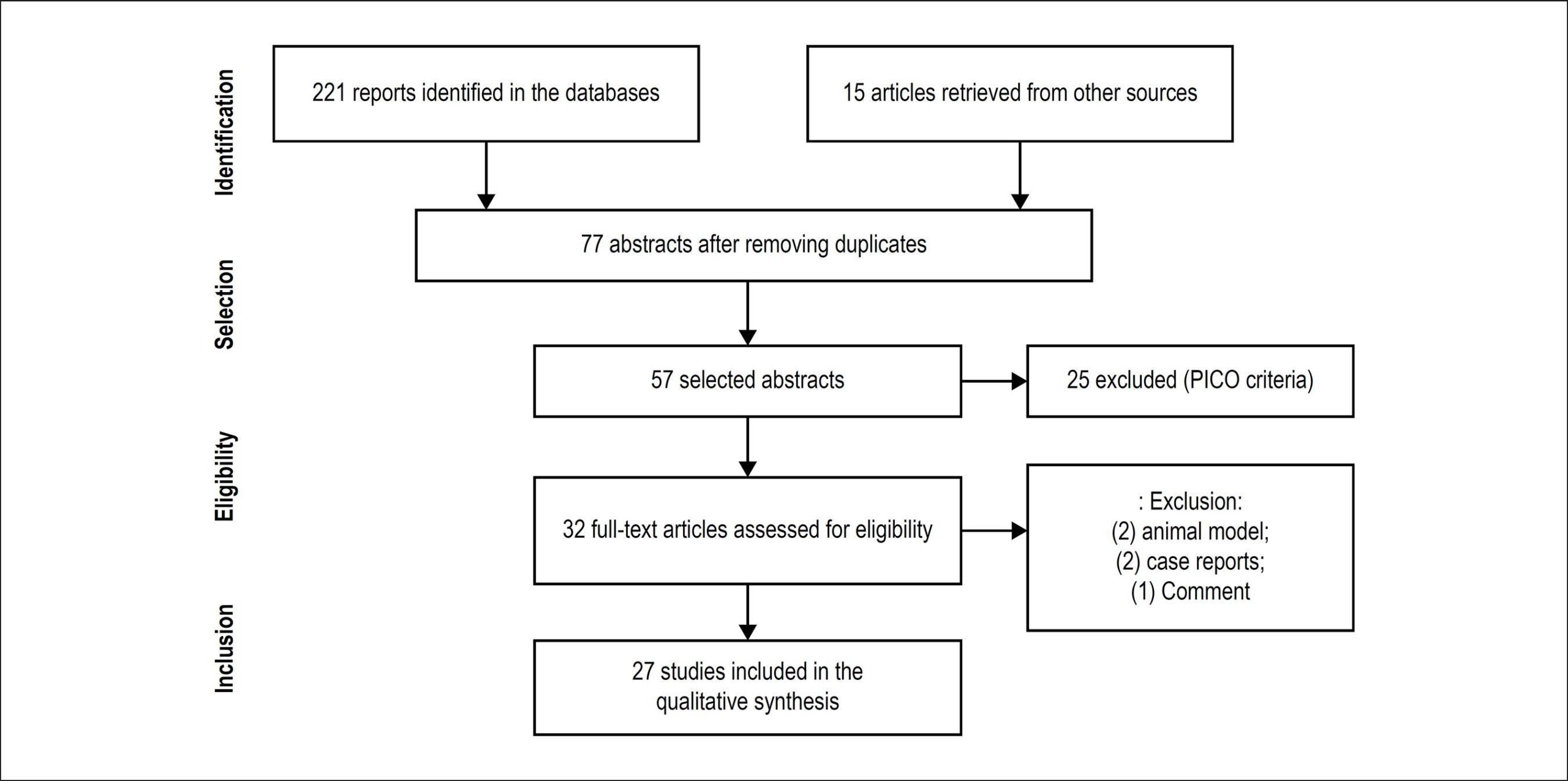
Breast cancer is the most frequently diagnosed tumor in women worldwide, with a significant impact on morbidity and mortality. Chemotherapy and hormone therapy have significantly reduced mortality; however, the adverse effects are significant. Aspirin has been incorporated into clinical practice for over 100 years at a low cost, making it particularly attractive as a potential agent in breast cancer prevention and as an adjunct treatment to endocrine therapy in the prophylaxis of cardiovascular complications. The objective of this study was to evaluate the role of aspirin in reducing the incidence of breast cancer and to evaluate the impact of its use on morbidity and mortality and reduction of cardiovascular events as adjuvant therapy during breast cancer treatment with selective estrogen receptor modulators. A systematic review was performed using the PRISMA methodology and PICO criteria, based on the MEDLINE, EMBASE and LILACS databases. The original articles of clinical trials, cohort, case-control studies and meta-analyses published from January 1998 to June 2017, were considered. Most studies showed an association between the use of selective estrogen receptor modulators and the increase in thromboembolic events. The studies suggest a protective effect of aspirin for cardiovascular events during its concomitant use with selective estrogen receptor modulators and in the prevention of breast cancer. This systematic review suggests that aspirin therapy combines the benefit of protection against cardiovascular events with the potential reduction in breast cancer risk, and that the evaluation of the benefits of the interaction of endocrine therapy with aspirin should be further investigated.
  • Aspirin
  • Breast Neoplasms/drug therapy
  • Cardiovascular Diseases / prevention & control
  • Indicators of Morbidity and Mortality
  • Raloxilene Hydrochloride
  • Selective Estrogen Receptor Modulators
  • Tamoxifen
Read Full Article
Creative Commons Attribution (CC BY) Creative Commons license
01/08/2018 DOI: 10.5935/abc.20180138
Figure 1
ABC
Original Article

Global Longitudinal Strain Accuracy for Cardiotoxicity Prediction in a Cohort of Breast Cancer Patients During Anthracycline and/or Trastuzumab Treatment

Eliza de Almeida Gripp et al. Gabriela Escudini de Oliveira Luiz Augusto Feijó Marcelo Iorio Garcia … Sergio Salles Xavier Andréa Silvestre de Sousa

Abstract

Background:

The high cardiotoxicity morbidity and mortality rates associated with the antineoplastic therapy for breast cancer could be reduced with the early use of cardioprotective drugs. However, the low sensitivity of left ventricular ejection fraction limits its use in that preventive strategy. New parameters, such as global longitudinal strain, are being used in the early detection of contractile function changes.

Objectives:

To assess the incidence of cardiotoxicity in patients treated for breast cancer, the independent factors associated with that event, and the ability of strain to identify it early.

Methods:

Prospective observational study of consecutive outpatients diagnosed with breast cancer, with no previous antineoplastic treatment and no ventricular dysfunction, who underwent anthracycline and/or trastuzumab therapy. The patients were quarterly evaluated on a 6- to 12-month follow-up by an observer blind to therapy. Cox regression was used to evaluate the association of cardiotoxicity with clinical, therapeutic and echocardiographic variables. A ROC curve was built to identify the strain cutoff point on the third month that could predict the ejection fraction reduction on the sixth month. For all tests, the statistical significance level adopted was p ≤ 0.05.

Results:

Of 49 women (mean age, 49.7 ± 12.2 years), cardiotoxicity was identified in 5 (10%) on the third (n = 2) and sixth (n = 3) months of follow-up. Strain was independently associated with the event (p = 0.004; HR = 2.77; 95%CI: 1.39-5.54), with a cutoff point for absolute value of -16.6 (AUC = 0.95; 95%CI: 0.87-1.0) or a cutoff point for percentage reduction of 14% (AUC = 0.97; 95%CI: 0.9-1.0).

Conclusion:

The 14% reduction in strain (absolute value of -16.6) allowed the early identification of patients who could develop anthracycline and/or trastuzumab-induced cardiotoxicity.

  • Breast Neoplasms/drug therapy
  • Cardiotoxicity
  • Indicators of Morbidity and Mortality
  • Stroke Volume
  • Trastuzumab
Read Full Article
Creative Commons Attribution (CC BY) Creative Commons license
01/02/2018 DOI: 10.5935/abc.20180021 Views 1

How to cite this article

EndNote RIS

Electronic Document Format (Vancouver)

Leite AM, Macedo AVS, Jorge AJL, Martins WA. Antiplatelet Therapy in Breast Cancer Patients Using Hormonal Therapy: Myths, Evidence and Potentialities – Systematic Review. Arquivos Brasileiros de Cardiologia 2018;111(2):205-12.

Electronic Document Format (ABNT)

Leite, Andréa de Melo; Macedo, Ariane Vieira Scarlatelli; Jorge, Antonio José Lagoeiro; Martins, Wolney de Andrade. Antiplatelet Therapy in Breast Cancer Patients Using Hormonal Therapy: Myths, Evidence and Potentialities – Systematic Review. Arquivos Brasileiros de Cardiologia, v. 111, n. 2, p. 205-212, Jul. 2018.

Electronic Document Format (APA)

Leite, A. M., Macedo, A. V. S., Jorge, A. J. L., & Martins, W. A. (2018). Antiplatelet Therapy in Breast Cancer Patients Using Hormonal Therapy: Myths, Evidence and Potentialities – Systematic Review. Arquivos Brasileiros de Cardiologia, 111(2), 205-212.

Electronic Document Format (ISO)

Leite, Andréa de Melo and Macedo, Ariane Vieira Scarlatelli and Jorge, Antonio José Lagoeiro and Martins, Wolney de Andrade. Antiplatelet Therapy in Breast Cancer Patients Using Hormonal Therapy: Myths, Evidence and Potentialities – Systematic Review. Arquivos Brasileiros de Cardiologia [online]. 2018, vol. 111, n. 2, [cited 2026-10-14], pp. 205-212. Available from: <https://journals.cardiol.br/en/article/antiplatelet-therapy-in-breast-cancer-patients-using-hormonal-therapy-myths-evidence-and-potentialities-systematic-review/>. ISSN 0066-782X

EndNote RIS

Electronic Document Format (Vancouver)

Gripp EA, Oliveira GE, Feijó LA, Garcia MI, Xavier SS, Sousa AS. Global Longitudinal Strain Accuracy for Cardiotoxicity Prediction in a Cohort of Breast Cancer Patients During Anthracycline and/or Trastuzumab Treatment. Arquivos Brasileiros de Cardiologia 2018;110(2):140-5.

Electronic Document Format (ABNT)

Gripp, Eliza de Almeida; Oliveira, Gabriela Escudini de; Feijó, Luiz Augusto; Garcia, Marcelo Iorio; Xavier, Sergio Salles; Sousa, Andréa Silvestre de. Global Longitudinal Strain Accuracy for Cardiotoxicity Prediction in a Cohort of Breast Cancer Patients During Anthracycline and/or Trastuzumab Treatment. Arquivos Brasileiros de Cardiologia, v. 110, n. 2, p. 140-150, Jan. 2018.

Electronic Document Format (APA)

Gripp, E. A., Oliveira, G. E. , Feijó, L. A., Garcia, M. I., Xavier, S. S., & Sousa, A. S. (2018). Global Longitudinal Strain Accuracy for Cardiotoxicity Prediction in a Cohort of Breast Cancer Patients During Anthracycline and/or Trastuzumab Treatment. Arquivos Brasileiros de Cardiologia, 110(2), 140-150.

Electronic Document Format (ISO)

Gripp, Eliza de Almeida and Oliveira, Gabriela Escudini de and Feijó, Luiz Augusto and Garcia, Marcelo Iorio and Xavier, Sergio Salles and Sousa, Andréa Silvestre de. Global Longitudinal Strain Accuracy for Cardiotoxicity Prediction in a Cohort of Breast Cancer Patients During Anthracycline and/or Trastuzumab Treatment. Arquivos Brasileiros de Cardiologia [online]. 2018, vol. 110, n. 2, [cited 2026-10-14], pp. 140-150. Available from: <https://journals.cardiol.br/en/article/global-longitudinal-strain-accuracy-for-cardiotoxicity-prediction-in-a-cohort-of-breast-cancer-patients-during-anthracycline-and-or-trastuzumab-treatment/>. ISSN 0066-782X

  • About ABC Family
  • Internal Regulation
  • Editorial Board
  • Brazilian Society of Cardiology (SBC)

Issues

SBC Guidelines

  • Videos
  • Podcasts
  • News