ABC Family Arquivos Brasileiros de Cardiologia International Journal of Cardiovascular Sciences ABC Heart Failure & Cardiomyopathy ABC Imagem Cardiovascular
Português English
ABC Family
Português English
  • About
    • About ABC Family
    • Internal Regulation
    • Editorial Board
    • Brazilian Society of Cardiology (SBC)
  • Issues
  • SBC Guidelines
  • Content
    • Videos
    • Podcasts
    • News
  • About
    • About ABC Family
    • Internal Regulation
    • Editorial Board
    • Brazilian Society of Cardiology (SBC)
  • Issues
  • SBC Guidelines
  • Content
    • Videos
    • Podcasts
    • News

ABC Family

  • ABC Family
  • Arquivos Brasileiros de Cardiologia
  • International Journal of Cardiovascular Sciences
  • ABC Heart Failure & Cardiomyopathy
  • ABC Imagem Cardiovascular
Search in

No content found.

Journals
Ordering
Article types
Others

  1. Home
  2. Keyword: aortic valve surgery
ABC
Editorial

The Role of Inflammation in Post-TAVI Outcomes

Pedro H. M. C. de Melo et al. Rodrigo Modolo

In the early transcatheter aortic valve implantation (TAVI) experience with extreme/high risk for surgical aortic valve replacement (SAVR) patients, global mortality in one year was as high as 25% . Since then, access to TAVI has been extended to intermediate and low-risk patients, and the annual volume of procedures has markedly increased. Post-discharge mortality rates have declined in parallel with the introduction of new devices and the adoption of broader indications. However, the one-year mortality after TAVI remains relevant, exceeding 15% in contemporary practice .

Over time, significant postprocedural paravalvular leak, acute renal failure, and comorbidities such as chronic obstructive pulmonary disease (COPD), heart failure, chronic kidney disease (CKD) and prior stroke were linked to higher rates of mortality ,. Risk scores originally validated to estimate mortality after SAVR, and serum biomarkers related to congestive heart failure and others had their performance tested in patients who underwent TAVI . Nonetheless, there is no specific, widely adopted tool to predict late mortality of post-TAVI patients.

[…]
  • aortic valve surgery
  • Biomarkers
  • C-Reactive Protein
  • Comorbidity
  • Implantation Transcatheter Aortic Valve/methods
  • Inflammation
  • Mortality
Read Full Article
Creative Commons Attribution (CC BY) Creative Commons license
22/11/2021 DOI: 10.36660/abc.20210809 Views 1
ABC
Editorial

Arterial Stiffness in Aortic Stenosis

Henrique Murad

The paper “Arterial Stiffness Changes in Severe Aortic Stenosis Patients Submitted to Valve Replacement Surgery” has important information on the behavior of arterial stiffness before and after aortic valve replacement.

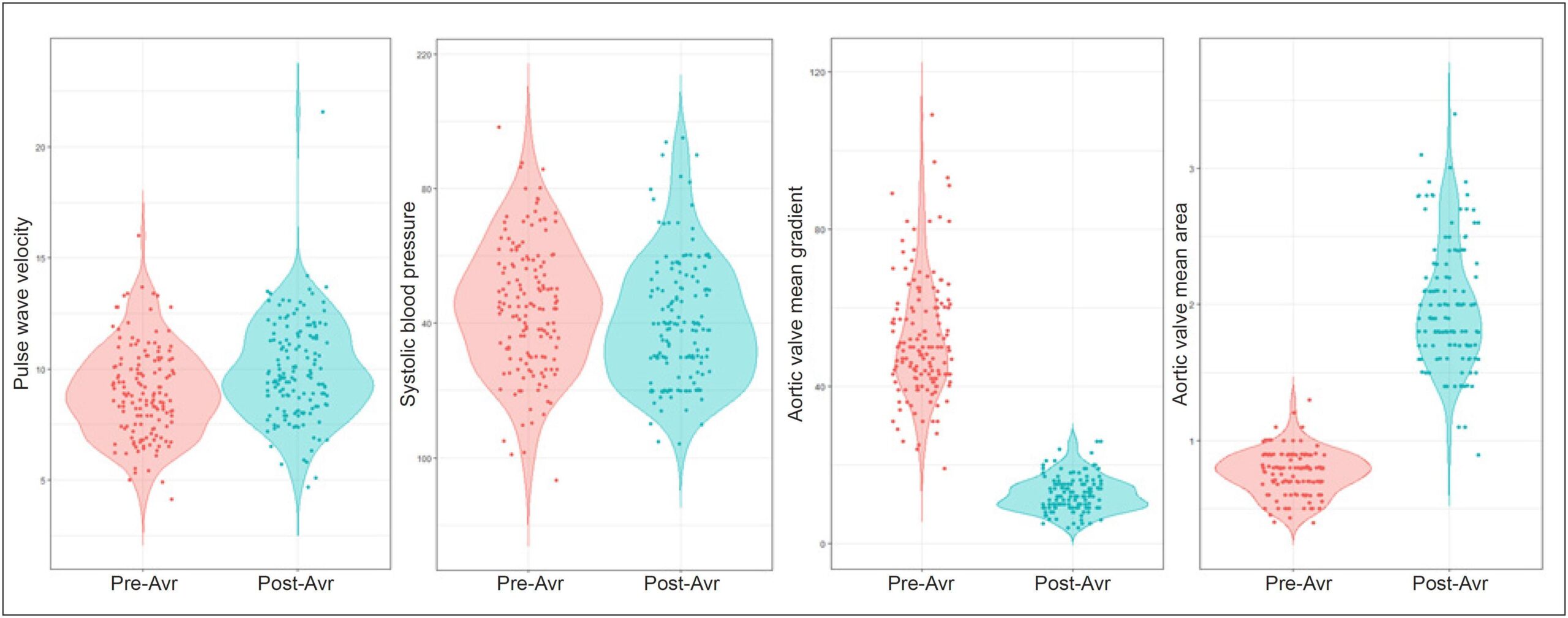
They studied 150 patients with severe aortic stenosis submitted to aortic valve replacement with bioprosthesis. They used a noninvasive method, carotid-femoral pressure wave velocity (PWV) measured through Complior Analyse, to study arterial stiffness. Other methods could have been used, such as invasive pressure catheter measurements, MRI and peripheral cuff sensors, but PWV is the gold standard.

[…]

  • Aortic Valve Replacement/methods
  • Aortic valve stenosis / surgery
  • aortic valve surgery
  • Blood Pressure
  • Pulse Wave Analysis
Read Full Article
Creative Commons Attribution (CC BY) Creative Commons license
23/04/2021 DOI: 10.36660/abc.20201234
Figure 1
ABC
Original Article

Arterial Stiffness Changes in Severe Aortic Stenosis Patients Submitted to Valve Replacement Surgery

Renata Raimundo et al. Francisca Saraiva Raquel Moreira Soraia Moreira … Ana Filipa Ferreira Rui J. Cerqueira Mario Jorge Amorim Paulo Pinho António Sousa Barros André P. Lourenço Adelino Leite-Moreira

Abstract

Background:

Little is known about the impact of severe aortic stenosis (AS) in aortic stiffness and if there is any change after removing AS barrier with aortic valve replacement (AVR) surgery.

Objective:

To estimate carotid-femoral pulse wave velocity (PWV) changes after AVR surgery and to define PWV predictors in severe AS patients.

Methods:

Single-center retrospective cohort, including patients with severe AS who underwent AVR surgery with bioprostheses, between February 2017 and January 2019 and performed PWV measurements (Complior®) before and after the procedure (2±1 months). Before and after AVR, PWV values were compared through paired tests. The associations of PWV with clinical data were studied and linear regression models were applied to estimate pre and postoperative PWV independent predictors. The significance level was set at 5%.

Results:

We included 150 patients in the sample, with mean age of 72±8 years, and 51% being males. We found a statistically significant increase in PWV values after surgery (9.0±2.1 m/s vs. 9.9±2.2, p<0.001, before and after AVR, respectively) and an inverse association with AS severity variables. In the linear regression model, age and systolic blood pressure (SBP) were established as independent predictors of higher pre- and postoperative PWV, while higher mean valvular gradient emerged as a determinant of lower pre-AVR PWV.

Conclusion:

We documented an inverse correlation of arterial stiffness with the severity of AS in patients with AS, and a significant increase in PWV values after AVR surgery. Advanced age and higher SBP were associated with higher PWV values, although arterial function measurements were within the normal range. (Arq Bras Cardiol. 2021; 116(3):475-482)

  • Aortic Valve Replacement/methods
  • Aortic valve stenosis / surgery
  • aortic valve surgery
  • Pulse Wave Analysis
Read Full Article
Creative Commons Attribution (CC BY) Creative Commons license
23/04/2021 DOI: 10.36660/abc.20190577
ABC
Editorial

Prosthesis-Patient Mismatch Following Aortic Valve Replacement: Finding Predictors for Prevention

Flávio Tarasoutchi

The impact of prosthesis-patient mismatch

Nowadays, the main indication for valve surgery, in patients with anatomically important aortic valve disease, occurs at the onset of symptoms, given the presumed benefit of reduced morbidity and mortality associated with this procedure in this context.– Thus, the presence of PPM following surgical implantation of an aortic bioprosthesis interferes in the expected reduction of symptomatology and mortality rates, thus minimizing the benefits that such invasive procedure could bring to the patient. Therefore, we need tools to predict the risk of PPM and thus implement strategies that can prevent such entity. This scenario was evaluated by Otto et al. in the current issue of the Arquivos Brasileiros de Cardiologia.

PPM is defined echocardiographically by an indexed effective orifice area (EOA) ≤ 0.85cm2/m2 and considered severe if ≤ 0.65 cm2/m2. Since this parameter is indexed by body surface area, individuals with body mass index ≥ 35 kg/m2 have lower reference values (≤ 0.70 cm2/m2 and ≤ 0.55 cm2/m2, respectively) to avoid overestimation of anatomical severity in these patients. Its reported prevalence varies greatly: up to 70% in the case of moderate PPM and 20% in the case of severe PPM.

[…]

  • aortic valve surgery
  • Echocardiography/methods
  • Heart Valve Prosthesis/adverse effects
  • Quality of life
  • Size Perception
Read Full Article
Creative Commons Attribution (CC BY) Creative Commons license
10/02/2020 DOI: 10.36660/abc.201907
Figure 1
ABC
Image

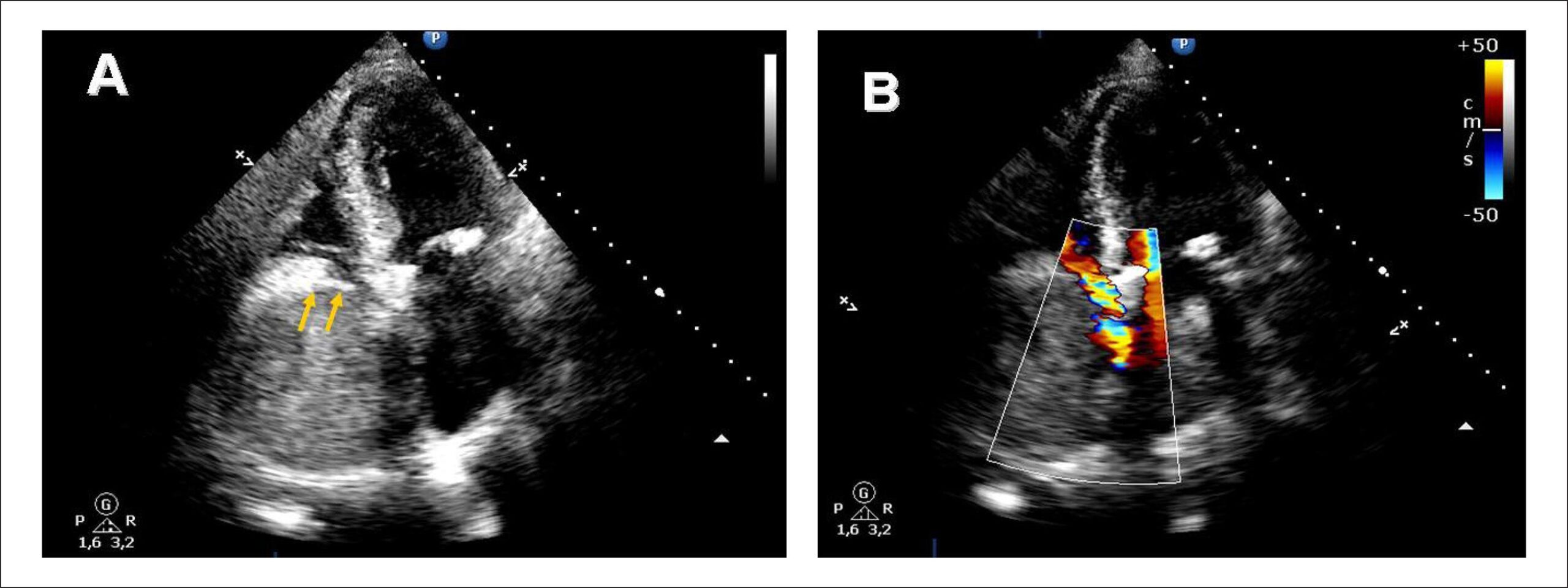
Giant Right Atrial Mass Following Surgical Aortic Valve Replacement

Teresa Bastante et al. Fernando Alfonso

A

[…]

  • aortic valve surgery
  • Heart Atria/abnormalities
  • Pericardial Effusion
Read Full Article
Creative Commons Attribution (CC BY) Creative Commons license
01/08/2015 DOI: 10.5935/abc.20150066
Mini-sternotomy for the treatment of aortic valve lesions
ABC
Original Article

Mini-sternotomy for the treatment of aortic valve lesions

Altamiro Ribeiro Dias et al. Ricardo Ribeiro Dias Fábio Gaiotto José Lima O. Júnior … Filinto M.C.N. Cerqueira Max Grinberg Roney Sampaio Paulo de Lara Lavitola Nelson Elias Flávio Tarasoutchi Luiz F. Cardoso Noedir A. G. Stolf

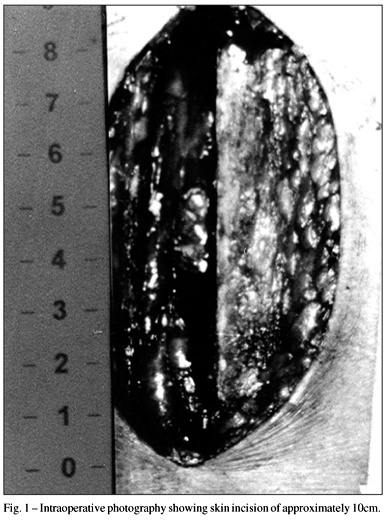
OBJECTIVE: To compare inverted-L mini-sternotomy performed above the sternal furcula with conventional sternotomy in patients with aortic valve diseases who undergo surgical treatment. METHODS: We operated upon 30 patients who had aortic valve lesions that had clinical and hemodynamic findings. All patients underwent inverted-L sternotomy, which extended from above the manubrium of the sternum to the 3rd right intercostal space, without opening the pleural cavity. Their ages ranged from 32 to 76 years, and 18 were males and 12 were females. We used negative pressure in a venous ¼-inch cannula, and the patients were maintained in Trendelemburg’s position. Twenty-seven patients received bioprostheses with diameters ranging from 23 to 29mm. Three patients underwent only removal of the calcifications of the aortic valve leaflets and aortic commissurotomy. RESULTS: The mean duration of anoxic cardiac arrest was 63.11min. Access was considered good in all patients. One death was due to pulmonary and renal problems not related to the incision. All patients had a better recovery in the intensive care unit, got out of bed sooner, coughed more easily, and performed prophylactic physiotherapeutic maneuvers for respiratory problems more easily and with less pain in the incision. Early ambulation was more easily carried out by all patients. CONCLUSION: Mini-sternotomy proved to be better than the conventional sternotomy because it provided morecomfort for the patients in the early postoperative period, with less pain and greater desire for early ambulation and all its inherent advantages.

  • Aortic Valve Disease
  • aortic valve surgery
  • Sternotomy
Read Full Article
Creative Commons Attribution (CC BY) Creative Commons license
18/09/2001 DOI: 10.1590/S0066-782X2001000900002 Views 1

How to cite this article

EndNote RIS

Electronic Document Format (Vancouver)

Melo PHMC, Modolo R. The Role of Inflammation in Post-TAVI Outcomes. Arquivos Brasileiros de Cardiologia 2021;117(5):1028-9.

Electronic Document Format (ABNT)

Melo, Pedro H. M. C. de; Modolo, Rodrigo. The Role of Inflammation in Post-TAVI Outcomes. Arquivos Brasileiros de Cardiologia, v. 117, n. 5, p. 1028-1029, Nov. 2021.

Electronic Document Format (APA)

Melo, P. H. M. C. , & Modolo, R. (2021). The Role of Inflammation in Post-TAVI Outcomes. Arquivos Brasileiros de Cardiologia, 117(5), 1028-1029.

Electronic Document Format (ISO)

Melo, Pedro H. M. C. de and Modolo, Rodrigo. The Role of Inflammation in Post-TAVI Outcomes. Arquivos Brasileiros de Cardiologia [online]. 2021, vol. 117, n. 5, [cited 2026-10-14], pp. 1028-1029. Available from: <https://journals.cardiol.br/en/article/the-role-of-inflammation-in-post-tavi-outcomes/>. ISSN 0066-782X

EndNote RIS

Electronic Document Format (Vancouver)

Murad H. Arterial Stiffness in Aortic Stenosis. Arquivos Brasileiros de Cardiologia 2021;116(3):483-4.

Electronic Document Format (ABNT)

Murad, Henrique. Arterial Stiffness in Aortic Stenosis. Arquivos Brasileiros de Cardiologia, v. 116, n. 3, p. 483-484, Apr. 2021.

Electronic Document Format (APA)

Murad, H. (2021). Arterial Stiffness in Aortic Stenosis. Arquivos Brasileiros de Cardiologia, 116(3), 483-484.

Electronic Document Format (ISO)

Murad, Henrique. Arterial Stiffness in Aortic Stenosis. Arquivos Brasileiros de Cardiologia [online]. 2021, vol. 116, n. 3, [cited 2026-10-14], pp. 483-484. Available from: <https://journals.cardiol.br/en/article/arterial-stiffness-in-aortic-stenosis/>. ISSN 0066-782X

EndNote RIS

Electronic Document Format (Vancouver)

Raimundo R, Saraiva F, Moreira R, Moreira S, Ferreira AF, Cerqueira RJ, Amorim MJ, et al. Arterial Stiffness Changes in Severe Aortic Stenosis Patients Submitted to Valve Replacement Surgery. Arquivos Brasileiros de Cardiologia 2021;116(3):475-82.

Electronic Document Format (ABNT)

Raimundo, Renata; Saraiva, Francisca; Moreira, Raquel; Moreira, Soraia; Ferreira, Ana Filipa; Cerqueira, Rui J.; Amorim, Mario Jorge; Pinho, Paulo; Barros, António Sousa; Lourenço, André P.; Leite-Moreira, Adelino. Arterial Stiffness Changes in Severe Aortic Stenosis Patients Submitted to Valve Replacement Surgery. Arquivos Brasileiros de Cardiologia, v. 116, n. 3, p. 475-482, Apr. 2021.

Electronic Document Format (APA)

Raimundo, R., Saraiva, F., Moreira, R., Moreira, S., Ferreira, A. F., Cerqueira, R. J., Amorim, M. J., Pinho, P., Barros, A. S., Lourenço, A. P., & Leite-Moreira, A. (2021). Arterial Stiffness Changes in Severe Aortic Stenosis Patients Submitted to Valve Replacement Surgery. Arquivos Brasileiros de Cardiologia, 116(3), 475-482.

Electronic Document Format (ISO)

Raimundo, Renata and Saraiva, Francisca and Moreira, Raquel and Moreira, Soraia and Ferreira, Ana Filipa and Cerqueira, Rui J. and Amorim, Mario Jorge and Pinho, Paulo and Barros, António Sousa and Lourenço, André P. and Leite-Moreira, Adelino. Arterial Stiffness Changes in Severe Aortic Stenosis Patients Submitted to Valve Replacement Surgery. Arquivos Brasileiros de Cardiologia [online]. 2021, vol. 116, n. 3, [cited 2026-10-14], pp. 475-482. Available from: <https://journals.cardiol.br/en/article/arterial-stiffness-changes-in-severe-aortic-stenosis-patients-submitted-to-valve-replacement-surgery/>. ISSN 0066-782X

EndNote RIS

Electronic Document Format (Vancouver)

Tarasoutchi F. Prosthesis-Patient Mismatch Following Aortic Valve Replacement: Finding Predictors for Prevention. Arquivos Brasileiros de Cardiologia 2020;114(1):23-4.

Electronic Document Format (ABNT)

Tarasoutchi, Flávio. Prosthesis-Patient Mismatch Following Aortic Valve Replacement: Finding Predictors for Prevention. Arquivos Brasileiros de Cardiologia, v. 114, n. 1, p. 23-24, Feb. 2020.

Electronic Document Format (APA)

Tarasoutchi, F. (2020). Prosthesis-Patient Mismatch Following Aortic Valve Replacement: Finding Predictors for Prevention. Arquivos Brasileiros de Cardiologia, 114(1), 23-24.

Electronic Document Format (ISO)

Tarasoutchi, Flávio. Prosthesis-Patient Mismatch Following Aortic Valve Replacement: Finding Predictors for Prevention. Arquivos Brasileiros de Cardiologia [online]. 2020, vol. 114, n. 1, [cited 2026-10-14], pp. 23-24. Available from: <https://journals.cardiol.br/en/article/prosthesis-patient-mismatch-following-aortic-valve-replacement-finding-predictors-for-prevention/>. ISSN 0066-782X

EndNote RIS

Electronic Document Format (Vancouver)

Bastante T, Alfonso F. Giant Right Atrial Mass Following Surgical Aortic Valve Replacement. Arquivos Brasileiros de Cardiologia 2015;105(2):205.

Electronic Document Format (ABNT)

Bastante, Teresa; Alfonso, Fernando. Giant Right Atrial Mass Following Surgical Aortic Valve Replacement. Arquivos Brasileiros de Cardiologia, v. 105, n. 2, p. 205-205, Jul. 2015.

Electronic Document Format (APA)

Bastante, T., & Alfonso, F. (2015). Giant Right Atrial Mass Following Surgical Aortic Valve Replacement. Arquivos Brasileiros de Cardiologia, 105(2), 205-205.

Electronic Document Format (ISO)

Bastante, Teresa and Alfonso, Fernando. Giant Right Atrial Mass Following Surgical Aortic Valve Replacement. Arquivos Brasileiros de Cardiologia [online]. 2015, vol. 105, n. 2, [cited 2026-10-14], pp. 205-205. Available from: <https://journals.cardiol.br/en/article/giant-right-atrial-mass-following-surgical-aortic-valve-replacement/>. ISSN 0066-782X

EndNote RIS

Electronic Document Format (Vancouver)

Dias AR, Dias RR, Gaiotto F, O. Júnior JL, Cerqueira FM, Grinberg M, Sampaio R, et al. Mini-sternotomy for the treatment of aortic valve lesions. Arquivos Brasileiros de Cardiologia 2001;77(3):225-8.

Electronic Document Format (ABNT)

Dias, Altamiro Ribeiro; Dias, Ricardo Ribeiro; Gaiotto, Fábio; O. Júnior, José Lima; Cerqueira, Filinto M.C.N.; Grinberg, Max; Sampaio, Roney; Lavitola, Paulo de Lara; Elias, Nelson; Tarasoutchi, Flávio; Cardoso, Luiz F.; Stolf, Noedir A. G.. Mini-sternotomy for the treatment of aortic valve lesions. Arquivos Brasileiros de Cardiologia, v. 77, n. 3, p. 225-228, Sep. 2001.

Electronic Document Format (APA)

Dias, A. R., Dias, R. R., Gaiotto, F., O. Júnior, J. L., Cerqueira, F. M., Grinberg, M., Sampaio, R., Lavitola, P. L., Elias, N., Tarasoutchi, F., Cardoso, L. F., & Stolf, N. A. G. (2001). Mini-sternotomy for the treatment of aortic valve lesions. Arquivos Brasileiros de Cardiologia, 77(3), 225-228.

Electronic Document Format (ISO)

Dias, Altamiro Ribeiro and Dias, Ricardo Ribeiro and Gaiotto, Fábio and O. Júnior, José Lima and Cerqueira, Filinto M.C.N. and Grinberg, Max and Sampaio, Roney and Lavitola, Paulo de Lara and Elias, Nelson and Tarasoutchi, Flávio and Cardoso, Luiz F. and Stolf, Noedir A. G.. Mini-sternotomy for the treatment of aortic valve lesions. Arquivos Brasileiros de Cardiologia [online]. 2001, vol. 77, n. 3, [cited 2026-10-14], pp. 225-228. Available from: <https://journals.cardiol.br/en/article/mini-sternotomy-for-the-treatment-of-aortic-valve-lesions/>. ISSN 0066-782X

  • About ABC Family
  • Internal Regulation
  • Editorial Board
  • Brazilian Society of Cardiology (SBC)

Issues

SBC Guidelines

  • Videos
  • Podcasts
  • News