The Role of Indexed Left Atrial Volume in Detecting Adverse Outcomes in Patients with Chronic Obstructive Pulmonary Disease: A Cohort Study
Abstract
Background
Chronic obstructive pulmonary disease (COPD) is a progressive disease with high mortality, and understanding the predictors of adverse outcomes can aid in developing individualized therapeutic approaches and in making decisions regarding hospital or intensive care unit admissions.
Objective
To assess the epidemiological and laboratory profiles of patients with COPD and to correlate clinical, echocardiographic, and biomarker variables with unfavorable outcomes due to exacerbation.
Method
This was a prospective study involving patients with COPD who underwent clinical evaluation, spirometry, transthoracic echocardiography, and laboratory tests. Patients were followed for 1 year to monitor for unfavorable outcomes. The significance level considered for all analyses was p < 0.05.
Results
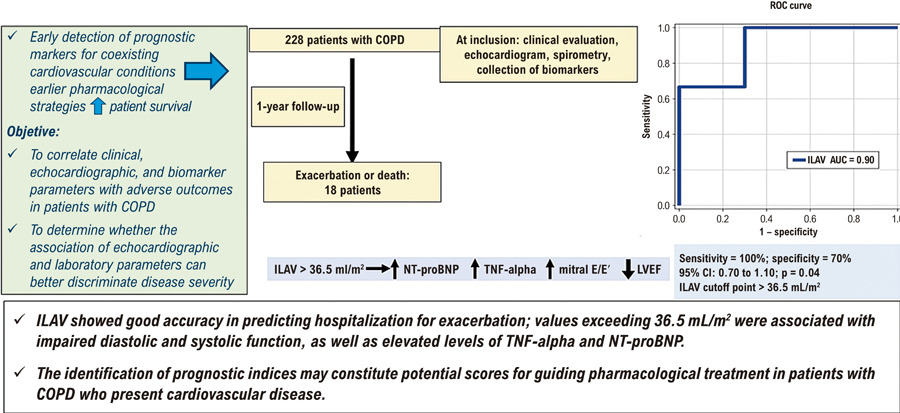
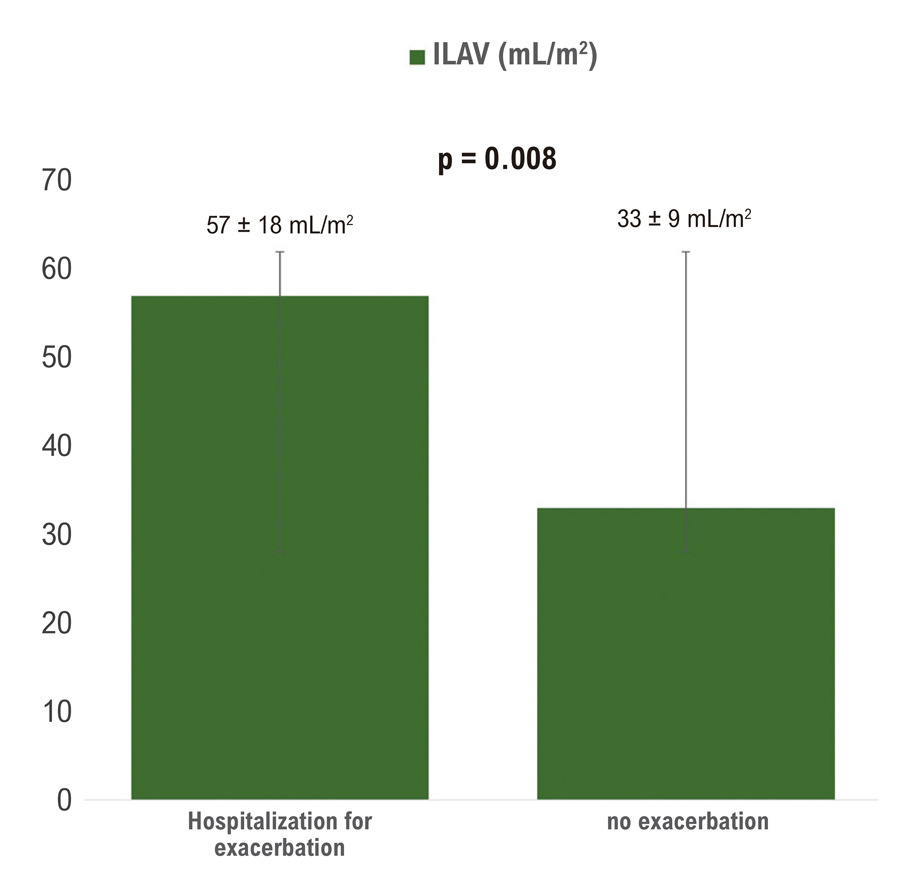
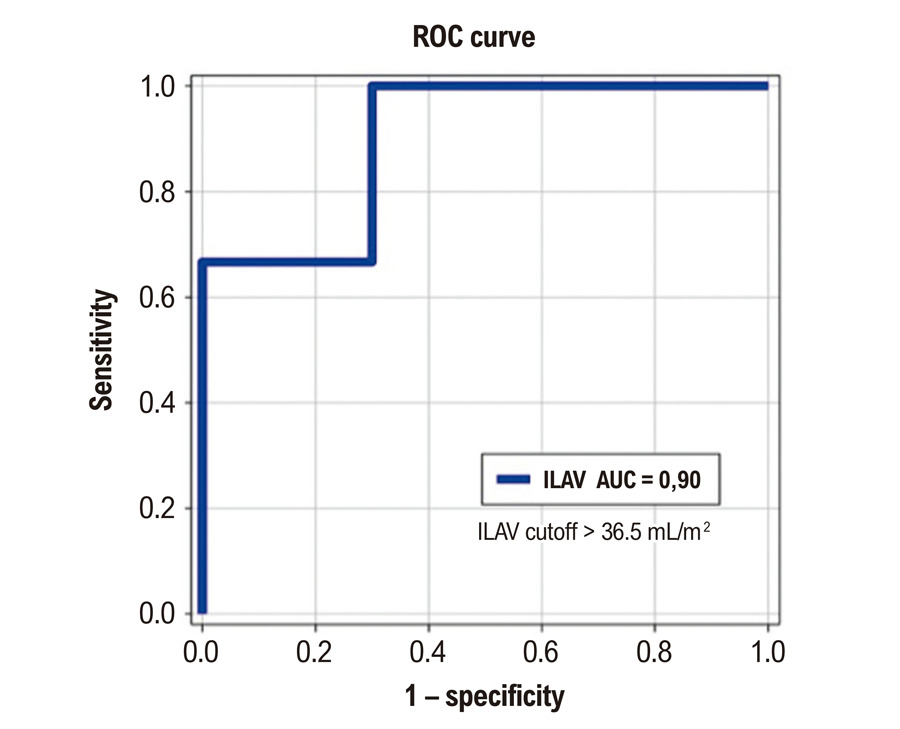
A total of 228 patients were included, with the mean age of 71 ± 9 years. The majority of patients were male (58%), and smoking (72%), hypertension (66%), and GOLD B (55%) were predominant. Indexed left atrial volume (ILAV) demonstrated good accuracy in detecting hospitalization for exacerbation, with a cutoff point of 36.5 ml/m2, yielding 100% sensitivity and 70% specificity. Patients with ILAV > 36.5 ml/m2 exhibited worsening diastolic and systolic function, as indicated by mitral E wave peak velocity in the rapid filling phase/E′ velocity of displacement of the septal or lateral mitral annulus in the rapid filling phase (E/E′) (p = 0.02) and left ventricle ejection fraction (p = 0.01), along with elevated levels of tumor necrosis factor alpha (p = 0.05) and NT-proBNP (p = 0.03).
Conclusion
ILAV may be a reliable marker for predicting unfavorable outcomes in patients with COPD. Individualized strategies should be implemented to improve disease severity and cardiovascular function.
Images
Image gallery fullscreen viewer
Comments are moderated by the editorial team before publication. Discussions should be evidence-based and use scientific language. Conflicts of interest should be declared.