Association between the Use of Fondaparinux Plus Radial Access and Clinical Outcomes in Patients with Non-ST Elevation Acute Coronary Syndrome
Abstract
Background:
Both fondaparinux and radial access have been associated with lower rates of major adverse cardiovascular events (MACE) in acute coronary syndrome (ACS).
Objective:
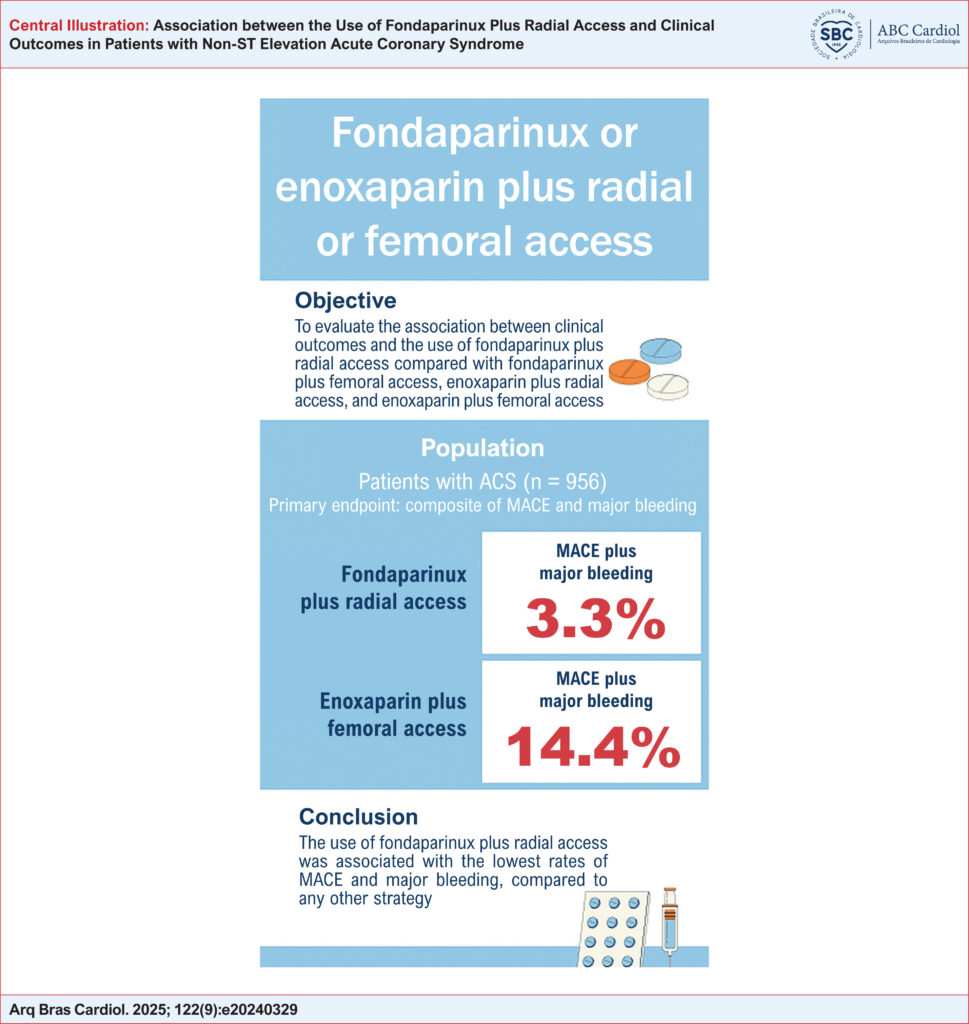
To evaluate the association between the use of fondaparinux plus radial access and clinical outcomes.
Methods:
In this study, 956 patients admitted with ACS and treated with an invasive strategy were analyzed. The primary outcome — a composite of major bleeding (according to OASIS-5 criteria) and MACE — was compared across groups defined by anticoagulation regimen (fondaparinux or enoxaparin) plus arterial access site (femoral vs. radial). A p-value < 0.05 was considered statistically significant.
Results:
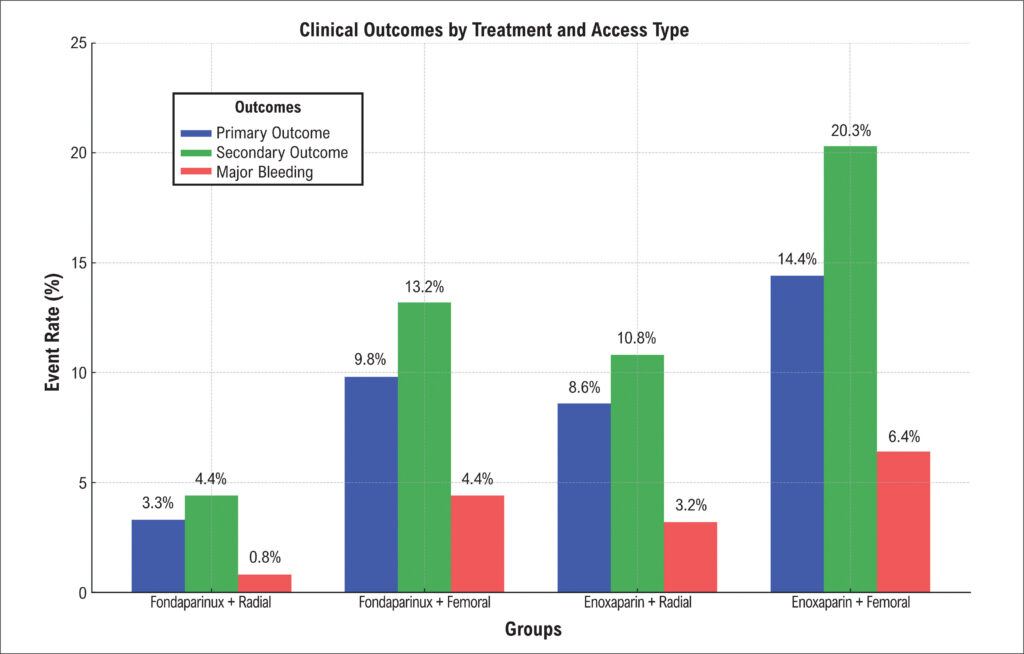
The mean age of the study population was 65 ± 12.4 years, and 49.5% presented with non-ST segment elevation myocardial infarction (NSTEMI). Fondaparinux and radial access were used concurrently in 366 patients. The primary endpoint occurred in 78 patients (8.1%): MACE in 50 (5.2%) and major bleeding in 32 (3.3%). The event rate was lowest in the fondaparinux plus radial access group (3.3%), compared with enoxaparin plus radial access (9.8%), fondaparinux plus femoral access (8.6%), and enoxaparin plus femoral access (14.4%) (p < 0.001). Multivariable analysis showed that the use of fondaparinux was associated with a 43% reduction in the primary outcome (OR, 0.57; 95% CI, 0.34-0.96; p < 0.05), and radial access was independently associated with a 54% reduction (OR, 0.46; 95% CI, 0.26-0.83; p = 0.01).
Conclusion:
The combination of fondaparinux and radial access was associated with the lowest rates of MACE and major bleeding, compared to either strategy alone.
Images
Image gallery fullscreen viewer
Comments are moderated by the editorial team before publication. Discussions should be evidence-based and use scientific language. Conflicts of interest should be declared.