Aerobic training does not alter blood pressure in menopausal women with metabolic syndrome
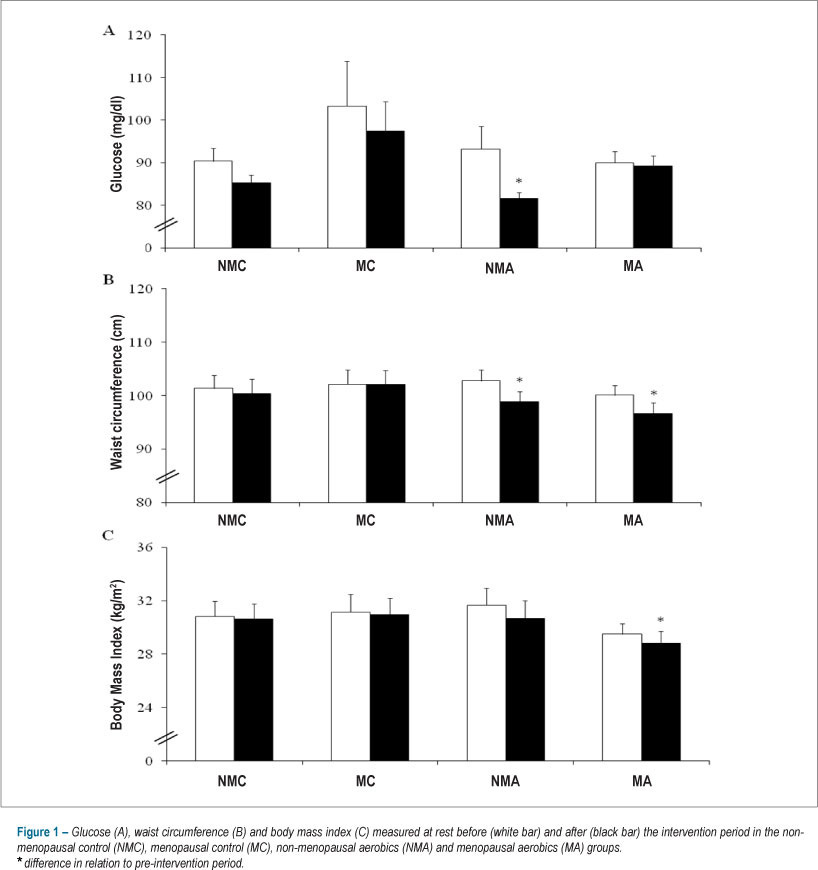
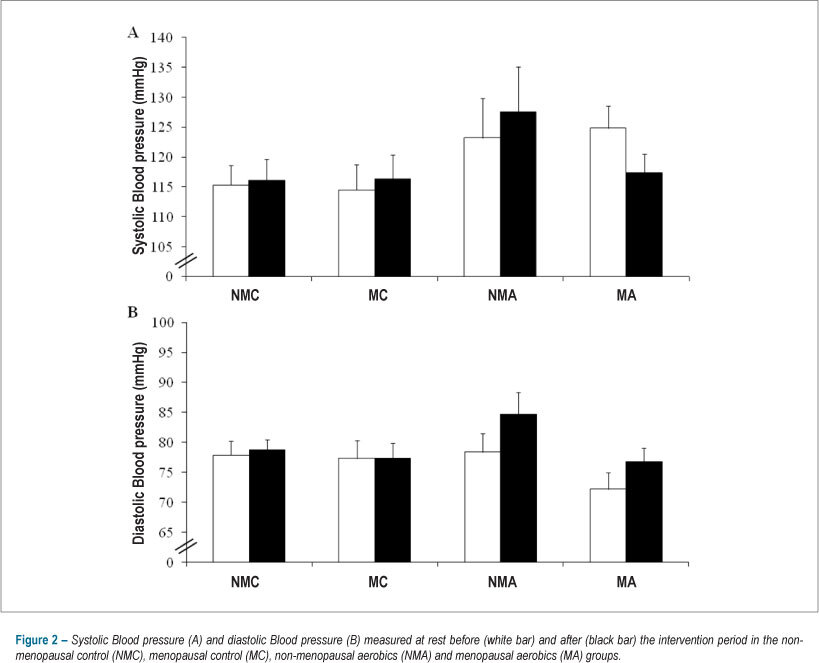
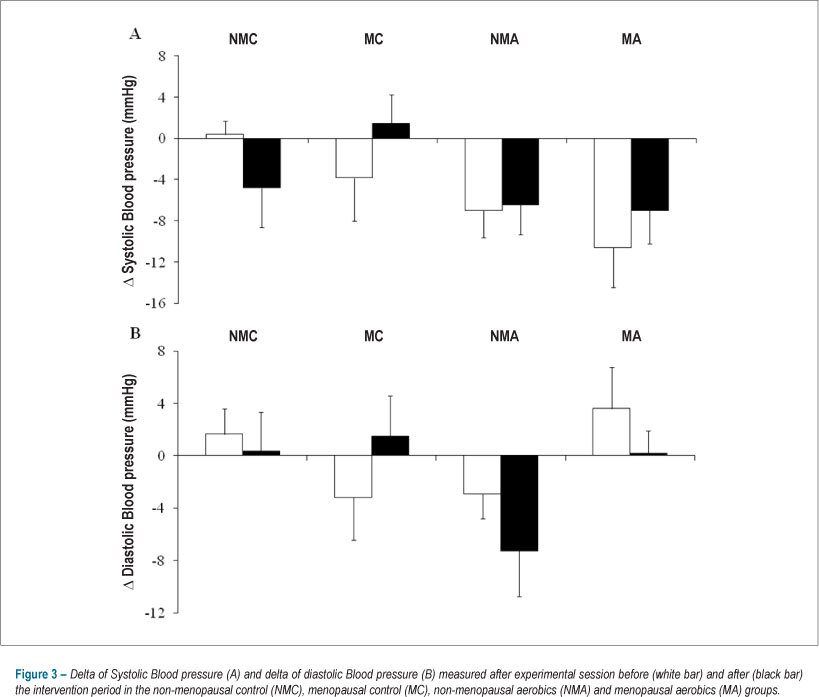
BACKGROUND: Arterial Hypertension (AH) is an aggravating condition for Metabolic Syndrome (MS), as well as being aggravated by it. Menopause can make hypertension treatment more difficult, as it favors the worsening of MS components. Although there is evidence that exercise training reduces blood pressure, whether menopause and SM affect the exercise-induced benefits is yet to be elucidated. OBJECTIVE: To compare the effects of aerobic training on blood pressure in non-menopausal and menopausal women with MS METHODS: A total of 44 women were recruited and divided into four groups: non-menopausal control (NMC: 39.5 ± 3.6 years, n = 11); menopausal control (MC: 54.9 ± 5.9 years, n = 12), non-menopausal aerobics (NMA: 43.1 ± 6.8 years, n = 11) and menopausal aerobics (MA: 52.1 ± 5 years, n = 10). The exercise groups performed aerobic training for three months, five times a week, at an intensity between 60% and 70% of heart rate reserve. The resting blood pressure and blood pressure response after 60 minutes of exercise were measured before and after the training period. The two-way ANOVA test was used, considering a p value 0.05). CONCLUSION: Three months of aerobic training improved MS components, but did not alter resting blood pressure or the BP response after an acute exercise session in women with MS.
Images
Image gallery fullscreen viewer
Comments are moderated by the editorial team before publication. Discussions should be evidence-based and use scientific language. Conflicts of interest should be declared.