ABC Family Arquivos Brasileiros de Cardiologia International Journal of Cardiovascular Sciences ABC Heart Failure & Cardiomyopathy ABC Imagem Cardiovascular
Português English
ABC Family
Português English
  • About
    • About ABC Family
    • Internal Regulation
    • Editorial Board
    • Brazilian Society of Cardiology (SBC)
  • Issues
  • SBC Guidelines
  • Content
    • Videos
    • Podcasts
    • News
  • About
    • About ABC Family
    • Internal Regulation
    • Editorial Board
    • Brazilian Society of Cardiology (SBC)
  • Issues
  • SBC Guidelines
  • Content
    • Videos
    • Podcasts
    • News

ABC Family

  • ABC Family
  • Arquivos Brasileiros de Cardiologia
  • International Journal of Cardiovascular Sciences
  • ABC Heart Failure & Cardiomyopathy
  • ABC Imagem Cardiovascular
Search in

No content found.

Journals
Ordering
Article types
Others

  1. Home
  2. Keyword: Climacteric
IJCS
Original Article

Cardiovascular Risk Factors, Functionality, and Quality of Life in Climacteric Women

João Vítor Costa dos Santos Chaves et al. Keila Lindineia Silva Pinto Kleicillainy Mota de Sousa Lucas Oliveira Soares André Luiz Lisboa Cordeiro

Abstract

Background:

Cardiovascular disease (CVD) comprises a group of cardiac and circulatory diseases. Despite the high incidence in males, women after menopause have an exponential increase in the risk of CVD.

Objective:

To identify the leading risk factors for CVD and describe quality of life and functionality in women hospitalized for cardiac causes during the climacteric period.

Materials and methods:

Observational descriptive study. Quality of life was assessed through the SF-36 questionnaire, and functionality through the Functional Independence Measurement (FIM) scale. Records were used to identify the main risk factors associated with CVD in climacteric women.

Results:

We included 30 patients (mean age, 55 ± 6 years). The mean FIM score was 118 ± 3, and the mean SF-36 score, 20 ± 10. Hypertension and sedentary lifestyle were the most prevalent cardiovascular risk factors in these women.

Conclusion:

Hypertension and sedentary lifestyle were the most prevalent cardiovascular risk factors in this sample of climacteric women hospitalized for cardiac causes. Quality of life was strongly affected, with social, emotional, and mental health domains showing the most impact.
  • Cardiovascular disease
  • Climacteric
  • Quality of life
Read Full Article
Creative Commons Attribution (CC BY) Creative Commons license
19/07/2021 DOI: 10.36660/ijcs.20200410 Views 1
IJCS
Original Article

Metabolic Syndrome and Insulin Resistance by HOMA-IR in Menopause

Érika Joseth Nogueira da Cruz Fonseca et al. Tânia Pavão Oliveira Rocha Iara Antônia Lustosa Nogueira Jorgileia Braga de Melo … Bianca Lima e Silva Elenice Jardim Lopes Claudiana Batalha Serra Maria Vaneide Gomes Andrade Surama Maria Bandeira de Sousa José Albuquerque de Figueredo Neto

Abstract

Background:

Metabolic syndrome is an important cardiovascular risk factor, and its prevalence increases after menopause. However, it is still uncertain whether menopause is an independent risk factor for metabolic syndrome. One of the pathophysiological basis for metabolic syndrome is insulin resistance, which can be calculated by the Homeostatic Model Assessment-Insulin Resistance (HOMA-IR) method, and the association between insulin resistance and menopause is little known.

Objective:

To evaluate the association between metabolic syndrome and insulin resistance in menopausal women.

Method:

Descriptive study, which evaluated 150 women, aged 40 to 65, treated at a Gynecology Outpatient Clinic of a tertiary public hospital, from May to December of 2013. The sample was divided into two groups: Group I, comprising women in the premenopausal period and Group II, comprising women in the post-menopausal period. The presence of metabolic syndrome and its components were evaluated, as well as occurrence of insulin resistance in both groups. The association of menopausal status and the assessed variables was assessed using the Mann-Whitney, Chi-square and Fisher’s exact tests. The significance level was set at 5%. The statistical analysis was performed using STATA 12.0.

Results:

Metabolic syndrome and its components were more prevalent in postmenopausal women. Postmenopausal women also had a higher prevalence of insulin resistance, but no statistical association was observed between the findings.

Conclusion:

The menopausal status was not significantly associated with metabolic syndrome and insulin resistance. Insulin resistance was considered an independent risk factor for the development of metabolic syndrome only in the postmenopausal group.

  • Cardiovascular Diseases
  • Climacteric
  • Insulin Resistance
  • Menopause
  • Metabolic Syndrome
Read Full Article
Creative Commons Attribution (CC BY) Creative Commons license
01/01/2018 DOI: 10.5935/2359-4802.20180009 Views 1
IJCS
Original Article

Cardiovascular Risk Factors in Climacteric Women with Coronary Artery Disease

Jorgileia Braga de Melo et al. Roberta Cristina Almeida Campos Philippe Costa Carvalho Mariana Ferreira Meireles … Maria Valneide Gomes Andrade Tânia Pavão Oliveira Rocha Wilma Karlla dos Santos Farias Maria Jozelia Diniz Moraes Josete Costa dos Santos José Albuquerque de Figueiredo Neto

Abstract

Background:

The increased incidence of cardiovascular disease in women occurs during the climacteric period, especially after menopause.

Objective:

The aim of this study was to identify risk factors among climacteric women with and without coronary artery disease (CAD).

Method:

This cross-sectional study was performed in the Catheterization Laboratory at the Federal University Hospital of Maranhão, in the Northeast region of Brazil, between March 2012 and July 2013. We included 31 climacteric women who went to the care center for cardiac catheterization. They were divided into groups after catheterization results: Group I (with DAC) and Group II (without CAD). Statistical analysis: Categorical variables were described by means of frequencies and percentages, numerical variables by mean ± standard deviation or median (Quartile.3 – Quartile.1); the Shapiro-Wilk test was used to verify the normality of quantitative data. Fisher’s exact test was used for categorical data comparisons. For continuous data, we used Student’s test or the Mann-Whitney for unpaired samples; statistical significance was set at p < 0.05.

Results:

We evaluated groups with CAD (n = 13) and without CAD (n = 18). The results showed a mean age between the groups of 57.92 ± 5.15 and 51.72 ± 4.63 years, respectively. Among the cardiovascular risk factors, the most prevalent among women with CAD were menopause (84.62%), systemic arterial hypertension (SAH) (69.23%) and sedentary life style (69.23%).

Conclusion:

We concluded that, in addition to menopause itself, SAH and sedentary lifestyle were the most prevalent cardiovascular risk factors among women with CAD.

  • Cardiovascular Diseases
  • Climacteric
  • Coronary Artery Disease
  • Hypertension
  • Risk Factors
  • Sedentary Lifestyle
  • Women
Read Full Article
Creative Commons Attribution (CC BY) Creative Commons license
23/10/2017 DOI: 10.5935/2359-4802.20170056 Views 1
Evaluation of heart rate variability in trained and sedentary climacteric women
ABC
Artigo Original

Evaluation of heart rate variability in trained and sedentary climacteric women

Mário Augusto Paschoal et al. Emily Assis Polessi Fernanda Cardoso Simioni

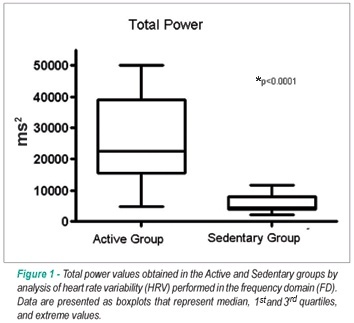
BACKGROUND: Changes in autonomic cardiac function are frequent during menopause, and various methods have been used to understand and minimize them. OBJECTIVE: To study the interference of dynamic aerobic physical activity on heart rate variability (HRV) in climacteric women. METHODS: Cross-sectional study that analyzed HRV in 15 menopausal women (mean age 56.8±4.9 years) who had participated in physical training (one-hour walks, 3 times a week) for at least two years (active group), and 15 menopausal women (mean age 56.5 ± 3.7 years) who were sedentary (sedentary group). None of the volunteers received hormonal replacement therapy. HRV data were compared between the groups by means of the Mann Whitney U Test. RESULTS: There were significant differences both in the frequency and time domains of the following variables of HRV (in medians) for the active e sedentary groups, respectively: total power (22,626.50 ms² and 4,432.10 ms²), low frequency component (741.20 ms² and 131.70 ms²), high frequency component (668.90 ms² and 131.70 ms²), standard deviations of RR intervals (51.60 ms and 22.50 ms), square root of the sum of squares of differences between the normal RR intervals (35.30ms and 15.90 ms), and percentage of normal adjacent RR intervals greater than 50ms (6.6% and 0.2%). CONCLUSION: The study suggests that aerobic training may have afforded a significant improvement in the autonomic cardiac function of the menopausal women in the active group, and may be a useful option for preserving this functional condition without the need for hormonal replacement therapy.

  • Autonomic Nervous System
  • Climacteric
  • Heart Rate
  • Women
Read Full Article
Creative Commons Attribution (CC BY) Creative Commons license
28/04/2008 DOI: 10.1590/S0066-782X2008000200002 Views 1

How to cite this article

EndNote RIS

Electronic Document Format (Vancouver)

Chaves JVCS, Pinto KLS, Sousa KM, Soares LO, Cordeiro ALL. Cardiovascular Risk Factors, Functionality, and Quality of Life in Climacteric Women. International Journal of Cardiovascular Sciences 2021;34(4):393-7.

Electronic Document Format (ABNT)

Chaves, João Vítor Costa dos Santos; Pinto, Keila Lindineia Silva; Sousa, Kleicillainy Mota de; Soares, Lucas Oliveira; Cordeiro, André Luiz Lisboa. Cardiovascular Risk Factors, Functionality, and Quality of Life in Climacteric Women. International Journal of Cardiovascular Sciences, v. 34, n. 4, p. 393-397, Jul. 2021.

Electronic Document Format (APA)

Chaves, J. V. C. S., Pinto, K. L. S., Sousa, K. M. , Soares, L. O., & Cordeiro, A. L. L. (2021). Cardiovascular Risk Factors, Functionality, and Quality of Life in Climacteric Women. International Journal of Cardiovascular Sciences, 34(4), 393-397.

Electronic Document Format (ISO)

Chaves, João Vítor Costa dos Santos and Pinto, Keila Lindineia Silva and Sousa, Kleicillainy Mota de and Soares, Lucas Oliveira and Cordeiro, André Luiz Lisboa. Cardiovascular Risk Factors, Functionality, and Quality of Life in Climacteric Women. International Journal of Cardiovascular Sciences [online]. 2021, vol. 34, n. 4, [cited 2026-10-14], pp. 393-397. Available from: <https://journals.cardiol.br/en/article/cardiovascular-risk-factors-functionality-and-quality-of-life-in-climacteric-women/>. ISSN 2359-4802

EndNote RIS

Electronic Document Format (Vancouver)

Fonseca JNC, Rocha TPO, Nogueira IAL, Melo JB, Silva BL, Lopes EJ, Serra CB, et al. Metabolic Syndrome and Insulin Resistance by HOMA-IR in Menopause. International Journal of Cardiovascular Sciences 2018;31(3):201-8.

Electronic Document Format (ABNT)

Fonseca, Érika Joseth Nogueira da Cruz; Rocha, Tânia Pavão Oliveira; Nogueira, Iara Antônia Lustosa; Melo, Jorgileia Braga de; Silva, Bianca Lima e; Lopes, Elenice Jardim; Serra, Claudiana Batalha; Andrade, Maria Vaneide Gomes; Sousa, Surama Maria Bandeira de; Figueredo Neto, José Albuquerque de. Metabolic Syndrome and Insulin Resistance by HOMA-IR in Menopause. International Journal of Cardiovascular Sciences, v. 31, n. 3, p. 201-208, Dec. 2017.

Electronic Document Format (APA)

Fonseca, J. N. C., Rocha, T. P. O., Nogueira, I. A. L., Melo, J. B. , Silva, B. L. , Lopes, E. J., Serra, C. B., Andrade, M. V. G., Sousa, S. M. B. , & Figueredo Neto, J. A. (2018). Metabolic Syndrome and Insulin Resistance by HOMA-IR in Menopause. International Journal of Cardiovascular Sciences, 31(3), 201-208.

Electronic Document Format (ISO)

Fonseca, Érika Joseth Nogueira da Cruz and Rocha, Tânia Pavão Oliveira and Nogueira, Iara Antônia Lustosa and Melo, Jorgileia Braga de and Silva, Bianca Lima e and Lopes, Elenice Jardim and Serra, Claudiana Batalha and Andrade, Maria Vaneide Gomes and Sousa, Surama Maria Bandeira de and Figueredo Neto, José Albuquerque de. Metabolic Syndrome and Insulin Resistance by HOMA-IR in Menopause. International Journal of Cardiovascular Sciences [online]. 2018, vol. 31, n. 3, [cited 2026-10-14], pp. 201-208. Available from: <https://journals.cardiol.br/en/article/metabolic-syndrome-and-insulin-resistance-by-homa-ir-in-menopause/>. ISSN 2359-4802

EndNote RIS

Electronic Document Format (Vancouver)

Melo JB, Campos RCA, Carvalho PC, Meireles MF, Andrade MVG, Rocha TPO, Farias WKS, et al. Cardiovascular Risk Factors in Climacteric Women with Coronary Artery Disease. International Journal of Cardiovascular Sciences 2017;31(1):04-11.

Electronic Document Format (ABNT)

Melo, Jorgileia Braga de; Campos, Roberta Cristina Almeida; Carvalho, Philippe Costa; Meireles, Mariana Ferreira; Andrade, Maria Valneide Gomes; Rocha, Tânia Pavão Oliveira; Farias, Wilma Karlla dos Santos; Moraes, Maria Jozelia Diniz; Santos, Josete Costa dos; Figueiredo Neto, José Albuquerque de. Cardiovascular Risk Factors in Climacteric Women with Coronary Artery Disease. International Journal of Cardiovascular Sciences, v. 31, n. 1, p. 04-11, Oct. 2017.

Electronic Document Format (APA)

Melo, J. B. , Campos, R. C. A., Carvalho, P. C., Meireles, M. F., Andrade, M. V. G., Rocha, T. P. O., Farias, W. K. S., Moraes, M. J. D., Santos, J. C. , & Figueiredo Neto, J. A. (2017). Cardiovascular Risk Factors in Climacteric Women with Coronary Artery Disease. International Journal of Cardiovascular Sciences, 31(1), 04-11.

Electronic Document Format (ISO)

Melo, Jorgileia Braga de and Campos, Roberta Cristina Almeida and Carvalho, Philippe Costa and Meireles, Mariana Ferreira and Andrade, Maria Valneide Gomes and Rocha, Tânia Pavão Oliveira and Farias, Wilma Karlla dos Santos and Moraes, Maria Jozelia Diniz and Santos, Josete Costa dos and Figueiredo Neto, José Albuquerque de. Cardiovascular Risk Factors in Climacteric Women with Coronary Artery Disease. International Journal of Cardiovascular Sciences [online]. 2017, vol. 31, n. 1, [cited 2026-10-14], pp. 04-11. Available from: <https://journals.cardiol.br/en/article/cardiovascular-risk-factors-in-climacteric-women-with-coronary-artery-disease/>. ISSN 2359-4802

EndNote RIS

Electronic Document Format (Vancouver)

Paschoal MA, Polessi EA, Simioni FC. Evaluation of heart rate variability in trained and sedentary climacteric women. Arquivos Brasileiros de Cardiologia 2008;90(2):80-6.

Electronic Document Format (ABNT)

Paschoal, Mário Augusto; Polessi, Emily Assis; Simioni, Fernanda Cardoso. Evaluation of heart rate variability in trained and sedentary climacteric women. Arquivos Brasileiros de Cardiologia, v. 90, n. 2, p. 80-86, Apr. 2008.

Electronic Document Format (APA)

Paschoal, M. A., Polessi, E. A., & Simioni, F. C. (2008). Evaluation of heart rate variability in trained and sedentary climacteric women. Arquivos Brasileiros de Cardiologia, 90(2), 80-86.

Electronic Document Format (ISO)

Paschoal, Mário Augusto and Polessi, Emily Assis and Simioni, Fernanda Cardoso. Evaluation of heart rate variability in trained and sedentary climacteric women. Arquivos Brasileiros de Cardiologia [online]. 2008, vol. 90, n. 2, [cited 2026-10-14], pp. 80-86. Available from: <https://journals.cardiol.br/en/article/evaluation-of-heart-rate-variability-in-trained-and-sedentary-climacteric-women/>. ISSN 0066-782X

  • About ABC Family
  • Internal Regulation
  • Editorial Board
  • Brazilian Society of Cardiology (SBC)

Issues

SBC Guidelines

  • Videos
  • Podcasts
  • News