ABC Family Arquivos Brasileiros de Cardiologia International Journal of Cardiovascular Sciences ABC Heart Failure & Cardiomyopathy ABC Imagem Cardiovascular
Português English
ABC Family
Português English
  • About
    • About ABC Family
    • Internal Regulation
    • Editorial Board
    • Brazilian Society of Cardiology (SBC)
  • Issues
  • SBC Guidelines
  • Content
    • Videos
    • Podcasts
    • News
  • About
    • About ABC Family
    • Internal Regulation
    • Editorial Board
    • Brazilian Society of Cardiology (SBC)
  • Issues
  • SBC Guidelines
  • Content
    • Videos
    • Podcasts
    • News

ABC Family

  • ABC Family
  • Arquivos Brasileiros de Cardiologia
  • International Journal of Cardiovascular Sciences
  • ABC Heart Failure & Cardiomyopathy
  • ABC Imagem Cardiovascular
Search in

No content found.

Journals
Ordering
Article types
Others

  1. Home
  2. Keyword: Metabolic x Syndrome
ABC
Letter to the Editor

Extracellular Matrix Turnover: a Balance between MMPs and their Inhibitors

Emre Yalcinkaya et al. Murat Celik Baris Bugan

To the Editor,

We read with great interest the article by Santos et al, entitled “Early Change of Extracellular Matrix and Diastolic Parameters in Metabolic Syndrome”, which was published in october of Arquivos Brasileiros de Cardiologia. The authors aimed to compare diastolic function, biomarkers representing extracellular matrix activity (MMP9 and TIMP1), inflammation and cardiac hemodynamic stress in patients with the metabolic syndrome and healthy controls. We thank authors for their excellent data and valuable study but some comments may be of beneficial.

[…]

  • Extracellular Matrix
  • matrix metalloproteinase 1
  • Matrix metalloproteinase inhibitors
  • Metabolic x Syndrome
Read Full Article
Creative Commons Attribution (CC BY) Creative Commons license
01/05/2014 DOI: 10.5935/abc.20140061 Views 1
Figure 1
ABC
Artigo Original

Metabolic Syndrome, Strain, and Reduced Myocardial Function: Multi-Ethnic Study of Atherosclerosis

André Luiz Cerqueira de Almeida et al. Gisela Teixido-Tura Eui-Young Choi Anders Opdahl … Verônica R. S. Fernandes Colin O. Wu David A. Bluemke João A. C. Lima

Background:

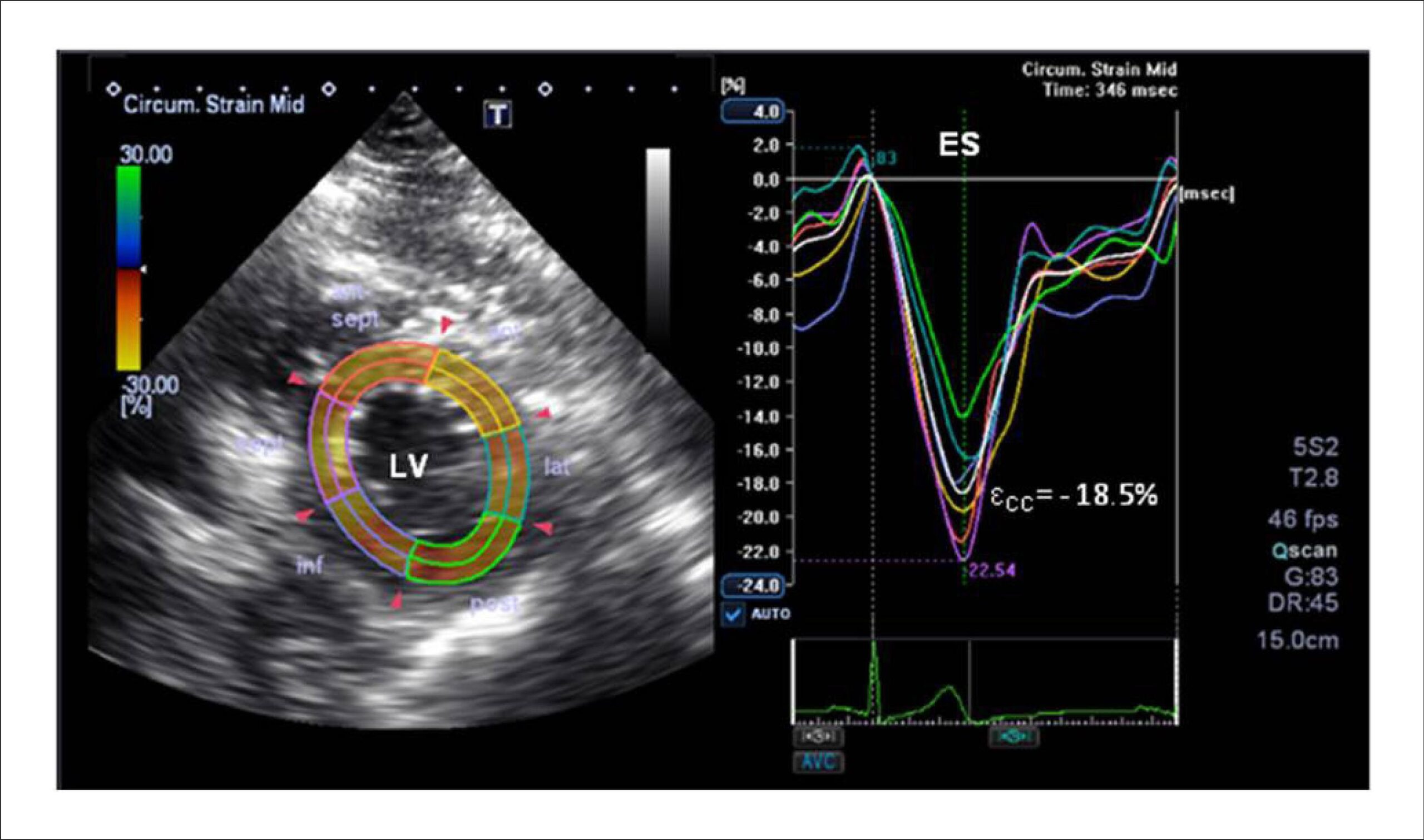
Subclinical cardiovascular disease is prevalent in patients with Metabolic Syndrome (MetSyn). Left ventricular (LV) circumferential strain (εCC) and longitudinal strain (εLL), assessed by Speckle Tracking Echocardiography (STE), are indices of systolic function: shortening is indicated by negative strain, and thus, the more negative the strain, the better the LV systolic function. They have been used to demonstrate subclinical ventricular dysfunction in several clinical disorders.

Objective:

We hypothesized that MetSyn is associated with impaired myocardial function, as assessed by STE.

Methods:

We analyzed Multi-Ethnic Study of Atherosclerosis (MESA) participants who underwent STE and were evaluated for all MetSyn components.

Results:

Among the 133 participants included [women: 63%; age: 65 ± 9 years (mean ± SD)], the prevalence of MetSyn was 31% (41/133). Individuals with MetSyn had lower εCC and lower εLL than those without MetSyn (-16.3% ± 3.5% vs. -18.4% ± 3.7%, p < 0.01; and -12.1% ± 2.5% vs. -13.9% ± 2.3%, p < 0.01, respectively). The LV ejection fraction (LVEF) was similar in both groups (p = 0.09). In multivariate analysis, MetSyn was associated with less circumferential myocardial shortening as indicated by less negative εCC (B = 2.1%, 95%CI:0.6 3.5, p < 0.01) even after adjusting for age, ethnicity, LV mass, and LVEF). Likewise, presence of MetSyn (B = 1.3%, 95%CI:0.3 2.2, p < 0.01) and LV mass (B = 0.02%, 95% CI: 0.01-0.03, p = 0.02) were significantly associated with less longitudinal myocardial shortening as indicated by less negative εLL after adjustment for ethnicity, LVEF, and creatinine.

Conclusion:

Left ventricular εCC and εLL, markers of subclinical cardiovascular disease, are impaired in asymptomatic individuals with MetSyn and no history of myocardial infarction, heart failure, and/or LVEF < 50%.

  • Atherosclerosis
  • Diabetes Mellitus / mortality
  • Ethnic Group
  • Metabolic x Syndrome
  • Ventricular Dysfunction / physiopathology
Read Full Article
Creative Commons Attribution (CC BY) Creative Commons license
01/03/2014 DOI: 10.5935/abc.20140040
Figure 1
ABC
Artigo Original

Alimentary Habits, Physical Activity, and Framingham Global Risk Score in Metabolic Syndrome

Thays Soliman Soares et al. Carla Haas Piovesan Andréia da Silva Gustavo Fabrício Edler Macagnan … Luiz Carlos Bodanese Ana Maria Pandolfo Feoli

Background:

Metabolic syndrome is a complex disorder represented by a set of cardiovascular risk factors. A healthy lifestyle is strongly related to improve Quality of Life and interfere positively in the control of risk factors presented in this condition.

Objective:

To evaluate the effect of a program of lifestyle modification on the Framingham General Cardiovascular Risk Profile in subjects diagnosed with metabolic syndrome.

Methods:

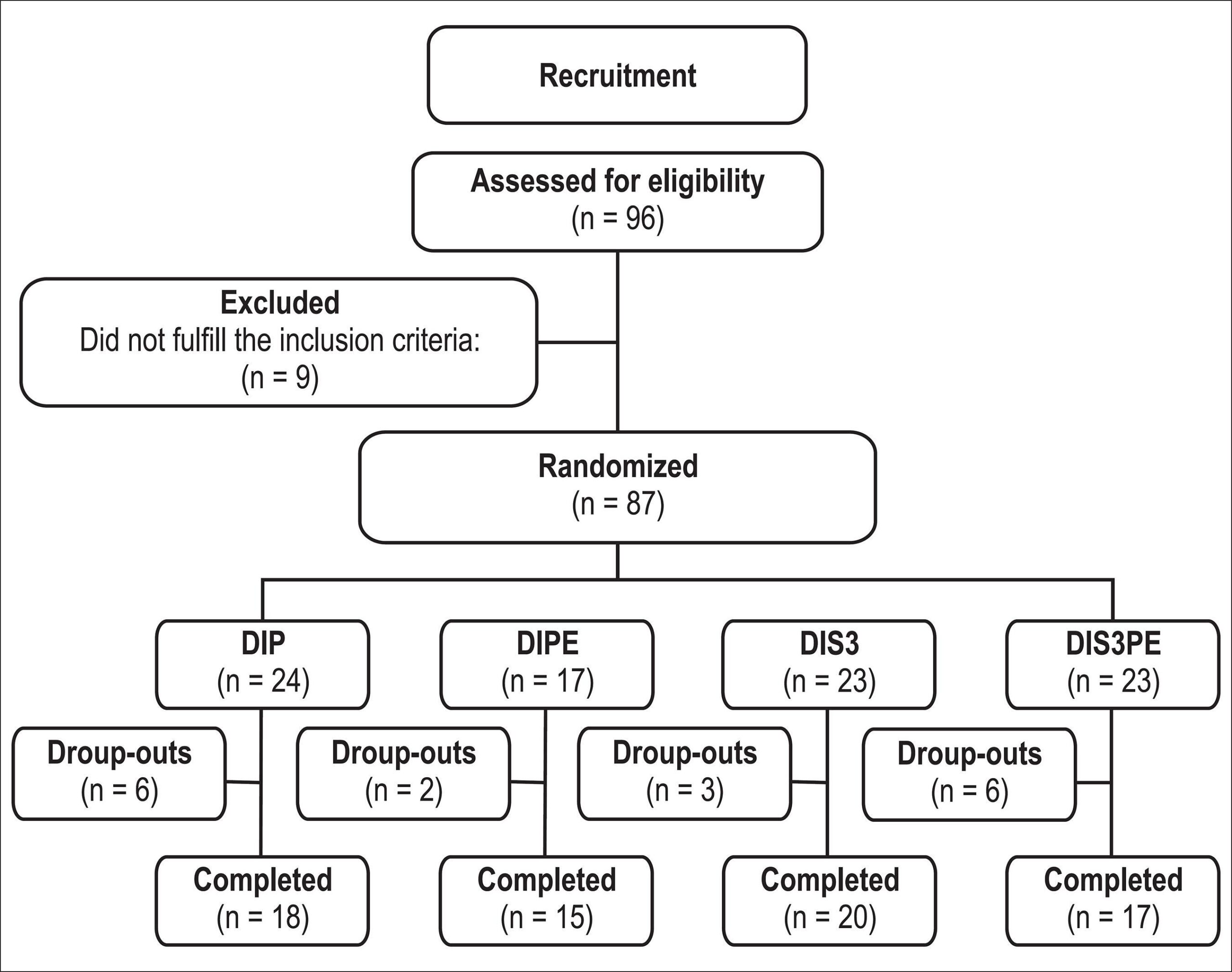
A sub-analysis study of a randomized clinical trial controlled blind that lasted three months. Participants were randomized into four groups: dietary intervention + placebo (DIP), dietary intervention + supplementation of omega 3 (fish oil 3 g/day) (DIS3), dietary intervention + placebo + physical activity (DIPE) and dietary intervention + physical activity + supplementation of omega 3 (DIS3PE). The general cardiovascular risk profile of each individual was calculated before and after the intervention.

Results:

The study included 70 subjects. Evaluating the score between the pre and post intervention yielded a significant value (p < 0.001). We obtained a reduction for intermediate risk in 25.7% of subjects. After intervention, there was a significant reduction (p < 0.01) on cardiovascular age, this being more significant in groups DIP (5.2%) and DIPE (5.3%).

Conclusion:

Proposed interventions produced beneficial effects for reducing cardiovascular risk score. This study emphasizes the importance of lifestyle modification in the prevention and treatment of cardiovascular diseases.

  • Cardiovascular Diseases
  • Exercise
  • Food habits
  • Lifestyle
  • Metabolic x Syndrome
  • Probability
  • Risk Factors
Read Full Article
Creative Commons Attribution (CC BY) Creative Commons license
17/02/2014 DOI: 10.5935/abc.20140029
Aerobic training does not alter blood pressure in menopausal women with metabolic syndrome
ABC
Artigo Original

Aerobic training does not alter blood pressure in menopausal women with metabolic syndrome

Aluísio Henrique Rodrigues de Andrade Lima et al. Henrique Eduardo Couto Glêbia Alexa Cardoso Lidiane Tavares Toscano … Alexandre Sérgio Silva Maria Paula Gonçalves Mota

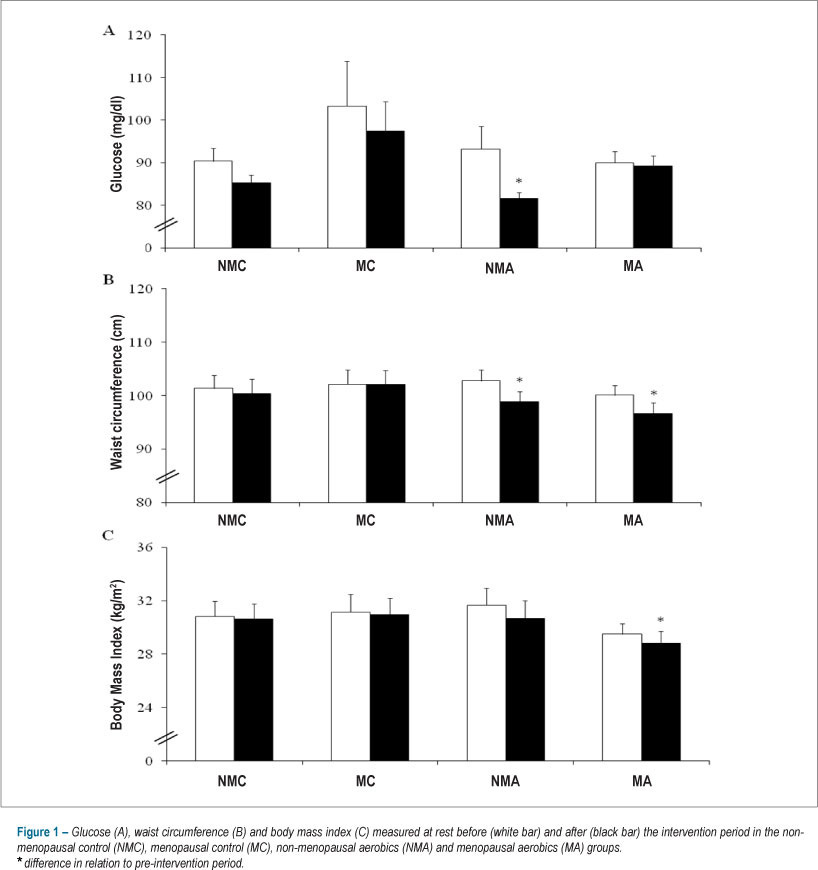
BACKGROUND: Arterial Hypertension (AH) is an aggravating condition for Metabolic Syndrome (MS), as well as being aggravated by it. Menopause can make hypertension treatment more difficult, as it favors the worsening of MS components. Although there is evidence that exercise training reduces blood pressure, whether menopause and SM affect the exercise-induced benefits is yet to be elucidated. OBJECTIVE: To compare the effects of aerobic training on blood pressure in non-menopausal and menopausal women with MS METHODS: A total of 44 women were recruited and divided into four groups: non-menopausal control (NMC: 39.5 ± 3.6 years, n = 11); menopausal control (MC: 54.9 ± 5.9 years, n = 12), non-menopausal aerobics (NMA: 43.1 ± 6.8 years, n = 11) and menopausal aerobics (MA: 52.1 ± 5 years, n = 10). The exercise groups performed aerobic training for three months, five times a week, at an intensity between 60% and 70% of heart rate reserve. The resting blood pressure and blood pressure response after 60 minutes of exercise were measured before and after the training period. The two-way ANOVA test was used, considering a p value 0.05). CONCLUSION: Three months of aerobic training improved MS components, but did not alter resting blood pressure or the BP response after an acute exercise session in women with MS.

  • Blood Pressure
  • Exercise
  • Menopause
  • Metabolic x Syndrome
  • Women
Read Full Article
Creative Commons Attribution (CC BY) Creative Commons license
18/10/2012 DOI: 10.1590/S0066-782X2012005000092

How to cite this article

EndNote RIS

Electronic Document Format (Vancouver)

Yalcinkaya E, Celik M, Bugan B. Extracellular Matrix Turnover: a Balance between MMPs and their Inhibitors. Arquivos Brasileiros de Cardiologia 2014;102(5):519-20.

Electronic Document Format (ABNT)

Yalcinkaya, Emre; Celik, Murat; Bugan, Baris. Extracellular Matrix Turnover: a Balance between MMPs and their Inhibitors. Arquivos Brasileiros de Cardiologia, v. 102, n. 5, p. 519-520, Apr. 2014.

Electronic Document Format (APA)

Yalcinkaya, E., Celik, M., & Bugan, B. (2014). Extracellular Matrix Turnover: a Balance between MMPs and their Inhibitors. Arquivos Brasileiros de Cardiologia, 102(5), 519-520.

Electronic Document Format (ISO)

Yalcinkaya, Emre and Celik, Murat and Bugan, Baris. Extracellular Matrix Turnover: a Balance between MMPs and their Inhibitors. Arquivos Brasileiros de Cardiologia [online]. 2014, vol. 102, n. 5, [cited 2026-10-14], pp. 519-520. Available from: <https://journals.cardiol.br/en/article/extracellular-matrix-turnover-a-balance-between-mmps-and-their-inhibitors/>. ISSN 0066-782X

EndNote RIS

Electronic Document Format (Vancouver)

Almeida ALC, Teixido-Tura G, Choi E, Opdahl A, Fernandes VRS, Wu CO, Bluemke DA, et al. Metabolic Syndrome, Strain, and Reduced Myocardial Function: Multi-Ethnic Study of Atherosclerosis. Arquivos Brasileiros de Cardiologia 2014;102(4):327-35.

Electronic Document Format (ABNT)

Almeida, André Luiz Cerqueira de; Teixido-Tura, Gisela; Choi, Eui-Young; Opdahl, Anders; Fernandes, Verônica R. S.; Wu, Colin O.; Bluemke, David A.; Lima, João A. C.. Metabolic Syndrome, Strain, and Reduced Myocardial Function: Multi-Ethnic Study of Atherosclerosis. Arquivos Brasileiros de Cardiologia, v. 102, n. 4, p. 327-335, Feb. 2014.

Electronic Document Format (APA)

Almeida, A. L. C. , Teixido-Tura, G., Choi, E., Opdahl, A., Fernandes, V. R. S., Wu, C. O., Bluemke, D. A., & Lima, J. A. C. (2014). Metabolic Syndrome, Strain, and Reduced Myocardial Function: Multi-Ethnic Study of Atherosclerosis. Arquivos Brasileiros de Cardiologia, 102(4), 327-335.

Electronic Document Format (ISO)

Almeida, André Luiz Cerqueira de and Teixido-Tura, Gisela and Choi, Eui-Young and Opdahl, Anders and Fernandes, Verônica R. S. and Wu, Colin O. and Bluemke, David A. and Lima, João A. C.. Metabolic Syndrome, Strain, and Reduced Myocardial Function: Multi-Ethnic Study of Atherosclerosis. Arquivos Brasileiros de Cardiologia [online]. 2014, vol. 102, n. 4, [cited 2026-10-14], pp. 327-335. Available from: <https://journals.cardiol.br/en/article/metabolic-syndrome-strain-and-reduced-myocardial-function-multi-ethnic-study-of-atherosclerosis/>. ISSN 0066-782X

EndNote RIS

Electronic Document Format (Vancouver)

Soares TS, Piovesan CH, Gustavo AS, Macagnan FE, Bodanese LC, Feoli AMP. Alimentary Habits, Physical Activity, and Framingham Global Risk Score in Metabolic Syndrome. Arquivos Brasileiros de Cardiologia 2014;102(4):374-82.

Electronic Document Format (ABNT)

Soares, Thays Soliman; Piovesan, Carla Haas; Gustavo, Andréia da Silva; Macagnan, Fabrício Edler; Bodanese, Luiz Carlos; Feoli, Ana Maria Pandolfo. Alimentary Habits, Physical Activity, and Framingham Global Risk Score in Metabolic Syndrome. Arquivos Brasileiros de Cardiologia, v. 102, n. 4, p. 374-382, Feb. 2014.

Electronic Document Format (APA)

Soares, T. S., Piovesan, C. H., Gustavo, A. S., Macagnan, F. E., Bodanese, L. C., & Feoli, A. M. P. (2014). Alimentary Habits, Physical Activity, and Framingham Global Risk Score in Metabolic Syndrome. Arquivos Brasileiros de Cardiologia, 102(4), 374-382.

Electronic Document Format (ISO)

Soares, Thays Soliman and Piovesan, Carla Haas and Gustavo, Andréia da Silva and Macagnan, Fabrício Edler and Bodanese, Luiz Carlos and Feoli, Ana Maria Pandolfo. Alimentary Habits, Physical Activity, and Framingham Global Risk Score in Metabolic Syndrome. Arquivos Brasileiros de Cardiologia [online]. 2014, vol. 102, n. 4, [cited 2026-10-14], pp. 374-382. Available from: <https://journals.cardiol.br/en/article/alimentary-habits-physical-activity-and-framingham-global-risk-score-in-metabolic-syndrome/>. ISSN 0066-782X

EndNote RIS

Electronic Document Format (Vancouver)

Lima AHRA, Couto HE, Cardoso GA, Toscano LT, Silva AS, Mota MPG. Aerobic training does not alter blood pressure in menopausal women with metabolic syndrome. Arquivos Brasileiros de Cardiologia 2012;99(5):979-87.

Electronic Document Format (ABNT)

Lima, Aluísio Henrique Rodrigues de Andrade; Couto, Henrique Eduardo; Cardoso, Glêbia Alexa; Toscano, Lidiane Tavares; Silva, Alexandre Sérgio; Mota, Maria Paula Gonçalves. Aerobic training does not alter blood pressure in menopausal women with metabolic syndrome. Arquivos Brasileiros de Cardiologia, v. 99, n. 5, p. 979-987, Oct. 2012.

Electronic Document Format (APA)

Lima, A. H. R. A., Couto, H. E., Cardoso, G. A., Toscano, L. T., Silva, A. S., & Mota, M. P. G. (2012). Aerobic training does not alter blood pressure in menopausal women with metabolic syndrome. Arquivos Brasileiros de Cardiologia, 99(5), 979-987.

Electronic Document Format (ISO)

Lima, Aluísio Henrique Rodrigues de Andrade and Couto, Henrique Eduardo and Cardoso, Glêbia Alexa and Toscano, Lidiane Tavares and Silva, Alexandre Sérgio and Mota, Maria Paula Gonçalves. Aerobic training does not alter blood pressure in menopausal women with metabolic syndrome. Arquivos Brasileiros de Cardiologia [online]. 2012, vol. 99, n. 5, [cited 2026-10-14], pp. 979-987. Available from: <https://journals.cardiol.br/en/article/aerobic-training-does-not-alter-blood-pressure-in-menopausal-women-with-metabolic-syndrome/>. ISSN 0066-782X

  • About ABC Family
  • Internal Regulation
  • Editorial Board
  • Brazilian Society of Cardiology (SBC)

Issues

SBC Guidelines

  • Videos
  • Podcasts
  • News