Right Ventricular Outflow Tract Acceleration Time: Correlation with Left Ventricular Diastolic Function, Sex, And Age
Abstract
Background:
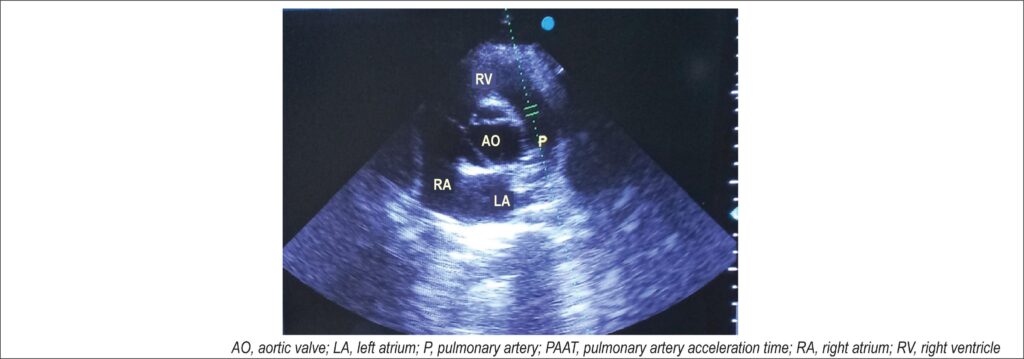
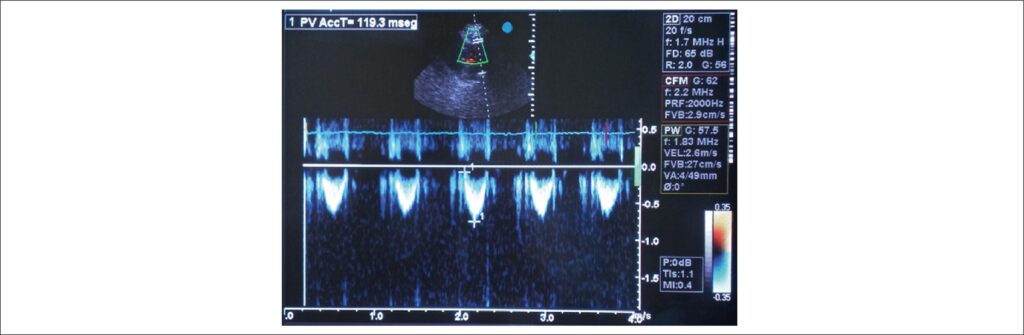
Pulmonary artery acceleration time (PAAT) can be used as a parameter in the evaluation of pulmonary hypertension and aids left ventricular diastolic function (LVDF) analyses.
Objective:
To assess whether there is a correlation between PAAT and LVDF parameters in individuals with a preserved left ventricular systolic function and by sex, age, and cardiovascular risk factors.
Methods:
Observational cross-sectional study. One hundred nineteen patients were selected (59 women [49.6%]). The subjects underwent transthoracic echocardiography including measurements of PAAT, E and A waves and E/A ratio, e’ septal and e’ lateral waves and E/e’ ratio, pulmonary artery systolic pressure (PASP), and left atrial volume.
Results:
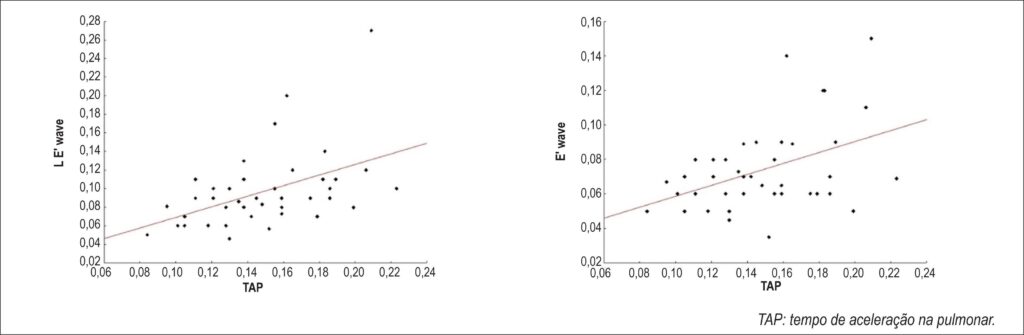
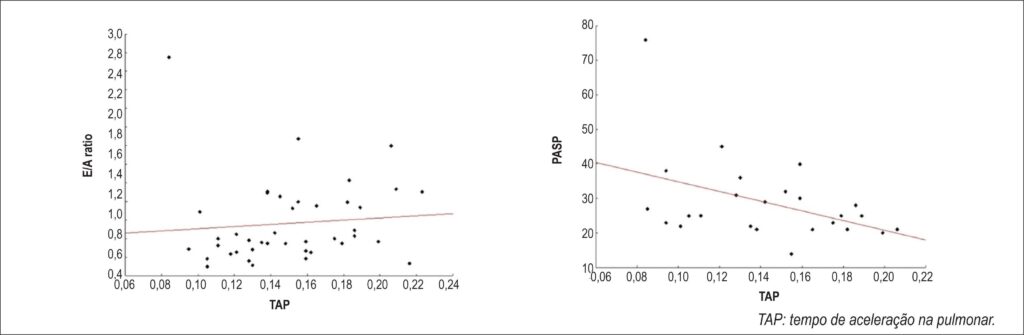
In female patients, a positive correlation (Spearman’s correlation coefficient – Spearman correlation coefficient [SCC]) was found between the PAAT value and the lateral e’ (SCC, 0.47; p = 0.002), with the E/A ratio (SCC, 0.32; p = 0.04), and with septal e’ (SCC, 0.36; p = 0.023), and a negative correlation between PAAT and PASP (SCC, -0.43; p = 0.034). In men, no correlation was found between PAAT and any parameters. Lower PAAT values were found in women with systemic arterial hypertension (hypertension) than in women without hypertension (0.13 ± 0.03 s versus 0.16 ± 0.03 s; p = 0.015).
Conclusion:
The present study showed a significant correlation between PAAT and some LVDF parameters in female patients only. Hypertension was correlated with lower PAAT values in women.
Images
Image gallery fullscreen viewer
Comments are moderated by the editorial team before publication. Discussions should be evidence-based and use scientific language. Conflicts of interest should be declared.