
ABC Family Arquivos Brasileiros de Cardiologia International Journal of Cardiovascular Sciences ABC Heart Failure & Cardiomyopathy ABC Imagem Cardiovascular
Português English
ABC Family
Português English
  • About
    • About ABC Family
    • Internal Regulation
    • Editorial Board
    • Brazilian Society of Cardiology (SBC)
  • Issues
  • SBC Guidelines
  • Content
    • Videos
    • Podcasts
    • News
  • About
    • About ABC Family
    • Internal Regulation
    • Editorial Board
    • Brazilian Society of Cardiology (SBC)
  • Issues
  • SBC Guidelines
  • Content
    • Videos
    • Podcasts
    • News

ABC Family

  • ABC Family
  • Arquivos Brasileiros de Cardiologia
  • International Journal of Cardiovascular Sciences
  • ABC Heart Failure & Cardiomyopathy
  • ABC Imagem Cardiovascular
Search in

No content found.

Journals
Ordering
Article types
Others

  1. Home
  2. Keyword: Risk Factor
Figure 1
ABC
Research Letter

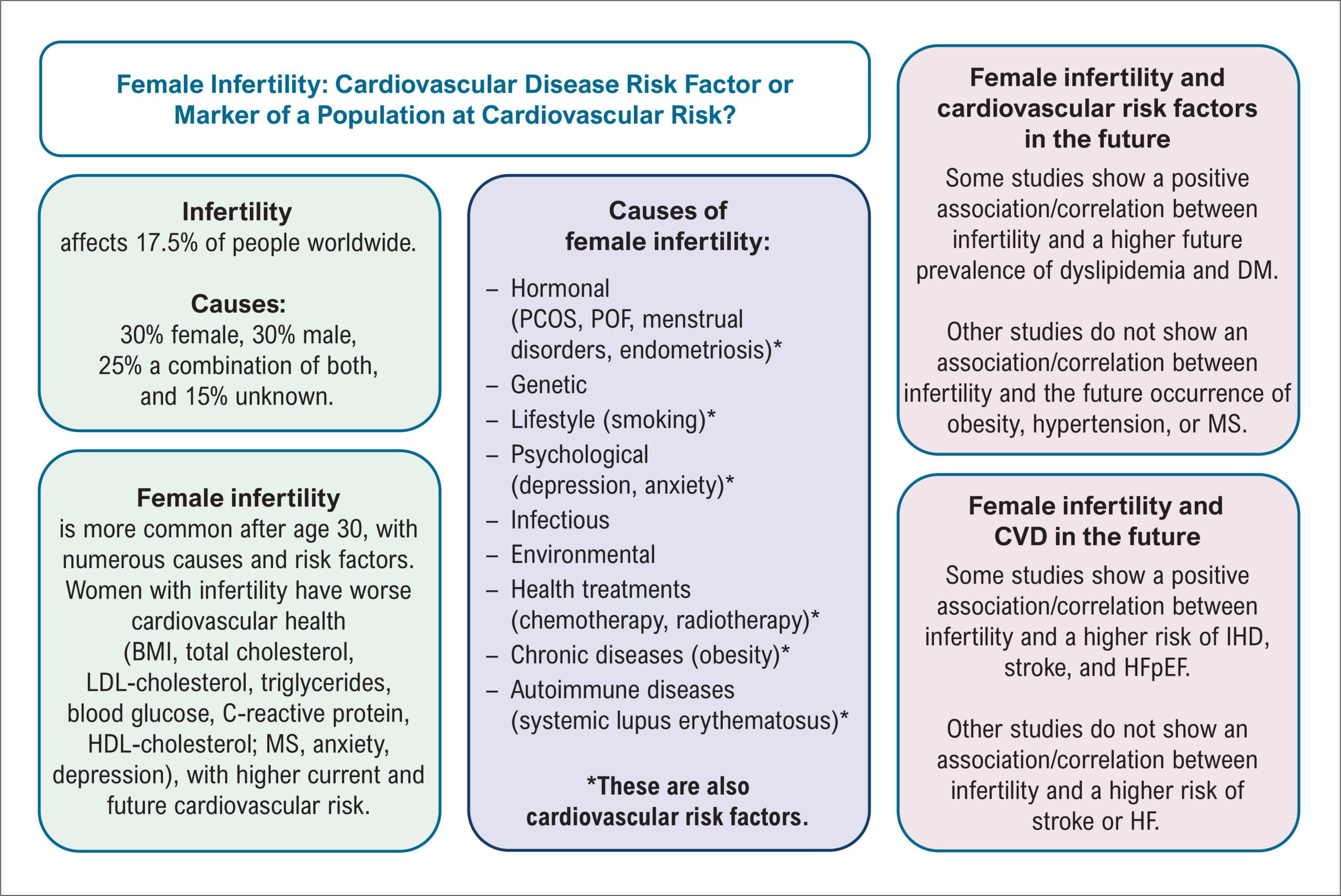
Female Infertility: Cardiovascular Disease Risk Factor or Marker of a Population at Cardiovascular Risk?

Maria Alayde Mendonça Rivera et al. Ivan Romero Rivera Glaucia Maria Moraes de Oliveira

According to the World Health Organization, approximately 17.5% of the adult population (1 in every 6 people in the world) suffers from infertility, defined as the inability to conceive after 12 months of regular unprotected sexual intercourse. The prevalence varies little between regions, with similar rates in high-, middle-, and low-income countries, constituting a global public health problem.

Approximately 85% of infertile couples have an identifiable cause for infertility, whereas the remaining 15% have unexplained infertility. As shown in the , infertility can be attributed to numerous causes and risk factors, the treatment of which can eventually contribute to the couple’s fertility.

[…]

  • Cardiovascular disease
  • female sex
  • Infertility
  • Risk Factor
Read Full Article
Creative Commons Attribution (CC BY) Creative Commons license
17/07/2026 DOI: 10.36660/abc.20250250i Views 1
ABCIC
Original Article

Transthoracic Echocardiographic Assessment of Thoracic Aorta: Correlation with Cardiovascular Risk Factors

Alexandre Sartori Barbosa et al. Ana Cristina Camarozano Daniela de Castro Carmo Daniane Rafael … Jerônimo Antonio Fortunato Rubens Zenóbio Darwich Liz Andréa Villela Baroncini

Abstract

Background

Thoracic aorta dimensions have been poorly correlated with cardiovascular risk factors such as systemic arterial hypertension (SAH), diabetes mellitus (DM) and coronary artery disease (CAD).

Objectives

To correlate the thoracic aorta diameter assessed by transthoracic echocardiography (TTE) with SAH, DM, dyslipidemia, CAD, smoking, age, gender, weight, height, body mass index (BMI) and body surface area (BSA) and continuous use of drugs with cardiovascular protective action.

Methods

Observational, cross-sectional and retrospective study. The study included 203 individuals (62.1 ± 15.3 years of age; 57.1% female) who underwent TTE with thoracic aorta evaluation at 6 sites: (1) aortic valve annulus; (2) sinus of Valsalva; (3) sinotubular junction; (4) ascending proximal aorta; (5) aortic arch and (6) descending aorta.

Results

Age (p < 0.05), male gender (p < 0.001), weight (p < 0.001), height (p < 0.05), and BSA (p < 0.001) were associated with greater thoracic aorta diameters at all sites evaluated. Multivariate analysis identified that age, male gender and BSA, together, explain the variation of aortic annulus diameters in 17.3%, in the sinus of Valsalva in 30.7%, in the sinotubular junction in 17.7%, in the proximal ascending aorta in 21.9%, in the aortic arch in 19.8% and in the descending aorta in 21.4%. There was no association between aortic diameters and the risk factors assessed and continuous use of beta-blockers, angiotensin-converting enzyme inhibitors or angiotensin receptor blockers.

Conclusions

Age, male gender and body surface area correlated positively and significantly with the thoracic aorta diameters. (Arq Bras Cardiol: Imagem cardiovasc. 2018;31(3):191-197)

  • Aorta,Thoracic
  • Dilatation,Pathologic
  • Drug Utilization
  • Echocardiography
  • Risk Factor
Read Full Article
Creative Commons Attribution (CC BY) Creative Commons license
20/01/2022 DOI: 10.5935/2318-8219.20180028
Exercise Testing, Family History, and Subclinical Atherosclerosis Markers for Cardiovascular Risk Reclassification in Middle-Aged Women
IJCS
Original Article

Exercise Testing, Family History, and Subclinical Atherosclerosis Markers for Cardiovascular Risk Reclassification in Middle-Aged Women

Ricardo Quental Coutinho et al. Ulisses Ramos Montarroyos Isly Maria Lucena de Barros Maria José Bezerra Guimarães … Ana Paula Dornelas Leão Laura Olinda Bregieiro Fernandes Costa Ana Kelley de Lima Medeiros Maria de Fátima Monteiro Moacir de Novaes Lima Ferreira William Azem Chalela Rodrigo Pinto Pedrosa

Abstract

Background

Cardiovascular diseases are the main cause of death in women and the accuracy of currently available risk scores is questionable.

Objective

To reclassify the risk estimated by the Framingham Risk Score (FRS) in asymptomatic middle-aged women by incorporating family history, exercise testing variables, and subclinical atherosclerosis markers.

Methods

This cross-sectional study included 509 women (age range, 46-65 years) without cardiovascular symptoms. Those at low or intermediate risk by the FRS were reclassified to a higher level considering premature family history of acute myocardial infarction and/or sudden death; four variables from exercise testing; and two variables related to subclinical atherosclerosis markers. The homogeneity of these variables according to the FRS was verified by Pearson chi-square test (p<0.05).

Results

According to the FRS, 80.2%, 6.2%, and 13.6% of the women were classified as low (10%) risks, respectively. The intermediate-risk stratum showed the highest increase (from 6.2% to 33.3%) with addition of family history; followed by addition of chronotropic index <80% (to 24.2%); functional capacity 0 (20.6%); decreased one-minute heart rate recovery ≤12 bpm (15.2%); carotid intima-media thickness >1 mm and/or carotid plaque (13.8%) and ST-segment depression (9.0%). The high-risk stratum increased to 14.4% with the addition of reduced heart rate recovery and to 17.1% with the coronary calcium score.

Conclusion

Incorporation of premature family history of cardiovascular events, exercise testing abnormal parameters, and subclinical atherosclerosis markers into the FRS led to risk reclassification in 3.0-29.7% of asymptomatic middle-aged women, mainly by an increase from low to intermediate risk.

  • Atherosclerosis
  • Estrogens
  • Exercise Test
  • Heredity
  • Hypertension
  • middle aged
  • Myocardial Infarction
  • Obesity
  • Risk Factor
  • Sudden Death
  • Women
Read Full Article
Creative Commons Attribution (CC BY) Creative Commons license
16/07/2021 DOI: 10.36660/ijcs.20200414 Views 1
IJCS
Editorial

New Cholesterol Targets of SBC Guidelines on Dyslipidemia

Maria Eliane Campos Magalhães

Evidence from clinical trials and meta-analysis have demonstrated that the most effective LDL (low-density lipoprotein) cholesterol-lowering treatment is associated with unequivocal benefits for reducing atherosclerotic cardiovascular disease (ASCVD) events. More recently, clinical trials concluded that the addition of ezetimibe and of a new class of drugs, inhibitors of proprotein convertase subtilisin/kexine type 9 (iPCSK9), to statins, were able to reduce LDL-C to levels not previously achieved with the available therapy so far.–

Is this context, the results of the IMPROVE-IT study – Improved Reduction of Outcomes: Vytorin Efficacy International Trial, with statins plus ezetimibe compared to statin monotherapy, achieved strict lipid control (LDL-c of 53.7 vs. 69.5 mg/dL, respectively) in patients with acute coronary syndrome, that is, individuals at high cardiovascular risk. In this study, patients achieving LDL-cholesterol levels less than 50 mg/dL had a significantly lower risk of major cardiovascular events compared to patients with LDL cholesterol levels above this value. The risk category was proportionally lower as the level of LDL-C decreased. Although at modest levels, there was an incremental cardiovascular event risk reduction, except mortality.

[…]

  • Atherosclerosis
  • Cholesterol / standards
  • Dyslipidemias
  • Reference Standards
  • Risk Factor
Read Full Article
Creative Commons Attribution (CC BY) Creative Commons license
01/01/2017 DOI: 10.5935/2359-4802.20170090
Figure 1
ABC
Original Article

Assessment of Myocardial Infarction by Cardiac Magnetic Resonance Imaging and Long-Term Mortality

João Luiz Fernandes Petriz et al. Bruno Ferraz de Oliveira Gomes Braulio Santos Rua Clério Francisco Azevedo … Marcelo Souza Hadlich Henrique Thadeu Periard Mussi Gunnar de Cunto Taets Emília Matos do Nascimento Basílio de Bragança Pereira Nelson Albuquerque de Souza e Silva

Background:

Cardiac magnetic resonance imaging provides detailed anatomical information on infarction. However, few studies have investigated the association of these data with mortality after acute myocardial infarction.

Objective:

To study the association between data regarding infarct size and anatomy, as obtained from cardiac magnetic resonance imaging after acute myocardial infarction, and long-term mortality.

Methods:

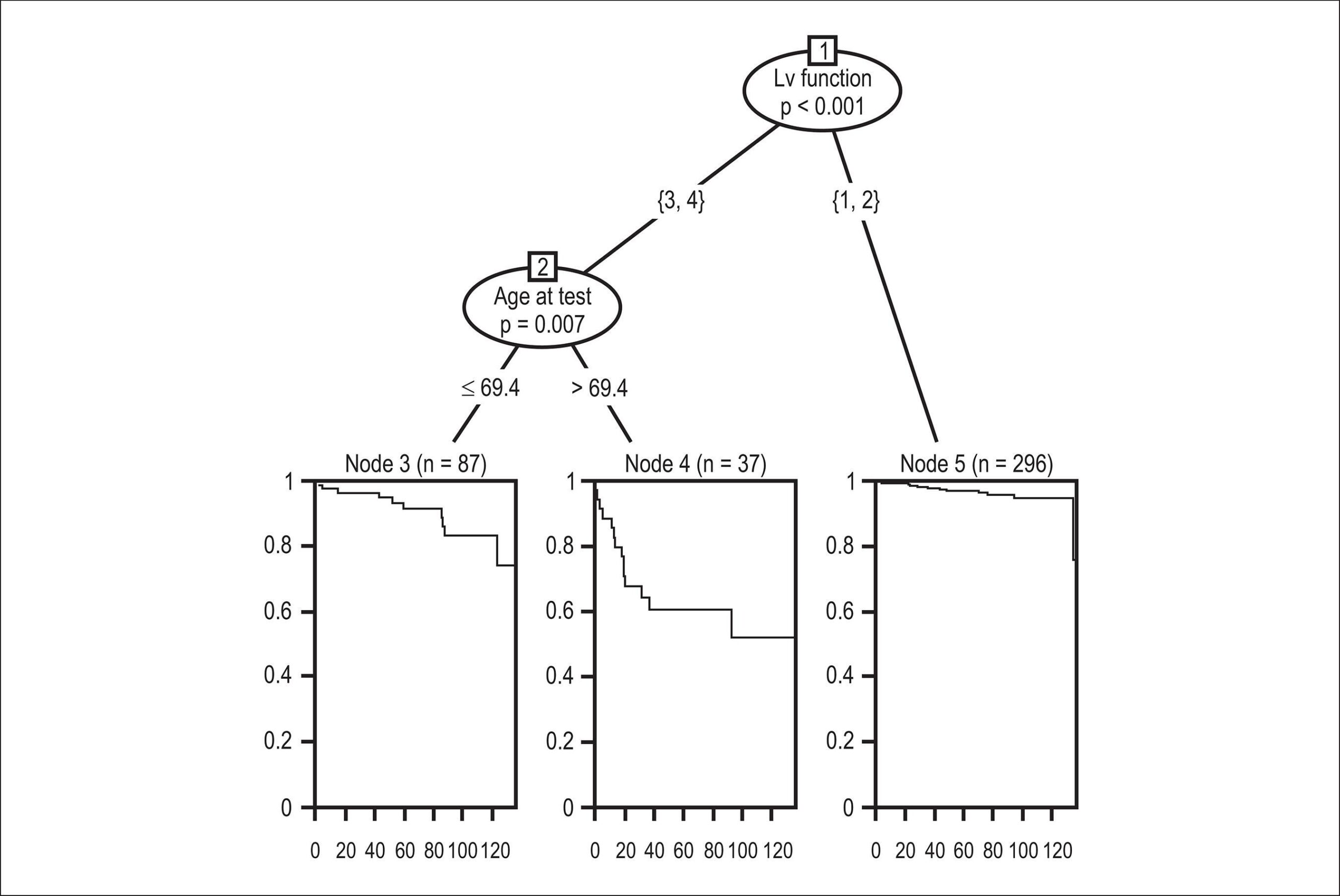
A total of 1959 reports of “infarct size” were identified in 7119 cardiac magnetic resonance imaging studies, of which 420 had clinical and laboratory confirmation of previous myocardial infarction. The variables studied were the classic risk factors – left ventricular ejection fraction, categorized ventricular function, and location of acute myocardial infarction. Infarct size and acute myocardial infarction extent and transmurality were analyzed alone and together, using the variable named “MET-AMI”. The statistical analysis was carried out using the elastic net regularization, with the Cox model and survival trees.

Results:

The mean age was 62.3 ± 12 years, and 77.3% were males. During the mean follow-up of 6.4 ± 2.9 years, there were 76 deaths (18.1%). Serum creatinine, diabetes mellitus and previous myocardial infarction were independently associated with mortality. Age was the main explanatory factor. The cardiac magnetic resonance imaging variables independently associated with mortality were transmurality of acute myocardial infarction (p = 0.047), ventricular dysfunction (p = 0.0005) and infarcted size (p = 0.0005); the latter was the main explanatory variable for ischemic heart disease death. The MET-AMI variable was the most strongly associated with risk of ischemic heart disease death (HR: 16.04; 95%CI: 2.64-97.5; p = 0.003).

Conclusion:

The anatomical data of infarction, obtained from cardiac magnetic resonance imaging after acute myocardial infarction, were independently associated with long-term mortality, especially for ischemic heart disease death.

  • Diagnostic Imaging
  • Magnetic Resonance Imaging
  • Mortality
  • Myocardial Infarction/physiology;
  • Risk Factor
Read Full Article
Creative Commons Attribution (CC BY) Creative Commons license
21/11/2014 DOI: 10.5935/abc.20140177
ABC
Artigo Original

Periodontal disease as a potential risk factor for acute coronary syndromes

Renata Accarini et al. Moacir Fernandes de Godoy

OBJECTIVE: To investigate whether there is a relationship between active periodontal disease (PD) and acute coronary syndromes (ACS). METHODS: Three hundred and sixty-one patients (57,3% male), ages ranging from 27 to 89 (mean ± DP = 60.5 ± 12.2), were admitted to the Intensive Care Unit of a Teaching Hospital with symptoms and complementary examinations consistent with acute coronary syndrome. All the patients had a complete periodontal examination in the ICU setting, and 325 (90.9%) underwent coronary angiography for diagnostic confirmation and/or treatment planning. Periodontal examination included evaluation of all the teeth in the oral cavity and the following parameters: probing depth, clinical attachment level, plaque index, and gingival index. RESULTS: Of the 325 patients, 91 (28%) had coronary arteries free of obstruction or with mild obstructions (< 50% diameter stenosis), and the remaining 72% had severe obstructions. Fisher's exact text yielded a p value of 0.0245 with an odds ratio of 2.571 (95% CI 1.192 to 5.547), meaning that the group with ACS and significant obstructive coronary artery disease was 2.5-fold more likely to have active PD. CONCLUSION: A significant association was found between active periodontal disease and severe obstructive coronary artery in patients with acute coronary syndrome, underscoring the importance of prevention and adequate treatment of periodontal disease, which should be considered as a potential risk factor in the etiology and instability of the atherosclerotic plaque.

  • Acute coronary syndrome
  • coronary atherosclerosis
  • Inflammation
  • obstructive coronary artery disease
  • Periodontal disease
  • Risk Factor
Read Full Article
Creative Commons Attribution (CC BY) Creative Commons license
06/03/2007 DOI: 10.1590/S0066-782X2006001800007
Hyperhomocysteinemia as a risk factor for coronary atherosclerotic diseases in the elderly
ABC
Artigo Original

Hyperhomocysteinemia as a risk factor for coronary atherosclerotic diseases in the elderly

Claudia Felícia Gravina-Taddei et al. Michel Batlouni Camila Sarteschi Valéria T Baltar … Nívea A.C Salvarini Marcelo C Bertolami José Eduardo M. R Sousa

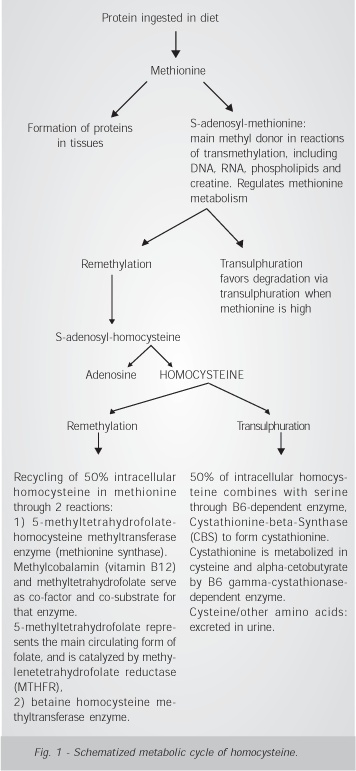
OBJECTIVE: To investigate whether hyperhomocysteinemia is an independent risk factor for atherosclerotic disease in elderly individuals METHODS: A case-control study with 172 elderly individuals, 88 belonging to control group and 84 to case group, who showed coronary angiography requested for clinical indications. Quantitative coronary angiography was performed in 91% of the patients. Homocysteinemia was assessed in a continuous and categorized way, through univariate and multivariate analysis. RESULTS: When analyzed continuously, in univariate analysis, it was verified that case group elderly individuals showed an average homocysteinemia levels significantly higher than the control group individuals’ (14.33±4.59 µmol/l against 11.99±4.59 µmol/l, p=0.015). In multivariate analysis, continuous homocysteinemia was associated to the risk rate for coronary artery disease of 1.07 for each 1 µmol/l increase of homocysteine level. Na increase of 5 µmol/l corresponded to the risk rate of 1.40. When analyzed in categorized way, the values found over percentile 75 of control group (14 µmol/l) were defined as hyperhomocysteinemia. Hyperhomocysteinemia was found in 34% of elderly individuals, being 37.3% in control group and 62.7% in case group (p= 0.009). In multivariate analysis, hyperhomocysteinemia constituted an independent risk factor for coronary atherosclerotic disease for elderly individuals, with a risk rate for coronary artery disease of 2.03, confidence interval 95%, 1.02-4.03. CONCLUSION: Hyperhomocysteinemia was an independent risk factor for coronary artery disease in elderly individuals.

  • Coronary Artery Disease
  • Elderly
  • homocysteine
  • hyperhomocysteinemia
  • octogenarian
  • Risk Factor
Read Full Article
Creative Commons Attribution (CC BY) Creative Commons license
10/10/2005 DOI: 10.1590/S0066-782X2005001600004

How to cite this article

EndNote RIS

Electronic Document Format (Vancouver)

Rivera MAM, Rivera IR, Oliveira GMM. Female Infertility: Cardiovascular Disease Risk Factor or Marker of a Population at Cardiovascular Risk?. Arquivos Brasileiros de Cardiologia 2026;123(5):e20250250.

Electronic Document Format (ABNT)

Rivera, Maria Alayde Mendonça; Rivera, Ivan Romero; Oliveira, Glaucia Maria Moraes de. Female Infertility: Cardiovascular Disease Risk Factor or Marker of a Population at Cardiovascular Risk?. Arquivos Brasileiros de Cardiologia, v. 123, n. 5, e20250250, Jul. 2026.

Electronic Document Format (APA)

Rivera, M. A. M., Rivera, I. R., & Oliveira, G. M. M. (2026). Female Infertility: Cardiovascular Disease Risk Factor or Marker of a Population at Cardiovascular Risk?. Arquivos Brasileiros de Cardiologia, 123(5), e20250250.

Electronic Document Format (ISO)

Rivera, Maria Alayde Mendonça and Rivera, Ivan Romero and Oliveira, Glaucia Maria Moraes de. Female Infertility: Cardiovascular Disease Risk Factor or Marker of a Population at Cardiovascular Risk?. Arquivos Brasileiros de Cardiologia [online]. 2026, vol. 123, n. 5, [cited 2026-10-14], e20250250. Available from: <https://journals.cardiol.br/en/article/female-infertility-cardiovascular-disease-risk-factor-or-marker-of-a-population-at-cardiovascular-risk/>. ISSN 0066-782X

EndNote RIS

Electronic Document Format (Vancouver)

Barbosa AS, Camarozano AC, Carmo DC, Rafael D, Fortunato JA, Darwich RZ, Baroncini LAV, et al. Transthoracic Echocardiographic Assessment of Thoracic Aorta: Correlation with Cardiovascular Risk Factors. Arquivos Brasileiros de Cardiologia Imagem cardiovascular 2022;31(3):191-7.

Electronic Document Format (ABNT)

Barbosa, Alexandre Sartori; Camarozano, Ana Cristina; Carmo, Daniela de Castro; Rafael, Daniane; Fortunato, Jerônimo Antonio; Darwich, Rubens Zenóbio; Baroncini, Liz Andréa Villela. Transthoracic Echocardiographic Assessment of Thoracic Aorta: Correlation with Cardiovascular Risk Factors. Arquivos Brasileiros de Cardiologia Imagem cardiovascular, v. 31, n. 3, p. 191-197, Jan. 2022.

Electronic Document Format (APA)

Barbosa, A. S., Camarozano, A. C., Carmo, D. C., Rafael, D., Fortunato, J. A., Darwich, R. Z., & Baroncini, L. A. V. (2022). Transthoracic Echocardiographic Assessment of Thoracic Aorta: Correlation with Cardiovascular Risk Factors. Arquivos Brasileiros de Cardiologia Imagem cardiovascular, 31(3), 191-197.

Electronic Document Format (ISO)

Barbosa, Alexandre Sartori and Camarozano, Ana Cristina and Carmo, Daniela de Castro and Rafael, Daniane and Fortunato, Jerônimo Antonio and Darwich, Rubens Zenóbio and Baroncini, Liz Andréa Villela. Transthoracic Echocardiographic Assessment of Thoracic Aorta: Correlation with Cardiovascular Risk Factors. Arquivos Brasileiros de Cardiologia Imagem cardiovascular [online]. 2022, vol. 31, n. 3, [cited 2026-10-14], pp. 191-197. Available from: <https://journals.cardiol.br/en/article/transthoracic-echocardiographic-assessment-of-thoracic-aorta-correlation-with-cardiovascular-risk-factors/>. ISSN 2318-8219

EndNote RIS

Electronic Document Format (Vancouver)

Coutinho RQ, Montarroyos UR, Barros IML, Guimarães MJB, Leão APD, Costa LOBF, Medeiros AKL, et al. Exercise Testing, Family History, and Subclinical Atherosclerosis Markers for Cardiovascular Risk Reclassification in Middle-Aged Women. International Journal of Cardiovascular Sciences 2021;34(4):383-92.

Electronic Document Format (ABNT)

Coutinho, Ricardo Quental; Montarroyos, Ulisses Ramos; Barros, Isly Maria Lucena de; Guimarães, Maria José Bezerra; Leão, Ana Paula Dornelas; Costa, Laura Olinda Bregieiro Fernandes; Medeiros, Ana Kelley de Lima; Monteiro, Maria de Fátima; Ferreira, Moacir de Novaes Lima; Chalela, William Azem; Pedrosa, Rodrigo Pinto. Exercise Testing, Family History, and Subclinical Atherosclerosis Markers for Cardiovascular Risk Reclassification in Middle-Aged Women. International Journal of Cardiovascular Sciences, v. 34, n. 4, p. 383-392, Jul. 2021.

Electronic Document Format (APA)

Coutinho, R. Q., Montarroyos, U. R., Barros, I. M. L. , Guimarães, M. J. B., Leão, A. P. D., Costa, L. O. B. F., Medeiros, A. K. L., Monteiro, M. F., Ferreira, M. N. L., Chalela, W. A., & Pedrosa, R. P. (2021). Exercise Testing, Family History, and Subclinical Atherosclerosis Markers for Cardiovascular Risk Reclassification in Middle-Aged Women. International Journal of Cardiovascular Sciences, 34(4), 383-392.

Electronic Document Format (ISO)

Coutinho, Ricardo Quental and Montarroyos, Ulisses Ramos and Barros, Isly Maria Lucena de and Guimarães, Maria José Bezerra and Leão, Ana Paula Dornelas and Costa, Laura Olinda Bregieiro Fernandes and Medeiros, Ana Kelley de Lima and Monteiro, Maria de Fátima and Ferreira, Moacir de Novaes Lima and Chalela, William Azem and Pedrosa, Rodrigo Pinto. Exercise Testing, Family History, and Subclinical Atherosclerosis Markers for Cardiovascular Risk Reclassification in Middle-Aged Women. International Journal of Cardiovascular Sciences [online]. 2021, vol. 34, n. 4, [cited 2026-10-14], pp. 383-392. Available from: <https://journals.cardiol.br/en/article/exercise-testing-family-history-and-subclinical-atherosclerosis-markers-for-cardiovascular-risk-reclassification-in-middle-aged-women/>. ISSN 2359-4802

EndNote RIS

Electronic Document Format (Vancouver)

Magalhães MEC. New Cholesterol Targets of SBC Guidelines on Dyslipidemia. International Journal of Cardiovascular Sciences 2017;30(6):466-8.

Electronic Document Format (ABNT)

Magalhães, Maria Eliane Campos. New Cholesterol Targets of SBC Guidelines on Dyslipidemia. International Journal of Cardiovascular Sciences, v. 30, n. 6, p. 466-468, Dec. 2016.

Electronic Document Format (APA)

Magalhães, M. E. C. (2017). New Cholesterol Targets of SBC Guidelines on Dyslipidemia. International Journal of Cardiovascular Sciences, 30(6), 466-468.

Electronic Document Format (ISO)

Magalhães, Maria Eliane Campos. New Cholesterol Targets of SBC Guidelines on Dyslipidemia. International Journal of Cardiovascular Sciences [online]. 2017, vol. 30, n. 6, [cited 2026-10-14], pp. 466-468. Available from: <https://journals.cardiol.br/en/article/new-cholesterol-targets-of-sbc-guidelines-on-dyslipidemia/>. ISSN 2359-4802

EndNote RIS

Electronic Document Format (Vancouver)

Petriz JLF, Gomes BFO, Rua BS, Azevedo CF, Hadlich MS, Mussi HTP, Taets GC, et al. Assessment of Myocardial Infarction by Cardiac Magnetic Resonance Imaging and Long-Term Mortality. Arquivos Brasileiros de Cardiologia 2014;104(2):159-68.

Electronic Document Format (ABNT)

Petriz, João Luiz Fernandes; Gomes, Bruno Ferraz de Oliveira; Rua, Braulio Santos; Azevedo, Clério Francisco; Hadlich, Marcelo Souza; Mussi, Henrique Thadeu Periard; Taets, Gunnar de Cunto; Nascimento, Emília Matos do; Pereira, Basílio de Bragança; Silva, Nelson Albuquerque de Souza e. Assessment of Myocardial Infarction by Cardiac Magnetic Resonance Imaging and Long-Term Mortality. Arquivos Brasileiros de Cardiologia, v. 104, n. 2, p. 159-168, Nov. 2014.

Electronic Document Format (APA)

Petriz, J. L. F., Gomes, B. F. O., Rua, B. S., Azevedo, C. F., Hadlich, M. S., Mussi, H. T. P., Taets, G. C., Nascimento, E. M. , Pereira, B. B., & Silva, N. A. S. (2014). Assessment of Myocardial Infarction by Cardiac Magnetic Resonance Imaging and Long-Term Mortality. Arquivos Brasileiros de Cardiologia, 104(2), 159-168.

Electronic Document Format (ISO)

Petriz, João Luiz Fernandes and Gomes, Bruno Ferraz de Oliveira and Rua, Braulio Santos and Azevedo, Clério Francisco and Hadlich, Marcelo Souza and Mussi, Henrique Thadeu Periard and Taets, Gunnar de Cunto and Nascimento, Emília Matos do and Pereira, Basílio de Bragança and Silva, Nelson Albuquerque de Souza e. Assessment of Myocardial Infarction by Cardiac Magnetic Resonance Imaging and Long-Term Mortality. Arquivos Brasileiros de Cardiologia [online]. 2014, vol. 104, n. 2, [cited 2026-10-14], pp. 159-168. Available from: <https://journals.cardiol.br/en/article/assessment-of-myocardial-infarction-by-cardiac-magnetic-resonance-imaging-and-long-term-mortality/>. ISSN 0066-782X

EndNote RIS

Electronic Document Format (Vancouver)

Accarini R, Godoy MF. Periodontal disease as a potential risk factor for acute coronary syndromes. Arquivos Brasileiros de Cardiologia 2007;87(5):592-6.

Electronic Document Format (ABNT)

Accarini, Renata; Godoy, Moacir Fernandes de. Periodontal disease as a potential risk factor for acute coronary syndromes. Arquivos Brasileiros de Cardiologia, v. 87, n. 5, p. 592-596, Mar. 2007.

Electronic Document Format (APA)

Accarini, R., & Godoy, M. F. (2007). Periodontal disease as a potential risk factor for acute coronary syndromes. Arquivos Brasileiros de Cardiologia, 87(5), 592-596.

Electronic Document Format (ISO)

Accarini, Renata and Godoy, Moacir Fernandes de. Periodontal disease as a potential risk factor for acute coronary syndromes. Arquivos Brasileiros de Cardiologia [online]. 2007, vol. 87, n. 5, [cited 2026-10-14], pp. 592-596. Available from: <https://journals.cardiol.br/en/article/periodontal-disease-as-a-potential-risk-factor-for-acute-coronary-syndromes-2/>. ISSN 0066-782X

EndNote RIS

Electronic Document Format (Vancouver)

Gravina-Taddei CF, Batlouni M, Sarteschi C, Baltar VT, Salvarini NA, Bertolami MC, Sousa JEMR, et al. Hyperhomocysteinemia as a risk factor for coronary atherosclerotic diseases in the elderly. Arquivos Brasileiros de Cardiologia 2005;85(3):166-73.

Electronic Document Format (ABNT)

Gravina-Taddei, Claudia Felícia; Batlouni, Michel; Sarteschi, Camila; Baltar, Valéria T; Salvarini, Nívea A.C; Bertolami, Marcelo C; Sousa, José Eduardo M. R. Hyperhomocysteinemia as a risk factor for coronary atherosclerotic diseases in the elderly. Arquivos Brasileiros de Cardiologia, v. 85, n. 3, p. 166-173, Oct. 2005.

Electronic Document Format (APA)

Gravina-Taddei, C. F., Batlouni, M., Sarteschi, C., Baltar, V. T., Salvarini, N. A., Bertolami, M. C., & Sousa, J. E. M. R. (2005). Hyperhomocysteinemia as a risk factor for coronary atherosclerotic diseases in the elderly. Arquivos Brasileiros de Cardiologia, 85(3), 166-173.

Electronic Document Format (ISO)

Gravina-Taddei, Claudia Felícia and Batlouni, Michel and Sarteschi, Camila and Baltar, Valéria T and Salvarini, Nívea A.C and Bertolami, Marcelo C and Sousa, José Eduardo M. R. Hyperhomocysteinemia as a risk factor for coronary atherosclerotic diseases in the elderly. Arquivos Brasileiros de Cardiologia [online]. 2005, vol. 85, n. 3, [cited 2026-10-14], pp. 166-173. Available from: <https://journals.cardiol.br/en/article/hyperhomocysteinemia-as-a-risk-factor-for-coronary-atherosclerotic-diseases-in-the-elderly/>. ISSN 0066-782X

  • About ABC Family
  • Internal Regulation
  • Editorial Board
  • Brazilian Society of Cardiology (SBC)

Issues

SBC Guidelines

  • Videos
  • Podcasts
  • News