ABC Family Arquivos Brasileiros de Cardiologia International Journal of Cardiovascular Sciences ABC Heart Failure & Cardiomyopathy ABC Imagem Cardiovascular
Português English
ABC Family
Português English
  • About
    • About ABC Family
    • Internal Regulation
    • Editorial Board
    • Brazilian Society of Cardiology (SBC)
  • Issues
  • SBC Guidelines
  • Content
    • Videos
    • Podcasts
    • News
  • About
    • About ABC Family
    • Internal Regulation
    • Editorial Board
    • Brazilian Society of Cardiology (SBC)
  • Issues
  • SBC Guidelines
  • Content
    • Videos
    • Podcasts
    • News

ABC Family

  • ABC Family
  • Arquivos Brasileiros de Cardiologia
  • International Journal of Cardiovascular Sciences
  • ABC Heart Failure & Cardiomyopathy
  • ABC Imagem Cardiovascular
Search in

No content found.

Journals
Ordering
Article types
Others

  1. Home
  2. Keyword: Bradycardia/complications
Figure 1
ABC
Research Letter

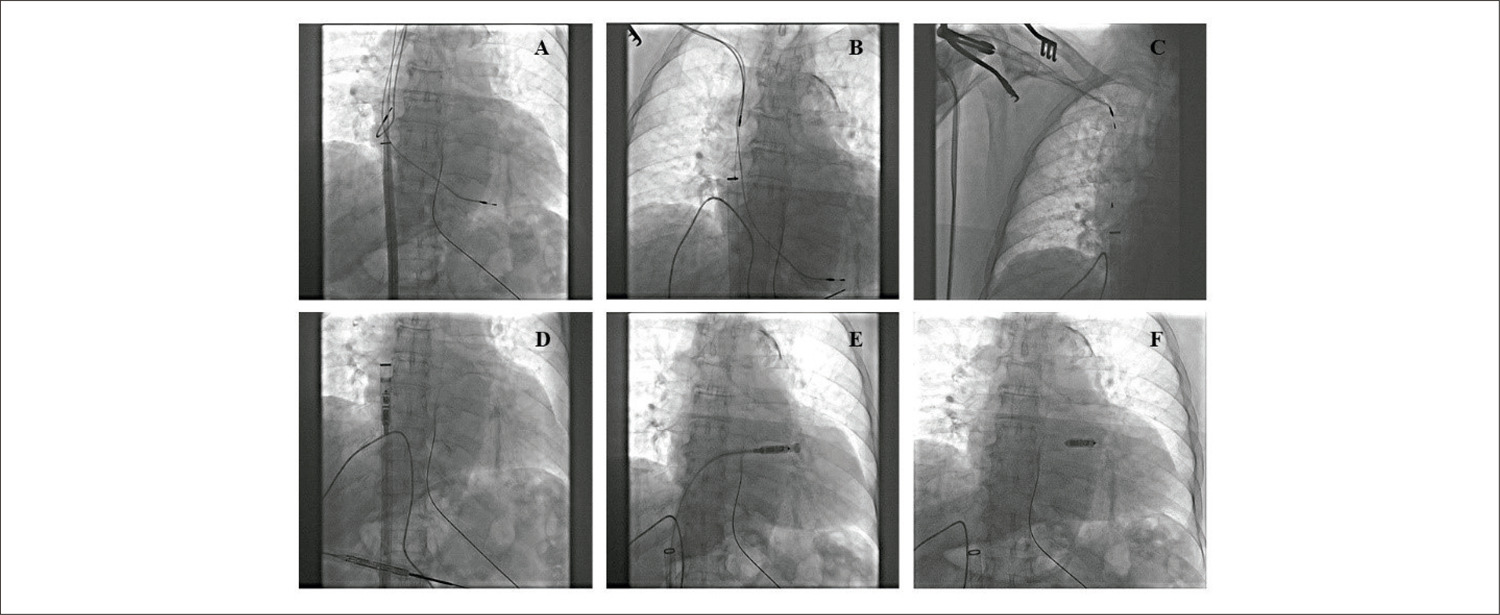
A Hybrid Approach of Simultaneous Extraction and Leadless Pacemaker Implantation in a Transvenous Lead Endocarditis Case

Helder Santos et al. André Grazina Mariana Santos Paulo Osório … Guilherme Portugal Ana Lousinha Bruno Valente Pedro Silva Cunha Mário Oliveira

Introduction

Symptomatic bradycardia treatment is based on the transvenous method of endocardial pacing. However, cardiac electronic implantable devices (CEID) are associated with a potential risk of complications, including infections, with an estimated rate of 0.5% with primary implants and 1–7 % with secondary interventions. CIED infections are associated with longer hospital length of stay, higher clinical costs and mortality rates. , According to guidelines, infective endocarditis related to CIED implicates complete removal of the system, followed by a period without intravascular therapy. – Nevertheless, most of the patients require CIED reimplantation, which is known to be associated with a risk of reinfection between 2 and 11%, particularly in cases with only partial removal of the initial device.

The PISA technique is a percutaneous procedure used with success in lead extraction of the CIED. This technique starts with the identification of the proximal portion of the lead. Then, a debridement is performed along the lead to achieve the site of venous insertion. Subsequently, a polypropylene dilator sheath is inserted and advanced externally up to the lead in rotational movements, while maintaining a light traction. Such movements will cause the release of adhesions around the lead, allowing, after the full advancement of the sheath, the entire lead removal.

[…]
  • Artificial/adverse effects
  • Artificial/methods
  • Bradycardia/complications
  • Cardiac pacing
  • Equipment and Supplies/instrumentation
  • Leadless Pacemaker
  • Method PISA
  • Pacemaker
  • Replantation
Read Full Article
Creative Commons Attribution (CC BY) Creative Commons license
27/02/2023 DOI: 10.36660/abc.20220091 Views 1
Figure 1
IJCS
Case Report

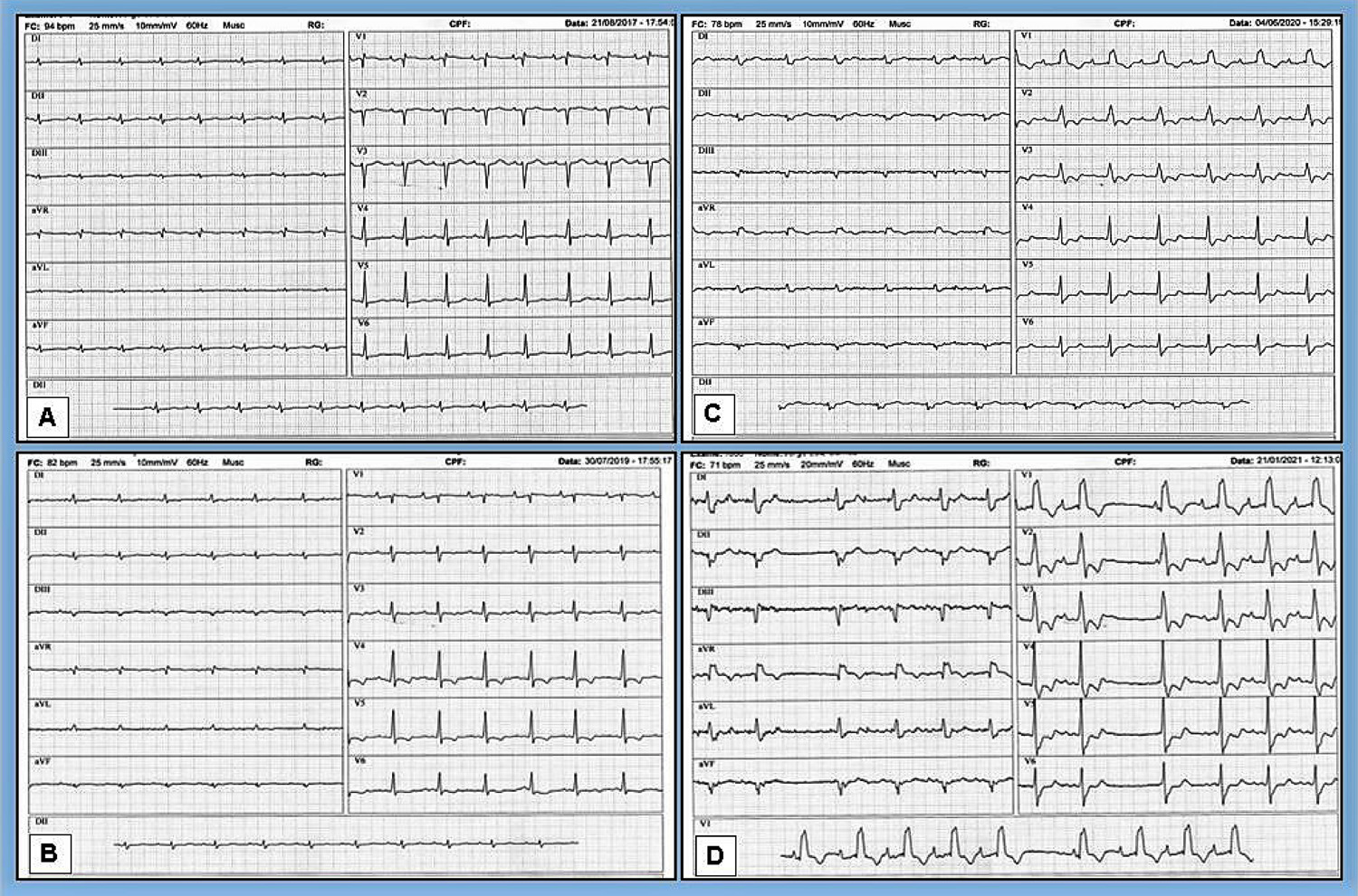
First-degree Atrioventricular Block as an Early Marker of Advanced Disease of the Conduction System in a Patient with Hereditary Val142Ile Cardiac Amyloidosis

Nágela S. V. Nunes et al. Evandro Tinoco Mesquita Claudio Tinoco Mesquita Paulo Roberto Benchimol-Barbosa

Introduction

Cardiac amyloidosis (CA) is a type of restrictive cardiomyopathy secondary to amyloid infiltration in the heart. The most common clinical forms are immunoglobulin light chain amyloidosis (AL) and amyloidosis resulting from amyloid deposits secondary to the destabilization of the protein tetramer transthyretin (ATTR), which is divided into two types: the hereditary form (ATTRm) and the wild type (ATTRwt).

Cardiac impulse conduction disorders and atrial arrhythmias are more frequent in ATTR than in the AL form, and this seems to reflect the longer survival of patients affected by ATTR, given that the AL form manifests with high mortality up to 6 months from diagnosis, because conduction system disease appears to be a later manifestation.

[…]

  • Artificial Pacemaker
  • Atrioventricular Block/genetics
  • Bradycardia/complications
  • cardiomyopathy
  • Diagnostic Imaging
  • Familial Amyloidodis/complications
  • Sick Sinus Syndrome/genetics
Read Full Article
Creative Commons Attribution (CC BY) Creative Commons license
09/05/2022 DOI: 10.36660/ijcs.20210081 Views 2

How to cite this article

EndNote RIS

Electronic Document Format (Vancouver)

Santos H, Grazina A, Santos M, Osório P, Portugal G, Lousinha A, Valente B, et al. A Hybrid Approach of Simultaneous Extraction and Leadless Pacemaker Implantation in a Transvenous Lead Endocarditis Case. Arquivos Brasileiros de Cardiologia 2023;120(2):e20220091.

Electronic Document Format (ABNT)

Santos, Helder; Grazina, André; Santos, Mariana; Osório, Paulo; Portugal, Guilherme; Lousinha, Ana; Valente, Bruno; Cunha, Pedro Silva; Oliveira, Mário. A Hybrid Approach of Simultaneous Extraction and Leadless Pacemaker Implantation in a Transvenous Lead Endocarditis Case. Arquivos Brasileiros de Cardiologia, v. 120, n. 2, e20220091, Feb. 2023.

Electronic Document Format (APA)

Santos, H., Grazina, A., Santos, M., Osório, P., Portugal, G., Lousinha, A., Valente, B., Cunha, P. S., & Oliveira, M. (2023). A Hybrid Approach of Simultaneous Extraction and Leadless Pacemaker Implantation in a Transvenous Lead Endocarditis Case. Arquivos Brasileiros de Cardiologia, 120(2), e20220091.

Electronic Document Format (ISO)

Santos, Helder and Grazina, André and Santos, Mariana and Osório, Paulo and Portugal, Guilherme and Lousinha, Ana and Valente, Bruno and Cunha, Pedro Silva and Oliveira, Mário. A Hybrid Approach of Simultaneous Extraction and Leadless Pacemaker Implantation in a Transvenous Lead Endocarditis Case. Arquivos Brasileiros de Cardiologia [online]. 2023, vol. 120, n. 2, [cited 2026-10-14], e20220091. Available from: <https://journals.cardiol.br/en/article/a-hybrid-approach-of-simultaneous-extraction-and-leadless-pacemaker-implantation-in-a-transvenous-lead-endocarditis-case/>. ISSN 0066-782X

EndNote RIS

Electronic Document Format (Vancouver)

Nunes NSV, Mesquita ET, Mesquita CT, Benchimol-Barbosa PR. First-degree Atrioventricular Block as an Early Marker of Advanced Disease of the Conduction System in a Patient with Hereditary Val142Ile Cardiac Amyloidosis. International Journal of Cardiovascular Sciences 2022;36:e20210081.

Electronic Document Format (ABNT)

Nunes, Nágela S. V.; Mesquita, Evandro Tinoco; Mesquita, Claudio Tinoco; Benchimol-Barbosa, Paulo Roberto. First-degree Atrioventricular Block as an Early Marker of Advanced Disease of the Conduction System in a Patient with Hereditary Val142Ile Cardiac Amyloidosis. International Journal of Cardiovascular Sciences, v. 36, e20210081, May. 2022.

Electronic Document Format (APA)

Nunes, N. S. V., Mesquita, E. T., Mesquita, C. T., & Benchimol-Barbosa, P. R. (2022). First-degree Atrioventricular Block as an Early Marker of Advanced Disease of the Conduction System in a Patient with Hereditary Val142Ile Cardiac Amyloidosis. International Journal of Cardiovascular Sciences, 36, e20210081.

Electronic Document Format (ISO)

Nunes, Nágela S. V. and Mesquita, Evandro Tinoco and Mesquita, Claudio Tinoco and Benchimol-Barbosa, Paulo Roberto. First-degree Atrioventricular Block as an Early Marker of Advanced Disease of the Conduction System in a Patient with Hereditary Val142Ile Cardiac Amyloidosis. International Journal of Cardiovascular Sciences [online]. 2022, vol. 36, [cited 2026-10-14], e20210081. Available from: <https://journals.cardiol.br/en/article/first-degree-atrioventricular-block-as-an-early-marker-of-advanced-disease-of-the-conduction-system-in-a-patient-with-hereditary-val142ile-cardiac-amyloidosis/>. ISSN 2359-4802

  • About ABC Family
  • Internal Regulation
  • Editorial Board
  • Brazilian Society of Cardiology (SBC)

Issues

SBC Guidelines

  • Videos
  • Podcasts
  • News