Impact of Contrast Volume Used After Percutaneous Coronary Procedures in Patients at Risk for Contrast-Induced Nephropathy
Abstract
Background
Contrast-induced nephropathy (CIN) is a common complication following angiographic procedures, potentially related to the volume of contrast agent administered. However, it is unclear whether the type of contrast also influences its occurrence.
Objective
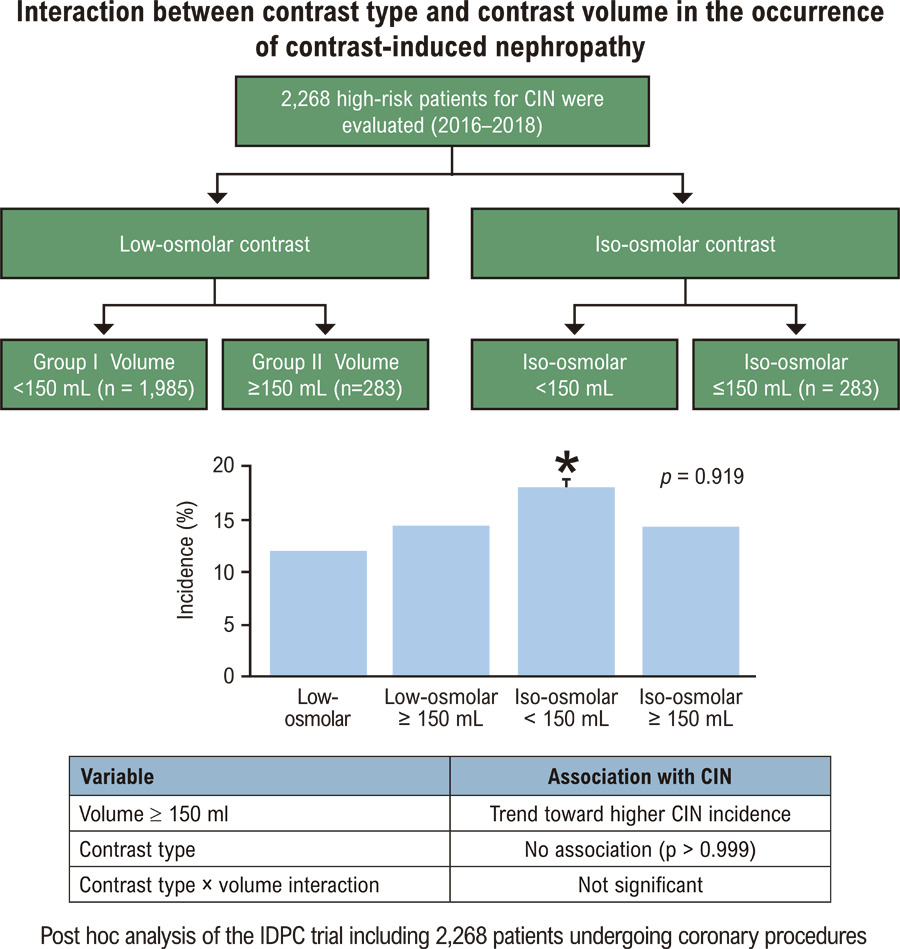
To evaluate the interaction between contrast volume and contrast type (iso-osmolar vs low-osmolar) in the development of CIN.
Methods
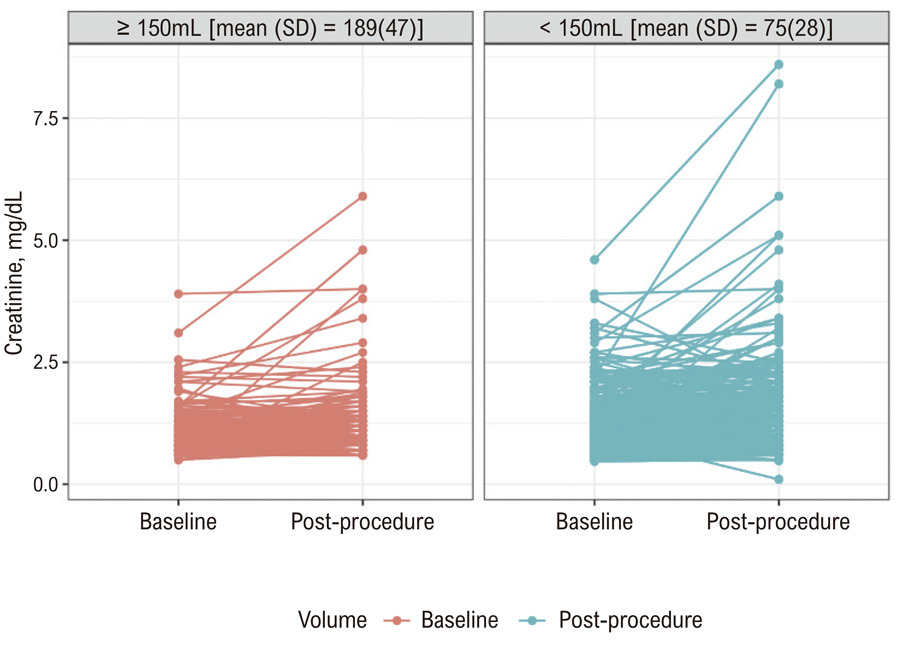
A post hoc subanalysis was performed on patients undergoing diagnostic or therapeutic coronary procedures who were randomized 1:1 to receive low-osmolar or iso-osmolar contrast media. The overall sample (n = 2,268) was stratified by contrast volume: Group I (< 150 mL; n = 1,985) and Group II (≥ 150 mL; n = 283), and groups were compared by contrast type. The primary endpoint was CIN at 48- and 96-hours post-procedure. CIN was defined as a ≥ 25% or ≥ 0.5 mg/dL increase in serum creatinine from baseline at 48 hours. The effects of contrast type and volume were tested with logistic regression including an interaction term, adjusted for acute coronary syndrome, ventricular dysfunction, baseline creatinine, sex, and age (p < 0.05).
Results
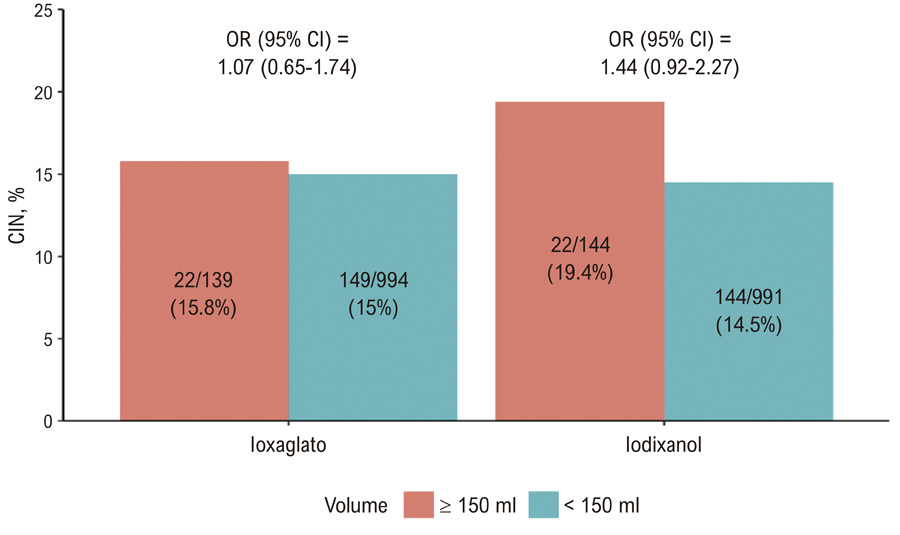
We included 2,268 consecutive patients; two-thirds were male; hypertension was present in 85%, diabetes in 52%, and chronic kidney disease in 31%. Mean contrast volume was 75.3 ± 28.0 mL in Group I and 188.6 ± 46.9 mL in Group II. The incidence of CIN was higher with greater volume (14.8% vs 17.7%) but not statistically significant (adjusted odds ratio = 1.25; 95% CI = 0.89-1.73; p = 0.191). The model with the interaction term showed no evidence of an interaction between the type of contrast and volume (p > 0.999).
Conclusion
The type of contrast was not associated with CIN, even among patients exposed to higher contrast volumes.
Images
Image gallery fullscreen viewer
Comments are moderated by the editorial team before publication. Discussions should be evidence-based and use scientific language. Conflicts of interest should be declared.