ABC Family Arquivos Brasileiros de Cardiologia International Journal of Cardiovascular Sciences ABC Heart Failure & Cardiomyopathy ABC Imagem Cardiovascular
Português English
ABC Family
Português English
  • About
    • About ABC Family
    • Internal Regulation
    • Editorial Board
    • Brazilian Society of Cardiology (SBC)
  • Issues
  • SBC Guidelines
  • Content
    • Videos
    • Podcasts
    • News
  • About
    • About ABC Family
    • Internal Regulation
    • Editorial Board
    • Brazilian Society of Cardiology (SBC)
  • Issues
  • SBC Guidelines
  • Content
    • Videos
    • Podcasts
    • News

ABC Family

  • ABC Family
  • Arquivos Brasileiros de Cardiologia
  • International Journal of Cardiovascular Sciences
  • ABC Heart Failure & Cardiomyopathy
  • ABC Imagem Cardiovascular
Search in

No content found.

Journals
Ordering
Article types
Others

  1. Home
  2. Keyword: Coronary Diseases
ABCIC
Original Article

Carotid Evaluation in Patients with Suspected Coronary Disease: Is There a Negative Prediction?

José Luiz Fernandes Molina Filho et al. Francisco das Chagas Lima e Silva

Abstract

Introduction

Due to its prevalence and gravity, coronary diseases require a more definite and early sort of diagnosis. Thus, there is extreme urgency in identifying patients under the risk of such problem. The most important indicator of risk is a previous manifestation of atherosclerosis itself. In this context, the study of subclinical atherosclerosis may bring to light essential information.

Objective

To evaluate if there is any connection between carotid and coronary alterations; if the absence of atherosclerosis in the arterial bed may indicate absence of obstructive atherosclerotic disease in the coronary bed; and if the absence of carotid lesion might substantiate the non indication of coronarography, keeping in mind the clinical characteristics of each patient.

Methods

This study was observational, transversal, analytic and comparative. Fifty consecutive patients were included, having clinical indication for coronarography. A vascular ultrasound exam of the carotids was performed for a comparison of the results.

Results

All patients with no carotid plaque, evaluated using vascular ultrasound, did not present any significant coronary obstruction, as evaluated via coronarography. All patients who showed significant carotid obstruction, ≥ 50%, also presented significant coronary obstruction, ≥ 70%. Among the evaluated points, only the result of the vascular ultrasound exam of the carotids was seen as a risk predictor in the findings obtained via vascular ultrasound (odds ratio of 2,58; confidence interval 1,66-4,02; p < 0,001).

Conclusion

There was a positive association between the degree of the atherosclerotic lesion of the carotid and of the coronary. No patient without carotid lesion showed significant obstruction of coronary artery, presenting high negative predictive value.

  • Atherosclerosis
  • Cardiac Catheterization
  • Carotid Artery Diseases
  • Coronary Diseases
  • Ultrasonography, Doppler
Read Full Article
Creative Commons Attribution (CC BY) Creative Commons license
14/01/2022 DOI: 10.5935/2318-8219.20200023 Views 1
Figure 1
IJCS
Original Article

Acute Myocardial Infarction and Percutaneous Coronary Intervention: What does the Epidemiological Data of the Last Years Indicate?

Gabriel Silvestre Minucci et al. Samuel Marques dos Reis

Abstract

Background:

ST-segment elevation acute myocardial infarction (STEMI) is a pathological process that involves cardiac muscle tissue death. Intravenous thrombolysis with fibrinolytics or primary percutaneous coronary intervention (PCI), an invasive technique, can be performed for tissue revascularization. PCI has been preferred as compared to non-invasive methods, although few studies have described its use in Brazil.

Objectives:

The aim of the present study was to analyze data on the use of primary PCI and investigate the relevance of hospitalizations for the treatment of STEMI in the country.

Methods:

A descriptive, cross-sectional analysis of data from the Brazilian Unified Health system (SUS) Department of Informatics (DATASUS) from 2010 to 2019 was conducted.

Results:

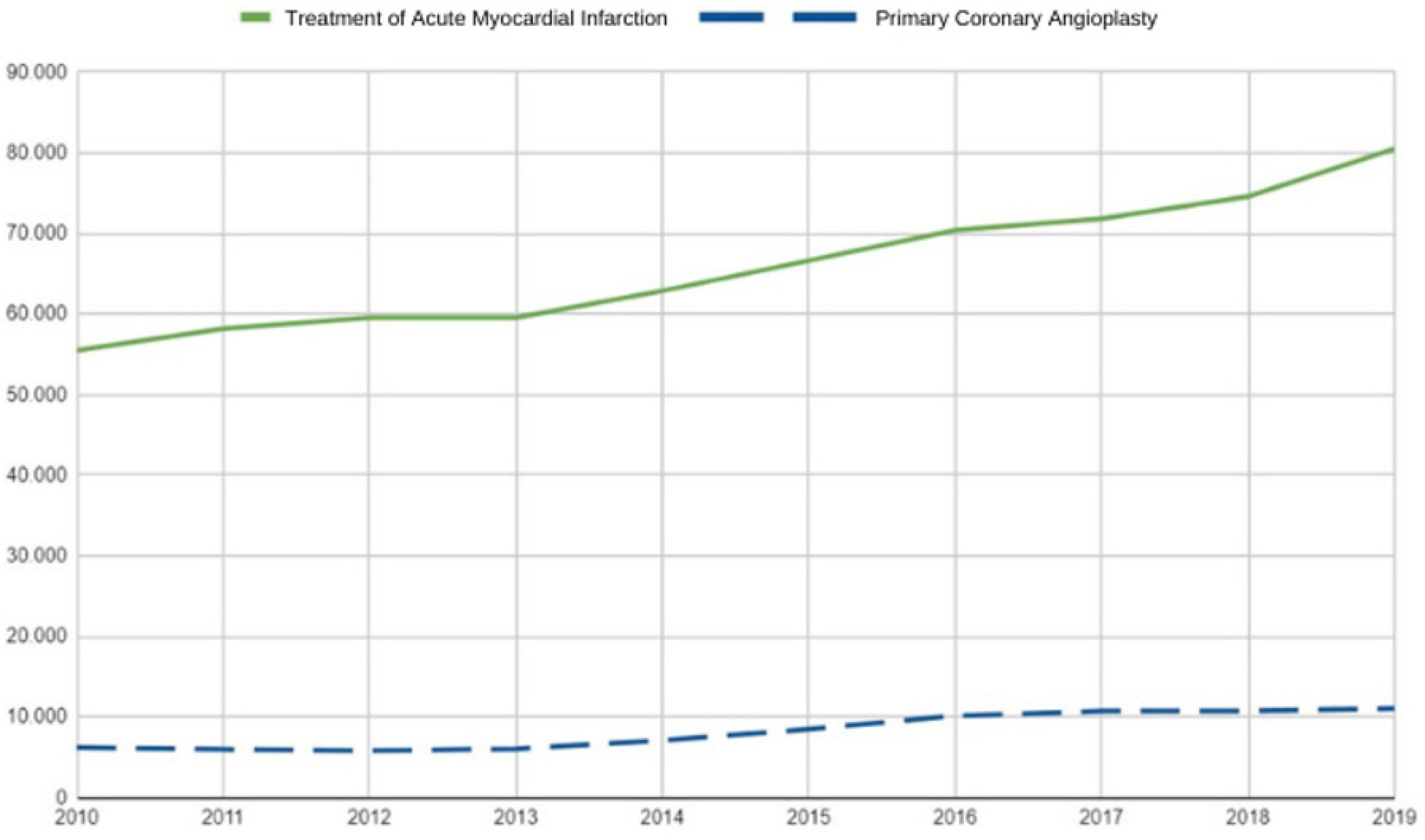
Hospitalizations for STEMI represented 0.6% of all hospital admissions in Brazil in the analyzed period, 0.9% of hospital costs, and 2.1% of deaths. The number of hospitalizations due to STEMI was 659,811, and 82,793 for PCIs. Length of hospital stay was 36.0% shorter and mortality rate was 53.3% lower in PCI. The mean cost of PCI was 3.5-fold higher than for treatment of STEMI.

Conclusions:

Data on hospitalizations for STEMI treatment in Brazil revealed high hospitalization and mortality rates, elevated costs, and long hospital stay. Although primary PCI is a more expensive and less used technique than other methods, it can reduce the length of hospital stay and mortality in the treatment of STEMI.

  • Angioplasty, Balloon, Coronary/methods
  • Cardiovascular Diseases
  • Coronary Diseases
  • Hospitalization
  • Mortality
  • Myocardial Infarction
  • Risk Factors
Read Full Article
Creative Commons Attribution (CC BY) Creative Commons license
01/11/2021 DOI: 10.36660/ijcs.20200256
IJCS
Original Article

Predictors for Indication to Catheterization after Myocardial Perfusion Gated Spect

Fernanda de Oliveira Mesquita et al. Larissa Andrade Lívia Pitta Andrea Rocha de Lorenzo Ronaldo de Souza Leão Lima

Abstract

Background:

Patients with coronary artery disease with left ventricular dysfunction present higher mortality and are the major beneficiaries of a myocardial revascularization procedure. A previous study showed that left ventricular ejection fraction (LVEF) is a negative determinant for cardiac catheterization (CAT) after myocardial perfusion scintigraphy (MPS).

Objective:

To determine clinical and scintigraphic factors associated with cardiac catheterization (CAT) indication in patients undergoing myocardial perfusion SPECT (MPS).Population: Patients consecutively submitted to PMC in the period from March 2008 to December 2012.

Methods:

All patients undergoing MPS during the study were recorded in a data bank, where epidemiological, clinical and scintigraphic data (perfusion scores and LVEF) were recorded. Patients or their attending physicians were contacted by phone semiannually for follow-up. For statistical analysis, univariate analyzes were performed and variables were selected for inclusion in a logistic regression model.

Results:

5536 patients were submitted to MPS, of which 643 performed CAT after the examination. This group presents a higher prevalence of males, hypertensive, dyslipidemic and previously revascularized. Patients undergoing CAT have angina more frequently, more extensive ischemia scores and lower LVEF. Only presence of angina (IC 95% 1.2 – 1.7, p < 0.001) and extent of ischemia (95% CI 1.2 – 1.3, p < 0.001) were independent variables for CAT indication.

Conclusion:

The presence of angina and the extent of ischemia were the main predictors for CAT post-MPS indication while lower LVEF was not an independent predictor.

  • Cardiac Catheterization
  • Coronary Diseases
  • Myocardial/diagnostic imaging
  • Ventricular Dysfunction, Left/mortality
Read Full Article
Creative Commons Attribution (CC BY) Creative Commons license
21/09/2017 DOI: 10.5935/2359-4802.20170078 Views 1
Evaluation of the musculoskeletal system of patients in cardiopulmonary and metabolic rehabilitation programs
ABC
Artigo Original

Evaluation of the musculoskeletal system of patients in cardiopulmonary and metabolic rehabilitation programs

Tales de Carvalho et al. Angelise Mozerle Anderson Zampier Ulbrich Alexsandro Luiz de Andrade … Emmanuele Elise Campos de Moraes Lourenço Sampaio de Mara

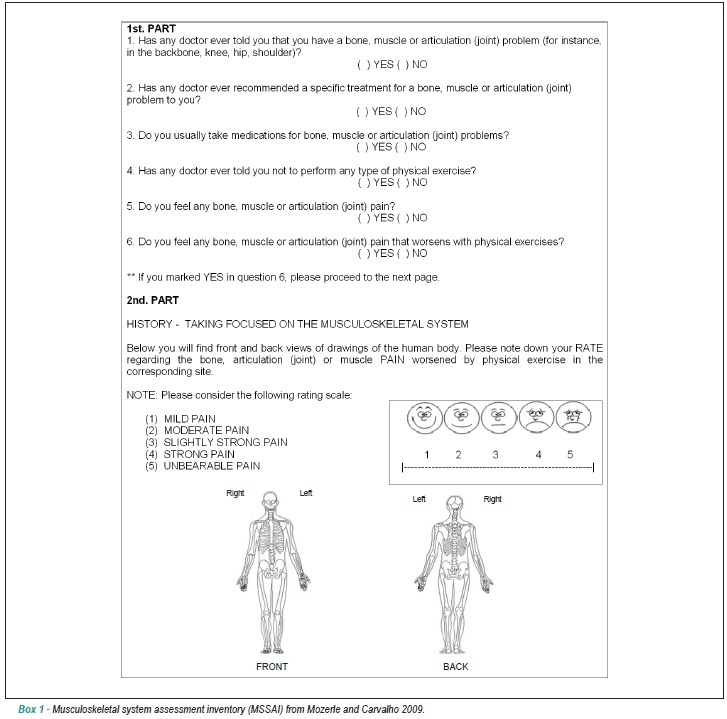
BACKGROUND: Participants of cardiopulmonary and metabolic rehabilitation (CPMR) programs may present with musculoskeletal changes that may affect treatment compliance and effectiveness. OBJECTIVE: To develop an instrument for evaluation of the musculoskeletal system and identification of problems, especially those related to exercise, so that patients can be cleared to exercise with no restrictions, cleared with restrictions, or not cleared before approval from a specialist. METHODS: Construction and validation (according to Cronbach’s alpha) of a musculoskeletal system assessment inventory (MSSAI), for subsequent administration to participants in CPMR programs. RESULTS: A total of 103 individuals participating in CPMR programs were evaluated by means of the MSSAI, whose internal validity and reliability proved to be satisfactory. Of these, 33 were men (32%) and 70 were women (68%), with age ranging from 36 to 84 years; 47 (45.6%) had already been diagnosed with musculoskeletal system disorders; 39 (37.9%) had already received specific treatment for the musculoskeletal system; 33 (32%) used to take medications to relieve symptoms related to the musculoskeletal system; and 10 (9.7%) had a medical restriction for performing some type of exercise. We should point out that 48 individuals (46.6%) reported pain in the musculoskeletal system; in 14 (13.6%) of them, the pain worsened by exercise, and this should have prevented them from participating in exercise programs before receiving approval from a specialist. CONCLUSION: The MSSAI, whose internal validity and reliability proved satisfactory, showed that there was some restriction to exercise practice for almost half of the individuals participating in CPMR programs, and that some of them should not have been cleared without approval from a specialist.

  • Coronary Diseases
  • Diabetes Mellitus
  • Exercise
  • Hypertension
  • Locomotion
  • Patients
Read Full Article
Creative Commons Attribution (CC BY) Creative Commons license
02/07/2010 DOI: 10.1590/S0066-782X2010005000083 Views 2
ABC
Artigo Original

Construction and validation of the CADE-Q for patient education in cardiac rehabilitation programs

Gabriela Lima de Melo Ghisi et al. Adriana Durieux Waldomiro Carlos Manfroi Artur Haddad Herdy … Tales de Carvalho Alexandre Andrade Magnus Benetti

BACKGROUND: Being aware of the coronary artery disease can be considered the first step to reduce the risk of cardiac complications. OBJECTIVE: Building and validating a tool to assess and describe coronary patients’ awareness in cardiac rehabilitation programs, with the purpose of education. METHODS: For the construction, we analyzed articles and field studies to submit items to multidisciplinary team associated to cardiac rehabilitation. After this analysis, we generated the version tested in a pilot study. The tool, named CADE-Q (Questionnaire for Coronary Patient Education) was applied in 155 patients aged 61 ± 9 (min = 36, max = 86) in response to cardiac rehabilitation programs. Out of the 155 patients, 114 were men. Internal consistency was measured by Cronbach’s alpha coefficient. Reproducibility was tested by the intraclass correlation coefficient (ICC) and construct validity was performed by exploratory factor analysis. The analysis compared the total scores as a function population characteristics and rehabilitation groups (private and public). RESULTS: The final version has 19 questions with 4 alternatives, with 4 quadrants of awareness. Cronbach’s alpha was 0.68 and ICC was 0.783. The factor analysis revealed 6 factors, covering three areas of awareness, which demonstrates the multifactorial nature of the instrument. The population characteristics as a function of the total score showed significant differences depending on the socioeconomic status variables (type of rehabilitation, household income and education level). CONCLUSION: CADE-Q has proper validity and reliability to be used in the Brazilian population in future research.

  • Coronary Diseases
  • Education
  • questionnaires
  • Rehabilitation
Read Full Article
Creative Commons Attribution (CC BY) Creative Commons license
07/05/2010 DOI: 10.1590/S0066-782X2010005000045 Views 1
Atherosclerosis imaging in progression/regression trials: surrogate marker or direct window into the atherosclerotic disease process?
ABC
Review Article

Atherosclerosis imaging in progression/regression trials: surrogate marker or direct window into the atherosclerotic disease process?

Paul Schoenhagen et al. E. Murat Tuzcu

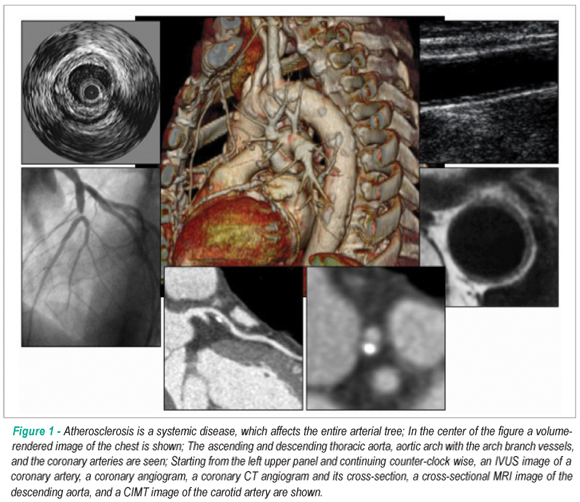
CAD remains a major global cause of morbidity and mortality. Comprehensive drug development programs of novel pharmacological treatment strategies frequently utilize traditional mortality/morbidity endpoints studies and additional surrogate endpoints trials. This parallel approach allows an assessment of efficacy several years in advance of the availability of data from clinical endpoint trials. Several atherosclerosis imaging markers have been introduced into these drug-development strategies, including angiography, carotid ultrasound, IVUS, MRI, and CT. This review will discuss the current status of atherosclerosis imaging as an endpoint in progression/regression trials, with an emphasis on evidence-based data. In addition to a discussion of the results of individual imaging modalities, the emerging data comparing different modalities and approaches are presented.

  • Atherosclerosis
  • Coronary Diseases
  • Diagnostic Imaging
  • disease progression
Read Full Article
Creative Commons Attribution (CC BY) Creative Commons license
05/01/2009 DOI: 10.1590/S0066-782X2008001800010 Views 1
ABC
Artigo Original

Predictive value of angina to detect coronary artery disease in patients with severe aortic stenosis aged 50 years or older

Aline Alves Vargas Gonçalves et al. Fabíola Lúcio Cardão Maria Gabriela Gomes Soares André Weksler … Clara Weksler Bernardo Rangel Tura Paulo Roberto Dutra da Silva Antônio Sérgio Cordeiro da Rocha

OBJECTIVE: The objective of this study is to evaluate the value of angina pectoris as a predictor of CAD (coronary artery disease) in patients with AS (aortic stenosis) during and beyond the 5th decade of life. METHODS: The study population consisted of 186 consecutive patients with AS and e” 50 years of age, referred for surgical aortic valve replacement (AVR) between June 1989 and September 2004. Routine coronary angiography was performed for all patients. One hundred and one patients were males (54.3%) and 85 were females (45.7%), and the mean age was 66±8 years. One hundred and twenty-four patients (66.7%) had angina. The maximum transvalve gradient was 89.4±27.6 mmHg, and the aortic valve area measured 0.59±0.17 cm2. We calculated the sensitivity, specificity, positive and negative predictive values, as well as the likelihood ratio of a positive test result for angina in predicting the presence of CAD. RESULTS: Ninety-three patients (50%) had CAD. Of the 124 patients with angina, 68 (54.8%) had CAD, whereas of the 62 patients without angina, 25 had CAD (40.3%) (p=0.087). Therefore, the diagnostic sensitivity of angina to detect CAD was 73.1%, specificity was 39.7%, positive predictive value was 54.8%, negative predictive value was 59.6%, and the likelihood ratio of a positive test result was 1.6. CONCLUSION: Angina pectoris is not a good predictor of CAD in patients with AS who are more than 50 years of age.

  • Angina Pectoris
  • Aortic Valve Stenosis
  • Coronary Diseases
  • Heart Valve Diseases
Read Full Article
Creative Commons Attribution (CC BY) Creative Commons license
18/01/2007 DOI: 10.1590/S0066-782X2006001900004 Views 1

How to cite this article

EndNote RIS

Electronic Document Format (Vancouver)

Molina Filho JLF, Silva FCL. Carotid Evaluation in Patients with Suspected Coronary Disease: Is There a Negative Prediction?. Arquivos Brasileiros de Cardiologia Imagem cardiovascular 2022;33(2):1-8.

Electronic Document Format (ABNT)

Molina Filho, José Luiz Fernandes; Silva, Francisco das Chagas Lima e. Carotid Evaluation in Patients with Suspected Coronary Disease: Is There a Negative Prediction?. Arquivos Brasileiros de Cardiologia Imagem cardiovascular, v. 33, n. 2, p. 1-8, Jan. 2022.

Electronic Document Format (APA)

Molina Filho, J. L. F., & Silva, F. C. L. (2022). Carotid Evaluation in Patients with Suspected Coronary Disease: Is There a Negative Prediction?. Arquivos Brasileiros de Cardiologia Imagem cardiovascular, 33(2), 1-8.

Electronic Document Format (ISO)

Molina Filho, José Luiz Fernandes and Silva, Francisco das Chagas Lima e. Carotid Evaluation in Patients with Suspected Coronary Disease: Is There a Negative Prediction?. Arquivos Brasileiros de Cardiologia Imagem cardiovascular [online]. 2022, vol. 33, n. 2, [cited 2026-10-14], pp. 1-8. Available from: <https://journals.cardiol.br/en/article/carotid-evaluation-in-patients-with-suspected-coronary-disease-is-there-a-negative-prediction/>. ISSN 2318-8219

EndNote RIS

Electronic Document Format (Vancouver)

Minucci GS, Reis SM. Acute Myocardial Infarction and Percutaneous Coronary Intervention: What does the Epidemiological Data of the Last Years Indicate?. International Journal of Cardiovascular Sciences 2021;35(2):184-90.

Electronic Document Format (ABNT)

Minucci, Gabriel Silvestre; Reis, Samuel Marques dos. Acute Myocardial Infarction and Percutaneous Coronary Intervention: What does the Epidemiological Data of the Last Years Indicate?. International Journal of Cardiovascular Sciences, v. 35, n. 2, p. 184-190, Oct. 2021.

Electronic Document Format (APA)

Minucci, G. S., & Reis, S. M. (2021). Acute Myocardial Infarction and Percutaneous Coronary Intervention: What does the Epidemiological Data of the Last Years Indicate?. International Journal of Cardiovascular Sciences, 35(2), 184-190.

Electronic Document Format (ISO)

Minucci, Gabriel Silvestre and Reis, Samuel Marques dos. Acute Myocardial Infarction and Percutaneous Coronary Intervention: What does the Epidemiological Data of the Last Years Indicate?. International Journal of Cardiovascular Sciences [online]. 2021, vol. 35, n. 2, [cited 2026-10-14], pp. 184-190. Available from: <https://journals.cardiol.br/en/article/acute-myocardial-infarction-and-percutaneous-coronary-intervention-what-does-the-epidemiological-data-of-the-last-years-indicate/>. ISSN 2359-4802

EndNote RIS

Electronic Document Format (Vancouver)

Mesquita FO, Andrade L, Pitta L, Lorenzo AR, Lima RSL. Predictors for Indication to Catheterization after Myocardial Perfusion Gated Spect. International Journal of Cardiovascular Sciences 2017;30(6):504-9.

Electronic Document Format (ABNT)

Mesquita, Fernanda de Oliveira; Andrade, Larissa; Pitta, Lívia; Lorenzo, Andrea Rocha de; Lima, Ronaldo de Souza Leão. Predictors for Indication to Catheterization after Myocardial Perfusion Gated Spect. International Journal of Cardiovascular Sciences, v. 30, n. 6, p. 504-509, Sep. 2017.

Electronic Document Format (APA)

Mesquita, F. O., Andrade, L., Pitta, L., Lorenzo, A. R. , & Lima, R. S. L. (2017). Predictors for Indication to Catheterization after Myocardial Perfusion Gated Spect. International Journal of Cardiovascular Sciences, 30(6), 504-509.

Electronic Document Format (ISO)

Mesquita, Fernanda de Oliveira and Andrade, Larissa and Pitta, Lívia and Lorenzo, Andrea Rocha de and Lima, Ronaldo de Souza Leão. Predictors for Indication to Catheterization after Myocardial Perfusion Gated Spect. International Journal of Cardiovascular Sciences [online]. 2017, vol. 30, n. 6, [cited 2026-10-14], pp. 504-509. Available from: <https://journals.cardiol.br/en/article/predictors-for-indication-to-catheterization-after-myocardial-perfusion-gated-spect/>. ISSN 2359-4802

EndNote RIS

Electronic Document Format (Vancouver)

Carvalho T, Mozerle A, Ulbrich AZ, Andrade AL, Moraes EEC, Mara LS. Evaluation of the musculoskeletal system of patients in cardiopulmonary and metabolic rehabilitation programs. Arquivos Brasileiros de Cardiologia 2010;95(2):258-63.

Electronic Document Format (ABNT)

Carvalho, Tales de; Mozerle, Angelise; Ulbrich, Anderson Zampier; Andrade, Alexsandro Luiz de; Moraes, Emmanuele Elise Campos de; Mara, Lourenço Sampaio de. Evaluation of the musculoskeletal system of patients in cardiopulmonary and metabolic rehabilitation programs. Arquivos Brasileiros de Cardiologia, v. 95, n. 2, p. 258-263, Jul. 2010.

Electronic Document Format (APA)

Carvalho, T. , Mozerle, A., Ulbrich, A. Z., Andrade, A. L. , Moraes, E. E. C. , & Mara, L. S. (2010). Evaluation of the musculoskeletal system of patients in cardiopulmonary and metabolic rehabilitation programs. Arquivos Brasileiros de Cardiologia, 95(2), 258-263.

Electronic Document Format (ISO)

Carvalho, Tales de and Mozerle, Angelise and Ulbrich, Anderson Zampier and Andrade, Alexsandro Luiz de and Moraes, Emmanuele Elise Campos de and Mara, Lourenço Sampaio de. Evaluation of the musculoskeletal system of patients in cardiopulmonary and metabolic rehabilitation programs. Arquivos Brasileiros de Cardiologia [online]. 2010, vol. 95, n. 2, [cited 2026-10-14], pp. 258-263. Available from: <https://journals.cardiol.br/en/article/evaluation-of-the-musculoskeletal-system-of-patients-in-cardiopulmonary-and-metabolic-rehabilitation-programs/>. ISSN 0066-782X

EndNote RIS

Electronic Document Format (Vancouver)

Ghisi GLM, Durieux A, Manfroi WC, Herdy AH, Carvalho T, Andrade A, Benetti M, et al. Construction and validation of the CADE-Q for patient education in cardiac rehabilitation programs. Arquivos Brasileiros de Cardiologia 2010;94(6):813-22.

Electronic Document Format (ABNT)

Ghisi, Gabriela Lima de Melo; Durieux, Adriana; Manfroi, Waldomiro Carlos; Herdy, Artur Haddad; Carvalho, Tales de; Andrade, Alexandre; Benetti, Magnus. Construction and validation of the CADE-Q for patient education in cardiac rehabilitation programs. Arquivos Brasileiros de Cardiologia, v. 94, n. 6, p. 813-822, May. 2010.

Electronic Document Format (APA)

Ghisi, G. L. M., Durieux, A., Manfroi, W. C., Herdy, A. H., Carvalho, T. , Andrade, A., & Benetti, M. (2010). Construction and validation of the CADE-Q for patient education in cardiac rehabilitation programs. Arquivos Brasileiros de Cardiologia, 94(6), 813-822.

Electronic Document Format (ISO)

Ghisi, Gabriela Lima de Melo and Durieux, Adriana and Manfroi, Waldomiro Carlos and Herdy, Artur Haddad and Carvalho, Tales de and Andrade, Alexandre and Benetti, Magnus. Construction and validation of the CADE-Q for patient education in cardiac rehabilitation programs. Arquivos Brasileiros de Cardiologia [online]. 2010, vol. 94, n. 6, [cited 2026-10-14], pp. 813-822. Available from: <https://journals.cardiol.br/en/article/construction-and-validation-of-the-cade-q-for-patient-education-in-cardiac-rehabilitation-programs/>. ISSN 0066-782X

EndNote RIS

Electronic Document Format (Vancouver)

Schoenhagen P, Tuzcu EM. Atherosclerosis imaging in progression/regression trials: surrogate marker or direct window into the atherosclerotic disease process?. Arquivos Brasileiros de Cardiologia 2009;91(6):418-31.

Electronic Document Format (ABNT)

Schoenhagen, Paul; Tuzcu, E. Murat. Atherosclerosis imaging in progression/regression trials: surrogate marker or direct window into the atherosclerotic disease process?. Arquivos Brasileiros de Cardiologia, v. 91, n. 6, p. 418-431, Jan. 2009.

Electronic Document Format (APA)

Schoenhagen, P., & Tuzcu, E. M. (2009). Atherosclerosis imaging in progression/regression trials: surrogate marker or direct window into the atherosclerotic disease process?. Arquivos Brasileiros de Cardiologia, 91(6), 418-431.

Electronic Document Format (ISO)

Schoenhagen, Paul and Tuzcu, E. Murat. Atherosclerosis imaging in progression/regression trials: surrogate marker or direct window into the atherosclerotic disease process?. Arquivos Brasileiros de Cardiologia [online]. 2009, vol. 91, n. 6, [cited 2026-10-14], pp. 418-431. Available from: <https://journals.cardiol.br/en/article/atherosclerosis-imaging-in-progression-regression-trials-surrogate-marker-or-direct-window-into-the-atherosclerotic-disease-process/>. ISSN 0066-782X

EndNote RIS

Electronic Document Format (Vancouver)

Gonçalves AAV, Cardão FL, Soares MGG, Weksler A, Weksler C, Tura BR, Silva PRD, et al. Predictive value of angina to detect coronary artery disease in patients with severe aortic stenosis aged 50 years or older. Arquivos Brasileiros de Cardiologia 2007;87(6):701-4.

Electronic Document Format (ABNT)

Gonçalves, Aline Alves Vargas; Cardão, Fabíola Lúcio; Soares, Maria Gabriela Gomes; Weksler, André; Weksler, Clara; Tura, Bernardo Rangel; Silva, Paulo Roberto Dutra da; Rocha, Antônio Sérgio Cordeiro da. Predictive value of angina to detect coronary artery disease in patients with severe aortic stenosis aged 50 years or older. Arquivos Brasileiros de Cardiologia, v. 87, n. 6, p. 701-704, Jan. 2007.

Electronic Document Format (APA)

Gonçalves, A. A. V., Cardão, F. L., Soares, M. G. G., Weksler, A., Weksler, C., Tura, B. R., Silva, P. R. D. , & Rocha, A. S. C. (2007). Predictive value of angina to detect coronary artery disease in patients with severe aortic stenosis aged 50 years or older. Arquivos Brasileiros de Cardiologia, 87(6), 701-704.

Electronic Document Format (ISO)

Gonçalves, Aline Alves Vargas and Cardão, Fabíola Lúcio and Soares, Maria Gabriela Gomes and Weksler, André and Weksler, Clara and Tura, Bernardo Rangel and Silva, Paulo Roberto Dutra da and Rocha, Antônio Sérgio Cordeiro da. Predictive value of angina to detect coronary artery disease in patients with severe aortic stenosis aged 50 years or older. Arquivos Brasileiros de Cardiologia [online]. 2007, vol. 87, n. 6, [cited 2026-10-14], pp. 701-704. Available from: <https://journals.cardiol.br/en/article/predictive-value-of-angina-to-detect-coronary-artery-disease-in-patients-with-severe-aortic-stenosis-aged-50-years-or-older/>. ISSN 0066-782X

  • About ABC Family
  • Internal Regulation
  • Editorial Board
  • Brazilian Society of Cardiology (SBC)

Issues

SBC Guidelines

  • Videos
  • Podcasts
  • News