Helder Santos et al. André Grazina Mariana Santos Paulo Osório … Guilherme Portugal Ana Lousinha Bruno Valente Pedro Silva Cunha Mário Oliveira
Introduction
Symptomatic bradycardia treatment is based on the transvenous method of endocardial pacing. However, cardiac electronic implantable devices (CEID) are associated with a potential risk of complications, including infections, with an estimated rate of 0.5% with primary implants and 1–7 % with secondary interventions. CIED infections are associated with longer hospital length of stay, higher clinical costs and mortality rates. , According to guidelines, infective endocarditis related to CIED implicates complete removal of the system, followed by a period without intravascular therapy. – Nevertheless, most of the patients require CIED reimplantation, which is known to be associated with a risk of reinfection between 2 and 11%, particularly in cases with only partial removal of the initial device.
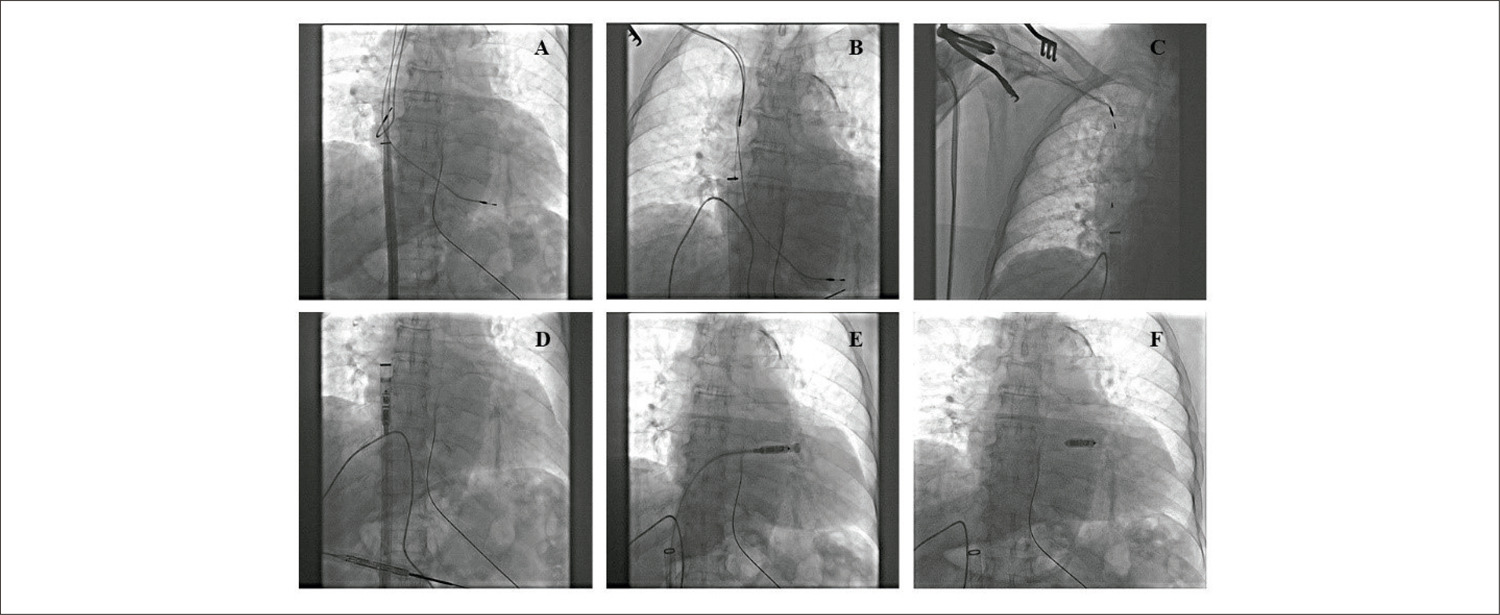
The PISA technique is a percutaneous procedure used with success in lead extraction of the CIED. This technique starts with the identification of the proximal portion of the lead. Then, a debridement is performed along the lead to achieve the site of venous insertion. Subsequently, a polypropylene dilator sheath is inserted and advanced externally up to the lead in rotational movements, while maintaining a light traction. Such movements will cause the release of adhesions around the lead, allowing, after the full advancement of the sheath, the entire lead removal.
[…]