Left ventricular synchrony and function in pediatric patients with definitive pacemakers
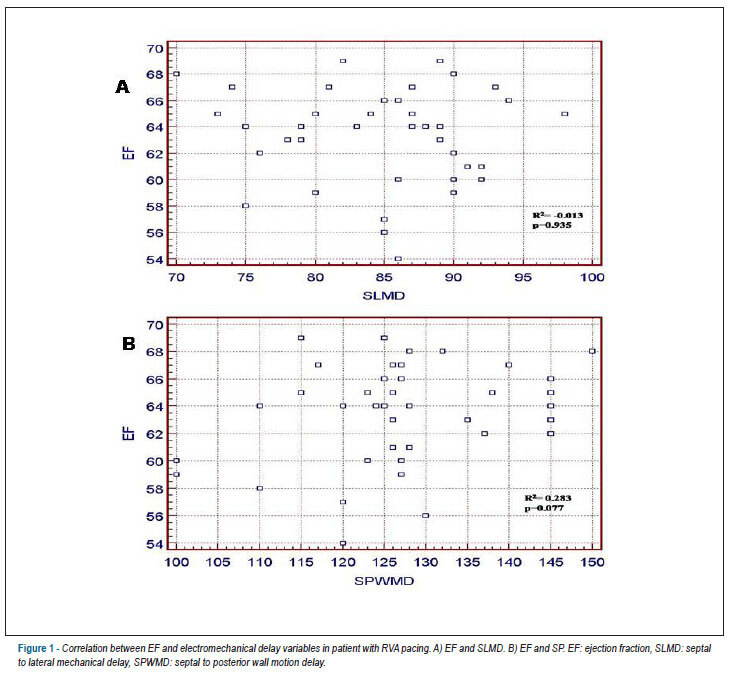
BACKGROUND: Chronic right ventricular pacing (RVP) induces a dyssynchronous contraction pattern,producing interventricular and intraventricular asynchrony. Many studies have shown the relationship of RVP with impaired left ventricular (LV) form and function. OBJECTIVE: The aim of this study was to evaluate LV synchrony and function in pediatric patients receiving RVP in comparison with those receiving LV pacing (LVP). METHODS:LV systolic and diastolic function and synchrony were evaluated in 80 pediatric patients with either nonsurgical or postsurgical complete atrioventricular block, with pacing from either the RV endocardium (n = 40) or the LV epicardium (n = 40). Echocardiographic data obtained before pacemaker implantation, immediately after it, and at the end of a mean follow-up of 6.8 years were analyzed. RESULTS: LV diastolic function did not change in any patient during follow-up. LV systolic function was preserved in patients with LVP. However, in children with RVP the shortening fraction and ejection fraction decreased from medians of 41% ± 2.6% and 70% ± 6.9% before implantation to 32% ± 4.2% and 64% ± 2.5% (p < 0.0001 and p < 0.0001), respectively, at final follow-up. Interventricular mechanical delay was significantly larger with RVP (66 ± 13 ms) than with LVP (20 ± 8 ms). Similarly, the following parameters were significantly different in the two groups: LV mechanical delay (RVP: 69 ± 6 ms, LVP: 30 ± 11 ms, p < 0.0001); septal to lateral wall motion delay (RVP: 75 ± 19 ms, LVP: 42 ± 10 ms, p < 0.0001); and, septal to posterior wall motion delay (RVP: 127 ± 33 ms, LVP: 58 ± 17 ms, p < 0.0001). CONCLUSION: Compared with RV endocardium, LV epicardium is an optimal site for pacing to preserve cardiac synchrony and function.
Images
Image gallery fullscreen viewer
Comments are moderated by the editorial team before publication. Discussions should be evidence-based and use scientific language. Conflicts of interest should be declared.