ABC Family Arquivos Brasileiros de Cardiologia International Journal of Cardiovascular Sciences ABC Heart Failure & Cardiomyopathy ABC Imagem Cardiovascular
Português English
ABC Family
Português English
  • About
    • About ABC Family
    • Internal Regulation
    • Editorial Board
    • Brazilian Society of Cardiology (SBC)
  • Issues
  • SBC Guidelines
  • Content
    • Videos
    • Podcasts
    • News
  • About
    • About ABC Family
    • Internal Regulation
    • Editorial Board
    • Brazilian Society of Cardiology (SBC)
  • Issues
  • SBC Guidelines
  • Content
    • Videos
    • Podcasts
    • News

ABC Family

  • ABC Family
  • Arquivos Brasileiros de Cardiologia
  • International Journal of Cardiovascular Sciences
  • ABC Heart Failure & Cardiomyopathy
  • ABC Imagem Cardiovascular
Search in

No content found.

Journals
Ordering
Article types
Others

  1. Home
  2. Keyword: Beta-blocker
Figure 1
ABCHF
Viewpoint

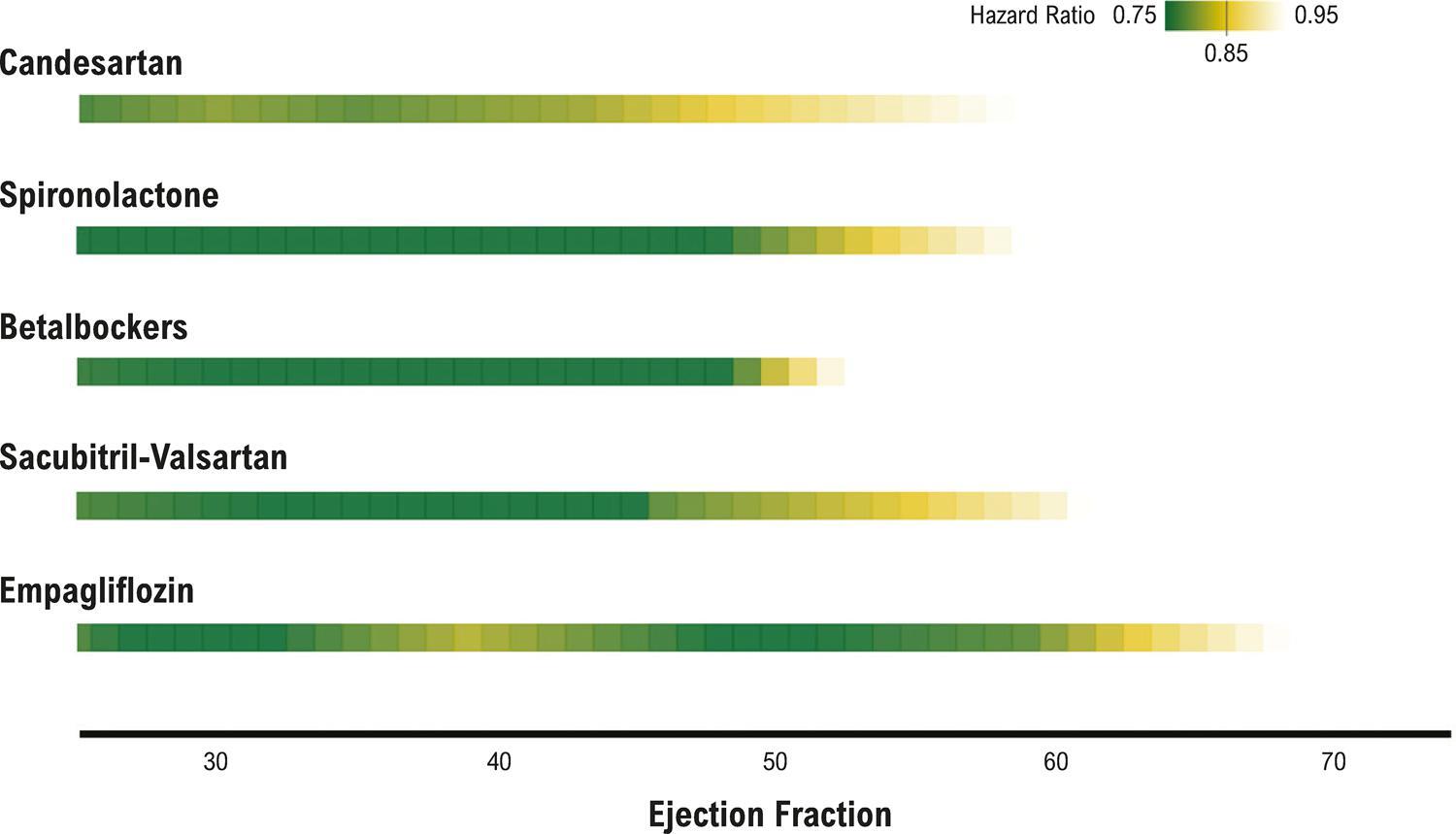
SGLT2 Inhibitors and Sacubitril-Valsartan: How Trial Results will Revolutionize the Treatment of Heart Failure with Mildly Reduced Ejection Fraction

Miguel Morita Fernandes-Silva

Left ventricular ejection fraction (EF) is a key parameter in the management of heart failure (HF) and a crucial biomarker for prognostic evaluation and therapeutic decision. Patients with HF are classified into different categories according to EF. Although the concept of “normal” EF was introduced four decades ago, the cutoff values for normal and abnormal EF have considerably varied over time. In 2016, the European Society of Cardiology HF guidelines defined HF with reduced EF (HFrEF) as patients with EF below 40%, while HF with preserved EF (HFpEF) was the category for patients with EF equal to 50% or above. To fill in the gap between the two categories, the term HF with mid-range EF was introduced. More recently, the guidelines considered more appropriate to rename this category to HF with mildly reduced EF (HFmrEF). , Why has the EF-based classification changed in recent years and how may this affect HF treatment?

In the 1980s, the first HF trials used in their design EF cutoffs to select patients with worse prognosis as an enrichment strategy, ie, they included patients based on a biomarker that improves design efficiency. Because patients with lower EF have worse prognosis and, therefore, higher rates of events, a relatively smaller sample size would be required to detect an effect. These trials used cutoff values for EF that ranged from < 45% to < 25% ( ) and were highly successful in finding effective therapies. In general, trials using a cutoff EF of < 40% consistently found drugs and devices for the treatment of HF that improved outcomes.

[…]

  • Angiotensin receptor-neprylisin Inhibitor
  • Angiotensin-converting Enzyme Inhibitor
  • Beta-blocker
  • Ejection Fraction
  • Heart Failure
  • Mineralocorticoid Receptor Antagonist
  • Sodium-glucose Cotransporter 2 Inhibitor
Read Full Article
Creative Commons Attribution (CC BY) Creative Commons license
12/04/2022 DOI: 10.36660/abchf.20220013 Views 1
Effects of metoprolol tartrate therapy in patients with heart failure
ABC
Artigo Original

Effects of metoprolol tartrate therapy in patients with heart failure

José Albuquerque de Figueiredo Neto et al. Charles Mady César Grupi

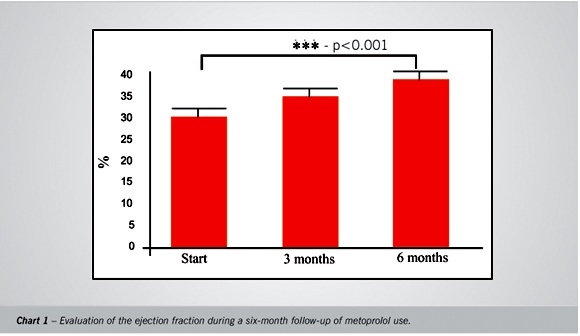
OBJECTIVE: To study the effects of metoprolol tartrate therapy in patients with heart failure. METHODS: Fifty patients (36 males) aged 52±14.8 yrs, with functional class II to IV heart failure (HF) and left ventricular ejection fraction (LVFE) < 45%, assessed by radionuclide ventriculography, were evaluated in a retrospective study. Metoprolol tartrate was added to the usual therapy, with a starting dose of 12.5 mg, which was increased weekly to a maximum of 200 mg/day, according to patients’ tolerance. Clinical evaluation, electrocardiogram, Doppler echocardiogram, 24-h Holter monitoring and radionuclide ventriculography were carried out in the pre-treatment phase and repeated three and six months after the start of therapy. RESULTS: At the end of six months, there was functional class (NYHA) improvement with a reduction from 3.04±0.11 to 1.66±0.06(p<0.001). Ejection fraction increased from 29.84+1.61% to 38.56±1.95% (p< 0.001). The left ventricular diastolic diameter showed a reduction from 67.70±1.31 mm to 63.96±1.29 mm (p<0.001), and the left ventricular systolic diameter showed a reduction from 54.80±1.67 mm to 48.58±1.38 (p0.05). Cardiac frequency decreased from 78.84±1.68 to 67.48±1.86 b.p.m. (p<0.001). CONCLUSION: The adding of metoprolol tartrate to the usual heart failure therapy is followed by an increase of ejection fraction, functional class improvement, and decrease of ventricular diameters and cardiac frequency. These results suggest anti-remodeling effects in patients with HF who utilize metoprolol tartrate in addition to the usual therapy.

  • Beta-blocker
  • Dilated Cardiomyopathy
  • Heart Failure
Read Full Article
Creative Commons Attribution (CC BY) Creative Commons license
16/10/2006 DOI: 10.1590/S0066-782X2006001600016 Views 1
ABC
Artigo Original

Strategy for identifying an efficient dosage of beta-blocker for elderly patients with myocardial ischemia and preserved left ventricular function

João Batista Serro-Azul et al. Mauricio Wajngarten Amit Nussbacher Maria C. Giorgi … José C. Meneghetti Marco A. de Oliveira Rubens Abe Creusa Dal Bó Humberto Pierri Otávio Gebara

OBJECTIVE: To assess the strategy of titration for prescribing an efficient dosage of propranolol to reduce myocardial ischemia in the elderly. METHODS: The study comprised 14 elderly men (73.6 ± 5.3 years) with stable coronary heart disease documented on coronary cineangiography, ischemic response to exercise testing, and preserved left ventricular function. Titration was performed to identify the dosage of propranolol that would cause a 15% reduction in heart rate at the end of a 50 W load (corresponding to normal daily activities in the elderly) in weekly exercise tests. Synchronous scintigraphic study of the cardiac chambers was performed at rest and during exercise prior to and after propranolol use. RESULTS: The reductions in heart rate with the 50 W load and at rest were similar (21% vs 20%; P=0.5100). Propranolol improved the duration of exercise (12.2 ± 2.0 min vs 13.1 ± 1.8 min; P=0.0313) and abolished the changes in the ST segment induced by exercise in 8 (57%) patients. At rest, the ejection fraction was not modified by the beta-blocker. During maximum exercise, propranolol reduced the end-systolic volume index and increased ejection fraction. CONCLUSION: The strategy of using beta-blockers to reduce heart rate by 15% with a 50 W load is safe and beneficial in the elderly patient with myocardial ischemia and preserved ventricular function. The dose of beta-blocker used reduced myocardial ischemia and improved tolerance to exercise without hampering ventricular performance during maximum exercise.

  • Beta-blocker
  • Elderly
  • Myocardial Ischemia
Read Full Article
Creative Commons Attribution (CC BY) Creative Commons license
12/07/2004 DOI: 10.1590/S0066-782X2004000600007
Effects of carvedilol in heart failure due to dilated cardiomyopathy. Results of a double-blind randomized placebo-controlled study (CARIBE study)
ABC
Original Article

Effects of carvedilol in heart failure due to dilated cardiomyopathy. Results of a double-blind randomized placebo-controlled study (CARIBE study)

Paulo Roberto Chizzola et al. Humberto Felício Gonçalves Freitas Márcia Azevedo Caldas Joicely Melo da Costa … Cláudio Meneghetti Norma Vasconcelos Saldanha Marinho Alfredo José Mansur José Antonio Franchini Ramires Edimar Alcides Bocchi

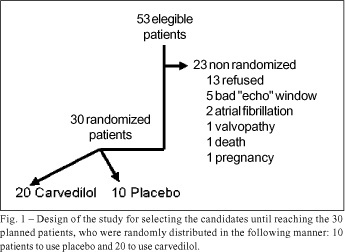
OBJECTIVE: To assess the effects of carvedilol in patients with idiopathic dilated cardiomyopathy. METHODS: In a double-blind randomized placebo-controlled study, 30 patients (7 women) with functional class II and III heart failure were assessed. Their ages ranged from 28 to 66 years (mean of 43±9 years), and their left ventricular ejection fraction varied from 8% to 35%. Carvedilol was added to the usual therapy of 20 patients; placebo was added to the usual therapy of 10 patients. The initial dose of carvedilol was 12.5 mg, which was increased weekly until it reached 75 mg/day, according to the patient’s tolerance. Clinical assessment, electrocardiogram, echocardiogram, and radionuclide ventriculography were performed in the pretreatment phase, being repeated after 2 and 6 months of medication use. RESULTS: A reduction in heart rate (p=0.016) as well as an increase in left ventricular shortening fraction (p=0.02) and in left ventricular ejection fraction (p=0.017) occurred in the group using carvedilol as compared with that using placebo. CONCLUSION: Carvedilol added to the usual therapy for heart failure resulted in better heart function.

  • Beta-blocker
  • Dilated Cardiomyopathy
  • Heart Failure
Read Full Article
Creative Commons Attribution (CC BY) Creative Commons license
08/01/2002 DOI: 10.1590/S0066-782X2000000300005 Views 1
Effects of propranolol on the QT dispersion in congestive heart failure
ABC
Original Article

Effects of propranolol on the QT dispersion in congestive heart failure

Evandro Tinoco Mesquita et al. Flávia Cristina Carvalho de Deus Cassia Regina Guedes Eduardo Reis Maia … César Gerson Pereira Subieta Humberto Villacorta Patrice Alessandra dos Santos Helena Cramer Valeria Battistella Amado dos Santos Luis José Martins Romeo

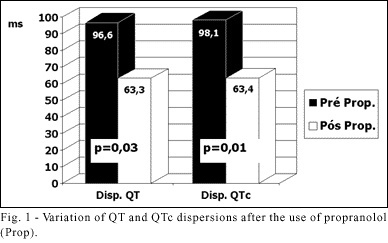
OBJECTIVE – Studies have shown that therapy with beta-blockers reduces mortality in patients with heart failure. However, there are no studies describing the effects of propranolol on the QT dispersion in this population. The objective of this study was to assess the electrophysiological profile, mainly QT dispersion, of patients with heart failure regularly using propranolol. METHODS – Fifteen patients with heart failure and using propranolol were assessed over a period of 12 months. Twelve-lead electrocardiograms (ECG) were recorded prior to the onset of beta-blocker therapy and after 3 months of drug use. RESULTS – A significant reduction in heart rate, in QT dispersion and in QTc dispersion was observed, as was also an increase in the PR interval and in the QT interval, after the use of propranolol in an average dosage of 100 mg/day. CONCLUSION – Reduction in QT dispersion in patients with heart failure using propranolol may explain the reduction in the risk of sudden cardiac death with beta-blocker therapy, in this specific group of patients.

  • Beta-blocker
  • congestive heart failure
  • Electrocardiography
Read Full Article
Creative Commons Attribution (CC BY) Creative Commons license
08/01/2002 DOI: 10.1590/S0066-782X1999000900005 Views 1

How to cite this article

EndNote RIS

Electronic Document Format (Vancouver)

Fernandes-Silva MM. SGLT2 Inhibitors and Sacubitril-Valsartan: How Trial Results will Revolutionize the Treatment of Heart Failure with Mildly Reduced Ejection Fraction. ABC Heart Fail Cardiomyop 2022;2(1):67-71.

Electronic Document Format (ABNT)

Fernandes-Silva, Miguel Morita. SGLT2 Inhibitors and Sacubitril-Valsartan: How Trial Results will Revolutionize the Treatment of Heart Failure with Mildly Reduced Ejection Fraction. ABC Heart Fail Cardiomyop, v. 2, n. 1, p. 67-71, Apr. 2022.

Electronic Document Format (APA)

Fernandes-Silva, M. M. (2022). SGLT2 Inhibitors and Sacubitril-Valsartan: How Trial Results will Revolutionize the Treatment of Heart Failure with Mildly Reduced Ejection Fraction. ABC Heart Fail Cardiomyop, 2(1), 67-71.

Electronic Document Format (ISO)

Fernandes-Silva, Miguel Morita. SGLT2 Inhibitors and Sacubitril-Valsartan: How Trial Results will Revolutionize the Treatment of Heart Failure with Mildly Reduced Ejection Fraction. ABC Heart Fail Cardiomyop [online]. 2022, vol. 2, n. 1, [cited 2026-10-14], pp. 67-71. Available from: <https://journals.cardiol.br/en/article/sglt2-inhibitors-and-sacubitril-valsartan-how-trial-results-will-revolutionize-the-treatment-of-heart-failure-with-mildly-reduced-ejection-fraction/>

EndNote RIS

Electronic Document Format (Vancouver)

Figueiredo Neto JA, Mady C, Grupi C. Effects of metoprolol tartrate therapy in patients with heart failure. Arquivos Brasileiros de Cardiologia 2006;87(3):329-35.

Electronic Document Format (ABNT)

Figueiredo Neto, José Albuquerque de; Mady, Charles; Grupi, César. Effects of metoprolol tartrate therapy in patients with heart failure. Arquivos Brasileiros de Cardiologia, v. 87, n. 3, p. 329-335, Oct. 2006.

Electronic Document Format (APA)

Figueiredo Neto, J. A. , Mady, C., & Grupi, C. (2006). Effects of metoprolol tartrate therapy in patients with heart failure. Arquivos Brasileiros de Cardiologia, 87(3), 329-335.

Electronic Document Format (ISO)

Figueiredo Neto, José Albuquerque de and Mady, Charles and Grupi, César. Effects of metoprolol tartrate therapy in patients with heart failure. Arquivos Brasileiros de Cardiologia [online]. 2006, vol. 87, n. 3, [cited 2026-10-14], pp. 329-335. Available from: <https://journals.cardiol.br/en/article/effects-of-metoprolol-tartrate-therapy-in-patients-with-heart-failure/>. ISSN 0066-782X

EndNote RIS

Electronic Document Format (Vancouver)

Serro-Azul JB, Wajngarten M, Nussbacher A, Giorgi MC, Meneghetti JC, Oliveira MA, Abe R, et al. Strategy for identifying an efficient dosage of beta-blocker for elderly patients with myocardial ischemia and preserved left ventricular function. Arquivos Brasileiros de Cardiologia 2004;82(6):551-4.

Electronic Document Format (ABNT)

Serro-Azul, João Batista; Wajngarten, Mauricio; Nussbacher, Amit; Giorgi, Maria C.; Meneghetti, José C.; Oliveira, Marco A. de; Abe, Rubens; Bó, Creusa Dal; Pierri, Humberto; Gebara, Otávio. Strategy for identifying an efficient dosage of beta-blocker for elderly patients with myocardial ischemia and preserved left ventricular function. Arquivos Brasileiros de Cardiologia, v. 82, n. 6, p. 551-554, Jul. 2004.

Electronic Document Format (APA)

Serro-Azul, J. B., Wajngarten, M., Nussbacher, A., Giorgi, M. C., Meneghetti, J. C., Oliveira, M. A. , Abe, R., Bó, C. D., Pierri, H., & Gebara, O. (2004). Strategy for identifying an efficient dosage of beta-blocker for elderly patients with myocardial ischemia and preserved left ventricular function. Arquivos Brasileiros de Cardiologia, 82(6), 551-554.

Electronic Document Format (ISO)

Serro-Azul, João Batista and Wajngarten, Mauricio and Nussbacher, Amit and Giorgi, Maria C. and Meneghetti, José C. and Oliveira, Marco A. de and Abe, Rubens and Bó, Creusa Dal and Pierri, Humberto and Gebara, Otávio. Strategy for identifying an efficient dosage of beta-blocker for elderly patients with myocardial ischemia and preserved left ventricular function. Arquivos Brasileiros de Cardiologia [online]. 2004, vol. 82, n. 6, [cited 2026-10-14], pp. 551-554. Available from: <https://journals.cardiol.br/en/article/strategy-for-identifying-an-efficient-dosage-of-beta-blocker-for-elderly-patients-with-myocardial-ischemia-and-preserved-left-ventricular-function/>. ISSN 0066-782X

EndNote RIS

Electronic Document Format (Vancouver)

Chizzola PR, Freitas HFG, Caldas MA, Costa JM, Meneghetti C, Marinho NVS, Mansur AJ, et al. Effects of carvedilol in heart failure due to dilated cardiomyopathy. Results of a double-blind randomized placebo-controlled study (CARIBE study). Arquivos Brasileiros de Cardiologia 2002;74(3):238-42.

Electronic Document Format (ABNT)

Chizzola, Paulo Roberto; Freitas, Humberto Felício Gonçalves; Caldas, Márcia Azevedo; Costa, Joicely Melo da; Meneghetti, Cláudio; Marinho, Norma Vasconcelos Saldanha; Mansur, Alfredo José; Ramires, José Antonio Franchini; Bocchi, Edimar Alcides. Effects of carvedilol in heart failure due to dilated cardiomyopathy. Results of a double-blind randomized placebo-controlled study (CARIBE study). Arquivos Brasileiros de Cardiologia, v. 74, n. 3, p. 238-242, Jan. 2002.

Electronic Document Format (APA)

Chizzola, P. R., Freitas, H. F. G., Caldas, M. A., Costa, J. M. , Meneghetti, C., Marinho, N. V. S., Mansur, A. J., Ramires, J. A. F., & Bocchi, E. A. (2002). Effects of carvedilol in heart failure due to dilated cardiomyopathy. Results of a double-blind randomized placebo-controlled study (CARIBE study). Arquivos Brasileiros de Cardiologia, 74(3), 238-242.

Electronic Document Format (ISO)

Chizzola, Paulo Roberto and Freitas, Humberto Felício Gonçalves and Caldas, Márcia Azevedo and Costa, Joicely Melo da and Meneghetti, Cláudio and Marinho, Norma Vasconcelos Saldanha and Mansur, Alfredo José and Ramires, José Antonio Franchini and Bocchi, Edimar Alcides. Effects of carvedilol in heart failure due to dilated cardiomyopathy. Results of a double-blind randomized placebo-controlled study (CARIBE study). Arquivos Brasileiros de Cardiologia [online]. 2002, vol. 74, n. 3, [cited 2026-10-14], pp. 238-242. Available from: <https://journals.cardiol.br/en/article/effects-of-carvedilol-in-heart-failure-due-to-dilated-cardiomyopathy-results-of-a-double-blind-randomized-placebo-controlled-study-caribe-study/>. ISSN 0066-782X

EndNote RIS

Electronic Document Format (Vancouver)

Mesquita ET, Deus FCC, Guedes CR, Maia ER, Subieta CGP, Villacorta H, Santos PA, et al. Effects of propranolol on the QT dispersion in congestive heart failure. Arquivos Brasileiros de Cardiologia 2002;73(3):295-8.

Electronic Document Format (ABNT)

Mesquita, Evandro Tinoco; Deus, Flávia Cristina Carvalho de; Guedes, Cassia Regina; Maia, Eduardo Reis; Subieta, César Gerson Pereira; Villacorta, Humberto; Santos, Patrice Alessandra dos; Cramer, Helena; Santos, Valeria Battistella Amado dos; Romeo, Luis José Martins. Effects of propranolol on the QT dispersion in congestive heart failure. Arquivos Brasileiros de Cardiologia, v. 73, n. 3, p. 295-298, Jan. 2002.

Electronic Document Format (APA)

Mesquita, E. T., Deus, F. C. C. , Guedes, C. R., Maia, E. R., Subieta, C. G. P., Villacorta, H., Santos, P. A. , Cramer, H., Santos, V. B. A. , & Romeo, L. J. M. (2002). Effects of propranolol on the QT dispersion in congestive heart failure. Arquivos Brasileiros de Cardiologia, 73(3), 295-298.

Electronic Document Format (ISO)

Mesquita, Evandro Tinoco and Deus, Flávia Cristina Carvalho de and Guedes, Cassia Regina and Maia, Eduardo Reis and Subieta, César Gerson Pereira and Villacorta, Humberto and Santos, Patrice Alessandra dos and Cramer, Helena and Santos, Valeria Battistella Amado dos and Romeo, Luis José Martins. Effects of propranolol on the QT dispersion in congestive heart failure. Arquivos Brasileiros de Cardiologia [online]. 2002, vol. 73, n. 3, [cited 2026-10-14], pp. 295-298. Available from: <https://journals.cardiol.br/en/article/effects-of-propranolol-on-the-qt-dispersion-in-congestive-heart-failure/>. ISSN 0066-782X

  • About ABC Family
  • Internal Regulation
  • Editorial Board
  • Brazilian Society of Cardiology (SBC)

Issues

SBC Guidelines

  • Videos
  • Podcasts
  • News