Alexandre Costa Souza et al. Bruna de Mattos Ivo Junqueira Stephanie de Azevedo Drubi Laila Caroline Gomes … Marcus Vinicius Freire Priscila Pinheiro Alessandra Ghattas Basile Marco André Moraes Sales Ricardo André Sales Pereira Guedes Carolina Thé Macêdo
Abstract
Background:
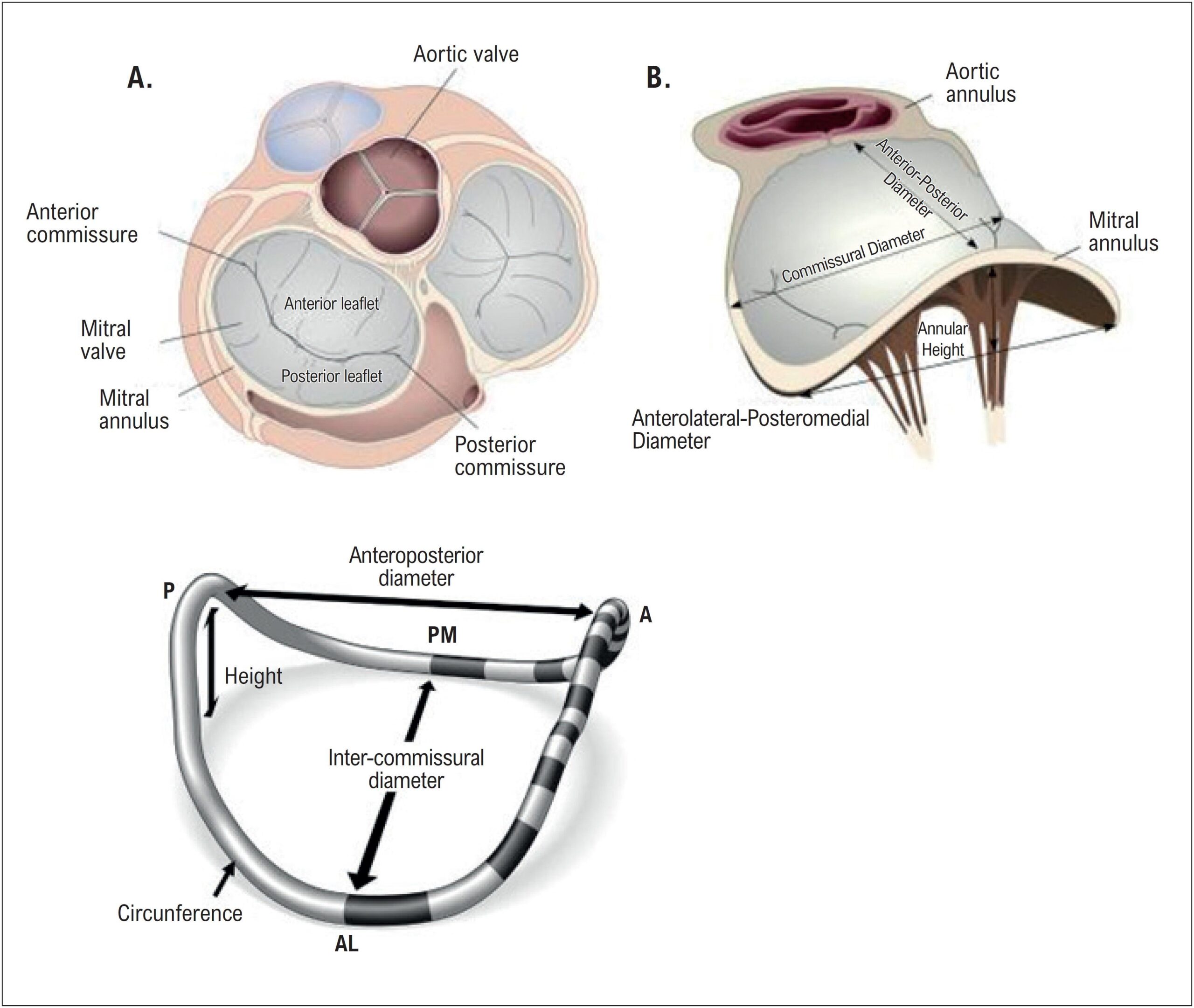
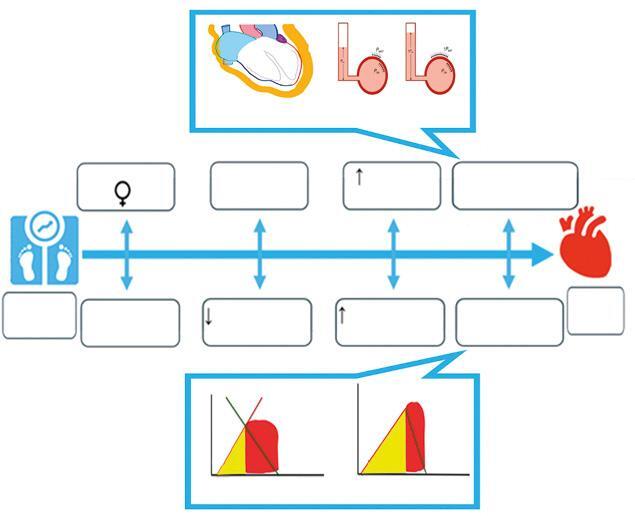
Atrial Functional Mitral Regurgitation (FMR) is defined by mitral annular dilation and functional alterations without structural impairment of the leaflets or subvalvular apparatus. It is associated with higher cardiovascular mortality, being often characterized as an exclusion diagnosis due to the absence of more precise diagnostic criteria. Therefore, it is crucial to identify markers that distinguish it from other Mitral Regurgitation (MR) types.
Objective:
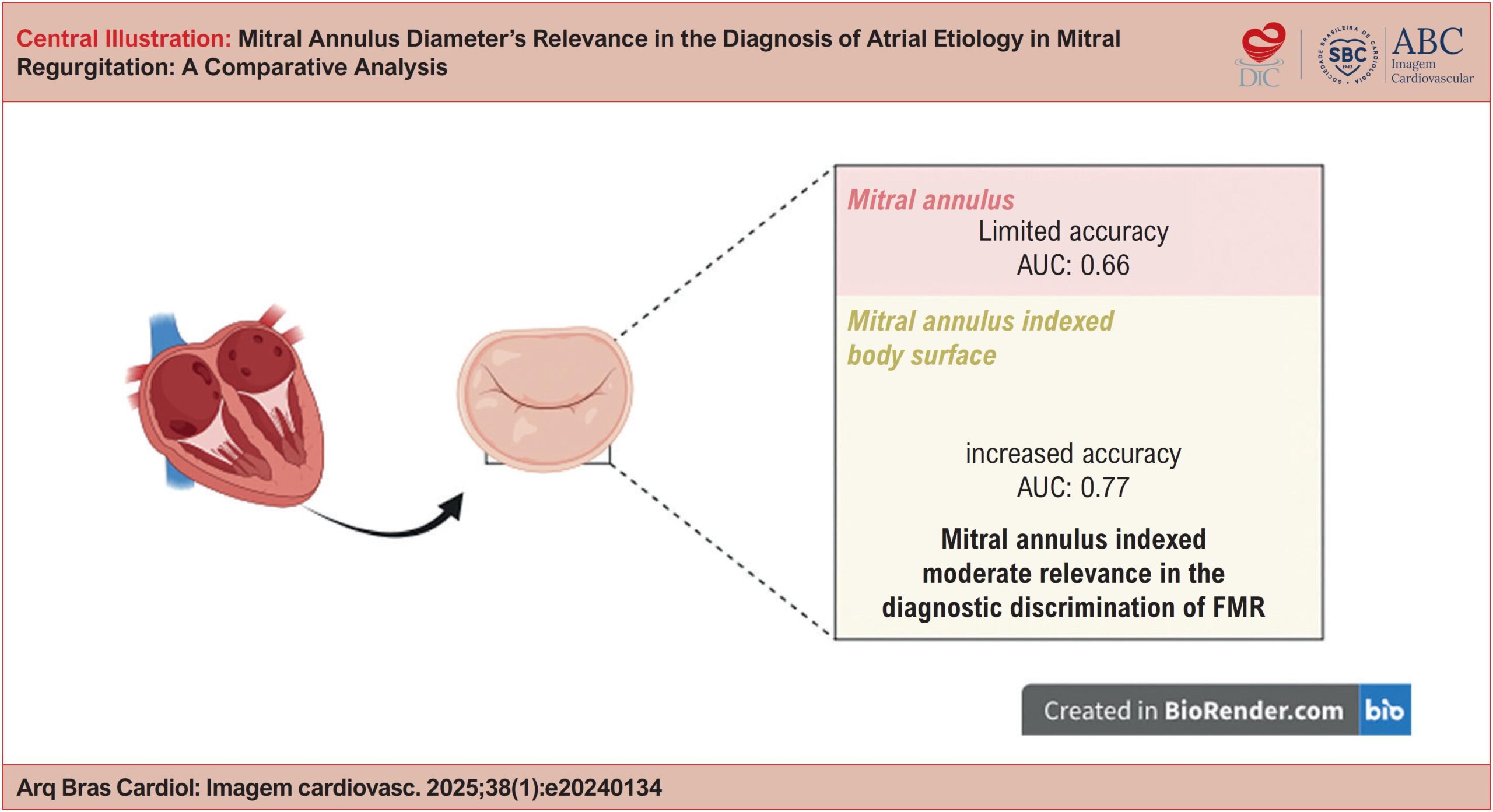
To assess the accuracy of the intercommissural diameter of the mitral annulus and its value indexed to body surface area in differentiating atrial etiology in patients with MR.
Methods:
This is an observational cross-sectional study with 109 patients diagnosed with moderate or severe MR. Data were obtained between October 2022 and January 2024, from transesophageal echocardiograms performed at a referral hospital in the city of Salvador-BA.
Results:
The mean age was 69 ± 15, with 67 males and 28 cases of atrial etiology. The comparison between patients with MR of Atrial etiology versus Non-atrial etiology revealed significantly increased diameters of the intercommissural mitral annulus and its indexed value, with considerably larger diameters in the Atrial group (p = 0.009; 95% CI: 0.501 to 3.507). The receiver operating characteristic (ROC) curve analysis identified an optimal cut-off value of 20.8750, in which the sensitivity and specificity were 67.9%.
Conclusion:
Indexing the mitral annular diameter to the body surface area improves diagnostic accuracy in identifying the atrial etiology of MR compared to diameter alone, supporting its potential role in more comprehensive diagnostic algorithms.