Mariana Laranjeira et al. Maria Inês Bertão Rodolfo Pereira Olga Sousa
Prosthetic Heart Valves, despite their improvements over the last few decades, can be subject to complications and dysfunction. Mechanical prosthetic valves have an expected lifespan of approximately 10 to 20 years, with many lasting longer. For biological valves, the lifespan is generally shorter (5 to 15 years). However, the durability varies according to individual factors, valve type, and patient health. Although their greater durability, Mechanical Heart Valves are more pro-thrombotic than biological valves, and their dysfunction may be associated, for example, with thrombotic events and the formation of pannus. Pannus is an inflammatory tissue composed of inflammatory cells, fibroblasts, and blood vessels, and its presence can lead to dysfunction or other complications such as valve obstruction or endocarditis. The prevalence of pannus in cardiac valve prostheses varies depending on several factors, such as the type of prosthesis (biological or mechanical) and the patients’ clinical conditions. It is estimated that the formation of pannus occurs in about 1% to 5% of patients with valve prostheses, although it may be more common in biological ones. The annual rate of thrombus formation can reach 5.7-8%, being higher in tricuspid and mitral valve prostheses., A multimodality-based approach can provide useful data for differential diagnosis, complementing clinical assessment and offering an appropriate and optimized therapeutic approach. Valve dysfunction, in case of delayed diagnosis, can progress to cardiogenic shock. Valvular dysfunctions can be structural (valve dysfunction due to changes related to the valve itself) or non-structural (dysfunctions not related to the valve resulting in stenosis or regurgitation, which include the formation of pannus), which arises from the accumulation of fibrous tissue in the valve, causing its dysfunction. It forms less frequently than thrombi and its risk is higher in the mitral position compared to the tricuspid.
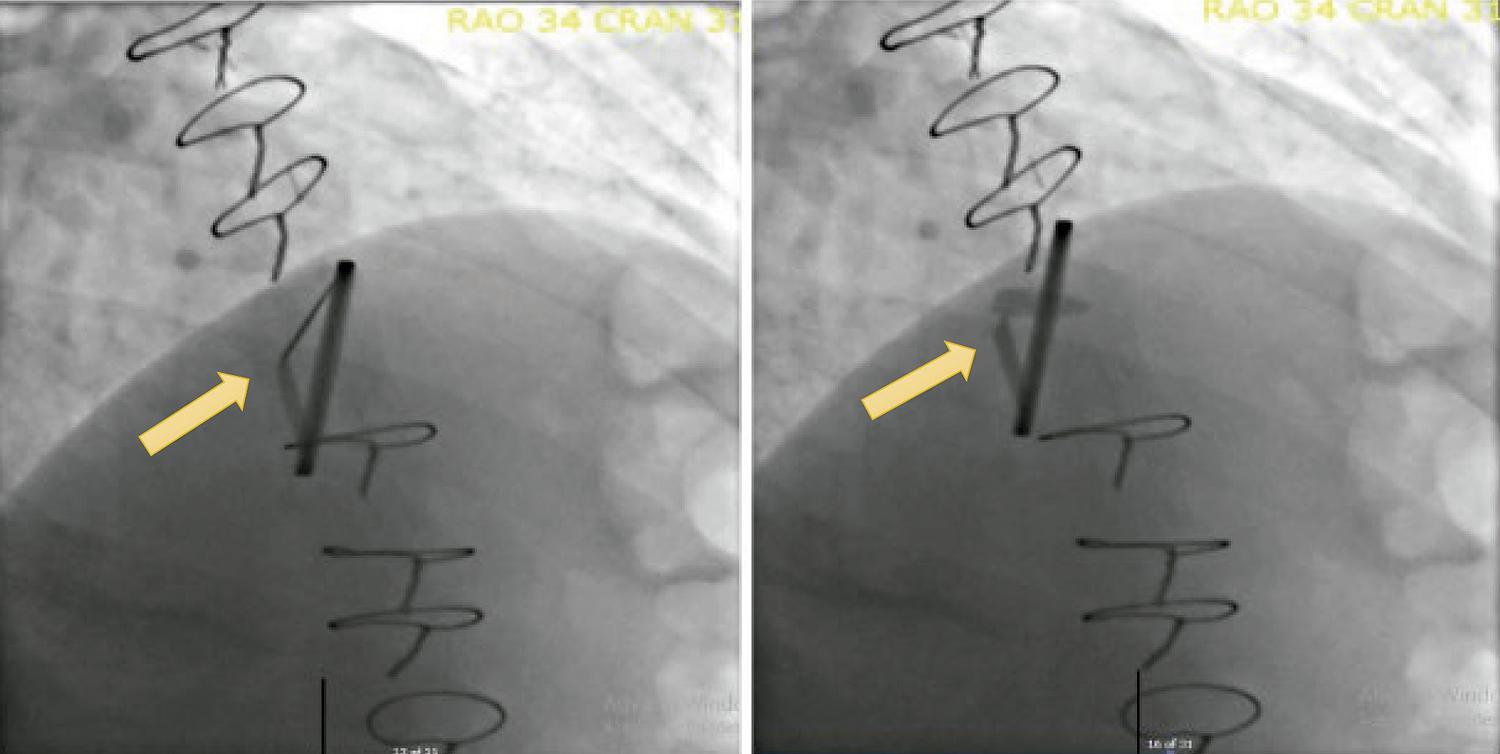
The authors present a case of mechanical mitral valve prosthesis dysfunction due to pannus. A Caucasian 43 years-old woman, with dyslipidaemia and hypertension with a history of infectious endocarditis of the mitral valve in 04/2022, presented with signs of infectious infiltration of both leaflets and severe mitral regurgitation. At this point, a cycle of antibiotic therapy was performed with ampicillin and flucloxacillin, with no agent being isolated (neither in blood cultures nor microbiological examination of the explanted valve). A double-disc mechanical valve prosthesis was implanted in the mitral position. The patients were hypocoagulated with a vitamin K antagonist (warfarin, with target INR levels of 2.5-3.5) and discharged from the hospital for outpatient follow-up.
[…]