ABC Family Arquivos Brasileiros de Cardiologia International Journal of Cardiovascular Sciences ABC Heart Failure & Cardiomyopathy ABC Imagem Cardiovascular
Português English
ABC Family
Português English
  • About
    • About ABC Family
    • Internal Regulation
    • Editorial Board
    • Brazilian Society of Cardiology (SBC)
  • Issues
  • SBC Guidelines
  • Content
    • Videos
    • Podcasts
    • News
  • About
    • About ABC Family
    • Internal Regulation
    • Editorial Board
    • Brazilian Society of Cardiology (SBC)
  • Issues
  • SBC Guidelines
  • Content
    • Videos
    • Podcasts
    • News

ABC Family

  • ABC Family
  • Arquivos Brasileiros de Cardiologia
  • International Journal of Cardiovascular Sciences
  • ABC Heart Failure & Cardiomyopathy
  • ABC Imagem Cardiovascular
Search in

No content found.

Journals
Ordering
Article types
Others

  1. Home
  2. Keyword: Embolization, Therapeutic
ABC
Editorial

Angiographic Scores in Prediction of No-Reflow, Myocardial Injury May not end with Reperfusion

Adriano Ossuna Tamazato et al. Thais Chang Valente Tamazato Cristiano Guedes Bezerra

The ST segment elevation infarction (STEMI) is usually precipitated by the rupture or erosion of an atherosclerotic plaque and the consequent formation of an occlusive thrombus. Early percutaneous coronary intervention is the treatment of choice for providing a more complete revascularization and less bleeding complications when compared to fibrinolysis.,

In the last decades, we observed a substantial development in the pharmacological and invasive treatments of STEMI, which significantly reduced early mortality. Several variables affect clinical outcomes, including patient age, time to reperfusion, angiographic complexity and the occurrence or not of the no-reflow (NR) phenomenon during percutaneous intervention., NR is defined by inadequate myocardial perfusion in a given territory, in the absence of mechanical obstruction of the epicardial coronary and is associated with a worse clinical prognosis.,

[…]

  • Atherosclerosis
  • Embolization, Therapeutic
  • Myocardial Infarction
  • Percutaneous Coronary Intervention/methods
  • Plaque, Atherosclerotic
Read Full Article
Creative Commons Attribution (CC BY) Creative Commons license
23/04/2021 DOI: 10.36660/abc.20210114 Views 1
Figure 1
ABC
Original Article

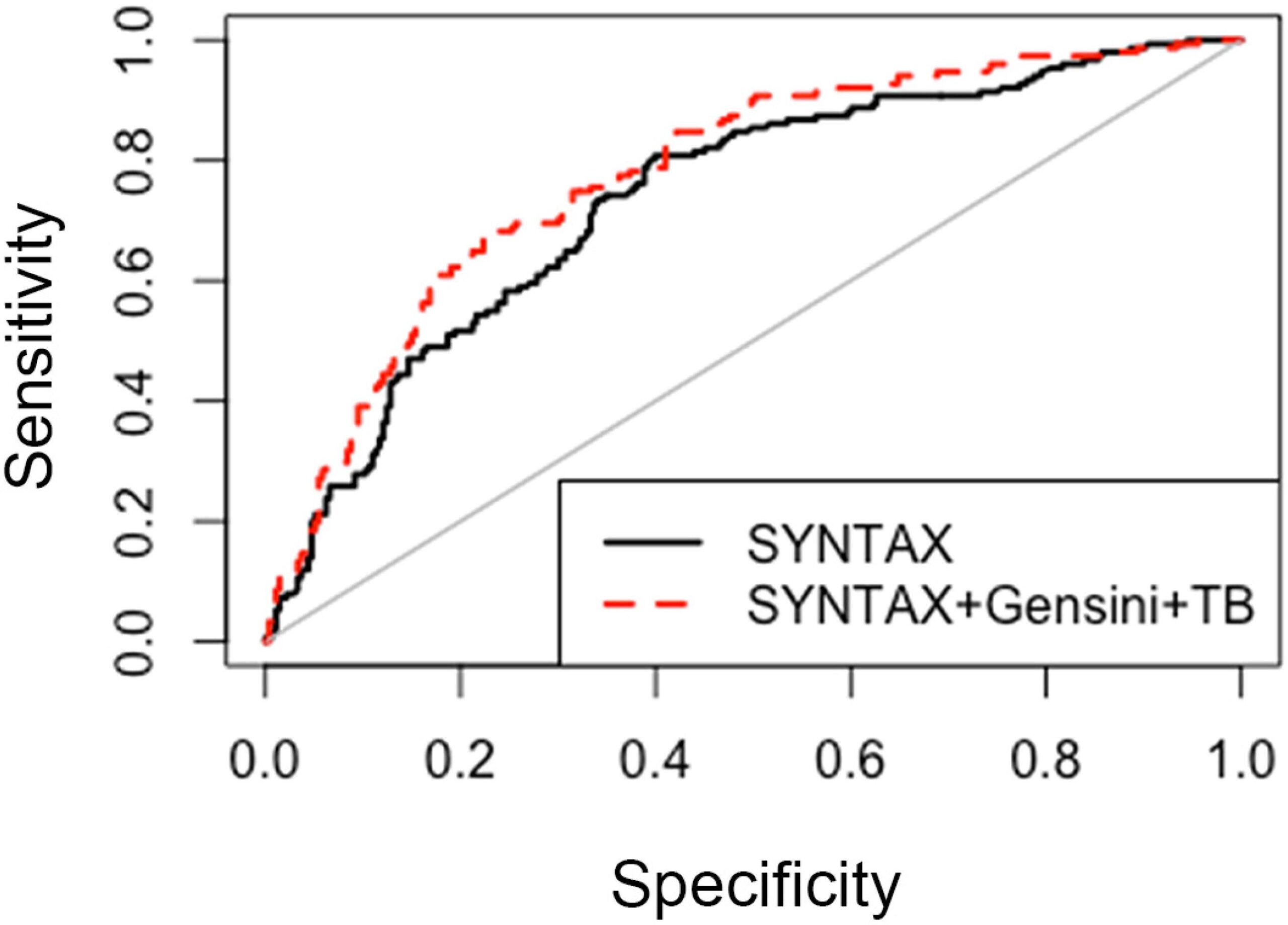
Gensini Score and Thrombus Burden Add Predictive Value to the SYNTAX Score in Detecting No-Reflow after Myocardial Infarction

Luís Carlos V Matos et al. Luiz Sergio Carvalho Rodrigo Modolo Simone Santos … José Carlos Quinaglia e Silva Osório Luis Rangel de Almeida Andrei C. Sposito

Abstract

Background

No-reflow after percutaneous coronary intervention is associated with poor prognosis in patients with ST-segment elevation myocardial infarction (STEMI). SYNTAX score is a good predictor of no-reflow.

Objective

We aimed to evaluate whether atherosclerotic burden (Gensini score) and thrombus burden in the culprit coronary artery would improve the ability of the SYNTAX score to detect no-reflow.

Methods

In this prospective cohort study, consecutive patients with STEMI who presented within 12 h of onset of symptoms were selected for this study. No-reflow was defined as TIMI flow < 3 o r TIMI flow = 3 but myocardial blush grade <2. Thrombus burden was quantified according to the TIMI thrombus grade scale (0 to 5).

Results

A total of 481 patients were included (mean age 61±11 years). No-reflow occurred in 32.8%. SYNTAX score (OR=1.05, 95%CI 1.01–1.08, p<0.01), thrombus burden (OR=1.17, 95%CI 1.06–1.31, p<0.01), and Gensini score (OR=1.37, 95%CI 1.13–1.65, p0) (0.54 [0.035–0.73], p<0.001) showed improvement in the predictive ability of no-reflow in the combined model, with integrated discrimination improvement (IDI) of 0.07 (0.04–0.09, p<0.001).

Conclusions

Our findings suggest that, in patients with STEMI undergoing percutaneous coronary intervention, atherosclerotic burden and thrombus burden in the culprit artery add predictive value to the SYNTAX score in detecting the no-reflow phenomenon. (Arq Bras Cardiol. 2021; [online].ahead print, PP.0-0)

  • Atheroscclerosis
  • Embolization, Therapeutic
  • Myocardial Infarction
  • Percutaneous Coronary Intervention/methods
  • Plaque, Atherosclerotic
  • Thrombosis
Read Full Article
Creative Commons Attribution (CC BY) Creative Commons license
26/02/2021 DOI: 10.36660/abc.20200045 Views 2
Figure 1
ABC
Case Report

A Rare Cause of Angina After Coronary Bypass Grafting; Left İnternal Mammary Artery to Pulmonary Artery Fistula and Successful Treatment with Transcatheter Coil Embolization

Ali Nazmi Calik et al. Can Yücel Karabay Evliya Akdeniz Yiğit Çanga … Baris Gungor Omer Kozan

Abstract

Fistula from left internal mammary artery (LIMA) to pulmonary artery (PA) is rarely encountered in daily practice. In recent years, endovascular therapy options have emerged for the treatment of fistula formations and replaced with surgery.

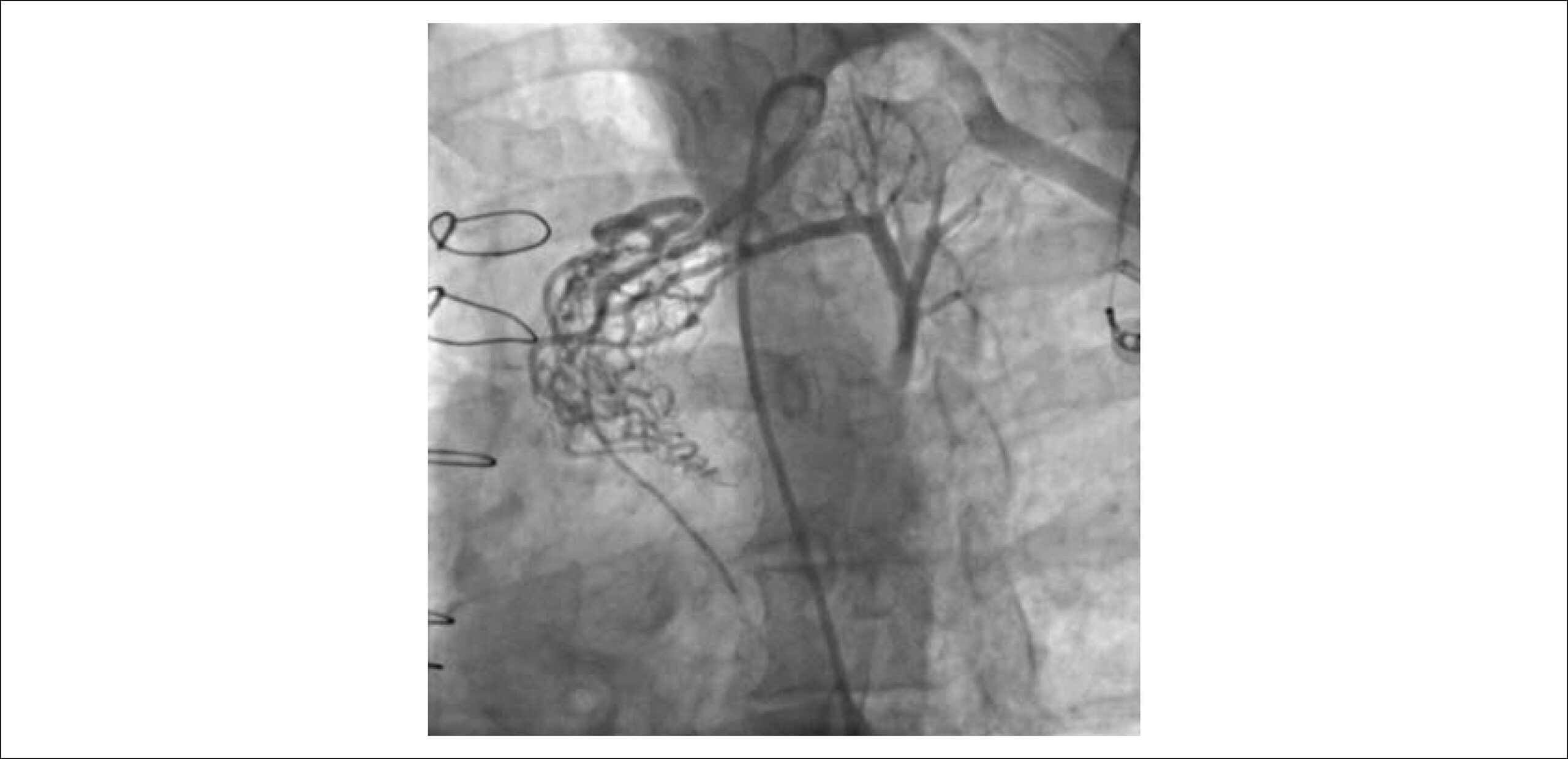
A 53-year-old man admitted to our outpatient clinic with symptoms of typical angina and shortness of breath despite optimal medical therapy. In his relevant history, he had a coronary artery bypass graft (CABG) operation in 2009 in which his LIMA was anastomosed to left anterior descending (LAD) and ramus artery sequentially. Coronary angiography including selective imaging of LIMA demonstrated a fistula formation originating from the proximal portion of the LIMA and draining to PA. After successful closure of fistula with transcatheter coil embolization, the patient was discharged without any complication and symptom.

In conclusion, although LIMA to PA fistula is an infrequent clinical condition, it should be considered as a potential cause of persistent angina after CABG operation. Treatment options include conservative medical therapy, surgical ligation and endovascular interventions. The best therapy should be individualised for each patient in respect to patient’s symptoms, surgical compatibility and anatomy of fistula.

  • Arterio-Arterial Fistula
  • Cardiac Catheterization
  • Drug-Eluting Stents
  • Embolization, Therapeutic
  • Mammary Arteries/surgery
  • Pulmonary Artery
  • Self Expandable Metallic Stents
Read Full Article
Creative Commons Attribution (CC BY) Creative Commons license
02/12/2019 DOI: 10.5935/abc.20190196 Views 2
Figure 1
IJCS
Case Report

Coronary Angioplasty with Stent in Woman with Active Vaginal Bleeding

Felipe José de Andrade Falcão et al. Fabiano Lima Cantarelli Aline Hofmann Baião Marco Rivera … Verônica Monteiro Flavio Roberto Azevedo de Oliveira

Abstract

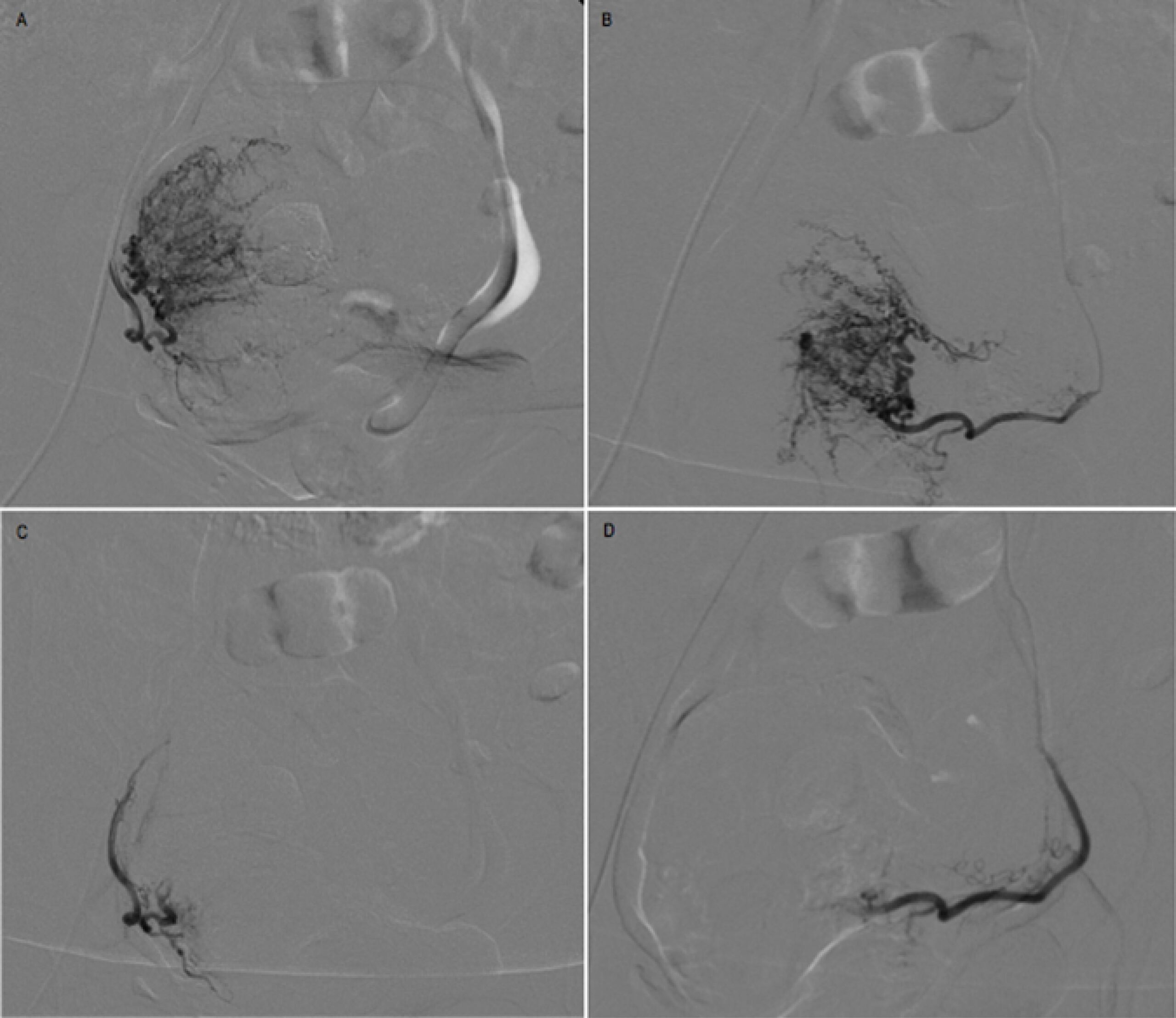
Uterine leiomyoma and coronary artery disease are two common diseases in women. However, the association of uterine bleeding caused by leiomyoma with unstable coronary syndrome is not frequent. Here we describe a case of a patient with active vaginal bleeding and unstable angina who underwent a unique approach by performing percutaneous procedures. The report demonstrates that new interventional options can be used to control active bleeding in patients in need of coronary angioplasty.

  • Angioplasty
  • Embolization, Therapeutic
  • Hemorrhage/complications
  • Leiomyoma
  • stent
  • Uterine Hemorrhage
  • Woman
Read Full Article
Creative Commons Attribution (CC BY) Creative Commons license
07/03/2019 DOI: 10.5935/2359-4802.20190008

How to cite this article

EndNote RIS

Electronic Document Format (Vancouver)

Tamazato AO, Tamazato TCV, Bezerra CG. Angiographic Scores in Prediction of No-Reflow, Myocardial Injury May not end with Reperfusion. Arquivos Brasileiros de Cardiologia 2021;116(3):473-4.

Electronic Document Format (ABNT)

Tamazato, Adriano Ossuna; Tamazato, Thais Chang Valente; Bezerra, Cristiano Guedes. Angiographic Scores in Prediction of No-Reflow, Myocardial Injury May not end with Reperfusion. Arquivos Brasileiros de Cardiologia, v. 116, n. 3, p. 473-474, Apr. 2021.

Electronic Document Format (APA)

Tamazato, A. O., Tamazato, T. C. V., & Bezerra, C. G. (2021). Angiographic Scores in Prediction of No-Reflow, Myocardial Injury May not end with Reperfusion. Arquivos Brasileiros de Cardiologia, 116(3), 473-474.

Electronic Document Format (ISO)

Tamazato, Adriano Ossuna and Tamazato, Thais Chang Valente and Bezerra, Cristiano Guedes. Angiographic Scores in Prediction of No-Reflow, Myocardial Injury May not end with Reperfusion. Arquivos Brasileiros de Cardiologia [online]. 2021, vol. 116, n. 3, [cited 2026-10-14], pp. 473-474. Available from: <https://journals.cardiol.br/en/article/angiographic-scores-in-prediction-of-no-reflow-myocardial-injury-may-not-end-with-reperfusion/>. ISSN 0066-782X

EndNote RIS

Electronic Document Format (Vancouver)

Matos LCV, Carvalho LS, Modolo R, Santos S, Silva JCQ, Almeida OLR, Sposito AC, et al. Gensini Score and Thrombus Burden Add Predictive Value to the SYNTAX Score in Detecting No-Reflow after Myocardial Infarction. Arquivos Brasileiros de Cardiologia 2021;116(3):466-72.

Electronic Document Format (ABNT)

Matos, Luís Carlos V; Carvalho, Luiz Sergio; Modolo, Rodrigo; Santos, Simone; Silva, José Carlos Quinaglia e; Almeida, Osório Luis Rangel de; Sposito, Andrei C.. Gensini Score and Thrombus Burden Add Predictive Value to the SYNTAX Score in Detecting No-Reflow after Myocardial Infarction. Arquivos Brasileiros de Cardiologia, v. 116, n. 3, p. 466-472, Feb. 2021.

Electronic Document Format (APA)

Matos, L. C. V., Carvalho, L. S., Modolo, R., Santos, S., Silva, J. C. Q. , Almeida, O. L. R. , & Sposito, A. C. (2021). Gensini Score and Thrombus Burden Add Predictive Value to the SYNTAX Score in Detecting No-Reflow after Myocardial Infarction. Arquivos Brasileiros de Cardiologia, 116(3), 466-472.

Electronic Document Format (ISO)

Matos, Luís Carlos V and Carvalho, Luiz Sergio and Modolo, Rodrigo and Santos, Simone and Silva, José Carlos Quinaglia e and Almeida, Osório Luis Rangel de and Sposito, Andrei C.. Gensini Score and Thrombus Burden Add Predictive Value to the SYNTAX Score in Detecting No-Reflow after Myocardial Infarction. Arquivos Brasileiros de Cardiologia [online]. 2021, vol. 116, n. 3, [cited 2026-10-14], pp. 466-472. Available from: <https://journals.cardiol.br/en/article/gensini-score-and-thrombus-burden-add-predictive-value-to-the-syntax-score-in-detecting-no-reflow-after-myocardial-infarction/>. ISSN 0066-782X

EndNote RIS

Electronic Document Format (Vancouver)

Calik AN, Karabay CY, Akdeniz E, Çanga Y, Gungor B, Kozan O. A Rare Cause of Angina After Coronary Bypass Grafting; Left İnternal Mammary Artery to Pulmonary Artery Fistula and Successful Treatment with Transcatheter Coil Embolization. Arquivos Brasileiros de Cardiologia 2019;113(5):1002-5.

Electronic Document Format (ABNT)

Calik, Ali Nazmi; Karabay, Can Yücel; Akdeniz, Evliya; Çanga, Yiğit; Gungor, Baris; Kozan, Omer. A Rare Cause of Angina After Coronary Bypass Grafting; Left İnternal Mammary Artery to Pulmonary Artery Fistula and Successful Treatment with Transcatheter Coil Embolization. Arquivos Brasileiros de Cardiologia, v. 113, n. 5, p. 1002-1005, Dec. 2019.

Electronic Document Format (APA)

Calik, A. N., Karabay, C. Y., Akdeniz, E., Çanga, Y., Gungor, B., & Kozan, O. (2019). A Rare Cause of Angina After Coronary Bypass Grafting; Left İnternal Mammary Artery to Pulmonary Artery Fistula and Successful Treatment with Transcatheter Coil Embolization. Arquivos Brasileiros de Cardiologia, 113(5), 1002-1005.

Electronic Document Format (ISO)

Calik, Ali Nazmi and Karabay, Can Yücel and Akdeniz, Evliya and Çanga, Yiğit and Gungor, Baris and Kozan, Omer. A Rare Cause of Angina After Coronary Bypass Grafting; Left İnternal Mammary Artery to Pulmonary Artery Fistula and Successful Treatment with Transcatheter Coil Embolization. Arquivos Brasileiros de Cardiologia [online]. 2019, vol. 113, n. 5, [cited 2026-10-14], pp. 1002-1005. Available from: <https://journals.cardiol.br/en/article/a-rare-cause-of-angina-after-coronary-bypass-grafting-left-internal-mammary-artery-to-pulmonary-artery-fistula-and-successful-treatment-with-transcatheter-coil-embolization/>. ISSN 0066-782X

EndNote RIS

Electronic Document Format (Vancouver)

Falcão FJA, Cantarelli FL, Baião AH, Rivera M, Monteiro V, Oliveira FRA. Coronary Angioplasty with Stent in Woman with Active Vaginal Bleeding. International Journal of Cardiovascular Sciences 2019;32(3):297-301.

Electronic Document Format (ABNT)

Falcão, Felipe José de Andrade; Cantarelli, Fabiano Lima; Baião, Aline Hofmann; Rivera, Marco; Monteiro, Verônica; Oliveira, Flavio Roberto Azevedo de. Coronary Angioplasty with Stent in Woman with Active Vaginal Bleeding. International Journal of Cardiovascular Sciences, v. 32, n. 3, p. 297-301, Mar. 2019.

Electronic Document Format (APA)

Falcão, F. J. A., Cantarelli, F. L., Baião, A. H., Rivera, M., Monteiro, V., & Oliveira, F. R. A. (2019). Coronary Angioplasty with Stent in Woman with Active Vaginal Bleeding. International Journal of Cardiovascular Sciences, 32(3), 297-301.

Electronic Document Format (ISO)

Falcão, Felipe José de Andrade and Cantarelli, Fabiano Lima and Baião, Aline Hofmann and Rivera, Marco and Monteiro, Verônica and Oliveira, Flavio Roberto Azevedo de. Coronary Angioplasty with Stent in Woman with Active Vaginal Bleeding. International Journal of Cardiovascular Sciences [online]. 2019, vol. 32, n. 3, [cited 2026-10-14], pp. 297-301. Available from: <https://journals.cardiol.br/en/article/coronary-angioplasty-with-stent-in-woman-with-active-vaginal-bleeding/>. ISSN 2359-4802

  • About ABC Family
  • Internal Regulation
  • Editorial Board
  • Brazilian Society of Cardiology (SBC)

Issues

SBC Guidelines

  • Videos
  • Podcasts
  • News