Clinical Implementation of Different Strategies for Exercise-Based Rehabilitation in Kidney and Liver Transplant Recipients: A Pilot Study
Abstract
Background:
Cardiovascular disease is among the leading causes of death in solid organ transplant recipients with a functional graft. Although these patients could theoretically benefit from exercise-based rehabilitation (EBR) programs, their implementation is a challenge.
Objective:
We present our initial experience on different delivery modes of a pilot EBR program in kidney and liver transplant recipients.
Methods:
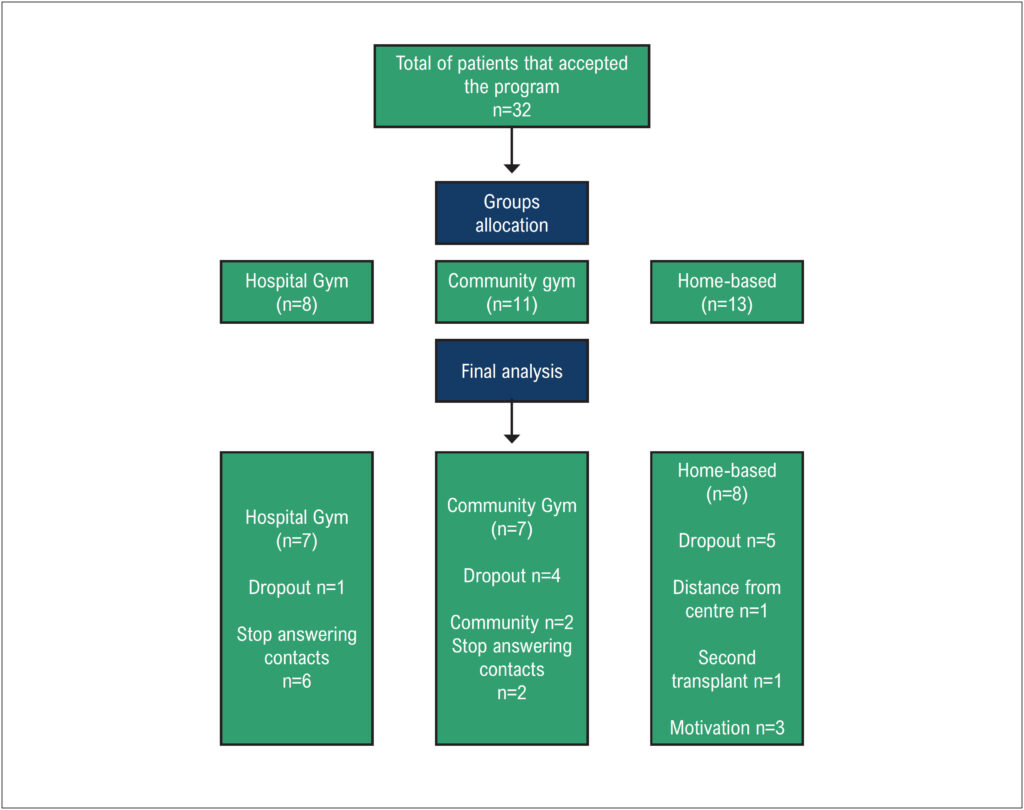
Thirty-two kidney or liver transplant recipients were invited for a 6-month EBR program delivered at the hospital gym, community gym or at home, according to the patient’s preference. The significance level adopted was 5%.
Results:
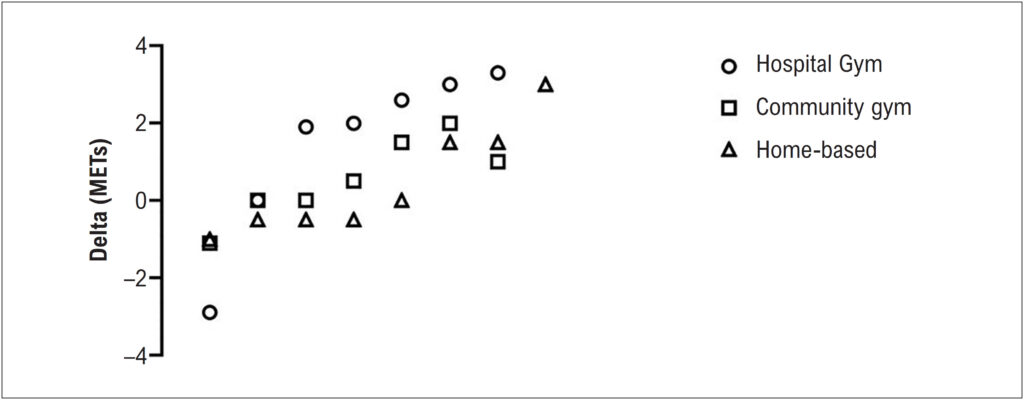
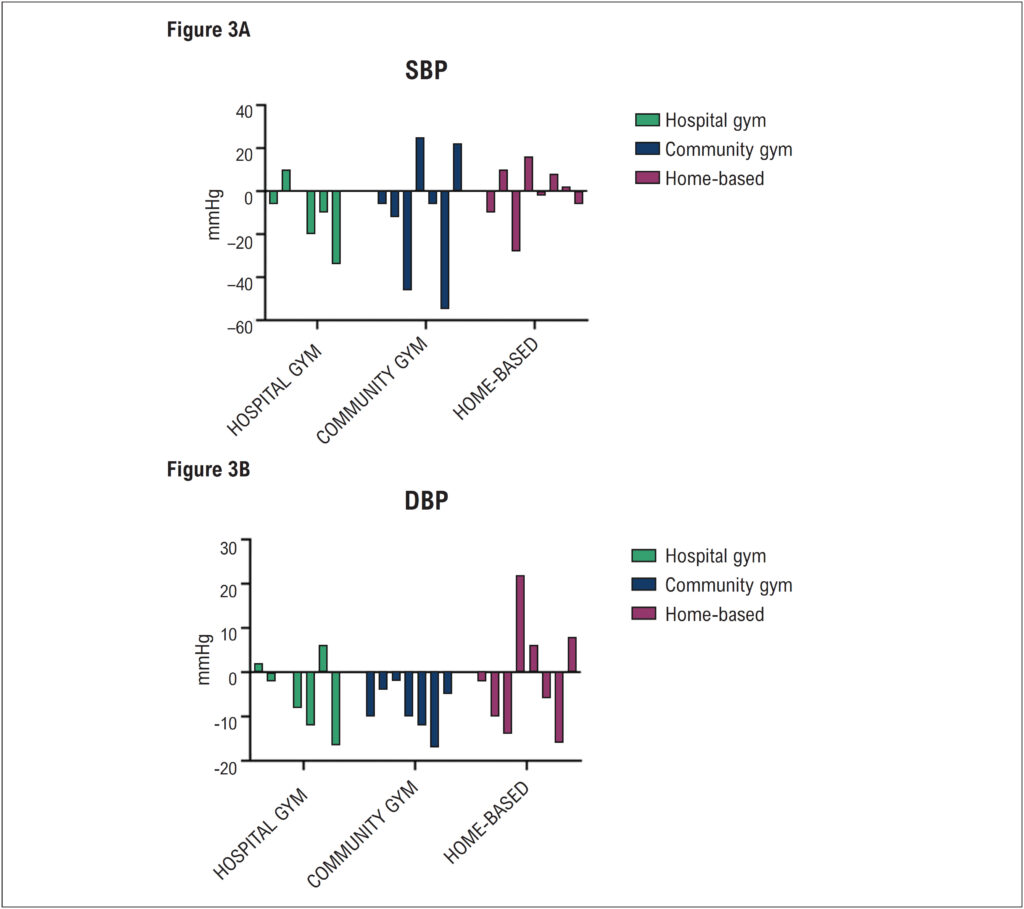
Ten patients (31%) did not complete their program. Among the 22 who did, 7 trained at the hospital gym, 7 at the community gym, and 8 at home. The overall effect was an 11.4% increase in maximum METs (Hedges’ effect size g = 0.39). The hospital gym group had an increase in METs of 25.5% (g= 0.58, medium effect size) versus 10% (g= 0.25), and 6.5% (g= 0.20) for the community gym and home groups, respectively. There was a beneficial effect on systolic and diastolic blood pressures, greater for the hospital gym (g= 0.51 and 0.40) and community gym (g= 0.60 and 1.15) groups than for the patients training at home (g= 0.07 and 0.10). No significant adverse event was reported during the follow-up.
Conclusion:
EBR programs in kidney and liver transplant recipients should be encouraged, even if they are delivered outside a hospital gym, since they are safe with positive effects on exercise capacity and cardiovascular risk factors.
Images
Image gallery fullscreen viewer
Comments are moderated by the editorial team before publication. Discussions should be evidence-based and use scientific language. Conflicts of interest should be declared.