ABC Family Arquivos Brasileiros de Cardiologia International Journal of Cardiovascular Sciences ABC Heart Failure & Cardiomyopathy ABC Imagem Cardiovascular
Português English
ABC Family
Português English
  • About
    • About ABC Family
    • Internal Regulation
    • Editorial Board
    • Brazilian Society of Cardiology (SBC)
  • Issues
  • SBC Guidelines
  • Content
    • Videos
    • Podcasts
    • News
  • About
    • About ABC Family
    • Internal Regulation
    • Editorial Board
    • Brazilian Society of Cardiology (SBC)
  • Issues
  • SBC Guidelines
  • Content
    • Videos
    • Podcasts
    • News

ABC Family

  • ABC Family
  • Arquivos Brasileiros de Cardiologia
  • International Journal of Cardiovascular Sciences
  • ABC Heart Failure & Cardiomyopathy
  • ABC Imagem Cardiovascular
Search in

No content found.

Journals
Ordering
Article types
Others

  1. Home
  2. Keyword: Angioplasty transluminal percutaneous coronary
ABC
Point of view

Angioplasty versus surgery: meta-analyses or registries?

Pedro José Negreiros de Andrade

POINT OF VIEW

[…]

  • Angioplasty transluminal percutaneous coronary
  • coronary artery bypass graft
  • Meta-Analysis
Read Full Article
Creative Commons Attribution (CC BY) Creative Commons license
13/04/2011 DOI: 10.1590/S0066-782X2010001500024
Percutaneous coronary intervention in Brazil: results from the Brazilian Public Health System
ABC
Artigo Original

Percutaneous coronary intervention in Brazil: results from the Brazilian Public Health System

Leopoldo Soares Piegas et al. Nagib Haddad

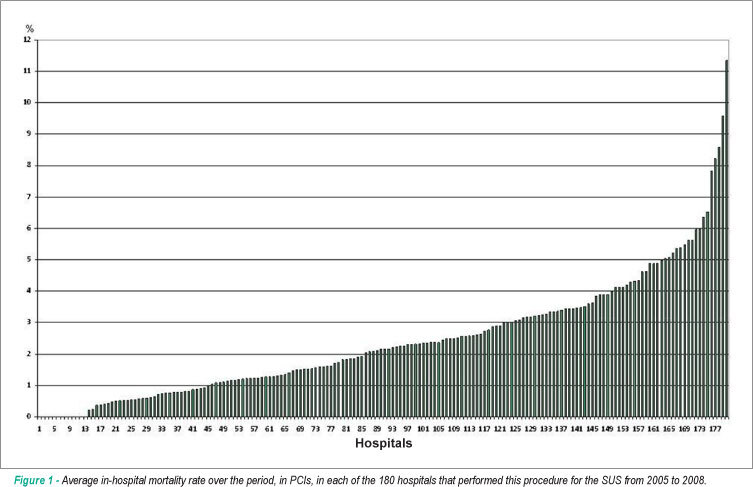
BACKGROUND: The Brazilian Public Health System (SUS) holds approximately 80% of percutaneous coronary interventions (PCI) in Brazil. Being aware of these data will enable to design a proper plan for the treatment of coronary artery disease (CAD). OBJECTIVE: To review and discuss the results of PCIs performed by the SUS. METHODS: We reviewed data from SIH/DATASUS available for public consultation. RESULTS: From 2005 to 2008, 166,514 procedures were performed in 180 hospitals. Average hospital mortality was 2.33%, ranging from 0% to 11.35%, being lower in the Southeast, 2.03% and higher in the northern region, 3.64% (p 0.05). Mortality was higher in females (p 65 to = (p < 0.001). In the diagnosis of angina (79,324, 47.64%) mortality was 1.03%, and AMI (33,286, 32.30%) 6.35% (p < 0.0000001). In the single stent implantation, the most common (102,165, 61.36%), mortality was 1.20%, and primary PCI (27,125, 16.29%), 6.96%. CONCLUSION: Although it is growing, the number of PCIs in Brazil is still low. High-volume hospitals, in smaller numbers, accounted for most procedures. Single stent implantation through hospital admission was reported to be most commonly used procedure. Mortality rates were highly variable among the hospitals. Primary PCI was responsible for the highest mortality rate.

  • Angina Pectoris
  • Angioplasty transluminal percutaneous coronary
  • Single Health System
Read Full Article
Creative Commons Attribution (CC BY) Creative Commons license
01/04/2011 DOI: 10.1590/S0066-782X2011005000035 Views 1
Clinical outcomes by geographic region for patients implanted with the zotarolimus-eluting stent
ABC
Artigo Original

Clinical outcomes by geographic region for patients implanted with the zotarolimus-eluting stent

Chaim Lotan et al. Ian T. Meredith Ajay Jain Fausto Feres … A. Firszt A. Frutos Garcia Martin T. Rothman

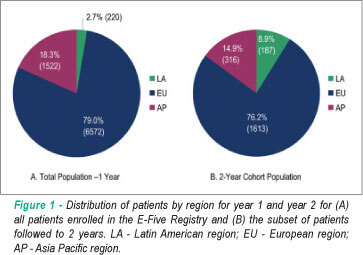
BACKGROUND: Differences between geographic regions in patient characteristics and outcomes, particularly for acute coronary syndromes, have been demonstrated in clinical trials. Clinical outcomes after percutaneous coronary interventions with the Zotarolimus-eluting stent in a real-world population were assessed over time. OBJECTIVE: The influence of geographic location on clinical outcomes with the Zotarolimus-eluting stent was assessed in 3 regions: Asia Pacific, Europe, and Latin America. METHODS: A total of 8,314 patients (6,572 Europe, 1,522 Asia Pacific, and 220 Latin America) were followed for 1 year; 2,116 of these (1,613, 316, and 187, respectively) were followed for 2 years. Patient and lesion characteristics, dual antiplatelet therapy, and clinical outcomes were compared between Latin America and the other regions. RESULTS: Patients in Latin America had the highest proportions of risk factors and prior myocardial infarction. Dual antiplatelet therapy usage rapidly declined in Latin America, from 44.9% at 6 months to 22.5% at 1 year and 7.8% at 2 years (Europe: 87.4%, 61.5%, 19.7%; Asia Pacific: 82.4%, 67.0%, 45.7%). There were no significant differences between Latin America and Europe or Asia Pacific for any outcome at either time point. The incidence of Academic Research Consortium definite and probable stent thrombosis was low (<1.2%) among all patients at 1 year and 2 years. CONCLUSION: Clinical outcomes were comparable between patients in Latin America and Europe, and Latin America and Asia Pacific, despite less favorable clinical subsets in Latin America, a higher risk profile, and markedly lower use of dual antiplatelet therapy over time.

  • Angioplasty transluminal percutaneous coronary
  • Coronary Restenosis
  • craft occlusion, vascular
  • Eluting stents
  • Multicenter Studies
Read Full Article
Creative Commons Attribution (CC BY) Creative Commons license
01/04/2011 DOI: 10.1590/S0066-782X2011005000033
Radial approach in percutaneous coronary interventions: current status in Brazil
ABC
Artigo Original

Radial approach in percutaneous coronary interventions: current status in Brazil

Pedro Beraldo de Andrade et al. Marden André Tebet Mônoca Vieira Athanazio de Andrade André Labrunie Luiz Alberto Piva e Mattos

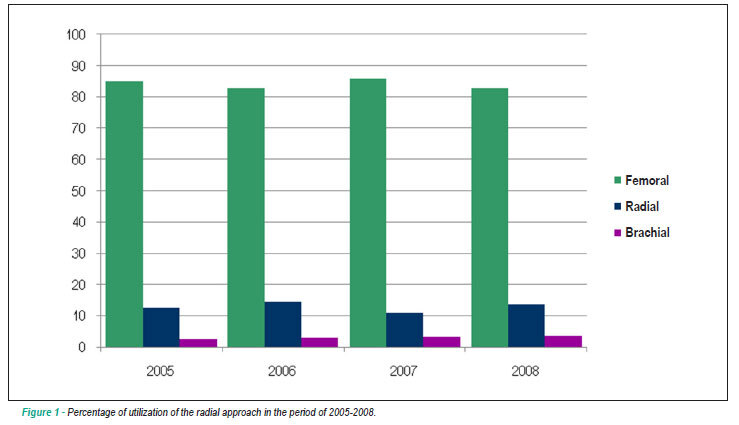
BACKGROUND: Although the radial approach offers an unquestionable result in terms of reduction of vascular complications and occurrence of severe bleeding in comparison to the femoral approach, so far it has only been used in few centers which elected it as the preferential access. OBJECTIVE: To evaluate the current status of percutaneous coronary interventions in Brazil, as regards the use of the radial approach. METHODS: Analysis of data spontaneously recorded in Central Nacional de Intervenções Cardiovasculares – CENIC (National Center for Cardiovascular Interventions) from 2005 to 2008, in a total of 83,376 procedures. RESULTS: The radial approach was used in 12.6% of the procedures performed, and the femoral approach, in 84.3%. The remaining 3.1% corresponded to brachial artery dissection or puncture. With a success rate of 97.5%, the choice of the radial approach was associated with a significant reduction of vascular complications in comparison to the femoral approach (2.5% versus 3.6 %, p < 0.0001). CONCLUSION: The radial approach remains uncommonly used in Brazil, and this is possibly explained by the lack of training programs, uncertainties regarding the learning curve, and the lack of large-scale studies corroborating the benefits demonstrated to date.

  • Angioplasty transluminal percutaneous coronary
  • Brazil
  • femoral artery
  • Medical Records
  • Radial Artery
Read Full Article
Creative Commons Attribution (CC BY) Creative Commons license
04/03/2011 DOI: 10.1590/S0066-782X2011005000026 Views 1
Angiographic evaluation of plaque volume and cardiovascular events after coronary Stent Implantation
ABC
Artigo Original

Angiographic evaluation of plaque volume and cardiovascular events after coronary Stent Implantation

Erlon Oliveira de Abreu-Silva et al. Alexandre Schaan de Quadros Marco Tulio Zanettini Carlos Antonio Gottschall

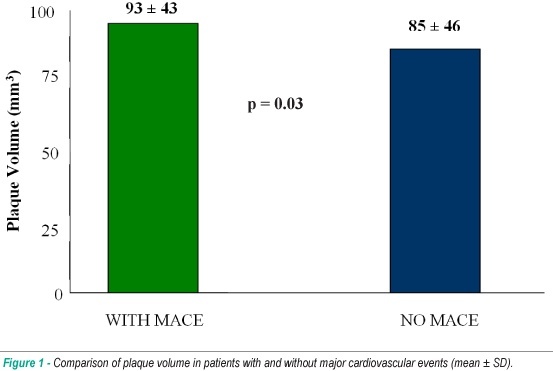
BACKGROUND: Plaque volume (PV) is related to major cardiovascular events (MACE) after coronary stent implantation. OBJECTIVE: To evaluate the association between PV before the procedure evaluated by angiography and clinical outcomes. METHODS: This is a prospective cohort study of patients undergoing coronary stent implantation in a referral center. PV before the stent implantation was evaluated by the formula described by Giugliano (Am J Cardiol 2005, 95:173): VP = À X (lesion length) X [(vessel diameter/2)² – (minimum luminal diameter/2)²]. The MACE were registered at clinical follow-up of one year and multiple linear regression analysis was performed to identify predictors of events. RESULTS: The sample consisted of 824 patients, mean age 60 ± 11 years, 70.0% were male. Diabetes mellitus was present in 21.0% and triple vessel involvement in 12.0%. Average reference diameter was 3.3 ± 3.2 mm, average lesion length was 10.2 ± 4.7 mm and mean residual stenosis was 1.0% ± 12.0%. Patients with MACE had higher PV than those without events (92.84 ± 42.85 vs 85 ± 46.85, p = 0.03). Other variables associated with MACE in the univariate analysis were triple vessel involvement, myocardial infarction, vessel diameter and length of the lesion treated. PV maintained a significant association with MACE after adjusting for the variables described and diabetes mellitus. CONCLUSION: The volume of atheromatous plaque before stenting was higher in patients with MACE on clinical follow-up in one year, regardless of other predictors of events.

  • Angioplasty transluminal percutaneous coronary
  • Coronary Angiography
  • Coronary Artery Disease
  • Stents
Read Full Article
Creative Commons Attribution (CC BY) Creative Commons license
12/11/2010 DOI: 10.1590/S0066-782X2010005000150
Lack of clopidogrel-statin interaction in patients undergoing coronary stent implantation
ABC
Artigo Original

Lack of clopidogrel-statin interaction in patients undergoing coronary stent implantation

Carlos Vicente Serrano Júnior et al. Alexandre de Matos Soeiro Leila Fernandes Araújo Bruna Jabot … Fabiana Rached Noemia Mie Orii José Carlos Nicolau Alberto J. Duarte José Antonio F. Ramires

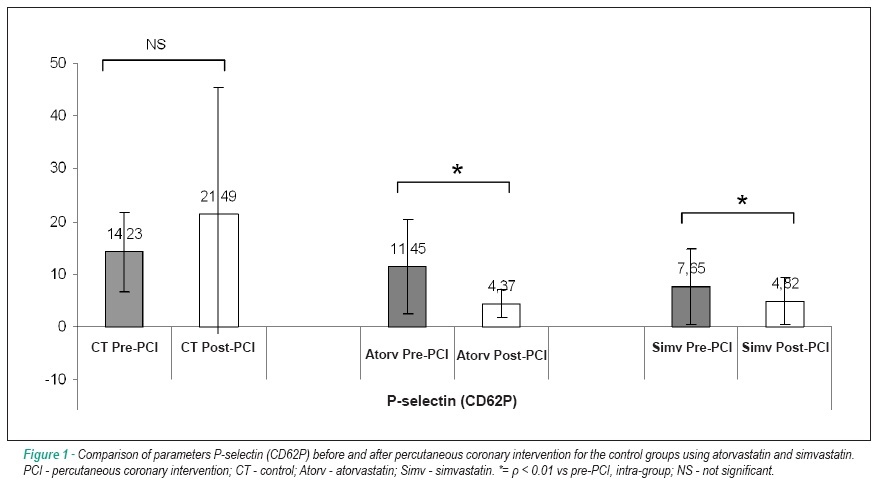
BACKGROUND: Some studies have suggested reduced activity of clopidogrel on platelet activation and adherence in patients using statins. OBJECTIVE: To assess whether platelet activation and aggregation decrease with clopidogrel, and whether there is a reduction of the action of clopidogrel when associated with atorvastatin or simvastatin. METHODS: This prospective study included 68 patients with stable angina with previous use of simvastatin, atorvastatin, or no statin (control group), with previous elective indication of percutaneous coronary intervention (PCI). Platelet activation was analyzed by means of platelet count, levels of P-selectin and glycoprotein IIb/IIIa (with and without ADP stimulation) by flow cytometry. The findings were analyzed before and after percutaneous coronary intervention and the administration of clopidogrel. RESULTS: We observed reduction in platelet activity with use of clopidogrel. Furthermore, no differences were found between the variables analyzed to prove reduced activity of clopidogrel when combined with statins. We observed levels of p-selectin (pre-angioplasty: 14.23 ± 7.52 x 8.83 x 11.45 ± 7.65 ± 7.09; after angioplasty: 21.49 ± 23.82 x 4 37 ± 2.71 x 4.82 ± 4.47, ρ < 0.01) and glycoprotein IIb/IIIa (pre-angioplasty: 98.97 ± 0.43 ± 1.25 x 98.79 x 99.21 ± 0.40 after angioplasty: 99.37 ± 0.29 ± 1.47 x 98.50 x 98.92 ± 0.88, ρ = 0.52), respectively, in the control, atorvastatin and simvastatin groups. CONCLUSION: We concluded that platelet activation decreases with administration of clopidogrel, and clopidogrel has no antiplatelet effect reduced in the presence of simvastatin or atorvastatin.

  • Angioplasty transluminal percutaneous coronary
  • Hidroxymethylglutaryl-CoA reductase inhibitors
  • simvastatin
  • Stents
Read Full Article
Creative Commons Attribution (CC BY) Creative Commons license
13/08/2010 DOI: 10.1590/S0066-782X2010005000106 Views 1
ABC
Review Article

Percutaneous coronary intervention for stable patients: is there any benefit beyond symptom relief?

Goran Stankovic

The indications for percutaneous coronary intervention (PCI) continue to evolve because of the steady improvement in technology, broadened patient and lesion selection criteria, and new evidence from clinical trials. Considerable controversy was generated by the main results from the Clinical Outcomes Utilizing Revascularization and Aggressive Drug Evaluation (COURAGE) trial, in which no difference in long-term outcome was reported for stable patients with coronary disease randomized to an initial strategy of PCI plus optimal medical therapy versus optimal medical therapy alone. In patients with chronic stable angina, medical therapy remains the cornerstone and should be optimized for all patients, while the major achievable goals of PCI are to affect symptoms, either by decreasing or preventing them, reducing the need for subsequent procedures and relieving ischemia. In patients with stable coronary artery disease, however, no reduction in death or myocardial infarction has been observed, and these limitations of PCI in this clinical setting need to be emphasized. The message from the COURAGE trial may be refined based on recently presented nuclear and angiographic sub-studies, such that patients with substantial residual ischemia on optimal medical therapy should be considered for crossover PCI, as it is associated with greater likelihood of death and myocardial infarction. However, those findings need to be confirmed by prospective evaluation before being widely accepted by the interventional community.

  • Angioplasty transluminal percutaneous coronary
  • Drug Therapy
  • Myocardial Revascularization
  • prospective studies
  • Survival
Read Full Article
Creative Commons Attribution (CC BY) Creative Commons license
13/10/2009 DOI: 10.1590/S0066-782X2009000800020
Obesity and coronary intervention: should we continue to use Body Mass Index as a risk factor?
ABC
Artigo Original

Obesity and coronary intervention: should we continue to use Body Mass Index as a risk factor?

José Carlos Estival Tarastchuk et al. Ênio Eduardo Guérios Ronaldo da Rocha Loures Bueno Paulo Maurício Piá de Andrade … Deborah Christina Nercolini João Gustavo Gongora Ferraz Eduardo Doubrawa

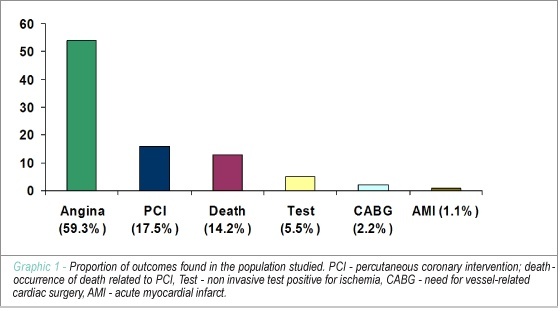
BACKGROUND: Central anthropometric indexes are better than the body mass index to discriminate elevated coronary risk. However, the Body Mass Index (BMI) is still the most frequently studied anthropometric index on outcomes of patients undergoing percutaneous coronary angioplasty (PCI). OBJECTIVE: To recognize, among several anthropometric indexes of obesity, which one best discriminates MACE (Major Adverse Cardiac Events) after PCI. METHODS: Subjects were 308 patients (mean age 61.92±11.06 years, 60.7% of them men) who had undergone successful coronary angioplasties. Six months after the procedure, patients were contacted for clinical follow-up. Major Adverse Cardiac Events included death, acute myocardial infarction, cardiac surgery, reintervention, angina, or evidence of myocardial ischemia on a non-invasive test. Patients were divided into 2 groups: Group 1 (with MACE, n=91, 29.5%), Group 2 (with no MACE, n= 217; 70.45%). For men and women, the anthropometric indexes studied and their respective cut-off points were waist circumference >90/80 cm, Waist-Hip Ratio > 0.90/0.80cm, Conicity Index > 1.25/1.18, and Body Mass Index > 30. RESULTS: There were more cases of familial history and previous infarct in Group 2. For men, waist circumference >90cm (p=0.0498) in multivariate analyses was an independent predictor of MACE. BMI was not related to MACE. In Group 1, the prevalence of an elevated BMI was significantly different compared to the other anthropometric indexes studied (p<0.0001). CONCLUSION: Waist circumference was an independent predictor of MACE in men. Body Mass Index was not related to MACE and was the least frequent anthropometric index in the MACE group.

  • Angioplasty transluminal percutaneous coronary
  • antropometry
  • body mass index
  • Obesity
Read Full Article
Creative Commons Attribution (CC BY) Creative Commons license
27/05/2008 DOI: 10.1590/S0066-782X2008000500001
ABC
Artigo Original

Randomized comparative study of diamond-like carbon coated stainless steel stent versus uncoated stent implantation in patients with coronary artery disease

George César Ximenes Meireles et al. Luciano Mauricio de Abreu Antonio Artur da Cruz Forte Marcos Kiyoshi Sumita … Jorge Hideki Sumita Jose Del Carmen Solano Aliaga

OBJECTIVE: To compare restenosis and major cardiac event rates at one and six months after DLC-coated stent implantation with those of uncoated stents. METHODS: Randomized, prospective, comparative study of 180 patients with coronary insufficiency undergoing DLC coated stent (Phytis™) or uncoated stent (Penta™) implantation, from January, 2003 to July, 2004. Inclusion criteria were: de novo lesion with >50% diameter stenosis in a coronary artery with reference diameter > 2,5 mm and < 4 mm, and length < 20 mm. Exclusion criteria were: left main coronary artery and bifurcation lesions, chronic total occlusion, and in-stent restenosis. RESULTS: Clinical and angiographic baseline characteristics of the groups were similar. Procedural success was achieved in 98.9% of the patients in both groups. One cardiac death occurred in each group during hospitalization. Reference diameter and acute gain were greater in the Penta™ group (3.21±0.37 mm vs. 3.34±0.8 mm, p=0.02 and 2.3±0.5 vs. 2.49±0.5, p=0.009, respectively). Angiographic follow-up at six months showed similar rates of restenosis (24.3% vs. 21.8%, p=0.84) and of major cardiac events (16.8% vs. 17.5%, p=1). CONCLUSION: DLC coated stents did not provide better outcomes in relation to uncoated stents.

  • Angioplasty transluminal percutaneous coronary
  • Coronary Disease
  • Coronary Restenosis
Read Full Article
Creative Commons Attribution (CC BY) Creative Commons license
24/05/2007 DOI: 10.1590/S0066-782X2007000400004
Cost-effectiveness of sirolimus-eluting stents in percutaneous coronary interventions in Brazil
ABC
Artigo Original

Cost-effectiveness of sirolimus-eluting stents in percutaneous coronary interventions in Brazil

Carisi Anne Polanczyk et al. Marco V. Wainstein Jorge Pinto Ribeiro

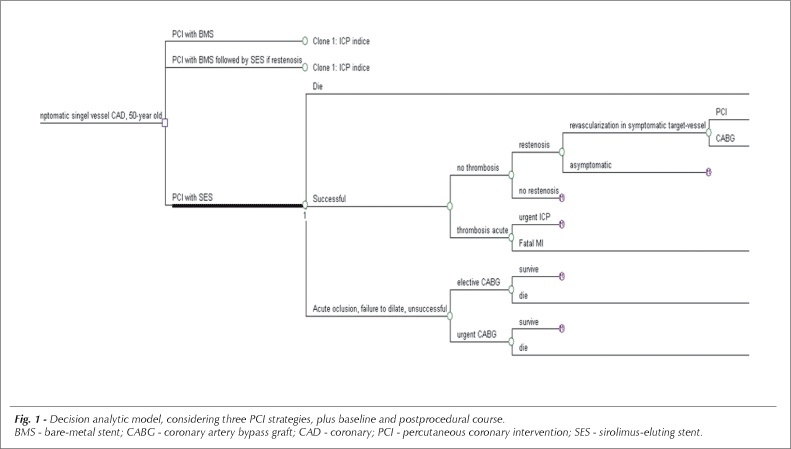
OBJECTIVES: To compare the cost-effectiveness ratios of sirolimus-eluting stents (SES) with bare-metal stents (BMS) under two perspectives: the “supplementary medical system” (health plans and private patients) and the public health (SUS) system. METHODS: A decision-analytic model using three different therapeutic strategies for coronary lesions: percutaneous coronary intervention (PCI) with BMS; with SES; or with BMS followed by SES to treat symptomatic restenosis. Study endpoints were one-year event-free survival and life expectancy. Decision trees were constructed using the results of published registries and clinical trials. RESULTS: One-year restenosis-free survival was 92.7% with SES and 78.8% with BMS. Estimated life expectancy was very similar for all the strategies, ranging from 18.5 to 19 years. Under a nonpublic perspective, the cost difference in the first year between BMS and SES was R$3,816, with an incremental cost-effectiveness ratio of R$27,403 per event avoided in one year. Under the SUS perspective, the cost per event avoided in one year was R$47,529. In the sensitivity analysis, probability of restenosis, risk reduction expected with SES, the price of the stent and cost of treating restenosis were all important predictors. In the Monte Carlo simulation, data per years of life saved showed very high cost-effectiveness ratios. CONCLUSION: In the Brazilian model, the cost-effectiveness ratios for SES were elevated. The use of SES was more favorable for patients with high risk of restenosis, as it is associated with elevated costs in restenosis management of and under a nonpublic perspective.

  • Angioplasty transluminal percutaneous coronary
  • National Health System (BR)
  • pharmacologic stents
  • Sirolimus
  • Stents
Read Full Article
Creative Commons Attribution (CC BY) Creative Commons license
24/05/2007 DOI: 10.1590/S0066-782X2007000400017 Views 1

How to cite this article

EndNote RIS

Electronic Document Format (Vancouver)

Andrade PJN. Angioplasty versus surgery: meta-analyses or registries?. Arquivos Brasileiros de Cardiologia 2011;95(5):e128-9.

Electronic Document Format (ABNT)

Andrade, Pedro José Negreiros de. Angioplasty versus surgery: meta-analyses or registries?. Arquivos Brasileiros de Cardiologia, v. 95, n. 5, p. e128-e129, Apr. 2011.

Electronic Document Format (APA)

Andrade, P. J. N. (2011). Angioplasty versus surgery: meta-analyses or registries?. Arquivos Brasileiros de Cardiologia, 95(5), e128-e129.

Electronic Document Format (ISO)

Andrade, Pedro José Negreiros de. Angioplasty versus surgery: meta-analyses or registries?. Arquivos Brasileiros de Cardiologia [online]. 2011, vol. 95, n. 5, [cited 2026-10-14], pp. e128-e129. Available from: <https://journals.cardiol.br/en/article/angioplasty-versus-surgery-meta-analyses-or-registries/>. ISSN 0066-782X

EndNote RIS

Electronic Document Format (Vancouver)

Piegas LS, Haddad N. Percutaneous coronary intervention in Brazil: results from the Brazilian Public Health System. Arquivos Brasileiros de Cardiologia 2011;96(4):317-24.

Electronic Document Format (ABNT)

Piegas, Leopoldo Soares; Haddad, Nagib. Percutaneous coronary intervention in Brazil: results from the Brazilian Public Health System. Arquivos Brasileiros de Cardiologia, v. 96, n. 4, p. 317-324, Mar. 2011.

Electronic Document Format (APA)

Piegas, L. S., & Haddad, N. (2011). Percutaneous coronary intervention in Brazil: results from the Brazilian Public Health System. Arquivos Brasileiros de Cardiologia, 96(4), 317-324.

Electronic Document Format (ISO)

Piegas, Leopoldo Soares and Haddad, Nagib. Percutaneous coronary intervention in Brazil: results from the Brazilian Public Health System. Arquivos Brasileiros de Cardiologia [online]. 2011, vol. 96, n. 4, [cited 2026-10-14], pp. 317-324. Available from: <https://journals.cardiol.br/en/article/percutaneous-coronary-intervention-in-brazil-results-from-the-brazilian-public-health-system/>. ISSN 0066-782X

EndNote RIS

Electronic Document Format (Vancouver)

Lotan C, Meredith IT, Jain A, Feres F, Firszt A, Garcia AF, Rothman MT, et al. Clinical outcomes by geographic region for patients implanted with the zotarolimus-eluting stent. Arquivos Brasileiros de Cardiologia 2011;96(5):353-62.

Electronic Document Format (ABNT)

Lotan, Chaim; Meredith, Ian T.; Jain, Ajay; Feres, Fausto; Firszt, A.; Garcia, A. Frutos; Rothman, Martin T.. Clinical outcomes by geographic region for patients implanted with the zotarolimus-eluting stent. Arquivos Brasileiros de Cardiologia, v. 96, n. 5, p. 353-362, Mar. 2011.

Electronic Document Format (APA)

Lotan, C., Meredith, I. T., Jain, A., Feres, F., Firszt, A., Garcia, A. F., & Rothman, M. T. (2011). Clinical outcomes by geographic region for patients implanted with the zotarolimus-eluting stent. Arquivos Brasileiros de Cardiologia, 96(5), 353-362.

Electronic Document Format (ISO)

Lotan, Chaim and Meredith, Ian T. and Jain, Ajay and Feres, Fausto and Firszt, A. and Garcia, A. Frutos and Rothman, Martin T.. Clinical outcomes by geographic region for patients implanted with the zotarolimus-eluting stent. Arquivos Brasileiros de Cardiologia [online]. 2011, vol. 96, n. 5, [cited 2026-10-14], pp. 353-362. Available from: <https://journals.cardiol.br/en/article/clinical-outcomes-by-geographic-region-for-patients-implanted-with-the-zotarolimus-eluting-stent/>. ISSN 0066-782X

EndNote RIS

Electronic Document Format (Vancouver)

Andrade PB, Tebet MA, Andrade MVA, Labrunie A, Mattos LAP. Radial approach in percutaneous coronary interventions: current status in Brazil. Arquivos Brasileiros de Cardiologia 2011;96(4):312-6.

Electronic Document Format (ABNT)

Andrade, Pedro Beraldo de; Tebet, Marden André; Andrade, Mônoca Vieira Athanazio de; Labrunie, André; Mattos, Luiz Alberto Piva e. Radial approach in percutaneous coronary interventions: current status in Brazil. Arquivos Brasileiros de Cardiologia, v. 96, n. 4, p. 312-316, Mar. 2011.

Electronic Document Format (APA)

Andrade, P. B. , Tebet, M. A., Andrade, M. V. A. , Labrunie, A., & Mattos, L. A. P. (2011). Radial approach in percutaneous coronary interventions: current status in Brazil. Arquivos Brasileiros de Cardiologia, 96(4), 312-316.

Electronic Document Format (ISO)

Andrade, Pedro Beraldo de and Tebet, Marden André and Andrade, Mônoca Vieira Athanazio de and Labrunie, André and Mattos, Luiz Alberto Piva e. Radial approach in percutaneous coronary interventions: current status in Brazil. Arquivos Brasileiros de Cardiologia [online]. 2011, vol. 96, n. 4, [cited 2026-10-14], pp. 312-316. Available from: <https://journals.cardiol.br/en/article/radial-approach-in-percutaneous-coronary-interventions-current-status-in-brazil/>. ISSN 0066-782X

EndNote RIS

Electronic Document Format (Vancouver)

Abreu-Silva EO, Quadros AS, Zanettini MT, Gottschall CA. Angiographic evaluation of plaque volume and cardiovascular events after coronary Stent Implantation. Arquivos Brasileiros de Cardiologia 2010;95(6):679-84.

Electronic Document Format (ABNT)

Abreu-Silva, Erlon Oliveira de; Quadros, Alexandre Schaan de; Zanettini, Marco Tulio; Gottschall, Carlos Antonio. Angiographic evaluation of plaque volume and cardiovascular events after coronary Stent Implantation. Arquivos Brasileiros de Cardiologia, v. 95, n. 6, p. 679-684, Nov. 2010.

Electronic Document Format (APA)

Abreu-Silva, E. O. , Quadros, A. S. , Zanettini, M. T., & Gottschall, C. A. (2010). Angiographic evaluation of plaque volume and cardiovascular events after coronary Stent Implantation. Arquivos Brasileiros de Cardiologia, 95(6), 679-684.

Electronic Document Format (ISO)

Abreu-Silva, Erlon Oliveira de and Quadros, Alexandre Schaan de and Zanettini, Marco Tulio and Gottschall, Carlos Antonio. Angiographic evaluation of plaque volume and cardiovascular events after coronary Stent Implantation. Arquivos Brasileiros de Cardiologia [online]. 2010, vol. 95, n. 6, [cited 2026-10-14], pp. 679-684. Available from: <https://journals.cardiol.br/en/article/angiographic-evaluation-of-plaque-volume-and-cardiovascular-events-after-coronary-stent-implantation/>. ISSN 0066-782X

EndNote RIS

Electronic Document Format (Vancouver)

Serrano Júnior CV, Soeiro AM, Araújo LF, Jabot B, Rached F, Orii NM, Nicolau JC, et al. Lack of clopidogrel-statin interaction in patients undergoing coronary stent implantation. Arquivos Brasileiros de Cardiologia 2010;95(3):321-7.

Electronic Document Format (ABNT)

Serrano Júnior, Carlos Vicente; Soeiro, Alexandre de Matos; Araújo, Leila Fernandes; Jabot, Bruna; Rached, Fabiana; Orii, Noemia Mie; Nicolau, José Carlos; Duarte, Alberto J.; Ramires, José Antonio F.. Lack of clopidogrel-statin interaction in patients undergoing coronary stent implantation. Arquivos Brasileiros de Cardiologia, v. 95, n. 3, p. 321-327, Aug. 2010.

Electronic Document Format (APA)

Serrano Júnior, C. V., Soeiro, A. M., Araújo, L. F., Jabot, B., Rached, F., Orii, N. M., Nicolau, J. C., Duarte, A. J., & Ramires, J. A. F. (2010). Lack of clopidogrel-statin interaction in patients undergoing coronary stent implantation. Arquivos Brasileiros de Cardiologia, 95(3), 321-327.

Electronic Document Format (ISO)

Serrano Júnior, Carlos Vicente and Soeiro, Alexandre de Matos and Araújo, Leila Fernandes and Jabot, Bruna and Rached, Fabiana and Orii, Noemia Mie and Nicolau, José Carlos and Duarte, Alberto J. and Ramires, José Antonio F.. Lack of clopidogrel-statin interaction in patients undergoing coronary stent implantation. Arquivos Brasileiros de Cardiologia [online]. 2010, vol. 95, n. 3, [cited 2026-10-14], pp. 321-327. Available from: <https://journals.cardiol.br/en/article/lack-of-clopidogrel-statin-interaction-in-patients-undergoing-coronary-stent-implantation/>. ISSN 0066-782X

EndNote RIS

Electronic Document Format (Vancouver)

Stankovic G. Percutaneous coronary intervention for stable patients: is there any benefit beyond symptom relief?. Arquivos Brasileiros de Cardiologia 2009;93(2):196-9.

Electronic Document Format (ABNT)

Stankovic, Goran. Percutaneous coronary intervention for stable patients: is there any benefit beyond symptom relief?. Arquivos Brasileiros de Cardiologia, v. 93, n. 2, p. 196-199, Oct. 2009.

Electronic Document Format (APA)

Stankovic, G. (2009). Percutaneous coronary intervention for stable patients: is there any benefit beyond symptom relief?. Arquivos Brasileiros de Cardiologia, 93(2), 196-199.

Electronic Document Format (ISO)

Stankovic, Goran. Percutaneous coronary intervention for stable patients: is there any benefit beyond symptom relief?. Arquivos Brasileiros de Cardiologia [online]. 2009, vol. 93, n. 2, [cited 2026-10-14], pp. 196-199. Available from: <https://journals.cardiol.br/en/article/percutaneous-coronary-intervention-for-stable-patients-is-there-any-benefit-beyond-symptom-relief/>. ISSN 0066-782X

EndNote RIS

Electronic Document Format (Vancouver)

Tarastchuk JCE, Guérios E, Bueno RRL, Andrade PMP, Nercolini DC, Ferraz JGG, Doubrawa E, et al. Obesity and coronary intervention: should we continue to use Body Mass Index as a risk factor?. Arquivos Brasileiros de Cardiologia 2008;90(5):311-6.

Electronic Document Format (ABNT)

Tarastchuk, José Carlos Estival; Guérios, Ênio Eduardo; Bueno, Ronaldo da Rocha Loures; Andrade, Paulo Maurício Piá de; Nercolini, Deborah Christina; Ferraz, João Gustavo Gongora; Doubrawa, Eduardo. Obesity and coronary intervention: should we continue to use Body Mass Index as a risk factor?. Arquivos Brasileiros de Cardiologia, v. 90, n. 5, p. 311-316, May. 2008.

Electronic Document Format (APA)

Tarastchuk, J. C. E., Guérios, E., Bueno, R. R. L., Andrade, P. M. P. , Nercolini, D. C., Ferraz, J. G. G., & Doubrawa, E. (2008). Obesity and coronary intervention: should we continue to use Body Mass Index as a risk factor?. Arquivos Brasileiros de Cardiologia, 90(5), 311-316.

Electronic Document Format (ISO)

Tarastchuk, José Carlos Estival and Guérios, Ênio Eduardo and Bueno, Ronaldo da Rocha Loures and Andrade, Paulo Maurício Piá de and Nercolini, Deborah Christina and Ferraz, João Gustavo Gongora and Doubrawa, Eduardo. Obesity and coronary intervention: should we continue to use Body Mass Index as a risk factor?. Arquivos Brasileiros de Cardiologia [online]. 2008, vol. 90, n. 5, [cited 2026-10-14], pp. 311-316. Available from: <https://journals.cardiol.br/en/article/obesity-and-coronary-intervention-should-we-continue-to-use-body-mass-index-as-a-risk-factor/>. ISSN 0066-782X

EndNote RIS

Electronic Document Format (Vancouver)

Meireles GCX, Abreu LM, Forte AAC, Sumita MK, Sumita JH, Aliaga JDCS. Randomized comparative study of diamond-like carbon coated stainless steel stent versus uncoated stent implantation in patients with coronary artery disease. Arquivos Brasileiros de Cardiologia 2007;88(4):390-5.

Electronic Document Format (ABNT)

Meireles, George César Ximenes; Abreu, Luciano Mauricio de; Forte, Antonio Artur da Cruz; Sumita, Marcos Kiyoshi; Sumita, Jorge Hideki; Aliaga, Jose Del Carmen Solano. Randomized comparative study of diamond-like carbon coated stainless steel stent versus uncoated stent implantation in patients with coronary artery disease. Arquivos Brasileiros de Cardiologia, v. 88, n. 4, p. 390-395, May. 2007.

Electronic Document Format (APA)

Meireles, G. C. X., Abreu, L. M. , Forte, A. A. C., Sumita, M. K., Sumita, J. H., & Aliaga, J. D. C. S. (2007). Randomized comparative study of diamond-like carbon coated stainless steel stent versus uncoated stent implantation in patients with coronary artery disease. Arquivos Brasileiros de Cardiologia, 88(4), 390-395.

Electronic Document Format (ISO)

Meireles, George César Ximenes and Abreu, Luciano Mauricio de and Forte, Antonio Artur da Cruz and Sumita, Marcos Kiyoshi and Sumita, Jorge Hideki and Aliaga, Jose Del Carmen Solano. Randomized comparative study of diamond-like carbon coated stainless steel stent versus uncoated stent implantation in patients with coronary artery disease. Arquivos Brasileiros de Cardiologia [online]. 2007, vol. 88, n. 4, [cited 2026-10-14], pp. 390-395. Available from: <https://journals.cardiol.br/en/article/randomized-comparative-study-of-diamond-like-carbon-coated-stainless-steel-stent-versus-uncoated-stent-implantation-in-patients-with-coronary-artery-disease/>. ISSN 0066-782X

EndNote RIS

Electronic Document Format (Vancouver)

Polanczyk CA, Wainstein MV, Ribeiro JP. Cost-effectiveness of sirolimus-eluting stents in percutaneous coronary interventions in Brazil. Arquivos Brasileiros de Cardiologia 2007;88(4):464-7.

Electronic Document Format (ABNT)

Polanczyk, Carisi Anne; Wainstein, Marco V.; Ribeiro, Jorge Pinto. Cost-effectiveness of sirolimus-eluting stents in percutaneous coronary interventions in Brazil. Arquivos Brasileiros de Cardiologia, v. 88, n. 4, p. 464-474, May. 2007.

Electronic Document Format (APA)

Polanczyk, C. A., Wainstein, M. V., & Ribeiro, J. P. (2007). Cost-effectiveness of sirolimus-eluting stents in percutaneous coronary interventions in Brazil. Arquivos Brasileiros de Cardiologia, 88(4), 464-474.

Electronic Document Format (ISO)

Polanczyk, Carisi Anne and Wainstein, Marco V. and Ribeiro, Jorge Pinto. Cost-effectiveness of sirolimus-eluting stents in percutaneous coronary interventions in Brazil. Arquivos Brasileiros de Cardiologia [online]. 2007, vol. 88, n. 4, [cited 2026-10-14], pp. 464-474. Available from: <https://journals.cardiol.br/en/article/cost-effectiveness-of-sirolimus-eluting-stents-in-percutaneous-coronary-interventions-in-brazil/>. ISSN 0066-782X

  • About ABC Family
  • Internal Regulation
  • Editorial Board
  • Brazilian Society of Cardiology (SBC)

Issues

SBC Guidelines

  • Videos
  • Podcasts
  • News