ABC Family Arquivos Brasileiros de Cardiologia International Journal of Cardiovascular Sciences ABC Heart Failure & Cardiomyopathy ABC Imagem Cardiovascular
Português English
ABC Family
Português English
  • About
    • About ABC Family
    • Internal Regulation
    • Editorial Board
    • Brazilian Society of Cardiology (SBC)
  • Issues
  • SBC Guidelines
  • Content
    • Videos
    • Podcasts
    • News
  • About
    • About ABC Family
    • Internal Regulation
    • Editorial Board
    • Brazilian Society of Cardiology (SBC)
  • Issues
  • SBC Guidelines
  • Content
    • Videos
    • Podcasts
    • News

ABC Family

  • ABC Family
  • Arquivos Brasileiros de Cardiologia
  • International Journal of Cardiovascular Sciences
  • ABC Heart Failure & Cardiomyopathy
  • ABC Imagem Cardiovascular
Search in

No content found.

Journals
Ordering
Article types
Others

  1. Home
  2. Keyword: Surveys and Questionnaires
IJCS
Original Article

The Challenges of Implementing a Text Message Intervention to Promote Behavioral Change in Primary Care Patients With Hypertension and Diabetes

João Antonio de Queiroz Oliveira et al. Christiane Cimini Vania Almeida Junia Xavier Maia … Raissa Eda Resende Leticia Alves Gualberto Pedro Henrique Lauar Santos Paulo R. Gomes Leonardo Bonisson Maria Cristina Paixão Janaina Moutinho Costa Clareci Silva Cardoso Karla Santo Antonio Ribeiro Maria Auxiliadora Martins Milena S. Marcolino

Abstract

Background

Controlling blood pressure and glycemic levels is a challenge that requires innovative solutions.

Objective

To assess the feasibility of implementing a text message intervention among low-income primary care patients, as well as to assess self-reported behavioral change.

Methods

A set of 200 text messages was developed on healthy eating, physical activity, adherence, and motivation. Participants from Vale do Mucuri, MG, Brazil diagnosed with diabetes or hypertension or undergoing screening for those diseases, received 5 to 8 messages per week for 6 months. They answered a questionnaire to report their satisfaction and behavioral changes.

Results

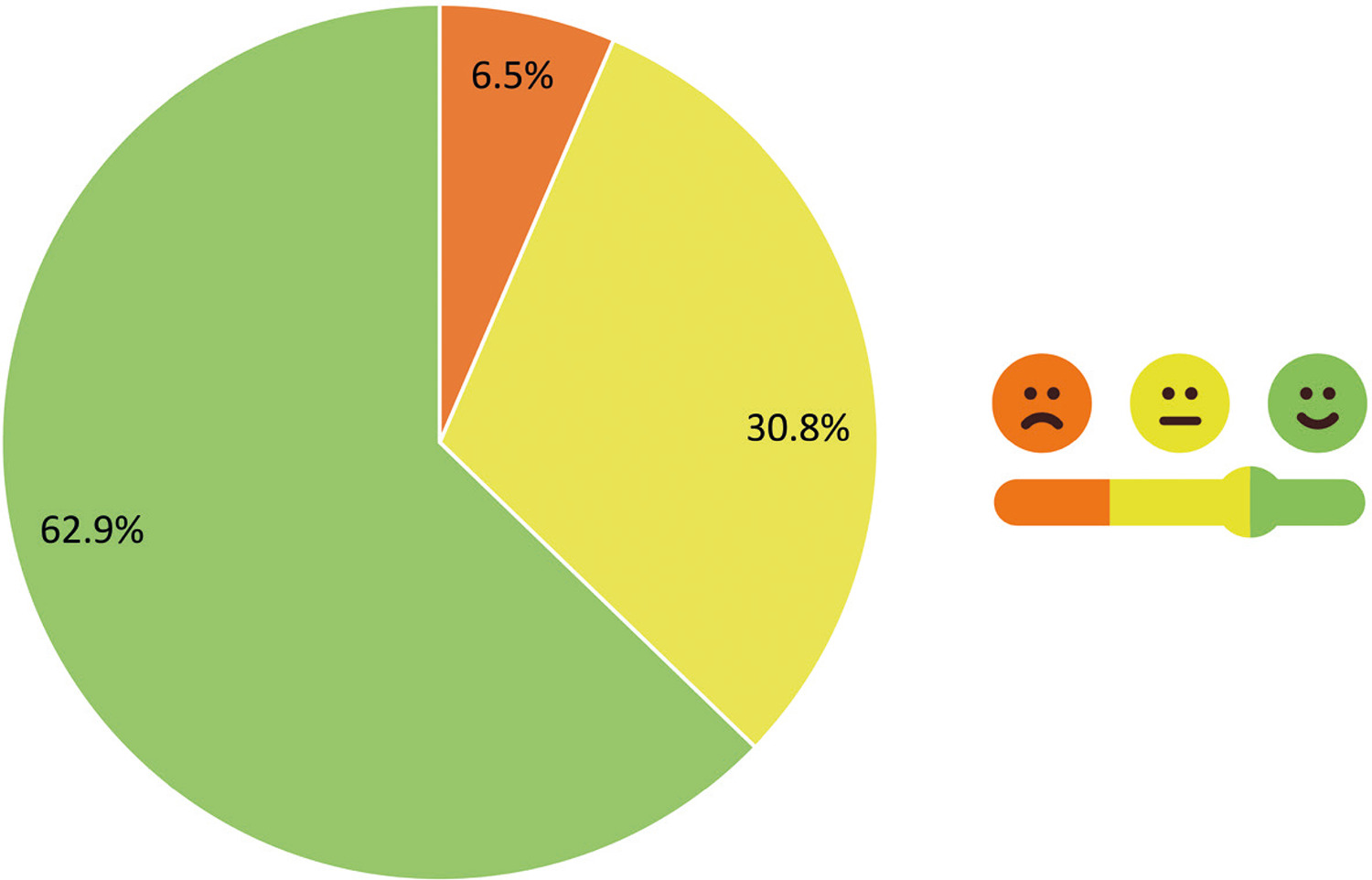
Of the 136 patients, 117 (86.0%) answered the questionnaire. Most reported that the messages were very useful (86.3%), easy to understand (90.6%), and were very helpful for behavioral change (65.0%); 84.6% reported that they had started eating healthier. The most frequent reported lifestyle changes were: improved diet quality (85.5%), reduced portions (65.8%), and weight loss (56.4%). The majority of patients shared the messages (60.7%) with family or other acquaintances, considered the number of messages to be adequate (89.7%) and would recommend the program to others (95.7%).

Conclusion

An intervention based on text messages to promote behavioral change in patients with hypertension or diabetes in primary care is feasible in low-resource settings. Future studies are needed to assess the program’s long-term effects on clinical outcomes.
  • Arterial Pressure/prevention and control
  • Blood Glicose/prevention and control
  • Hypertension/prevention and control
  • Lifestyle
  • Physical activity
  • Surveys and Questionnaires
Read Full Article
Creative Commons Attribution (CC BY) Creative Commons license
03/04/2023 DOI: 10.36660/ijcs.20220050 Views 1
Figure 1
ABC
Original Article

Impact of COVID-19’s on Cardiovascular Rehabilitation Programs in Brazil: An Online Survey-Based Cross-Sectional Study

Iara de Sousa Cezário Jardim et al. Mauricio Milani Isac Castro Dominique Hansen … Marlus Karsten Lawrence Patrick Cahalin Graziella França Bernardelli Cipriano Gerson Cipriano Jr

Abstract

Background

The COVID-19 pandemic had an impact on cardiovascular rehabilitation (CR) programs in Brazil.

Objectives

To describe the characteristics of CR programs in Brazil, the impacts of the first epidemiological wave of COVID-19 (first 60 days) on the programs and present the initiatives used to overcome the impacts.

Method

This cross-sectional and retrospective study utilized a specific online survey. Participants were coordinators of CR programs. Variables were presented by Brazilian geographic region and as the following categories: demographic, clinical and operational characteristics. The significance level for statistical analysis was set at 5%.

Results

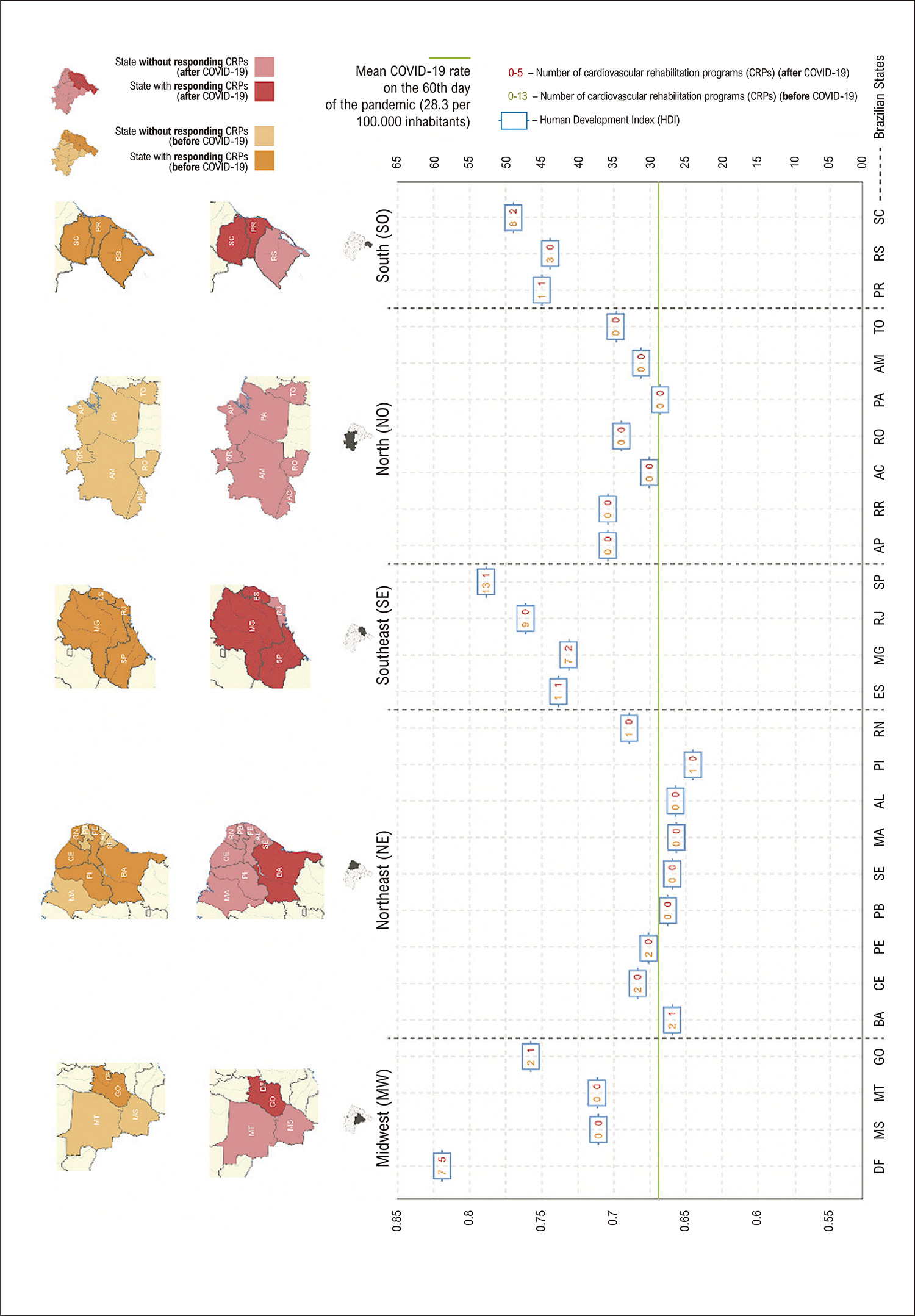
Fifty-nine CR programs were responsible for 5,349 patients, of which only 1,817 were post-acute cardiovascular events, which corresponded to 1.99% of hospitalized patients in the month prior to the survey (n=91,231). The greatest impact was the suspension of on-site activities, which occurred similarly in areas with the highest and the lowest rates of COVID-19 in the period. Forty-five programs (75%) were shortly interrupted, while three (5%) were ended. All 42 programs that already used remote rehabilitation strategies noticed a substantial increase in activities, based primarily on the use of media and video calling. Only three (5%) considered safe to see patients during the first 60 days.

Conclusions

There was a reduction in the number of CR programs with the COVID-19 pandemic. Telerehabilitation activities increased during the first two months of the COVID-19 pandemic, but this was not enough to overcome the reduction in CR program activities across Brazil.

  • COVID-19
  • Research
  • Surveys and Questionnaires
  • Telerehabilitation
Read Full Article
Creative Commons Attribution (CC BY) Creative Commons license
10/03/2023 DOI: 10.36660/abc.20220135 Views 1
Figure 1
ABC
Original Article

Perceptions of Cardiac Rehabilitation Participants Regarding their Health Behaviors and Information Needs during the COVID-19 Pandemic in Brazil

Gabriela L.M Ghisi et al. Rafaella Z. Santos Andrea S. Korbes Cícero Augusto de Souza … Marlus Karsten Paul Oh Magnus Benetti

Abstract

Background

COVID-19 has impacted how people receive health care for many conditions, including cardiovascular diseases.

Objectives

To examine perceptions of cardiac rehabilitation (CR) participants regarding their health behaviors and information needs during the COVID-19 pandemic in Brazil.

Methods

In this cross-sectional study, a 27-item questionnaire, developed by the investigators, was administered online to participants from two CR programs. Questions included health literacy (HL; using the Brief Health Literacy Screening Tool), technology use, perceptions before and during the COVID-19 pandemic, and information needs. Pearson correlation coefficients, paired t-tests, and ANOVA were used as appropriate. P < 0.05 was considered statistically significant for all tests.

Results

Overall, 159 (25.5%) CR participants answered the questionnaire. Of these, 89.9% had limited or marginal HL and 96.2% reported having internet access at home. Patients are mainly concerned about their family’s health and their own, as well as how the coronavirus is dangerous to their health and how it has changed their lifestyle. Participants perceived that the quality of their health behaviors significantly decreased during the pandemic. The pandemic also changed information needs of CR participants as new needs emerged, such as the control of anxiety levels, staying motivated to live healthily during a pandemic, and how COVID-19 can impact their health condition. Participants with adequate HL significantly perceived the severity of the disease and having access to information significantly more than those with limited HL.

Conclusions

Our results highlighted the impact of the pandemic on CR participants’ perceptions regarding their health behaviors and information needs, which can be influenced by HL levels.

  • Cardiac Rehabilitation
  • COVID-19
  • Health Literacy
  • Needs Assessment
  • Surveys and Questionnaires
Read Full Article
Creative Commons Attribution (CC BY) Creative Commons license
04/04/2022 DOI: 10.36660/abc.20210447
Figure 1
ABC
Original Article

Patients' Preferences after Recurrent Coronary Narrowing: Discrete Choice Experiments

Carlos Alberto da Silva Magliano et al. Andrea Liborio Monteiro Amanda Rebeca de Oliveira Rebelo Giovanna Francisconi Santos … Claudia Cristina de Aguiar Pereira Nikolas Krucien Roberto Magalhães Saraiva

Abstract

Background:

Selecting the optimal treatment strategy for coronary revascularization is challenging. A crucial endpoint to be considered when making this choice is the necessity to repeat revascularization since it is much more frequent after percutaneous coronary intervention (PCI) than after coronary artery bypass grafting (CABG).

Objective:

This study intends to provide insights on patients’ preferences for revascularization, strategies in the perspective of patients who had to repeat revascularization.

Methods:

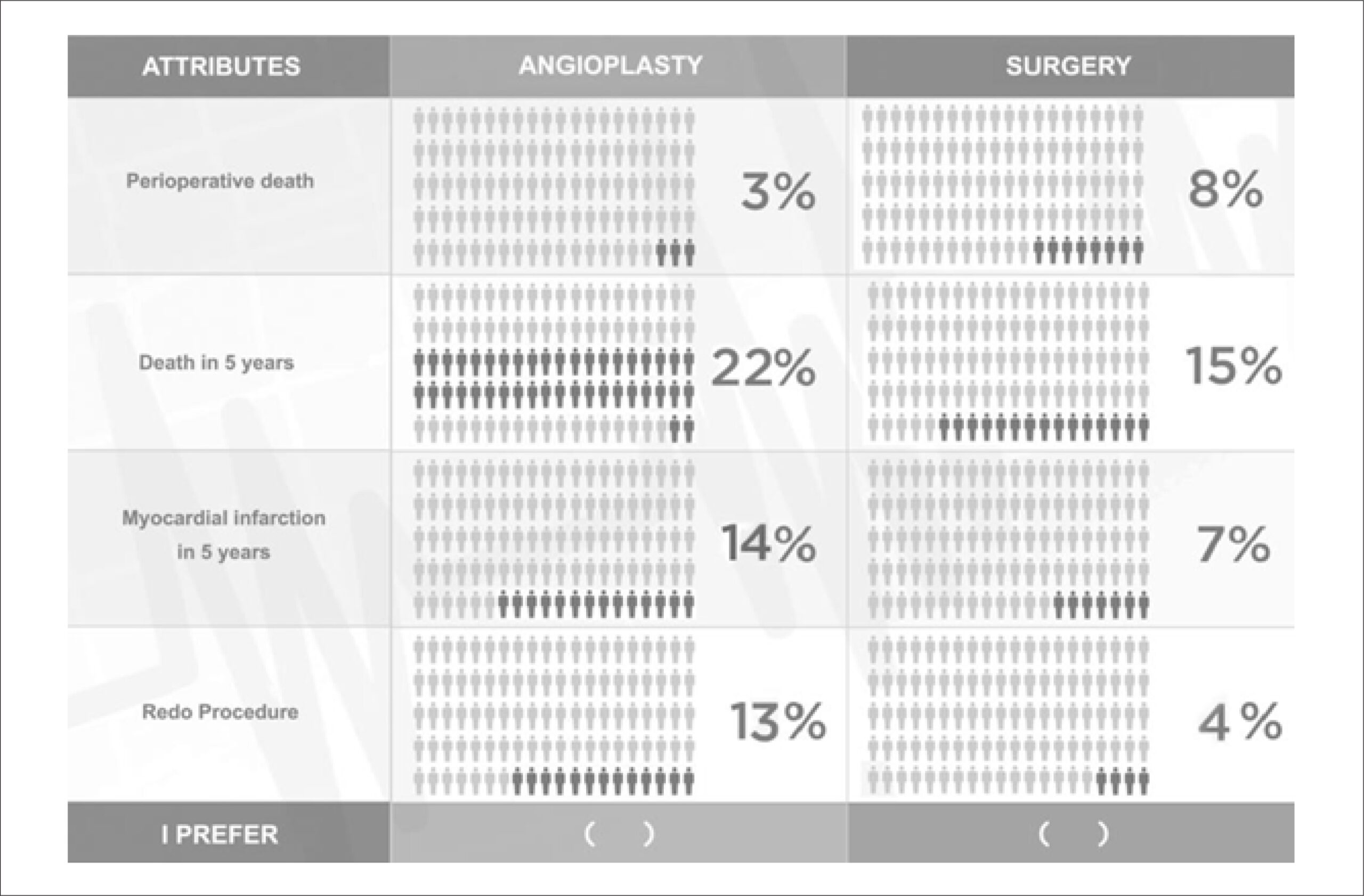
We selected a sample of patients who had undergone PCI and were hospitalized to repeat coronary revascularization and elicited their preferences for a new PCI or CABG. Perioperative death, long-term death, myocardial infarction, and repeat revascularization were used to design scenarios describing hypothetical treatments that were labeled as PCI or CABG. PCI was always presented as the option with lower perioperative death risk and a higher necessity to repeat procedure. A conditional logit model was used to analyze patients’ choices using R software. A p value < 0.05 was considered statistically significant.

Results:

A total of 144 patients participated, most of them (73.7%) preferred CABG over PCI (p < 0.001). The regression coefficients were statistically significant for PCI label, PCI long-term death, CABG perioperative death, CABG long-term death and repeat CABG. The PCI label was the most important parameter (p < 0.05).

Conclusion:

Most patients who face the necessity to repeat coronary revascularization reject a new PCI, considering realistic levels of risks and benefits. Incorporating patients’ preferences into benefit-risk calculation and treatment recommendations could enhance patient-centered care.

  • Coronary Artery Disease/surgery
  • Coronary Restenosis
  • Intervention Coronary Percutaneous
  • Myocardial Revascularization
  • Patient Preference
  • Surveys and Questionnaires
Read Full Article
Creative Commons Attribution (CC BY) Creative Commons license
23/10/2020 DOI: 10.36660/abc.20190305
Figure 1
IJCS
Original Article

CLINIMEX Aerobic Fitness Questionnaire: Proposal and Validation

Claudio Gil S. Araújo et al. Claudia Lucia Castro João Felipe Franca Christina Grüne de Souza e Silva

Abstract

Background:

Cardiorespiratory (aerobic) fitness is strongly and directly related to major health outcomes, including all-cause mortality. Maximum oxygen uptake (VO2max), directly measured by maximal cardiopulmonary exercise test (CPET), represents the subject’s aerobic fitness. However, as CPET is not always available, aerobic fitness estimation tools are necessary.

Objectives:

a) to propose the CLINIMEX Aerobic Fitness Questionnaire (C-AFQ); b) to validate C-AFQ against measured VO2max; and c) to analyze the influence of some potentially relevant variables on the error of estimate.

Methods:

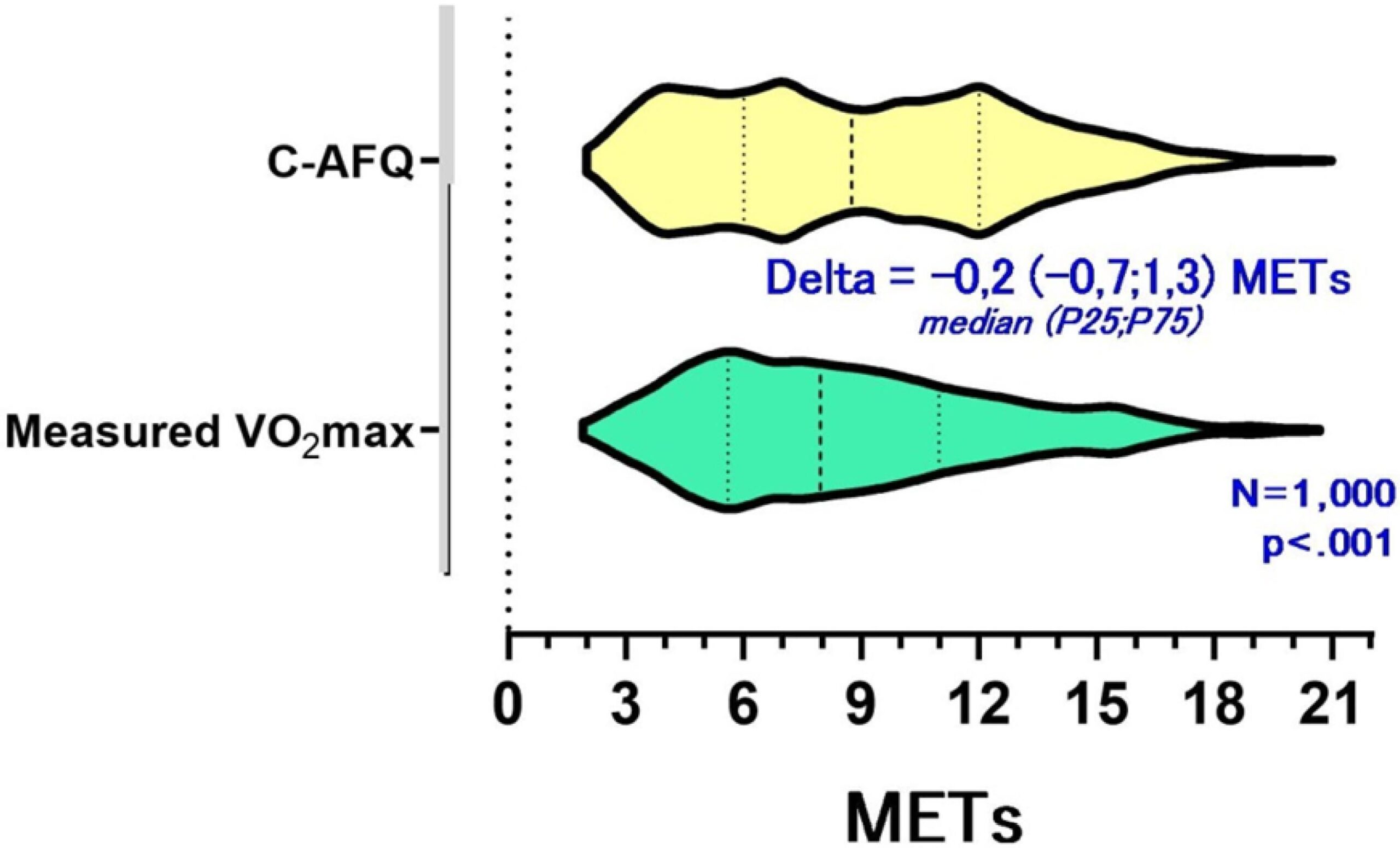
We prospectively studied 1,000 healthy and unhealthy subjects (68.6% men) aged from 14 to 96 years that underwent a CPET. The two-step C-AFQ describes physical activities with corresponding values in metabolic equivalents (METs) – ranging from 0.9 to 21 METs.

Results:

Application of C-AFQ took less than two minutes. Linear regression analysis indicated a very strong association between estimated (C-AFQ) and measured (CPET) maximal METs – r2 = 0.83 (Sy.x = 1.63; p < .001) – with median difference of only 0.2 METs between both values and interquartile range (percentiles 25 and 75) of 2 METs. The difference between estimated and measured METs was not influenced by age, sex, body mass index, clinical condition, ß-blocker use or sitting-rising test scores.

Conclusion:

C-AFQ is a simple and valid tool for estimating aerobic fitness when CPET is unavailable and it is also useful in planning individual ramp protocols. However, individual error of estimate is quite high, so C-AFQ should not be considered a perfect substitute for CPET’s measured VO2max.

  • Breathing Exercises
  • Exercise
  • Exercise Test
  • Exercise Therapy
  • Health Impact
  • Surveys and Questionnaires
  • Validation Studies
Read Full Article
Creative Commons Attribution (CC BY) Creative Commons license
12/08/2019 DOI: 10.5935/2359-4802.20190064 Views 1
Figure 1
ABC
Original Article

Cut-Point for Satisfactory Adherence of the Dietary Sodium Restriction Questionnaire for Patients with Heart Failure

Karina Sanches Machado d’Almeida et al. Sofia Louise Santin Barilli Gabriela Corrêa Souza Eneida Rejane Rabelo-Silva

Abstract

Background:

The low or non-adherence to reduction of sodium intake has been identified as one of the main precipitating factors of heart failure (HF). The Dietary Sodium Restriction Questionnaire (DSRQ) identifies factors that can interfere with adherence to this recommendation. However, there is still no cut-point to define adherence for this questionnaire.

Objectives:

To identify the cut-point for satisfactory adherence to the Brazilian version of the DSRQ, (the Questionário de Restrição de Sódio na Dieta, QRSD).

Methods:

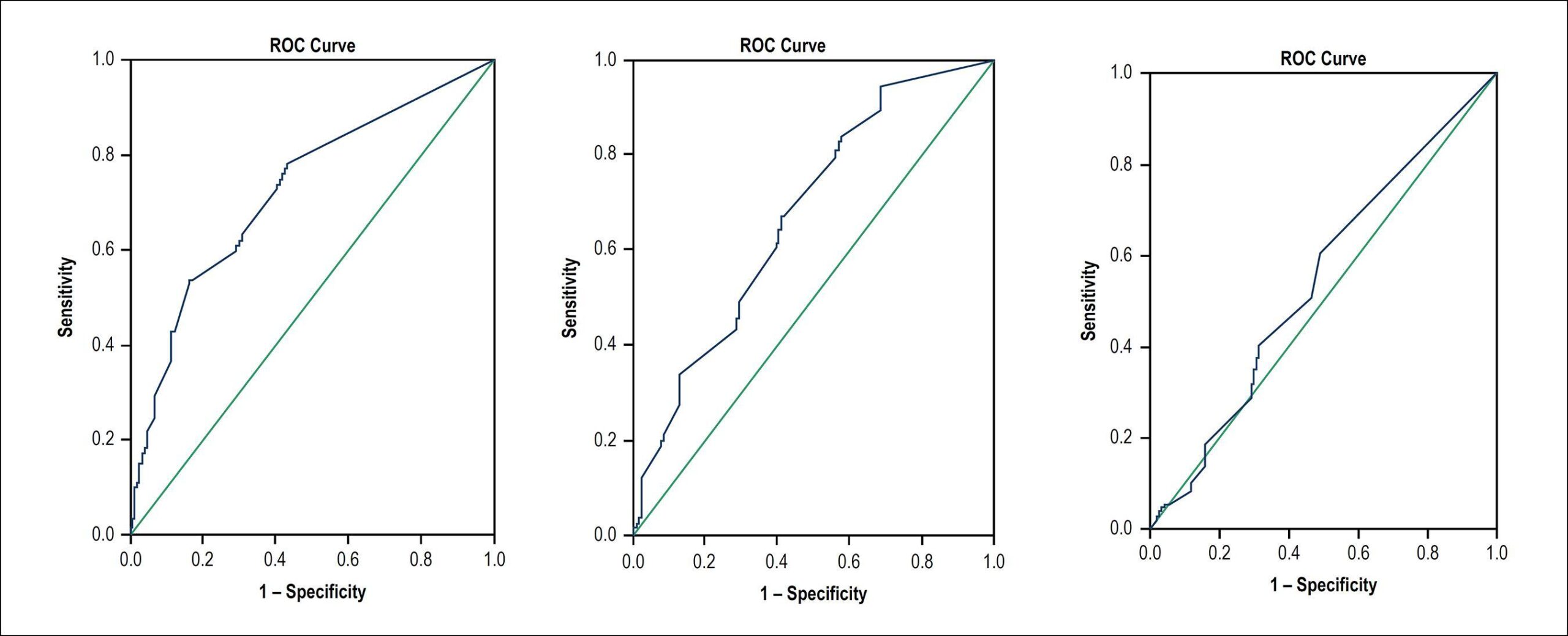
Multicenter study. Patients with HF in outpatient treatment (compensated) and those treated in emergency departments due to acute HF (decompensated) were included. For the cut-point definition, the DSRQ scores were compared between groups. A ROC curve was constructed for each subscale to determine the best point of sensitivity and specificity regarding adherence. A 5% significance level was adopted.

Results:

A total of 206 compensated patients and 225 decompensated were included. Compensated patients exhibited scores that showed higher adhesion in all subscales (all p <0.05). Scores ≥ 40 points of a total of 45 for the subscale of Attitude and Subjective Norm; scores ≤ eight of a total of 20 for Perceived Behavioral Control; and ≤ three of a total of 15 for Dependent Behavior Control were indicative of satisfactory adherence.

Conclusions:

Based on the evaluation of patients in these two scenarios, it was possible to determine the cut-point for satisfactory adherence to the reduction of sodium in the diet of patients with HF. Countries with similar culture could use this cut-point, as other researchers could also use the results as a reference for further studies.

  • Behavior Control
  • Decision Making
  • Heart Failure/physiopathology
  • Muklticenter Study
  • Sodium,Dietary
  • Surveys and Questionnaires
Read Full Article
Creative Commons Attribution (CC BY) Creative Commons license
01/02/2019 DOI: 10.5935/abc.20190011
ABC
Original Article

Validation of the Brazilian Version of CADE-Q II to Assess Knowledge of Coronary Artery Disease Patients

Rafaella Zulianello dos Santos et al. Gabriela Lima Melo Ghisi Christiani Decker Batista Bonin Gabriela Chaves … Clarissa Machado Haase Raquel Rodrigues Britto Magnus Benetti

Abstract

Background:

The Coronary Artery Disease Education Questionnaire (CADE-Q), an instrument aimed at assessing patients’ knowledge about coronary artery disease (CAD), was originally developed and psychometrically validated in Brazil. It was later translated, cross-culturally adapted, and validated to English. Although both versions demonstrated good reliability and validity, new studies in the area have pointed out the need of implementing the CADE-Q with other components of cardiac rehabilitation (CR) programs, such as psychologic factors, which had not been considered in previous version and were added in the subsequent, adapted version. Thus, a second version of CADE-Q was developed in English, the CADE-Q II.

Objective:

to translate, culturally adapt and psychometrically validate the CADE-Q II in Brazilian Portuguese.

Methods:

After translation and review by a Committee of specialists in CR, a version in Brazilian Portuguese was generated and tested in 307 patients in CR. Test-retest reliability was assessed by intraclass correlation coefficient (ICC) in 49 patients; internal consistency was assessed using Cronbach’s alpha (α); and, criterion validity was assessed regarding patients’ educational level and family income. The level of significance adopted for all tests was 5%.

Results:

After the ICC analysis, 4 items were excluded. The questionnaire was considered internally consistent (α > 0.7). Associations were found between the mean total scores and the variables schooling (p < 0.001) and income (p < 0.001). Median total score was 53 (14) points corresponding to 65.4% of the total possible score.

Conclusion:

The Portuguese version of the CADE-Q II showed sufficient reliability, consistency and validity, supporting its use in future studies.

  • Cardiac Rehabilitation
  • Cardiovascular Diseases/physiopathology
  • Coronary Artery Disease
  • Patient Education as Topic
  • Surveys and Questionnaires
  • Validation Studies
Read Full Article
Creative Commons Attribution (CC BY) Creative Commons license
17/12/2018 DOI: 10.5935/abc.20180244 Views 1
ABC
Original Article

Validation of the Brazilian-Portuguese Version of a Short Questionnaire to Assess Knowledge in Cardiovascular Disease Patients (CADE-Q SV)

Gabriela Lima de Melo Ghisi et al. Gabriela S. S. Chaves Jessica Blanco Loures Gabriela Moreira Bonfim Raquel Britto

Abstract

Background:

Patient education is an essential part of cardiovascular patients’ care targeting self-management behavior to reduce risk factors and subsequent events. Herein, a short and reliable tool to assess patients’ knowledge in Brazil is warranted.

Objectives:

To translate, culturally-adapt and psychometrically validate the Portuguese version of the Coronary Artery Disease Education Questionnaire Short Version (CADE-Q SV).

Methods:

The Portuguese CADE-Q SV – translated and culturally-adapted – was reviewed by five bilingual experts in cardiovascular disease. This version was then pre-tested in 21 patients, and clarity of items was checked using a Likert-type scale ranging from 1 = not clear to 10 = very clear. It was then psychometrically tested in 200 cardiovascular patients (41%women; mean age = 58.4 ± 11.6 years old). The internal consistency was assessed using Kuder-Richardson-20 (KR-20) and Cronbach’s alpha, test-retest reliability through intraclass correlation coefficient (ICC), factor structure using confirmatory factor analysis, and construct validity regarding educational level, family income, and time of diagnosis.

Results:

All questions were considered clear by patients (clarity range:7.8-9.6). KR-20 was 0.70. All ICC values were > 0.70. Factor analysis revealed 6 factors, all internally consistent. Construct validity was supported by significant differences in total scores by educational level and family income (p < 0.001). The overall mean was 13.08 ± 2.61. The area with the highest knowledge was risk factors and the lowest was psychosocial risk.

Conclusions:

The Portuguese CADE-SV was demonstrated to have good validity and reliability. This tool can be applicable in clinical and research settings, assessing cardiovascular patients’ knowledge as part of an education programming.

  • Cardiovascular Diseases
  • Coronary Artery Disease
  • Educational Status
  • Knowledge
  • Patient Education as Topic
  • Surveys and Questionnaires
Read Full Article
Creative Commons Attribution (CC BY) Creative Commons license
21/09/2018 DOI: 10.5935/abc.20180169 Views 1
IJCS
Original Article

Methods of Screening for Depression in Outpatients with Heart Failure

Thaís de Rezende Bessa Guerra et al. Isabella Cristina Diniz Venancio Daniel Mählmann de Moura Pinheiro Mauro Vitor Mendlowicz … Ana Carla Dantas Cavalcanti Evandro Tinoco Mesquita

Abstract

Background:

Depression is a syndromic clinical condition underdiagnosed in patients with heart failure. Several instruments are currently applied to screen for depression.

Objective:

To determine the prevalence of depression and the agreement among screening methods for depression in patients with heart failure.

Methods:

Cross-sectional study conducted between March 2015 and January 2017 including 76 outpatients following up at a clinic specialized in heart failure. Depression was screened with the Hamilton Depression Rating Scale (HAM-D), Beck Depression Inventory-II (BDI-II), and Patient Health Questionnaire-9 (PHQ-9). The agreement among the three instruments was analyzed with Fleiss’ kappa coefficient (kF), Krippendorff’s alpha coefficient (Ck) and Cronbach’s alpha coefficient. The accuracy, sensitivity, and specificity, as well as false-positive and false-negative results of the HAM-D and PHQ-9 were calculated considering the BDI-II as the gold-standard instrument in the diagnosis of depression.

Results:

The prevalence rates of depression were 72.4% (n = 55) with the HAM-D, 67.1% (n = 51) with the BDI-II, and 40.8% (n = 31) with the PHQ-9 scales. The prevalence of depression simultaneously identified by all three instruments was 28.9% (n = 22) and the diagnostic agreement (presence or absence of depression) was 47.4% (n = 36). The analysis revealed a superficial agreement (kF = Ck = 0.27) and moderate consistency ((↓C = 0.602, significantly not null, p = 0.000). Sociodemographic and clinical variables were not risk factors for depression in the evaluated sample.

Conclusion:

The screening methods analyzed showed agreement and were useful in detecting depression among outpatients with heart failure.

  • Cross-Sectional Studies
  • Depression / diagnosis
  • Depression / prevalence
  • Heart Failure
  • Medical Records
  • Surveys and Questionnaires
Read Full Article
Creative Commons Attribution (CC BY) Creative Commons license
02/07/2018 DOI: 10.5935/2359-4802.20180037
IJCS
Original Article

Assessment of the Lifestyle of University Students in the Healthcare Area Using the Fantastic Questionnaire

Carolina Campos Tassini et al. Gabriela Ribeiro do Val Sarah da Silva Candido Cynthia Kallás Bachur

Abstract

Background:

The constant concern about quality of life nowadays has incited individuals to seek parameters for disease prevention. Along with that, arise a need to investigate and the ability to measure elements that characterize an appropriate lifestyle.

Objective:

To compare the factors determining the quality of life of students in the healthcare area using the Fantastic questionnaire.

Methods:

Descriptive, cross-sectional, population study. The sample was obtained by convenience and comprised medical and physical therapy students of both sexes and any ethnicity, attending a private institution of higher education, who agreed to fill out the questionnaire voluntarily. The Fantastic instrument used in this study has 25 closed questions that explore nine domains including physical, psychological, and social lifestyle components.

Results:

In total, 57 university students participated, of whom 28 (15%) were physical therapy students and 29 (50.8%) were medical students. The mean age was 23 ± 2 years, and 40 (70.1%) were female and 17 (28.8%) were male. The overall rating was “regular”, and none of the participants scored in the “very good” and “excellent” categories. The domains that mostly required change among medical students related to nutrition and physical activity, while among physical therapy students they related to cigarette, drugs, and alcohol.

Conclusion:

According to the data collected using the Fantastic questionnaire, there was a remarkable need for improvement in the management of the quality of life of physical therapy and medical students, therefore allowing some social and educational measures through health promotion and disease prevention.

  • Chronic Disease / prevention & control
  • Quality of life
  • Students, Health Sciences
  • Students, Medical
  • Surveys and Questionnaires
Read Full Article
Creative Commons Attribution (CC BY) Creative Commons license
01/01/2017 DOI: 10.5935/2359-4802.20170024 Views 1
Figure 1
ABC
Original Article

Association between Spirituality and Adherence to Management in Outpatients with Heart Failure

Juglans Souto Alvarez et al. Livia Adams Goldraich Alice Hoefel Nunes Mônica Cristina Brugalli Zandavalli … Rafaela Brugalli Zandavalli Karlyse Claudino Belli Neusa Sica da Rocha Marcelo Pio de Almeida Fleck Nadine Clausell

Abstract

Background:

Spirituality may influence how patients cope with their illness.

Objectives:

We assessed whether spirituality may influence adherence to management of outpatients with heart failure.

Methods:

Cross sectional study enrolling consecutive ambulatory heart failure patients in whom adherence to multidisciplinary treatment was evaluated. Patients were assessed for quality of life, depression, religiosity and spirituality utilizing validated questionnaires. Correlations between adherence and psychosocial variables of interest were obtained. Logistic regression models explored independent predictors of adherence.

Results:

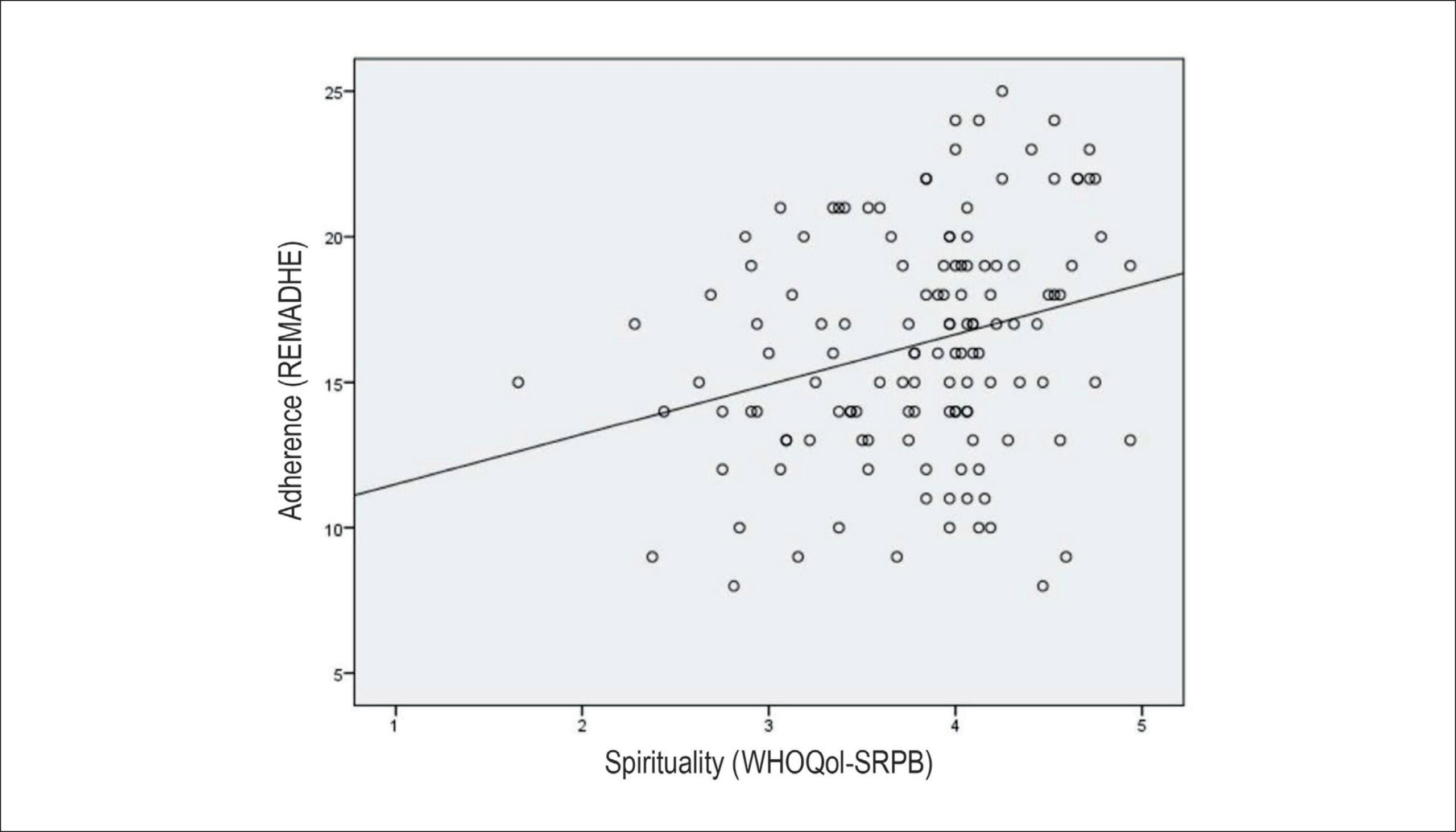
One hundred and thirty patients (age 60 ± 13 years; 67% male) were interviewed. Adequate adherence score was observed in 38.5% of the patients. Neither depression nor religiosity was correlated to adherence, when assessed separately. Interestingly, spirituality, when assessed by both total score sum (r = 0.26; p = 0.003) and by all specific domains, was positively correlated to adherence. Finally, the combination of spirituality, religiosity and personal beliefs was an independent predictor of adherence when adjusted for demographics, clinical characteristics and psychosocial instruments.

Conclusion:

Spirituality, religiosity and personal beliefs were the only variables consistently associated with compliance to medication in a cohort of outpatients with heart failure. Our data suggest that adequately addressing these aspects on patient’s care may lead to an improvement in adherence patterns in the complex heart failure management.

  • Heart Failure
  • Medication Adherence / psychology
  • outpatients
  • Religion
  • Spirituality
  • Surveys and Questionnaires
Read Full Article
Creative Commons Attribution (CC BY) Creative Commons license
17/05/2016 DOI: 10.5935/abc.20160076 Views 1
ABC
Original Article

Prevalence of Risk for Obstructive Sleep Apnea Syndrome and Association With Risk Factors in Primary Care

Kenia Vieira da Silva et al. Maria Luiza Garcia Rosa Antônio José Lagoeiro Jorge Adson Renato Leite … Dayse Mary Silva Correia Davi de Sá Silva Diego Bragatto Cetto Andreia da Paz Brum Pedro Silveira Netto Gustavo Domingos Rodrigues

Abstract

Background:

Obstructive sleep apnea syndrome (OSAS) is a chronic, progressive disease with high morbidity and mortality. It is underdiagnosed, especially among women.

Objective:

To study the prevalence of high risk for OSAS globally and for the Berlin Questionnaire (BQ) categories, and to evaluate the reliability of the BQ use in the population studied.

Methods:

Observational, cross-sectional study with individuals from the Niterói Family Doctor Program, randomly selected, aged between 45 and 99 years. The visits occurred between August/2011 and December/2012. Variables associated with each BQ category and with high risk for OSAS (global) were included in logistic regression models (p < 0.05).

Results:

Of the total (616), 403 individuals (65.4%) reported snoring. The prevalence of high risk for OSA was 42.4%, being 49.7% for category I, 10.2% for category II and 77.6% for category III.

Conclusion:

BQ showed an acceptable reliability after excluding the questions Has anyone noticed that you stop breathing during your sleep? and Have you ever dozed off or fallen asleep while driving?. This should be tested in further studies with samples mostly comprised of women and low educational level individuals. Given the burden of OSAS-related diseases and risks, studies should be conducted to validate new tools and to adapt BQ to better screen OSAS.

  • Prevalence
  • Risk Factors
  • Sleep Apnea, Obstructive
  • Surveys and Questionnaires
Read Full Article
Creative Commons Attribution (CC BY) Creative Commons license
03/05/2016 DOI: 10.5935/abc.20160061 Views 2

How to cite this article

EndNote RIS

Electronic Document Format (Vancouver)

Oliveira JAQ, Cimini C, Almeida V, Maia JX, Resende RE, Gualberto LA, Santos PHL, et al. The Challenges of Implementing a Text Message Intervention to Promote Behavioral Change in Primary Care Patients With Hypertension and Diabetes. International Journal of Cardiovascular Sciences 2023;36:e20220050.

Electronic Document Format (ABNT)

Oliveira, João Antonio de Queiroz; Cimini, Christiane; Almeida, Vania; Maia, Junia Xavier; Resende, Raissa Eda; Gualberto, Leticia Alves; Santos, Pedro Henrique Lauar; Gomes, Paulo R.; Bonisson, Leonardo; Paixão, Maria Cristina; Costa, Janaina Moutinho; Cardoso, Clareci Silva; Santo, Karla; Ribeiro, Antonio; Martins, Maria Auxiliadora; Marcolino, Milena S.. The Challenges of Implementing a Text Message Intervention to Promote Behavioral Change in Primary Care Patients With Hypertension and Diabetes. International Journal of Cardiovascular Sciences, v. 36, e20220050, Apr. 2023.

Electronic Document Format (APA)

Oliveira, J. A. Q., Cimini, C., Almeida, V., Maia, J. X., Resende, R. E., Gualberto, L. A., Santos, P. H. L., Gomes, P. R., Bonisson, L., Paixão, M. C., Costa, J. M., Cardoso, C. S., Santo, K., Ribeiro, A., Martins, M. A., & Marcolino, M. S. (2023). The Challenges of Implementing a Text Message Intervention to Promote Behavioral Change in Primary Care Patients With Hypertension and Diabetes. International Journal of Cardiovascular Sciences, 36, e20220050.

Electronic Document Format (ISO)

Oliveira, João Antonio de Queiroz and Cimini, Christiane and Almeida, Vania and Maia, Junia Xavier and Resende, Raissa Eda and Gualberto, Leticia Alves and Santos, Pedro Henrique Lauar and Gomes, Paulo R. and Bonisson, Leonardo and Paixão, Maria Cristina and Costa, Janaina Moutinho and Cardoso, Clareci Silva and Santo, Karla and Ribeiro, Antonio and Martins, Maria Auxiliadora and Marcolino, Milena S.. The Challenges of Implementing a Text Message Intervention to Promote Behavioral Change in Primary Care Patients With Hypertension and Diabetes. International Journal of Cardiovascular Sciences [online]. 2023, vol. 36, [cited 2026-10-14], e20220050. Available from: <https://journals.cardiol.br/en/article/the-challenges-of-implementing-a-text-message-intervention-to-promote-behavioral-change-in-primary-care-patients-with-hypertension-and-diabetes/>. ISSN 2359-4802

EndNote RIS

Electronic Document Format (Vancouver)

Jardim ISC, Milani M, Castro I, Hansen D, Karsten M, Cahalin LP, Cipriano GFB, et al. Impact of COVID-19’s on Cardiovascular Rehabilitation Programs in Brazil: An Online Survey-Based Cross-Sectional Study. Arquivos Brasileiros de Cardiologia 2023;120(3):e20220135.

Electronic Document Format (ABNT)

Jardim, Iara de Sousa Cezário; Milani, Mauricio; Castro, Isac; Hansen, Dominique; Karsten, Marlus; Cahalin, Lawrence Patrick; Cipriano, Graziella França Bernardelli; Cipriano Jr, Gerson. Impact of COVID-19’s on Cardiovascular Rehabilitation Programs in Brazil: An Online Survey-Based Cross-Sectional Study. Arquivos Brasileiros de Cardiologia, v. 120, n. 3, e20220135, Mar. 2023.

Electronic Document Format (APA)

Jardim, I. S. C., Milani, M., Castro, I., Hansen, D., Karsten, M., Cahalin, L. P., Cipriano, G. F. B., & Cipriano Jr, G. (2023). Impact of COVID-19’s on Cardiovascular Rehabilitation Programs in Brazil: An Online Survey-Based Cross-Sectional Study. Arquivos Brasileiros de Cardiologia, 120(3), e20220135.

Electronic Document Format (ISO)

Jardim, Iara de Sousa Cezário and Milani, Mauricio and Castro, Isac and Hansen, Dominique and Karsten, Marlus and Cahalin, Lawrence Patrick and Cipriano, Graziella França Bernardelli and Cipriano Jr, Gerson. Impact of COVID-19’s on Cardiovascular Rehabilitation Programs in Brazil: An Online Survey-Based Cross-Sectional Study. Arquivos Brasileiros de Cardiologia [online]. 2023, vol. 120, n. 3, [cited 2026-10-14], e20220135. Available from: <https://journals.cardiol.br/en/article/impact-of-covid-19s-on-cardiovascular-rehabilitation-programs-in-brazil-an-online-survey-based-cross-sectional-study/>. ISSN 0066-782X

EndNote RIS

Electronic Document Format (Vancouver)

Ghisi GL, Santos RZ, Korbes AS, Souza CA, Karsten M, Oh P, Benetti M, et al. Perceptions of Cardiac Rehabilitation Participants Regarding their Health Behaviors and Information Needs during the COVID-19 Pandemic in Brazil. Arquivos Brasileiros de Cardiologia 2022;118(5):949-60.

Electronic Document Format (ABNT)

Ghisi, Gabriela L.M; Santos, Rafaella Z.; Korbes, Andrea S.; Souza, Cícero Augusto de; Karsten, Marlus; Oh, Paul; Benetti, Magnus. Perceptions of Cardiac Rehabilitation Participants Regarding their Health Behaviors and Information Needs during the COVID-19 Pandemic in Brazil. Arquivos Brasileiros de Cardiologia, v. 118, n. 5, p. 949-960, Apr. 2022.

Electronic Document Format (APA)

Ghisi, G. L., Santos, R. Z., Korbes, A. S., Souza, C. A. , Karsten, M., Oh, P., & Benetti, M. (2022). Perceptions of Cardiac Rehabilitation Participants Regarding their Health Behaviors and Information Needs during the COVID-19 Pandemic in Brazil. Arquivos Brasileiros de Cardiologia, 118(5), 949-960.

Electronic Document Format (ISO)

Ghisi, Gabriela L.M and Santos, Rafaella Z. and Korbes, Andrea S. and Souza, Cícero Augusto de and Karsten, Marlus and Oh, Paul and Benetti, Magnus. Perceptions of Cardiac Rehabilitation Participants Regarding their Health Behaviors and Information Needs during the COVID-19 Pandemic in Brazil. Arquivos Brasileiros de Cardiologia [online]. 2022, vol. 118, n. 5, [cited 2026-10-14], pp. 949-960. Available from: <https://journals.cardiol.br/en/article/perceptions-of-cardiac-rehabilitation-participants-regarding-their-health-behaviors-and-information-needs-during-the-covid-19-pandemic-in-brazil/>. ISSN 0066-782X

EndNote RIS

Electronic Document Format (Vancouver)

Magliano CAS, Monteiro AL, Rebelo ARO, Santos GF, Pereira CCA, Krucien N, Saraiva RM, et al. Patients’ Preferences after Recurrent Coronary Narrowing: Discrete Choice Experiments. Arquivos Brasileiros de Cardiologia 2020;115(4):613-9.

Electronic Document Format (ABNT)

Magliano, Carlos Alberto da Silva; Monteiro, Andrea Liborio; Rebelo, Amanda Rebeca de Oliveira; Santos, Giovanna Francisconi; Pereira, Claudia Cristina de Aguiar; Krucien, Nikolas; Saraiva, Roberto Magalhães. Patients’ Preferences after Recurrent Coronary Narrowing: Discrete Choice Experiments. Arquivos Brasileiros de Cardiologia, v. 115, n. 4, p. 613-619, Oct. 2020.

Electronic Document Format (APA)

Magliano, C. A. S., Monteiro, A. L., Rebelo, A. R. O., Santos, G. F., Pereira, C. C. A., Krucien, N., & Saraiva, R. M. (2020). Patients’ Preferences after Recurrent Coronary Narrowing: Discrete Choice Experiments. Arquivos Brasileiros de Cardiologia, 115(4), 613-619.

Electronic Document Format (ISO)

Magliano, Carlos Alberto da Silva and Monteiro, Andrea Liborio and Rebelo, Amanda Rebeca de Oliveira and Santos, Giovanna Francisconi and Pereira, Claudia Cristina de Aguiar and Krucien, Nikolas and Saraiva, Roberto Magalhães. Patients’ Preferences after Recurrent Coronary Narrowing: Discrete Choice Experiments. Arquivos Brasileiros de Cardiologia [online]. 2020, vol. 115, n. 4, [cited 2026-10-14], pp. 613-619. Available from: <https://journals.cardiol.br/en/article/patients-preferences-after-recurrent-coronary-narrowing-discrete-choice-experiments/>. ISSN 0066-782X

EndNote RIS

Electronic Document Format (Vancouver)

Araújo CGS, Castro CL, Franca JF, Silva CGS. CLINIMEX Aerobic Fitness Questionnaire: Proposal and Validation. International Journal of Cardiovascular Sciences 2019;32(4):331-42.

Electronic Document Format (ABNT)

Araújo, Claudio Gil S.; Castro, Claudia Lucia; Franca, João Felipe; Silva, Christina Grüne de Souza e. CLINIMEX Aerobic Fitness Questionnaire: Proposal and Validation. International Journal of Cardiovascular Sciences, v. 32, n. 4, p. 331-342, Aug. 2019.

Electronic Document Format (APA)

Araújo, C. G. S., Castro, C. L., Franca, J. F., & Silva, C. G. S. (2019). CLINIMEX Aerobic Fitness Questionnaire: Proposal and Validation. International Journal of Cardiovascular Sciences, 32(4), 331-342.

Electronic Document Format (ISO)

Araújo, Claudio Gil S. and Castro, Claudia Lucia and Franca, João Felipe and Silva, Christina Grüne de Souza e. CLINIMEX Aerobic Fitness Questionnaire: Proposal and Validation. International Journal of Cardiovascular Sciences [online]. 2019, vol. 32, n. 4, [cited 2026-10-14], pp. 331-342. Available from: <https://journals.cardiol.br/en/article/clinimex-aerobic-fitness-questionnaire-proposal-and-validation/>. ISSN 2359-4802

EndNote RIS

Electronic Document Format (Vancouver)

d’Almeida KSM, Barilli SLS, Souza GC, Rabelo-Silva ER. Cut-Point for Satisfactory Adherence of the Dietary Sodium Restriction Questionnaire for Patients with Heart Failure. Arquivos Brasileiros de Cardiologia 2019;112(2):165-70.

Electronic Document Format (ABNT)

d’Almeida, Karina Sanches Machado; Barilli, Sofia Louise Santin; Souza, Gabriela Corrêa; Rabelo-Silva, Eneida Rejane. Cut-Point for Satisfactory Adherence of the Dietary Sodium Restriction Questionnaire for Patients with Heart Failure. Arquivos Brasileiros de Cardiologia, v. 112, n. 2, p. 165-170, Jan. 2019.

Electronic Document Format (APA)

d’Almeida, K. S. M., Barilli, S. L. S., Souza, G. C., & Rabelo-Silva, E. R. (2019). Cut-Point for Satisfactory Adherence of the Dietary Sodium Restriction Questionnaire for Patients with Heart Failure. Arquivos Brasileiros de Cardiologia, 112(2), 165-170.

Electronic Document Format (ISO)

d’Almeida, Karina Sanches Machado and Barilli, Sofia Louise Santin and Souza, Gabriela Corrêa and Rabelo-Silva, Eneida Rejane. Cut-Point for Satisfactory Adherence of the Dietary Sodium Restriction Questionnaire for Patients with Heart Failure. Arquivos Brasileiros de Cardiologia [online]. 2019, vol. 112, n. 2, [cited 2026-10-14], pp. 165-170. Available from: <https://journals.cardiol.br/en/article/cut-point-for-satisfactory-adherence-of-the-dietary-sodium-restriction-questionnaire-for-patients-with-heart-failure/>. ISSN 0066-782X

EndNote RIS

Electronic Document Format (Vancouver)

Santos RZ, Ghisi GLM, Bonin CDB, Chaves G, Haase CM, Britto RR, Benetti M, et al. Validation of the Brazilian Version of CADE-Q II to Assess Knowledge of Coronary Artery Disease Patients. Arquivos Brasileiros de Cardiologia 2018;112(1):78-84.

Electronic Document Format (ABNT)

Santos, Rafaella Zulianello dos; Ghisi, Gabriela Lima Melo; Bonin, Christiani Decker Batista; Chaves, Gabriela; Haase, Clarissa Machado; Britto, Raquel Rodrigues; Benetti, Magnus. Validation of the Brazilian Version of CADE-Q II to Assess Knowledge of Coronary Artery Disease Patients. Arquivos Brasileiros de Cardiologia, v. 112, n. 1, p. 78-84, Dec. 2018.

Electronic Document Format (APA)

Santos, R. Z. , Ghisi, G. L. M., Bonin, C. D. B., Chaves, G., Haase, C. M., Britto, R. R., & Benetti, M. (2018). Validation of the Brazilian Version of CADE-Q II to Assess Knowledge of Coronary Artery Disease Patients. Arquivos Brasileiros de Cardiologia, 112(1), 78-84.

Electronic Document Format (ISO)

Santos, Rafaella Zulianello dos and Ghisi, Gabriela Lima Melo and Bonin, Christiani Decker Batista and Chaves, Gabriela and Haase, Clarissa Machado and Britto, Raquel Rodrigues and Benetti, Magnus. Validation of the Brazilian Version of CADE-Q II to Assess Knowledge of Coronary Artery Disease Patients. Arquivos Brasileiros de Cardiologia [online]. 2018, vol. 112, n. 1, [cited 2026-10-14], pp. 78-84. Available from: <https://journals.cardiol.br/en/article/validation-of-the-brazilian-version-of-cade-q-ii-to-assess-knowledge-of-coronary-artery-disease-patients/>. ISSN 0066-782X

EndNote RIS

Electronic Document Format (Vancouver)

Ghisi GLM, Chaves GSS, Loures JB, Bonfim GM, Britto R. Validation of the Brazilian-Portuguese Version of a Short Questionnaire to Assess Knowledge in Cardiovascular Disease Patients (CADE-Q SV). Arquivos Brasileiros de Cardiologia 2018;111(6):841-9.

Electronic Document Format (ABNT)

Ghisi, Gabriela Lima de Melo; Chaves, Gabriela S. S.; Loures, Jessica Blanco; Bonfim, Gabriela Moreira; Britto, Raquel. Validation of the Brazilian-Portuguese Version of a Short Questionnaire to Assess Knowledge in Cardiovascular Disease Patients (CADE-Q SV). Arquivos Brasileiros de Cardiologia, v. 111, n. 6, p. 841-849, Sep. 2018.

Electronic Document Format (APA)

Ghisi, G. L. M., Chaves, G. S. S., Loures, J. B., Bonfim, G. M., & Britto, R. (2018). Validation of the Brazilian-Portuguese Version of a Short Questionnaire to Assess Knowledge in Cardiovascular Disease Patients (CADE-Q SV). Arquivos Brasileiros de Cardiologia, 111(6), 841-849.

Electronic Document Format (ISO)

Ghisi, Gabriela Lima de Melo and Chaves, Gabriela S. S. and Loures, Jessica Blanco and Bonfim, Gabriela Moreira and Britto, Raquel. Validation of the Brazilian-Portuguese Version of a Short Questionnaire to Assess Knowledge in Cardiovascular Disease Patients (CADE-Q SV). Arquivos Brasileiros de Cardiologia [online]. 2018, vol. 111, n. 6, [cited 2026-10-14], pp. 841-849. Available from: <https://journals.cardiol.br/en/article/validation-of-the-brazilian-portuguese-version-of-a-short-questionnaire-to-assess-knowledge-in-cardiovascular-disease-patients-cade-q-sv/>. ISSN 0066-782X

EndNote RIS

Electronic Document Format (Vancouver)

Guerra TRB, Venancio ICD, Pinheiro DMM, Mendlowicz MV, Cavalcanti ACD, Mesquita ET. Methods of Screening for Depression in Outpatients with Heart Failure. International Journal of Cardiovascular Sciences 2018;31(4):414-21.

Electronic Document Format (ABNT)

Guerra, Thaís de Rezende Bessa; Venancio, Isabella Cristina Diniz; Pinheiro, Daniel Mählmann de Moura; Mendlowicz, Mauro Vitor; Cavalcanti, Ana Carla Dantas; Mesquita, Evandro Tinoco. Methods of Screening for Depression in Outpatients with Heart Failure. International Journal of Cardiovascular Sciences, v. 31, n. 4, p. 414-421, Jul. 2018.

Electronic Document Format (APA)

Guerra, T. R. B., Venancio, I. C. D., Pinheiro, D. M. M., Mendlowicz, M. V., Cavalcanti, A. C. D., & Mesquita, E. T. (2018). Methods of Screening for Depression in Outpatients with Heart Failure. International Journal of Cardiovascular Sciences, 31(4), 414-421.

Electronic Document Format (ISO)

Guerra, Thaís de Rezende Bessa and Venancio, Isabella Cristina Diniz and Pinheiro, Daniel Mählmann de Moura and Mendlowicz, Mauro Vitor and Cavalcanti, Ana Carla Dantas and Mesquita, Evandro Tinoco. Methods of Screening for Depression in Outpatients with Heart Failure. International Journal of Cardiovascular Sciences [online]. 2018, vol. 31, n. 4, [cited 2026-10-14], pp. 414-421. Available from: <https://journals.cardiol.br/en/article/methods-of-screening-for-depression-in-outpatients-with-heart-failure/>. ISSN 2359-4802

EndNote RIS

Electronic Document Format (Vancouver)

Tassini CC, Val GR, Candido SS, Bachur CK. Assessment of the Lifestyle of University Students in the Healthcare Area Using the Fantastic Questionnaire. International Journal of Cardiovascular Sciences 2017;30(2):117-22.

Electronic Document Format (ABNT)

Tassini, Carolina Campos; Val, Gabriela Ribeiro do; Candido, Sarah da Silva; Bachur, Cynthia Kallás. Assessment of the Lifestyle of University Students in the Healthcare Area Using the Fantastic Questionnaire. International Journal of Cardiovascular Sciences, v. 30, n. 2, p. 117-122, Dec. 2016.

Electronic Document Format (APA)

Tassini, C. C., Val, G. R. , Candido, S. S., & Bachur, C. K. (2017). Assessment of the Lifestyle of University Students in the Healthcare Area Using the Fantastic Questionnaire. International Journal of Cardiovascular Sciences, 30(2), 117-122.

Electronic Document Format (ISO)

Tassini, Carolina Campos and Val, Gabriela Ribeiro do and Candido, Sarah da Silva and Bachur, Cynthia Kallás. Assessment of the Lifestyle of University Students in the Healthcare Area Using the Fantastic Questionnaire. International Journal of Cardiovascular Sciences [online]. 2017, vol. 30, n. 2, [cited 2026-10-14], pp. 117-122. Available from: <https://journals.cardiol.br/en/article/assessment-of-the-lifestyle-of-university-students-in-the-healthcare-area-using-the-fantastic-questionnaire/>. ISSN 2359-4802

EndNote RIS

Electronic Document Format (Vancouver)

Alvarez JS, Goldraich LA, Nunes AH, Zandavalli MCB, Zandavalli RB, Belli KC, Rocha NS, et al. Association between Spirituality and Adherence to Management in Outpatients with Heart Failure. Arquivos Brasileiros de Cardiologia 2016;106(6):491-50.

Electronic Document Format (ABNT)

Alvarez, Juglans Souto; Goldraich, Livia Adams; Nunes, Alice Hoefel; Zandavalli, Mônica Cristina Brugalli; Zandavalli, Rafaela Brugalli; Belli, Karlyse Claudino; Rocha, Neusa Sica da; Fleck, Marcelo Pio de Almeida; Clausell, Nadine. Association between Spirituality and Adherence to Management in Outpatients with Heart Failure. Arquivos Brasileiros de Cardiologia, v. 106, n. 6, p. 491-501, May. 2016.

Electronic Document Format (APA)

Alvarez, J. S., Goldraich, L. A., Nunes, A. H., Zandavalli, M. C. B., Zandavalli, R. B., Belli, K. C., Rocha, N. S. , Fleck, M. P. A., & Clausell, N. (2016). Association between Spirituality and Adherence to Management in Outpatients with Heart Failure. Arquivos Brasileiros de Cardiologia, 106(6), 491-501.

Electronic Document Format (ISO)

Alvarez, Juglans Souto and Goldraich, Livia Adams and Nunes, Alice Hoefel and Zandavalli, Mônica Cristina Brugalli and Zandavalli, Rafaela Brugalli and Belli, Karlyse Claudino and Rocha, Neusa Sica da and Fleck, Marcelo Pio de Almeida and Clausell, Nadine. Association between Spirituality and Adherence to Management in Outpatients with Heart Failure. Arquivos Brasileiros de Cardiologia [online]. 2016, vol. 106, n. 6, [cited 2026-10-14], pp. 491-501. Available from: <https://journals.cardiol.br/en/article/association-between-spirituality-and-adherence-to-management-in-outpatients-with-heart-failure/>. ISSN 0066-782X

EndNote RIS

Electronic Document Format (Vancouver)

Silva KV, Rosa MLG, Jorge AJL, Leite AR, Correia DMS, Silva DS, Cetto DB, et al. Prevalence of Risk for Obstructive Sleep Apnea Syndrome and Association With Risk Factors in Primary Care. Arquivos Brasileiros de Cardiologia 2016;106(6):474-80.

Electronic Document Format (ABNT)

Silva, Kenia Vieira da; Rosa, Maria Luiza Garcia; Jorge, Antônio José Lagoeiro; Leite, Adson Renato; Correia, Dayse Mary Silva; Silva, Davi de Sá; Cetto, Diego Bragatto; Brum, Andreia da Paz; Netto, Pedro Silveira; Rodrigues, Gustavo Domingos. Prevalence of Risk for Obstructive Sleep Apnea Syndrome and Association With Risk Factors in Primary Care. Arquivos Brasileiros de Cardiologia, v. 106, n. 6, p. 474-480, May. 2016.

Electronic Document Format (APA)

Silva, K. V. , Rosa, M. L. G., Jorge, A. J. L., Leite, A. R., Correia, D. M. S., Silva, D. S., Cetto, D. B., Brum, A. P., Netto, P. S., & Rodrigues, G. D. (2016). Prevalence of Risk for Obstructive Sleep Apnea Syndrome and Association With Risk Factors in Primary Care. Arquivos Brasileiros de Cardiologia, 106(6), 474-480.

Electronic Document Format (ISO)

Silva, Kenia Vieira da and Rosa, Maria Luiza Garcia and Jorge, Antônio José Lagoeiro and Leite, Adson Renato and Correia, Dayse Mary Silva and Silva, Davi de Sá and Cetto, Diego Bragatto and Brum, Andreia da Paz and Netto, Pedro Silveira and Rodrigues, Gustavo Domingos. Prevalence of Risk for Obstructive Sleep Apnea Syndrome and Association With Risk Factors in Primary Care. Arquivos Brasileiros de Cardiologia [online]. 2016, vol. 106, n. 6, [cited 2026-10-14], pp. 474-480. Available from: <https://journals.cardiol.br/en/article/prevalence-of-risk-for-obstructive-sleep-apnea-syndrome-and-association-with-risk-factors-in-primary-care/>. ISSN 0066-782X

  • About ABC Family
  • Internal Regulation
  • Editorial Board
  • Brazilian Society of Cardiology (SBC)

Issues

SBC Guidelines

  • Videos
  • Podcasts
  • News