ABC Family Arquivos Brasileiros de Cardiologia International Journal of Cardiovascular Sciences ABC Heart Failure & Cardiomyopathy ABC Imagem Cardiovascular
Português English
ABC Family
Português English
  • About
    • About ABC Family
    • Internal Regulation
    • Editorial Board
    • Brazilian Society of Cardiology (SBC)
  • Issues
  • SBC Guidelines
  • Content
    • Videos
    • Podcasts
    • News
  • About
    • About ABC Family
    • Internal Regulation
    • Editorial Board
    • Brazilian Society of Cardiology (SBC)
  • Issues
  • SBC Guidelines
  • Content
    • Videos
    • Podcasts
    • News

ABC Family

  • ABC Family
  • Arquivos Brasileiros de Cardiologia
  • International Journal of Cardiovascular Sciences
  • ABC Heart Failure & Cardiomyopathy
  • ABC Imagem Cardiovascular
Search in

No content found.

Journals
Ordering
Article types
Others

  1. Home
  2. Keyword: Students, Medical
Use of Echocardiography as a Supplementary Tool in Teaching Cardiac Anatomy and Physiology to Medical Students
ABCIC
Original Article

Use of Echocardiography as a Supplementary Tool in Teaching Cardiac Anatomy and Physiology to Medical Students

Caroline de Oliveira Fischer Bacca et al. Silvia R. Froes Toniazzo Franciani Rodrigues da Rocha Luiz Fernando Matias … Thais Naiara Mees Ana Luiza Nardelli Kuhl Nicolas Ramos Marcelo Vier Gambetta

Abstract

Background:

Ultrasonography has been increasingly used in teaching basic medicine. The simultaneous observation of the echocardiographic image and the electrocardiogram allows students to understand the physiological process of the heart and its function within the cardiovascular system.

Objective:

Evaluate the acquisition and retention of knowledge among medical students during the study of cardiac anatomy and physiology through the use of echocardiography.

Methods:

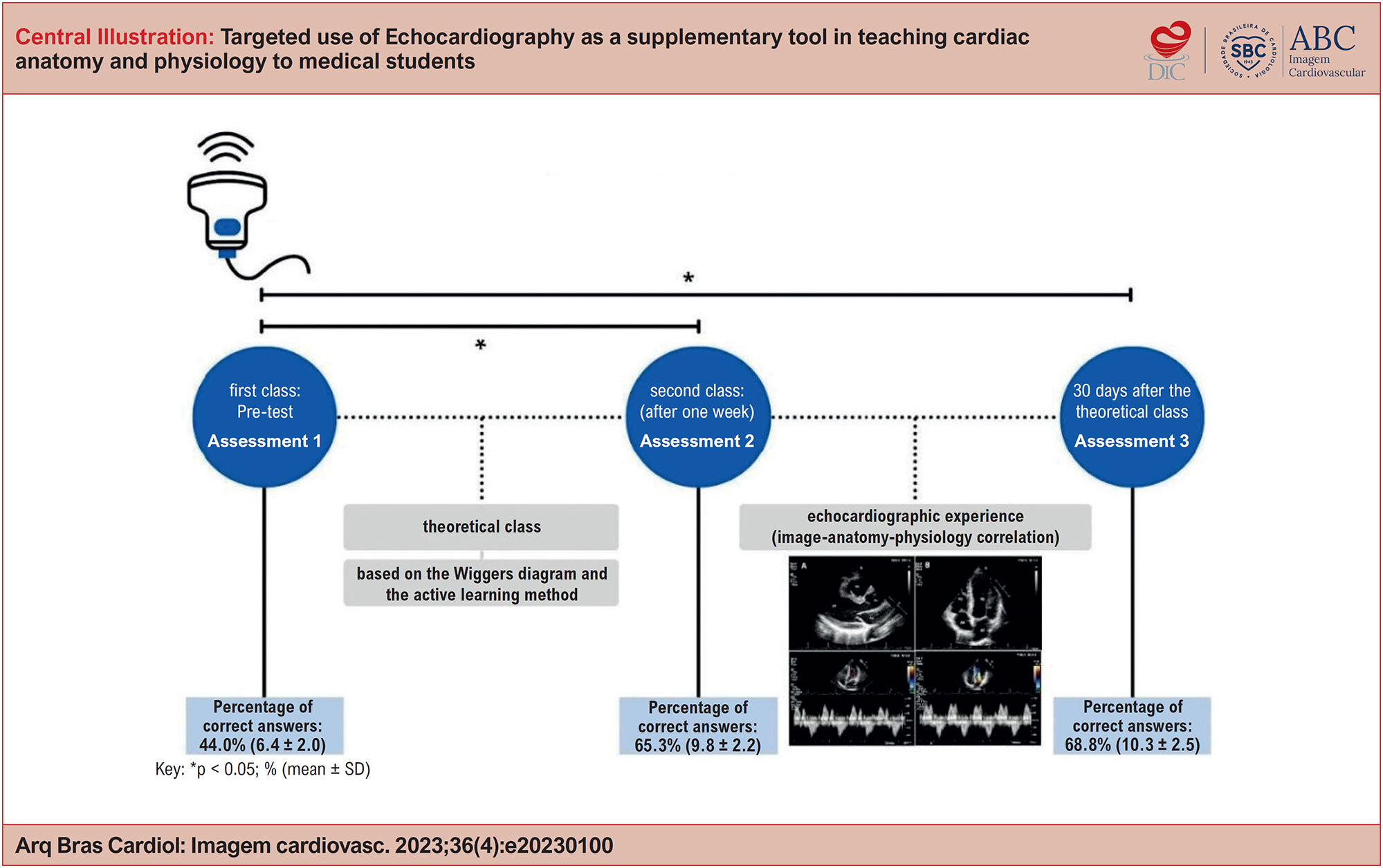
Thirty-four (34) students in the third semester took a pre-test (assessment 1) consisting of 20 multiple-choice questions, 15 of which were related to cardiac anatomy and physiology and 5 were “confusion-inducing questions.” The test was designed by one of the authors, blind to the others. After the theoretical meeting, assessment 2 was carried out with the same questions. The following week, a practical echocardiography meeting was held, aimed at evaluating anatomy and physiology. A post-test (assessment 3) was carried out 30 days after the first meeting to assess knowledge retention. The variables were analyzed by the Kolmogorov-Smirnov, Student’s T, and Wilcoxon tests, with a statistical significance level of p < 0.05.

Results:

The average number of correct answers in assessment 1 was 6.37 ± 2.0 (42.4%), 9.8 ± 2.2 (65.3%) in the second assessment, and 10.3 ± 2.5 (68.6%) in assessment 3. There was a statistical difference between assessment 1 and the other assessments (p = 0.01).

Conclusion:

Early introduction of echocardiography in the medical curriculum proves beneficial for imparting knowledge in cardiac physiology and anatomy, reinforcing theoretical understanding.
  • Anatomy
  • Cardiovascular Physiological Phenomena
  • Echocardiography
  • Education, Medical
  • Students, Medical
Read Full Article
Creative Commons Attribution (CC BY) Creative Commons license
18/12/2023 DOI: 10.36660/abcimg.20230100i
Figure 1
ABC
Original Article

Learning: New Strategy for Humanized Digital Medical Education and Training in Cardiology

Manoel Fernandes Canesin et al. Fabrício Nogueira Furtado Rodrigo Marques Gonçalves Diogo Cesar Carraro … Thaísa Mariela Nascimento de Oliveira Ricardo Rodrigues Cláudio José Fuganti Cézar Eumann Mesas Laércio Uemura

Abstract

Background

The consolidation of new educational paradigms requires the implementation of innovative strategies to transform students into competent professionals.

Objectives

To assess knowledge and satisfaction of medical students before and after the use of a new humanized digital model of active learning, called virtual case-based learning (VCBL).

Methods

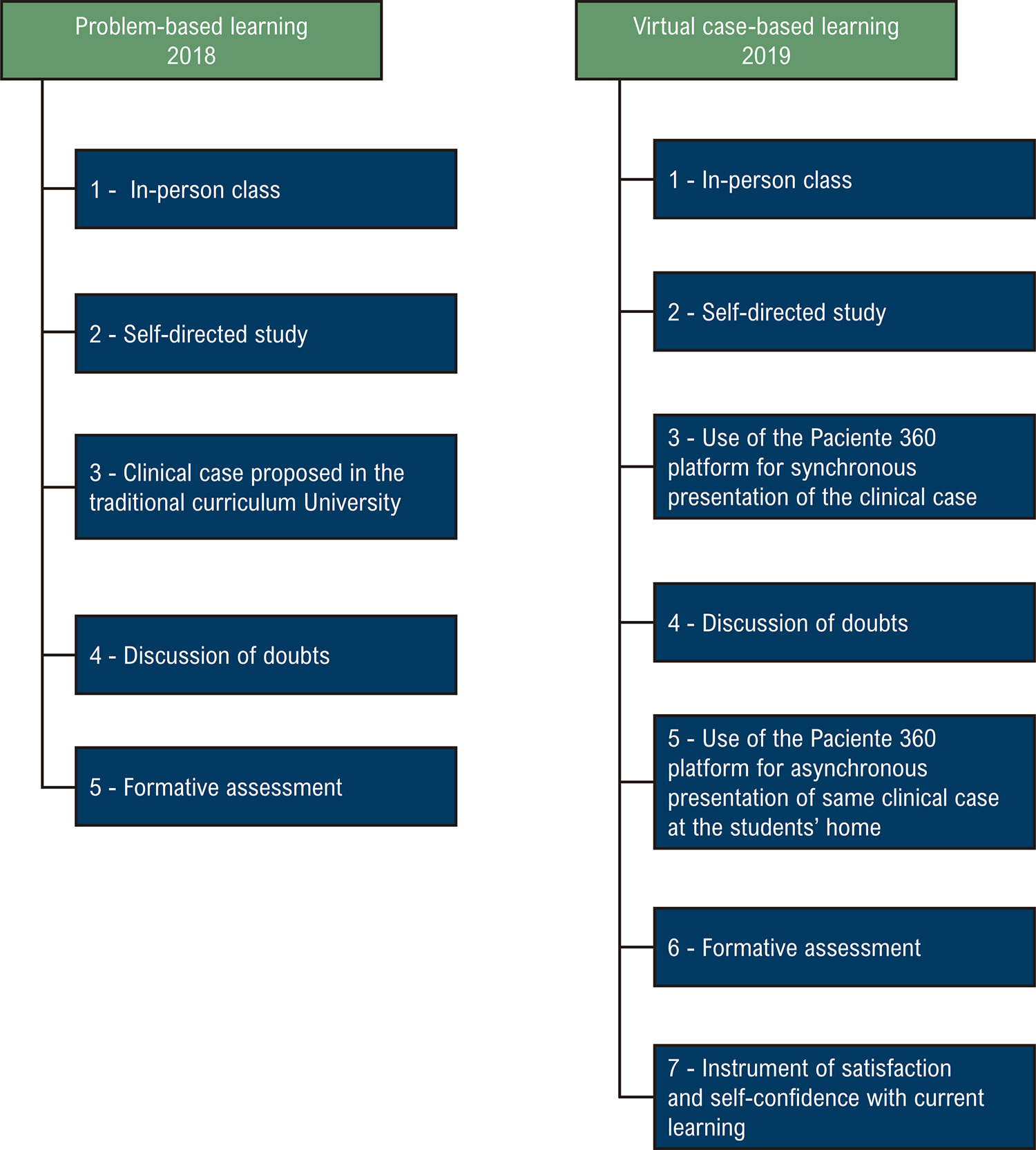
This was a descriptive, documentary analysis of the teaching-learning process of medical students. Data obtained from theoretical knowledge assessment and satisfaction evaluation questionnaires applied in 2018 and 2019 were analyzed, and the new VCBL was compared with the traditional active methodology PBL (problem-based learning). Descriptive and association analyses were made using the Statistical Package for the Social Sciences.

Results

A total of 167 evaluation forms administered to medical students were analyzed. In the evaluation of theoretical knowledge, the 2018 and the 2019 student groups had a mean of 41.7% and 73.3%, respectively (p<0.001). Among the students who responded to the satisfaction evaluation form, 76.0% gave the highest rating to question one, and 83.0% to question two. Nearly 70.0% of students positively evaluated knowledge acquisition with the Paciente 360 platform; 78.0% reported to feel prepared for working in outpatient care; and 94.0% positively evaluated the new method.

Conclusion

In this initial study, the results indicate that the new active method for humanized digital medical education, the VCBL, can help in the betterment of the teaching-learning process, promoting knowledge and satisfaction by the students.

  • Aprendizagem
  • Computer Simulation
  • Education, Medical
  • Humanization of Assistance
  • Students, Medical
Read Full Article
Creative Commons Attribution (CC BY) Creative Commons license
25/11/2022 DOI: 10.36660/abc.20220423 Views 2
Figure 1
ABC
Original Article

Teaching of Clinical Reasoning Guided by Illness Script Theory

Juliana de Cássia Vaz Oliveira et al. Aline Barbosa Peixoto Gustavo Eugênio Martins Marinho José Maria Peixoto

Abstract

Background

Teaching of clinical reasoning (CR) can be facilitated by educational strategies guided by illness script theory.

Objective

To evaluate the effects of an educational strategy guided by illness script theory on the diagnostic accuracy of chest pain in medical students.

Methods

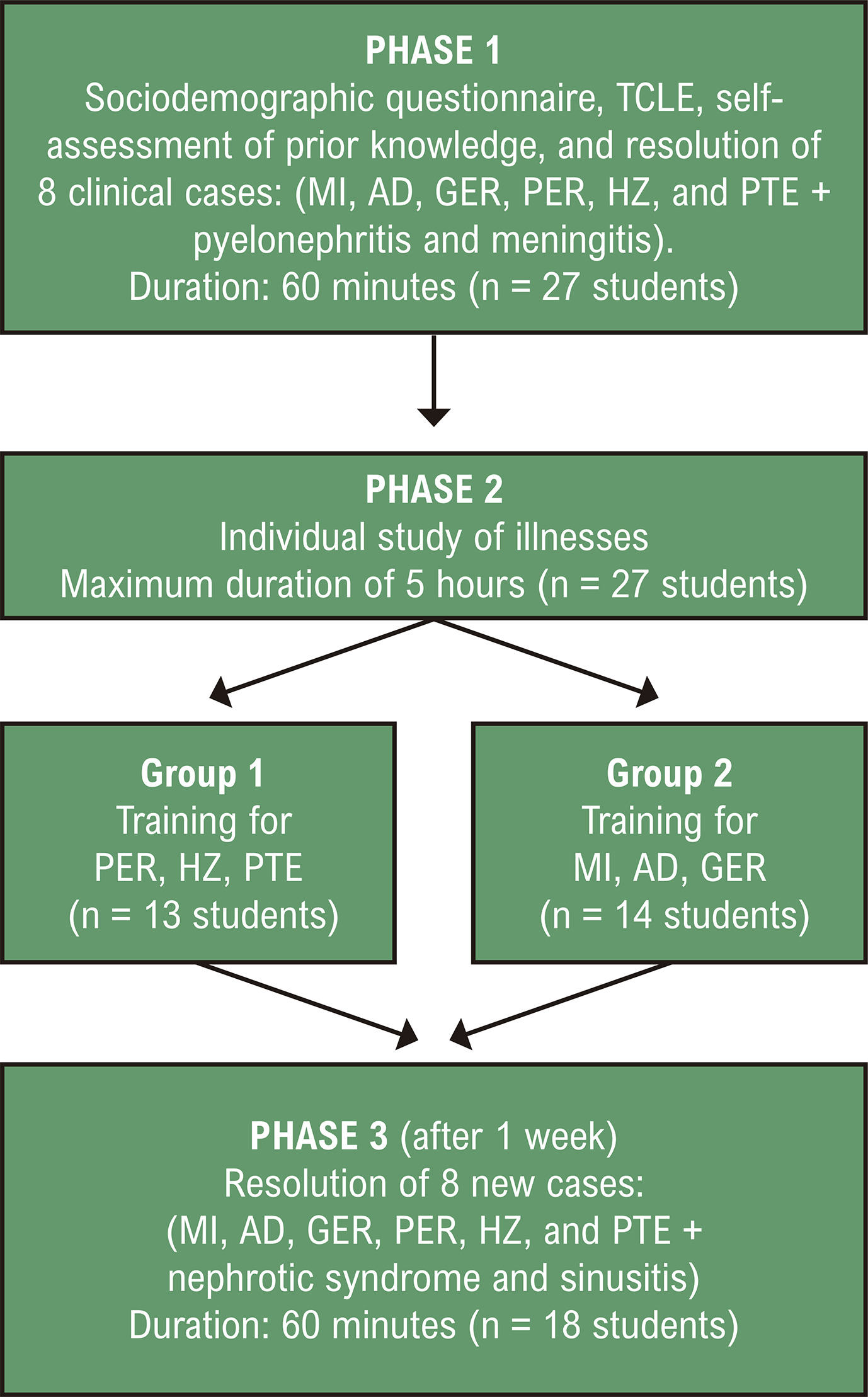
Experimental study in 3 phases, with 18 third-year medical students completing phase 3. Phases 1 and 2 had 27 students. In phase 1, each participant solved 8 clinical cases (6 of chest pain and 2 distractors). In phase 2, participants were divided into 2 groups, which distinctly trained 3 of the chest pain diagnoses from phase 1. In phase 3, after 1 week, each participant solved 8 new cases, with the same diagnoses as phase 1. Case resolution time and diagnostic accuracy were evaluated. The significance level adopted for statistical analysis was p < 0.05.

Results

In phase 3, both groups showed improved diagnostic accuracy and reduced case resolution time for the trained diagnoses, with no transfer of learning. For these diagnoses, the diagnostic accuracy scores in phases 1 and 3 were: group 1 = 1.00, IQR [0.00 to 1.00] versus 2.00, IQR [2.00 to 2.50], p = 0.017 and group 2 = 1.00, IQR [0.66 to 1.17] versus 3.00, IQR [1.33 to 3.00], p = 0.006. Case resolution times in seconds were: group 1: 485, IQR [450 to 583] versus 318, IQR [284 to 418], p = 0.027 and group 2: 655, IQR [543 to 740] versus 408, IQR [337 to 569], p = 0.010.

Conclusion

The proposed strategy seems to contribute to improved diagnostic accuracy, and it may be considered for teaching CR.

  • Cardiovascular Diseases
  • Clinical Decision – Making
  • Decision Making
  • Education,Medical
  • Learning
  • Students, Medical
Read Full Article
Creative Commons Attribution (CC BY) Creative Commons license
25/11/2022 DOI: 10.36660/abc.20220419 Views 1
IJCS
Original Article

Assessment of the Lifestyle of University Students in the Healthcare Area Using the Fantastic Questionnaire

Carolina Campos Tassini et al. Gabriela Ribeiro do Val Sarah da Silva Candido Cynthia Kallás Bachur

Abstract

Background:

The constant concern about quality of life nowadays has incited individuals to seek parameters for disease prevention. Along with that, arise a need to investigate and the ability to measure elements that characterize an appropriate lifestyle.

Objective:

To compare the factors determining the quality of life of students in the healthcare area using the Fantastic questionnaire.

Methods:

Descriptive, cross-sectional, population study. The sample was obtained by convenience and comprised medical and physical therapy students of both sexes and any ethnicity, attending a private institution of higher education, who agreed to fill out the questionnaire voluntarily. The Fantastic instrument used in this study has 25 closed questions that explore nine domains including physical, psychological, and social lifestyle components.

Results:

In total, 57 university students participated, of whom 28 (15%) were physical therapy students and 29 (50.8%) were medical students. The mean age was 23 ± 2 years, and 40 (70.1%) were female and 17 (28.8%) were male. The overall rating was “regular”, and none of the participants scored in the “very good” and “excellent” categories. The domains that mostly required change among medical students related to nutrition and physical activity, while among physical therapy students they related to cigarette, drugs, and alcohol.

Conclusion:

According to the data collected using the Fantastic questionnaire, there was a remarkable need for improvement in the management of the quality of life of physical therapy and medical students, therefore allowing some social and educational measures through health promotion and disease prevention.

  • Chronic Disease / prevention & control
  • Quality of life
  • Students, Health Sciences
  • Students, Medical
  • Surveys and Questionnaires
Read Full Article
Creative Commons Attribution (CC BY) Creative Commons license
01/01/2017 DOI: 10.5935/2359-4802.20170024 Views 1
ABC
Artigo Original

Medical students teaching cardiopulmonary resuscitation to middle school Brazilian students

Lucas Gaspar Ribeiro et al. Rafael Germano Pedro Lugarinho Menezes André Schmidt Antônio Pazin-Filho

BACKGROUND: Diseases of the circulatory system are the most common cause of death in Brazil. Because the general population is often the first to identify problems related to the circulatory system, it is important that they are trained. However, training is challenging owing to the number of persons to be trained and the maintenance of training. OBJECTIVES: To assess the delivery of a medical-student led cardiopulmonary resuscitation (CPR) training program and to assess prior knowledge of CPR as well as immediate and delayed retention of CPR training among middle school students. METHODS: Two public and two private schools were selected. CPR training consisted of a video class followed by practice on manikins that was supervised by medical students. Multiple choice questionnaires were provided before, immediately after, and at 6 months after CPR training. The questions were related to general knowledge, the sequence of procedures, and the method to administer each component (ventilation, chest compression, and automated external defibrillation). The instructors met in a focus group after the sessions to identify the potential problems faced. RESULTS: In total, 147 students completed the 6-month follow-up. The public school students had a lower prior knowledge, but this difference disappeared immediately after training. After the 6-month follow-up period, these public school students demonstrated lower retention. The main problem faced was teaching mouth-to-mouth resuscitation. CONCLUSIONS: The method used by medical students to teach middle school students was based on the see-and-practice technique. This method was effective in achieving both immediate and late retention of acquired knowledge. The greater retention of knowledge among private school students may reflect cultural factors.

  • Cardiopulmonary Resuscitation
  • Education, Primary and Secondary
  • Students, Medical
Read Full Article
Creative Commons Attribution (CC BY) Creative Commons license
14/08/2013 DOI: 10.5935/abc.20130165
Comparative study of the Pro-Atherosclerotic Profile of students of Medicine and Physical Education
ABC
Artigo Original

Comparative study of the Pro-Atherosclerotic Profile of students of Medicine and Physical Education

Marcelo de Aquino Resende et al. Roberta Barreto Vasconcelos Resende Rodrigo da Silveira Tavares Carlos Roberto Rodrigues Santos José Augusto Soares Barreto-Filho

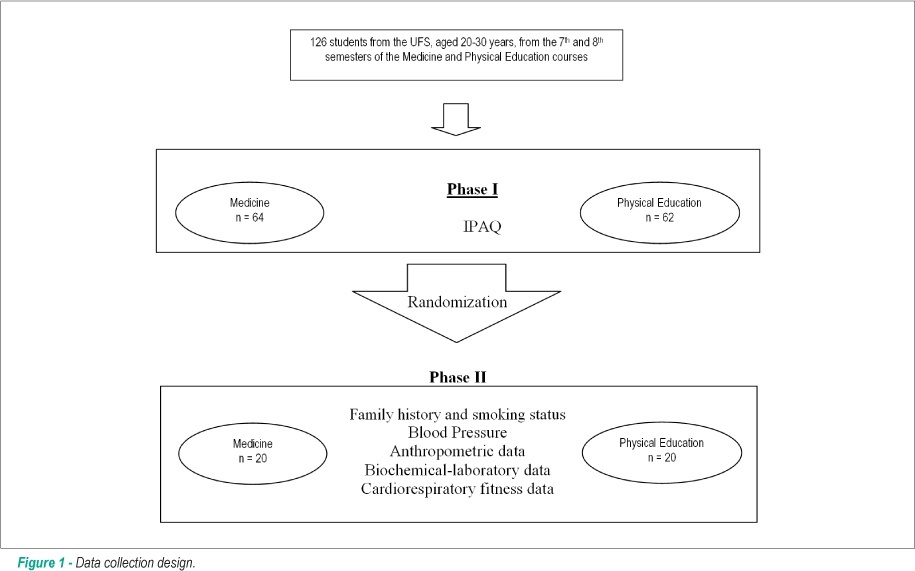
BACKGROUND: Recent studies have demonstrated a strong association between physical activity, low level of cardiorespiratory fitness and the presence of cardiovascular risk factors. OBJECTIVE: Compare the level of physical activity, level of cardiorespiratory fitness and cardiovascular risk in students of medicine and physical education. METHODS: At the first phase, the International Physical Activity Questionnaire (IPAQ) was used to quantify the physical activity level of 126 students from the 7th and 8th semesters of the physical education and medicine courses. At the second phase, 40 students were randomly selected (20 from each course) to undergo cardiovascular risk assessment and cardiorespiratory fitness. The following data were assessed 1) arterial pressure; 2) body mass index (BMI); 3) percentage of fat (electrical bioimpedance); 4) abdominal circumference (AC); 5) laboratory biochemical assessment; and 6) cardiorespiratory fitness (Kline’s Test). RESULTS: The comparison of students of medicine and physical education, respectively, showed a higher frequency of individuals presenting: low level of physical activity (55% vs 15.0%; p = 0.008); pre-hypertension measured by SAP (80% vs 25.0%; p = 0.000) and by DAP (45% vs 5.0%; p = 0.003); overweight (50% vs 10.0%; p = 0.006); increased abdominal circumference (25% vs 0.0%; p = 0.017); increased total cholesterol (165 ± 28 vs 142 ± 28 mg/dl; p = 0.015); increased LDL-c (99 ± 27 vs 81 ± 23 mg/dl; p = 0.026); increased glycemia (81 ± 8.0 vs 75 ± 7.0 mg/dl; p = 0.013); lower cardiorespiratory fitness (48 ± 8.0 vs 56 ± 7.0 ml/kg/min; p = 0.001). CONCLUSION: Students of medicine presented lower levels of physical activity practice, lower level of cardiorespiratory fitness and higher frequency of cardiovascular risk factors, when compared to Physical Education students.

  • Exercise
  • Motor Activity
  • physical education and training
  • Risk Factors
  • Students, Medical
Read Full Article
Creative Commons Attribution (CC BY) Creative Commons license
11/06/2010 DOI: 10.1590/S0066-782X2010005000061 Views 1

How to cite this article

EndNote RIS

Electronic Document Format (Vancouver)

Bacca COF, Toniazzo SRF, Rocha FR, Matias LF, Mees TN, Kuhl ALN, Ramos N, et al. Use of Echocardiography as a Supplementary Tool in Teaching Cardiac Anatomy and Physiology to Medical Students. ABC Imagem Cardiovascular 2023;36(4):e20230100.

Electronic Document Format (ABNT)

Bacca, Caroline de Oliveira Fischer; Toniazzo, Silvia R. Froes; Rocha, Franciani Rodrigues da; Matias, Luiz Fernando; Mees, Thais Naiara; Kuhl, Ana Luiza Nardelli; Ramos, Nicolas; Gambetta, Marcelo Vier. Use of Echocardiography as a Supplementary Tool in Teaching Cardiac Anatomy and Physiology to Medical Students. ABC Imagem Cardiovascular, v. 36, n. 4, e20230100, Dec. 2023.

Electronic Document Format (APA)

Bacca, C. O. F., Toniazzo, S. R. F., Rocha, F. R. , Matias, L. F., Mees, T. N., Kuhl, A. L. N., Ramos, N., & Gambetta, M. V. (2023). Use of Echocardiography as a Supplementary Tool in Teaching Cardiac Anatomy and Physiology to Medical Students. ABC Imagem Cardiovascular, 36(4), e20230100.

Electronic Document Format (ISO)

Bacca, Caroline de Oliveira Fischer and Toniazzo, Silvia R. Froes and Rocha, Franciani Rodrigues da and Matias, Luiz Fernando and Mees, Thais Naiara and Kuhl, Ana Luiza Nardelli and Ramos, Nicolas and Gambetta, Marcelo Vier. Use of Echocardiography as a Supplementary Tool in Teaching Cardiac Anatomy and Physiology to Medical Students. ABC Imagem Cardiovascular [online]. 2023, vol. 36, n. 4, [cited 2026-10-14], e20230100. Available from: <https://journals.cardiol.br/en/article/use-of-echocardiography-as-a-supplementary-tool-in-teaching-cardiac-anatomy-and-physiology-to-medical-students/>. ISSN 2318-8219

EndNote RIS

Electronic Document Format (Vancouver)

Canesin MF, Furtado FN, Gonçalves RM, Carraro DC, Oliveira TMN, Rodrigues R, Fuganti CJ, et al. Learning: New Strategy for Humanized Digital Medical Education and Training in Cardiology. Arquivos Brasileiros de Cardiologia 2022;119(5 suppl 1):35-42.

Electronic Document Format (ABNT)

Canesin, Manoel Fernandes; Furtado, Fabrício Nogueira; Gonçalves, Rodrigo Marques; Carraro, Diogo Cesar; Oliveira, Thaísa Mariela Nascimento de; Rodrigues, Ricardo; Fuganti, Cláudio José; Mesas, Cézar Eumann; Uemura, Laércio. Learning: New Strategy for Humanized Digital Medical Education and Training in Cardiology. Arquivos Brasileiros de Cardiologia, v. 119, n. 5 suppl 1, p. 35-42, Nov. 2022.

Electronic Document Format (APA)

Canesin, M. F., Furtado, F. N., Gonçalves, R. M., Carraro, D. C., Oliveira, T. M. N. , Rodrigues, R., Fuganti, C. J., Mesas, C. E., & Uemura, L. (2022). Learning: New Strategy for Humanized Digital Medical Education and Training in Cardiology. Arquivos Brasileiros de Cardiologia, 119(5 suppl 1), 35-42.

Electronic Document Format (ISO)

Canesin, Manoel Fernandes and Furtado, Fabrício Nogueira and Gonçalves, Rodrigo Marques and Carraro, Diogo Cesar and Oliveira, Thaísa Mariela Nascimento de and Rodrigues, Ricardo and Fuganti, Cláudio José and Mesas, Cézar Eumann and Uemura, Laércio. Learning: New Strategy for Humanized Digital Medical Education and Training in Cardiology. Arquivos Brasileiros de Cardiologia [online]. 2022, vol. 119, n. 5 suppl 1, [cited 2026-10-14], pp. 35-42. Available from: <https://journals.cardiol.br/en/article/learning-new-strategy-for-humanized-digital-medical-education-and-training-in-cardiology/>. ISSN 0066-782X

EndNote RIS

Electronic Document Format (Vancouver)

Oliveira JCV, Peixoto AB, Marinho GEM, Peixoto JM. Teaching of Clinical Reasoning Guided by Illness Script Theory. Arquivos Brasileiros de Cardiologia 2022;119(5 suppl 1):14-21.

Electronic Document Format (ABNT)

Oliveira, Juliana de Cássia Vaz; Peixoto, Aline Barbosa; Marinho, Gustavo Eugênio Martins; Peixoto, José Maria. Teaching of Clinical Reasoning Guided by Illness Script Theory. Arquivos Brasileiros de Cardiologia, v. 119, n. 5 suppl 1, p. 14-21, Nov. 2022.

Electronic Document Format (APA)

Oliveira, J. C. V., Peixoto, A. B., Marinho, G. E. M., & Peixoto, J. M. (2022). Teaching of Clinical Reasoning Guided by Illness Script Theory. Arquivos Brasileiros de Cardiologia, 119(5 suppl 1), 14-21.

Electronic Document Format (ISO)

Oliveira, Juliana de Cássia Vaz and Peixoto, Aline Barbosa and Marinho, Gustavo Eugênio Martins and Peixoto, José Maria. Teaching of Clinical Reasoning Guided by Illness Script Theory. Arquivos Brasileiros de Cardiologia [online]. 2022, vol. 119, n. 5 suppl 1, [cited 2026-10-14], pp. 14-21. Available from: <https://journals.cardiol.br/en/article/teaching-of-clinical-reasoning-guided-by-illness-script-theory/>. ISSN 0066-782X

EndNote RIS

Electronic Document Format (Vancouver)

Tassini CC, Val GR, Candido SS, Bachur CK. Assessment of the Lifestyle of University Students in the Healthcare Area Using the Fantastic Questionnaire. International Journal of Cardiovascular Sciences 2017;30(2):117-22.

Electronic Document Format (ABNT)

Tassini, Carolina Campos; Val, Gabriela Ribeiro do; Candido, Sarah da Silva; Bachur, Cynthia Kallás. Assessment of the Lifestyle of University Students in the Healthcare Area Using the Fantastic Questionnaire. International Journal of Cardiovascular Sciences, v. 30, n. 2, p. 117-122, Dec. 2016.

Electronic Document Format (APA)

Tassini, C. C., Val, G. R. , Candido, S. S., & Bachur, C. K. (2017). Assessment of the Lifestyle of University Students in the Healthcare Area Using the Fantastic Questionnaire. International Journal of Cardiovascular Sciences, 30(2), 117-122.

Electronic Document Format (ISO)

Tassini, Carolina Campos and Val, Gabriela Ribeiro do and Candido, Sarah da Silva and Bachur, Cynthia Kallás. Assessment of the Lifestyle of University Students in the Healthcare Area Using the Fantastic Questionnaire. International Journal of Cardiovascular Sciences [online]. 2017, vol. 30, n. 2, [cited 2026-10-14], pp. 117-122. Available from: <https://journals.cardiol.br/en/article/assessment-of-the-lifestyle-of-university-students-in-the-healthcare-area-using-the-fantastic-questionnaire/>. ISSN 2359-4802

EndNote RIS

Electronic Document Format (Vancouver)

Ribeiro LG, Germano R, Menezes PL, Schmidt A, Pazin-Filho A. Medical students teaching cardiopulmonary resuscitation to middle school Brazilian students. Arquivos Brasileiros de Cardiologia 2013;101(4):328-35.

Electronic Document Format (ABNT)

Ribeiro, Lucas Gaspar; Germano, Rafael; Menezes, Pedro Lugarinho; Schmidt, André; Pazin-Filho, Antônio. Medical students teaching cardiopulmonary resuscitation to middle school Brazilian students. Arquivos Brasileiros de Cardiologia, v. 101, n. 4, p. 328-335, Aug. 2013.

Electronic Document Format (APA)

Ribeiro, L. G., Germano, R., Menezes, P. L., Schmidt, A., & Pazin-Filho, A. (2013). Medical students teaching cardiopulmonary resuscitation to middle school Brazilian students. Arquivos Brasileiros de Cardiologia, 101(4), 328-335.

Electronic Document Format (ISO)

Ribeiro, Lucas Gaspar and Germano, Rafael and Menezes, Pedro Lugarinho and Schmidt, André and Pazin-Filho, Antônio. Medical students teaching cardiopulmonary resuscitation to middle school Brazilian students. Arquivos Brasileiros de Cardiologia [online]. 2013, vol. 101, n. 4, [cited 2026-10-14], pp. 328-335. Available from: <https://journals.cardiol.br/en/article/medical-students-teaching-cardiopulmonary-resuscitation-to-middle-school-brazilian-students/>. ISSN 0066-782X

EndNote RIS

Electronic Document Format (Vancouver)

Resende MA, Resende RBV, Tavares RS, Santos CRR, Barreto-Filho JAS. Comparative study of the Pro-Atherosclerotic Profile of students of Medicine and Physical Education. Arquivos Brasileiros de Cardiologia 2010;95(1):21-9.

Electronic Document Format (ABNT)

Resende, Marcelo de Aquino; Resende, Roberta Barreto Vasconcelos; Tavares, Rodrigo da Silveira; Santos, Carlos Roberto Rodrigues; Barreto-Filho, José Augusto Soares. Comparative study of the Pro-Atherosclerotic Profile of students of Medicine and Physical Education. Arquivos Brasileiros de Cardiologia, v. 95, n. 1, p. 21-29, Jun. 2010.

Electronic Document Format (APA)

Resende, M. A., Resende, R. B. V., Tavares, R. S., Santos, C. R. R., & Barreto-Filho, J. A. S. (2010). Comparative study of the Pro-Atherosclerotic Profile of students of Medicine and Physical Education. Arquivos Brasileiros de Cardiologia, 95(1), 21-29.

Electronic Document Format (ISO)

Resende, Marcelo de Aquino and Resende, Roberta Barreto Vasconcelos and Tavares, Rodrigo da Silveira and Santos, Carlos Roberto Rodrigues and Barreto-Filho, José Augusto Soares. Comparative study of the Pro-Atherosclerotic Profile of students of Medicine and Physical Education. Arquivos Brasileiros de Cardiologia [online]. 2010, vol. 95, n. 1, [cited 2026-10-14], pp. 21-29. Available from: <https://journals.cardiol.br/en/article/comparative-study-of-the-pro-atherosclerotic-profile-of-students-of-medicine-and-physical-education/>. ISSN 0066-782X

  • About ABC Family
  • Internal Regulation
  • Editorial Board
  • Brazilian Society of Cardiology (SBC)

Issues

SBC Guidelines

  • Videos
  • Podcasts
  • News