ABC Family Arquivos Brasileiros de Cardiologia International Journal of Cardiovascular Sciences ABC Heart Failure & Cardiomyopathy ABC Imagem Cardiovascular
Português English
ABC Family
Português English
  • About
    • About ABC Family
    • Internal Regulation
    • Editorial Board
    • Brazilian Society of Cardiology (SBC)
  • Issues
  • SBC Guidelines
  • Content
    • Videos
    • Podcasts
    • News
  • About
    • About ABC Family
    • Internal Regulation
    • Editorial Board
    • Brazilian Society of Cardiology (SBC)
  • Issues
  • SBC Guidelines
  • Content
    • Videos
    • Podcasts
    • News

ABC Family

  • ABC Family
  • Arquivos Brasileiros de Cardiologia
  • International Journal of Cardiovascular Sciences
  • ABC Heart Failure & Cardiomyopathy
  • ABC Imagem Cardiovascular
Search in

No content found.

Journals
Ordering
Article types
Others

  1. Home
  2. Keyword: Machine Learning/trends
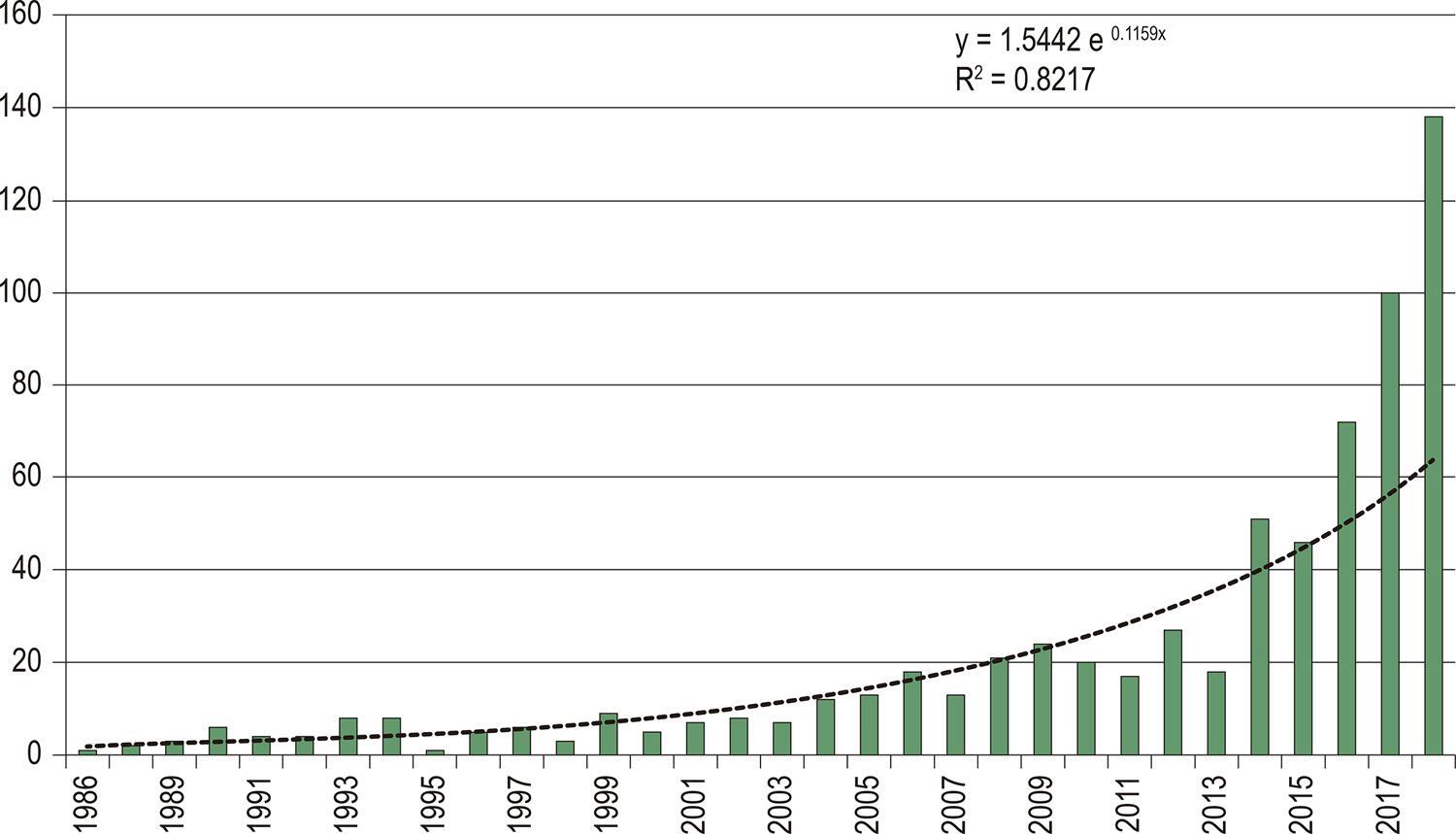
Figure 1
ABC
Review Article

Artificial Intelligence in Cardiology: Concepts, Tools and Challenges – “The Horse is the One Who Runs, You Must Be the Jockey”

Erito Marques de Souza Filho et al. Fernando de Amorim Fernandes Celine Lacerda de Abreu Soares Flavio Luiz Seixas … Alair Augusto Sarmet M.D. dos Santos Ronaldo Altenburg Gismondi Evandro Tinoco Mesquita Claudio Tinoco Mesquita

Abstract

The recent advances at hardware level and the increasing requirement of personalization of care associated with the urgent needs of value creation for the patients has helped Artificial Intelligence (AI) to promote a significant paradigm shift in the most diverse areas of medical knowledge, particularly in Cardiology, for its ability to support decision-making and improve diagnostic and prognostic performance. In this context, the present work does a non-systematic review of the main papers published on AI in Cardiology, focusing on its main applications, potential impacts and challenges.

  • Artificial Intelligence/trends
  • Cardiovascular Diseases
  • Clinical Decision – Making
  • Computer Systems/trends
  • Machine Learning/trends
Read Full Article
Creative Commons Attribution (CC BY) Creative Commons license
29/05/2020 DOI: 10.36660/abc.20180431
ABC
Editorial

Toward a Patient-Centered, Data-Driven Cardiology

Antonio Luiz Ribeiro et al. Gláucia Maria Moraes de Oliveira

Beginning in the 1970s and 1980s, the emergence of randomized clinical trials and studies with large cohorts, associated with the development of the methodology for systematic reviews and meta-analyses, triggered a revolution in the way of thinking and performing healthcare practice. Evidence-based medicine (EBM), defined as the integration of the best research evidence with clinical experience and patient values, has become a new paradigm, orienting medical education and specialized publications. One of the principles of EBM was precisely the primacy of information obtained from randomized clinical trials and meta-analyses, which were placed at the top of an evidence hierarchy, valuing quantitative results more than clinical experience and expert opinion. Indeed, it has always been challenging for EBM to integrate empirical evidence with other types of medical knowledge, such as clinical expertise and pathophysiological rationale, or even with the preferences of individual patients.

The use of EBM in clinical practice also runs into the difficulty of finding robust evidence for all subgroups of clinical situations found in the real world, “gray areas” in which no reliable evidence can be obtained from the scientific literature to guide the physician in caring for his patient. Randomized clinical trials are expensive and generally require large study samples and long-term follow-up. There are several situations without evidence, or situations in which the evidence is inconsistent or of poor quality.

[…]

  • Access Health Technologies
  • Artificial Intelligence
  • Cardiology
  • Clinical Decision – Making
  • Diagnostic Equipment Digital
  • Evidence-Based Medicine/methods
  • Health Manager
  • Machine Learning/trends
  • Patient Centered Care
  • Physician-Patient Relations
Read Full Article
Creative Commons Attribution (CC BY) Creative Commons license
15/04/2019 DOI: 10.5935/abc.20190069 Views 2
IJCS
Editorial

Artificial Intelligence and Machine Learning in Cardiology – A Change of Paradigm

Claudio Tinoco Mesquita

We are experiencing a change paradigm in modern life. With the presence of computers and intelligent machines everywhere, the predictions of science-fiction books from years ago gradually become reality; these are the times of pervasive computing. Among the computational most frequently mentioned tools in clinical studies and seen with enthusiasm by the scientific community is the Artificial Intelligence and consequently the machines that learn, which is best quoted in its original English form, Machine Learning. In general Artificial Intelligence is defined as the constellation of items (algorithms, robotics, neural networks) that allow a software to have intelligence properties that are comparable to those of a human being, among them learning from databases with minimal human interference.

Obermeyer and Emanuel recently wrote an editorial stating that Machine Learning has become widespread and imperative for solving complex problems in the various fields of science, and in the medical field its use will transform the practice. The use of artificial intelligence is evolving increasingly in cardiology and there are already excellent examples in several areas. Using a sophisticated learning system to electrocardiographic interpretation, Li et al. achieved that electrocardiographic patterns were automatically recognized with an accuracy of 88% for the classification of abnormal rhythms(). One of the most important limitations of the system studied was the quality of the electrocardiographic signal for interpretation and learning, which highlights one of the essential characteristics of Machine Learning, that is the need for accurate and reproducible information for the formation of databases., As databases are usually produced from patients selected for their basic condition, one of the most important points for development is the creation of broader and generalizable databases that do not induce biases in the interpretation of findings, point in which industry is heavily investing at the moment.

[…]

  • Artificial Intelligence/trends
  • Cardiovascular Diseases
  • Computer Systems/trends
  • Echocardiography/trends
  • Machine Learning/trends
  • NucleAR Medicine/trends
Read Full Article
Creative Commons Attribution (CC BY) Creative Commons license
01/01/2017 DOI: 10.5935/2359-4802.20170027 Views 2

How to cite this article

EndNote RIS

Electronic Document Format (Vancouver)

Souza Filho EM, Fernandes FA, Soares CLA, Seixas FL, Santos AASM, Gismondi RA, Mesquita ET, et al. Artificial Intelligence in Cardiology: Concepts, Tools and Challenges – “The Horse is the One Who Runs, You Must Be the Jockey”. Arquivos Brasileiros de Cardiologia 2020;114(4):718-25.

Electronic Document Format (ABNT)

Souza Filho, Erito Marques de; Fernandes, Fernando de Amorim; Soares, Celine Lacerda de Abreu; Seixas, Flavio Luiz; Santos, Alair Augusto Sarmet M.D. dos; Gismondi, Ronaldo Altenburg; Mesquita, Evandro Tinoco; Mesquita, Claudio Tinoco. Artificial Intelligence in Cardiology: Concepts, Tools and Challenges – “The Horse is the One Who Runs, You Must Be the Jockey”. Arquivos Brasileiros de Cardiologia, v. 114, n. 4, p. 718-725, May. 2020.

Electronic Document Format (APA)

Souza Filho, E. M. , Fernandes, F. A., Soares, C. L. A., Seixas, F. L., Santos, A. A. S. M. , Gismondi, R. A., Mesquita, E. T., & Mesquita, C. T. (2020). Artificial Intelligence in Cardiology: Concepts, Tools and Challenges – “The Horse is the One Who Runs, You Must Be the Jockey”. Arquivos Brasileiros de Cardiologia, 114(4), 718-725.

Electronic Document Format (ISO)

Souza Filho, Erito Marques de and Fernandes, Fernando de Amorim and Soares, Celine Lacerda de Abreu and Seixas, Flavio Luiz and Santos, Alair Augusto Sarmet M.D. dos and Gismondi, Ronaldo Altenburg and Mesquita, Evandro Tinoco and Mesquita, Claudio Tinoco. Artificial Intelligence in Cardiology: Concepts, Tools and Challenges – “The Horse is the One Who Runs, You Must Be the Jockey”. Arquivos Brasileiros de Cardiologia [online]. 2020, vol. 114, n. 4, [cited 2026-10-14], pp. 718-725. Available from: <https://journals.cardiol.br/en/article/artificial-intelligence-in-cardiology-concepts-tools-and-challenges-the-horse-is-the-one-who-runs-you-must-be-the-jockey/>. ISSN 0066-782X

EndNote RIS

Electronic Document Format (Vancouver)

Ribeiro AL, Oliveira GMM. Toward a Patient-Centered, Data-Driven Cardiology. Arquivos Brasileiros de Cardiologia 2019;112(4):371-3.

Electronic Document Format (ABNT)

Ribeiro, Antonio Luiz; Oliveira, Gláucia Maria Moraes de. Toward a Patient-Centered, Data-Driven Cardiology. Arquivos Brasileiros de Cardiologia, v. 112, n. 4, p. 371-373, Apr. 2019.

Electronic Document Format (APA)

Ribeiro, A. L., & Oliveira, G. M. M. (2019). Toward a Patient-Centered, Data-Driven Cardiology. Arquivos Brasileiros de Cardiologia, 112(4), 371-373.

Electronic Document Format (ISO)

Ribeiro, Antonio Luiz and Oliveira, Gláucia Maria Moraes de. Toward a Patient-Centered, Data-Driven Cardiology. Arquivos Brasileiros de Cardiologia [online]. 2019, vol. 112, n. 4, [cited 2026-10-14], pp. 371-373. Available from: <https://journals.cardiol.br/en/article/toward-a-patient-centered-data-driven-cardiology/>. ISSN 0066-782X

EndNote RIS

Electronic Document Format (Vancouver)

Mesquita CT. Artificial Intelligence and Machine Learning in Cardiology – A Change of Paradigm. International Journal of Cardiovascular Sciences 2017;30(3):187-8.

Electronic Document Format (ABNT)

Mesquita, Claudio Tinoco. Artificial Intelligence and Machine Learning in Cardiology – A Change of Paradigm. International Journal of Cardiovascular Sciences, v. 30, n. 3, p. 187-188, Dec. 2016.

Electronic Document Format (APA)

Mesquita, C. T. (2017). Artificial Intelligence and Machine Learning in Cardiology – A Change of Paradigm. International Journal of Cardiovascular Sciences, 30(3), 187-188.

Electronic Document Format (ISO)

Mesquita, Claudio Tinoco. Artificial Intelligence and Machine Learning in Cardiology – A Change of Paradigm. International Journal of Cardiovascular Sciences [online]. 2017, vol. 30, n. 3, [cited 2026-10-14], pp. 187-188. Available from: <https://journals.cardiol.br/en/article/artificial-intelligence-and-machine-learning-in-cardiology-a-change-of-paradigm/>. ISSN 2359-4802

  • About ABC Family
  • Internal Regulation
  • Editorial Board
  • Brazilian Society of Cardiology (SBC)

Issues

SBC Guidelines

  • Videos
  • Podcasts
  • News