ABC Family Arquivos Brasileiros de Cardiologia International Journal of Cardiovascular Sciences ABC Heart Failure & Cardiomyopathy ABC Imagem Cardiovascular
Português English
ABC Family
Português English
  • About
    • About ABC Family
    • Internal Regulation
    • Editorial Board
    • Brazilian Society of Cardiology (SBC)
  • Issues
  • SBC Guidelines
  • Content
    • Videos
    • Podcasts
    • News
  • About
    • About ABC Family
    • Internal Regulation
    • Editorial Board
    • Brazilian Society of Cardiology (SBC)
  • Issues
  • SBC Guidelines
  • Content
    • Videos
    • Podcasts
    • News

ABC Family

  • ABC Family
  • Arquivos Brasileiros de Cardiologia
  • International Journal of Cardiovascular Sciences
  • ABC Heart Failure & Cardiomyopathy
  • ABC Imagem Cardiovascular
Search in

No content found.

Journals
Ordering
Article types
Others

  1. Home
  2. Keyword: Decision Making
Figure 1
ABC
Original Article

Teaching of Clinical Reasoning Guided by Illness Script Theory

Juliana de Cássia Vaz Oliveira et al. Aline Barbosa Peixoto Gustavo Eugênio Martins Marinho José Maria Peixoto

Abstract

Background

Teaching of clinical reasoning (CR) can be facilitated by educational strategies guided by illness script theory.

Objective

To evaluate the effects of an educational strategy guided by illness script theory on the diagnostic accuracy of chest pain in medical students.

Methods

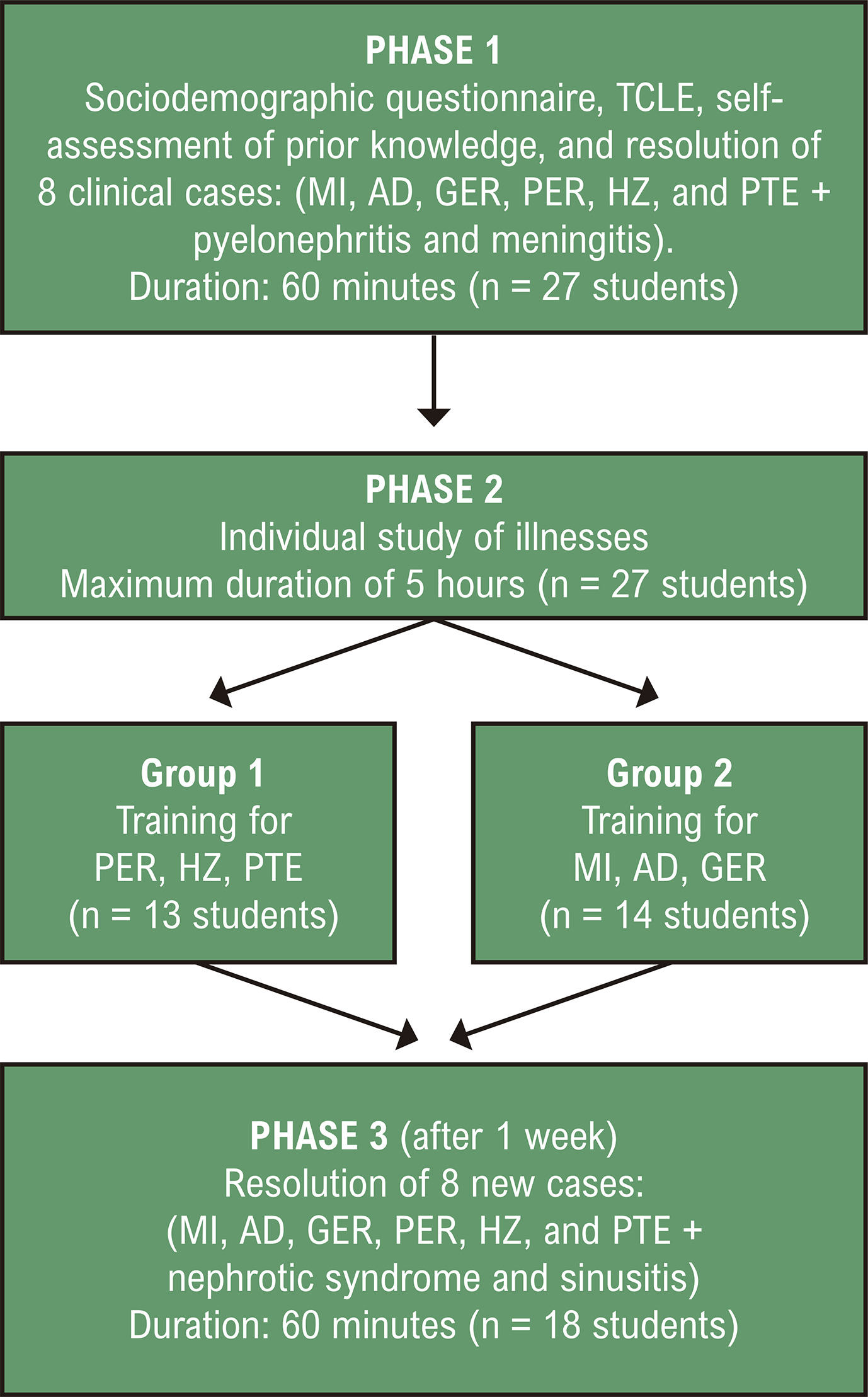
Experimental study in 3 phases, with 18 third-year medical students completing phase 3. Phases 1 and 2 had 27 students. In phase 1, each participant solved 8 clinical cases (6 of chest pain and 2 distractors). In phase 2, participants were divided into 2 groups, which distinctly trained 3 of the chest pain diagnoses from phase 1. In phase 3, after 1 week, each participant solved 8 new cases, with the same diagnoses as phase 1. Case resolution time and diagnostic accuracy were evaluated. The significance level adopted for statistical analysis was p < 0.05.

Results

In phase 3, both groups showed improved diagnostic accuracy and reduced case resolution time for the trained diagnoses, with no transfer of learning. For these diagnoses, the diagnostic accuracy scores in phases 1 and 3 were: group 1 = 1.00, IQR [0.00 to 1.00] versus 2.00, IQR [2.00 to 2.50], p = 0.017 and group 2 = 1.00, IQR [0.66 to 1.17] versus 3.00, IQR [1.33 to 3.00], p = 0.006. Case resolution times in seconds were: group 1: 485, IQR [450 to 583] versus 318, IQR [284 to 418], p = 0.027 and group 2: 655, IQR [543 to 740] versus 408, IQR [337 to 569], p = 0.010.

Conclusion

The proposed strategy seems to contribute to improved diagnostic accuracy, and it may be considered for teaching CR.
  • Cardiovascular Diseases
  • Clinical Decision – Making
  • Decision Making
  • Education,Medical
  • Learning
  • Students, Medical
Read Full Article
Creative Commons Attribution (CC BY) Creative Commons license
25/11/2022 DOI: 10.36660/abc.20220419 Views 1
ABC
Editorial

Short Editorial: “Creation and Implementation of a Prospective Multicenter Registry of Acute Myocardial Infarction: RIAM”

José Mariani Junior

Cardiovascular diseases, including acute myocardial infarction (AMI), represent a major public health issue in Brazil and worldwide, with elevated incidence and mortality rates. The rates of Brazilian mortality for this group of causes (183.3/100,000), are amongst the highest in the world and is similar to that of countries such as China and areas such as the east of Europe.,

The implementation of health promotion policies, early diagnosis and effective treatment are some of the most important prevention and treatment strategies for these diseases, which remain the leading cause of mortality among adult patients globally. However, the recognition of these diseases, as well as their real and effective measurements, are among the strategies that must be optimized in our field.

[…]

  • Cardiovascular Diseases, mortality
  • Database
  • Decision Making
  • Epidemiology
  • Myocardial Infarction/prevention and control
  • Public Health Policy
Read Full Article
Creative Commons Attribution (CC BY) Creative Commons license
06/04/2020 DOI: 10.36660/abc.20200158 Views 1
Figure 1
ABC
Original Article

Cut-Point for Satisfactory Adherence of the Dietary Sodium Restriction Questionnaire for Patients with Heart Failure

Karina Sanches Machado d’Almeida et al. Sofia Louise Santin Barilli Gabriela Corrêa Souza Eneida Rejane Rabelo-Silva

Abstract

Background:

The low or non-adherence to reduction of sodium intake has been identified as one of the main precipitating factors of heart failure (HF). The Dietary Sodium Restriction Questionnaire (DSRQ) identifies factors that can interfere with adherence to this recommendation. However, there is still no cut-point to define adherence for this questionnaire.

Objectives:

To identify the cut-point for satisfactory adherence to the Brazilian version of the DSRQ, (the Questionário de Restrição de Sódio na Dieta, QRSD).

Methods:

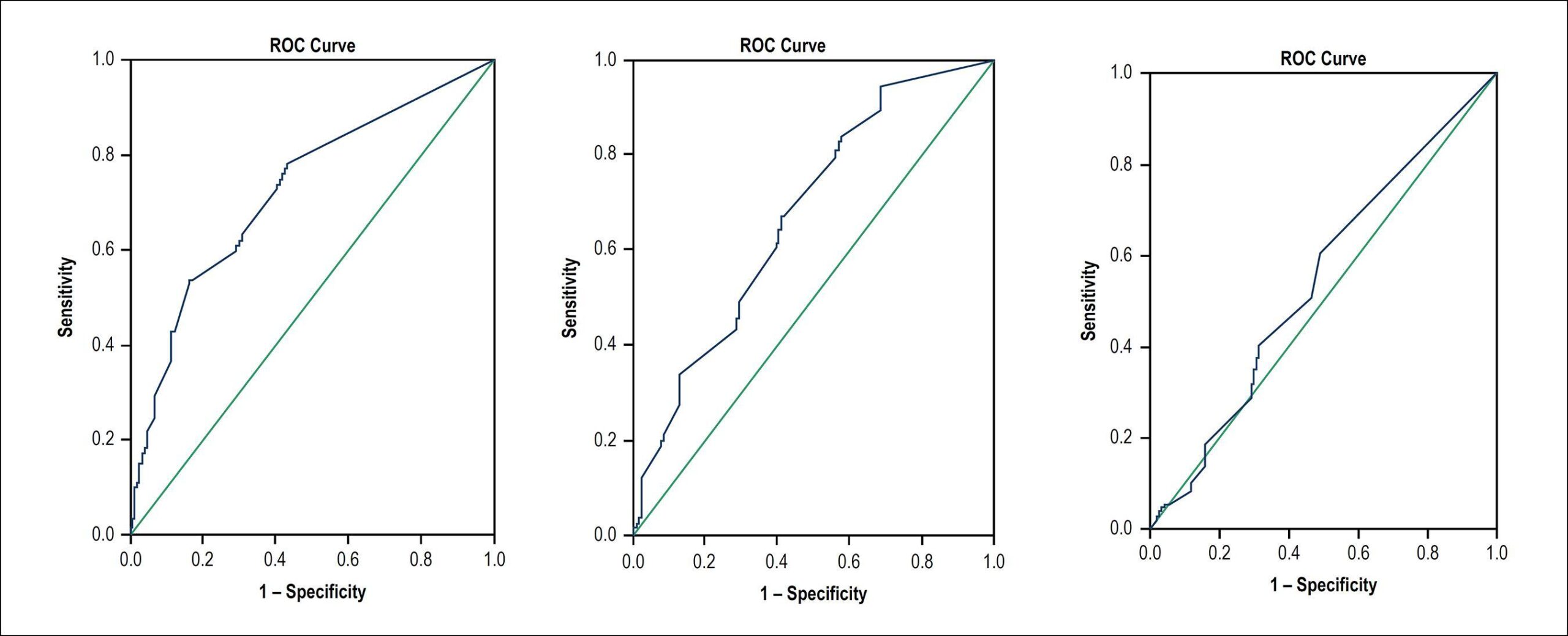
Multicenter study. Patients with HF in outpatient treatment (compensated) and those treated in emergency departments due to acute HF (decompensated) were included. For the cut-point definition, the DSRQ scores were compared between groups. A ROC curve was constructed for each subscale to determine the best point of sensitivity and specificity regarding adherence. A 5% significance level was adopted.

Results:

A total of 206 compensated patients and 225 decompensated were included. Compensated patients exhibited scores that showed higher adhesion in all subscales (all p <0.05). Scores ≥ 40 points of a total of 45 for the subscale of Attitude and Subjective Norm; scores ≤ eight of a total of 20 for Perceived Behavioral Control; and ≤ three of a total of 15 for Dependent Behavior Control were indicative of satisfactory adherence.

Conclusions:

Based on the evaluation of patients in these two scenarios, it was possible to determine the cut-point for satisfactory adherence to the reduction of sodium in the diet of patients with HF. Countries with similar culture could use this cut-point, as other researchers could also use the results as a reference for further studies.

  • Behavior Control
  • Decision Making
  • Heart Failure/physiopathology
  • Muklticenter Study
  • Sodium,Dietary
  • Surveys and Questionnaires
Read Full Article
Creative Commons Attribution (CC BY) Creative Commons license
01/02/2019 DOI: 10.5935/abc.20190011
ABC
Editorial

Coronary Artery Calcium – From Screening to a Personalized Shared Decision-Making Tool: The New American Prevention Guidelines

Marcio Sommer Bittencourt et al. Michael J. Blaha Khurram Nasir

The United States (US) National Cholesterol Education Program (NCEP) formed the Adult Treatment Panel (ATP) in 1985 with the aim to educate clinician and provide guideline recommendations for the treatment of dyslipidemias. In its first 1998 recommendations, the approach to primary prevention of cardiovascular disease included LDL-cholesterol (LDL-C) reduction in individuals with more than two risk factors and LDL-C levels above 160mg/dL and optional treatment in those with “borderline” LDL-C levels between 130 – 159 mg/dL. In its second version, in 1994, a category of secondary prevention with a target LDL-C below 100mg/dL was introduced. In 2001 the third version of the document, ATP-III introduced the concept of “optimal” LDL-C < 100mg/dL and introduced the use of the 10-year Framingham risk score (FRS) for the estimation of risk to define the intensity of treatment and target LDL-C levels, and an update of this document introduced a more aggressive LDL-C < 70 mg/dL target for those at extremely high risk. The ATP-III also mentions coronary artery calcium (CAC) as an “emerging risk factor”, stating it could be of value for additional risk stratification, predominantly in intermediate risk groups. Interestingly, at this point the recommendations were that CAC could be of use in individuals with multiple risk factors or older individuals in whom “traditional risk factors lose some of their predictive power”. In both cases CAC was proposed as a tool to screen for individuals at an even higher than expected risk, though the ATP-III clearly advised against the widespread use of CAC as a screening tool.

After the update of ATP-III there was a considerable gap before the publication of the 2013 ACC/AHA Blood Cholesterol guidelines, and a completely new approach towards the selection of candidates for treatment of LDL-C was taken. First, this document updated the equations for calculating 10-year cardiovascular risk (the Framingham Risk Score only predicted risk of coronary heart disease). Second, it identified higher risk groups which should be treated irrespective of risk (LDL-C > 190 mg/dL, diabetics). Third, it proposed a much broader recommendation of statin use for primary prevention including all individuals with LDL-C > 70 mg/dL and a calculated atherosclerotic cardiovascular disease risk > 5% in 10 years. This broader approach has been criticized by many , as it resulted in a substantial increase in the number of individuals in whom statins would be recommended, including treatment recommendations of lower risk individuals due to overestimation of risk derived from the risk assessment tool. This document also gave CAC a class IIb indication for a selective use in individuals fitting the vague description “in whom the decision to start treatment was unclear”. In this document additional markers of risk included CAC, high sensitivity C-reactive protein, ankle braquial index, family history of premature cardiovascular disease or individuals with LDL-C > 160 mg/dL – and all were given similar IIb recommendations with little to differentiate their predictive power. As recommended in ATP-III, the use of those markers was as an additional screening tool to identify individuals with a higher risk for more aggressive treatment, though no clear recommendation on its use was provided.

[…]

  • Calcium Score
  • Cardiovascular Diseases/prevention and control
  • Cholesterol,LDL
  • Decision Making
  • Dyslipidemias/prevention and control
  • Health Care/Public Health)
  • Risk Factors
Read Full Article
Creative Commons Attribution (CC BY) Creative Commons license
01/01/2019 DOI: 10.5935/abc.20190008 Views 1
ABC
Viewpoint

Prediction Models for Decision-Making on Chagas Disease

Fernanda de Souza Nogueira Sardinha Mendes et al. Pedro Emmanuel Alvarenga Americano do Brasil

To investigate the relationship between future or unknown outcomes and baseline health states among people with specific conditions, prediction models are an interesting strategy used to assist diagnosis, prognosis and treatment. They estimate the likelihood of clinical events taking into account clinical relevant measures and complementary tests. These predictors and their importance vary between the different events of interest and their prediction ability varies when considered singly or in combination with other predictors. They may facilitate simple and direct comparisons of risks, individualize treatment regimens, and may refine prognosis stratification of patients, especially when many prognostic factors are known. Models have to be simple, easy to use and lead the clinician to make decisions which are more likely to bring benefit to the patients.

The World Health Organization estimates that 7-8 million people worldwide are infected with T.cruzi. Chagas disease is endemic in Latin America and the immigration pattern in the past years has made this disease an important health issue in many countries. In United States, more than 300,000 individuals might be infected and one study estimated that 3.5% of immigrants to Canada from Latin America were infected. Physicians should be able to recognize signs and symptoms of Chagas disease as globalization increase the burden of this disease in non-Latin American countries, where vector transmission is unlikely to occur.

[…]

  • Chagas Cardiomyopathy
  • Chagas disease
  • Decision Making
  • Decision Support Techniques
Read Full Article
Creative Commons Attribution (CC BY) Creative Commons license
01/05/2017 DOI: 10.5935/abc.20170059

How to cite this article

EndNote RIS

Electronic Document Format (Vancouver)

Oliveira JCV, Peixoto AB, Marinho GEM, Peixoto JM. Teaching of Clinical Reasoning Guided by Illness Script Theory. Arquivos Brasileiros de Cardiologia 2022;119(5 suppl 1):14-21.

Electronic Document Format (ABNT)

Oliveira, Juliana de Cássia Vaz; Peixoto, Aline Barbosa; Marinho, Gustavo Eugênio Martins; Peixoto, José Maria. Teaching of Clinical Reasoning Guided by Illness Script Theory. Arquivos Brasileiros de Cardiologia, v. 119, n. 5 suppl 1, p. 14-21, Nov. 2022.

Electronic Document Format (APA)

Oliveira, J. C. V., Peixoto, A. B., Marinho, G. E. M., & Peixoto, J. M. (2022). Teaching of Clinical Reasoning Guided by Illness Script Theory. Arquivos Brasileiros de Cardiologia, 119(5 suppl 1), 14-21.

Electronic Document Format (ISO)

Oliveira, Juliana de Cássia Vaz and Peixoto, Aline Barbosa and Marinho, Gustavo Eugênio Martins and Peixoto, José Maria. Teaching of Clinical Reasoning Guided by Illness Script Theory. Arquivos Brasileiros de Cardiologia [online]. 2022, vol. 119, n. 5 suppl 1, [cited 2026-10-14], pp. 14-21. Available from: <https://journals.cardiol.br/en/article/teaching-of-clinical-reasoning-guided-by-illness-script-theory/>. ISSN 0066-782X

EndNote RIS

Electronic Document Format (Vancouver)

Mariani Junior J. Short Editorial: “Creation and Implementation of a Prospective Multicenter Registry of Acute Myocardial Infarction: RIAM”. Arquivos Brasileiros de Cardiologia 2020;114(3):456.

Electronic Document Format (ABNT)

Mariani Junior, José. Short Editorial: “Creation and Implementation of a Prospective Multicenter Registry of Acute Myocardial Infarction: RIAM”. Arquivos Brasileiros de Cardiologia, v. 114, n. 3, p. 456-456, Apr. 2020.

Electronic Document Format (APA)

Mariani Junior, J. (2020). Short Editorial: “Creation and Implementation of a Prospective Multicenter Registry of Acute Myocardial Infarction: RIAM”. Arquivos Brasileiros de Cardiologia, 114(3), 456-456.

Electronic Document Format (ISO)

Mariani Junior, José. Short Editorial: “Creation and Implementation of a Prospective Multicenter Registry of Acute Myocardial Infarction: RIAM”. Arquivos Brasileiros de Cardiologia [online]. 2020, vol. 114, n. 3, [cited 2026-10-14], pp. 456-456. Available from: <https://journals.cardiol.br/en/article/short-editorial-creation-and-implementation-of-a-prospective-multicenter-registry-of-acute-myocardial-infarction-riam/>. ISSN 0066-782X

EndNote RIS

Electronic Document Format (Vancouver)

d’Almeida KSM, Barilli SLS, Souza GC, Rabelo-Silva ER. Cut-Point for Satisfactory Adherence of the Dietary Sodium Restriction Questionnaire for Patients with Heart Failure. Arquivos Brasileiros de Cardiologia 2019;112(2):165-70.

Electronic Document Format (ABNT)

d’Almeida, Karina Sanches Machado; Barilli, Sofia Louise Santin; Souza, Gabriela Corrêa; Rabelo-Silva, Eneida Rejane. Cut-Point for Satisfactory Adherence of the Dietary Sodium Restriction Questionnaire for Patients with Heart Failure. Arquivos Brasileiros de Cardiologia, v. 112, n. 2, p. 165-170, Jan. 2019.

Electronic Document Format (APA)

d’Almeida, K. S. M., Barilli, S. L. S., Souza, G. C., & Rabelo-Silva, E. R. (2019). Cut-Point for Satisfactory Adherence of the Dietary Sodium Restriction Questionnaire for Patients with Heart Failure. Arquivos Brasileiros de Cardiologia, 112(2), 165-170.

Electronic Document Format (ISO)

d’Almeida, Karina Sanches Machado and Barilli, Sofia Louise Santin and Souza, Gabriela Corrêa and Rabelo-Silva, Eneida Rejane. Cut-Point for Satisfactory Adherence of the Dietary Sodium Restriction Questionnaire for Patients with Heart Failure. Arquivos Brasileiros de Cardiologia [online]. 2019, vol. 112, n. 2, [cited 2026-10-14], pp. 165-170. Available from: <https://journals.cardiol.br/en/article/cut-point-for-satisfactory-adherence-of-the-dietary-sodium-restriction-questionnaire-for-patients-with-heart-failure/>. ISSN 0066-782X

EndNote RIS

Electronic Document Format (Vancouver)

Bittencourt MS, Blaha MJ, Nasir K. Coronary Artery Calcium – From Screening to a Personalized Shared Decision-Making Tool: The New American Prevention Guidelines. Arquivos Brasileiros de Cardiologia 2019;112(1):1-2.

Electronic Document Format (ABNT)

Bittencourt, Marcio Sommer; Blaha, Michael J.; Nasir, Khurram. Coronary Artery Calcium – From Screening to a Personalized Shared Decision-Making Tool: The New American Prevention Guidelines. Arquivos Brasileiros de Cardiologia, v. 112, n. 1, p. 1-2, Dec. 2018.

Electronic Document Format (APA)

Bittencourt, M. S., Blaha, M. J., & Nasir, K. (2019). Coronary Artery Calcium – From Screening to a Personalized Shared Decision-Making Tool: The New American Prevention Guidelines. Arquivos Brasileiros de Cardiologia, 112(1), 1-2.

Electronic Document Format (ISO)

Bittencourt, Marcio Sommer and Blaha, Michael J. and Nasir, Khurram. Coronary Artery Calcium – From Screening to a Personalized Shared Decision-Making Tool: The New American Prevention Guidelines. Arquivos Brasileiros de Cardiologia [online]. 2019, vol. 112, n. 1, [cited 2026-10-14], pp. 1-2. Available from: <https://journals.cardiol.br/en/article/coronary-artery-calcium-from-screening-to-a-personalized-shared-decision-making-tool-the-new-american-prevention-guidelines/>. ISSN 0066-782X

EndNote RIS

Electronic Document Format (Vancouver)

Mendes FSNS, Brasil PEAA. Prediction Models for Decision-Making on Chagas Disease. Arquivos Brasileiros de Cardiologia 2017;108(5):470-2.

Electronic Document Format (ABNT)

Mendes, Fernanda de Souza Nogueira Sardinha; Brasil, Pedro Emmanuel Alvarenga Americano do. Prediction Models for Decision-Making on Chagas Disease. Arquivos Brasileiros de Cardiologia, v. 108, n. 5, p. 470-472, Apr. 2017.

Electronic Document Format (APA)

Mendes, F. S. N. S., & Brasil, P. E. A. A. (2017). Prediction Models for Decision-Making on Chagas Disease. Arquivos Brasileiros de Cardiologia, 108(5), 470-472.

Electronic Document Format (ISO)

Mendes, Fernanda de Souza Nogueira Sardinha and Brasil, Pedro Emmanuel Alvarenga Americano do. Prediction Models for Decision-Making on Chagas Disease. Arquivos Brasileiros de Cardiologia [online]. 2017, vol. 108, n. 5, [cited 2026-10-14], pp. 470-472. Available from: <https://journals.cardiol.br/en/article/prediction-models-for-decision-making-on-chagas-disease/>. ISSN 0066-782X

  • About ABC Family
  • Internal Regulation
  • Editorial Board
  • Brazilian Society of Cardiology (SBC)

Issues

SBC Guidelines

  • Videos
  • Podcasts
  • News