| ABC
ABC Family Arquivos Brasileiros de Cardiologia International Journal of Cardiovascular Sciences ABC Heart Failure & Cardiomyopathy ABC Imagem Cardiovascular
Português English
ABC Family | ABC
Português English
  • About
    • About the Journal
    • Internal Regulation
    • Editors Section
    • Editorial Board
    • History
    • SBC Award
  • Instructions to Authors
    • Guidelines for Publication
    • Editorial Policy
    • Ethics Policy
    • Policy on the Use of Artificial Intelligence
    • Mandatory Publication Form
    • Publication Fee
  • Issues
  • SBC Guidelines
  • Abstracts
    • How to Publish an Abstract Supplement?
    • Supplements from the Brazilian Congress of Cardiology
  • About
    • About the Journal
    • Internal Regulation
    • Editors Section
    • Editorial Board
    • History
    • SBC Award
  • Instructions to Authors
    • Guidelines for Publication
    • Editorial Policy
    • Ethics Policy
    • Policy on the Use of Artificial Intelligence
    • Mandatory Publication Form
    • Publication Fee
  • Issues
  • SBC Guidelines
  • Abstracts
    • How to Publish an Abstract Supplement?
    • Supplements from the Brazilian Congress of Cardiology

ABC Family

  • ABC Family
  • Arquivos Brasileiros de Cardiologia
  • International Journal of Cardiovascular Sciences
  • ABC Heart Failure & Cardiomyopathy
  • ABC Imagem Cardiovascular
Search in

No content found.

Journals
Ordering
Article types
Others

  1. Home
  2. ABC
  3. Issues
  4. 2008, Volume 91, Number 1
The profile of cardiovascular health of elderly brazilian people needs to improve: a population-based study
Artigo Original

The profile of cardiovascular health of elderly brazilian people needs to improve: a population-based study

Janaina Caldeira Pereira et al. Sandhi Maria Barreto Valéria Maria A. Passos

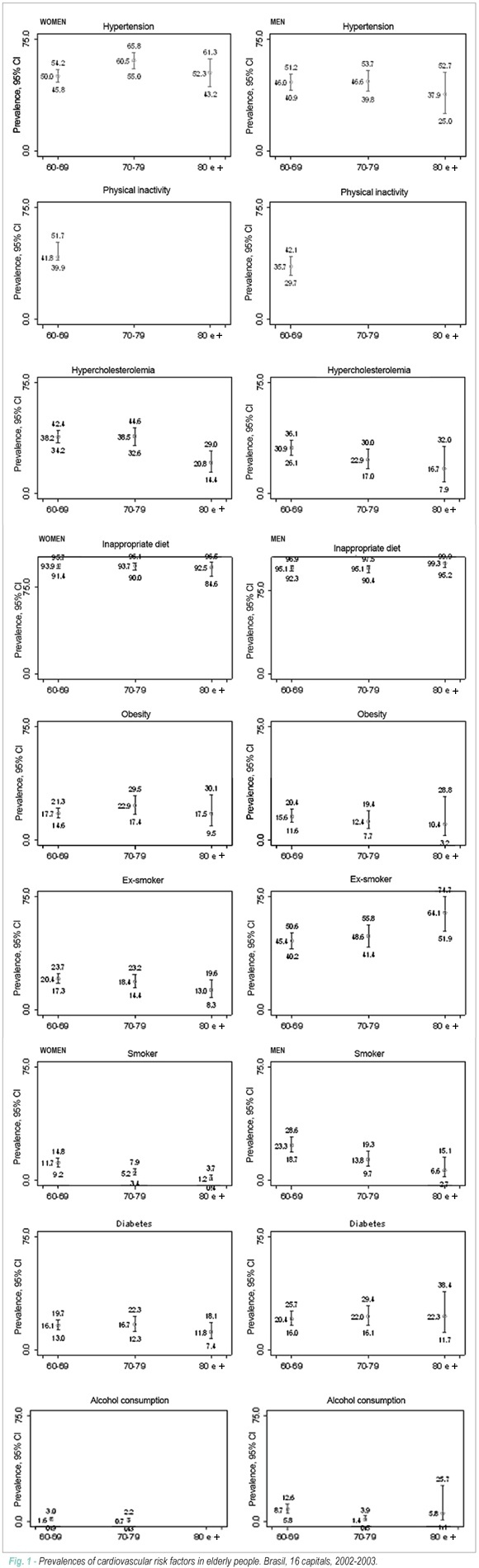
BACKGROUND: In Brazil, population-based information on risk factors and their relationship with cardiovascular diseases in the elderly is scarce. OBJECTIVE: To estimate the prevalence and clustering of risk factors and investigate their association with ischemic heart disease (IHD) in elderly people. METHODS: All subjects >60 years of age participating in the “Inquérito domiciliar sobre comportamentos de risco e morbidade referida de doenças e agravos não transmissíveis” (Household Survey on Risk Behaviors and Reported Morbidity of Non Transmissible Diseases and Health Conditions) carried out by the Ministry of Health, in 2002/2003 in 15 capitals and the Federal District were included. The prevalence of risk factors (smoking, alcohol consumption, lack of physical activity, inappropriate diet, and obesity) and reported morbidity (hypertension, hypercholesterolemia, and diabetes) was assessed, as well as the association between IHD and clustering of these factors using the Poisson regression model. RESULTS: Elderly individuals represented 13.4% (3,142/23,457), 59.4% women and 40.6% men. The mean age of the participants was 69.5 years. Approximately 50% of participants reported having hypertension, 33% hypercholesterolemia, and 18% diabetes. Smoking and hypercholesterolemia dropped significantly with age. Hypertension, physical inactivity, obesity, and hypercholesterolemia were more prevalent among women. Clustering of two or more factors was observed in 71.3% of the elderly, and diminished with age. Elderly subjects with IHD had a four-fold higher prevalence of clusters with four or more factors (PR=4.1; 95% CI: 2.6-6.4). CONCLUSION: The relationship between IHD and a larger clustering of risk factors probably represents a greater accumulated risk throughout life, but it also indicates the need to improve the risk profile of these elderly people.
  • Aged
  • Cardiovascular Diseases
  • Prevalence
  • Risk Factors
Read Full Article
Creative Commons Attribution (CC BY) Creative Commons license
28/07/2008 DOI: 10.1590/S0066-782X2008001300001
Interrupted aortic arch with cardiac heart failure in young adult
Case Report

Interrupted aortic arch with cardiac heart failure in young adult

Rogério Fortes Lobato et al. Luis Augusto R. Saliba Carlos Regenga Ferreiro Fernando Bacal

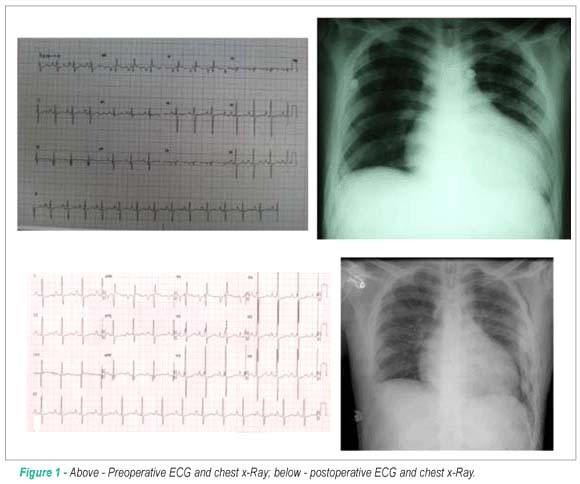
The interrupted aortic arch (IAA) is a rare cardiopathy, with high morbimortality when treatment is delayed. This study is a case of IAA with atypical clinical behavior in a 19-year-old patient. The history and the clinical assessment were compatible with recent heart failure, associated to syncope episodes and reduction of pulses in the lower limbs. The electrocardiogram showed biventricular and biatrial overload. The echocardiogram showed severe ventricular dysfunction and altered blood flow in the descending aorta. The angiotomography disclosed occlusion of the thoracic aorta after the left subclavian artery. The attained diagnosis was interrupted aortic arch and surgical treatment was indicated.

  • Adult
  • Aorta, Thoracic
  • heart failure,congestive
Read Full Article
Creative Commons Attribution (CC BY) Creative Commons license
25/07/2008 DOI: 10.1590/S0066-782X2008001300012
Prevalence and surgical approach of supravalvular pulmonary stenosis after jatene operation for transposition of great arteries
Artigo Original

Prevalence and surgical approach of supravalvular pulmonary stenosis after jatene operation for transposition of great arteries

Marcelo Biscegli Jatene et al. Ieda Biscegli Jatene Patrícia Marques de Oliveira Rafael Aon Moysés … Luis Carlos Bento de Souza Valmir Fontes Nana Miura Antonio Augusto Lopes Miguel Barbero Marcial Adib Domingos Jatene

BACKGROUND: The Transposition of the Great Arteries is the most frequent congenital cyanogenic cardiopathy in the neonatal period, corresponding to 7% of all congenital cardiopathies. Among the operations for surgical treatment, the Jatene operation, with arterial correction, is the treatment of choice. During the late postoperative evolution, some problems were observed, with the most common being the occurrence of supravalvular stenosis at the neopulmonary, regardless of the type of surgical technique used. OBJECTIVE: To study and analyze the prevalence of stenosis, as well as describe the surgical treatment and propose technical maneuvers to prevent its onset. METHODS: Of the 553 patients that underwent surgery, 409 were discharged from the hospital and 281 had late follow-up; 59 (20.9%) presented different degrees of supravalvular pulmonary stenosis and 21 had a mean gradient > 60 mmHg, needing surgical treatment. Depending on the location and anatomy of the stenosis, the surgical treatment consisted of the use of different techniques, such as the enlargement of stenosis areas with bovine pericardium patches, resection of stenotic areas and termino-terminal anastomosis, replacement of retracted patches and synthetic tubes. RESULTS: Twenty patients presented good evolution and only one patient died. CONCLUSION: It can be concluded that the supravalvular pulmonary stenosis, post-Jatene operation for Transposition of Great Arteries, had a prevalence of 20.9%; once identified and with indication for treatment, it can be treated surgically with low mortality levels, through different surgical techniques; to prevent the occurrence of stenosis, ample dissection and release of the pulmonary branches, double anastomoses, large patches of autologous pericardium and careful reconstruction of the aorta are proposed, which prevents the compression of the neopulmonary.

  • Heart Defects, Congenital
  • Jatene's surgery
  • Pulmonary Valve Stenosis
  • Transposition of Great Vessels
Read Full Article
Creative Commons Attribution (CC BY) Creative Commons license
25/07/2008 DOI: 10.1590/S0066-782X2008001300003 Views 1
Case Report

Thiamin deficiency as a cause of reversible cor pulmonale

Liana S. Coelho et al. João C. Hueb Marcos F. Minicucci Paula S. Azevedo … Sergio A. R. Paiva Leonardo A. M. Zornoff

Thiamine deficiency may present four classic clinical forms: peripheral polyneuropathy, anorexia and muscular weakness (dry beriberi); high output heart failure with signs of congestion (wet beriberi); beriberi associated with shock (Shoshin beriberi) and Wernicke’s encephalopathy. In this report we describe a picture that is suggestive of severe pulmonary hypertension and cor pulmonale, with jugular stasis, congestive hepatitis and generalized edema that reversed completely after the administration of thiamine.

  • beriberi
  • Hypertension Pulmonary
  • Pulmonary Heart Disease
  • Thiamine deficiency
Read Full Article
Creative Commons Attribution (CC BY) Creative Commons license
25/07/2008 DOI: 10.1590/S0066-782X2008001300013
Artigo Original

Blood pressure response to physical exertion in adolescents: influence of overweight and obesity

Luciana Carletti et al. Anabel Nunes Rodrigues Anselmo José Perez Dalton Valentim Vassallo

BACKGROUND: The acute blood pressure response to physical exertion has been used as an indicator of the risk of developing hypertension. The factors associated with this response need to be clarified for timely intervention in preventing hypertensive disease. OBJECTIVE: To describe the response of cardiovascular variables to acute physical exertion in overweight adolescents using cardiopulmonary exercise testing. METHODS: The sample consisted of 104 adolescents (56 boys and 48 girls), divided into two groups: the obese/overweight group (OOG) and the eutrophic group (EG). The following variables were measured: anthropometric (weight, height, and BMI), body composition (skin fold thickness), as well as hemodynamic variables such as systolic arterial pressure (SAP), diastolic arterial pressure (DAP), and heart rate (HR), at rest and at maximal physical exertion during the cardiopulmonary test. RESULTS: In the male group, the greatest values of systolic arterial pressure at rest were recorded in the OOG as compared to the EG (113 ± 13 vs 106 ± 8 mmHg; p = 0.009), pre-exertion SAP (120 ± 14 vs 109 ± 10 mmHg; p = 0.003), and SAP during maximal exertion conditions (156 ± 20 vs 146 ± 14 mmHg; p = 0.03). In the female group, only pre-exertion SAP was higher in the overweight group as compared to the eutrophic girls (114 ± 11 vs 106 ± 10 mmHg; p = 0.009). CONCLUSION: The response of arterial blood pressure during physical exercise was most exacerbated in obese adolescents as compared to eutrophic teens, suggesting greater reactivity to physical exertion.

  • Adolescent
  • Blood Pressure
  • calorimetry
  • exertion
  • Obesity
  • Overweight
Read Full Article
Creative Commons Attribution (CC BY) Creative Commons license
25/07/2008 DOI: 10.1590/S0066-782X2008001300004
Point of view

Narcissus and the echocardiographist

Max Grinberg et al. Wilson Mathias Jr.

POINT OF VIEW

Narcissus and the echocardiographist

[…]

Read Full Article
Creative Commons Attribution (CC BY) Creative Commons license
25/07/2008 DOI: 10.1590/S0066-782X2008001300014 Views 1
Artigo Original

Prevalence and sociodemographic factors in a hypertensive population in São José do Rio Preto, São Paulo, Brazil

Claudia B. Cesarino et al. José Paulo Cipullo José Fernando Vilela Martin Luiz Alberto Ciorlia … Maria Regina P. de Godoy José Antonio Cordeiro Isabela C. Rodrigues

BACKGROUND: Systemic arterial hypertension (SAH) is one of the greatest problems of public health in Brazil. Its detection and early treatment should be a priority to reduce the morbimortality of the cardiovascular diseases. OBJECTIVE: This study aimed at assessing the prevalence of SAH and the sociodemographic factors in a population of hypertensive individuals from São José do Rio Preto, São Paulo, Brazil. METHODS: A cross-sectional study was carried out in a stratified sample of 1,717 people, representative of the urban adult population from the city of São José do Rio Preto, between 2004 and 2005. RESULTS: The sample consisted of 1,717 people, with 762 of them (25.2%) being characterized as hypertensive. The following results were observed: 54.6% were women; 78.4% were caucasian; 66.1% were illiterate or had not finished Elementary School; 63.9% were married, 40.9% belonged to social classes D and E; 37.9% were self-employed or wage earners. CONCLUSION: The results of study on SAH in the city of São José do Rio Preto shows the need for early-onset continuous educational interventions.

  • ethnology
  • Hipertension
  • Prevalence
  • Prevention & Control
Read Full Article
Creative Commons Attribution (CC BY) Creative Commons license
25/07/2008 DOI: 10.1590/S0066-782X2008001300005 Views 2
Myeloperoxidase and coronary arterial disease: from research to clinical practice
Clinical Update

Myeloperoxidase and coronary arterial disease: from research to clinical practice

Raquel Melchior Roman et al. Andrea Elisabet Wendland Carisi Anne Polanczyk

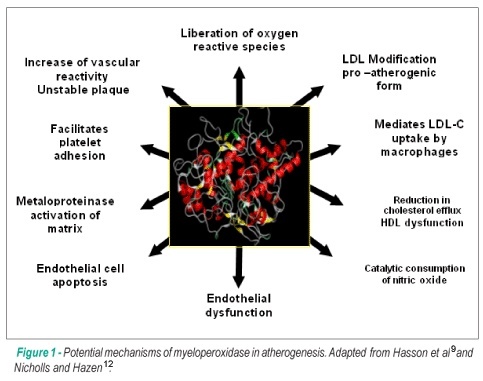
Myeloperoxidase (MPO) is an enzyme derived of leukocytes that catalyze formation of numerous reactive oxidant species. Besides members of the innate host defense, evidences have been proving the contribution of these oxidants to tissue injury during inflammation. MPO participates in proatherogenic biological activities related to the evolution of cardiovascular disease, including initiation, propagation and acute complications of atherosclerotic process. Thereby, MPO and its inflammatory cascade represents an attractive target for prognostical investigation and therapeutics in atherosclerotic cardiovascular disease. In this review, we present the state of the art in the understanding of biological actions to clinical evidences of the relationship between MPO and coronary arterial disease. Several studies point to the independent effect of MPO levels in the evolution of disease and incidence of events in patients with acute coronary syndrome. However, the additional predictive value of MPO levels in the cardiovascular risk assessment, to incorporate it to the clinical practice as marker of plaque vulnerability, is still not consistent. Additional studies are necessary to confirm its role in the different forms of presentation of ischemic disease, besides the standardization of the assay, fundamental point for transition of this marker from research atmosphere to use in clinical routine: : from laboratory to clinical practice.

  • Atherosclerosis
  • coronary arteriosclerosis
  • Inflammation
  • Peroxidase
Read Full Article
Creative Commons Attribution (CC BY) Creative Commons license
25/07/2008 DOI: 10.1590/S0066-782X2008001300015
Partial anomalous return of four pulmonary veins with intact interatrial septum defect: a rare case report
Case Report

Partial anomalous return of four pulmonary veins with intact interatrial septum defect: a rare case report

Edmar Atik et al. Maria Aparecida Bhering Renato Samy Assad

We report on the rare case of partial anomalous return of four pulmonary veins in the right atrium and superior vena cava with intact interatrial septum in a five-year-old child. There were few symptoms in contrast with the left ventricular output dependent on the flow of the left upper lobe vein and from the lingula. Reduced compliance to the left led to a severe picture of pulmonary venocapillary hypertension in the immediate postoperative period, mitigated by an 8-mm interatrial septal defect. The patient progressed well after the intervention.

  • Heart Defects, Congenital
  • Hypertension Pulmonary
  • Pulmonary Veins
Read Full Article
Creative Commons Attribution (CC BY) Creative Commons license
25/07/2008 DOI: 10.1590/S0066-782X2008001300011 Views 1
Artigo Original

Adult extracorporeal life support: a failed or forgotten concept?

Alexandre Siciliano Colafranceschi et al. Andrey José de Oliveira Monteiro Leonardo Secchin Canale Luiz Antonio de Almeida Campos … Marcelo Westerlund Montera Paulo Roberto Dutra da Silva Marcelo Ramalho Fernandes Alexandre de Araújo Pinto Stelmar Moura Molas Evandro Tinoco Mesquita

BACKGROUND: The extracorporeal membrane oxygenation (ECMO) has been used in the neonatal and childhood periods with excellent results. The adult experience has been modest with inferior immediate results. The intermediate survival, however, has been promising. We have been using the extracorporeal membrane oxygenation for temporary mechanical circulatory support of adults that present with acute refractory cardiogenic shock in our institution. There is no other published experience of the use of this system in this scenario in Brazil. OBJECTIVE: To describe our experience with the use of the extracorporeal membrane oxygenation for circulatory support in adults. METHODS: Retrospective analysis of the medical files of patients submitted to the implant of extracorporeal membrane oxygenation system for circulatory assistance in acute and refractory cardiogenic shock. RESULTS: Eleven patients (63,5yo; 45,5%male) were considered for analysis from 2005 to 2007. Median support time was 77 hours (10-240h) and 5 patients have survived 30 days (45,5%). Two patients were subsequently submitted to prolonged paracorporeal circulatory assistance. Mortality on ECMO (6 patients) was due to multiple organ failure (66,6%) and refractory bleeding (33,4%). CONCLUSION: ECMO system is an option to be used in acute refractory cardiogenic shock as a bridge to recovery or selecting patients that might benefit from prolonged paracorporeal assist devices (bridge to bridge).

  • Cardiogenic shock
  • Extracorporeal Membrane Oxygenation
  • Heart Arrest
  • multiple organ failure
  • Thoracic Surgery
Read Full Article
Creative Commons Attribution (CC BY) Creative Commons license
25/07/2008 DOI: 10.1590/S0066-782X2008001300006 Views 1
Review Article

Diagnostic evaluation of hipertrophic cardiomyopathy in its clinical and preclinical phases

Beatriz Piva e Mattos et al. Marco Antonio Rodrigues Torres Valéria Centeno de Freitas

Hypertrophic cardiomyopathy is a familial, genetic disease caused by mutations in genes encoding sarcomeric proteins. It is characterized by various deGrees of left ventricular hypertrophy, usually diffuse, predominantly involving the interventricular septum. The asymptomatic forms with mild or no segmental hypertrophy makes it difficult to establish the diagnosis and screening for familial forms. Its high penetrance is often incomplete and, as a result, 20% to 30% of adults who carry disease-causing gene mutations do not express the phenotype. The susceptibility to sudden death and likelihood of late expression makes establishing a preclinical diagnosis all the more important. The use of Doppler echocardiography and magnetic resonance imaging, in conjunction with a detailed ECG analysis, may be useful in this process. Molecular genetic studies can identify mutations in 60% to 80% of the cases. However, its complex, time-consuming and costly nature, coupled with an inadequate assessment of genotype-phenotype relationships, limits its routine application. Major advances in imaging methods and the introduction of more simplified molecular techniques may contribute to clinical and preclinical diagnosis of hypertrophic cardiomyopathy, in addition to allowing implementation of therapeutic strategies to prevent or delay the development of the disease.

  • Cardiomyopathy, Hypertrophic
  • Cardiomyopathy, Hypertrophic, Familial
  • Hypertrophy Left Ventricular
Read Full Article
Creative Commons Attribution (CC BY) Creative Commons license
25/07/2008 DOI: 10.1590/S0066-782X2008001300009
Case 4: a 78-year-old obese woman with sudden-onset dyspnea
Anatomopathological Session

Case 4: a 78-year-old obese woman with sudden-onset dyspnea

Bruno Ceotto et al. Júlio César Vieira de Sousa Luiz Alberto Benvenuti

ANATOMOPATHOLOGICAL SESSION

Case 4 – a 78-year-old obese woman with sudden-onset dyspnea

[…]

Read Full Article
Creative Commons Attribution (CC BY) Creative Commons license
25/07/2008 DOI: 10.1590/S0066-782X2008001300010
Peak VO2 and VE/VCO2 slope in betablockers era in patients with heart failure: a brazilian experience
Artigo Original

Peak VO2 and VE/VCO2 slope in betablockers era in patients with heart failure: a brazilian experience

Guilherme Veiga Guimarães et al. Mário Sérgio Vaz da Silva Veridiana Moraes d'Avila Silvia Moreira Ayub Ferreira … Christiano Pereira Silva Edimar Alcides Bocchi

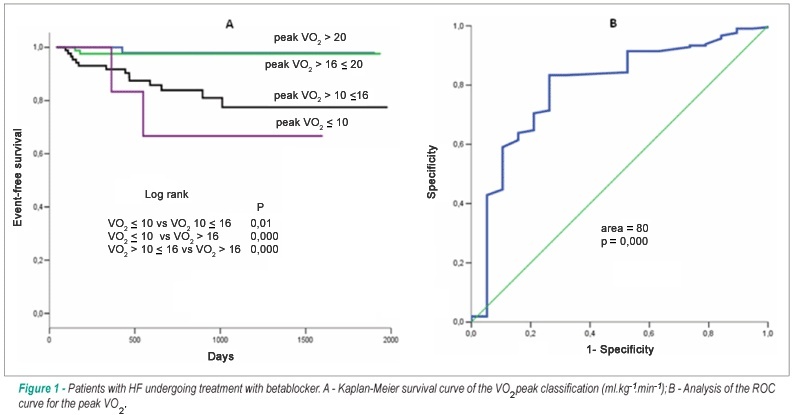
BACKGROUND: Studies have demonstrated that peak oxygen consumption (peak VO2) and the VE/VCO2 slope are predictors of survival in patients with heart failure (HF). However, with the advent of betablockers in the treatment of HF, the prognostic values of peak VO2 and VE/VCO2 slope have not been fully established. OBJECTIVE: To evaluate the effect of betablocker use on the prognostic value of peak VO2 and VE/VCO2 slope in patients with HF. METHODS: We studied 391 patients with heart failure, aged 49 ± 14 years and presenting a left ventricular ejection fraction of 38 ± 10%. The total number of patients that used (Group I – GI) or did not use (Group II – GII) betablockers was 229 and 162, respectively. All patients were submitted to a cardiopulmonary stress test on a treadmill, using the Naughton protocol. RESULTS: A peak VO2 16 ml.kg-1.min-1 categorizes patients with a better mid-term prognosis. Peak VO2 values between > 10 and < 16 ml.kg-1.min-1 indicated moderate risk for cardiac event in four years of follow up. The betablocker use significantly reduced the VE/VCO2 slope in patients with HF. The prognostic value of the VE/VCO2 slope < 34 in the group using betablocker can reflect the impact of the drug on this cardiorespiratory variable. CONCLUSION: A low peak VO2 and an elevated VE/VCO2 slope are strong and independent predictors of cardiac events in HF. Thus, both variables remain important survival predictors in patients with HF, especially at the age of betablockers.

  • Betablockers
  • heart failure, low
  • Prognosis
Read Full Article
Creative Commons Attribution (CC BY) Creative Commons license
25/07/2008 DOI: 10.1590/S0066-782X2008001300007
Serum NT pro-BNP: relation to systolic and diastolic function in cardiomyopathies and pericardiopathies
Artigo Original

Serum NT pro-BNP: relation to systolic and diastolic function in cardiomyopathies and pericardiopathies

Charles Mady et al. Fábio Fernandes Edmundo Arteaga Felix José Alvarez Ramires … Paula de Cássia Buck Vera Maria Cury Salemi Barbara Maria Ianni Luciano Nastari Ricardo Ribeiro Dias

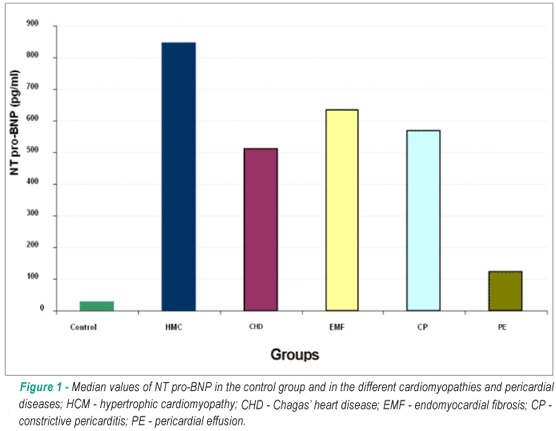
BACKGROUND: NT pro-BNP is a marker of systolic and diastolic dysfunction. OBJECTIVE: To determine NT pro-BNP levels in patients with chagasic, hypertrophic, and restrictive heart diseases, as well as with pericardial diseases, and their relation to echocardiographic measurements of systolic and diastolic dysfunction. METHODS: A total of 145 patients were divided into the following groups: 1) Chagas’ heart disease (CHD) – 14 patients; 2) hypertrophic cardiomyopathy (HCM) – 71 patients; 3) endomyocardial fibrosis (EMF) – 26 patients; 4) pericardial effusion (PE) – 18 patients; and 5) constrictive pericarditis (CP) – 16 patients. The control group was comprised of 40 individuals with no heart disease. The degree of myocardial impairment and pericardial effusion were assessed by two-dimensional echocardiography and the degree of restriction by pulsed Doppler transmitral flow. The diagnosis of CP was confirmed through magnetic resonance imaging. NT pro-BNP levels were determined through electrochemiluminescence immunoassay. RESULTS: NT pro-BNP was increased (p < 0.001) in CHD (median = 513.8 pg/ml), HCM (median = 848 pg/ml), EMF (median = 633 pg/ml), CP (median = 568 pg/ml), and PE (median = 124 pg/ml), when compared with the control group (median = 28 pg/ml). No statistically significant differences were found between CP and EMF (p = 0.14). In the hypertrophic group, NT pro-BNP was correlated with left atrial size (r = 0.40; p < 0.001) and with E/Ea ratio (p < 0.01). In the restrictive group, there was a trend of correlation with E-wave peak velocity (r = 0.439; p = 0.06). CONCLUSION: NT pro-BNP is increased in the different cardiomyopathies and pericardial diseases and is correlated with the degree of systolic and diastolic dysfunction.

  • Cardiomyopathies
  • Pericardial Effusion
  • Pericarditis, Constrictive
Read Full Article
Creative Commons Attribution (CC BY) Creative Commons license
25/07/2008 DOI: 10.1590/S0066-782X2008001300008 Views 1
Artigo Original

Study on the major maternal risk factors in hypertensive syndromes

Thaís Rocha Assis et al. Fabiana Pavan Viana Salvador Rassi

BACKGROUND: There are several risk factors for hypertensive syndromes in pregnancy (HSP), and these can be related to regional and ethnic factors. Studies on this issue are scarce in the State of Goiás. OBJECTIVE: To investigate maternal risk factors for HSP. METHODS: Case-control study based on the analysis of medical records of parturients from the Maternity Service of Hospital das Clínicas da Universidade Federal de Goiás (HC-UFG) in 2005. Risk factors were analyzed using Logistic Regression Analysis and Fisher’s Exact Test. RESULTS: In 2005, there were 890 deliveries in the Maternity Service of HC-UFG, and 129 pregnant women were diagnosed with HSP (14.5%). The multivariate analysis identified obesity as a risk factor both for gestational hypertension – GH (OR: 17.636; 95% CI: 2.859 to 108.774) and for preeclampsia superimposed on chronic hypertension – PESCH (OR: 27.307; 95% CI: 4.453 to 167.440). Primiparity was a risk factor for GH (OR: 5.435; 95% CI: 1.923 to 15.385). Age above 30 years was a risk factor for PESCH (OR: 5.218; 95% CI: 1.873 to 14.536) and a protective factor against preeclampsia – PE (OR: 0.035; 95% CI: 0.003 to 0.364). Non-white race was an independent risk for PE (OR: 13.158; 95% CI: 1.672 to 100.000) and previous PE for PESCH (OR: 4.757; 95% CI: 1.261 to 17.938). Of the pregnant women with chronic hypertension (CH), 73.5% developed PESCH (p < 0.001). CONCLUSION: The factors identified – obesity, non-white race, previous PE, age above 30 years and CH, were similar to those found in the majority of studies in the literature.

  • Hypertension
  • Pregnancy / high-risk
  • Pregnancy Complications
  • Risk Factors
Read Full Article
Creative Commons Attribution (CC BY) Creative Commons license
25/07/2008 DOI: 10.1590/S0066-782X2008001300002 Views 1

How to cite this article

EndNote RIS

Electronic Document Format (Vancouver)

Pereira JC, Barreto SM, Passos VMA. The profile of cardiovascular health of elderly brazilian people needs to improve: a population-based study. Arquivos Brasileiros de Cardiologia 2008;91(1):1-10.

Electronic Document Format (ABNT)

Pereira, Janaina Caldeira; Barreto, Sandhi Maria; Passos, Valéria Maria A.. The profile of cardiovascular health of elderly brazilian people needs to improve: a population-based study. Arquivos Brasileiros de Cardiologia, v. 91, n. 1, p. 1-10, Jul. 2008.

Electronic Document Format (APA)

Pereira, J. C., Barreto, S. M., & Passos, V. M. A. (2008). The profile of cardiovascular health of elderly brazilian people needs to improve: a population-based study. Arquivos Brasileiros de Cardiologia, 91(1), 1-10.

Electronic Document Format (ISO)

Pereira, Janaina Caldeira and Barreto, Sandhi Maria and Passos, Valéria Maria A.. The profile of cardiovascular health of elderly brazilian people needs to improve: a population-based study. Arquivos Brasileiros de Cardiologia [online]. 2008, vol. 91, n. 1, [cited 2026-10-14], pp. 1-10. Available from: <https://journals.cardiol.br/en/article/the-profile-of-cardiovascular-health-of-elderly-brazilian-people-needs-to-improve-a-population-based-study/>. ISSN 0066-782X

EndNote RIS

Electronic Document Format (Vancouver)

Lobato RF, Saliba LAR, Ferreiro CR, Bacal F. Interrupted aortic arch with cardiac heart failure in young adult. Arquivos Brasileiros de Cardiologia 2008;91(1):e4-6.

Electronic Document Format (ABNT)

Lobato, Rogério Fortes; Saliba, Luis Augusto R.; Ferreiro, Carlos Regenga; Bacal, Fernando. Interrupted aortic arch with cardiac heart failure in young adult. Arquivos Brasileiros de Cardiologia, v. 91, n. 1, p. e4-e6, Jul. 2008.

Electronic Document Format (APA)

Lobato, R. F., Saliba, L. A. R., Ferreiro, C. R., & Bacal, F. (2008). Interrupted aortic arch with cardiac heart failure in young adult. Arquivos Brasileiros de Cardiologia, 91(1), e4-e6.

Electronic Document Format (ISO)

Lobato, Rogério Fortes and Saliba, Luis Augusto R. and Ferreiro, Carlos Regenga and Bacal, Fernando. Interrupted aortic arch with cardiac heart failure in young adult. Arquivos Brasileiros de Cardiologia [online]. 2008, vol. 91, n. 1, [cited 2026-10-14], pp. e4-e6. Available from: <https://journals.cardiol.br/en/article/interrupted-aortic-arch-with-cardiac-heart-failure-in-young-adult/>. ISSN 0066-782X

EndNote RIS

Electronic Document Format (Vancouver)

Jatene MB, Jatene IB, Oliveira PM, Moysés RA, Souza LCB, Fontes V, Miura N, et al. Prevalence and surgical approach of supravalvular pulmonary stenosis after jatene operation for transposition of great arteries. Arquivos Brasileiros de Cardiologia 2008;91(1):18-24.

Electronic Document Format (ABNT)

Jatene, Marcelo Biscegli; Jatene, Ieda Biscegli; Oliveira, Patrícia Marques de; Moysés, Rafael Aon; Souza, Luis Carlos Bento de; Fontes, Valmir; Miura, Nana; Lopes, Antonio Augusto; Marcial, Miguel Barbero; Jatene, Adib Domingos. Prevalence and surgical approach of supravalvular pulmonary stenosis after jatene operation for transposition of great arteries. Arquivos Brasileiros de Cardiologia, v. 91, n. 1, p. 18-24, Jul. 2008.

Electronic Document Format (APA)

Jatene, M. B., Jatene, I. B., Oliveira, P. M. , Moysés, R. A., Souza, L. C. B. , Fontes, V., Miura, N., Lopes, A. A., Marcial, M. B., & Jatene, A. D. (2008). Prevalence and surgical approach of supravalvular pulmonary stenosis after jatene operation for transposition of great arteries. Arquivos Brasileiros de Cardiologia, 91(1), 18-24.

Electronic Document Format (ISO)

Jatene, Marcelo Biscegli and Jatene, Ieda Biscegli and Oliveira, Patrícia Marques de and Moysés, Rafael Aon and Souza, Luis Carlos Bento de and Fontes, Valmir and Miura, Nana and Lopes, Antonio Augusto and Marcial, Miguel Barbero and Jatene, Adib Domingos. Prevalence and surgical approach of supravalvular pulmonary stenosis after jatene operation for transposition of great arteries. Arquivos Brasileiros de Cardiologia [online]. 2008, vol. 91, n. 1, [cited 2026-10-14], pp. 18-24. Available from: <https://journals.cardiol.br/en/article/prevalence-and-surgical-approach-of-supravalvular-pulmonary-stenosis-after-jatene-operation-for-transposition-of-great-arteries/>. ISSN 0066-782X

EndNote RIS

Electronic Document Format (Vancouver)

Coelho LS, Hueb JC, Minicucci MF, Azevedo PS, Paiva SAR, Zornoff LAM. Thiamin deficiency as a cause of reversible cor pulmonale. Arquivos Brasileiros de Cardiologia 2008;91(1):e7-9.

Electronic Document Format (ABNT)

Coelho, Liana S.; Hueb, João C.; Minicucci, Marcos F.; Azevedo, Paula S.; Paiva, Sergio A. R.; Zornoff, Leonardo A. M.. Thiamin deficiency as a cause of reversible cor pulmonale. Arquivos Brasileiros de Cardiologia, v. 91, n. 1, p. e7-e9, Jul. 2008.

Electronic Document Format (APA)

Coelho, L. S., Hueb, J. C., Minicucci, M. F., Azevedo, P. S., Paiva, S. A. R., & Zornoff, L. A. M. (2008). Thiamin deficiency as a cause of reversible cor pulmonale. Arquivos Brasileiros de Cardiologia, 91(1), e7-e9.

Electronic Document Format (ISO)

Coelho, Liana S. and Hueb, João C. and Minicucci, Marcos F. and Azevedo, Paula S. and Paiva, Sergio A. R. and Zornoff, Leonardo A. M.. Thiamin deficiency as a cause of reversible cor pulmonale. Arquivos Brasileiros de Cardiologia [online]. 2008, vol. 91, n. 1, [cited 2026-10-14], pp. e7-e9. Available from: <https://journals.cardiol.br/en/article/thiamin-deficiency-as-a-cause-of-reversible-cor-pulmonale/>. ISSN 0066-782X

EndNote RIS

Electronic Document Format (Vancouver)

Carletti L, Rodrigues AN, Perez AJ, Vassallo DV. Blood pressure response to physical exertion in adolescents: influence of overweight and obesity. Arquivos Brasileiros de Cardiologia 2008;91(1):25-30.

Electronic Document Format (ABNT)

Carletti, Luciana; Rodrigues, Anabel Nunes; Perez, Anselmo José; Vassallo, Dalton Valentim. Blood pressure response to physical exertion in adolescents: influence of overweight and obesity. Arquivos Brasileiros de Cardiologia, v. 91, n. 1, p. 25-30, Jul. 2008.

Electronic Document Format (APA)

Carletti, L., Rodrigues, A. N., Perez, A. J., & Vassallo, D. V. (2008). Blood pressure response to physical exertion in adolescents: influence of overweight and obesity. Arquivos Brasileiros de Cardiologia, 91(1), 25-30.

Electronic Document Format (ISO)

Carletti, Luciana and Rodrigues, Anabel Nunes and Perez, Anselmo José and Vassallo, Dalton Valentim. Blood pressure response to physical exertion in adolescents: influence of overweight and obesity. Arquivos Brasileiros de Cardiologia [online]. 2008, vol. 91, n. 1, [cited 2026-10-14], pp. 25-30. Available from: <https://journals.cardiol.br/en/article/blood-pressure-response-to-physical-exertion-in-adolescents-influence-of-overweight-and-obesity/>. ISSN 0066-782X

EndNote RIS

Electronic Document Format (Vancouver)

Grinberg M, Mathias Jr. W. Narcissus and the echocardiographist. Arquivos Brasileiros de Cardiologia 2008;91(1):e10-1.

Electronic Document Format (ABNT)

Grinberg, Max; Mathias Jr., Wilson. Narcissus and the echocardiographist. Arquivos Brasileiros de Cardiologia, v. 91, n. 1, p. e10-e11, Jul. 2008.

Electronic Document Format (APA)

Grinberg, M., & Mathias Jr., W. (2008). Narcissus and the echocardiographist. Arquivos Brasileiros de Cardiologia, 91(1), e10-e11.

Electronic Document Format (ISO)

Grinberg, Max and Mathias Jr., Wilson. Narcissus and the echocardiographist. Arquivos Brasileiros de Cardiologia [online]. 2008, vol. 91, n. 1, [cited 2026-10-14], pp. e10-e11. Available from: <https://journals.cardiol.br/en/article/narcissus-and-the-echocardiographist/>. ISSN 0066-782X

EndNote RIS

Electronic Document Format (Vancouver)

Cesarino CB, Cipullo JP, Martin JFV, Ciorlia LA, Godoy MRP, Cordeiro JA, Rodrigues IC, et al. Prevalence and sociodemographic factors in a hypertensive population in São José do Rio Preto, São Paulo, Brazil. Arquivos Brasileiros de Cardiologia 2008;91(1):31-5.

Electronic Document Format (ABNT)

Cesarino, Claudia B.; Cipullo, José Paulo; Martin, José Fernando Vilela; Ciorlia, Luiz Alberto; Godoy, Maria Regina P. de; Cordeiro, José Antonio; Rodrigues, Isabela C.. Prevalence and sociodemographic factors in a hypertensive population in São José do Rio Preto, São Paulo, Brazil. Arquivos Brasileiros de Cardiologia, v. 91, n. 1, p. 31-35, Jul. 2008.

Electronic Document Format (APA)

Cesarino, C. B., Cipullo, J. P., Martin, J. F. V., Ciorlia, L. A., Godoy, M. R. P. , Cordeiro, J. A., & Rodrigues, I. C. (2008). Prevalence and sociodemographic factors in a hypertensive population in São José do Rio Preto, São Paulo, Brazil. Arquivos Brasileiros de Cardiologia, 91(1), 31-35.

Electronic Document Format (ISO)

Cesarino, Claudia B. and Cipullo, José Paulo and Martin, José Fernando Vilela and Ciorlia, Luiz Alberto and Godoy, Maria Regina P. de and Cordeiro, José Antonio and Rodrigues, Isabela C.. Prevalence and sociodemographic factors in a hypertensive population in São José do Rio Preto, São Paulo, Brazil. Arquivos Brasileiros de Cardiologia [online]. 2008, vol. 91, n. 1, [cited 2026-10-14], pp. 31-35. Available from: <https://journals.cardiol.br/en/article/prevalence-and-sociodemographic-factors-in-a-hypertensive-population-in-sao-jose-do-rio-preto-sao-paulo-brazil/>. ISSN 0066-782X

EndNote RIS

Electronic Document Format (Vancouver)

Roman RM, Wendland AE, Polanczyk CA. Myeloperoxidase and coronary arterial disease: from research to clinical practice. Arquivos Brasileiros de Cardiologia 2008;91(1):e12-9.

Electronic Document Format (ABNT)

Roman, Raquel Melchior; Wendland, Andrea Elisabet; Polanczyk, Carisi Anne. Myeloperoxidase and coronary arterial disease: from research to clinical practice. Arquivos Brasileiros de Cardiologia, v. 91, n. 1, p. e12-e19, Jul. 2008.

Electronic Document Format (APA)

Roman, R. M., Wendland, A. E., & Polanczyk, C. A. (2008). Myeloperoxidase and coronary arterial disease: from research to clinical practice. Arquivos Brasileiros de Cardiologia, 91(1), e12-e19.

Electronic Document Format (ISO)

Roman, Raquel Melchior and Wendland, Andrea Elisabet and Polanczyk, Carisi Anne. Myeloperoxidase and coronary arterial disease: from research to clinical practice. Arquivos Brasileiros de Cardiologia [online]. 2008, vol. 91, n. 1, [cited 2026-10-14], pp. e12-e19. Available from: <https://journals.cardiol.br/en/article/myeloperoxidase-and-coronary-arterial-disease-from-research-to-clinical-practice/>. ISSN 0066-782X

EndNote RIS

Electronic Document Format (Vancouver)

Atik E, Bhering MA, Assad RS. Partial anomalous return of four pulmonary veins with intact interatrial septum defect: a rare case report. Arquivos Brasileiros de Cardiologia 2008;91(1):e1-3.

Electronic Document Format (ABNT)

Atik, Edmar; Bhering, Maria Aparecida; Assad, Renato Samy. Partial anomalous return of four pulmonary veins with intact interatrial septum defect: a rare case report. Arquivos Brasileiros de Cardiologia, v. 91, n. 1, p. e1-e3, Jul. 2008.

Electronic Document Format (APA)

Atik, E., Bhering, M. A., & Assad, R. S. (2008). Partial anomalous return of four pulmonary veins with intact interatrial septum defect: a rare case report. Arquivos Brasileiros de Cardiologia, 91(1), e1-e3.

Electronic Document Format (ISO)

Atik, Edmar and Bhering, Maria Aparecida and Assad, Renato Samy. Partial anomalous return of four pulmonary veins with intact interatrial septum defect: a rare case report. Arquivos Brasileiros de Cardiologia [online]. 2008, vol. 91, n. 1, [cited 2026-10-14], pp. e1-e3. Available from: <https://journals.cardiol.br/en/article/partial-anomalous-return-of-four-pulmonary-veins-with-intact-interatrial-septum-defect-a-rare-case-report/>. ISSN 0066-782X

EndNote RIS

Electronic Document Format (Vancouver)

Colafranceschi AS, Monteiro AJO, Canale LS, Campos LAA, Montera MW, Silva PRD, Fernandes MR, et al. Adult extracorporeal life support: a failed or forgotten concept?. Arquivos Brasileiros de Cardiologia 2008;91(1):36-41.

Electronic Document Format (ABNT)

Colafranceschi, Alexandre Siciliano; Monteiro, Andrey José de Oliveira; Canale, Leonardo Secchin; Campos, Luiz Antonio de Almeida; Montera, Marcelo Westerlund; Silva, Paulo Roberto Dutra da; Fernandes, Marcelo Ramalho; Pinto, Alexandre de Araújo; Molas, Stelmar Moura; Mesquita, Evandro Tinoco. Adult extracorporeal life support: a failed or forgotten concept?. Arquivos Brasileiros de Cardiologia, v. 91, n. 1, p. 36-41, Jul. 2008.

Electronic Document Format (APA)

Colafranceschi, A. S., Monteiro, A. J. O., Canale, L. S., Campos, L. A. A., Montera, M. W., Silva, P. R. D. , Fernandes, M. R., Pinto, A. A., Molas, S. M., & Mesquita, E. T. (2008). Adult extracorporeal life support: a failed or forgotten concept?. Arquivos Brasileiros de Cardiologia, 91(1), 36-41.

Electronic Document Format (ISO)

Colafranceschi, Alexandre Siciliano and Monteiro, Andrey José de Oliveira and Canale, Leonardo Secchin and Campos, Luiz Antonio de Almeida and Montera, Marcelo Westerlund and Silva, Paulo Roberto Dutra da and Fernandes, Marcelo Ramalho and Pinto, Alexandre de Araújo and Molas, Stelmar Moura and Mesquita, Evandro Tinoco. Adult extracorporeal life support: a failed or forgotten concept?. Arquivos Brasileiros de Cardiologia [online]. 2008, vol. 91, n. 1, [cited 2026-10-14], pp. 36-41. Available from: <https://journals.cardiol.br/en/article/adult-extracorporeal-life-support-a-failed-or-forgotten-concept/>. ISSN 0066-782X

EndNote RIS

Electronic Document Format (Vancouver)

Mattos BP, Torres MAR, Freitas VC. Diagnostic evaluation of hipertrophic cardiomyopathy in its clinical and preclinical phases. Arquivos Brasileiros de Cardiologia 2008;91(1):55-62.

Electronic Document Format (ABNT)

Mattos, Beatriz Piva e; Torres, Marco Antonio Rodrigues; Freitas, Valéria Centeno de. Diagnostic evaluation of hipertrophic cardiomyopathy in its clinical and preclinical phases. Arquivos Brasileiros de Cardiologia, v. 91, n. 1, p. 55-62, Jul. 2008.

Electronic Document Format (APA)

Mattos, B. P. , Torres, M. A. R., & Freitas, V. C. (2008). Diagnostic evaluation of hipertrophic cardiomyopathy in its clinical and preclinical phases. Arquivos Brasileiros de Cardiologia, 91(1), 55-62.

Electronic Document Format (ISO)

Mattos, Beatriz Piva e and Torres, Marco Antonio Rodrigues and Freitas, Valéria Centeno de. Diagnostic evaluation of hipertrophic cardiomyopathy in its clinical and preclinical phases. Arquivos Brasileiros de Cardiologia [online]. 2008, vol. 91, n. 1, [cited 2026-10-14], pp. 55-62. Available from: <https://journals.cardiol.br/en/article/diagnostic-evaluation-of-hipertrophic-cardiomyopathy-in-its-clinical-and-preclinical-phases/>. ISSN 0066-782X

EndNote RIS

Electronic Document Format (Vancouver)

Ceotto B, Sousa JCV, Benvenuti LA. Case 4: a 78-year-old obese woman with sudden-onset dyspnea. Arquivos Brasileiros de Cardiologia 2008;91(1):63-8.

Electronic Document Format (ABNT)

Ceotto, Bruno; Sousa, Júlio César Vieira de; Benvenuti, Luiz Alberto. Case 4: a 78-year-old obese woman with sudden-onset dyspnea. Arquivos Brasileiros de Cardiologia, v. 91, n. 1, p. 63-68, Jul. 2008.

Electronic Document Format (APA)

Ceotto, B., Sousa, J. C. V. , & Benvenuti, L. A. (2008). Case 4: a 78-year-old obese woman with sudden-onset dyspnea. Arquivos Brasileiros de Cardiologia, 91(1), 63-68.

Electronic Document Format (ISO)

Ceotto, Bruno and Sousa, Júlio César Vieira de and Benvenuti, Luiz Alberto. Case 4: a 78-year-old obese woman with sudden-onset dyspnea. Arquivos Brasileiros de Cardiologia [online]. 2008, vol. 91, n. 1, [cited 2026-10-14], pp. 63-68. Available from: <https://journals.cardiol.br/en/article/case-4-a-78-year-old-obese-woman-with-sudden-onset-dyspnea/>. ISSN 0066-782X

EndNote RIS

Electronic Document Format (Vancouver)

Guimarães GV, Silva MSV, d’Avila VM, Ferreira SMA, Silva CP, Bocchi EA. Peak VO2 and VE/VCO2 slope in betablockers era in patients with heart failure: a brazilian experience. Arquivos Brasileiros de Cardiologia 2008;91(1):42-8.

Electronic Document Format (ABNT)

Guimarães, Guilherme Veiga; Silva, Mário Sérgio Vaz da; d’Avila, Veridiana Moraes; Ferreira, Silvia Moreira Ayub; Silva, Christiano Pereira; Bocchi, Edimar Alcides. Peak VO2 and VE/VCO2 slope in betablockers era in patients with heart failure: a brazilian experience. Arquivos Brasileiros de Cardiologia, v. 91, n. 1, p. 42-48, Jul. 2008.

Electronic Document Format (APA)

Guimarães, G. V., Silva, M. S. V. , d’Avila, V. M., Ferreira, S. M. A., Silva, C. P., & Bocchi, E. A. (2008). Peak VO2 and VE/VCO2 slope in betablockers era in patients with heart failure: a brazilian experience. Arquivos Brasileiros de Cardiologia, 91(1), 42-48.

Electronic Document Format (ISO)

Guimarães, Guilherme Veiga and Silva, Mário Sérgio Vaz da and d’Avila, Veridiana Moraes and Ferreira, Silvia Moreira Ayub and Silva, Christiano Pereira and Bocchi, Edimar Alcides. Peak VO2 and VE/VCO2 slope in betablockers era in patients with heart failure: a brazilian experience. Arquivos Brasileiros de Cardiologia [online]. 2008, vol. 91, n. 1, [cited 2026-10-14], pp. 42-48. Available from: <https://journals.cardiol.br/en/article/peak-vo2-and-ve-vco2-slope-in-betablockers-era-in-patients-with-heart-failure-a-brazilian-experience/>. ISSN 0066-782X

EndNote RIS

Electronic Document Format (Vancouver)

Mady C, Fernandes F, Arteaga E, Ramires FJA, Buck PC, Salemi VMC, Ianni BM, et al. Serum NT pro-BNP: relation to systolic and diastolic function in cardiomyopathies and pericardiopathies. Arquivos Brasileiros de Cardiologia 2008;91(1):49-54.

Electronic Document Format (ABNT)

Mady, Charles; Fernandes, Fábio; Arteaga, Edmundo; Ramires, Felix José Alvarez; Buck, Paula de Cássia; Salemi, Vera Maria Cury; Ianni, Barbara Maria; Nastari, Luciano; Dias, Ricardo Ribeiro. Serum NT pro-BNP: relation to systolic and diastolic function in cardiomyopathies and pericardiopathies. Arquivos Brasileiros de Cardiologia, v. 91, n. 1, p. 49-54, Jul. 2008.

Electronic Document Format (APA)

Mady, C., Fernandes, F., Arteaga, E., Ramires, F. J. A., Buck, P. C., Salemi, V. M. C., Ianni, B. M., Nastari, L., & Dias, R. R. (2008). Serum NT pro-BNP: relation to systolic and diastolic function in cardiomyopathies and pericardiopathies. Arquivos Brasileiros de Cardiologia, 91(1), 49-54.

Electronic Document Format (ISO)

Mady, Charles and Fernandes, Fábio and Arteaga, Edmundo and Ramires, Felix José Alvarez and Buck, Paula de Cássia and Salemi, Vera Maria Cury and Ianni, Barbara Maria and Nastari, Luciano and Dias, Ricardo Ribeiro. Serum NT pro-BNP: relation to systolic and diastolic function in cardiomyopathies and pericardiopathies. Arquivos Brasileiros de Cardiologia [online]. 2008, vol. 91, n. 1, [cited 2026-10-14], pp. 49-54. Available from: <https://journals.cardiol.br/en/article/serum-nt-pro-bnp-relation-to-systolic-and-diastolic-function-in-cardiomyopathies-and-pericardiopathies/>. ISSN 0066-782X

EndNote RIS

Electronic Document Format (Vancouver)

Assis TR, Viana FP, Rassi S. Study on the major maternal risk factors in hypertensive syndromes. Arquivos Brasileiros de Cardiologia 2008;91(1):11-7.

Electronic Document Format (ABNT)

Assis, Thaís Rocha; Viana, Fabiana Pavan; Rassi, Salvador. Study on the major maternal risk factors in hypertensive syndromes. Arquivos Brasileiros de Cardiologia, v. 91, n. 1, p. 11-17, Jul. 2008.

Electronic Document Format (APA)

Assis, T. R., Viana, F. P., & Rassi, S. (2008). Study on the major maternal risk factors in hypertensive syndromes. Arquivos Brasileiros de Cardiologia, 91(1), 11-17.

Electronic Document Format (ISO)

Assis, Thaís Rocha and Viana, Fabiana Pavan and Rassi, Salvador. Study on the major maternal risk factors in hypertensive syndromes. Arquivos Brasileiros de Cardiologia [online]. 2008, vol. 91, n. 1, [cited 2026-10-14], pp. 11-17. Available from: <https://journals.cardiol.br/en/article/study-on-the-major-maternal-risk-factors-in-hypertensive-syndromes/>. ISSN 0066-782X

Sede – Rio de Janeiro
Av. Marechal Câmara, 160
3º andar – Sala: 330 – Centro
Rio de Janeiro – CEP: 20020-907
Tel.: (55 +21) 3478-2700
ou (21) 99386-3961
E-mail: revista@cardiol.br

Sede – São Paulo
Alameda Santos, 705 – 11º andar
Cerqueira César | São Paulo
CEP: 01419-001
Tel.: (55 +11) 3411-5500
E-mail: revista@cardiol.br

  • About the Journal
  • Internal Regulation
  • Editors Section
  • Editorial Board
  • History
  • SBC Award

  • Guidelines for Publication
  • Editorial Policy
  • Ethics Policy
  • Policy on the Use of Artificial Intelligence
  • Mandatory Publication Form
  • Publication Fee

Issues

SBC Guidelines

  • How to Publish an Abstract Supplement?
  • Supplements from the Brazilian Congress of Cardiology