Serum NT pro-BNP: relation to systolic and diastolic function in cardiomyopathies and pericardiopathies
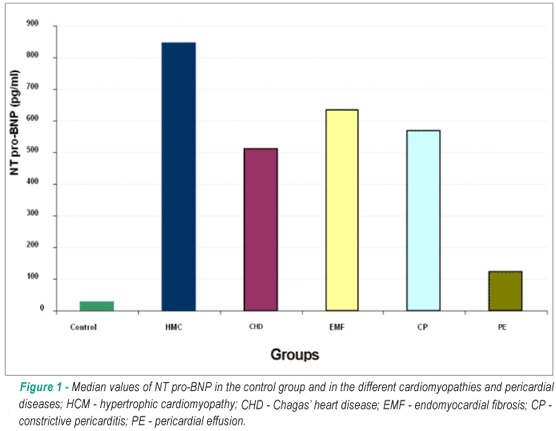
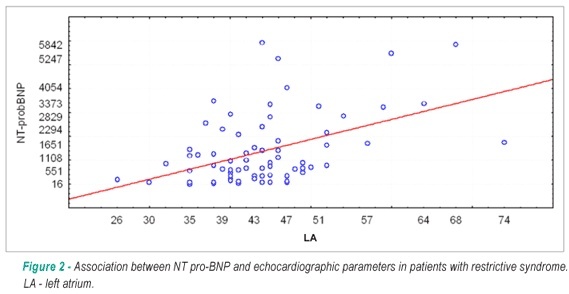
BACKGROUND: NT pro-BNP is a marker of systolic and diastolic dysfunction. OBJECTIVE: To determine NT pro-BNP levels in patients with chagasic, hypertrophic, and restrictive heart diseases, as well as with pericardial diseases, and their relation to echocardiographic measurements of systolic and diastolic dysfunction. METHODS: A total of 145 patients were divided into the following groups: 1) Chagas’ heart disease (CHD) – 14 patients; 2) hypertrophic cardiomyopathy (HCM) – 71 patients; 3) endomyocardial fibrosis (EMF) – 26 patients; 4) pericardial effusion (PE) – 18 patients; and 5) constrictive pericarditis (CP) – 16 patients. The control group was comprised of 40 individuals with no heart disease. The degree of myocardial impairment and pericardial effusion were assessed by two-dimensional echocardiography and the degree of restriction by pulsed Doppler transmitral flow. The diagnosis of CP was confirmed through magnetic resonance imaging. NT pro-BNP levels were determined through electrochemiluminescence immunoassay. RESULTS: NT pro-BNP was increased (p < 0.001) in CHD (median = 513.8 pg/ml), HCM (median = 848 pg/ml), EMF (median = 633 pg/ml), CP (median = 568 pg/ml), and PE (median = 124 pg/ml), when compared with the control group (median = 28 pg/ml). No statistically significant differences were found between CP and EMF (p = 0.14). In the hypertrophic group, NT pro-BNP was correlated with left atrial size (r = 0.40; p < 0.001) and with E/Ea ratio (p < 0.01). In the restrictive group, there was a trend of correlation with E-wave peak velocity (r = 0.439; p = 0.06). CONCLUSION: NT pro-BNP is increased in the different cardiomyopathies and pericardial diseases and is correlated with the degree of systolic and diastolic dysfunction.
Images
Image gallery fullscreen viewer
Comments are moderated by the editorial team before publication. Discussions should be evidence-based and use scientific language. Conflicts of interest should be declared.