ABC Family Arquivos Brasileiros de Cardiologia International Journal of Cardiovascular Sciences ABC Heart Failure & Cardiomyopathy ABC Imagem Cardiovascular
Português English
ABC Family
Português English
  • About
    • About ABC Family
    • Internal Regulation
    • Editorial Board
    • Brazilian Society of Cardiology (SBC)
  • Issues
  • SBC Guidelines
  • Content
    • Videos
    • Podcasts
    • News
  • About
    • About ABC Family
    • Internal Regulation
    • Editorial Board
    • Brazilian Society of Cardiology (SBC)
  • Issues
  • SBC Guidelines
  • Content
    • Videos
    • Podcasts
    • News

ABC Family

  • ABC Family
  • Arquivos Brasileiros de Cardiologia
  • International Journal of Cardiovascular Sciences
  • ABC Heart Failure & Cardiomyopathy
  • ABC Imagem Cardiovascular
Search in

No content found.

Journals
Ordering
Article types
Others

  1. Home
  2. Keyword: Cardiomyopathy, Hypertrophic, Familial
Figure 1
ABC
Original Article

Right Ventricle Involvement by Glycogen Storage Cardiomyopathy (PRKAG2): Standard and Advanced Echocardiography Analyses

José Luiz Barros Pena et al. Fabricio Junqueira de Melo Wander Costa Santos Isabel Cristina Gomes Moura … Gabriela Pansanato Nakashima Natalia Costa Freitas Eduardo Back Sternick

Abstract

Background

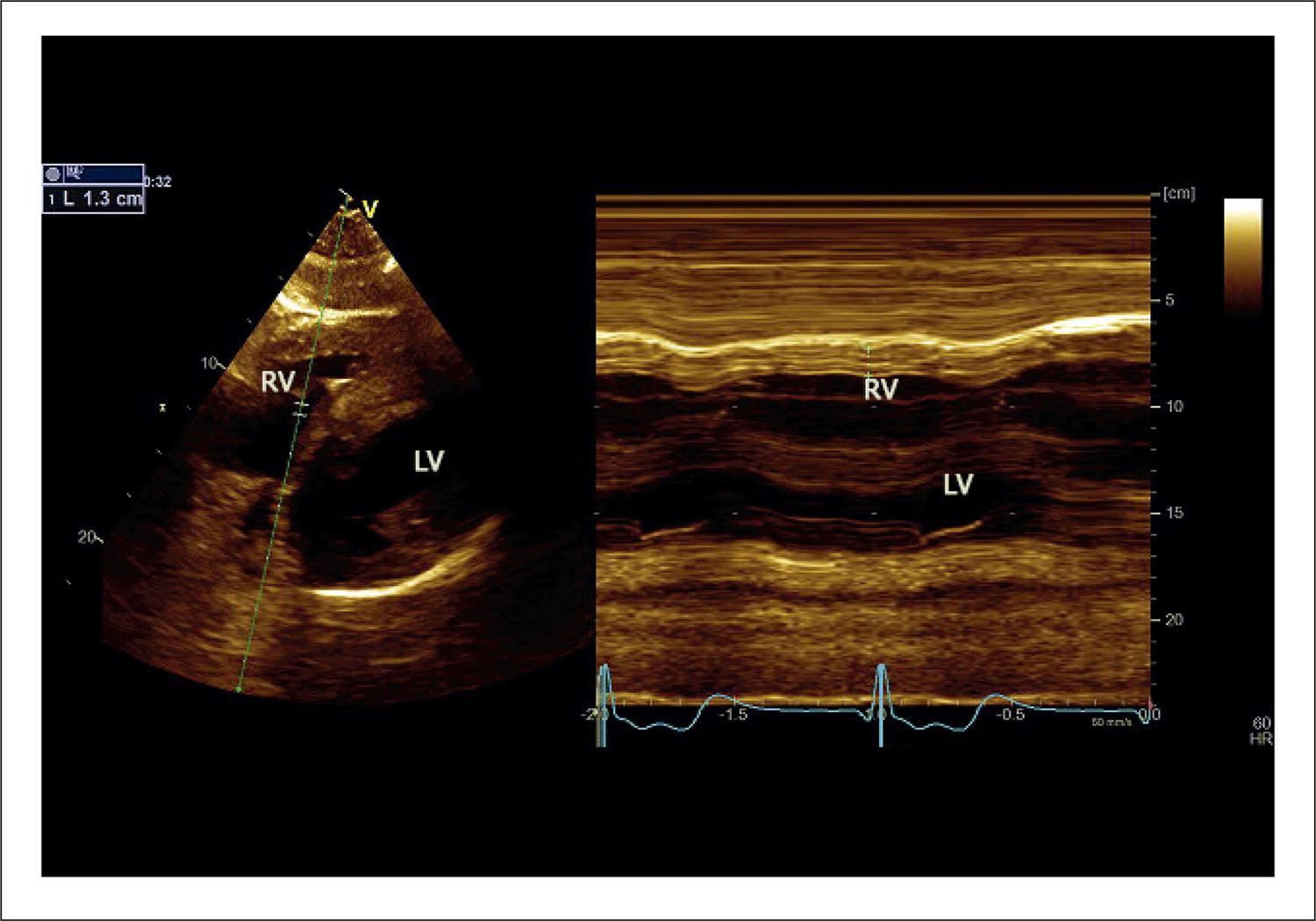
PRKAG2 syndrome is a rare, early-onset autosomal dominant inherited disease. We aimed to describe the right ventricle (RV) echocardiographic findings using two and three-dimensional (2D and 3D) modalities including myocardial deformation indices in this cardiomyopathy. We also aimed to demonstrate whether this technique could identify changes in RV function that could distinguish any particular findings.

Methods

Thirty patients with genetically proven PRKAG2 (R302Q and H401Q), 16 (53.3%) males, mean age 39.1 ± 15.4 years, underwent complete echocardiography examination. RV-focused, 4-chamber view was acquired for 2D and 3D measurements. Student’s t or Wilcoxon-Mann-Whitney tests were used to compare numerical variables between 2 groups, and p < 0.05 was considered significant.

Results

Twelve patients (40%) had a pacemaker implanted for 12.4 ± 9.9 years. RV free wall mean diastolic thickness was 7.9 ± 2.9 mm. RV 4-chamber longitudinal strain (RV4LS), including the free wall and interventricular septum, was –17.3% ± 6.7%, and RV free wall longitudinal strain (RVFWLS) was −19.1% ± 8.5%. The RVFWLS apical ratio measured 0.63 ± 0.15. Mean RV 3D ejection fraction (EF) was 42.6% ± 10.9% and below normal limits in 56.7% of patients. Positive correlation occurred between RV 3DEF, RV4LS, and RVFWLS, especially for patients without a pacemaker (p = 0.006).

Conclusion

RV involvement in PRKAG2 syndrome is frequent, occurring in different degrees. Echocardiography is a valuable tool in detecting RV myocardial abnormalities in this condition. The use of 2D RV4LS, RVFWLS, and 3DEF offers reliable indicators of RV systolic dysfunction in this rare, challenging cardiomyopathy.
  • Cardiomyopathy, Hypertrophic, Familial
  • Echocardiography/methods
  • Glycogen Storage Disease/complications
  • Hypertrophy, Right Ventricular
  • Pacemaker, Artificial
  • PRKAG2 Syndrome/genetics
  • Stroke Volume
Read Full Article
Creative Commons Attribution (CC BY) Creative Commons license
21/11/2022 DOI: 10.36660/abc.20210801 Views 1
ABCIC
Review Manuscript

Current Role of Cardiac Magnetic Resonance Imaging in Hypertrophic Cardiomyopathy

Fábio Vieira Fernandes et al. Juliana Hiromi Silva Matsumoto Bello Afonso Akio Shiozaki Roberto Caldeira Cury

[…]

  • Cardiomyopathy, Hypertrophic, Familial
  • Echocardiography/methods
  • Electrocardiography/methods
  • Endomyocardial Fibrosis
  • Heart Failure
  • Magnetic Resonance Imaging/methods
Read Full Article
Creative Commons Attribution (CC BY) Creative Commons license
04/02/2022 DOI: 10.5935/2318-8219.20180048
ABCIC
Review Article

What is the Value of Perfusion Scintigraphy and Cardiac PET in Hypertrophic Cardiomyopathy?

Elry Medeiros Vieira Segundo Neto et al. Rafael Willain Lopes Simone Cristina Soares Brandão

Abstract

Hypertrophic cardiomyopathy is the most common hereditary heart disease and affects about 1:500 individuals in the general population. Diagnosis is not always simple due to phenotypic variation and concomitance with other pathologies. It is initially based on electrocardiographic and echocardiographic criteria and on the absence of other diseases occurring with ventricular hypertrophy. Having myofibrillar derangement and fibrosis as a cellular base resulting in hemodynamic abnormalities, hypertrophic cardiomyopathy may reveal myocardial ischemia (not related to atherosclerosis) and sudden death. Therefore, evaluation of functional repercussion with myocardial perfusion scintigraphy using the Single Photon Emission Computed Tomography (SPECT) has gained space, since 25% of patients with hypertrophic cardiomyopathy have fixed or ischemic perfusion defects. In this context, some perfusion disorders are not necessarily associated with the type of hypertrophic cardiomyopathy, but are able to predict morbidity and mortality in these individuals. Another recent scintigraphy technique is the positron emission tomography (PET), which stands out in the evaluation of microcirculation, coronary flow reserve and myocardial metabolism. In patients with hypertrophic cardiomyopathy, studies have shown unfavorable results when myocardial blood flow and coronary flow reserve are lower. Metabolic myocardial evaluation using PET seems to be useful in the pathophysiological understanding of this disease and in the prognostic evaluation of alcohol ablation, a procedure performed in severe obstructive forms. This review addresses the role of nuclear cardiology using SPECT and myocardial PET in the diagnostic, prognostic and therapeutic evaluation of hypertrophic cardiomyopathy.

  • Cardiomyopathy, Hypertrophic, Familial
  • Echocardiography
  • Myocardial Ischemia
  • Myocardial Perfusion Imaging/methods
  • Positron-Emission Tomography/heart
  • Radionuclide Imaging
Read Full Article
Creative Commons Attribution (CC BY) Creative Commons license
20/01/2022 DOI: 10.5935/2318-8219.20190007
ABC
Editorial

Cardiac Troponin as a Predictor of Myocardial Injury and Mortality from COVID-19

Jorge Henrique Paiter Nascimento et al. Bruno Ferraz de Oliveira Gomes Gláucia Maria Moraes de Oliveira

In Brazil, until August 1, 2020, 2,707,877 cases of COVID-19 were diagnosed, with 93,563 deaths. the lethality rate for the country, in this period, was 3.5% with mortality variable mortality depending on the region studied. It is the lowest in the South (11.1 deaths/100,000 inhabitants) and the highest in the North (60.2 deaths/100,000 inhabitants). Up to 20% of infected individuals require hospitalization and, of these, about 25% need to be taken to an intensive care unit (ICU). In severe cases of COVID-19, intense inflammatory response and hypercoagulability enhanced by hypoxemia justify the main clinical and laboratory findings.

In this population, the presence of Myocardial Injury (MI) is not uncommon, and increased cardiac troponin (cTn)I behaves as a predictor of in-hospital mortality. There is also a possibility of direct injury by a virus that could generate myocarditis. A necropsy study that documented the presence of a virus in 61.5% did not observe the inflow of inflammatory cells in the myocardium in the acute phase, and the long-term consequence of this cardiac infection is not yet known. However, the incidence of MI in patients admitted for this disease in Brazil is little known, and its prognostic impact is still poorly elucidated. A multicenter study with cardiac biomarkers is hampered by different laboratory tests between institutions.

[…]

  • Betacoronavirus/complicações
  • Cardiomyopathy, Hypertrophic, Familial
  • Cardiovascular Diseases
  • Covid-19/complications
  • Hospitalization
  • Mortality
  • Troponin T
Read Full Article
Creative Commons Attribution (CC BY) Creative Commons license
23/10/2020 DOI: 10.36660/abc.20200862
ABC
Editorial

Which Risk Score Best Assesses Clinical Objectives in Patients with Hypertrophic Cardiomyopathy?

Eduardo Alberto de Castro Roque

Hypertrophic cardiomyopathy (HCM) is a genetic disorder characterized by commonly asymmetric unexplained left ventricular hypertrophy, with greater thickening of the basal interventricular septum. Left ventricular outflow tract obstruction is present at rest in around one third of patients and can be caused in another third. The histological features of HCM include hypertrophy and myocyte disorder, in addition to interstitial fibrosis. Hypertrophy is also often associated with left ventricular diastolic dysfunction.

The first case of HCM was described by Henri Liouville in 1869 in the Gazette Medecine Paris. In 1907, Dr. A. Schmincke, a German pathologist, described two hearts with left ventricular hypertrophy; both were seen in women in their fifth decade of life. Levy and von Glahn, in 1944, from the University of Colombia, in New York, published a series of cases that resembled HCM. In 1949, William Evans, a cardiologist from London, described the familial occurrence of cardiac hypertrophy in a series of patients similar to those described in the article by Levy and von Glahn. Dr. Eugene Braunwald and Dr. Andrew Glenn Morrow published a series of studies where they detailed the clinical and hemodynamic aspects of this disease, allowing the establishment of therapeutic objectives. –

[…]

  • Cardiomyopathy, Hypertrophic, Familial
  • Defibrillators, Implantable
  • Discrete Subaortic Stenosis
  • Hypertrophy Left Ventricular
  • Safety Management
Read Full Article
Creative Commons Attribution (CC BY) Creative Commons license
28/08/2020 DOI: 10.36660/abc.20200543 Views 1
Figure 1
ABC
Case Report

Rare Association of two Genetic Causes of Sudden Death in a Young Survivor

Dulce Brito et al. Andreia Magalhães Nuno Cortez-Dias Gabriel Miltenberger-Miltenyi

Introduction

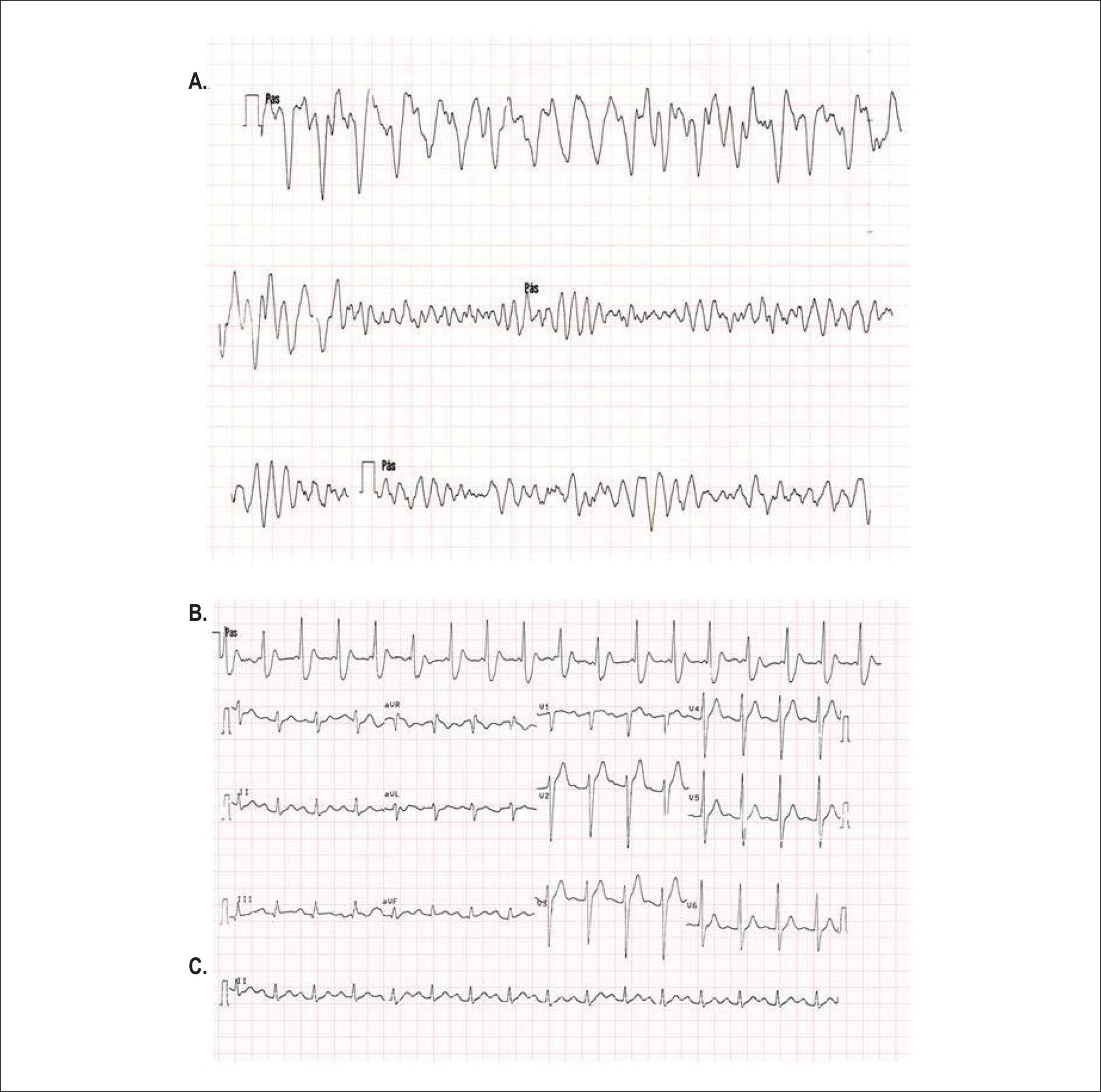
Sudden cardiac arrest (SCA) in young adults is frequently caused by inherited cardiac diseases, particularly cardiomyopathies and ion channelopathies. Genetic testing can be essential in the follow-up of survivors and today´s genetic diagnostics may include the parallel analysis of several SCA related genes, most commonly those associated with ion channelopathies and hypertrophic cardiomyopathy (HC). We present the case of a young survivor of SCA, carrier of double heterozygosity for mutations in the SNC5A and MYBPC3 genes, illustrating the complexity of genotype-phenotype associations and the difficulties of decisions regarding therapeutic interventions in inherited cardiac diseases.

[…]

  • Adolescent
  • Brugada Syndrome
  • Cardiomyopathy, Hypertrophic, Familial
  • Death, Sudden, Cardiac
Read Full Article
Creative Commons Attribution (CC BY) Creative Commons license
01/02/2017 DOI: 10.5935/abc.20170016 Views 1
ABC
Review Article

Diagnostic evaluation of hipertrophic cardiomyopathy in its clinical and preclinical phases

Beatriz Piva e Mattos et al. Marco Antonio Rodrigues Torres Valéria Centeno de Freitas

Hypertrophic cardiomyopathy is a familial, genetic disease caused by mutations in genes encoding sarcomeric proteins. It is characterized by various deGrees of left ventricular hypertrophy, usually diffuse, predominantly involving the interventricular septum. The asymptomatic forms with mild or no segmental hypertrophy makes it difficult to establish the diagnosis and screening for familial forms. Its high penetrance is often incomplete and, as a result, 20% to 30% of adults who carry disease-causing gene mutations do not express the phenotype. The susceptibility to sudden death and likelihood of late expression makes establishing a preclinical diagnosis all the more important. The use of Doppler echocardiography and magnetic resonance imaging, in conjunction with a detailed ECG analysis, may be useful in this process. Molecular genetic studies can identify mutations in 60% to 80% of the cases. However, its complex, time-consuming and costly nature, coupled with an inadequate assessment of genotype-phenotype relationships, limits its routine application. Major advances in imaging methods and the introduction of more simplified molecular techniques may contribute to clinical and preclinical diagnosis of hypertrophic cardiomyopathy, in addition to allowing implementation of therapeutic strategies to prevent or delay the development of the disease.

  • Cardiomyopathy, Hypertrophic
  • Cardiomyopathy, Hypertrophic, Familial
  • Hypertrophy Left Ventricular
Read Full Article
Creative Commons Attribution (CC BY) Creative Commons license
25/07/2008 DOI: 10.1590/S0066-782X2008001300009

How to cite this article

EndNote RIS

Electronic Document Format (Vancouver)

Pena JLB, Melo FJ, Santos WC, Moura ICG, Nakashima GP, Freitas NC, Sternick EB, et al. Right Ventricle Involvement by Glycogen Storage Cardiomyopathy (PRKAG2): Standard and Advanced Echocardiography Analyses. Arquivos Brasileiros de Cardiologia 2022;119(6):902-9.

Electronic Document Format (ABNT)

Pena, José Luiz Barros; Melo, Fabricio Junqueira de; Santos, Wander Costa; Moura, Isabel Cristina Gomes; Nakashima, Gabriela Pansanato; Freitas, Natalia Costa; Sternick, Eduardo Back. Right Ventricle Involvement by Glycogen Storage Cardiomyopathy (PRKAG2): Standard and Advanced Echocardiography Analyses. Arquivos Brasileiros de Cardiologia, v. 119, n. 6, p. 902-909, Nov. 2022.

Electronic Document Format (APA)

Pena, J. L. B., Melo, F. J. , Santos, W. C., Moura, I. C. G., Nakashima, G. P., Freitas, N. C., & Sternick, E. B. (2022). Right Ventricle Involvement by Glycogen Storage Cardiomyopathy (PRKAG2): Standard and Advanced Echocardiography Analyses. Arquivos Brasileiros de Cardiologia, 119(6), 902-909.

Electronic Document Format (ISO)

Pena, José Luiz Barros and Melo, Fabricio Junqueira de and Santos, Wander Costa and Moura, Isabel Cristina Gomes and Nakashima, Gabriela Pansanato and Freitas, Natalia Costa and Sternick, Eduardo Back. Right Ventricle Involvement by Glycogen Storage Cardiomyopathy (PRKAG2): Standard and Advanced Echocardiography Analyses. Arquivos Brasileiros de Cardiologia [online]. 2022, vol. 119, n. 6, [cited 2026-10-14], pp. 902-909. Available from: <https://journals.cardiol.br/en/article/right-ventricle-involvement-by-glycogen-storage-cardiomyopathy-prkag2-standard-and-advanced-echocardiography-analyses/>. ISSN 0066-782X

EndNote RIS

Electronic Document Format (Vancouver)

Fernandes FV, Bello JHSM, Shiozaki AA, Cury RC. Current Role of Cardiac Magnetic Resonance Imaging in Hypertrophic Cardiomyopathy. Arquivos Brasileiros de Cardiologia Imagem cardiovascular 2022;31(4):277-83.

Electronic Document Format (ABNT)

Fernandes, Fábio Vieira; Bello, Juliana Hiromi Silva Matsumoto; Shiozaki, Afonso Akio; Cury, Roberto Caldeira. Current Role of Cardiac Magnetic Resonance Imaging in Hypertrophic Cardiomyopathy. Arquivos Brasileiros de Cardiologia Imagem cardiovascular, v. 31, n. 4, p. 277-283, Feb. 2022.

Electronic Document Format (APA)

Fernandes, F. V., Bello, J. H. S. M., Shiozaki, A. A., & Cury, R. C. (2022). Current Role of Cardiac Magnetic Resonance Imaging in Hypertrophic Cardiomyopathy. Arquivos Brasileiros de Cardiologia Imagem cardiovascular, 31(4), 277-283.

Electronic Document Format (ISO)

Fernandes, Fábio Vieira and Bello, Juliana Hiromi Silva Matsumoto and Shiozaki, Afonso Akio and Cury, Roberto Caldeira. Current Role of Cardiac Magnetic Resonance Imaging in Hypertrophic Cardiomyopathy. Arquivos Brasileiros de Cardiologia Imagem cardiovascular [online]. 2022, vol. 31, n. 4, [cited 2026-10-14], pp. 277-283. Available from: <https://journals.cardiol.br/en/article/current-role-of-cardiac-magnetic-resonance-imaging-in-hypertrophic-cardiomyopathy/>. ISSN 2318-8219

EndNote RIS

Electronic Document Format (Vancouver)

Segundo Neto EMV, Lopes RW, Brandão SCS. What is the Value of Perfusion Scintigraphy and Cardiac PET in Hypertrophic Cardiomyopathy?. Arquivos Brasileiros de Cardiologia Imagem cardiovascular 2022;32(1):19-28.

Electronic Document Format (ABNT)

Segundo Neto, Elry Medeiros Vieira; Lopes, Rafael Willain; Brandão, Simone Cristina Soares. What is the Value of Perfusion Scintigraphy and Cardiac PET in Hypertrophic Cardiomyopathy?. Arquivos Brasileiros de Cardiologia Imagem cardiovascular, v. 32, n. 1, p. 19-28, Jan. 2022.

Electronic Document Format (APA)

Segundo Neto, E. M. V., Lopes, R. W., & Brandão, S. C. S. (2022). What is the Value of Perfusion Scintigraphy and Cardiac PET in Hypertrophic Cardiomyopathy?. Arquivos Brasileiros de Cardiologia Imagem cardiovascular, 32(1), 19-28.

Electronic Document Format (ISO)

Segundo Neto, Elry Medeiros Vieira and Lopes, Rafael Willain and Brandão, Simone Cristina Soares. What is the Value of Perfusion Scintigraphy and Cardiac PET in Hypertrophic Cardiomyopathy?. Arquivos Brasileiros de Cardiologia Imagem cardiovascular [online]. 2022, vol. 32, n. 1, [cited 2026-10-14], pp. 19-28. Available from: <https://journals.cardiol.br/en/article/what-is-the-value-of-perfusion-scintigraphy-and-cardiac-pet-in-hypertrophic-cardiomyopathy/>. ISSN 2318-8219

EndNote RIS

Electronic Document Format (Vancouver)

Nascimento JHP, Gomes BFO, Oliveira GMM. Cardiac Troponin as a Predictor of Myocardial Injury and Mortality from COVID-19. Arquivos Brasileiros de Cardiologia 2020;115(4):667-8.

Electronic Document Format (ABNT)

Nascimento, Jorge Henrique Paiter; Gomes, Bruno Ferraz de Oliveira; Oliveira, Gláucia Maria Moraes de. Cardiac Troponin as a Predictor of Myocardial Injury and Mortality from COVID-19. Arquivos Brasileiros de Cardiologia, v. 115, n. 4, p. 667-668, Oct. 2020.

Electronic Document Format (APA)

Nascimento, J. H. P., Gomes, B. F. O., & Oliveira, G. M. M. (2020). Cardiac Troponin as a Predictor of Myocardial Injury and Mortality from COVID-19. Arquivos Brasileiros de Cardiologia, 115(4), 667-668.

Electronic Document Format (ISO)

Nascimento, Jorge Henrique Paiter and Gomes, Bruno Ferraz de Oliveira and Oliveira, Gláucia Maria Moraes de. Cardiac Troponin as a Predictor of Myocardial Injury and Mortality from COVID-19. Arquivos Brasileiros de Cardiologia [online]. 2020, vol. 115, n. 4, [cited 2026-10-14], pp. 667-668. Available from: <https://journals.cardiol.br/en/article/cardiac-troponin-as-a-predictor-of-myocardial-injury-and-mortality-from-covid-19/>. ISSN 0066-782X

EndNote RIS

Electronic Document Format (Vancouver)

Roque EAC. Which Risk Score Best Assesses Clinical Objectives in Patients with Hypertrophic Cardiomyopathy?. Arquivos Brasileiros de Cardiologia 2020;115(2):205-6.

Electronic Document Format (ABNT)

Roque, Eduardo Alberto de Castro. Which Risk Score Best Assesses Clinical Objectives in Patients with Hypertrophic Cardiomyopathy?. Arquivos Brasileiros de Cardiologia, v. 115, n. 2, p. 205-206, Aug. 2020.

Electronic Document Format (APA)

Roque, E. A. C. (2020). Which Risk Score Best Assesses Clinical Objectives in Patients with Hypertrophic Cardiomyopathy?. Arquivos Brasileiros de Cardiologia, 115(2), 205-206.

Electronic Document Format (ISO)

Roque, Eduardo Alberto de Castro. Which Risk Score Best Assesses Clinical Objectives in Patients with Hypertrophic Cardiomyopathy?. Arquivos Brasileiros de Cardiologia [online]. 2020, vol. 115, n. 2, [cited 2026-10-14], pp. 205-206. Available from: <https://journals.cardiol.br/en/article/which-risk-score-best-assesses-clinical-objectives-in-patients-with-hypertrophic-cardiomyopathy/>. ISSN 0066-782X

EndNote RIS

Electronic Document Format (Vancouver)

Brito D, Magalhães A, Cortez-Dias N, Miltenberger-Miltenyi G. Rare Association of two Genetic Causes of Sudden Death in a Young Survivor. Arquivos Brasileiros de Cardiologia 2017;108(2):184-6.

Electronic Document Format (ABNT)

Brito, Dulce; Magalhães, Andreia; Cortez-Dias, Nuno; Miltenberger-Miltenyi, Gabriel. Rare Association of two Genetic Causes of Sudden Death in a Young Survivor. Arquivos Brasileiros de Cardiologia, v. 108, n. 2, p. 184-186, Jan. 2017.

Electronic Document Format (APA)

Brito, D., Magalhães, A., Cortez-Dias, N., & Miltenberger-Miltenyi, G. (2017). Rare Association of two Genetic Causes of Sudden Death in a Young Survivor. Arquivos Brasileiros de Cardiologia, 108(2), 184-186.

Electronic Document Format (ISO)

Brito, Dulce and Magalhães, Andreia and Cortez-Dias, Nuno and Miltenberger-Miltenyi, Gabriel. Rare Association of two Genetic Causes of Sudden Death in a Young Survivor. Arquivos Brasileiros de Cardiologia [online]. 2017, vol. 108, n. 2, [cited 2026-10-14], pp. 184-186. Available from: <https://journals.cardiol.br/en/article/rare-association-of-two-genetic-causes-of-sudden-death-in-a-young-survivor/>. ISSN 0066-782X

EndNote RIS

Electronic Document Format (Vancouver)

Mattos BP, Torres MAR, Freitas VC. Diagnostic evaluation of hipertrophic cardiomyopathy in its clinical and preclinical phases. Arquivos Brasileiros de Cardiologia 2008;91(1):55-62.

Electronic Document Format (ABNT)

Mattos, Beatriz Piva e; Torres, Marco Antonio Rodrigues; Freitas, Valéria Centeno de. Diagnostic evaluation of hipertrophic cardiomyopathy in its clinical and preclinical phases. Arquivos Brasileiros de Cardiologia, v. 91, n. 1, p. 55-62, Jul. 2008.

Electronic Document Format (APA)

Mattos, B. P. , Torres, M. A. R., & Freitas, V. C. (2008). Diagnostic evaluation of hipertrophic cardiomyopathy in its clinical and preclinical phases. Arquivos Brasileiros de Cardiologia, 91(1), 55-62.

Electronic Document Format (ISO)

Mattos, Beatriz Piva e and Torres, Marco Antonio Rodrigues and Freitas, Valéria Centeno de. Diagnostic evaluation of hipertrophic cardiomyopathy in its clinical and preclinical phases. Arquivos Brasileiros de Cardiologia [online]. 2008, vol. 91, n. 1, [cited 2026-10-14], pp. 55-62. Available from: <https://journals.cardiol.br/en/article/diagnostic-evaluation-of-hipertrophic-cardiomyopathy-in-its-clinical-and-preclinical-phases/>. ISSN 0066-782X

  • About ABC Family
  • Internal Regulation
  • Editorial Board
  • Brazilian Society of Cardiology (SBC)

Issues

SBC Guidelines

  • Videos
  • Podcasts
  • News