Chatterjee Phenomenon: The Heart Remembers What the Mind Forgets
Introduction
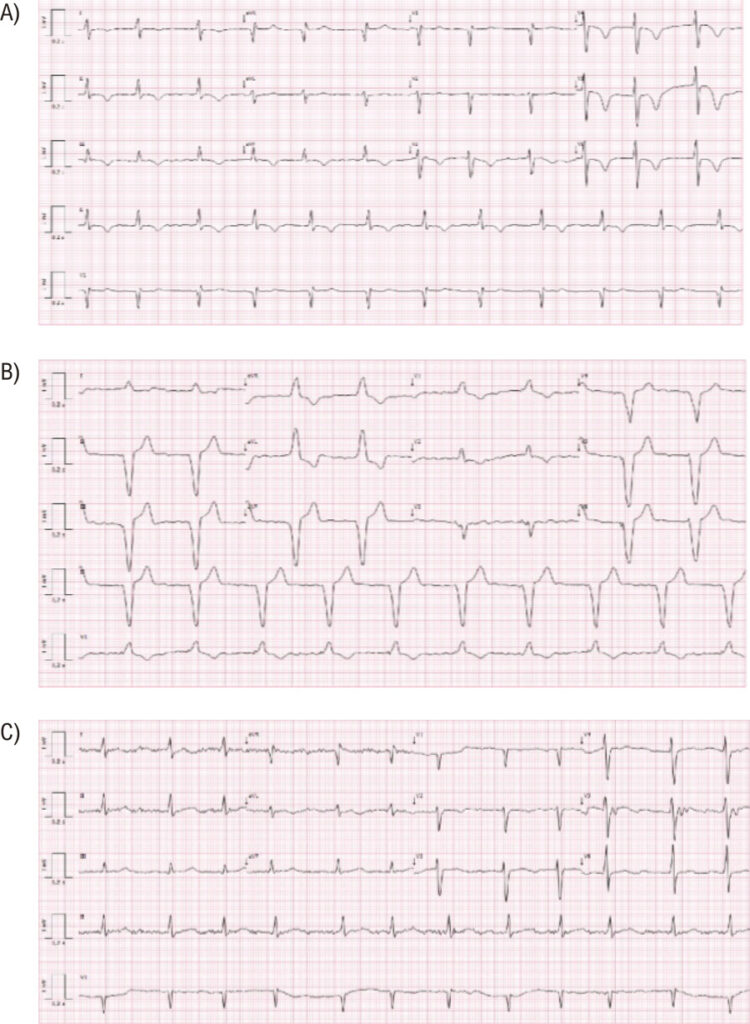
The Chatterjee phenomenon, also known as cardiac memory (CM), is defined as persistent changes in the T wave on the electrocardiogram after episodes of stimulated rhythms. These changes become evident when the normal pattern of ventricular activation is reestablished, which is often confused with pathological conditions such as myocarditis, hypertrophy, and ventricular pre-excitation, hydroelectrolytic disorders, and intracranial hypertension, where the most serious scenario is acute myocardial ischemia.–
This nosological entity, observed in about one-third of patients with pacemakers and with a prevalence of around 80% in cases with a high percentage of ventricular stimulation, was first reported exactly 110 years ago by White, who described transient T wave inversion (TWI) after premature ventricular beats. Twenty-five years later, abnormal T waves of varying duration were described after periods of intermittent ventricular pre-excitation, post-ventricular tachycardia syndrome, and ventricular complexes augmented by sodium channel blocker toxicity.
[…]
Images
Image gallery fullscreen viewer
Comments are moderated by the editorial team before publication. Discussions should be evidence-based and use scientific language. Conflicts of interest should be declared.