ABC Family Arquivos Brasileiros de Cardiologia International Journal of Cardiovascular Sciences ABC Heart Failure & Cardiomyopathy ABC Imagem Cardiovascular
Português English
ABC Family
Português English
  • About
    • About ABC Family
    • Internal Regulation
    • Editorial Board
    • Brazilian Society of Cardiology (SBC)
  • Issues
  • SBC Guidelines
  • Content
    • Videos
    • Podcasts
    • News
  • About
    • About ABC Family
    • Internal Regulation
    • Editorial Board
    • Brazilian Society of Cardiology (SBC)
  • Issues
  • SBC Guidelines
  • Content
    • Videos
    • Podcasts
    • News

ABC Family

  • ABC Family
  • Arquivos Brasileiros de Cardiologia
  • International Journal of Cardiovascular Sciences
  • ABC Heart Failure & Cardiomyopathy
  • ABC Imagem Cardiovascular
Search in

No content found.

Journals
Ordering
Article types
Others

  1. Home
  2. Keyword: Vasovagal Syncope
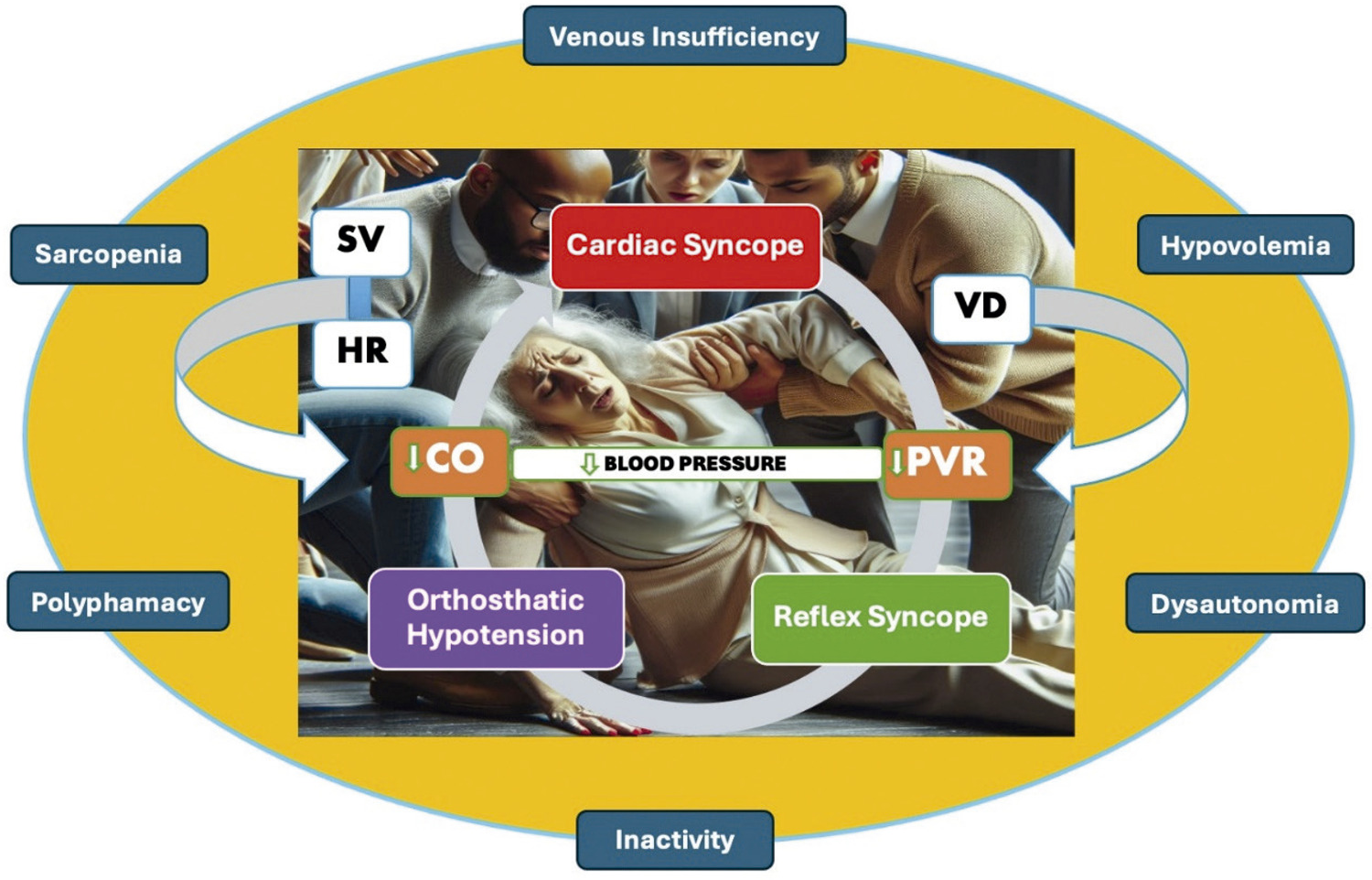
Figure 1
IJCS
Editorial

Assessment of Quality of Life after Diagnosis of Reflex Syncope: A Subjective Outcome of Great Clinical Importance with Multifactorial Cause

Nágela Nunes et al. Alfredo de Souza Bomfim

Syncope, a clinical syndrome characterized by transient loss of consciousness (TLOC), is defined by specific elements, namely: sudden onset and rapid recovery, loss of postural tone, full recovery of consciousness, amnesia of the event, nonresponsiveness, and a typical event duration of up to 5 minutes (usually lasting seconds). The pathophysiology of syncope involves global cerebral hypoperfusion, primarily due to a drop in blood pressure (BP), with various factors contributing individually or in combination to syncope (). Even brief periods of cessation of cerebral blood flow (6–8 s) or a systolic BP of 50–60 mmHg at the level of the heart (equivalent to 30–45 mmHg at the level of the brain in the upright position) can lead to TLOC. Pathophysiological mechanisms may include a decrease in peripheral vascular resistance, cardiac output, or a decrease in both. The etiology of syncope is didactically classified into three types: 1) orthostatic hypotension (OH); 2) reflex syncope (also termed vasovagal or neurally mediated syncope); and 3) cardiac syncope.

[…]

  • Artificial Pacemaker
  • Quality of life
  • Vasovagal Syncope
Read Full Article
Creative Commons Attribution (CC BY) Creative Commons license
05/07/2024 DOI: 10.36660/ijcs.20240076 Views 1
Clinical outcome of patients with neurocardiogenic syncope (NCS) after therapy interruption
ABC
Artigo Original

Clinical outcome of patients with neurocardiogenic syncope (NCS) after therapy interruption

Silvana Bastos et al. Mauricio Scanavacca Francisco Darrieux Ana Cristina Ludovice … Eduardo Sosa Denise Tessariol Hachul

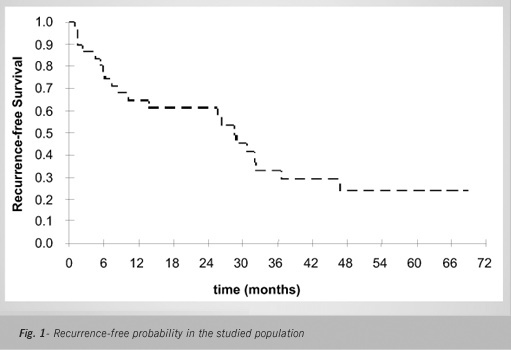
OBJECTIVE: To evaluate the outcome of patients with NCS after interruption of pharmacological therapy and to investigate the possible clinical variables predicting recurrence. METHODS: Thirty-seven patients (age 31±16 years) with refractory recurrent NCS being 19 females where prospectively studied. All patients became asymptomatic and had a negative tilt table test (TT) after pharmacological therapy. The treatment was interrupted and one month later, a new TT with no medication was carried out. The probability free of symptoms recurrence was analyzed according to sex, age, number of syncope episodes previously to the treatment, clinical history time, treatment time, drug free from treatment time and TT result. RESULTS: Twenty-two patients (59%) presented recurrence during a mean follow-up of 21±19.7 months. The variables related to greater recurrence were number of previous syncope (p=0.0248), positive TT after interruption of the therapy (p=0.0002) and female gender (p= 0.0131). CONCLUSIONS: Most of the very symptomatic patients with NCS present recurrence after the suppression of a specific therapy. A TT carried out after treatment discontinuation can identify patients with higher risk of recurrence, specially in the first year of follow-up.

  • Tilt Table Test
  • Treatment
  • Vasovagal Syncope
Read Full Article
Creative Commons Attribution (CC BY) Creative Commons license
25/04/2006 DOI: 10.1590/S0066-782X2006000400004
ABC
Original Article

Comparison between tilt-table testing results performed during different periods of the day

Tan Chen Wu et al. Denise Hachul Mauricio Scanavacca Eduardo Sosa

OBJECTIVE: To evaluate the influences of circadian variations on tilt-table testing (TTT) results by comparing the positivity rate of the test performed during the morning with that of the test performed in the afternoon and to evaluate the reproducibility of the results in different periods of the day. METHODS: One hundred twenty-three patients with recurrent unexplained syncope or near-syncope referred for TTT were randomized into 2 groups. In group I, 68 patients, TTT was performed first in the afternoon and then in the morning. In group II, 55 patients, the test was performed first in the morning and then in the afternoon. RESULTS: The TTT protocol was the prolonged passive test, without drug sensitization. Twenty-nine (23.5%) patients had a positive result in at least one of the periods. The positivity rate for each period was similar: 20 (16.2%) patients in the afternoon and 19 (15.4%) in the morning (p=1.000). Total reproducibility (positive/positive and negative/negative) was observed in 49 (89%) patients in group I and in 55 (81%) in group II. Reproducibility of the results was obtained in 94 (90.4%) patients with first negative tests but in 10 (34%) patients with first positive tests. CONCLUSION: TTT could be performed during any period of the day, and even in the 2 periods to enhance positivity. Considering the low reproducibility rate of the positive tests, serial TTT to evaluate therapeutic efficacy should be performed during the same period of the day.

  • circadian variation
  • tilt-table testing
  • Vasovagal Syncope
Read Full Article
Creative Commons Attribution (CC BY) Creative Commons license
06/11/2002 DOI: 10.1590/S0066-782X2002001300006 Views 2

How to cite this article

EndNote RIS

Electronic Document Format (Vancouver)

Nunes N, Bomfim AS. Assessment of Quality of Life after Diagnosis of Reflex Syncope: A Subjective Outcome of Great Clinical Importance with Multifactorial Cause. International Journal of Cardiovascular Sciences 2024;37:e20240076.

Electronic Document Format (ABNT)

Nunes, Nágela; Bomfim, Alfredo de Souza. Assessment of Quality of Life after Diagnosis of Reflex Syncope: A Subjective Outcome of Great Clinical Importance with Multifactorial Cause. International Journal of Cardiovascular Sciences, v. 37, e20240076, Jul. 2024.

Electronic Document Format (APA)

Nunes, N., & Bomfim, A. S. (2024). Assessment of Quality of Life after Diagnosis of Reflex Syncope: A Subjective Outcome of Great Clinical Importance with Multifactorial Cause. International Journal of Cardiovascular Sciences, 37, e20240076.

Electronic Document Format (ISO)

Nunes, Nágela and Bomfim, Alfredo de Souza. Assessment of Quality of Life after Diagnosis of Reflex Syncope: A Subjective Outcome of Great Clinical Importance with Multifactorial Cause. International Journal of Cardiovascular Sciences [online]. 2024, vol. 37, [cited 2026-10-14], e20240076. Available from: <https://journals.cardiol.br/en/article/assessment-of-quality-of-life-after-diagnosis-of-reflex-syncope-a-subjective-outcome-of-great-clinical-importance-with-multifactorial-cause/>. ISSN 2359-4802

EndNote RIS

Electronic Document Format (Vancouver)

Bastos S, Scanavacca M, Darrieux F, Ludovice AC, Sosa E, Hachul DT. Clinical outcome of patients with neurocardiogenic syncope (NCS) after therapy interruption. Arquivos Brasileiros de Cardiologia 2006;86(4):256-60.

Electronic Document Format (ABNT)

Bastos, Silvana; Scanavacca, Mauricio; Darrieux, Francisco; Ludovice, Ana Cristina; Sosa, Eduardo; Hachul, Denise Tessariol. Clinical outcome of patients with neurocardiogenic syncope (NCS) after therapy interruption. Arquivos Brasileiros de Cardiologia, v. 86, n. 4, p. 256-260, Apr. 2006.

Electronic Document Format (APA)

Bastos, S., Scanavacca, M., Darrieux, F., Ludovice, A. C., Sosa, E., & Hachul, D. T. (2006). Clinical outcome of patients with neurocardiogenic syncope (NCS) after therapy interruption. Arquivos Brasileiros de Cardiologia, 86(4), 256-260.

Electronic Document Format (ISO)

Bastos, Silvana and Scanavacca, Mauricio and Darrieux, Francisco and Ludovice, Ana Cristina and Sosa, Eduardo and Hachul, Denise Tessariol. Clinical outcome of patients with neurocardiogenic syncope (NCS) after therapy interruption. Arquivos Brasileiros de Cardiologia [online]. 2006, vol. 86, n. 4, [cited 2026-10-14], pp. 256-260. Available from: <https://journals.cardiol.br/en/article/clinical-outcome-of-patients-with-neurocardiogenic-syncope-ncs-after-therapy-interruption/>. ISSN 0066-782X

EndNote RIS

Electronic Document Format (Vancouver)

Wu TC, Hachul D, Scanavacca M, Sosa E. Comparison between tilt-table testing results performed during different periods of the day. Arquivos Brasileiros de Cardiologia 2002;79(4):390-4.

Electronic Document Format (ABNT)

Wu, Tan Chen; Hachul, Denise; Scanavacca, Mauricio; Sosa, Eduardo. Comparison between tilt-table testing results performed during different periods of the day. Arquivos Brasileiros de Cardiologia, v. 79, n. 4, p. 390-394, Nov. 2002.

Electronic Document Format (APA)

Wu, T. C., Hachul, D., Scanavacca, M., & Sosa, E. (2002). Comparison between tilt-table testing results performed during different periods of the day. Arquivos Brasileiros de Cardiologia, 79(4), 390-394.

Electronic Document Format (ISO)

Wu, Tan Chen and Hachul, Denise and Scanavacca, Mauricio and Sosa, Eduardo. Comparison between tilt-table testing results performed during different periods of the day. Arquivos Brasileiros de Cardiologia [online]. 2002, vol. 79, n. 4, [cited 2026-10-14], pp. 390-394. Available from: <https://journals.cardiol.br/en/article/comparison-between-tilt-table-testing-results-performed-during-different-periods-of-the-day/>. ISSN 0066-782X

  • About ABC Family
  • Internal Regulation
  • Editorial Board
  • Brazilian Society of Cardiology (SBC)

Issues

SBC Guidelines

  • Videos
  • Podcasts
  • News