Endocarditis – A 27-Year Epidemiological Analysis of Mortality in Brazil
Abstract
Background:
Infective endocarditis (IE) is frequently caused by viridans streptococci. Short-term in-hospital mortality in high-income settings ranges from 11% to 25%. In Brazil, rheumatic heart disease remains a leading valvular substrate; however, its declining prevalence in developing nations has limited country-specific analyses.
Objective:
To describe the epidemiological profile of mortality from IE in Brazil, characterizing its magnitude and temporal trend.
Methods:
We conducted a retrospective, exploratory epidemiological study with descriptive and analytic components using data from the Mortality Information System of the Department of Informatics of Brazil’s Unified Health System. Chi-square tests of independence were applied (p < 0.05), and results were summarized in tables and figures. Variables included International Statistical Classification of Diseases and Related Health Problems, 10th Revision categories, year of death, region, and sex.
Results:
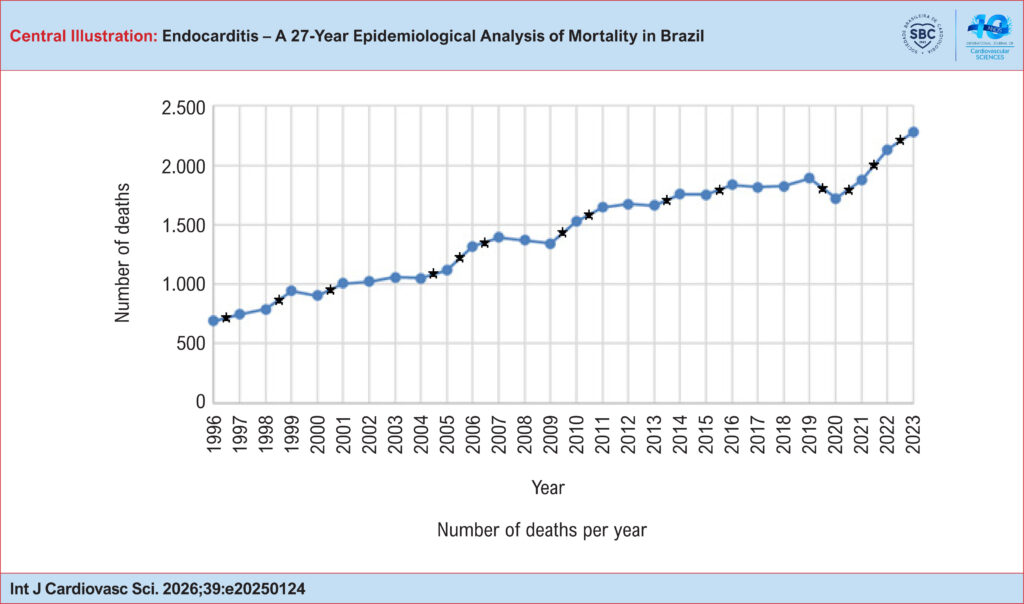
From 1996 to 2022, 40,157 deaths associated with IE were recorded in Brazil (chi-square = 1,701.43). The Southeast region accounted for the greatest burden, with 21,429 deaths (53.36%; chi-square = 15,236.00). By sex (chi-square = 999.32), men were more affected than women (55.57% [22,315] vs 44.41% [17,835]); in 0.02% of records, sex was unspecified.
Conclusions:
IE remains a condition of national and international concern, with substantial mortality in Brazil over the last 27 years. This overview of mortality patterns highlights regional disparities and sex differences and can inform public-health strategies and evidence-based interventions.
Images
Image gallery fullscreen viewer
Comments are moderated by the editorial team before publication. Discussions should be evidence-based and use scientific language. Conflicts of interest should be declared.