ABC Family Arquivos Brasileiros de Cardiologia International Journal of Cardiovascular Sciences ABC Heart Failure & Cardiomyopathy ABC Imagem Cardiovascular
Português English
ABC Family
Português English
  • About
    • About ABC Family
    • Internal Regulation
    • Editorial Board
    • Brazilian Society of Cardiology (SBC)
  • Issues
  • SBC Guidelines
  • Content
    • Videos
    • Podcasts
    • News
  • About
    • About ABC Family
    • Internal Regulation
    • Editorial Board
    • Brazilian Society of Cardiology (SBC)
  • Issues
  • SBC Guidelines
  • Content
    • Videos
    • Podcasts
    • News

ABC Family

  • ABC Family
  • Arquivos Brasileiros de Cardiologia
  • International Journal of Cardiovascular Sciences
  • ABC Heart Failure & Cardiomyopathy
  • ABC Imagem Cardiovascular
Search in

No content found.

Journals
Ordering
Article types
Others

  1. Home
  2. Keyword: heparin, low-molecular-weight
Propositional debate on biosimilar enoxaparin in Brazil
ABC
Point of view

Propositional debate on biosimilar enoxaparin in Brazil

Paulo A.S. Mourão et al. Bianca F. Glauser Bruno C. Vairo Mariana S. Pereira

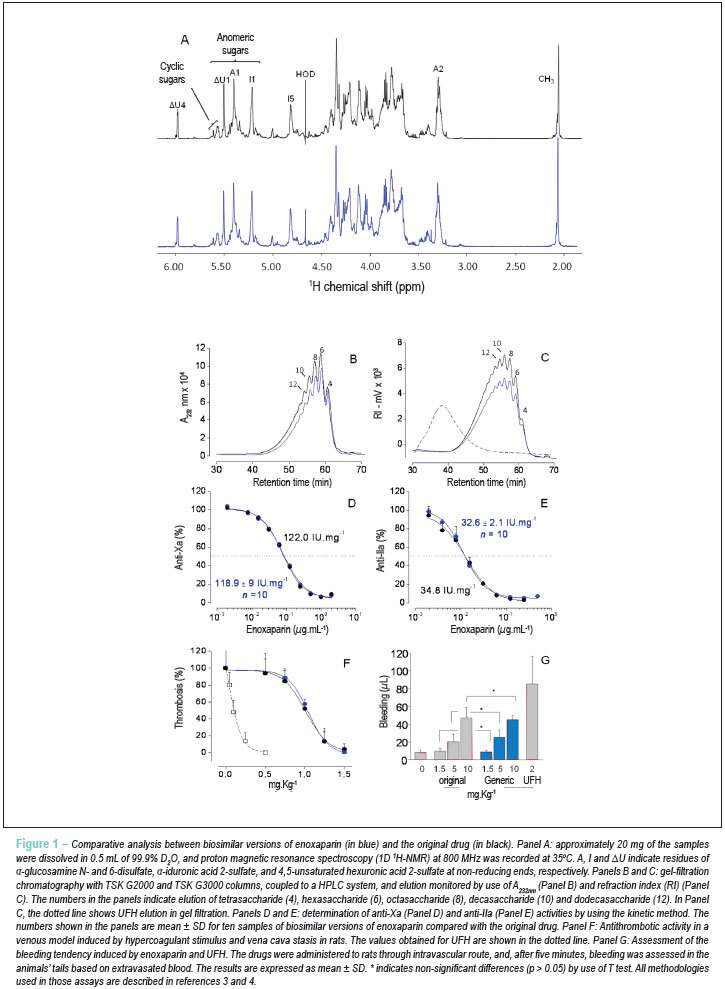
Some patents of low-molecular-weight heparins (LMWHs) have expired and others are about to expire. Biosimilar versions of those drugs are available for clinical use in several countries. However, skepticism persists about the possibility of obtaining preparations similar to the original drug, because of the complexity of the process to generate LMWHs. In recent years, our laboratory has analyzed biosimilar samples of enoxaparin available for clinical use in Brazil (30 different batches and 70 finished products). Those preparations were assessed regarding their chemical structure, molecular weight distribution, in vitro anticoagulant activity, and pharmacological effects in animal models of thrombosis and bleeding. Our results have clearly shown that biosimilar preparations of enoxaparin are similar to the original drug. Our results have shown that those biosimilar versions of enoxaparin are a valid therapeutic alternative, which are, however, in need of appropriate regulation to ensure compliance with regulatory requirements.
  • Enoxaparin
  • Fibrinolytic Agents
  • Heparin
  • heparin, low-molecular-weight
Read Full Article
Creative Commons Attribution (CC BY) Creative Commons license
08/02/2012 DOI: 10.1590/S0066-782X2012000100019 Views 2
Safety of ablation for atrial fibrillation with therapeutic INR: comparison with transition to low-molecular-weight heparin
ABC
Artigo Original

Safety of ablation for atrial fibrillation with therapeutic INR: comparison with transition to low-molecular-weight heparin

Eduardo B. Saad et al. Ieda P. Costa Rodrigo E. da Costa Luiz Antônio O. Inácio Jr … Charles Slater Angelina Camiletti Dario G. de Moura Neto Paulo Maldonado Luiz Eduardo Camanho Carisi A. Polanczyk

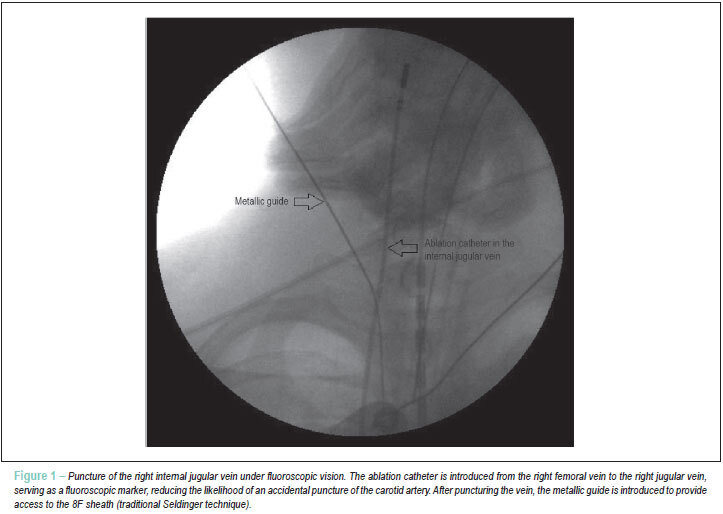
BACKGROUND: The ideal management of oral anticoagulation (OAC) before and after catheter ablation for atrial fibrillation (AF) is still controversial. OBJECTIVE: To compare two anticoagulation strategies for catheter ablation for AF: warfarin withholding and use of low-molecular-weight heparin (LMWH); and maintenance of warfarin and therapeutic INR (between 2.0 and 3.0). METHODS: 140 patients (pt) with persistent/permanent AF undergoing catheter ablation for AF were divided into two groups: Group I (70 pt), in which warfarin was withheld five days prior to the procedure and transition to LMWH was used (enoxaparin: 1 mg/kg 2x/day before ablation, and 0.5 mg/kg 2x/day after ablation); Group II (70 pt), in which warfarin was not withheld and the procedure was performed with therapeutic INR. Both groups received intravenous heparin (ACT > 350 seconds) during ablation. RESULTS: In Group I, one pt (1.4%) had a major hemorrhagic complication and four pts (5.7%) had minor hemorrhagic complications. In Group II, two pts (2.8%) had minor hemorrhagic complications and one pt had a major bleeding, which occurred after using LMWH due to INR < 2.0. None of the groups had thromboembolic complications or cardiovascular death over a period of 16 ± 8 months. CONCLUSION: Catheter ablation for AF without withholding OAC and with therapeutic INR is a strategy that has similar safety and efficacy when compared with the traditional transition to LMWH, avoiding the potentially inadequate anticoagulation of the initial post-ablation period.

  • Atrial Fibrillation
  • Catheter Ablation
  • heparin, low-molecular-weight
  • Treatment Outcome
  • Warfarin
  • withholding treatment
Read Full Article
Creative Commons Attribution (CC BY) Creative Commons license
19/08/2011 DOI: 10.1590/S0066-782X2011005000088 Views 3

How to cite this article

EndNote RIS

Electronic Document Format (Vancouver)

Mourão PA, Glauser BF, Vairo BC, Pereira MS. Propositional debate on biosimilar enoxaparin in Brazil. Arquivos Brasileiros de Cardiologia 2012;98(1):e11-4.

Electronic Document Format (ABNT)

Mourão, Paulo A.S.; Glauser, Bianca F.; Vairo, Bruno C.; Pereira, Mariana S.. Propositional debate on biosimilar enoxaparin in Brazil. Arquivos Brasileiros de Cardiologia, v. 98, n. 1, p. e11-e14, Feb. 2012.

Electronic Document Format (APA)

Mourão, P. A., Glauser, B. F., Vairo, B. C., & Pereira, M. S. (2012). Propositional debate on biosimilar enoxaparin in Brazil. Arquivos Brasileiros de Cardiologia, 98(1), e11-e14.

Electronic Document Format (ISO)

Mourão, Paulo A.S. and Glauser, Bianca F. and Vairo, Bruno C. and Pereira, Mariana S.. Propositional debate on biosimilar enoxaparin in Brazil. Arquivos Brasileiros de Cardiologia [online]. 2012, vol. 98, n. 1, [cited 2026-10-14], pp. e11-e14. Available from: <https://journals.cardiol.br/en/article/propositional-debate-on-biosimilar-enoxaparin-in-brazil/>. ISSN 0066-782X

EndNote RIS

Electronic Document Format (Vancouver)

Saad EB, Costa IP, Costa RE, Inácio Jr LAO, Slater C, Camiletti A, Moura Neto DG, et al. Safety of ablation for atrial fibrillation with therapeutic INR: comparison with transition to low-molecular-weight heparin. Arquivos Brasileiros de Cardiologia 2011;97(4):289-96.

Electronic Document Format (ABNT)

Saad, Eduardo B.; Costa, Ieda P.; Costa, Rodrigo E. da; Inácio Jr, Luiz Antônio O.; Slater, Charles; Camiletti, Angelina; Moura Neto, Dario G. de; Maldonado, Paulo; Camanho, Luiz Eduardo; Polanczyk, Carisi A.. Safety of ablation for atrial fibrillation with therapeutic INR: comparison with transition to low-molecular-weight heparin. Arquivos Brasileiros de Cardiologia, v. 97, n. 4, p. 289-296, Aug. 2011.

Electronic Document Format (APA)

Saad, E. B., Costa, I. P., Costa, R. E. , Inácio Jr, L. A. O., Slater, C., Camiletti, A., Moura Neto, D. G. , Maldonado, P., Camanho, L. E., & Polanczyk, C. A. (2011). Safety of ablation for atrial fibrillation with therapeutic INR: comparison with transition to low-molecular-weight heparin. Arquivos Brasileiros de Cardiologia, 97(4), 289-296.

Electronic Document Format (ISO)

Saad, Eduardo B. and Costa, Ieda P. and Costa, Rodrigo E. da and Inácio Jr, Luiz Antônio O. and Slater, Charles and Camiletti, Angelina and Moura Neto, Dario G. de and Maldonado, Paulo and Camanho, Luiz Eduardo and Polanczyk, Carisi A.. Safety of ablation for atrial fibrillation with therapeutic INR: comparison with transition to low-molecular-weight heparin. Arquivos Brasileiros de Cardiologia [online]. 2011, vol. 97, n. 4, [cited 2026-10-14], pp. 289-296. Available from: <https://journals.cardiol.br/en/article/safety-of-ablation-for-atrial-fibrillation-with-therapeutic-inr-comparison-with-transition-to-low-molecular-weight-heparin/>. ISSN 0066-782X

  • About ABC Family
  • Internal Regulation
  • Editorial Board
  • Brazilian Society of Cardiology (SBC)

Issues

SBC Guidelines

  • Videos
  • Podcasts
  • News