ABC Family Arquivos Brasileiros de Cardiologia International Journal of Cardiovascular Sciences ABC Heart Failure & Cardiomyopathy ABC Imagem Cardiovascular
Português English
ABC Family
Português English
  • About
    • About ABC Family
    • Internal Regulation
    • Editorial Board
    • Brazilian Society of Cardiology (SBC)
  • Issues
  • SBC Guidelines
  • Content
    • Videos
    • Podcasts
    • News
  • About
    • About ABC Family
    • Internal Regulation
    • Editorial Board
    • Brazilian Society of Cardiology (SBC)
  • Issues
  • SBC Guidelines
  • Content
    • Videos
    • Podcasts
    • News

ABC Family

  • ABC Family
  • Arquivos Brasileiros de Cardiologia
  • International Journal of Cardiovascular Sciences
  • ABC Heart Failure & Cardiomyopathy
  • ABC Imagem Cardiovascular
Search in

No content found.

Journals
Ordering
Article types
Others

  1. Home
  2. Keyword: Rivaroxaban
Central Illustration
ABC
Original Article

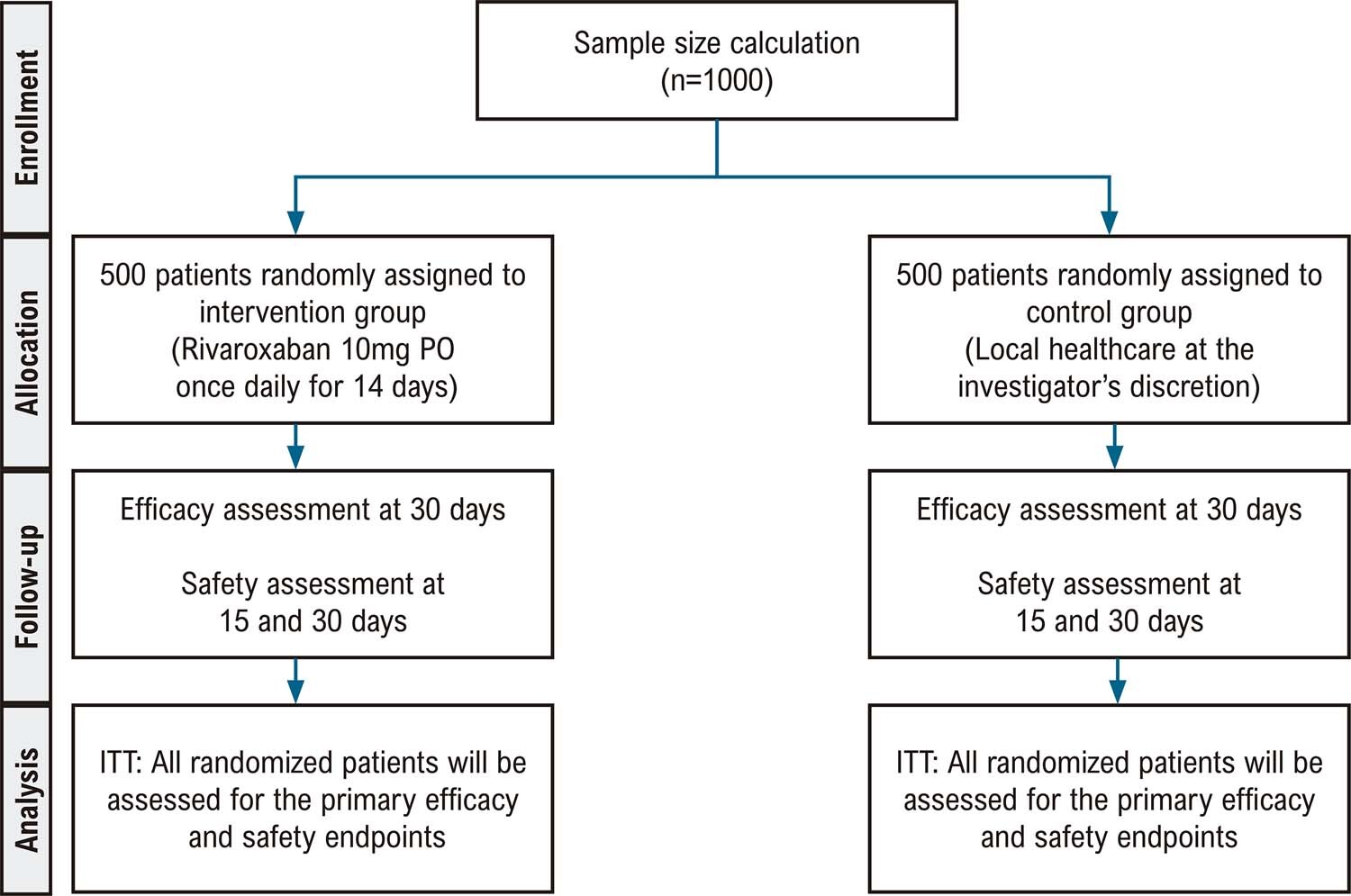
Rivaroxaban in Outpatients with Mild or Moderate COVID-19: Rationale and Design of the Study CARE (CARE – Coalition COVID-19 Brazil VIII)

Gustavo B. F. Oliveira et al. Precil Diego M. M. Neves Haliton A. Oliveira Daniela Ghidetti Mangas Catarino … Lucas B. O. Alves Alexandre B. Cavalcanti Regis G. Rosa Viviane C. Veiga Luciano C.P. Azevedo Otávio Berwanger Renato D. Lopes Álvaro Avezum

Abstract

Background

Previous studies have demonstrated a high risk of arterial and venous thromboembolic events as a consequence of direct viral damage to endothelial cells by SARS-CoV-2 and a procoagulant milieu due to increased biomarkers, such as D-dimer, fibrinogen, and factor VIII. Although randomized controlled trials of antithrombotic therapies have been conducted in hospitalized patients, few have evaluated the role of thromboprophylaxis in an outpatient setting.

Objective

To assess whether antithrombotic prophylaxis with rivaroxaban reduces the risk of venous or arterial thrombotic events, invasive ventilatory support, and death in COVID-19 outpatients.

Methods

The COVID Antithrombotic Rivaroxaban Evaluation (CARE) study, a multicenter, randomized, open-label, controlled trial of rivaroxaban 10 mg once daily for 14 days or local standard treatment alone to prevent adverse outcomes, is registered in clinicaltrials.gov (NCT04757857). The inclusion criteria are adults with confirmed or suspected SARS-CoV-2 infection and mild or moderate symptoms without indication for hospitalization, within 7 days of symptom onset, and 1 risk factor for COVID-19 complication (> 65 years, hypertension, diabetes mellitus, asthma, chronic obstructive pulmonary disease or other chronic lung diseases, smoking, immunosuppression, or obesity). The primary composite endpoint, which includes venous thromboembolism, invasive mechanical ventilation, major acute cardiovascular events, and mortality within 30 days of randomization, will be assessed according to the intention-to-treat principle. All patients will provide informed consent. A significance level of 5% will be used for all statistical tests.

Results

Major thrombotic and bleeding outcomes, hospitalizations, and deaths will be centrally adjudicated by an independent clinical events committee blinded to the assigned treatment groups.

Conclusion

The CARE study will provide relevant and contemporary information about the potential role of thromboprophylaxis in outpatients with COVID-19.
  • COVID-19
  • Outpatient Clinics, Hospital
  • Rivaroxaban
  • Thrombosis
  • Treatment Outcome
Read Full Article
Creative Commons Attribution (CC BY) Creative Commons license
03/04/2023 DOI: 10.36660/abc.20220431 Views 1
Figure 1
IJCS
Original Article

Atrial Fibrillation and Use of Rivaroxaban: Performance of the Prothrombin Time / INR as a Function of Time After Blood Collection

Rita Carolina Figueiredo Duarte et al. Priscila Samara Sérgio Moreira Cláudia Natália Ferreira Estevão Lanna Figueiredo … Eduardo Sternick Francisco Rezende Silveira Luan Carlos Vieira Alves Ana Paula Lucas Mota Edna Afonso Reis Maria das Graças Carvalho Helton José dos Reis

Abstract

Background

Traditionally, the most effective therapy in the prevention of stroke in patients with atrial fibrillation (AF) has been oral anticoagulation with vitamin K inhibitors, particularly warfarin, whose disadvantages and adverse effects have led to their replacement by “direct oral anticoagulants”, as factor X inhibitor.

Objectives

This study aimed to conduct a brief approach on atrial fibrillation (AF) and use of Rivaroxaban, and to comparatively evaluate the prothrombin time / International Normalized Ratio (PT/INR) in patients with AF in use of this oral anticoagulant, depending on the time elapsed between the last administration of the drug and the time of blood sample venipuncture.

Methods

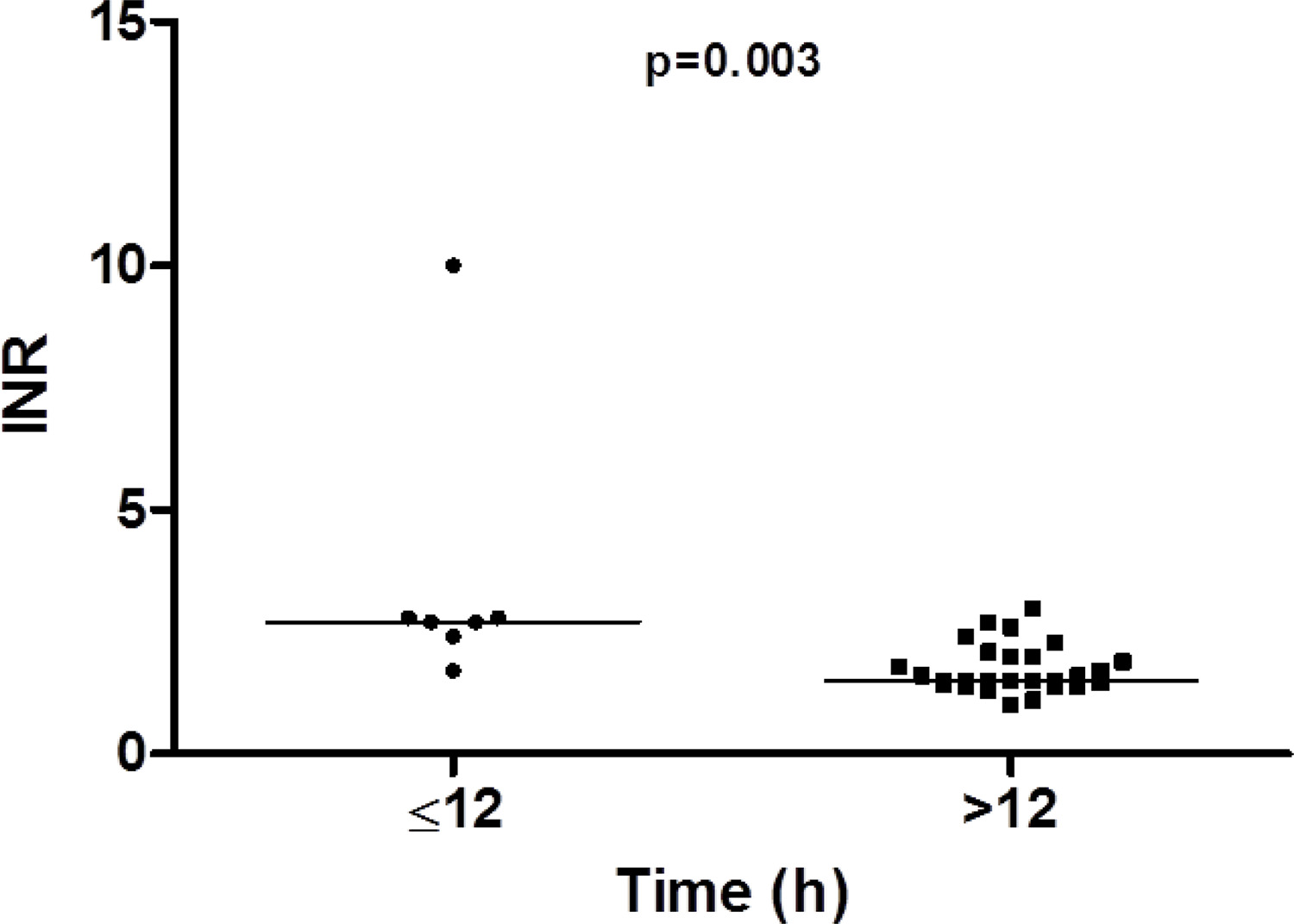
We evaluated 34 patients with AF in use of Rivaroxaban by using PT / INR, distributed into a subgroup with blood collection time ≤ 12 hours (n = 7) and > 12 hours after the last drug intake (n = 27). Mann-Whitney test was used to compare the groups and p < 0.05 was considered significant.

Results

An analysis as a function of time between the Rivaroxaban intake and blood collection, revealed that PT / INR suffers the greatest effect up to 12 hours after ingestion of the drug, dropping to levels close to normal in subsequent hours before the next dose.

Conclusion

We concluded that, in contrast to warfarin, the knowledge of the time interval between drug intake and blood collection from patients taking Rivaroxaban is essential to properly interpret a laboratory test to assess hemostasis, particularly PT and its derivatives. Int J Cardiovasc Sci. 2020; [online].ahead print, PP.0-0

  • Anticoagulants
  • Atrial Fibrillation
  • blood coagulation
  • Embolism
  • Hemorrhage/physiopathology
  • Risk Assessment
  • Rivaroxaban
  • Stroke
  • Warfarin
Read Full Article
Creative Commons Attribution (CC BY) Creative Commons license
06/11/2020 DOI: 10.36660/ijcs.20190141 Views 1
Figure 1
ABC
Viewpoint

Internet Search Trends and Regional Mortality Tendencies: The Case of Oral Anticoagulants and Stroke

Roberto Muniz Ferreira et al. Ísis da Capela Pinheiro João Roquette Fleury da Rocha

Introduction

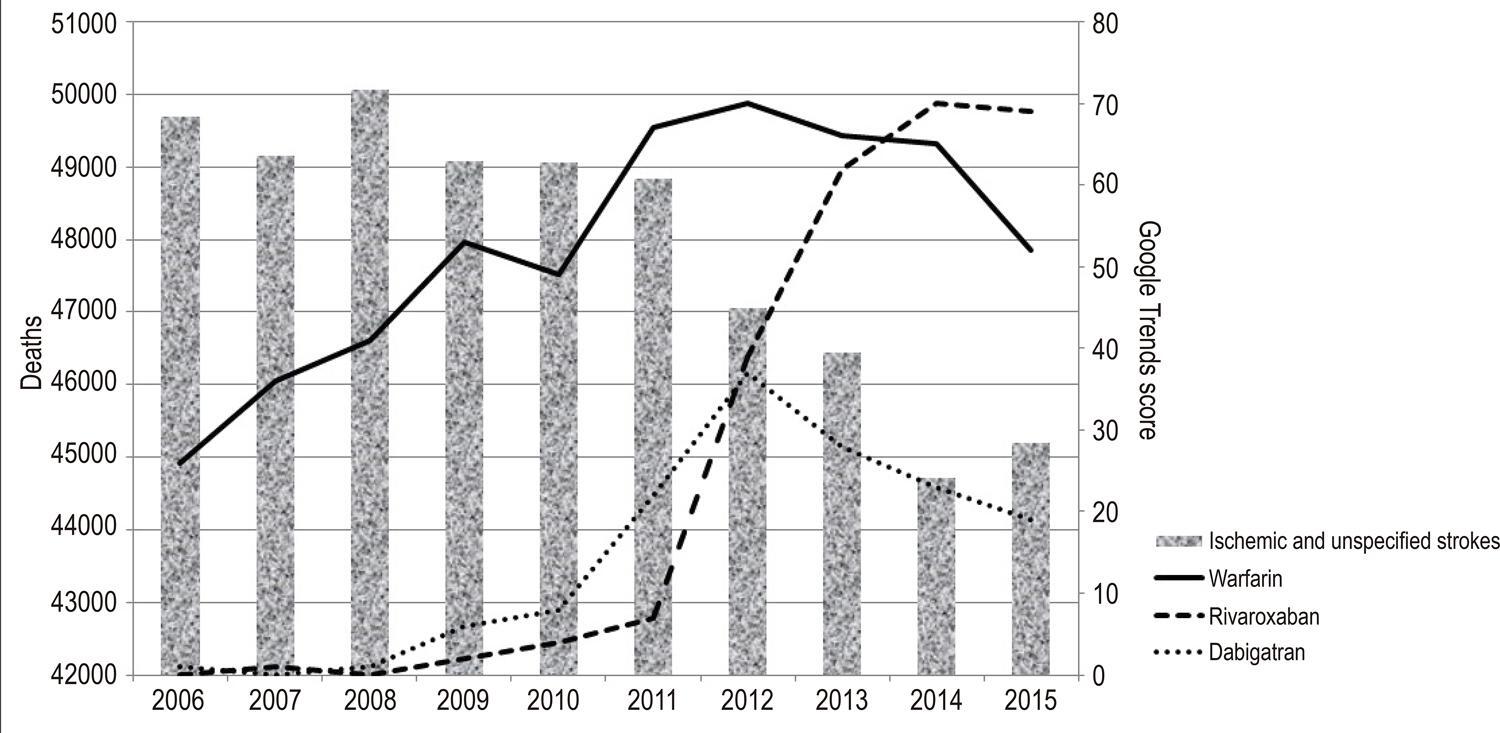
Multiple studies have found that up to 30% of ischemic strokes are associated with atrial fibrillation (AF), especially in the elderly population. , Although the embolic risk varies according to clinical characteristics and comorbidities, anticoagulant therapy has consistently shown to reduce stroke rates by approximately 70%. However, previous studies demonstrated that treatment rates with warfarin were low, even in patients at high risk for embolic events. Despite evidence from various publications demonstrating the effectiveness and safety of vitamin K antagonists, their complex pharmacokinetics and the need for continuous monitoring and frequent dose adjustments were the main explanations for low adherence.

Over the last 10 years, four direct oral anticoagulants (DOAC) have become available to prevent embolic events in patients with non-valvular AF: dabigatran, rivaroxaban, apixaban and edoxaban. In August 2011, dabigatran was the first DOAC approved in Brazil for stroke prevention, followed by rivaroxaban four months later. Two years later, apixaban was also introduced in the Brazilian market and only in February 2018 edoxaban became available. When compared to warfarin, multiple trials have suggested that DOACs are non-inferior in preventing ischemic strokes and possibly superior in reducing mortality, perhaps due to fewer intracranial hemorrhages. In addition to waive the need for laboratory monitoring, they have more predictable pharmacokinetics and a lower incidence of drug-to-drug interactions. Recent studies have demonstrated an increase in anticoagulation prescription rates among physicians since DOACs have become clinically available.

[…]

  • Anticoagulants / therapeutic use
  • Dabigatran
  • Mortality/trends
  • Myocardial Ischemia/prevention and control
  • Pharmaceutical Services, Online/trends
  • Rivaroxaban
  • Stroke/prevention and control
  • Varfarin
Read Full Article
Creative Commons Attribution (CC BY) Creative Commons license
29/05/2020 DOI: 10.36660/abc.20190768

How to cite this article

EndNote RIS

Electronic Document Format (Vancouver)

Oliveira GBF, Neves PDMM, Oliveira HA, Catarino DGM, Alves LBO, Cavalcanti AB, Rosa RG, et al. Rivaroxaban in Outpatients with Mild or Moderate COVID-19: Rationale and Design of the Study CARE (CARE – Coalition COVID-19 Brazil VIII). Arquivos Brasileiros de Cardiologia 2023;120(3):e20220431.

Electronic Document Format (ABNT)

Oliveira, Gustavo B. F.; Neves, Precil Diego M. M.; Oliveira, Haliton A.; Catarino, Daniela Ghidetti Mangas; Alves, Lucas B. O.; Cavalcanti, Alexandre B.; Rosa, Regis G.; Veiga, Viviane C.; Azevedo, Luciano C.P.; Berwanger, Otávio; Lopes, Renato D.; Avezum, Álvaro. Rivaroxaban in Outpatients with Mild or Moderate COVID-19: Rationale and Design of the Study CARE (CARE – Coalition COVID-19 Brazil VIII). Arquivos Brasileiros de Cardiologia, v. 120, n. 3, e20220431, Apr. 2023.

Electronic Document Format (APA)

Oliveira, G. B. F., Neves, P. D. M. M., Oliveira, H. A., Catarino, D. G. M., Alves, L. B. O., Cavalcanti, A. B., Rosa, R. G., Veiga, V. C., Azevedo, L. C., Berwanger, O., Lopes, R. D., & Avezum, (2023). Rivaroxaban in Outpatients with Mild or Moderate COVID-19: Rationale and Design of the Study CARE (CARE – Coalition COVID-19 Brazil VIII). Arquivos Brasileiros de Cardiologia, 120(3), e20220431.

Electronic Document Format (ISO)

Oliveira, Gustavo B. F. and Neves, Precil Diego M. M. and Oliveira, Haliton A. and Catarino, Daniela Ghidetti Mangas and Alves, Lucas B. O. and Cavalcanti, Alexandre B. and Rosa, Regis G. and Veiga, Viviane C. and Azevedo, Luciano C.P. and Berwanger, Otávio and Lopes, Renato D. and Avezum, Álvaro. Rivaroxaban in Outpatients with Mild or Moderate COVID-19: Rationale and Design of the Study CARE (CARE – Coalition COVID-19 Brazil VIII). Arquivos Brasileiros de Cardiologia [online]. 2023, vol. 120, n. 3, [cited 2026-10-14], e20220431. Available from: <https://journals.cardiol.br/en/article/rivaroxaban-in-outpatients-with-mild-or-moderate-covid-19-rationale-and-design-of-the-study-care-care-coalition-covid-19-brazil-viii/>. ISSN 0066-782X

EndNote RIS

Electronic Document Format (Vancouver)

Duarte RCF, Moreira PSS, Ferreira CN, Figueiredo EL, Sternick E, Silveira FR, Alves LCV, et al. Atrial Fibrillation and Use of Rivaroxaban: Performance of the Prothrombin Time / INR as a Function of Time After Blood Collection. International Journal of Cardiovascular Sciences 2020;34(2):116-21.

Electronic Document Format (ABNT)

Duarte, Rita Carolina Figueiredo; Moreira, Priscila Samara Sérgio; Ferreira, Cláudia Natália; Figueiredo, Estevão Lanna; Sternick, Eduardo; Silveira, Francisco Rezende; Alves, Luan Carlos Vieira; Mota, Ana Paula Lucas; Reis, Edna Afonso; Carvalho, Maria das Graças; Reis, Helton José dos. Atrial Fibrillation and Use of Rivaroxaban: Performance of the Prothrombin Time / INR as a Function of Time After Blood Collection. International Journal of Cardiovascular Sciences, v. 34, n. 2, p. 116-121, Nov. 2020.

Electronic Document Format (APA)

Duarte, R. C. F., Moreira, P. S. S., Ferreira, C. N., Figueiredo, E. L., Sternick, E., Silveira, F. R., Alves, L. C. V., Mota, A. P. L., Reis, E. A., Carvalho, M. G., & Reis, H. J. (2020). Atrial Fibrillation and Use of Rivaroxaban: Performance of the Prothrombin Time / INR as a Function of Time After Blood Collection. International Journal of Cardiovascular Sciences, 34(2), 116-121.

Electronic Document Format (ISO)

Duarte, Rita Carolina Figueiredo and Moreira, Priscila Samara Sérgio and Ferreira, Cláudia Natália and Figueiredo, Estevão Lanna and Sternick, Eduardo and Silveira, Francisco Rezende and Alves, Luan Carlos Vieira and Mota, Ana Paula Lucas and Reis, Edna Afonso and Carvalho, Maria das Graças and Reis, Helton José dos. Atrial Fibrillation and Use of Rivaroxaban: Performance of the Prothrombin Time / INR as a Function of Time After Blood Collection. International Journal of Cardiovascular Sciences [online]. 2020, vol. 34, n. 2, [cited 2026-10-14], pp. 116-121. Available from: <https://journals.cardiol.br/en/article/atrial-fibrillation-and-use-of-rivaroxaban-performance-of-the-prothrombin-time-inr-as-a-function-of-time-after-blood-collection/>. ISSN 2359-4802

EndNote RIS

Electronic Document Format (Vancouver)

Ferreira RM, Pinheiro C, Rocha JRF. Internet Search Trends and Regional Mortality Tendencies: The Case of Oral Anticoagulants and Stroke. Arquivos Brasileiros de Cardiologia 2020;114(4):726-9.

Electronic Document Format (ABNT)

Ferreira, Roberto Muniz; Pinheiro, Ísis da Capela; Rocha, João Roquette Fleury da. Internet Search Trends and Regional Mortality Tendencies: The Case of Oral Anticoagulants and Stroke. Arquivos Brasileiros de Cardiologia, v. 114, n. 4, p. 726-729, May. 2020.

Electronic Document Format (APA)

Ferreira, R. M., Pinheiro, C., & Rocha, J. R. F. (2020). Internet Search Trends and Regional Mortality Tendencies: The Case of Oral Anticoagulants and Stroke. Arquivos Brasileiros de Cardiologia, 114(4), 726-729.

Electronic Document Format (ISO)

Ferreira, Roberto Muniz and Pinheiro, Ísis da Capela and Rocha, João Roquette Fleury da. Internet Search Trends and Regional Mortality Tendencies: The Case of Oral Anticoagulants and Stroke. Arquivos Brasileiros de Cardiologia [online]. 2020, vol. 114, n. 4, [cited 2026-10-14], pp. 726-729. Available from: <https://journals.cardiol.br/en/article/internet-search-trends-and-regional-mortality-tendencies-the-case-of-oral-anticoagulants-and-stroke/>. ISSN 0066-782X

  • About ABC Family
  • Internal Regulation
  • Editorial Board
  • Brazilian Society of Cardiology (SBC)

Issues

SBC Guidelines

  • Videos
  • Podcasts
  • News