Contusio Cordis Associated with Atrioventricular Block and Tricuspid Regurgitation
Introduction
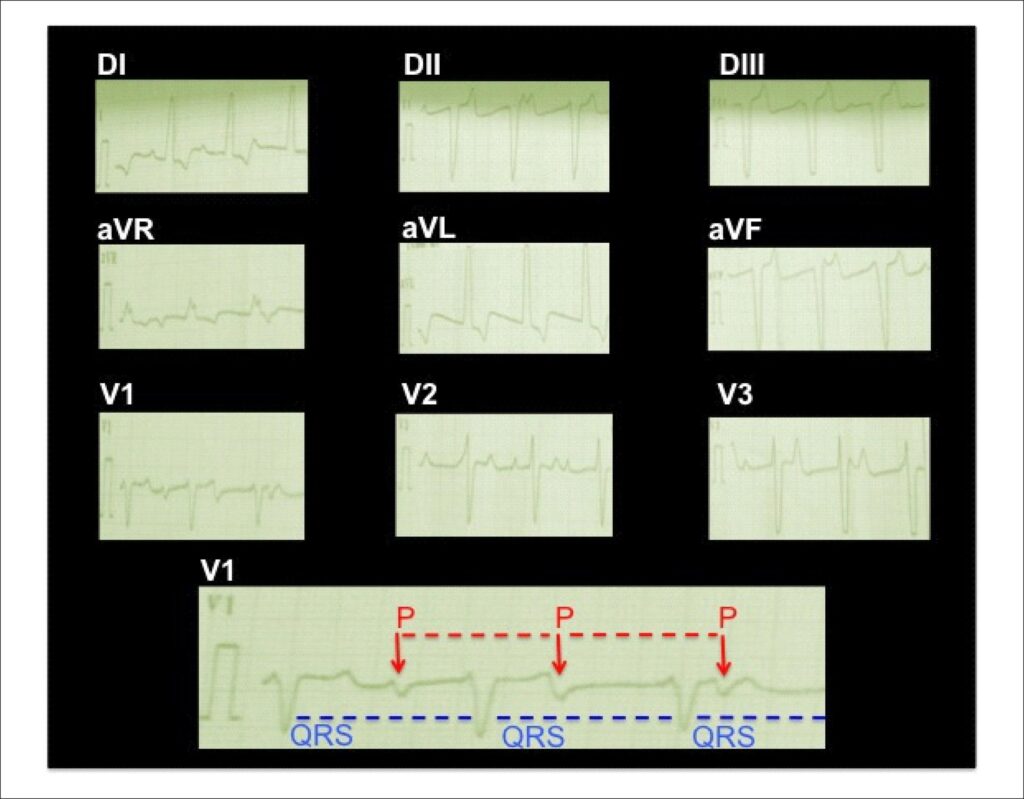
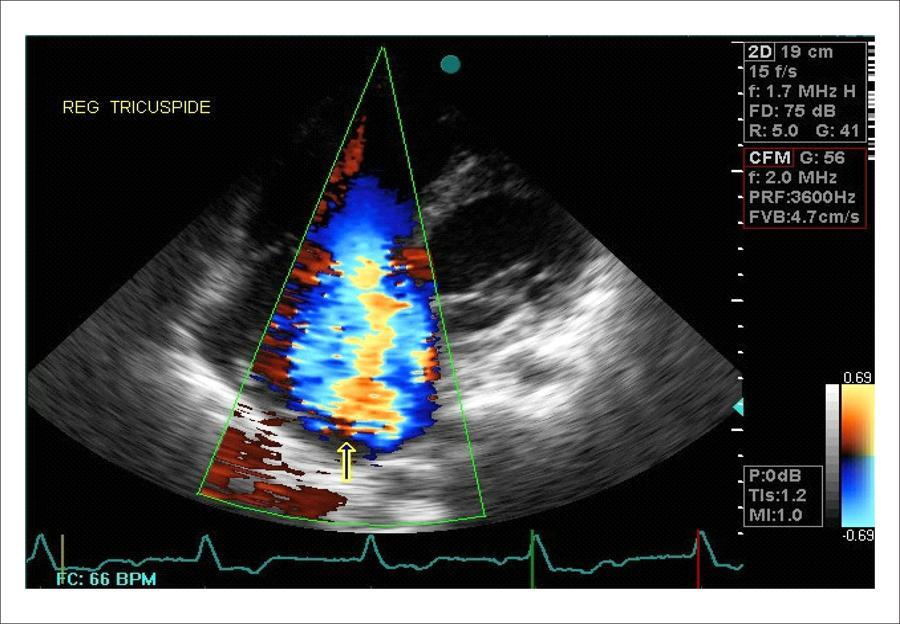
The expression “contusio cordis” defines a lesion of the cardiac myocyte, hemorrhagic or fibrotic, due to the application of violent kinetic force resulting from a blunt trauma to the precordial region. Syncope is almost always the first clinical manifestation observed, and commonly precedes death. Contusio cordis differs from commotio cordis, the latter representing a cardiac electromechanical disorder consequent to a blunt trauma to the precordial region, at a critical moment of the cardiac cycle, which occurs within 10 to 30 ms from the T-wave peak, a period susceptible to the development of ventricular fibrillation – . Both forms are fatal most of the time , , – . Commotio cordis is a form of ventricular fibrillation, rather than a lesion in cardiomyocytes or adjacent organs , . It is a rare condition, leading most cases to death , and being more prevalent among men, because of its relationship to high-impact sports , . The accurate incidence of both entities is unknown, because there is no systematic way to register all cases; however, although rare in the literature, they are believed to be more common than reported , . Contusio cordis associated with complete atrioventricular block (CAVB) is an even rarer condition, with few cases reported. The objective of the present study is to report a case of contusio cordis associated with CAVB and tricuspid regurgitation (TR).
[…]
Images
Image gallery fullscreen viewer
Comments are moderated by the editorial team before publication. Discussions should be evidence-based and use scientific language. Conflicts of interest should be declared.