ABC Family Arquivos Brasileiros de Cardiologia International Journal of Cardiovascular Sciences ABC Heart Failure & Cardiomyopathy ABC Imagem Cardiovascular
Português English
ABC Family
Português English
  • About
    • About ABC Family
    • Internal Regulation
    • Editorial Board
    • Brazilian Society of Cardiology (SBC)
  • Issues
  • SBC Guidelines
  • Content
    • Videos
    • Podcasts
    • News
  • About
    • About ABC Family
    • Internal Regulation
    • Editorial Board
    • Brazilian Society of Cardiology (SBC)
  • Issues
  • SBC Guidelines
  • Content
    • Videos
    • Podcasts
    • News

ABC Family

  • ABC Family
  • Arquivos Brasileiros de Cardiologia
  • International Journal of Cardiovascular Sciences
  • ABC Heart Failure & Cardiomyopathy
  • ABC Imagem Cardiovascular
Search in

No content found.

Journals
Ordering
Article types
Others

  1. Home
  2. Keyword: Lung Compliance
ABC
Editorial

Relationship between Static Lung Compliance and Extubation After Cardiac Surgery

Henrique Murad

The excellent paper “Relationship between static lung compliance and extubation failure in postoperative cardiac surgery patients” published in the Arquivos Brasileiros de Cardiologia gave one additional tool to make more precise decisions for successful and maintained extubation in postoperative cardiac surgery.

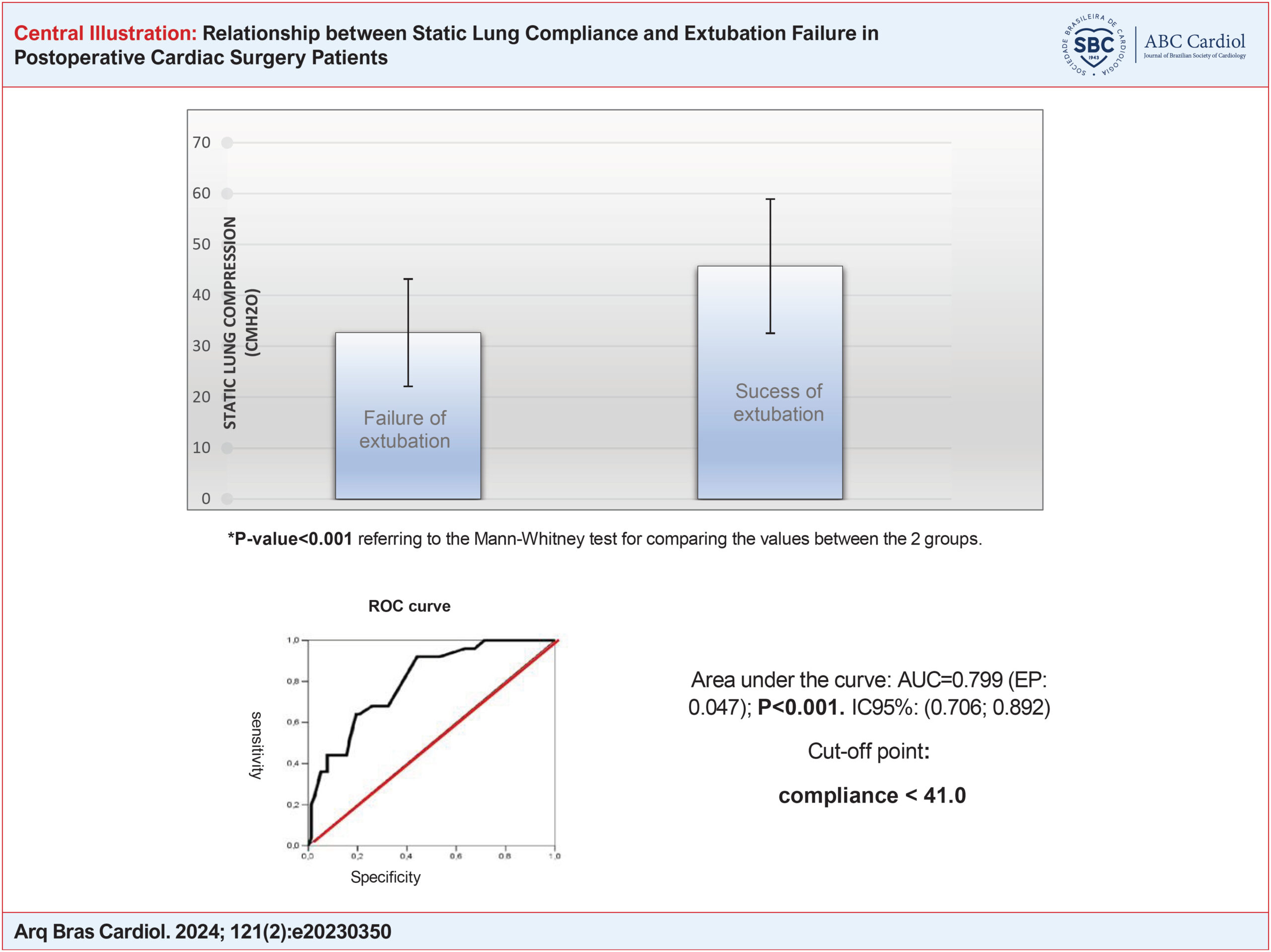
The authors have studied 102 patients submitted to several types of cardiac surgery under extracorporeal circulation and have found the need for reintubation in 25 patients (24,5%) after the first 48 hours of primary extubation. Extubation failure patients have had lower static lung compliance than non-failure patients. The cut-off point for the reintubation was a static lung compliance of 41 mi/cm H2O or lower, with a normal range between 60 and 100 ml/cm H2O. Using multiple regression analysis they had observed that extubation failure was 9,1 times greater in patients with static lung compliance equal to or less than 41 ml/cm H2O. They have also observed that lower static lung pulmonary compliance patients have worse oxygenation. They recommend that static lung compliance should be included in the postoperative evaluation of cardiac surgery patients, before extubation. This paper is part of the MSc thesis of Dr. Thais da Silva Bento, under the orientation of Dr. Desanka Dragosavac at the Universidade Estadual de Campinas.

[…]

  • Cardiac Surgical Procedures/methods
  • Extubation/methods
  • Lung Compliance
  • Post Operative Care
  • Respirator Insuficiency
Read Full Article
Creative Commons Attribution (CC BY) Creative Commons license
29/04/2024 DOI: 10.36660/abc.20240125
Relationship between Static Lung Compliance and Extubation Failure in Postoperative Cardiac Surgery Patients
ABC
Original Article

Relationship between Static Lung Compliance and Extubation Failure in Postoperative Cardiac Surgery Patients

Thais Bento Rudge Ramos et al. Luciana Castilho Figueiredo Luiz Claudio Martins Antonio Luis Eiras Falcão … Lígia dos Santos Roceto Ratti Orlando Petrucci Desanka Dragosavac

Abstract

Background:

Static lung compliance, which is seriously affected during surgery, can lead to respiratory failure and extubation failure, which is little explored in the decision to extubate after cardiac surgery.

Objective:

To evaluate static lung compliance in the postoperative period of cardiac surgery and relate its possible reduction to cases of extubation failure in patients submitted to the fast-track method of extubation.

Methods:

Patients undergoing cardiac surgery using cardiopulmonary bypass (CPB) at a state university hospital admitted to the ICU under sedation and residual block were included. Their static lung compliance was assessed on the mechanical ventilator using software that uses least squares fitting (LSF) for measurement. Within 48 hours of extubation, the patients were observed for the need for reintubation due to respiratory failure. The level of significance adopted for the statistical tests was 5%, i.e., p<0.05.

Results:

77 patients (75.49%) achieved successful extubation and 25 (24.51%) failed extubation. Patients who failed extubation had lower static lung compliance compared to those who succeeded (p<0.001). We identified the cut-off point for compliance through analysis of the Receiver Operating Characteristic Curve (ROC), with the cut-off point being compliance <41ml/cmH2O associated with a higher probability of extubation failure (p<0.001). In the multiple regression analysis, the influence of lung compliance (divided by the ROC curve cut-off point) was found to be 9.1 times greater for patients with compliance <41ml/cmH2O (p< 0.003).

Conclusions:

Static lung compliance <41ml/cmH2O is a factor that compromises the success of extubation in the postoperative period of cardiac surgery.

  • Lung Compliance
  • Postoperative Care
  • Thoracic Surgery
Read Full Article
Creative Commons Attribution (CC BY) Creative Commons license
23/02/2024 DOI: 10.36660/abc.20230350
Figure 1
ABC
Original Article

Use of a Portable Mechanical Ventilator during Cardiopulmonary Resuscitation is Feasible, Improves Respiratory Parameters, and Prevents the Decrease of Dynamic Lung Compliance

Manoel Ângelo Gomes Palácio et al. Edison Ferreira de Paiva Gustavo Bernardes de Figueiredo Oliveira Luciano César Pontes de Azevedo … Bruno Gregnanin Pedron Elizabete Silva dos Santos Ari Timerman

Abstract

Background

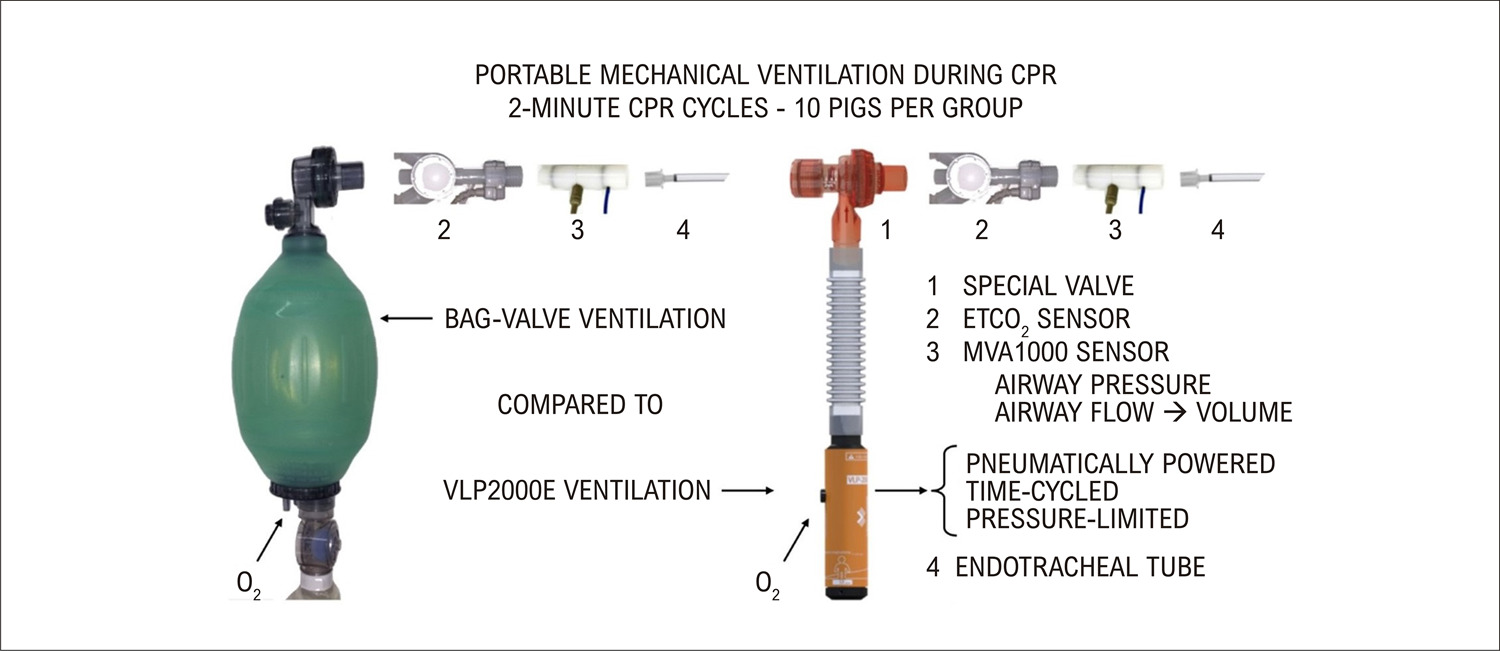
For practical and protective ventilation during cardiopulmonary resuscitation (CPR), a 150-grams mechanical ventilator (VLP2000E) that limits peak inspiratory pressure (PIP) during simultaneous ventilation with chest compressions was developed.

Objectives

To evaluate the feasibility of VLP2000E ventilation during CPR and to compare monitored parameters versus bag-valve ventilation.

Methods

A randomized experimental study with 10 intubated pigs per group. After seven minutes of ventricular fibrillation, 2-minute CPR cycles were delivered. All animals were placed on VLP2000E after achieving return of spontaneous circulation (ROSC).

Results

Bag-valve and VLP2000E groups had similar ROSC rate (60% vs. 50%, respectively) and arterial oxygen saturation in most CPR cycles, different baseline tidal volume [0.764 (0.068) vs. 0.591 (0.123) L, p = 0.0309, respectively] and, in 14 cycles, different PIP [52 (9) vs. 39 (5) cm H2O, respectively], tidal volume [0.635 (0.172) vs. 0.306 (0.129) L], ETCO2[14 (8) vs. 27 (9) mm Hg], and peak inspiratory flow [0.878 (0.234) vs. 0.533 (0.105) L/s], all p < 0.0001. Dynamic lung compliance (≥ 0.025 L/cm H2O) decreased after ROSC in bag-valve group but was maintained in VLP2000E group [0.019 (0.006) vs. 0.024 (0.008) L/cm H2O, p = 0.0003].

Conclusions

VLP2000E ventilation during CPR is feasible and equivalent to bag-valve ventilation in ROSC rate and arterial oxygen saturation. It produces better respiratory parameters, with lower airway pressure and tidal volume. VLP2000E ventilation also prevents the significant decrease of dynamic lung compliance observed after bag-valve ventilation. Further preclinical studies confirming these findings would be interesting.

  • Cardiopulmonary Resuscitation
  • Hyperventilation
  • Lung Compliance
  • Lung Injury
  • Ventilators Mechanical
Read Full Article
Creative Commons Attribution (CC BY) Creative Commons license
07/08/2023 DOI: 10.36660/abc.20220564
Figure 1
ABC
Original Article

Lowering Pulmonary Wedge Pressure after Heart Transplant: Pulmonary Compliance and Resistance Effect

Nádia Moreira et al. Rui Baptista Susana Costa Fátima Franco … Mariano Pêgo Manuel Antunes

Abstract

Background:

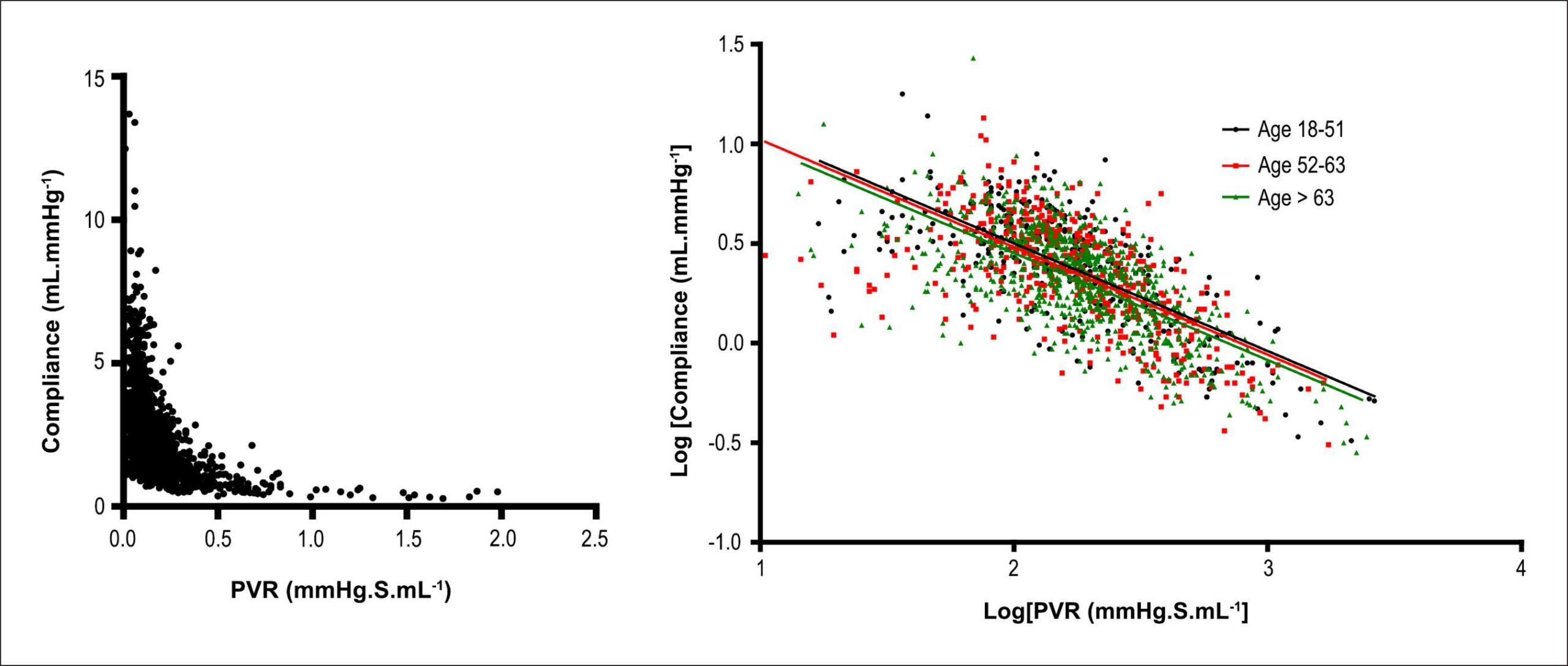
Right ventricular (RV) afterload is an important risk factor for post-heart transplantation (HTx) mortality, and it results from the interaction between pulmonary vascular resistance (PVR) and pulmonary compliance (CPA). Their product, the RC time, is believed to be constant. An exception is observed in pulmonary hypertension because of elevated left ventricular (LV) filling pressures.

Objective:

Using HTx as a model for chronic lowering of LV filling pressures, our aim was to assess the variations in RV afterload components after transplantation.

Methods:

We retrospectively studied 159 patients with right heart catheterization before and after HTx. The effect of Htx on hemodynamic variables was assessed.

Results:

Most of the patients were male (76%), and the mean age was 53 ± 12 years. HTx had a significant effect on the hemodynamics, with normalization of the LV and RV filling pressures and a significant increase in cardiac output and heart rate (HR). The PVR decreased by 56% and CPA increased by 86%. The RC time did not change significantly, instead of increasing secondary to pulmonary wedge pressure (PWP) normalization after HTx as expected. The expected increase in RC time with PWP lowering was offset by the increase in HR (because of autonomic denervation of the heart). This effect was independent from the decrease of PWP.

Conclusion:

The RC time remained unchanged after HTx, notwithstanding the fact that pulmonary capillary wedge pressure significantly decreased. An increased HR may have an important effect on RC time and RV afterload. Studying these interactions may be of value to the assessment of HTx candidates and explaining early RV failure after HTx.

  • Heart Transplantation
  • Lung Compliance
  • Pulmonary Wedge Pressure / physiology
  • Vascular Resistance
Read Full Article
Creative Commons Attribution (CC BY) Creative Commons license
31/07/2015 DOI: 10.5935/abc.20150083
Changes in pulmonary function after surgical treatment of congenital heart disease with pulmonary hyperflow
ABC
Artigo Original

Changes in pulmonary function after surgical treatment of congenital heart disease with pulmonary hyperflow

Lilian Goraieb et al. Ulisses Alexandre Croti Suzana Renata Perez Orrico Omar Yesid Prieto Rincon Domingo Marcolino Braile

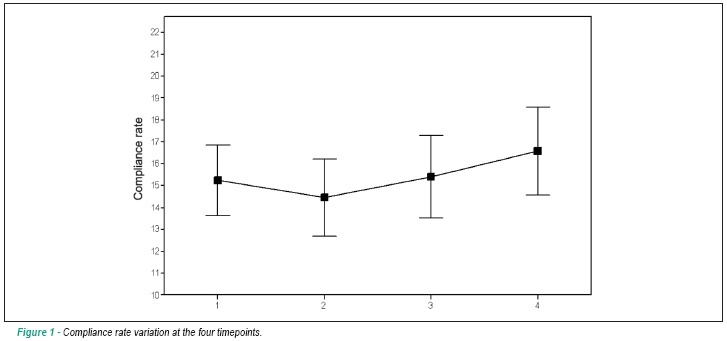
BACKGROUND: Analysis of pulmonary status of pediatric patients in the postoperative phase of cardiac surgery. OBJECTIVE: To assess pulmonary compliance and airway resistance in patients with congenital heart disease and pulmonary hyperflow submitted to surgical treatment with the use of extracorporeal circulation. METHODS: Thirty-five patients were evaluated during surgery with measurements of static compliance and airway resistance at four different timepoints. Pulmonary measurements were performed non-invasively using end-inspiratory airway occlusion and specific mathematical formulas. The variables examined and related to pulmonary changes were: preoperative – age, weight, and relationship between systemic and pulmonary blood flow; intraoperative – perfusion times, anoxia times and minimum temperature; postoperative – time on mechanical ventilation and length of stay in the intensive care unit. RESULTS: Pulmonary compliance in all patients had an immediate and significant increase (P<0.001) at the end of surgery. Patients older than 30 months experienced a greater increase (P=0.0004). Those with more than 10kg also had a greater increase (P=0.0006). In patients on extracorporeal circulation for more than 50 minutes, the increase in pulmonary compliance took longer to occur (P=0.04). Airway resistance was not significantly changed at the end of surgery (P=0.393). CONCLUSION: All patients experienced improved pulmonary compliance at the end of surgery, and this was significantly influenced by age, weight and time on extracorporeal circulation. Airway resistance, however, was not changed.

  • Extracorporeal Circulation
  • Heart Defects, Congenital
  • Lung Compliance
Read Full Article
Creative Commons Attribution (CC BY) Creative Commons license
08/08/2008 DOI: 10.1590/S0066-782X2008001400003

How to cite this article

EndNote RIS

Electronic Document Format (Vancouver)

Murad H. Relationship between Static Lung Compliance and Extubation After Cardiac Surgery. Arquivos Brasileiros de Cardiologia 2024;121(2):e20240125.

Electronic Document Format (ABNT)

Murad, Henrique. Relationship between Static Lung Compliance and Extubation After Cardiac Surgery. Arquivos Brasileiros de Cardiologia, v. 121, n. 2, e20240125, Apr. 2024.

Electronic Document Format (APA)

Murad, H. (2024). Relationship between Static Lung Compliance and Extubation After Cardiac Surgery. Arquivos Brasileiros de Cardiologia, 121(2), e20240125.

Electronic Document Format (ISO)

Murad, Henrique. Relationship between Static Lung Compliance and Extubation After Cardiac Surgery. Arquivos Brasileiros de Cardiologia [online]. 2024, vol. 121, n. 2, [cited 2026-10-14], e20240125. Available from: <https://journals.cardiol.br/en/article/relationship-between-static-lung-compliance-and-extubation-after-cardiac-surgery/>. ISSN 0066-782X

EndNote RIS

Electronic Document Format (Vancouver)

Ramos TBR, Figueiredo LC, Martins LC, Falcão ALE, Ratti LSR, Petrucci O, Dragosavac D, et al. Relationship between Static Lung Compliance and Extubation Failure in Postoperative Cardiac Surgery Patients. Arquivos Brasileiros de Cardiologia 2024;121(2):e20230350.

Electronic Document Format (ABNT)

Ramos, Thais Bento Rudge; Figueiredo, Luciana Castilho; Martins, Luiz Claudio; Falcão, Antonio Luis Eiras; Ratti, Lígia dos Santos Roceto; Petrucci, Orlando; Dragosavac, Desanka. Relationship between Static Lung Compliance and Extubation Failure in Postoperative Cardiac Surgery Patients. Arquivos Brasileiros de Cardiologia, v. 121, n. 2, e20230350, Feb. 2024.

Electronic Document Format (APA)

Ramos, T. B. R., Figueiredo, L. C., Martins, L. C., Falcão, A. L. E., Ratti, L. S. R., Petrucci, O., & Dragosavac, D. (2024). Relationship between Static Lung Compliance and Extubation Failure in Postoperative Cardiac Surgery Patients. Arquivos Brasileiros de Cardiologia, 121(2), e20230350.

Electronic Document Format (ISO)

Ramos, Thais Bento Rudge and Figueiredo, Luciana Castilho and Martins, Luiz Claudio and Falcão, Antonio Luis Eiras and Ratti, Lígia dos Santos Roceto and Petrucci, Orlando and Dragosavac, Desanka. Relationship between Static Lung Compliance and Extubation Failure in Postoperative Cardiac Surgery Patients. Arquivos Brasileiros de Cardiologia [online]. 2024, vol. 121, n. 2, [cited 2026-10-14], e20230350. Available from: <https://journals.cardiol.br/en/article/relationship-between-static-lung-compliance-and-extubation-failure-in-postoperative-cardiac-surgery-patients/>. ISSN 0066-782X

EndNote RIS

Electronic Document Format (Vancouver)

Palácio MG, Paiva EF, Oliveira GBF, Azevedo LCP, Pedron BG, Santos ES, Timerman A, et al. Use of a Portable Mechanical Ventilator during Cardiopulmonary Resuscitation is Feasible, Improves Respiratory Parameters, and Prevents the Decrease of Dynamic Lung Compliance. Arquivos Brasileiros de Cardiologia 2023;120(7):e20220564.

Electronic Document Format (ABNT)

Palácio, Manoel Ângelo Gomes; Paiva, Edison Ferreira de; Oliveira, Gustavo Bernardes de Figueiredo; Azevedo, Luciano César Pontes de; Pedron, Bruno Gregnanin; Santos, Elizabete Silva dos; Timerman, Ari. Use of a Portable Mechanical Ventilator during Cardiopulmonary Resuscitation is Feasible, Improves Respiratory Parameters, and Prevents the Decrease of Dynamic Lung Compliance. Arquivos Brasileiros de Cardiologia, v. 120, n. 7, e20220564, Aug. 2023.

Electronic Document Format (APA)

Palácio, M. G., Paiva, E. F. , Oliveira, G. B. F., Azevedo, L. C. P. , Pedron, B. G., Santos, E. S. , & Timerman, A. (2023). Use of a Portable Mechanical Ventilator during Cardiopulmonary Resuscitation is Feasible, Improves Respiratory Parameters, and Prevents the Decrease of Dynamic Lung Compliance. Arquivos Brasileiros de Cardiologia, 120(7), e20220564.

Electronic Document Format (ISO)

Palácio, Manoel Ângelo Gomes and Paiva, Edison Ferreira de and Oliveira, Gustavo Bernardes de Figueiredo and Azevedo, Luciano César Pontes de and Pedron, Bruno Gregnanin and Santos, Elizabete Silva dos and Timerman, Ari. Use of a Portable Mechanical Ventilator during Cardiopulmonary Resuscitation is Feasible, Improves Respiratory Parameters, and Prevents the Decrease of Dynamic Lung Compliance. Arquivos Brasileiros de Cardiologia [online]. 2023, vol. 120, n. 7, [cited 2026-10-14], e20220564. Available from: <https://journals.cardiol.br/en/article/use-of-a-portable-mechanical-ventilator-during-cardiopulmonary-resuscitation-is-feasible-improves-respiratory-parameters-and-prevents-the-decrease-of-dynamic-lung-compliance/>. ISSN 0066-782X

EndNote RIS

Electronic Document Format (Vancouver)

Moreira N, Baptista R, Costa S, Franco F, Pêgo M, Antunes M. Lowering Pulmonary Wedge Pressure after Heart Transplant: Pulmonary Compliance and Resistance Effect. Arquivos Brasileiros de Cardiologia 2015;105(3):292-300.

Electronic Document Format (ABNT)

Moreira, Nádia; Baptista, Rui; Costa, Susana; Franco, Fátima; Pêgo, Mariano; Antunes, Manuel. Lowering Pulmonary Wedge Pressure after Heart Transplant: Pulmonary Compliance and Resistance Effect. Arquivos Brasileiros de Cardiologia, v. 105, n. 3, p. 292-300, Jul. 2015.

Electronic Document Format (APA)

Moreira, N., Baptista, R., Costa, S., Franco, F., Pêgo, M., & Antunes, M. (2015). Lowering Pulmonary Wedge Pressure after Heart Transplant: Pulmonary Compliance and Resistance Effect. Arquivos Brasileiros de Cardiologia, 105(3), 292-300.

Electronic Document Format (ISO)

Moreira, Nádia and Baptista, Rui and Costa, Susana and Franco, Fátima and Pêgo, Mariano and Antunes, Manuel. Lowering Pulmonary Wedge Pressure after Heart Transplant: Pulmonary Compliance and Resistance Effect. Arquivos Brasileiros de Cardiologia [online]. 2015, vol. 105, n. 3, [cited 2026-10-14], pp. 292-300. Available from: <https://journals.cardiol.br/en/article/lowering-pulmonary-wedge-pressure-after-heart-transplant-pulmonary-compliance-and-resistance-effect/>. ISSN 0066-782X

EndNote RIS

Electronic Document Format (Vancouver)

Goraieb L, Croti UA, Orrico SRP, Rincon OYP, Braile DM. Changes in pulmonary function after surgical treatment of congenital heart disease with pulmonary hyperflow. Arquivos Brasileiros de Cardiologia 2008;91(2):77-84.

Electronic Document Format (ABNT)

Goraieb, Lilian; Croti, Ulisses Alexandre; Orrico, Suzana Renata Perez; Rincon, Omar Yesid Prieto; Braile, Domingo Marcolino. Changes in pulmonary function after surgical treatment of congenital heart disease with pulmonary hyperflow. Arquivos Brasileiros de Cardiologia, v. 91, n. 2, p. 77-84, Aug. 2008.

Electronic Document Format (APA)

Goraieb, L., Croti, U. A., Orrico, S. R. P., Rincon, O. Y. P., & Braile, D. M. (2008). Changes in pulmonary function after surgical treatment of congenital heart disease with pulmonary hyperflow. Arquivos Brasileiros de Cardiologia, 91(2), 77-84.

Electronic Document Format (ISO)

Goraieb, Lilian and Croti, Ulisses Alexandre and Orrico, Suzana Renata Perez and Rincon, Omar Yesid Prieto and Braile, Domingo Marcolino. Changes in pulmonary function after surgical treatment of congenital heart disease with pulmonary hyperflow. Arquivos Brasileiros de Cardiologia [online]. 2008, vol. 91, n. 2, [cited 2026-10-14], pp. 77-84. Available from: <https://journals.cardiol.br/en/article/changes-in-pulmonary-function-after-surgical-treatment-of-congenital-heart-disease-with-pulmonary-hyperflow/>. ISSN 0066-782X

  • About ABC Family
  • Internal Regulation
  • Editorial Board
  • Brazilian Society of Cardiology (SBC)

Issues

SBC Guidelines

  • Videos
  • Podcasts
  • News