Gustavo de Castro Lacerda et al. Roberto Coury Pedrosa Renato Côrtes de Lacerda Marcela Cedenilla dos Santos … Maurício de Andrade Perez Alfredo Brasil Teixeira Aristarco Gonçalves de Siqueira-Filho
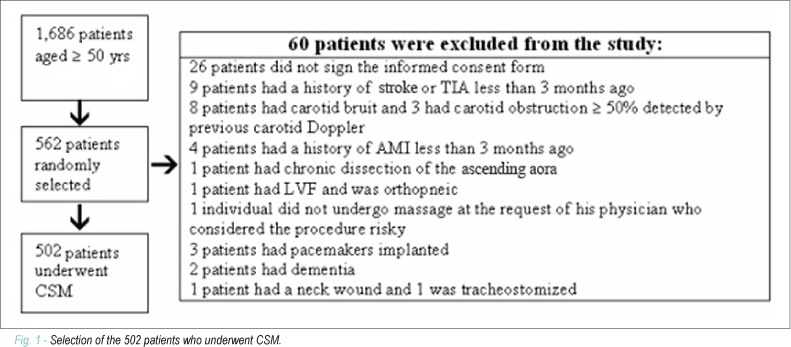
BACKGROUND: Cardioinhibitory response (CIR) is defined as asystole >3 seconds in response to 5-10 seconds of carotid sinus massage (CSM). Pacemaker implantation is indicated for patients with unexplained syncope episodes and CIR. OBJECTIVE: To determine the prevalence and predictors of CIR in patients with a high prevalence of cardiovascular disease, and assess the clinical significance of CIR in patients with a history of unexplained syncope or falls. METHODS: Cross-section design study. Outpatients, aged >50 years, referred to the electrocardiography sector of a tertiary hospital. Those with dementia, carotid bruit, and history of myocardial infarction, stroke or transient ischemic attack in the preceding 3 months were excluded. CSM was performed by a single investigator, with the patients in the supine position. CSM was applied on the right side and then on the left side during 10 seconds each time. RESULTS: 502 patients underwent CSM. CIR was present in 52 patients (10.4%; 95% CI: 7.7%-13%). Independent predictors of CIR were male gender (OR: 2.61%; CI 95%: 1.3%-5.1%), structural heart disease (OR: 3.28%; CI 95%: 1.3%-7.9%) and baseline heart rate (P 50 years. In males and in patients with structural heart disease CIR was more common. In women and patients with no apparent structural heart disease, the presence of CIR was a highly specific finding in the evaluation of syncope or falls.