ABC Family Arquivos Brasileiros de Cardiologia International Journal of Cardiovascular Sciences ABC Heart Failure & Cardiomyopathy ABC Imagem Cardiovascular
Português English
ABC Family
Português English
  • About
    • About ABC Family
    • Internal Regulation
    • Editorial Board
    • Brazilian Society of Cardiology (SBC)
  • Issues
  • SBC Guidelines
  • Content
    • Videos
    • Podcasts
    • News
  • About
    • About ABC Family
    • Internal Regulation
    • Editorial Board
    • Brazilian Society of Cardiology (SBC)
  • Issues
  • SBC Guidelines
  • Content
    • Videos
    • Podcasts
    • News

ABC Family

  • ABC Family
  • Arquivos Brasileiros de Cardiologia
  • International Journal of Cardiovascular Sciences
  • ABC Heart Failure & Cardiomyopathy
  • ABC Imagem Cardiovascular
Search in

No content found.

Journals
Ordering
Article types
Others

  1. Home
  2. Keyword: Arrhythmia
Figure 1
ABCHF
Review Article

Tachycardiomyopathies

Luís Beck-da-Silva et al. Andreia Biolo

What are tachycardiomyopathies?

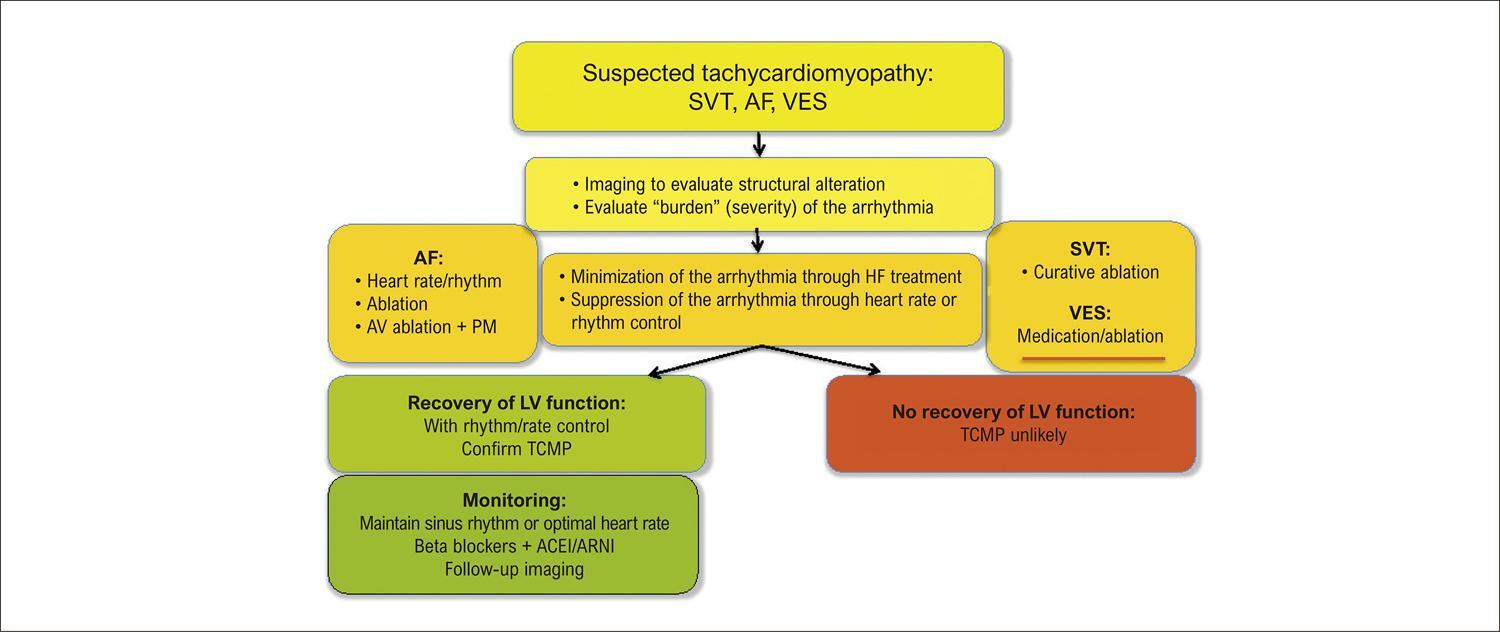
Tachycardiomyopathy is a relatively uncommon heart condition in which the myocardium develops ventricular dysfunction as a consequence of a persistently abnormal heart rhythm. One of the characteristics of this condition is that it is partially or completely reversible, once the arrhythmia has been controlled, making it crucial to recognize adequately in order to make recovery of ventricular function possible. In fact, the term “arrhythmia-induced cardiomyopathy” has emerged because tachycardiomyopathy results not only from prolonged and uncontrolled atrial or ventricular tachycardia, but also from atrial and/or ventricular ectopy leading to dyssynchrony. Both conditions can lead to chronic myocardial overload, resulting in ventricular dysfunction and heart failure.

Tachycardiomyopathies can be classified into two groups: in the first, arrhythmia is the only identified cause of ventricular dysfunction (arrhythmia-induced); in the second, the arrhythmia may aggravate ventricular dysfunction or worsen heart failure in a patient with pre-existing heart disease (arrhythmia-mediated).

[…]

  • Arrhythmia
  • Atrial Fibrillation
  • Heart Failure
  • Supraventricular Tachycardia
  • Tachycardiomyopathy
Read Full Article
Creative Commons Attribution (CC BY) Creative Commons license
20/07/2023 DOI: 10.36660/abchf.20230044 Views 1
Postoperative atrial fibrillation after cardiac surgery
ABC
Review Article

Postoperative atrial fibrillation after cardiac surgery

Carlos Romério Costa Ferro et al. Dinaldo Cavalcanti de Oliveira Fabiana Piech Nunes Leopoldo Soares Piegas

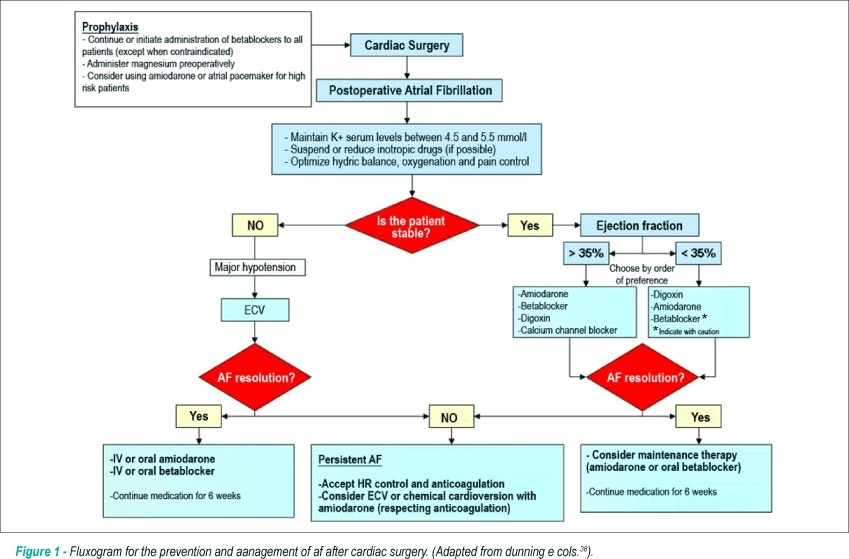
Atrial fibrillation (AF) is an arrhythmia frequently seen in the postoperative period of cardiac surgery. In this context, it is associated with the presence of comorbidities, longer length of hospital stay, and higher costs related to surgery. The mechanisms involved in the genesis of AF in the postoperative period of cardiac surgery (AFPO) are different from those causing paroxysmal AF. Knowledge of these mechanisms permits the use of efficient measures to reduce the incidence of this arrhythmia. According to recommendations of the literature, treatment is efficient and safe, because the rates of reversion to sinus rhythm are high and complications are reduced, and it is not associated with a high frequency of side effects.

  • Arrhythmia
  • Atrial Fibrillation
  • Postoperative Care
  • Thoracic Surgery
Read Full Article
Creative Commons Attribution (CC BY) Creative Commons license
13/10/2009 DOI: 10.1590/S0066-782X2009000700011
Arrythmogenic right ventricular dysplasia
ABC
Case Report

Arrythmogenic right ventricular dysplasia

Rogério Ferreira da Silva et al. Karina Morgarbel Christian Moreno Luize Carla Gonçalves Rosa … Marcelo Romano Ieda Maria Liguori

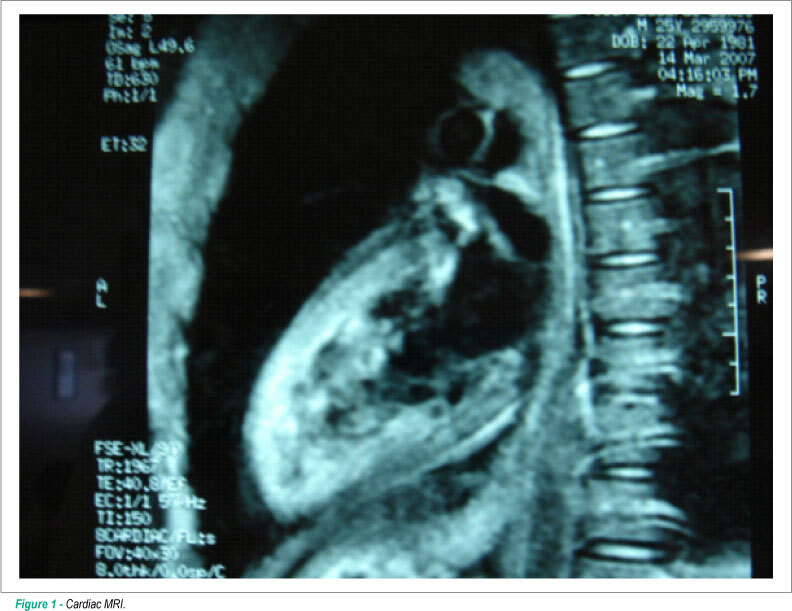
Arritmogenic right ventricular dysplasia (ARVD) is characterized by the gradual replacement of myocytes by adipose and fibrous tissue. Described in 1977, is considered a potentially lethal cause of cardiac disease poorly understood. This disorder usually involves the right ventricle and has been associated with arrthymia, heart failure, and sudden death. In this paper, we report a case of a 25-years-old patient with syncope associated with ventricular extrasystoles. A magnetic resonance imaging was performed and showed findings that support ARVD diagnose.

  • Arrhythmia
  • Arrhythmogenic right ventricular dysplasia;
  • Heredity
Read Full Article
Creative Commons Attribution (CC BY) Creative Commons license
11/11/2008 DOI: 10.1590/S0066-782X2008001600016 Views 1
Cardioinhibitory carotid sinus hypersensitivity: prevalence and predictors in 502 outpatients
ABC
Artigo Original

Cardioinhibitory carotid sinus hypersensitivity: prevalence and predictors in 502 outpatients

Gustavo de Castro Lacerda et al. Roberto Coury Pedrosa Renato Côrtes de Lacerda Marcela Cedenilla dos Santos … Maurício de Andrade Perez Alfredo Brasil Teixeira Aristarco Gonçalves de Siqueira-Filho

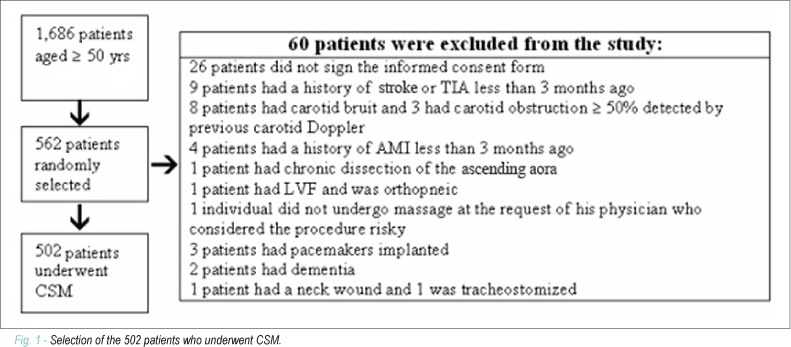
BACKGROUND: Cardioinhibitory response (CIR) is defined as asystole >3 seconds in response to 5-10 seconds of carotid sinus massage (CSM). Pacemaker implantation is indicated for patients with unexplained syncope episodes and CIR. OBJECTIVE: To determine the prevalence and predictors of CIR in patients with a high prevalence of cardiovascular disease, and assess the clinical significance of CIR in patients with a history of unexplained syncope or falls. METHODS: Cross-section design study. Outpatients, aged >50 years, referred to the electrocardiography sector of a tertiary hospital. Those with dementia, carotid bruit, and history of myocardial infarction, stroke or transient ischemic attack in the preceding 3 months were excluded. CSM was performed by a single investigator, with the patients in the supine position. CSM was applied on the right side and then on the left side during 10 seconds each time. RESULTS: 502 patients underwent CSM. CIR was present in 52 patients (10.4%; 95% CI: 7.7%-13%). Independent predictors of CIR were male gender (OR: 2.61%; CI 95%: 1.3%-5.1%), structural heart disease (OR: 3.28%; CI 95%: 1.3%-7.9%) and baseline heart rate (P 50 years. In males and in patients with structural heart disease CIR was more common. In women and patients with no apparent structural heart disease, the presence of CIR was a highly specific finding in the evaluation of syncope or falls.

  • Arrhythmia
  • Carotid sinus
  • outpatients
  • Syncope
Read Full Article
Creative Commons Attribution (CC BY) Creative Commons license
04/04/2008 DOI: 10.1590/S0066-782X2008000300002
Radiofrequency catheter ablation of premature ventricular contractions originating in the right ventricular outflow tract
ABC
Artigo Original

Radiofrequency catheter ablation of premature ventricular contractions originating in the right ventricular outflow tract

Francisco C. C. Darrieux et al. Maurício I. Scanavacca Denise T. Hachul Sissy L. Melo … André B. D'Ávilla César J. Gruppi Paulo J. Moffa Eduardo A. Sosa

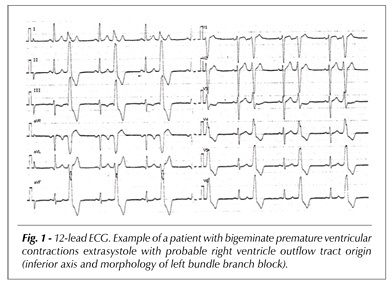
OBJECTIVES: To evaluate if radiofrequency catheter ablation is an effective procedure for the treatment of right ventricular outflow tract premature ventricular contractions (RVOT-PVC) and ascertain if it results in an improvement of symptoms. METHODS: A prospective study with 30 consecutive patients (mean age 40 ± 13 years, 25 females), with no apparent structural cardiopathy, with very frequent (mean density of 1,263 ± 593/h) RVOT-PVC, symptomatic for more than one year (mean = 74 months) and resistant to antiarrhythmic drugs (3 ± 1.7, including beta-blockers), who underwent radiofrequency catheter ablation. RESULTS: After the first procedure, there were 23 initial successful cases (76.6%) and 7 initial failures (23.4%). Four patients experienced relapses, two of whom did not undergo the second procedure. The second procedure was carried out in 9 patients (7 initial failures and 2 relapses), and there was success in 5 additional patients, one of them by epicardial access. The final success rate was 80% (24/30), and there were no major complications. After a mean follow-up of 14 ± 6 months, in the successful group there was a reduction greater than 90% in density of premature ventricular contractions (PVC) (24/24; p<0.0001) and a resulting absence of symptoms in the majority of patients (23/24; p<0.001). CONCLUSION: Radiofrequency catheter ablation is a safe and effective treatment for patients with persistent and symptomatic PVC with RVOT morphology.

  • Arrhythmia
  • Catheter Ablation
  • Heart Ventricles
  • premature ventricular contractions
Read Full Article
Creative Commons Attribution (CC BY) Creative Commons license
21/05/2007 DOI: 10.1590/S0066-782X2007000300003 Views 2
Contribution of the electrophysiological and anatomical analysis of the atypical atrioventricular nodal tachycardia circuit
ABC
Artigo Original

Contribution of the electrophysiological and anatomical analysis of the atypical atrioventricular nodal tachycardia circuit

Maila Seifert Macedo Silva et al. Roberto Luiz M. da Silva Sá Márcio Luiz A. Fagundes Fernando E. S. Cruz Filho … Leonardo B. Arantes Silvia Boghossian Adriana Monteiro C. David de Almeida Rafael Lopes Fagundes Luiz José Romeo Filho

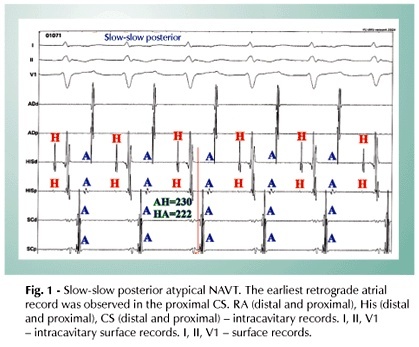
OBJECTIVES: To analyze retrograde conduction during junctional ectopic tachycardia (JET) episodes and investigate the existence of a relationship between the presence of a retrograde block and the risk of atrioventricular block (AVB) development during radiofrequency ablation procedures in patients with nodal atrioventricular tachycardia (NAVT). METHODS: 145 male and female patients aged 16-84 years, with NAVT who had undergone radiofrequency catheter ablation in the posteroseptal region of the right atrium were studied. Evaluation criteria were anatomical location and electrophysiological behavior of retrograde conduction during NAVT, in order to understand the nodal reentrant circuit (classifying the tachycardia as typical or atypical), and monitoring of retrograde conduction during JET episodes for risk-predicting AVB events. RESULTS: Of the 145 patients studied, 132 (91%) met electrophysiological and anatomical criteria of the typical form of NAVT, and 13 (9%) of atypical form. During the ablation, 5.3% with the typical form and 30.8% of the atypical form presented risk events for AVB. After the ablation, complications were a total AVB episode in one patient and a first-degree AVB episode in another in the typical group, and one first-degree AVB in the atypical group. All three episodes were preceded by risk events and resulted in permanent nodal injury. CONCLUSION: Patients with atypical NAVT presented higher percentages of risk events for atrioventricular block than did patients with the typical form (p=0.021).A careful observation of retrograde conduction during JET episodes is vital in order to avoid permanent damage in AV nodal conduction, such as TAVB, after the ablation procedure.

  • Ablation
  • Arrhythmia
  • nodal atrioventricular tachycardia
Read Full Article
Creative Commons Attribution (CC BY) Creative Commons license
20/03/2007 DOI: 10.1590/S0066-782X2007000200003 Views 1
Hypertrophic cardiomyopathy: the importance of arrhythmic events in patients at risk for sudden cardiac death
ABC
Artigo Original

Hypertrophic cardiomyopathy: the importance of arrhythmic events in patients at risk for sudden cardiac death

Paulo de Tarso Jorge Medeiros et al. Martino Martinelli Filho Edmundo Arteaga Roberto Costa … Sérgio Siqueira Charles Mady Leopoldo Soares Piegas José Antonio Franchini Ramires

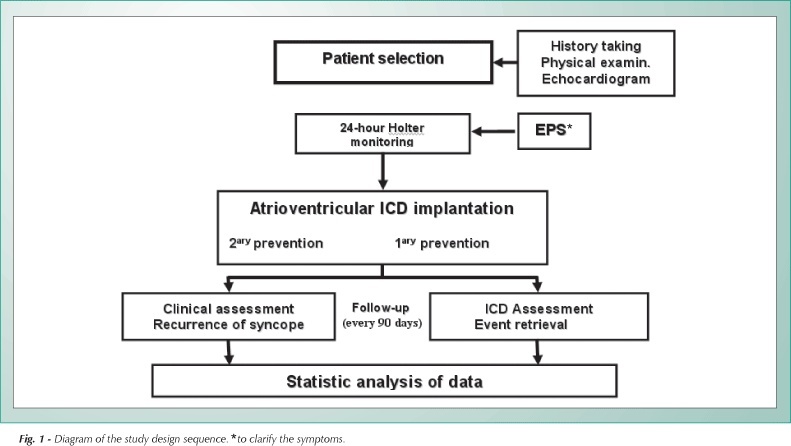
OBJECTIVE: It is controversial the correlation between complex ventricular arrhythmia of hypertrophic cardiomyopathy and cardiac sudden death (CSD). In patients with hypertrophic cardiomyopathy and at risk for CSD that have been undergone implantable cardioverter-defibrillator (ICD) implantation, we evaluated: a- occurrence of arrhythmic events; b- clinical event occurrence and its correlation with arrhythmic events; c- ICD shock therapy occurrence and clinical-functional correlation; d- prognosis clinical-functional predictors. METHODS: Twenty-six patients have been studied. They presented hypertrophic cardiomyopathy and risk factors for CSD. These patients underwent ICD implantation, period May, 2000 through January, 2004 (average follow-up – 19 months). Fourteen patients (53.8%) were female and the mean age was 42.7. Sixteen patients (61.5%) ICD was performed due to primary prevention for sudden death and ten (38.5%) secondary prevention. Twenty patients (76.9%) had had syncope, previus to ICD implantation, half of them associated with ventricular fibrillation or sustained ventricular tachycardia; 15 had had family sudden death; 12 patients (46.2%) presented non-sustained ventricular tachycardia at 24-hour Holter and 5 (19.2%) showed the ventricular septum thickness larger than 30 mm. RESULTS: During the follow-up, 4 shocks therapy were recorded by ICD in potentially lethal arrythmias (3 sustained ventricular tachycardia and 1 ventricular fibrillation). There was one death, due to likely stroke. Four patients had syncope recurrence, with no arrhythmic event recorded by ICD. The statistical analysis has showed precocity significance of ICD shock, in patients whose ventricular septum thickness was larger than 30 mm. CONCLUSION: 1- arrhythmic events have occurred in 50% of the patients. Most of those events (62%) were ventricular tachycardia, 31% sustained tachycardia and 31% non-sustained ventricular tachycardia. The remainders had supraventricular tachycardia. 2- recurrent syncope in only 16% of the patients. Nevertheless, they were not related to the presence of arrhythmic events. 3- the presence of ventricular septum larger than 30mm, at Echocardiogram, was associated with early shock therapy occurence (p = 0.003). 4- absence of clinical or functional predictors.

  • Arrhythmia
  • Hypertrophic Cardiomyopathy
  • implantable cardioverter-defibrillator
  • Risk Factors
  • Sudden Cardiac Death
Read Full Article
Creative Commons Attribution (CC BY) Creative Commons license
06/03/2007 DOI: 10.1590/S0066-782X2006001800016 Views 1
Initial Energy for External Electrical Cardioversion of Atrial Fibrillation
ABC
Original Article

Initial Energy for External Electrical Cardioversion of Atrial Fibrillation

Edilberto Figueiredo et al. Henrique Horta Veloso Angelo Amato Vincenzo de Paola

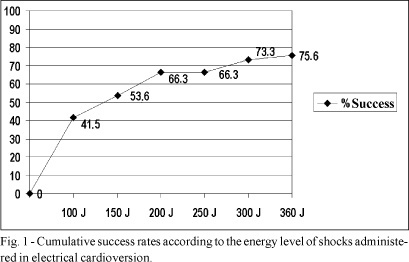
OBJECTIVE – To investigate the initial energy level required for electrical cardioversion of atrial fibrillation (AF). METHODS – We studied patients undergoing electrical cardioversion in the 1st Multicenter Trial of SOCESP. Patients were divided into 2 groups according to the initial energy level of electrical cardioversion: 100J and > or = 150J. We compared the efficacy of the initial and final shock of the procedure, the number of shocks administered, and the cumulative energy levels. RESULTS – Eight-six patients underwent electrical cardioversion. In 53 patients (62%), cardioversion was started with 100J, and in 33 patients (38%), cardioversion was started with > or = 150J. Groups did not differ regarding clinical features and therapeutical interventions. A tendency existed towards greater efficacy of the initial shock in patients who received > or = 150J (61% vs. 42% in the 100J group, p=0.08). The number of shocks was smaller in the > or = 150J group (1.5±0.7 vs. 2.1±1.3, p=0.04). No difference existed regarding the final efficacy of electrical cardioversion and total cumulative energy levels in both groups. In the subgroup of patients with recent-onset AF ( or = 150J received fewer counter shocks with a tendency toward greater success than those patients who were given 100J; however, in patients with recent-onset AF, the average cumulative energy level was lower in the 100J group. These data suggest that electrical cardioversion should be initiated with energy levels > or = 150J in patients with chronic AF.

  • Arrhythmia
  • Atrial Fibrillation
  • electrical cardioversion
Read Full Article
Creative Commons Attribution (CC BY) Creative Commons license
10/09/2002 DOI: 10.1590/S0066-782X2002001100004
ABC
Original Article

Prevalence of Cardiac Arrhythmias During and After Pregnancy in Women with Chagas' Disease without Apparent Heart Disease

Renato Enrique Sologuren Achá et al. Marco Túlio Oliveira Rezende Rimmel Amador Guzmán Heredia Aguinaldo Coelho da Silva … Elmiro Santos Rezende Cleber Augusto Oliveira Souza

OBJECTIVE: To evaluate cardiac arrhythmias during and after pregnancy in women with Chagas’ disease without apparent heart disease using dynamic electrocardiography. METHODS: Twenty pregnant women with Chagas’ disease without apparent heart disease aged 19 to 42 years (26.96 ± 3.6) and a control group of 20 non-chagasic pregnant patients aged 16 to 34 years (22.5 ± 4.8). The patients were submitted to passive hemagglutination and indirect immunofluorescence for the detection of Trypanosoma cruzi evaluation, and electrocardiography, echocardiography and 24-h dynamic electrocardiography. RESULTS: Supraventricular premature depolarizations were observed in 18 (90%) patients and ventricular premature depolarization in 11 (55%) patients of both groups during pregnancy. After delivery, supraventricular premature depolarizations were present in 13 (60%) chagasic patients and in 16 (89.4%) control patients (P<=0.05). Ventricular premature depolarization were observed in 9 (45%) chagasic patients and 11 (57.8%) control patients. CONCLUSION: The prevalence of ventricular premature depolarization was similar for the chagasic and control groups during and after pregnancy. The incidence of supraventricular premature depolarizations was similar in the two groups during pregnancy, while after delivery a predominance was observed in the control group compared to the chagasic group.

  • Arrhythmia
  • Chagas'disease
  • Pregnancy
Read Full Article
Creative Commons Attribution (CC BY) Creative Commons license
01/08/2002 DOI: 10.1590/S0066-782X2002001000001 Views 1

How to cite this article

EndNote RIS

Electronic Document Format (Vancouver)

Beck-da-Silva L, Biolo A. Tachycardiomyopathies. ABC Heart Fail Cardiomyop 2023;3(1):e20230044.

Electronic Document Format (ABNT)

Beck-da-Silva, Luís; Biolo, Andreia. Tachycardiomyopathies. ABC Heart Fail Cardiomyop, v. 3, n. 1, e20230044, Jul. 2023.

Electronic Document Format (APA)

Beck-da-Silva, L., & Biolo, A. (2023). Tachycardiomyopathies. ABC Heart Fail Cardiomyop, 3(1), e20230044.

Electronic Document Format (ISO)

Beck-da-Silva, Luís and Biolo, Andreia. Tachycardiomyopathies. ABC Heart Fail Cardiomyop [online]. 2023, vol. 3, n. 1, [cited 2026-10-14], e20230044. Available from: <https://journals.cardiol.br/en/article/tachycardiomyopathies/>

EndNote RIS

Electronic Document Format (Vancouver)

Ferro CRC, Oliveira DC, Nunes FP, Piegas LS. Postoperative atrial fibrillation after cardiac surgery. Arquivos Brasileiros de Cardiologia 2009;93(1):59-63.

Electronic Document Format (ABNT)

Ferro, Carlos Romério Costa; Oliveira, Dinaldo Cavalcanti de; Nunes, Fabiana Piech; Piegas, Leopoldo Soares. Postoperative atrial fibrillation after cardiac surgery. Arquivos Brasileiros de Cardiologia, v. 93, n. 1, p. 59-63, Oct. 2009.

Electronic Document Format (APA)

Ferro, C. R. C., Oliveira, D. C. , Nunes, F. P., & Piegas, L. S. (2009). Postoperative atrial fibrillation after cardiac surgery. Arquivos Brasileiros de Cardiologia, 93(1), 59-63.

Electronic Document Format (ISO)

Ferro, Carlos Romério Costa and Oliveira, Dinaldo Cavalcanti de and Nunes, Fabiana Piech and Piegas, Leopoldo Soares. Postoperative atrial fibrillation after cardiac surgery. Arquivos Brasileiros de Cardiologia [online]. 2009, vol. 93, n. 1, [cited 2026-10-14], pp. 59-63. Available from: <https://journals.cardiol.br/en/article/postoperative-atrial-fibrillation-after-cardiac-surgery/>. ISSN 0066-782X

EndNote RIS

Electronic Document Format (Vancouver)

Silva RF, Morgarbel K, Luize CM, Rosa CG, Romano M, Liguori IM. Arrythmogenic right ventricular dysplasia. Arquivos Brasileiros de Cardiologia 2008;91(4):e38-40.

Electronic Document Format (ABNT)

Silva, Rogério Ferreira da; Morgarbel, Karina; Luize, Christian Moreno; Rosa, Carla Gonçalves; Romano, Marcelo; Liguori, Ieda Maria. Arrythmogenic right ventricular dysplasia. Arquivos Brasileiros de Cardiologia, v. 91, n. 4, p. e38-e40, Nov. 2008.

Electronic Document Format (APA)

Silva, R. F. , Morgarbel, K., Luize, C. M., Rosa, C. G., Romano, M., & Liguori, I. M. (2008). Arrythmogenic right ventricular dysplasia. Arquivos Brasileiros de Cardiologia, 91(4), e38-e40.

Electronic Document Format (ISO)

Silva, Rogério Ferreira da and Morgarbel, Karina and Luize, Christian Moreno and Rosa, Carla Gonçalves and Romano, Marcelo and Liguori, Ieda Maria. Arrythmogenic right ventricular dysplasia. Arquivos Brasileiros de Cardiologia [online]. 2008, vol. 91, n. 4, [cited 2026-10-14], pp. e38-e40. Available from: <https://journals.cardiol.br/en/article/arrythmogenic-right-ventricular-dysplasia/>. ISSN 0066-782X

EndNote RIS

Electronic Document Format (Vancouver)

Lacerda GC, Pedrosa RC, Lacerda RC, Santos MC, Perez MA, Teixeira AB, Siqueira-Filho AG, et al. Cardioinhibitory carotid sinus hypersensitivity: prevalence and predictors in 502 outpatients. Arquivos Brasileiros de Cardiologia 2008;90(3):163-71.

Electronic Document Format (ABNT)

Lacerda, Gustavo de Castro; Pedrosa, Roberto Coury; Lacerda, Renato Côrtes de; Santos, Marcela Cedenilla dos; Perez, Maurício de Andrade; Teixeira, Alfredo Brasil; Siqueira-Filho, Aristarco Gonçalves de. Cardioinhibitory carotid sinus hypersensitivity: prevalence and predictors in 502 outpatients. Arquivos Brasileiros de Cardiologia, v. 90, n. 3, p. 163-171, Apr. 2008.

Electronic Document Format (APA)

Lacerda, G. C., Pedrosa, R. C., Lacerda, R. C. , Santos, M. C. , Perez, M. A., Teixeira, A. B., & Siqueira-Filho, A. G. (2008). Cardioinhibitory carotid sinus hypersensitivity: prevalence and predictors in 502 outpatients. Arquivos Brasileiros de Cardiologia, 90(3), 163-171.

Electronic Document Format (ISO)

Lacerda, Gustavo de Castro and Pedrosa, Roberto Coury and Lacerda, Renato Côrtes de and Santos, Marcela Cedenilla dos and Perez, Maurício de Andrade and Teixeira, Alfredo Brasil and Siqueira-Filho, Aristarco Gonçalves de. Cardioinhibitory carotid sinus hypersensitivity: prevalence and predictors in 502 outpatients. Arquivos Brasileiros de Cardiologia [online]. 2008, vol. 90, n. 3, [cited 2026-10-14], pp. 163-171. Available from: <https://journals.cardiol.br/en/article/cardioinhibitory-carotid-sinus-hypersensitivity-prevalence-and-predictors-in-502-outpatients/>. ISSN 0066-782X

EndNote RIS

Electronic Document Format (Vancouver)

Darrieux FCC, Scanavacca MI, Hachul DT, Melo SL, D’Ávilla AB, Gruppi CJ, Moffa PJ, et al. Radiofrequency catheter ablation of premature ventricular contractions originating in the right ventricular outflow tract. Arquivos Brasileiros de Cardiologia 2007;88(3):265-72.

Electronic Document Format (ABNT)

Darrieux, Francisco C. C.; Scanavacca, Maurício I.; Hachul, Denise T.; Melo, Sissy L.; D’Ávilla, André B.; Gruppi, César J.; Moffa, Paulo J.; Sosa, Eduardo A.. Radiofrequency catheter ablation of premature ventricular contractions originating in the right ventricular outflow tract. Arquivos Brasileiros de Cardiologia, v. 88, n. 3, p. 265-272, May. 2007.

Electronic Document Format (APA)

Darrieux, F. C. C., Scanavacca, M. I., Hachul, D. T., Melo, S. L., D’Ávilla, A. B., Gruppi, C. J., Moffa, P. J., & Sosa, E. A. (2007). Radiofrequency catheter ablation of premature ventricular contractions originating in the right ventricular outflow tract. Arquivos Brasileiros de Cardiologia, 88(3), 265-272.

Electronic Document Format (ISO)

Darrieux, Francisco C. C. and Scanavacca, Maurício I. and Hachul, Denise T. and Melo, Sissy L. and D’Ávilla, André B. and Gruppi, César J. and Moffa, Paulo J. and Sosa, Eduardo A.. Radiofrequency catheter ablation of premature ventricular contractions originating in the right ventricular outflow tract. Arquivos Brasileiros de Cardiologia [online]. 2007, vol. 88, n. 3, [cited 2026-10-14], pp. 265-272. Available from: <https://journals.cardiol.br/en/article/radiofrequency-catheter-ablation-of-premature-ventricular-contractions-originating-in-the-right-ventricular-outflow-tract/>. ISSN 0066-782X

EndNote RIS

Electronic Document Format (Vancouver)

Silva MSM, Sá RLMS, Fagundes MLA, Cruz Filho FES, Arantes LB, Boghossian S, Almeida AMCD, et al. Contribution of the electrophysiological and anatomical analysis of the atypical atrioventricular nodal tachycardia circuit. Arquivos Brasileiros de Cardiologia 2007;88(2):144-51.

Electronic Document Format (ABNT)

Silva, Maila Seifert Macedo; Sá, Roberto Luiz M. da Silva; Fagundes, Márcio Luiz A.; Cruz Filho, Fernando E. S.; Arantes, Leonardo B.; Boghossian, Silvia; Almeida, Adriana Monteiro C. David de; Fagundes, Rafael Lopes; Romeo Filho, Luiz José. Contribution of the electrophysiological and anatomical analysis of the atypical atrioventricular nodal tachycardia circuit. Arquivos Brasileiros de Cardiologia, v. 88, n. 2, p. 144-151, Mar. 2007.

Electronic Document Format (APA)

Silva, M. S. M., Sá, R. L. M. S., Fagundes, M. L. A., Cruz Filho, F. E. S., Arantes, L. B., Boghossian, S., Almeida, A. M. C. D. , Fagundes, R. L., & Romeo Filho, L. J. (2007). Contribution of the electrophysiological and anatomical analysis of the atypical atrioventricular nodal tachycardia circuit. Arquivos Brasileiros de Cardiologia, 88(2), 144-151.

Electronic Document Format (ISO)

Silva, Maila Seifert Macedo and Sá, Roberto Luiz M. da Silva and Fagundes, Márcio Luiz A. and Cruz Filho, Fernando E. S. and Arantes, Leonardo B. and Boghossian, Silvia and Almeida, Adriana Monteiro C. David de and Fagundes, Rafael Lopes and Romeo Filho, Luiz José. Contribution of the electrophysiological and anatomical analysis of the atypical atrioventricular nodal tachycardia circuit. Arquivos Brasileiros de Cardiologia [online]. 2007, vol. 88, n. 2, [cited 2026-10-14], pp. 144-151. Available from: <https://journals.cardiol.br/en/article/contribution-of-the-electrophysiological-and-anatomical-analysis-of-the-atypical-atrioventricular-nodal-tachycardia-circuit/>. ISSN 0066-782X

EndNote RIS

Electronic Document Format (Vancouver)

Medeiros PTJ, Martinelli Filho M, Arteaga E, Costa R, Siqueira S, Mady C, Piegas LS, et al. Hypertrophic cardiomyopathy: the importance of arrhythmic events in patients at risk for sudden cardiac death. Arquivos Brasileiros de Cardiologia 2007;87(5):649-57.

Electronic Document Format (ABNT)

Medeiros, Paulo de Tarso Jorge; Martinelli Filho, Martino; Arteaga, Edmundo; Costa, Roberto; Siqueira, Sérgio; Mady, Charles; Piegas, Leopoldo Soares; Ramires, José Antonio Franchini. Hypertrophic cardiomyopathy: the importance of arrhythmic events in patients at risk for sudden cardiac death. Arquivos Brasileiros de Cardiologia, v. 87, n. 5, p. 649-657, Mar. 2007.

Electronic Document Format (APA)

Medeiros, P. T. J., Martinelli Filho, M., Arteaga, E., Costa, R., Siqueira, S., Mady, C., Piegas, L. S., & Ramires, J. A. F. (2007). Hypertrophic cardiomyopathy: the importance of arrhythmic events in patients at risk for sudden cardiac death. Arquivos Brasileiros de Cardiologia, 87(5), 649-657.

Electronic Document Format (ISO)

Medeiros, Paulo de Tarso Jorge and Martinelli Filho, Martino and Arteaga, Edmundo and Costa, Roberto and Siqueira, Sérgio and Mady, Charles and Piegas, Leopoldo Soares and Ramires, José Antonio Franchini. Hypertrophic cardiomyopathy: the importance of arrhythmic events in patients at risk for sudden cardiac death. Arquivos Brasileiros de Cardiologia [online]. 2007, vol. 87, n. 5, [cited 2026-10-14], pp. 649-657. Available from: <https://journals.cardiol.br/en/article/hypertrophic-cardiomyopathy-the-importance-of-arrhythmic-events-in-patients-at-risk-for-sudden-cardiac-death/>. ISSN 0066-782X

EndNote RIS

Electronic Document Format (Vancouver)

Figueiredo E, Veloso HH, Paola AAV. Initial Energy for External Electrical Cardioversion of Atrial Fibrillation. Arquivos Brasileiros de Cardiologia 2002;79(2):134-8.

Electronic Document Format (ABNT)

Figueiredo, Edilberto; Veloso, Henrique Horta; Paola, Angelo Amato Vincenzo de. Initial Energy for External Electrical Cardioversion of Atrial Fibrillation. Arquivos Brasileiros de Cardiologia, v. 79, n. 2, p. 134-138, Sep. 2002.

Electronic Document Format (APA)

Figueiredo, E., Veloso, H. H., & Paola, A. A. V. (2002). Initial Energy for External Electrical Cardioversion of Atrial Fibrillation. Arquivos Brasileiros de Cardiologia, 79(2), 134-138.

Electronic Document Format (ISO)

Figueiredo, Edilberto and Veloso, Henrique Horta and Paola, Angelo Amato Vincenzo de. Initial Energy for External Electrical Cardioversion of Atrial Fibrillation. Arquivos Brasileiros de Cardiologia [online]. 2002, vol. 79, n. 2, [cited 2026-10-14], pp. 134-138. Available from: <https://journals.cardiol.br/en/article/initial-energy-for-external-electrical-cardioversion-of-atrial-fibrillation/>. ISSN 0066-782X

EndNote RIS

Electronic Document Format (Vancouver)

Achá RES, Rezende MTO, Heredia RAG, Silva AC, Rezende ES, Souza CAO. Prevalence of Cardiac Arrhythmias During and After Pregnancy in Women with Chagas’ Disease without Apparent Heart Disease. Arquivos Brasileiros de Cardiologia 2002;79(1):5-9.

Electronic Document Format (ABNT)

Achá, Renato Enrique Sologuren; Rezende, Marco Túlio Oliveira; Heredia, Rimmel Amador Guzmán; Silva, Aguinaldo Coelho da; Rezende, Elmiro Santos; Souza, Cleber Augusto Oliveira. Prevalence of Cardiac Arrhythmias During and After Pregnancy in Women with Chagas’ Disease without Apparent Heart Disease. Arquivos Brasileiros de Cardiologia, v. 79, n. 1, p. 5-9, Jul. 2002.

Electronic Document Format (APA)

Achá, R. E. S., Rezende, M. T. O., Heredia, R. A. G., Silva, A. C. , Rezende, E. S., & Souza, C. A. O. (2002). Prevalence of Cardiac Arrhythmias During and After Pregnancy in Women with Chagas’ Disease without Apparent Heart Disease. Arquivos Brasileiros de Cardiologia, 79(1), 5-9.

Electronic Document Format (ISO)

Achá, Renato Enrique Sologuren and Rezende, Marco Túlio Oliveira and Heredia, Rimmel Amador Guzmán and Silva, Aguinaldo Coelho da and Rezende, Elmiro Santos and Souza, Cleber Augusto Oliveira. Prevalence of Cardiac Arrhythmias During and After Pregnancy in Women with Chagas’ Disease without Apparent Heart Disease. Arquivos Brasileiros de Cardiologia [online]. 2002, vol. 79, n. 1, [cited 2026-10-14], pp. 5-9. Available from: <https://journals.cardiol.br/en/article/prevalence-of-cardiac-arrhythmias-during-and-after-pregnancy-in-women-with-chagas-disease-without-apparent-heart-disease/>. ISSN 0066-782X

  • About ABC Family
  • Internal Regulation
  • Editorial Board
  • Brazilian Society of Cardiology (SBC)

Issues

SBC Guidelines

  • Videos
  • Podcasts
  • News