ABC Family Arquivos Brasileiros de Cardiologia International Journal of Cardiovascular Sciences ABC Heart Failure & Cardiomyopathy ABC Imagem Cardiovascular
Português English
ABC Family
Português English
  • About
    • About ABC Family
    • Internal Regulation
    • Editorial Board
    • Brazilian Society of Cardiology (SBC)
  • Issues
  • SBC Guidelines
  • Content
    • Videos
    • Podcasts
    • News
  • About
    • About ABC Family
    • Internal Regulation
    • Editorial Board
    • Brazilian Society of Cardiology (SBC)
  • Issues
  • SBC Guidelines
  • Content
    • Videos
    • Podcasts
    • News

ABC Family

  • ABC Family
  • Arquivos Brasileiros de Cardiologia
  • International Journal of Cardiovascular Sciences
  • ABC Heart Failure & Cardiomyopathy
  • ABC Imagem Cardiovascular
Search in

No content found.

Journals
Ordering
Article types
Others

  1. Home
  2. Keyword: decompensated heart failure
ABC
Artigo Original

Is it necessary to suspend betablockers in decompensated heart failure with low output?

Marcelo Villaça Lima et al. Juliano Novaes Cardoso Marcelo Eidi Ochiai Katiuska Massucatti Grativvol … Petherson Susano Grativvol Euler C. O. Brancalhão Robinson Tadeu Munhoz Paulo Cesar Morgado Airton R. Scipioni Antonio Carlos Pereira Barretto

BACKGROUND: There is evidence that the suspension of betablockers (BB) in decompensated heart failure may increase mortality. Dobutamine (dobuta) is the most commonly used inotrope in decompensation, however, BB and dobuta act with the same receptor with antagonist actions, and concurrent use of both drugs could hinder compensation. OBJECTIVE: To evaluate whether the maintenance of BB associated with dobuta difficults cardiac compensation. METHODS: We studied 44 patients with LVEF < 45% and the need for inotropics. Divided into three groups according to the use of BB. Group A (n=8): those who were not using BB at baseline; Group B (n=25): those who used BB, but was suspended to start dobuta; Group C (n = 11): those who used BB concomitant to dobuta. To compare groups, we used the Student t, Fisher exact and chi-square tests. Considered significant if p < 0.05. RESULTS: Mean LVEF 23.8 ± 6.6%. The average use of dobuta use was similar in all groups (p = 0.35), and concomitant use of dobutamine with BB did not increase the length of stay (BB 20.36 ± 11.04 days vs without BB 28.37 ± 12.76 days, p = NS). In the high dose, BB was higher in patients whose medication was not suspended (35.8 ± 16.8 mg/day vs 23.0 ± 16.7 mg/day, p = 0.004). CONCLUSION: Maintaining BB associated with dobutamine did not increase the length of hospitalization and was not associated with the worst outcome. Patients who did not suspend BB were discharged with higher doses of the drug.
  • decompensated heart failure
  • Dobutamine
  • Heart Failure
  • low cardiac output
Read Full Article
Creative Commons Attribution (CC BY) Creative Commons license
13/08/2010 DOI: 10.1590/S0066-782X2010005000108
Decompensated heart failure in the emergency department of a cardiology hospital
ABC
Artigo Original

Decompensated heart failure in the emergency department of a cardiology hospital

Sandrigo Mangini et al. Fábio Serra Silveira Christiano Pereira Silva Petherson Suzano Grativvol … Luís Fernando Bernal da Costa Seguro Sílvia Moreira Ayub Ferreira Amílcar Oshiro Mocelin Luiz Francisco Cardoso Fernando Bacal Edimar Alcides Bocchi

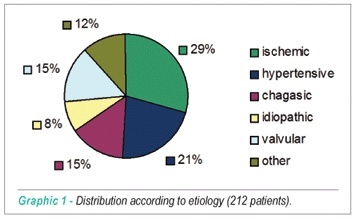
BACKGROUND: National studies on decompensated heart failure (DHF) are key to the understanding of this condition in our midst. OBJECTIVE: To determine the characteristics of DHF patients in an emergency department. METHODS: A total of 212 patients diagnosed with decompensated heart failure who had been admitted to an emergency department (EU) of a cardiology hospital were prospectively evaluated. Clinical variables, form of presentation and causes of decompensation were studied. In 100 patients, ancillary tests, prescription of vasoactive drugs, length of hospital stay and mortality were also analyzed. RESULTS: There was a predominance of the male gender (56%) and the most frequent etiology was ischemia (29,7%) despite high frequency of valvular (15%) and chagasic (14,7%) etiologies. The most common form of presentation and cause of decompensation were congestion (80.7%) and poor compliance/inadequate medication (43.4%), respectively. In the subanalysis of the 100 patients, systolic dysfunction was the most common cause of decompensation (55%); use of vasoactive drugs occurred in 20%, and mortality was 10%. The comparative analysis between the patients who were discharged and those who died during hospitalization confirmed some criteria of poor prognosis: reduced systolic blood pressure, low cardiac output associated with congestion, need for vasoactive drugs, reduced left ventricular ejection fraction, increased left ventricular diastolic diameter (LVDD) and hyponatremia. CONCLUSION: This study presents information about the profile of decompensated heart failure patients attended on the emergency unit of a brazilian southeast cardiology hospital. Clinical, hemodynamical and ancillary data may provide information for risk assessment in the initial evaluation helping the decision on hospitalization and advanced strategic therapies.

  • decompensated heart failure
  • emergency unit
Read Full Article
Creative Commons Attribution (CC BY) Creative Commons license
25/06/2008 DOI: 10.1590/S0066-782X2008000600008 Views 1
Levosimendan in decompensated heart failure patients: efficacy in a Brazilian cohort. Results of the BELIEF study
ABC
Artigo Original

Levosimendan in decompensated heart failure patients: efficacy in a Brazilian cohort. Results of the BELIEF study

Edimar Alcides Bocchi et al. Fábio Vilas-Boas Maria da Consolação Moreira Antonio Carlos Pereira Barretto … Silvia Lage Denilson Albuquerque Jader Baima Salvador Rassi Jorge Pinto Ribeiro

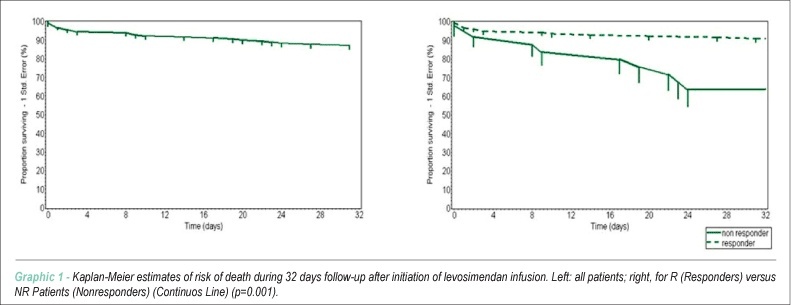
BACKGROUND: Levosimendan is a new inodilatory agent that enhances cardiac contractility via Ca(2+) sensitization and induces vasodilation through the activation of KATP/BKCa. OBJECTIVE: To study the efficacy and safety of levosimendan in a decompensated heart failure (DHF) Brazilian cohort, and in b-adrenergic agonist resistant patients. METHODS: The Brazilian Evaluation of Levosimendan Infusion Efficacy (BELIEF) study was prospective, multicenter, observational and included 182 high-risk DHF patients, all of which received open-label levosimendan. Primary end point was hospital discharge without additional inotropic therapy (responder). Secondary end points were changes in hemodynamics, clinical parameters, and brain natriuretic peptide (BNP). RESULTS: Mortality rate was 14.8%, and 139 of 182 patients were responders. In non responders it was 62.8%. Systolic blood pressure was a predictor of response. In b-adrenergic agonist resistant group, 55.8% were responders. Overall, 54 patients experienced at least one adverse event; most of them resolved either spontaneously or after levosimendan dose reduction. A significant improvement in quality of life was verified at 2-6 months of follow-up (p<0.0001). CONCLUSION: Our results suggest levosimendan infusion as an alternative therapy in the short term management of DHF patients. HF severity can influence the response to levosimendan treatment. Prospective studies are warranted in a Brazilian cohort including Chagas heart disease.

  • Chagas disease
  • decompensated congestive heart failure
  • decompensated heart failure
  • Dyspnea
  • Heart Failure
  • inotropic drug
  • levosimendan
  • systolic blood pressure
Read Full Article
Creative Commons Attribution (CC BY) Creative Commons license
27/03/2008 DOI: 10.1590/S0066-782X2008000300008 Views 1
Serum NT-proBNP levels are a prognostic predictor in patients with advanced heart failure
ABC
Artigo Original

Serum NT-proBNP levels are a prognostic predictor in patients with advanced heart failure

Antonio Carlos Pereira-Barretto et al. Mucio Tavares de Oliveira Junior Célia Cassaro Strunz Carlos Henrique Del Carlo … Airton Roberto Scipioni José Antonio Franchini Ramires

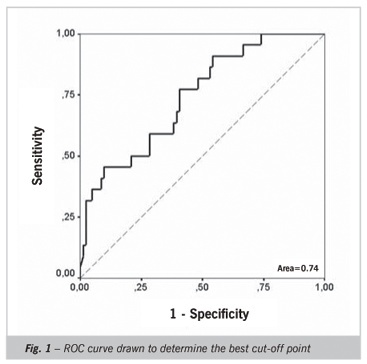
OBJECTIVE: To verify if the determination of NT-proBNP values would help predict the prognosis in advanced heart failure (HF) patients. METHODS: One hundred and five subjects with average age of 52.4 years were evaluated, 66.6% of them males. Thirty-three (32.0%) subjects were outpatients and 70 (67.9%) were inpatients (functional class III/IV) admitted to the hospital for cardiac compensation. All patients had left ventricular systolic dysfunction and a mean ejection fraction of 0.29. The NT-proBNP levels were measured in all patients and they were followed-up over a period from 2 to 90 days (average 77 days). A ROC curve was drawn to determine the best cut-off point, as well as the corresponding Kaplan-Meyer survival curves. RESULTS: During the follow-up period, 22 patients died. The average NT-proBNP value of the patients who remained alive was 6,443.67±6,071.62 pg/ml, whereas that of those who died was 14,609.66±12,165.15 pg/ml (p=0.001). The ROC curve identified a cut-off point at 6,000 pg/ml with 77.3% sensitivity (area under the curve: 0.74). The survival curve for values below and above 6,000 pg/ml was significantly different (p=0.002): patients with values below 6,000 pg/ml had a 90.2% 90-day survival, and those patients with values above, a 66% survival. CONCLUSION: Patients with advanced HF, especially those admitted to the hospital for cardiac compensation, had much higher NT-proBNP values, with a two-fold increase among those who died during the follow-up period. Values above 6,000 pg/ml identify the patients most likely to die within 90 days after hospital discharge.

  • Advanced Heart Failure
  • BNP
  • decompensated heart failure
  • Prognosis
Read Full Article
Creative Commons Attribution (CC BY) Creative Commons license
28/09/2006 DOI: 10.1590/S0066-782X2006001500016
ABC
Artigo Original

Cost analysis of the treatment of acute decompensated heart failure: levosimendan versus dobutamine

Mucio Tavares Oliveira Jr et al. Wilson Follador Maria Lucia Orlandi Martins Roberta Canaviera … Rosana Lima Garcia Tsuji Airton Scipioni Antonio Carlos Pereira Barretto

OBJECTIVE: To assess whether the treatment with levosimendan is more expensive than the usual one with dobutamine, since price of medications does not usually represent the greatest expense in the treatment of cardiac decompensation. METHODS: The cost of treatment of 18 inpatients with cardiac decompensation, 9 of which treated with dobutamine (dobuta group) and 9 with levosimendan (levo group), was compared. Groups were similar concerning age, sex, functional class and cardiac function. RESULTS: Treatment costs were similar for both groups. In the levo group, the costs with the drug were higher than in the dobuta group, but those related to the length of stay in intensive care unit and to the material used during admission were lower. Levo – drug: R$ 5,414.00; material: R$ 399.90; hospital daily rates: R$ 5,061.20; professional honorarium: R$ 3,241.80; total costs: R$ 14,117.00. Dobuta – drug: R$ 2,320.10; materials: R$ 1,665.70; hospital daily rates: R$ 6,261.90; professional honorarium: R$ 3,894.30; total costs: R$ 14,142.00. CONCLUSION: Despite the higher price of levosimendan, the global cost of the treatment was similar for patients who were treated either with dobutamine or levosimendan. Patients who were treated with levosimendan had a shorter length of stay in intensive care unit.

  • decompensated heart failure
  • Dobutamine
  • inotropics
  • levosimendan
  • pharmacoeconomics
Read Full Article
Creative Commons Attribution (CC BY) Creative Commons license
29/09/2005 DOI: 10.1590/S0066-782X2005001400003

How to cite this article

EndNote RIS

Electronic Document Format (Vancouver)

Lima MV, Cardoso JN, Ochiai ME, Grativvol KM, Grativvol PS, Brancalhão ECO, Munhoz RT, et al. Is it necessary to suspend betablockers in decompensated heart failure with low output?. Arquivos Brasileiros de Cardiologia 2010;95(4):530-5.

Electronic Document Format (ABNT)

Lima, Marcelo Villaça; Cardoso, Juliano Novaes; Ochiai, Marcelo Eidi; Grativvol, Katiuska Massucatti; Grativvol, Petherson Susano; Brancalhão, Euler C. O.; Munhoz, Robinson Tadeu; Morgado, Paulo Cesar; Scipioni, Airton R.; Barretto, Antonio Carlos Pereira. Is it necessary to suspend betablockers in decompensated heart failure with low output?. Arquivos Brasileiros de Cardiologia, v. 95, n. 4, p. 530-535, Aug. 2010.

Electronic Document Format (APA)

Lima, M. V., Cardoso, J. N., Ochiai, M. E., Grativvol, K. M., Grativvol, P. S., Brancalhão, E. C. O., Munhoz, R. T., Morgado, P. C., Scipioni, A. R., & Barretto, A. C. P. (2010). Is it necessary to suspend betablockers in decompensated heart failure with low output?. Arquivos Brasileiros de Cardiologia, 95(4), 530-535.

Electronic Document Format (ISO)

Lima, Marcelo Villaça and Cardoso, Juliano Novaes and Ochiai, Marcelo Eidi and Grativvol, Katiuska Massucatti and Grativvol, Petherson Susano and Brancalhão, Euler C. O. and Munhoz, Robinson Tadeu and Morgado, Paulo Cesar and Scipioni, Airton R. and Barretto, Antonio Carlos Pereira. Is it necessary to suspend betablockers in decompensated heart failure with low output?. Arquivos Brasileiros de Cardiologia [online]. 2010, vol. 95, n. 4, [cited 2026-10-14], pp. 530-535. Available from: <https://journals.cardiol.br/en/article/is-it-necessary-to-suspend-betablockers-in-decompensated-heart-failure-with-low-output/>. ISSN 0066-782X

EndNote RIS

Electronic Document Format (Vancouver)

Mangini S, Silveira FS, Silva CP, Grativvol PS, Seguro LFBC, Ferreira SMA, Mocelin AO, et al. Decompensated heart failure in the emergency department of a cardiology hospital. Arquivos Brasileiros de Cardiologia 2008;90(6):433-40.

Electronic Document Format (ABNT)

Mangini, Sandrigo; Silveira, Fábio Serra; Silva, Christiano Pereira; Grativvol, Petherson Suzano; Seguro, Luís Fernando Bernal da Costa; Ferreira, Sílvia Moreira Ayub; Mocelin, Amílcar Oshiro; Cardoso, Luiz Francisco; Bacal, Fernando; Bocchi, Edimar Alcides. Decompensated heart failure in the emergency department of a cardiology hospital. Arquivos Brasileiros de Cardiologia, v. 90, n. 6, p. 433-440, Jun. 2008.

Electronic Document Format (APA)

Mangini, S., Silveira, F. S., Silva, C. P., Grativvol, P. S., Seguro, L. F. B. C., Ferreira, S. M. A., Mocelin, A. O., Cardoso, L. F., Bacal, F., & Bocchi, E. A. (2008). Decompensated heart failure in the emergency department of a cardiology hospital. Arquivos Brasileiros de Cardiologia, 90(6), 433-440.

Electronic Document Format (ISO)

Mangini, Sandrigo and Silveira, Fábio Serra and Silva, Christiano Pereira and Grativvol, Petherson Suzano and Seguro, Luís Fernando Bernal da Costa and Ferreira, Sílvia Moreira Ayub and Mocelin, Amílcar Oshiro and Cardoso, Luiz Francisco and Bacal, Fernando and Bocchi, Edimar Alcides. Decompensated heart failure in the emergency department of a cardiology hospital. Arquivos Brasileiros de Cardiologia [online]. 2008, vol. 90, n. 6, [cited 2026-10-14], pp. 433-440. Available from: <https://journals.cardiol.br/en/article/decompensated-heart-failure-in-the-emergency-department-of-a-cardiology-hospital/>. ISSN 0066-782X

EndNote RIS

Electronic Document Format (Vancouver)

Bocchi EA, Vilas-Boas F, Moreira MC, Barretto ACP, Lage S, Albuquerque D, Baima J, et al. Levosimendan in decompensated heart failure patients: efficacy in a Brazilian cohort. Results of the BELIEF study. Arquivos Brasileiros de Cardiologia 2008;90(3):201-10.

Electronic Document Format (ABNT)

Bocchi, Edimar Alcides; Vilas-Boas, Fábio; Moreira, Maria da Consolação; Barretto, Antonio Carlos Pereira; Lage, Silvia; Albuquerque, Denilson; Baima, Jader; Rassi, Salvador; Ribeiro, Jorge Pinto. Levosimendan in decompensated heart failure patients: efficacy in a Brazilian cohort. Results of the BELIEF study. Arquivos Brasileiros de Cardiologia, v. 90, n. 3, p. 201-210, Mar. 2008.

Electronic Document Format (APA)

Bocchi, E. A., Vilas-Boas, F., Moreira, M. C., Barretto, A. C. P., Lage, S., Albuquerque, D., Baima, J., Rassi, S., & Ribeiro, J. P. (2008). Levosimendan in decompensated heart failure patients: efficacy in a Brazilian cohort. Results of the BELIEF study. Arquivos Brasileiros de Cardiologia, 90(3), 201-210.

Electronic Document Format (ISO)

Bocchi, Edimar Alcides and Vilas-Boas, Fábio and Moreira, Maria da Consolação and Barretto, Antonio Carlos Pereira and Lage, Silvia and Albuquerque, Denilson and Baima, Jader and Rassi, Salvador and Ribeiro, Jorge Pinto. Levosimendan in decompensated heart failure patients: efficacy in a Brazilian cohort. Results of the BELIEF study. Arquivos Brasileiros de Cardiologia [online]. 2008, vol. 90, n. 3, [cited 2026-10-14], pp. 201-210. Available from: <https://journals.cardiol.br/en/article/levosimendan-in-decompensated-heart-failure-patients-efficacy-in-a-brazilian-cohort-results-of-the-belief-study/>. ISSN 0066-782X

EndNote RIS

Electronic Document Format (Vancouver)

Pereira-Barretto AC, Oliveira Junior MT, Strunz CC, Carlo HD, Scipioni AR, Ramires JAF. Serum NT-proBNP levels are a prognostic predictor in patients with advanced heart failure. Arquivos Brasileiros de Cardiologia 2006;87(2):174-7.

Electronic Document Format (ABNT)

Pereira-Barretto, Antonio Carlos; Oliveira Junior, Mucio Tavares de; Strunz, Célia Cassaro; Carlo, s Henrique Del; Scipioni, Airton Roberto; Ramires, José Antonio Franchini. Serum NT-proBNP levels are a prognostic predictor in patients with advanced heart failure. Arquivos Brasileiros de Cardiologia, v. 87, n. 2, p. 174-177, Sep. 2006.

Electronic Document Format (APA)

Pereira-Barretto, A. C., Oliveira Junior, M. T. , Strunz, C. C., Carlo, H. D., Scipioni, A. R., & Ramires, J. A. F. (2006). Serum NT-proBNP levels are a prognostic predictor in patients with advanced heart failure. Arquivos Brasileiros de Cardiologia, 87(2), 174-177.

Electronic Document Format (ISO)

Pereira-Barretto, Antonio Carlos and Oliveira Junior, Mucio Tavares de and Strunz, Célia Cassaro and Carlo, s Henrique Del and Scipioni, Airton Roberto and Ramires, José Antonio Franchini. Serum NT-proBNP levels are a prognostic predictor in patients with advanced heart failure. Arquivos Brasileiros de Cardiologia [online]. 2006, vol. 87, n. 2, [cited 2026-10-14], pp. 174-177. Available from: <https://journals.cardiol.br/en/article/serum-nt-probnp-levels-are-a-prognostic-predictor-in-patients-with-advanced-heart-failure/>. ISSN 0066-782X

EndNote RIS

Electronic Document Format (Vancouver)

Oliveira Jr MT, Follador W, Martins MLO, Canaviera R, Tsuji RLG, Scipioni A, Barretto ACP, et al. Cost analysis of the treatment of acute decompensated heart failure: levosimendan versus dobutamine. Arquivos Brasileiros de Cardiologia 2005;85(1):9-14.

Electronic Document Format (ABNT)

Oliveira Jr, Mucio Tavares; Follador, Wilson; Martins, Maria Lucia Orlandi; Canaviera, Roberta; Tsuji, Rosana Lima Garcia; Scipioni, Airton; Barretto, Antonio Carlos Pereira. Cost analysis of the treatment of acute decompensated heart failure: levosimendan versus dobutamine. Arquivos Brasileiros de Cardiologia, v. 85, n. 1, p. 9-14, Sep. 2005.

Electronic Document Format (APA)

Oliveira Jr, M. T., Follador, W., Martins, M. L. O., Canaviera, R., Tsuji, R. L. G., Scipioni, A., & Barretto, A. C. P. (2005). Cost analysis of the treatment of acute decompensated heart failure: levosimendan versus dobutamine. Arquivos Brasileiros de Cardiologia, 85(1), 9-14.

Electronic Document Format (ISO)

Oliveira Jr, Mucio Tavares and Follador, Wilson and Martins, Maria Lucia Orlandi and Canaviera, Roberta and Tsuji, Rosana Lima Garcia and Scipioni, Airton and Barretto, Antonio Carlos Pereira. Cost analysis of the treatment of acute decompensated heart failure: levosimendan versus dobutamine. Arquivos Brasileiros de Cardiologia [online]. 2005, vol. 85, n. 1, [cited 2026-10-14], pp. 9-14. Available from: <https://journals.cardiol.br/en/article/cost-analysis-of-the-treatment-of-acute-decompensated-heart-failure-levosimendan-versus-dobutamine/>. ISSN 0066-782X

  • About ABC Family
  • Internal Regulation
  • Editorial Board
  • Brazilian Society of Cardiology (SBC)

Issues

SBC Guidelines

  • Videos
  • Podcasts
  • News