Early glucometabolic profile in patients with acute coronary syndromes and metabolic syndrome
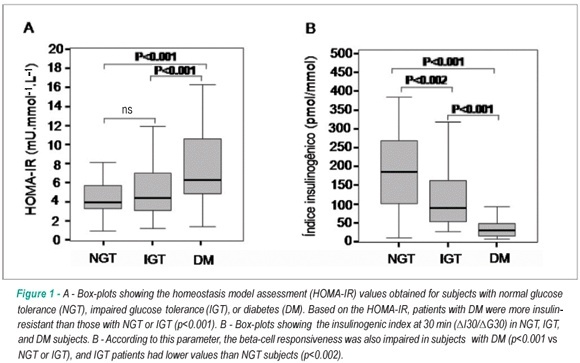
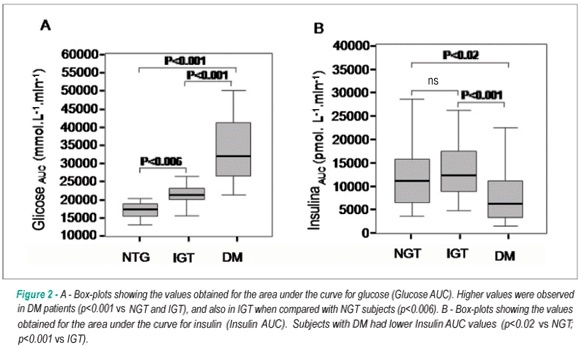
BACKGROUND: Patients with metabolic syndrome (MetS) are at high coronary risk and beta-cell dysfunction or insulin resistance might predict an additional risk for early cardiovascular events. OBJECTIVE: This study aimed to evaluate early glucometabolic alterations in patients with MetS, but without previously known type 2 diabetes, after acute coronary syndrome. METHODS: A total of 114 patients were submitted to an oral glucose tolerance test (OGTT) 1-3 days after hospital discharge due to myocardial infarction or unstable angina. Based on the OGTT, we defined three groups of patients: normal glucose tolerance (NGT; n=26), impaired glucose tolerance (IGT; n=39), or diabetes (DM; n=49). The homeostasis model assessment (HOMA-IR) was used to measure insulin resistance; beta-cell responsiveness was assessed by the insulinogenic index at 30 min (ΔI30/ΔG30). RESULTS: Based on the HOMA-IR, patients with DM were more insulin-resistant than those with NGT or IGT (p<0.001). According to the insulinogenic index, the beta-cell responsiveness was also impaired in subjects with DM (p<0.001 vs NGT or IGT). CONCLUSION: High rates of glucometabolic alterations were found after acute coronary syndrome in patients with MetS. As these abnormalities markedly increase the risk for adverse outcomes, early OGTT among MetS patients might be used to identify those at the highest coronary risk.
Images
Image gallery fullscreen viewer
Comments are moderated by the editorial team before publication. Discussions should be evidence-based and use scientific language. Conflicts of interest should be declared.