| ABCHF
ABC Family Arquivos Brasileiros de Cardiologia International Journal of Cardiovascular Sciences ABC Heart Failure & Cardiomyopathy ABC Imagem Cardiovascular
Português English
ABC Family | ABCHF
Português English
  • About
    • About the Journal
    • Internal Regulation
    • Editors Section
    • Editorial Board
    • SBC Award
  • Instructions to Authors
    • Guidelines for Publication
    • Editorial Policy
    • Ethics Policy
    • Policy on the Use of Artificial Intelligence
    • Mandatory Publication Form
  • Issues
  • SBC Guidelines
  • About
    • About the Journal
    • Internal Regulation
    • Editors Section
    • Editorial Board
    • SBC Award
  • Instructions to Authors
    • Guidelines for Publication
    • Editorial Policy
    • Ethics Policy
    • Policy on the Use of Artificial Intelligence
    • Mandatory Publication Form
  • Issues
  • SBC Guidelines

ABC Family

  • ABC Family
  • Arquivos Brasileiros de Cardiologia
  • International Journal of Cardiovascular Sciences
  • ABC Heart Failure & Cardiomyopathy
  • ABC Imagem Cardiovascular
Search in

No content found.

Journals
Ordering
Article types
Others

  1. Home
  2. ABCHF
  3. Issues
  4. 2025, Volume 5, Number 3
Letter to the Editor

Impacts of Post-COVID-19 Syndrome on Cardiovascular Autonomic Changes

Pedro Pereira Tenório

Dear Editor,

The article by Davanço et al., entitled “Post-COVID-19 Syndrome and Autonomic Repercussions on Cardiovascular Variables” (ABC Heart Fail Cardiomyop. 2023; 3(3): e20230056), makes an important contribution to understanding the autonomic repercussions of COVID-19 on cardiovascular modulation. This study stands out for addressing an emerging and highly relevant clinical topic by investigating heart rate variability (HRV) parameters in patients with post-COVID-19 syndrome, using robust temporal and spectral domain measures. The methodological rigor, adherence to STROBE guidelines, and adequate characterization of the comparison groups are noteworthy, lending solidity to the conclusions presented.

The correlation between increased parasympathetic indices (RMSSD, HF) and reduced global variability parameters suggests a complex autonomic adaptation, possibly mediated by persistent inflammatory mechanisms— a hypothesis of great pathophysiological value.

[…]

  • COVID-19
  • Inflamação
  • Síndrome de Pós-COVID-19 Aguda
  • Sistema Nervoso Autônomo
Read Full Article
Creative Commons Attribution (CC BY) Creative Commons license
31/12/2025 DOI: 10.36660/abchf.20250028i Views 6
Central Illustration
Original Article

Current Diagnostic and Prognostic Applications of Cardiopulmonary Exercise Testing in Heart Failure with Preserved Ejection Fraction – A Narrative Review

Fernando Colares Barros et al. Jéssica Cristina de Cezaro Eduardo Gatti Pianca Willian Roberto Menegazzo … Fernando Luís Scolari Anderson Donelli da Silveira

Abstract

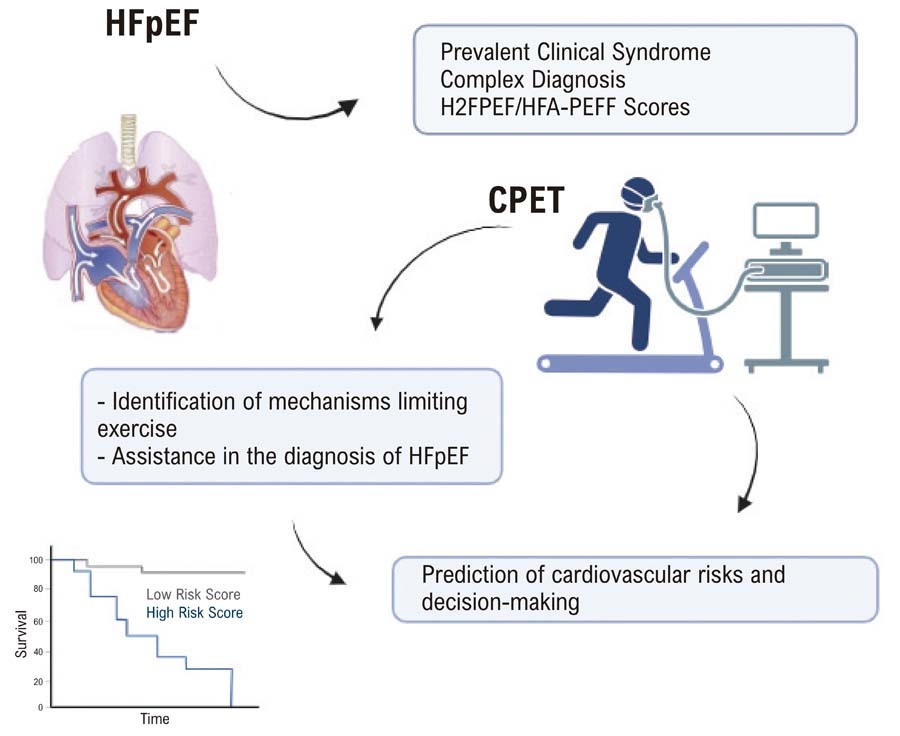
Heart failure with preserved ejection fraction (HFpEF) is a prevalent clinical syndrome with a complex diagnosis, associated with various comorbidities and high rates of cardiovascular events. Cardiopulmonary exercise testing (CPET) plays an essential role in understanding the mechanisms of exercise limitation and in complementing the diagnosis of HFpEF, but it presents several gaps to be explored in risk prediction. This article reviews the literature on current pathophysiological, diagnostic, and prognostic aspects of HFpEF. Subsequently, the role of CPET in diagnosis and prognostic prediction in HFpEF is explored. A critical analysis of the main observational and cohort studies that used CPET in this setting is performed, selected after a qualified search on the PubMed platform. For diagnostic purposes, peak VO2 is not very specific, with a high diagnostic probability for values 20 ml/kg/min. However, when peak VO2 is evaluated together with other ventilatory parameters, there is an increase in the diagnostic value of CPET in HFpEF. For prognostic purposes, variables such as peak VO2, VE/VCO2 slope, and the presence of periodic ventilation correlate with a higher risk prediction. However, there are notable sample differences between studies in HFpEF, hindering the generalization of the use of CPET in clinical practice. This review concludes that conducting prospective studies with more rigorous patient selection and using some variables adjusted for body composition differences, such as lean VO2, may allow for better incorporation of CPET in risk stratification in HFpEF.

  • Exercise Test
  • Heart Failure
  • Prognosis
Read Full Article
Creative Commons Attribution (CC BY) Creative Commons license
31/12/2025 DOI: 10.36660/abc.20250014i Views 8
Case Report

Reverse Remodeling After Myocardial Revascularization in Severe Ischemic Heart Disease

Bruna Montingelli Espinola Trento et al. Daniela Gourlart Medeiros Maria Eduarda Soares Bizinelli Manuella Macedo Barão Ana Karyn Ehrenfried Freitas

Introduction

Heart failure with reduced ejection fraction (HFrEF), especially of ischemic etiology, is a challenging condition associated with high morbidity and mortality.¹ Patients with HFrEF frequently present with ventricular remodeling and progressive systolic dysfunction, making early identification of significant coronary artery disease (CAD) essential for defining therapy and optimizing prognosis.

Triple-vessel CAD involving the left main coronary artery (LMCA) constitutes a high-risk scenario. Guidelines recommend surgical revascularization in most cases, particularly in the presence of pronounced left ventricular dysfunction.² Evidence from studies such as STICH/STICHES has demonstrated that coronary artery bypass grafting (CABG) combined with optimized medical therapy in patients with ischemic cardiomyopathy and reduced left ventricular ejection fraction (LVEF) promotes improved long-term outcomes, although the perioperative risk remains high, with mortality up to 8.6% in patients with LVEF < 35%.³

[…]

  • Coronary Artery Disease
  • Echocardiography
  • Heart Failure
  • Myocardial Ischemia
  • Myocardial Revascularization
Read Full Article
Creative Commons Attribution (CC BY) Creative Commons license
31/12/2025 DOI: 10.36660/abchf.20250039i Views 2
Cardiopulmonary Exercise Testing in Heart Failure: Updating the Theory into Clinical Practice
Review Article

Cardiopulmonary Exercise Testing in Heart Failure: Updating the Theory into Clinical Practice

João Manoel Rossi Neto et al. Raphael Machado Rossi Victor B. M. Mattos Plinio J. W. Wolf … Marco Aurelio A. Finger Carolina Casadei dos Santos

Abstract

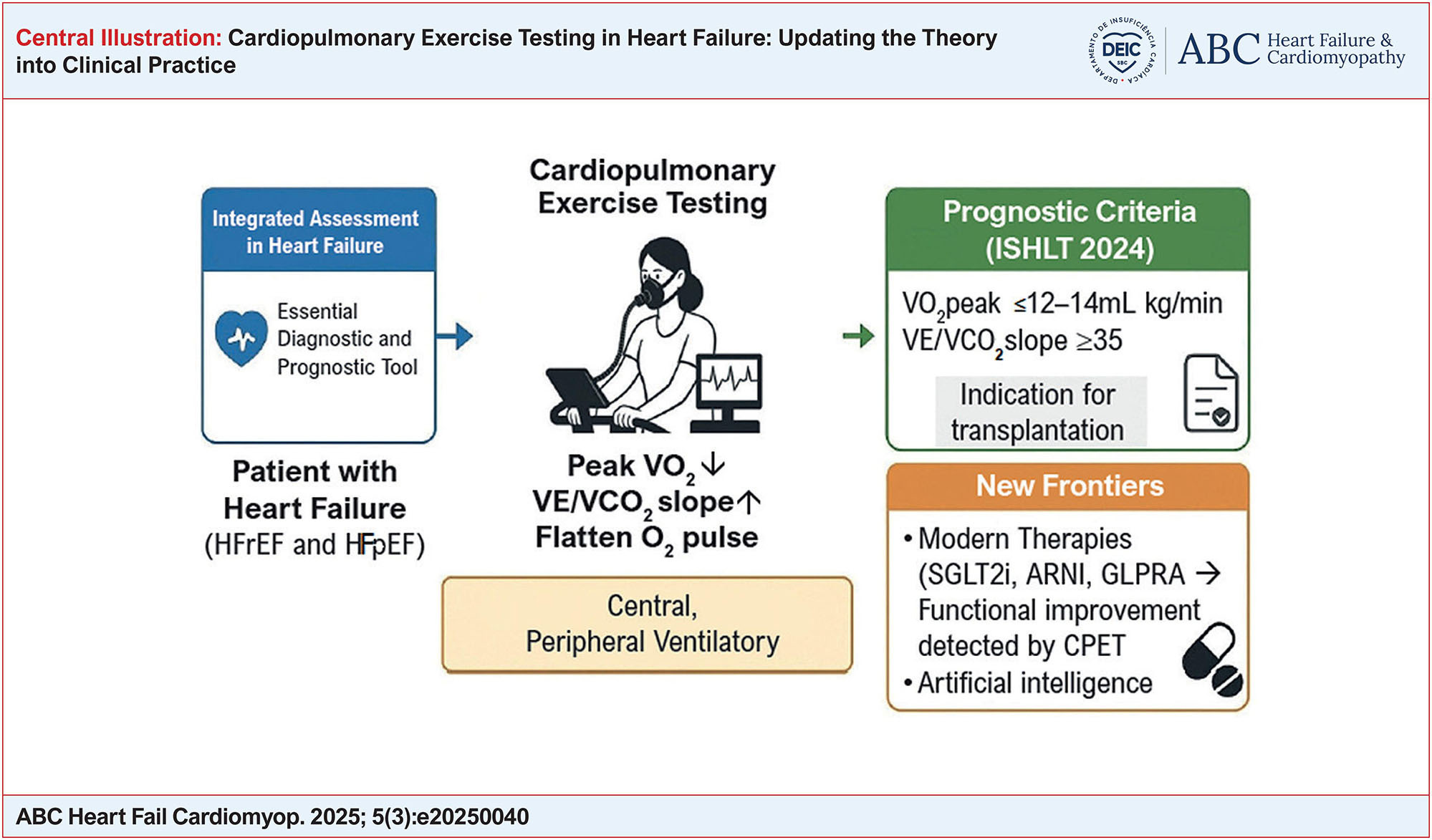
Cardiopulmonary exercise testing (CPET) is a central tool in the functional assessment of heart failure (HF), integrating cardiovascular, ventilatory, and metabolic responses into a single examination. In light of evidence published between 2023 and 2025, its diagnostic and prognostic role has been expanded, incorporating more refined pathophysiological foundations, submaximal parameters, and updated criteria for heart transplantation according to ISHLT 2024. This narrative review, based on studies indexed in PubMed, international consensus statements, and contemporary analyses, addresses the main mechanisms of exercise limitation in HF with reduced ejection fraction (HFrEF) and preserved ejection fraction (HFpEF), as well as the clinical relevance of key CPET variables, including peak VO2, VE/VCO2 slope, OUES, O2 pulse, chronotropic response, and VO2 recovery kinetics.

The body of evidence confirms that the CPET is the most comprehensive tool for characterizing cardiocirculatory, ventilatory, and peripheral limitations, with reduced peak VO2 and elevated VE/VCO2 slope remaining the most robust prognostic markers, even in submaximal tests. Recent studies also demonstrate that emerging therapies — such as SGLT2 inhibitors, ARNIs, and GLP-1 agonists — promote functional benefits detectable by CPET before cardiac structural changes, highlighting its role as a monitor of therapeutic response. Additionally, CPET remains fundamental in risk stratification and transplant decision-making, following the updated thresholds of the ISHLT. Thus, the examination is consolidated as an essential instrument in modern HF practice, integrating diagnosis, prognosis, and therapeutic monitoring, as well as guiding rehabilitation strategies and the selection of advanced therapies.

  • Cardiac Rehabilitation
  • Exercise Test
  • Gas exchange
  • Heart Failure
  • Prognosis
Read Full Article
Creative Commons Attribution (CC BY) Creative Commons license
31/12/2025 DOI: 10.36660/abchf.20250040i Views 2
Central Illustration
Viewpoint

The Use of Digitalis: A Reflection of Medicine as the Science of Provisional Truths

Plinio J. Wolf et al. Carolina Casadei dos Santos João Rossi Marco Aurelio A. Finger … Victor B. M. Mattos Raphael Rossi Edileide Barros Correia Marco Vasconcellos Larissa Bruscky Bruno Valdigem Haissa Assad Fernanda Fortuna

Introduction

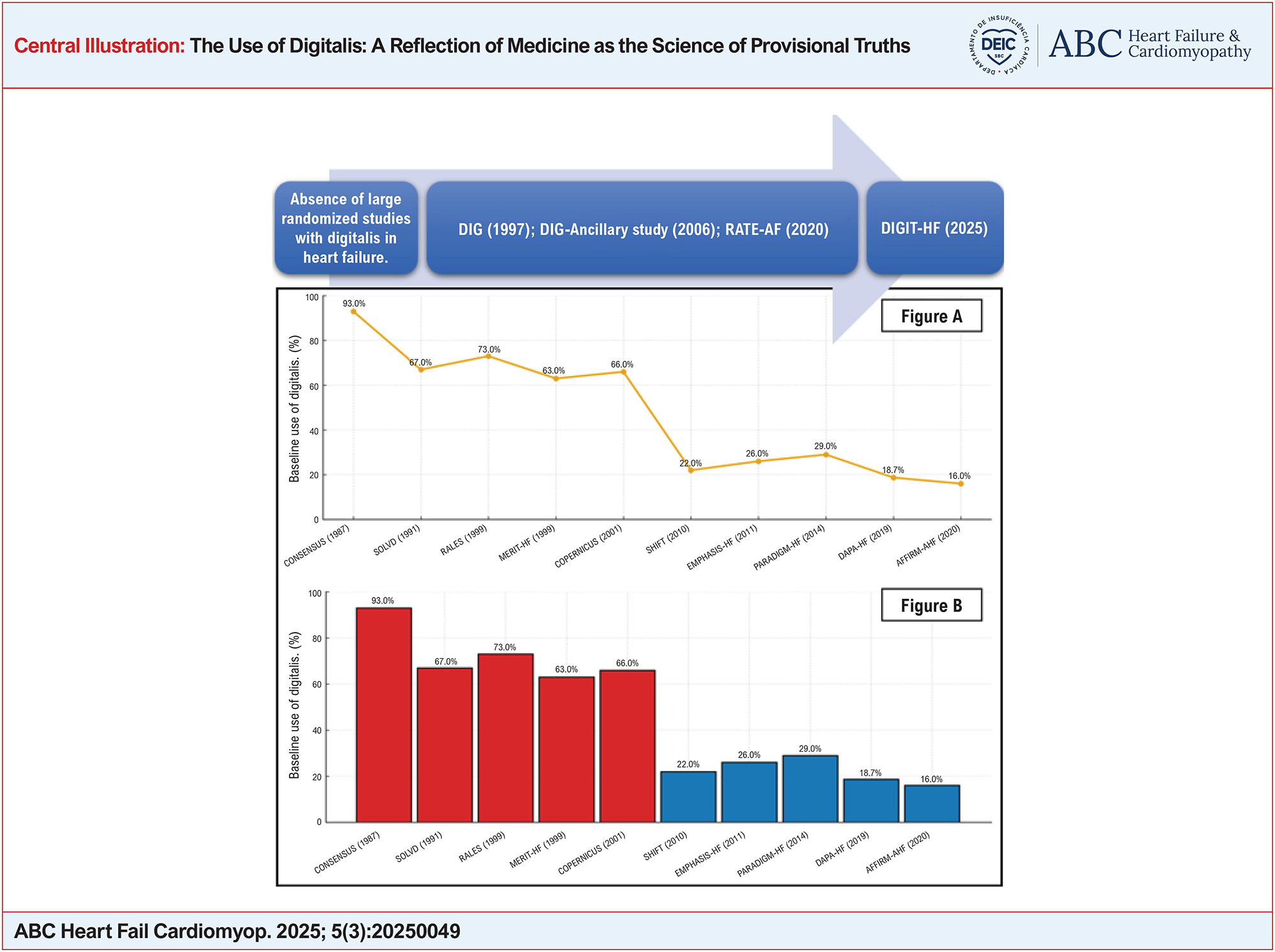
According to current guidelines (class I recommendation), the treatment of heart failure with reduced ejection fraction (HFrEF) – defined as left ventricular ejection fraction (LVEF) ≤40% – should be based on the quadruple therapy scheme aimed at reducing cardiovascular outcomes. This regimen consists of beta-blockers (BB), mineralocorticoid receptor antagonists (MRA), renin–angiotensin–aldosterone system blockers (including angiotensin-converting enzyme inhibitors [ACEIs], Angiotensin II Receptor Blockers [ARBs], or Angiotensin Receptor–Neprilysin Inhibitors [ARNIs]), and Sodium–Glucose Cotransporter-2 Inhibitors (SGLT2i).,

In recent decades, with the therapeutic evolution of HFrEF, some medications such as digitalis,¹ once widely recommended, have been relegated to the role of adjuvants for refractory patients. These drugs lost prominence due to their adverse effects and the unequivocal benefits of the “Fantastic Four,” especially from the late 1990s onward (). However, in light of recent evidence,³ digitalis appear to be regaining relevance as an additional treatment option for Heart Failure (HF), reflecting that, given the constant nuances in the use of digitalis over the years, medicine is indeed the science of provisional truths.

[…]

  • Digitoxin
  • Digoxin
  • Heart Failure
Read Full Article
Creative Commons Attribution (CC BY) Creative Commons license
31/12/2025 DOI: 10.36660/abchf.20250049i
Central Illustration
Original Article

Efficacy of Cardiopulmonary Rehabilitation on Cardiorespiratory Function in Patients with Long COVID Syndrome

Silvia Sarullo et al. Cinzia Nugara Annamaria Lo Voi Antonino Zarcone … Gabriele Di Francesco Sergio Bosco Sergio Carollo Luigi Mazzara Francesco Giallauria Francesco Cappello Filippo M. Sarullo

Abstract

Background

Long COVID syndrome (LCS) refers to persistent sequelae following acute SARS-CoV-2 infection and affects approximately 5%-20% of individuals.

Objective

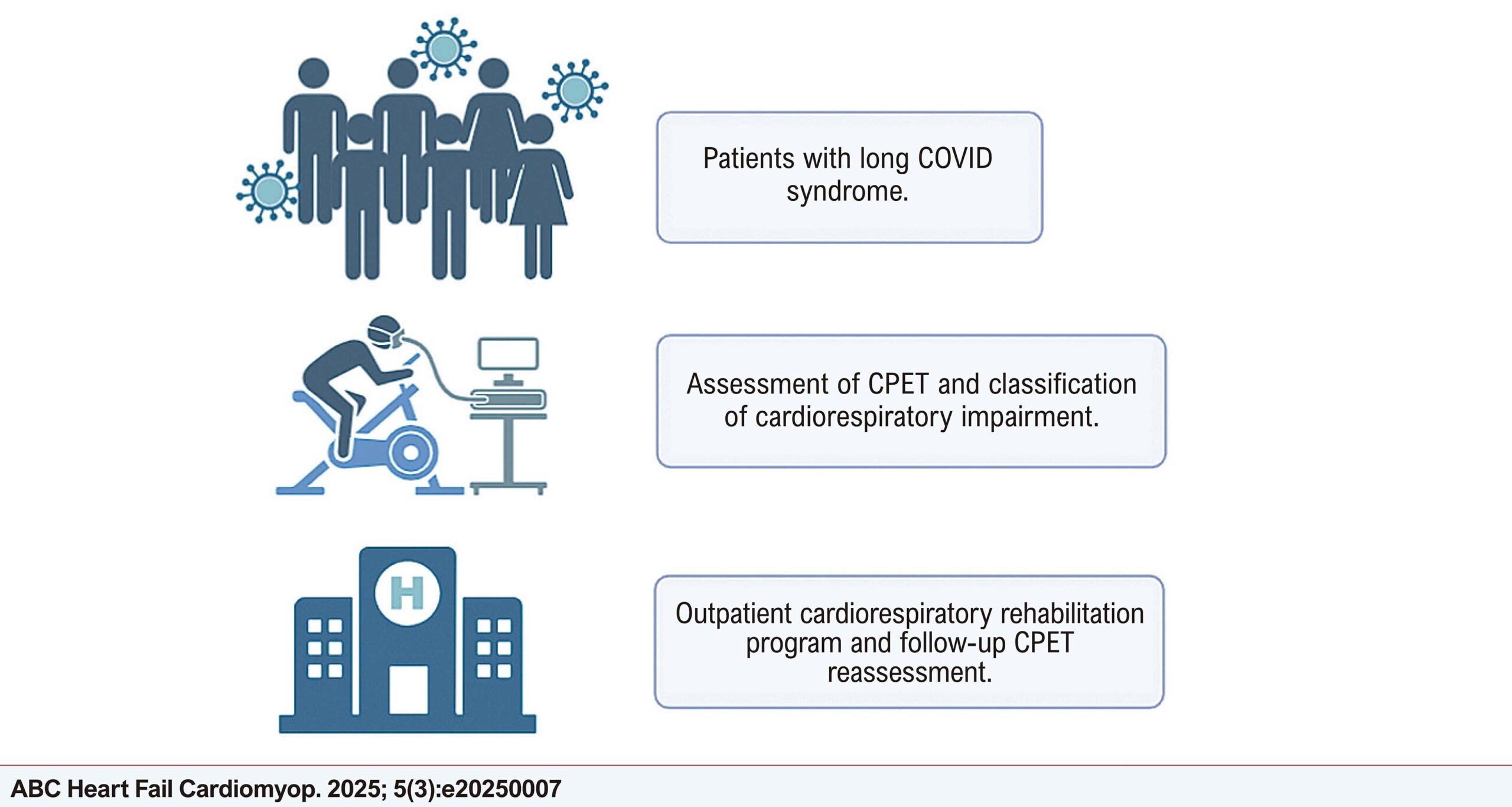
This study evaluated functional capacity limitations in patients with LCS using cardiopulmonary exercise testing (CPET) and quantified the effects of a structured cardiorespiratory rehabilitation (CR) program.

Methods

In this prospective observational study, 67 outpatients with LCS completed CPET before and after participation in a supervised CR program. At baseline, patients demonstrated reduced functional capacity, including decreased VO2peak (19.47 ± 7.86 mL/kg/min), lower O2 pulse (10.65 ± 3.11 mL/beat), increased VE/VCO2 slope (31.26 ± 7.98), and impaired ventilation (VE = 57.83 ± 17.37%). Most participants either did not achieve the anaerobic threshold (AT) or reached it prematurely, although VO2/work slope values remained within normal limits.

Results

After a median 45-day CR intervention, significant improvements were observed in several parameters: resting heart rate decreased by 8.88% (p < 0.0001), minute ventilation increased by 30.46% (p < 0.0001), VO2peak rose by 18.85% (p < 0.0001), and peak workload increased by 26.82% (p < 0.0001). Additionally, 95% of patients achieved AT following CR, with a 16.21% delay in AT onset (p < 0.0001). The VE/VCO2 slope showed a modest but significant reduction of 4.03% (p = 0.0443).

Conclusions

Exercise-based CR substantially improved functional capacity in patients with LCS, demonstrated by increases in VO2peak, O2 pulse, and ventilatory efficiency. Although these results support CR as a beneficial therapeutic strategy, the underlying pathophysiological mechanisms of LCS remain incompletely understood.

  • Cardiac Rehabilitation
  • exercise capacity
  • Exercise Test
  • Post-Acute COVID-19 Syndrome
Read Full Article
Creative Commons Attribution (CC BY) Creative Commons license
31/12/2025 DOI: 10.36660/abchf.20250007i
Figure 1
Original Article

Analysis of the Clinical and Epidemiological Profile of Patients with Heart Failure with Reduced Ejection Fraction in a Hospital in Southern Santa Catarina

Gabriela Aline Borges et al. Mateus De Luca Amanda Cirimbelli Bolan

Abstract

Background

Heart failure with reduced ejection fraction (HFrEF) accounts for approximately half of all heart failure hospitalizations, negatively impacts patients’ functional capacity and quality of life, and is associated with high financial costs in health care.

Objectives

To analyze the clinical and epidemiological profile of patients with heart failure with HFrEF in a hospital in southern Santa Catarina in the year 2023.

Methods

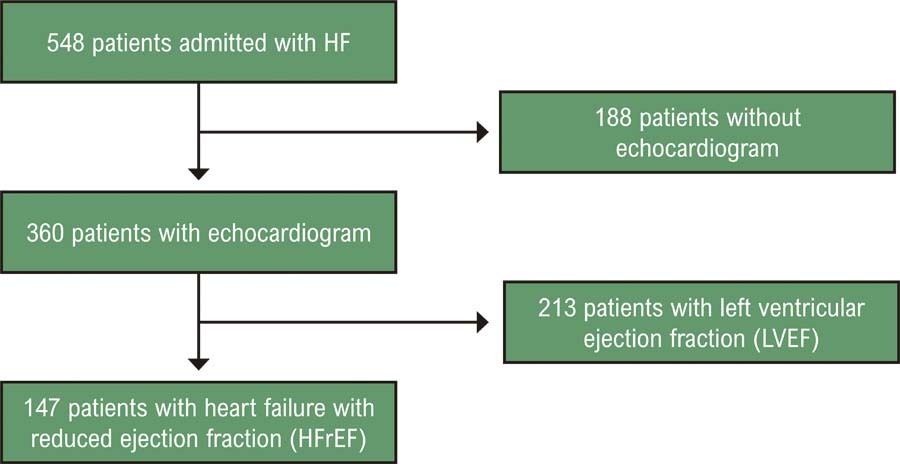
147 patients with HFrEF were evaluated in a reference hospital in southern Santa Catarina. The data were collected through electronic medical records from which information such as left ventricular ejection fraction (LVEF), sex, age, race/color, weight, height, medications in use, and associated conditions was extracted.

Results

The mean age of the study population was 68.14 ± 12.88 years. Males represented 57.8% of the patients, and 88.4% were white. Of the total, 25.5% presented some degree of obesity. Systemic arterial hypertension was observed in 68.7%, diabetes mellitus in 56.5%, and ischemic cardiomyopathies in 31.3% of the individuals. The mean LVEF value was 28.54 ± 6.72%. The recommended triple pharmacological therapy was present in 45.6% of the individuals, while the association with iSGLT2 was observed in 34.8%.

Conclusions

It was possible to identify the clinical and epidemiological profile of the study population and, above all, to highlight that more than half of this population was not using optimized drug therapy. Therefore, the importance of clinical and epidemiological data for reviewing and optimizing patient management is emphasized.

  • Clinical Epidemiology
  • Clinical Medicine
  • Systolic Heart Failure
Read Full Article
Creative Commons Attribution (CC BY) Creative Commons license
31/12/2025 DOI: 10.36660/abchf.20250027i
Local Inflammation May Underlie Cardiac Damage in Post-COVID-19 Period
Original Article

Local Inflammation May Underlie Cardiac Damage in Post-COVID-19 Period

Marcio Roberto Moraes de Carvalho et al. Natalia Fonseca Rosário Alice Ramos Carla Rodrigues do Amaral Azevedo … Mario Luiz Ribeiro Guilherme Schittine Bezerra Lomba Evelyn Maciel de Oliveira Rachel V. O’Neill de Souza Mauro Jorge Cabral Castro Jocemir Ronaldo Lugon

Abstract

Background

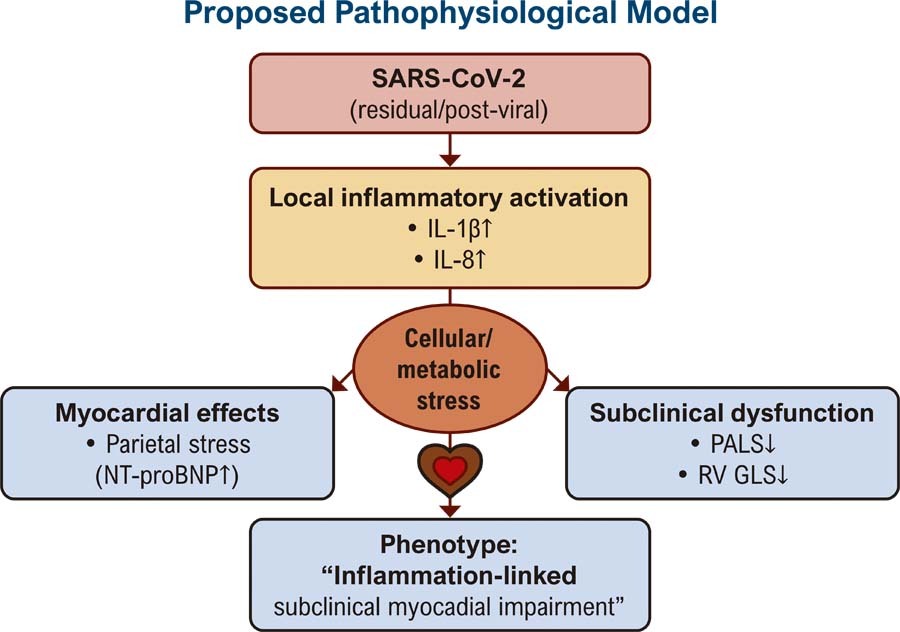
Some patients experience subclinical cardiovascular dysfunction after COVID-19, possibly driven by persistent inflammatory mechanisms that remain incompletely understood. NT-proBNP and GDF-15 have been proposed as biomarkers of myocardial stress and inflammation in this context.

Objectives

To investigate associations between NT-proBNP, GDF-15, inflammatory cytokines, and echocardiographic parameters in patients with Post-COVID-19 Condition (PCC).

Methods

This cross-sectional study included 78 adults followed in a university hospital cohort. Participants were stratified into elevated NT-proBNP (n = 39) and normal NT-proBNP (n = 39) groups. Clinical, laboratory, and echocardiographic variables were assessed, including PALS and RV-GLS. Serum GDF-15 and cytokines were quantified using a multiplex bead assay. ROC curve analysis evaluated the predictive value of GDF-15 for elevated NT-proBNP.

Results

Participants with elevated NT-proBNP had reduced PALS (28.5% vs. 36.7%; p < 0.05), and higher GDF-15 (median 368 vs. 219 pg/mL) and IL-1β levels (2.47 vs. 0.94 pg/mL; p < 0.05). GDF-15 ≥ 519 pg/mL predicted elevated NT-proBNP (AUC = 0.65). Individuals with elevated GDF-15 also showed worse RV-GLS (20.2% vs. 26.9%; p < 0.05) and higher IL-8 levels (p < 0.05).

Conclusions

NT-proBNP, GDF-15, and IL-1β identify subclinical myocardial dysfunction in PCC, supporting a pathophysiological model centered on persistent inflammation and early myocardial remodeling, distinct from classic ischemic pathways.

  • COVID-19
  • Echocardiography
  • Growth differentiation factor 15
  • Inflammation
Read Full Article
Creative Commons Attribution (CC BY) Creative Commons license
31/12/2025 DOI: 10.36660/abchf.20250037i Views 1
Central Illustration
Viewpoint

Digoxin in Heart Failure with Reduced Ejection Fraction: A Proposal for a Practical Precision Medicine-Based Guide

Germano Emílio Conceição-Souza

Introduction: the paradox of digitalis therapy

Digoxin holds a unique position in the history of cardiovascular medicine. Although it is the oldest drug in continuous use for heart failure (HF) treatment, there has been a sharp decline in prescriptions over the past two decades. Overshadowed by the advent of disease-modifying therapies and stigmatized due to concerns regarding toxicity, digoxin was relegated to a Class IIa recommendation in the Brazilian guideline and a third-line recommendation (Class IIb) in the major international guidelines.,

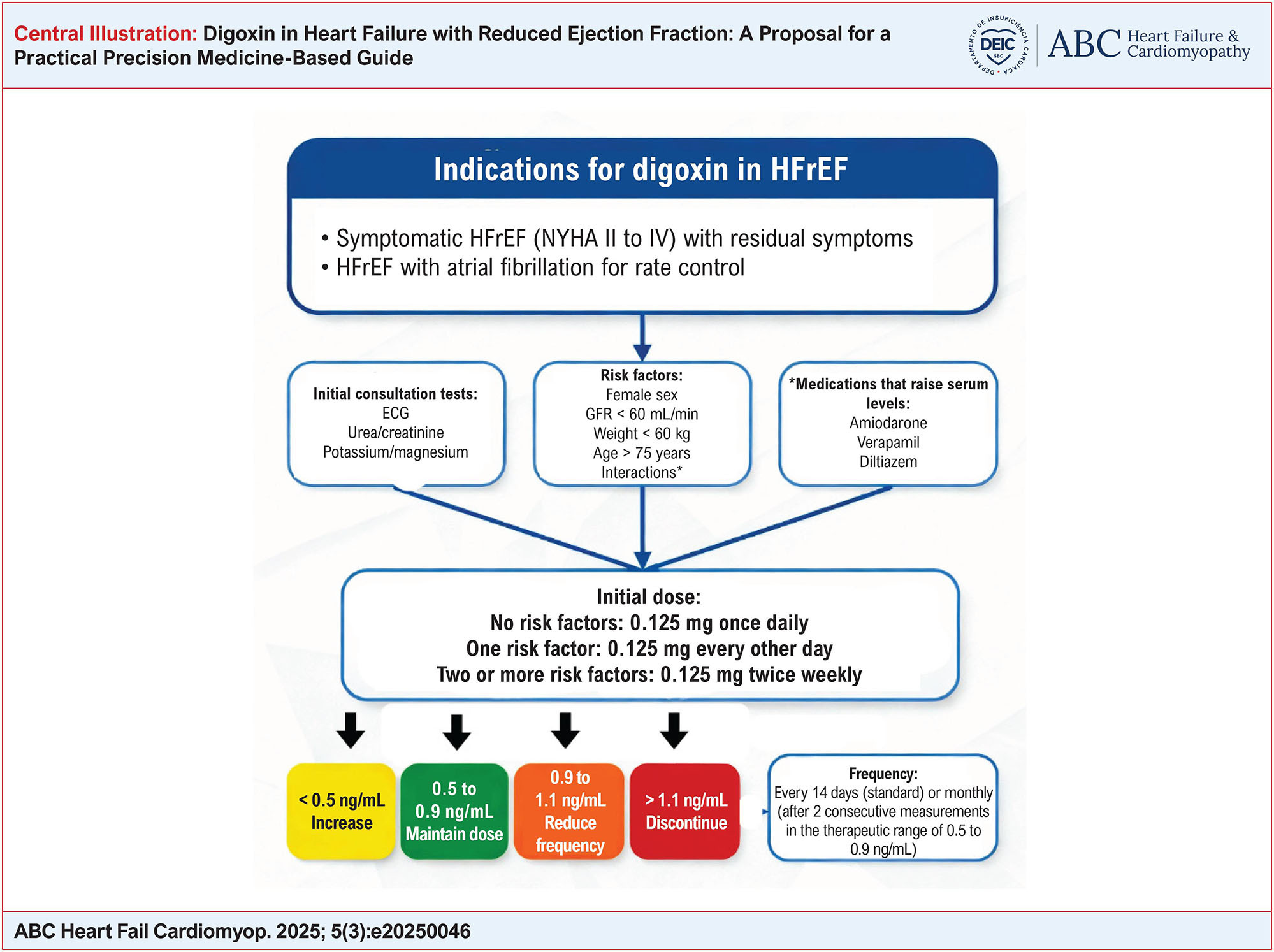
Nonetheless, the systematic exclusion of digoxin may represent a historical error based on incomplete interpretations of old data. In a scenario where heart failure with reduced ejection fraction (HFrEF) still imposes high morbidity, mortality, and residual symptoms despite optimized therapy, the premise of this viewpoint is unequivocal: digoxin is not obsolete; what has become obsolete is the empirical fixed-dose prescription model. In light of contemporary evidence, we propose a revival of digitalis therapy guided by precision medicine.

[…]

  • Cardiac glycosides
  • Digoxin
  • Heart Failure
  • pharmacokinetics
  • Precision Medicine
Read Full Article
Creative Commons Attribution (CC BY) Creative Commons license
31/12/2025 DOI: 10.36660/abchf.20250046i Views 2
Figure 1
Case Report

Septal Artery Embolization with EVOH in Obstructive Hypertrophic Cardiomyopathy Associated with Percutaneous Treatment of Coronary Disease

Victor Tavares Trindade et al. Núbia Andrade Silva Nassandro Machado Garcia Júnior Anna Luiza Souza … Maurício Lopes Prudente Giulliano Gardenghi

Introduction

Hypertrophic cardiomyopathy (HCM) is the most common genetic heart disease. It has an autosomal dominant inheritance pattern, and to date, 11 genes have been identified among the 1400 mutations involved in its pathogenesis. The most common are the β-myosin heavy chain (MYH7), myosin-binding protein C (MYBPC3), and troponin T (TNNT2), which encode cardiac sarcomeric proteins. Three mutations are involved in its pathophysiology: missense, insertions, and deletions. The most common mutation is missense, which causes a punctual exchange between two nucleic acids, resulting in a change in the nucleotide conformation, leading to the formation of a codon that codes for a different amino acid.,

HCM promotes changes in cardiac structure, with left ventricular hypertrophy (LVH) without another underlying etiology being the most common anatomical alteration. Its symptomatology varies according to the HCM profiles, and can present asymptomatically, with minor symptoms such as dyspnea on exertion, precordialgia, fatigue, presyncope and syncope, or in a severe form, evolving with advanced heart failure (HF), ventricular and atrial arrhythmias, and even sudden cardiac death.,

[…]

  • Angioplasty
  • Coronary Artery Disease
  • Heart Septum
  • Hypertrophic Cardiomyopathy
  • Therapeutic Embolization
Read Full Article
Creative Commons Attribution (CC BY) Creative Commons license
22/12/2025 DOI: 10.36660/abchf.20250019i Views 1

How to cite this article

EndNote RIS

Electronic Document Format (Vancouver)

Tenório PP. Impacts of Post-COVID-19 Syndrome on Cardiovascular Autonomic Changes. ABC Heart Fail Cardiomyop 2025;5(3):e20250028.

Electronic Document Format (ABNT)

Tenório, Pedro Pereira. Impacts of Post-COVID-19 Syndrome on Cardiovascular Autonomic Changes. ABC Heart Fail Cardiomyop, v. 5, n. 3, e20250028, Dec. 2025.

Electronic Document Format (APA)

Tenório, P. P. (2025). Impacts of Post-COVID-19 Syndrome on Cardiovascular Autonomic Changes. ABC Heart Fail Cardiomyop, 5(3), e20250028.

Electronic Document Format (ISO)

Tenório, Pedro Pereira. Impacts of Post-COVID-19 Syndrome on Cardiovascular Autonomic Changes. ABC Heart Fail Cardiomyop [online]. 2025, vol. 5, n. 3, [cited 2026-10-14], e20250028. Available from: <https://journals.cardiol.br/en/article/impacts-of-post-covid-19-syndrome-on-cardiovascular-autonomic-changes/>

EndNote RIS

Electronic Document Format (Vancouver)

Barros FC, Cezaro JC, Pianca EG, Menegazzo WR, Scolari FL, Silveira AD. Current Diagnostic and Prognostic Applications of Cardiopulmonary Exercise Testing in Heart Failure with Preserved Ejection Fraction – A Narrative Review. ABC Heart Fail Cardiomyop 2025;5(3):e20250014.

Electronic Document Format (ABNT)

Barros, Fernando Colares; Cezaro, Jéssica Cristina de; Pianca, Eduardo Gatti; Menegazzo, Willian Roberto; Scolari, Fernando Luís; Silveira, Anderson Donelli da. Current Diagnostic and Prognostic Applications of Cardiopulmonary Exercise Testing in Heart Failure with Preserved Ejection Fraction – A Narrative Review. ABC Heart Fail Cardiomyop, v. 5, n. 3, e20250014, Dec. 2025.

Electronic Document Format (APA)

Barros, F. C., Cezaro, J. C. , Pianca, E. G., Menegazzo, W. R., Scolari, F. L., & Silveira, A. D. (2025). Current Diagnostic and Prognostic Applications of Cardiopulmonary Exercise Testing in Heart Failure with Preserved Ejection Fraction – A Narrative Review. ABC Heart Fail Cardiomyop, 5(3), e20250014.

Electronic Document Format (ISO)

Barros, Fernando Colares and Cezaro, Jéssica Cristina de and Pianca, Eduardo Gatti and Menegazzo, Willian Roberto and Scolari, Fernando Luís and Silveira, Anderson Donelli da. Current Diagnostic and Prognostic Applications of Cardiopulmonary Exercise Testing in Heart Failure with Preserved Ejection Fraction – A Narrative Review. ABC Heart Fail Cardiomyop [online]. 2025, vol. 5, n. 3, [cited 2026-10-14], e20250014. Available from: <https://journals.cardiol.br/en/article/current-diagnostic-and-prognostic-applications-of-cardiopulmonary-exercise-testing-in-heart-failure-with-preserved-ejection-fraction-a-narrative-review/>

EndNote RIS

Electronic Document Format (Vancouver)

Trento BME, Medeiros DG, Bizinelli MES, Barão MM, Freitas AKE. Reverse Remodeling After Myocardial Revascularization in Severe Ischemic Heart Disease. ABC Heart Fail Cardiomyop 2025;5(3):e20250039.

Electronic Document Format (ABNT)

Trento, Bruna Montingelli Espinola; Medeiros, Daniela Gourlart; Bizinelli, Maria Eduarda Soares; Barão, Manuella Macedo; Freitas, Ana Karyn Ehrenfried. Reverse Remodeling After Myocardial Revascularization in Severe Ischemic Heart Disease. ABC Heart Fail Cardiomyop, v. 5, n. 3, e20250039, Dec. 2025.

Electronic Document Format (APA)

Trento, B. M. E., Medeiros, D. G., Bizinelli, M. E. S., Barão, M. M., & Freitas, A. K. E. (2025). Reverse Remodeling After Myocardial Revascularization in Severe Ischemic Heart Disease. ABC Heart Fail Cardiomyop, 5(3), e20250039.

Electronic Document Format (ISO)

Trento, Bruna Montingelli Espinola and Medeiros, Daniela Gourlart and Bizinelli, Maria Eduarda Soares and Barão, Manuella Macedo and Freitas, Ana Karyn Ehrenfried. Reverse Remodeling After Myocardial Revascularization in Severe Ischemic Heart Disease. ABC Heart Fail Cardiomyop [online]. 2025, vol. 5, n. 3, [cited 2026-10-14], e20250039. Available from: <https://journals.cardiol.br/en/article/reverse-remodeling-after-myocardial-revascularization-in-severe-ischemic-heart-disease/>

EndNote RIS

Electronic Document Format (Vancouver)

Rossi Neto JM, Rossi RM, Mattos VBM, Wolf PJW, Finger MAA, Santos CC. Cardiopulmonary Exercise Testing in Heart Failure: Updating the Theory into Clinical Practice. ABC Heart Fail Cardiomyop 2025;5(3):e20250040.

Electronic Document Format (ABNT)

Rossi Neto, João Manoel; Rossi, Raphael Machado; Mattos, Victor B. M.; Wolf, Plinio J. W.; Finger, Marco Aurelio A.; Santos, Carolina Casadei dos. Cardiopulmonary Exercise Testing in Heart Failure: Updating the Theory into Clinical Practice. ABC Heart Fail Cardiomyop, v. 5, n. 3, e20250040, Dec. 2025.

Electronic Document Format (APA)

Rossi Neto, J. M., Rossi, R. M., Mattos, V. B. M., Wolf, P. J. W., Finger, M. A. A., & Santos, C. C. (2025). Cardiopulmonary Exercise Testing in Heart Failure: Updating the Theory into Clinical Practice. ABC Heart Fail Cardiomyop, 5(3), e20250040.

Electronic Document Format (ISO)

Rossi Neto, João Manoel and Rossi, Raphael Machado and Mattos, Victor B. M. and Wolf, Plinio J. W. and Finger, Marco Aurelio A. and Santos, Carolina Casadei dos. Cardiopulmonary Exercise Testing in Heart Failure: Updating the Theory into Clinical Practice. ABC Heart Fail Cardiomyop [online]. 2025, vol. 5, n. 3, [cited 2026-10-14], e20250040. Available from: <https://journals.cardiol.br/en/article/cardiopulmonary-exercise-testing-in-heart-failure-updating-the-theory-into-clinical-practice/>

EndNote RIS

Electronic Document Format (Vancouver)

Wolf PJ, Santos CC, Rossi J, Finger MAA, Mattos VBM, Rossi R, Correia EB, et al. The Use of Digitalis: A Reflection of Medicine as the Science of Provisional Truths. ABC Heart Fail Cardiomyop 2025;5(3):20250049.

Electronic Document Format (ABNT)

Wolf, Plinio J.; Santos, Carolina Casadei dos; Rossi, João; Finger, Marco Aurelio A.; Mattos, Victor B. M.; Rossi, Raphael; Correia, Edileide Barros; Vasconcellos, Marco; Bruscky, Larissa; Valdigem, Bruno; Assad, Haissa; Fortuna, Fernanda. The Use of Digitalis: A Reflection of Medicine as the Science of Provisional Truths. ABC Heart Fail Cardiomyop, v. 5, n. 3, 20250049, Dec. 2025.

Electronic Document Format (APA)

Wolf, P. J., Santos, C. C. , Rossi, J., Finger, M. A. A., Mattos, V. B. M., Rossi, R., Correia, E. B., Vasconcellos, M., Bruscky, L., Valdigem, B., Assad, H., & Fortuna, F. (2025). The Use of Digitalis: A Reflection of Medicine as the Science of Provisional Truths. ABC Heart Fail Cardiomyop, 5(3), 20250049.

Electronic Document Format (ISO)

Wolf, Plinio J. and Santos, Carolina Casadei dos and Rossi, João and Finger, Marco Aurelio A. and Mattos, Victor B. M. and Rossi, Raphael and Correia, Edileide Barros and Vasconcellos, Marco and Bruscky, Larissa and Valdigem, Bruno and Assad, Haissa and Fortuna, Fernanda. The Use of Digitalis: A Reflection of Medicine as the Science of Provisional Truths. ABC Heart Fail Cardiomyop [online]. 2025, vol. 5, n. 3, [cited 2026-10-14], 20250049. Available from: <https://journals.cardiol.br/en/article/the-use-of-digitalis-a-reflection-of-medicine-as-the-science-of-provisional-truths/>

EndNote RIS

Electronic Document Format (Vancouver)

Sarullo S, Nugara C, Voi AL, Zarcone A, Francesco GD, Bosco S, Carollo S, et al. Efficacy of Cardiopulmonary Rehabilitation on Cardiorespiratory Function in Patients with Long COVID Syndrome. ABC Heart Fail Cardiomyop 2025;5(3):e20250007.

Electronic Document Format (ABNT)

Sarullo, Silvia; Nugara, Cinzia; Voi, Annamaria Lo; Zarcone, Antonino; Francesco, Gabriele Di; Bosco, Sergio; Carollo, Sergio; Mazzara, Luigi; Giallauria, Francesco; Cappello, Francesco; Sarullo, Filippo M.. Efficacy of Cardiopulmonary Rehabilitation on Cardiorespiratory Function in Patients with Long COVID Syndrome. ABC Heart Fail Cardiomyop, v. 5, n. 3, e20250007, Dec. 2025.

Electronic Document Format (APA)

Sarullo, S., Nugara, C., Voi, A. L., Zarcone, A., Francesco, G. D., Bosco, S., Carollo, S., Mazzara, L., Giallauria, F., Cappello, F., & Sarullo, F. M. (2025). Efficacy of Cardiopulmonary Rehabilitation on Cardiorespiratory Function in Patients with Long COVID Syndrome. ABC Heart Fail Cardiomyop, 5(3), e20250007.

Electronic Document Format (ISO)

Sarullo, Silvia and Nugara, Cinzia and Voi, Annamaria Lo and Zarcone, Antonino and Francesco, Gabriele Di and Bosco, Sergio and Carollo, Sergio and Mazzara, Luigi and Giallauria, Francesco and Cappello, Francesco and Sarullo, Filippo M.. Efficacy of Cardiopulmonary Rehabilitation on Cardiorespiratory Function in Patients with Long COVID Syndrome. ABC Heart Fail Cardiomyop [online]. 2025, vol. 5, n. 3, [cited 2026-10-14], e20250007. Available from: <https://journals.cardiol.br/en/article/efficacy-of-cardiopulmonary-rehabilitation-on-cardiorespiratory-function-in-patients-with-long-covid-syndrome/>

EndNote RIS

Electronic Document Format (Vancouver)

Borges GA, Luca MD, Bolan AC. Analysis of the Clinical and Epidemiological Profile of Patients with Heart Failure with Reduced Ejection Fraction in a Hospital in Southern Santa Catarina. ABC Heart Fail Cardiomyop 2025;5(3):e20250027.

Electronic Document Format (ABNT)

Borges, Gabriela Aline; Luca, Mateus De; Bolan, Amanda Cirimbelli. Analysis of the Clinical and Epidemiological Profile of Patients with Heart Failure with Reduced Ejection Fraction in a Hospital in Southern Santa Catarina. ABC Heart Fail Cardiomyop, v. 5, n. 3, e20250027, Dec. 2025.

Electronic Document Format (APA)

Borges, G. A., Luca, M. D., & Bolan, A. C. (2025). Analysis of the Clinical and Epidemiological Profile of Patients with Heart Failure with Reduced Ejection Fraction in a Hospital in Southern Santa Catarina. ABC Heart Fail Cardiomyop, 5(3), e20250027.

Electronic Document Format (ISO)

Borges, Gabriela Aline and Luca, Mateus De and Bolan, Amanda Cirimbelli. Analysis of the Clinical and Epidemiological Profile of Patients with Heart Failure with Reduced Ejection Fraction in a Hospital in Southern Santa Catarina. ABC Heart Fail Cardiomyop [online]. 2025, vol. 5, n. 3, [cited 2026-10-14], e20250027. Available from: <https://journals.cardiol.br/en/article/analysis-of-the-clinical-and-epidemiological-profile-of-patients-with-heart-failure-with-reduced-ejection-fraction-in-a-hospital-in-southern-santa-catarina/>

EndNote RIS

Electronic Document Format (Vancouver)

Carvalho MRM, Rosário NF, Ramos A, Azevedo CRA, Ribeiro ML, Lomba GSB, Oliveira EM, et al. Local Inflammation May Underlie Cardiac Damage in Post-COVID-19 Period. ABC Heart Fail Cardiomyop 2025;5(3):e20250037.

Electronic Document Format (ABNT)

Carvalho, Marcio Roberto Moraes de; Rosário, Natalia Fonseca; Ramos, Alice; Azevedo, Carla Rodrigues do Amaral; Ribeiro, Mario Luiz; Lomba, Guilherme Schittine Bezerra; Oliveira, Evelyn Maciel de; Souza, Rachel V. O’Neill de; Castro, Mauro Jorge Cabral; Lugon, Jocemir Ronaldo. Local Inflammation May Underlie Cardiac Damage in Post-COVID-19 Period. ABC Heart Fail Cardiomyop, v. 5, n. 3, e20250037, Dec. 2025.

Electronic Document Format (APA)

Carvalho, M. R. M. , Rosário, N. F., Ramos, A., Azevedo, C. R. A., Ribeiro, M. L., Lomba, G. S. B., Oliveira, E. M. , Souza, R. V. O. , Castro, M. J. C., & Lugon, J. R. (2025). Local Inflammation May Underlie Cardiac Damage in Post-COVID-19 Period. ABC Heart Fail Cardiomyop, 5(3), e20250037.

Electronic Document Format (ISO)

Carvalho, Marcio Roberto Moraes de and Rosário, Natalia Fonseca and Ramos, Alice and Azevedo, Carla Rodrigues do Amaral and Ribeiro, Mario Luiz and Lomba, Guilherme Schittine Bezerra and Oliveira, Evelyn Maciel de and Souza, Rachel V. O’Neill de and Castro, Mauro Jorge Cabral and Lugon, Jocemir Ronaldo. Local Inflammation May Underlie Cardiac Damage in Post-COVID-19 Period. ABC Heart Fail Cardiomyop [online]. 2025, vol. 5, n. 3, [cited 2026-10-14], e20250037. Available from: <https://journals.cardiol.br/en/article/local-inflammation-may-underlie-cardiac-damage-in-post-covid-19-period/>

EndNote RIS

Electronic Document Format (Vancouver)

Conceição-Souza GE. Digoxin in Heart Failure with Reduced Ejection Fraction: A Proposal for a Practical Precision Medicine-Based Guide. ABC Heart Fail Cardiomyop 2025;5(3):e20250046.

Electronic Document Format (ABNT)

Conceição-Souza, Germano Emílio. Digoxin in Heart Failure with Reduced Ejection Fraction: A Proposal for a Practical Precision Medicine-Based Guide. ABC Heart Fail Cardiomyop, v. 5, n. 3, e20250046, Dec. 2025.

Electronic Document Format (APA)

Conceição-Souza, G. E. (2025). Digoxin in Heart Failure with Reduced Ejection Fraction: A Proposal for a Practical Precision Medicine-Based Guide. ABC Heart Fail Cardiomyop, 5(3), e20250046.

Electronic Document Format (ISO)

Conceição-Souza, Germano Emílio. Digoxin in Heart Failure with Reduced Ejection Fraction: A Proposal for a Practical Precision Medicine-Based Guide. ABC Heart Fail Cardiomyop [online]. 2025, vol. 5, n. 3, [cited 2026-10-14], e20250046. Available from: <https://journals.cardiol.br/en/article/digoxin-in-heart-failure-with-reduced-ejection-fraction-a-proposal-for-a-practical-precision-medicine-based-guide/>

EndNote RIS

Electronic Document Format (Vancouver)

Trindade VT, Silva NA, Garcia Júnior NM, Souza AL, Prudente ML, Gardenghi G. Septal Artery Embolization with EVOH in Obstructive Hypertrophic Cardiomyopathy Associated with Percutaneous Treatment of Coronary Disease. ABC Heart Fail Cardiomyop 2025;5(3):e20250019.

Electronic Document Format (ABNT)

Trindade, Victor Tavares; Silva, Núbia Andrade; Garcia Júnior, Nassandro Machado; Souza, Anna Luiza; Prudente, Maurício Lopes; Gardenghi, Giulliano. Septal Artery Embolization with EVOH in Obstructive Hypertrophic Cardiomyopathy Associated with Percutaneous Treatment of Coronary Disease. ABC Heart Fail Cardiomyop, v. 5, n. 3, e20250019, Dec. 2025.

Electronic Document Format (APA)

Trindade, V. T., Silva, N. A., Garcia Júnior, N. M., Souza, A. L., Prudente, M. L., & Gardenghi, G. (2025). Septal Artery Embolization with EVOH in Obstructive Hypertrophic Cardiomyopathy Associated with Percutaneous Treatment of Coronary Disease. ABC Heart Fail Cardiomyop, 5(3), e20250019.

Electronic Document Format (ISO)

Trindade, Victor Tavares and Silva, Núbia Andrade and Garcia Júnior, Nassandro Machado and Souza, Anna Luiza and Prudente, Maurício Lopes and Gardenghi, Giulliano. Septal Artery Embolization with EVOH in Obstructive Hypertrophic Cardiomyopathy Associated with Percutaneous Treatment of Coronary Disease. ABC Heart Fail Cardiomyop [online]. 2025, vol. 5, n. 3, [cited 2026-10-14], e20250019. Available from: <https://journals.cardiol.br/en/article/septal-artery-embolization-with-evoh-in-obstructive-hypertrophic-cardiomyopathy-associated-with-percutaneous-treatment-of-coronary-disease/>

Sede – Rio de Janeiro
Av. Marechal Câmara, 160
3º andar – Sala: 330 – Centro
Rio de Janeiro – CEP: 20020-907
Tel.: (+55 21) 3478-2700
ou (21) 99386-3961
E-mail: abcheartfailure@cardiol.br

Sede – São Paulo
Alameda Santos, 705 – 11º andar
Cerqueira César | São Paulo
CEP: 01419-001
Tel.: (55 +11) 3411-5500
E-mail: abcheartfailure@cardiol.br

  • About the Journal
  • Internal Regulation
  • Editors Section
  • Editorial Board
  • SBC Award

  • Guidelines for Publication
  • Editorial Policy
  • Ethics Policy
  • Policy on the Use of Artificial Intelligence
  • Mandatory Publication Form

Issues

SBC Guidelines